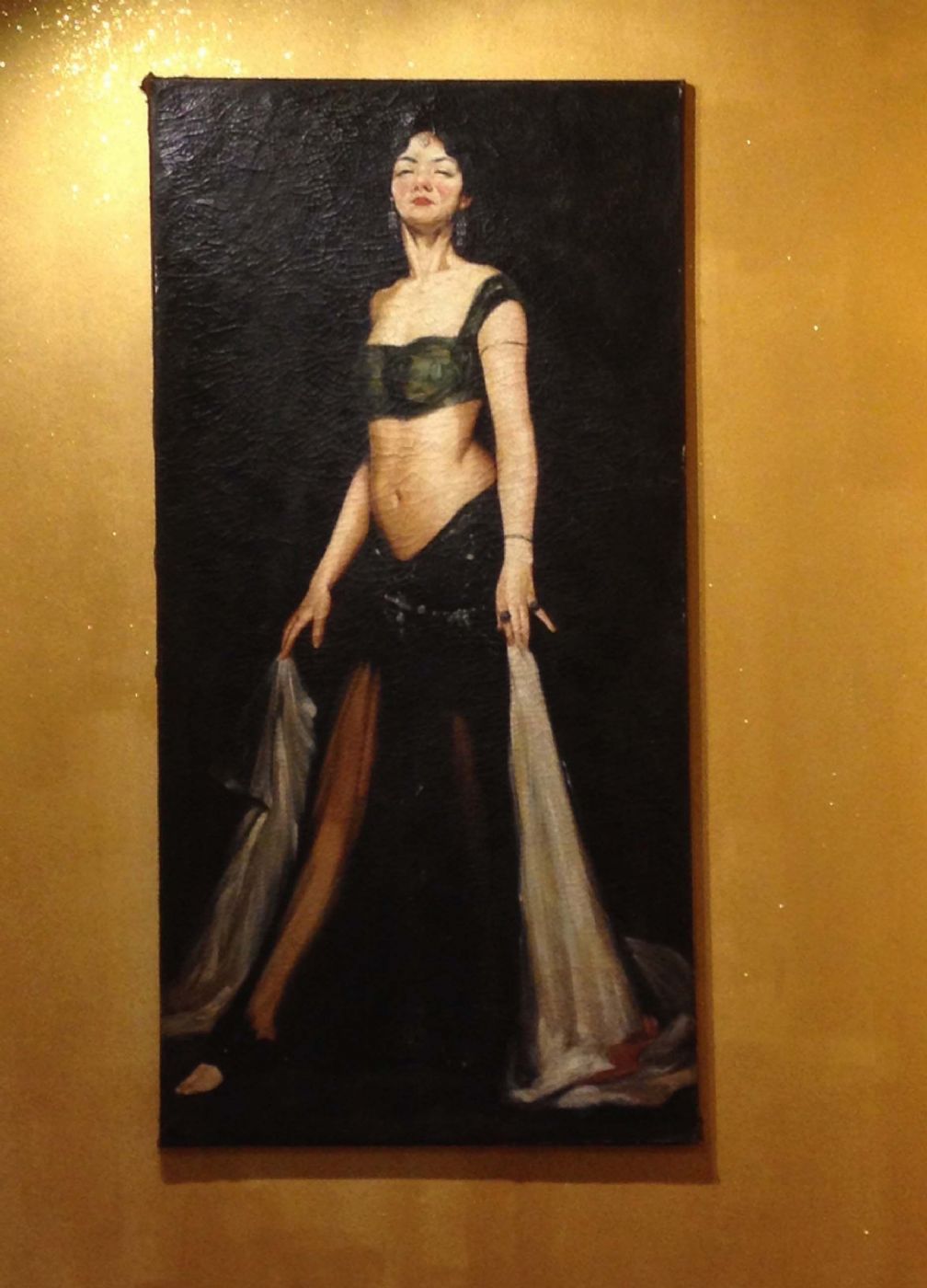
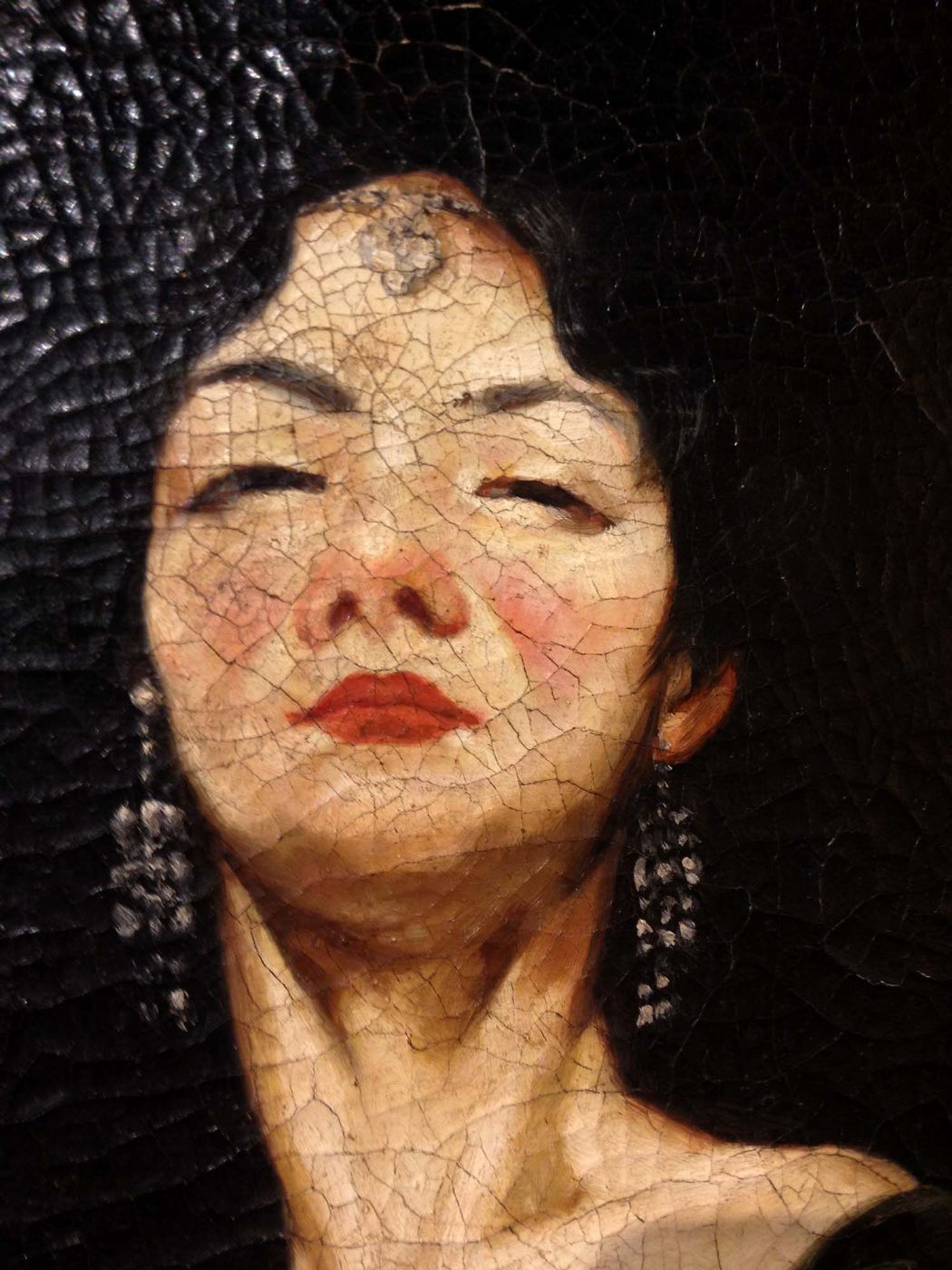
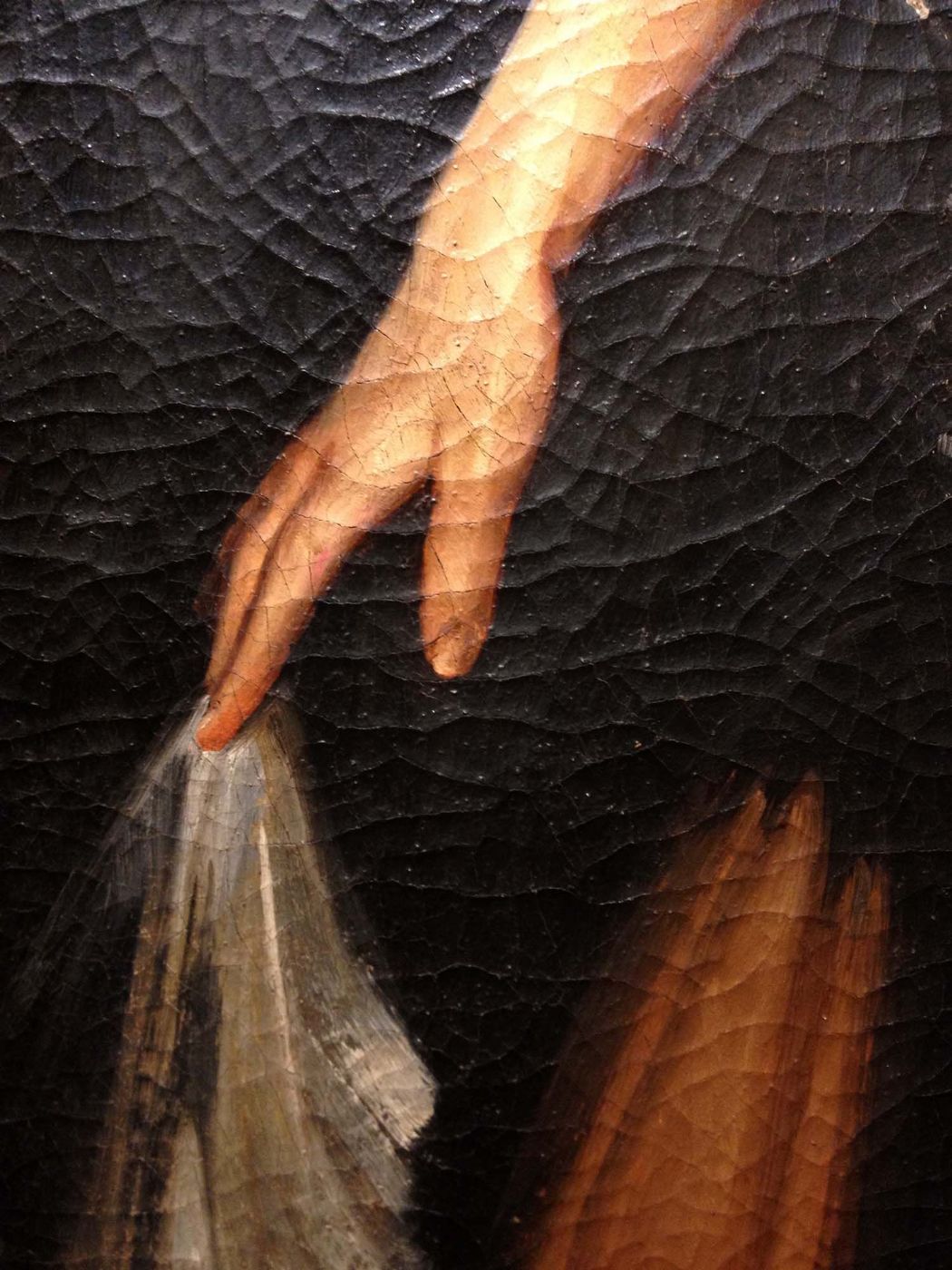
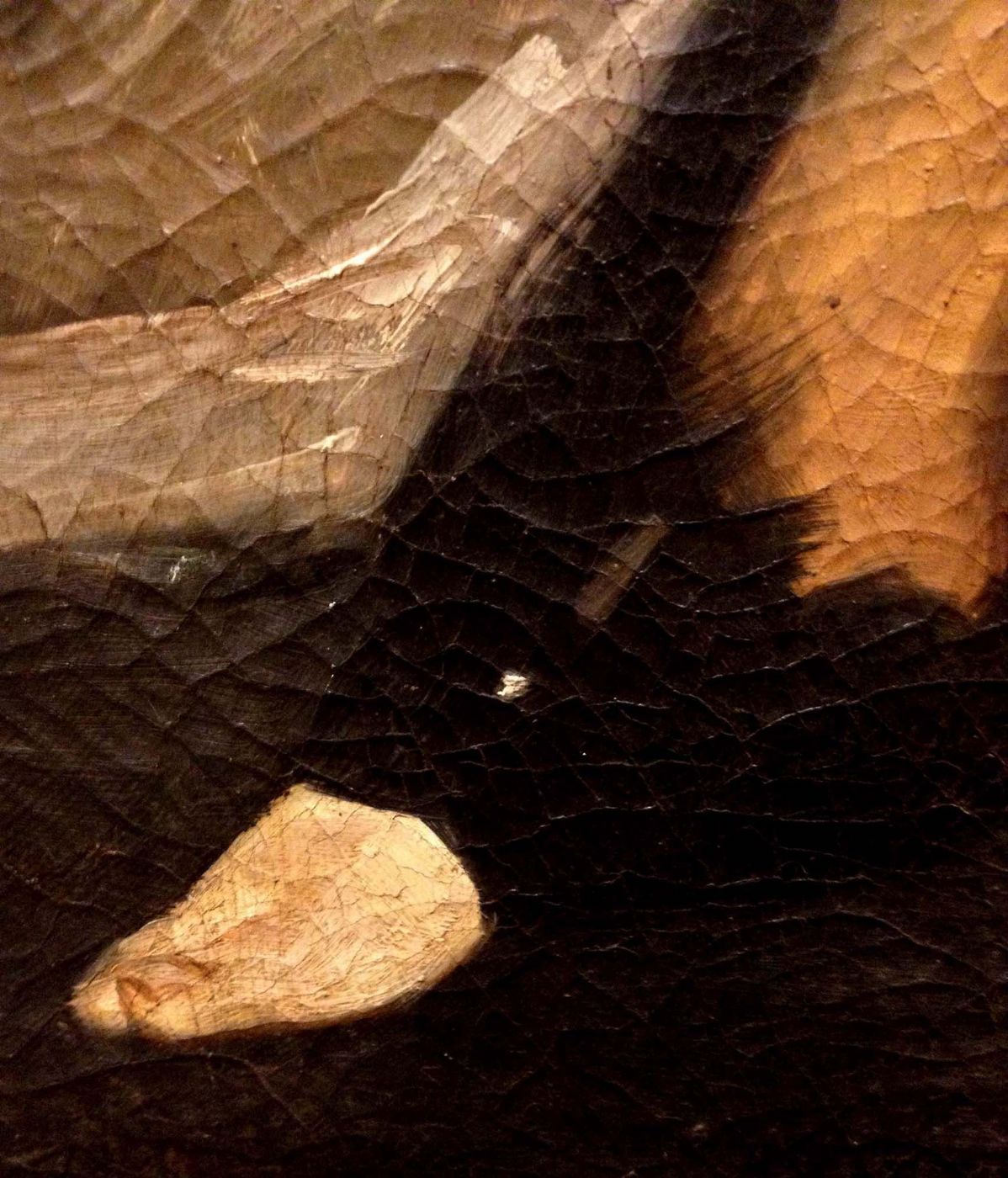
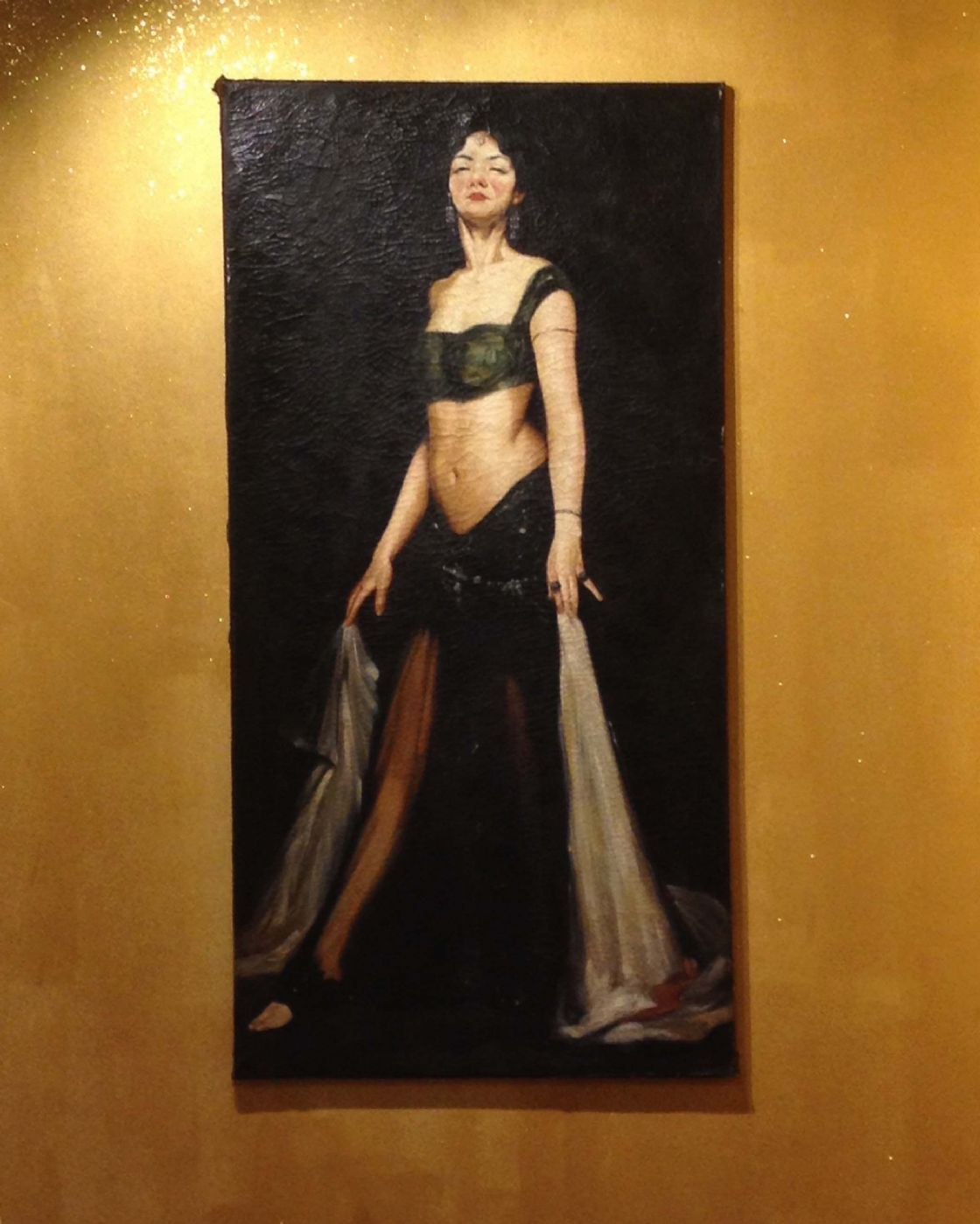
Fascinating painting depicting an idealized dancer with the figure of SALOME', wrapped in transparent black veils, according to the typical taste of the early twentieth century. In that period the so-called "exoticisms" were very fashionable, which mainly concerned fashion and the choice of furnishings. It is no coincidence that the work, by an anonymous American author, is inspired by a magnificent painting from 1909 (the year of publication of the Futurist Manifesto) by the American Robert Henri.
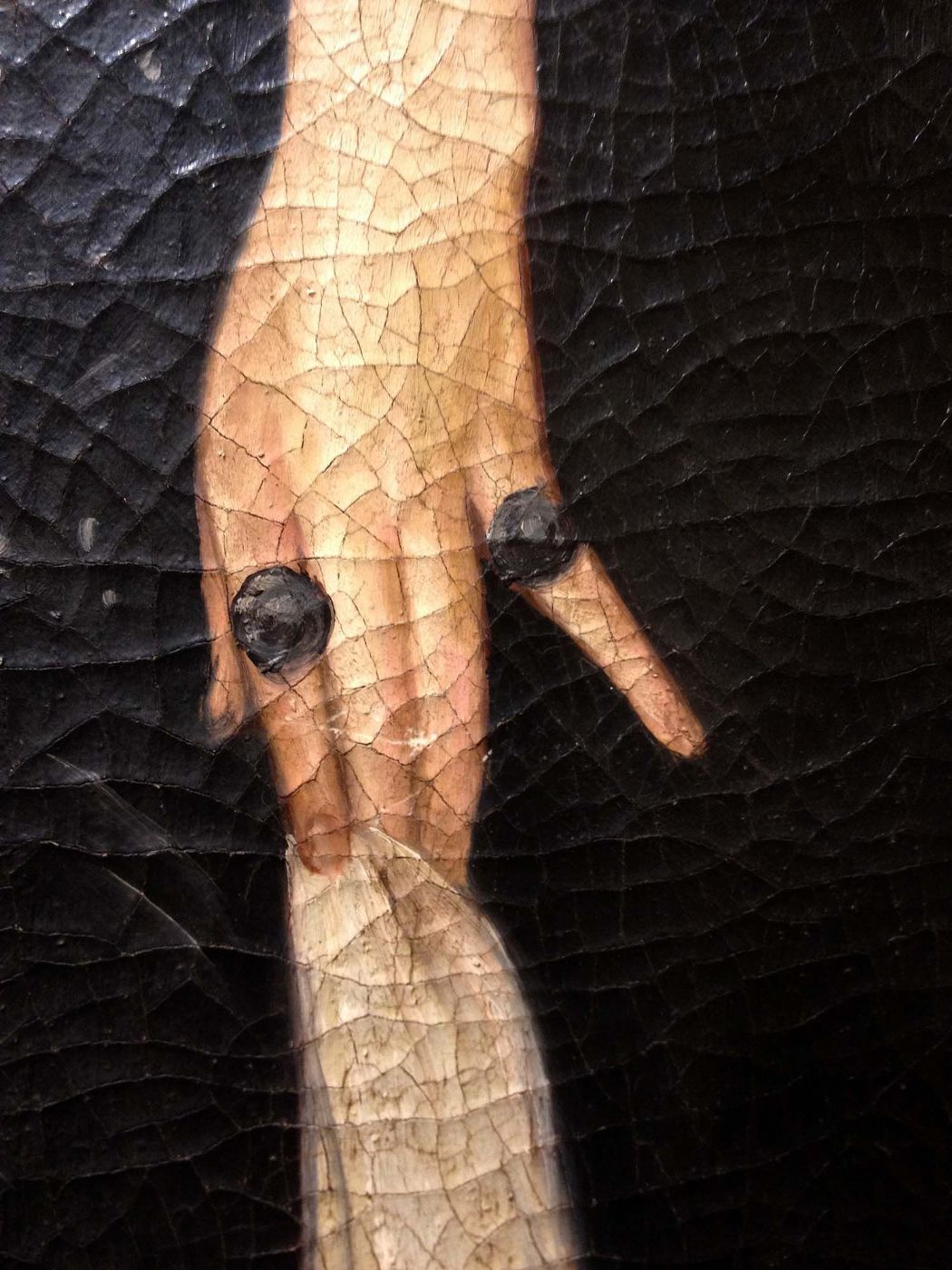
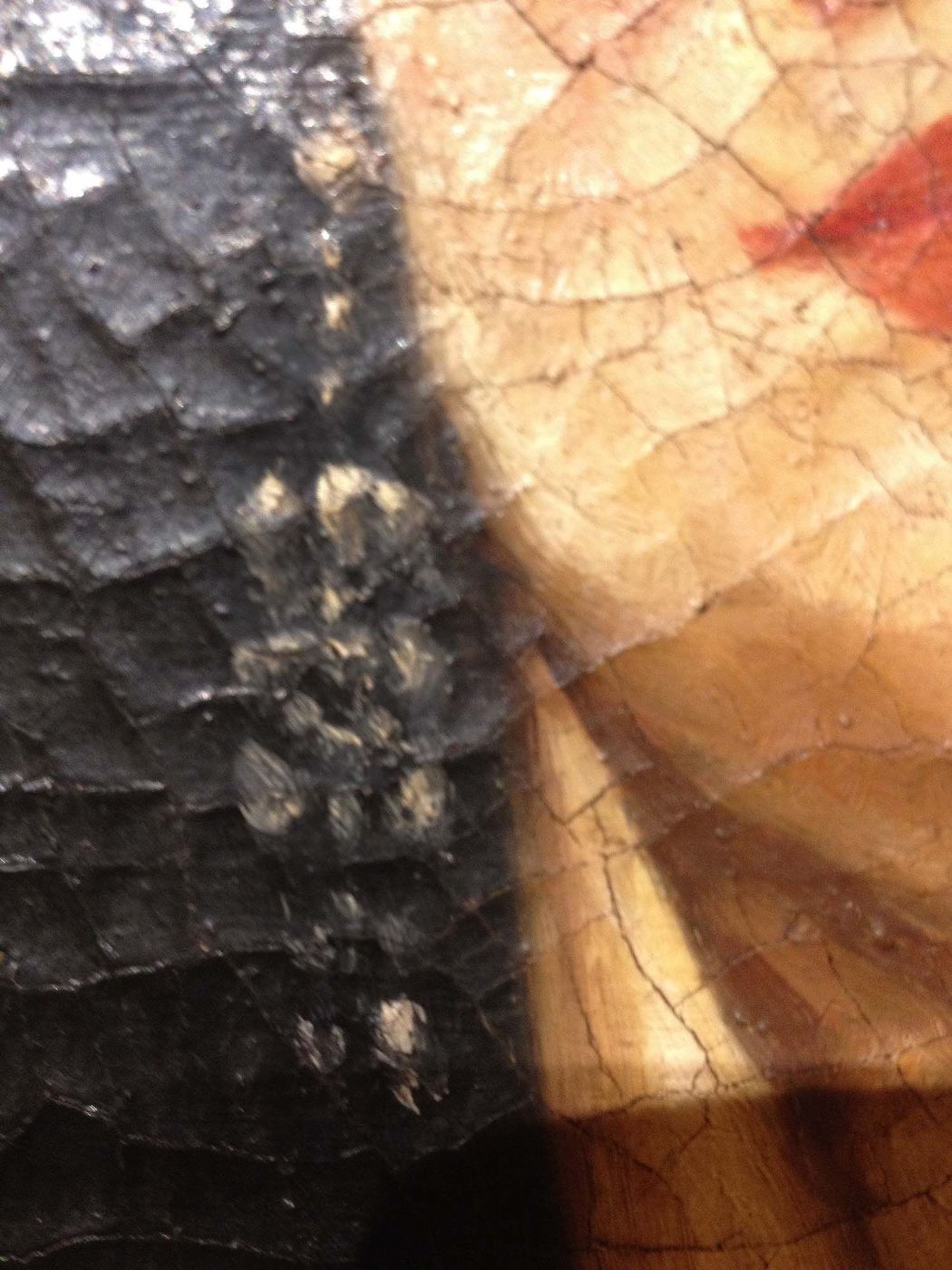
The young brunette woman (Salomè) wears oriental earrings, a pendant on her forehead and thin "slave-style" bracelets on both her arm and wrist. The very famous "seven veils" envelop her in mystery and eroticism, ready to be removed by her tapered hands.
Oil on canvas.
United States - approx. 1920
Century: 20th century.
Measurements: Height 120 cm Width 61 cm
Robert Henri, real name Robert Henry Cozad (Cincinnati, June 25, 1865 – New York, July 12, 1929), was an American painter. He was a leading figure of the Ashcan School of American realism and founded the group called "The Eight", to protest against the conservative and discriminatory criteria of the National Academy of Design. Due to family misfortunes, Henri spent his childhood and youth constantly moving to the central states of the United States, until in 1883 the family settled first in New York and then in Atlantic City, where he created his first paintings. With the encouragement of his parents, in 1886 Henri enrolled at the Academy of Art in Philadelphia, where he made paintings “en plein air”. He then went to Paris in 1888, where he studied under the guidance of William-Adolphe Bouguereau and admired the works of great artists, such as Velázquez, Goya, Hals, Rembrandt, Manet and Whistler.
He became familiar with Impressionism, Post-Impressionism and Symbolism, but it was Impressionism, with the technique of "en plein air" and the rejection of academicism, that most excited him. After traveling through France, in 1890 he arrived in Italy, admiring part of its immense artistic heritage. In 1891 he returned to Philadelphia and began to attract a group of artists, including William Glackens, George Luks, Everett Shinn and John Sloan, who met in his studio to discuss art and culture and to make live drawings; the esteem and friendship between them lasted for a lifetime. During this period his favorite themes were landscapes and portraits, characterized by a broad and lively brushstroke, with the firm conviction that art is closely linked to real life and that the artist's task is to express on canvas not only what he sees, but above all what he feels. A constant feature of his works is the rejection of academic models in favor of a deep and at the same time spontaneous observation of reality; this also applies to the works of subsequent years, in which he mainly portrayed urban scenes and subjects taken from everyday life. Starting in 1898 Henri spent another two years in France, during which he was noticed by several collectors. Back in the United States, he also dedicated himself to teaching and taught for the rest of his life in several prestigious schools in New York, having among his students artists such as Edward Hopper, Rockwell Kent, George Bellows, Joseph Stella, Man Ray and Stuart Davis. Despite the important recognitions obtained, Henri accused the members of the most important American art academies of prejudice and lack of willingness to renew, for having systematically rejected the innovative works of his students. For this reason he founded the group of artists called "The Eight" and organized several exhibitions in which were exhibited, together with his own works and those of the group of his friends from Philadelphia, also works by artists such as Maurice Prendergast, Ernest Lawson and Arthur Davies.
In these exhibitions the works were often exhibited in alphabetical order to highlight the egalitarian spirit that inspired them.
Robert Henri died in New York in 1929 at the age of 64.