Attributed to Giovanni da Nola, born Giovanni Merliano or Marigliano (Nola, 1488 - Naples, 1558)
Carved and polychrome painted wooden sculpture (53x67 cm), first half of the 16th century.
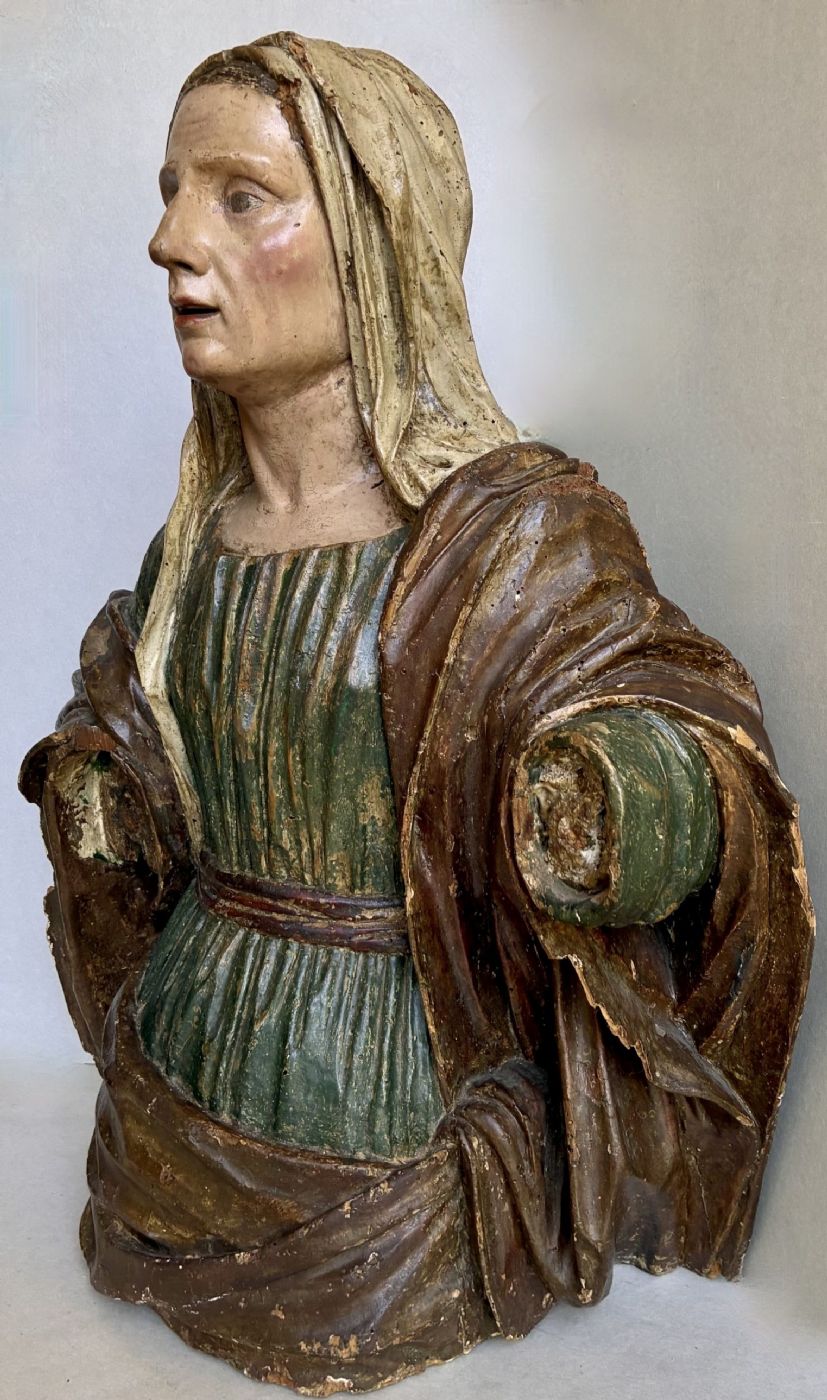
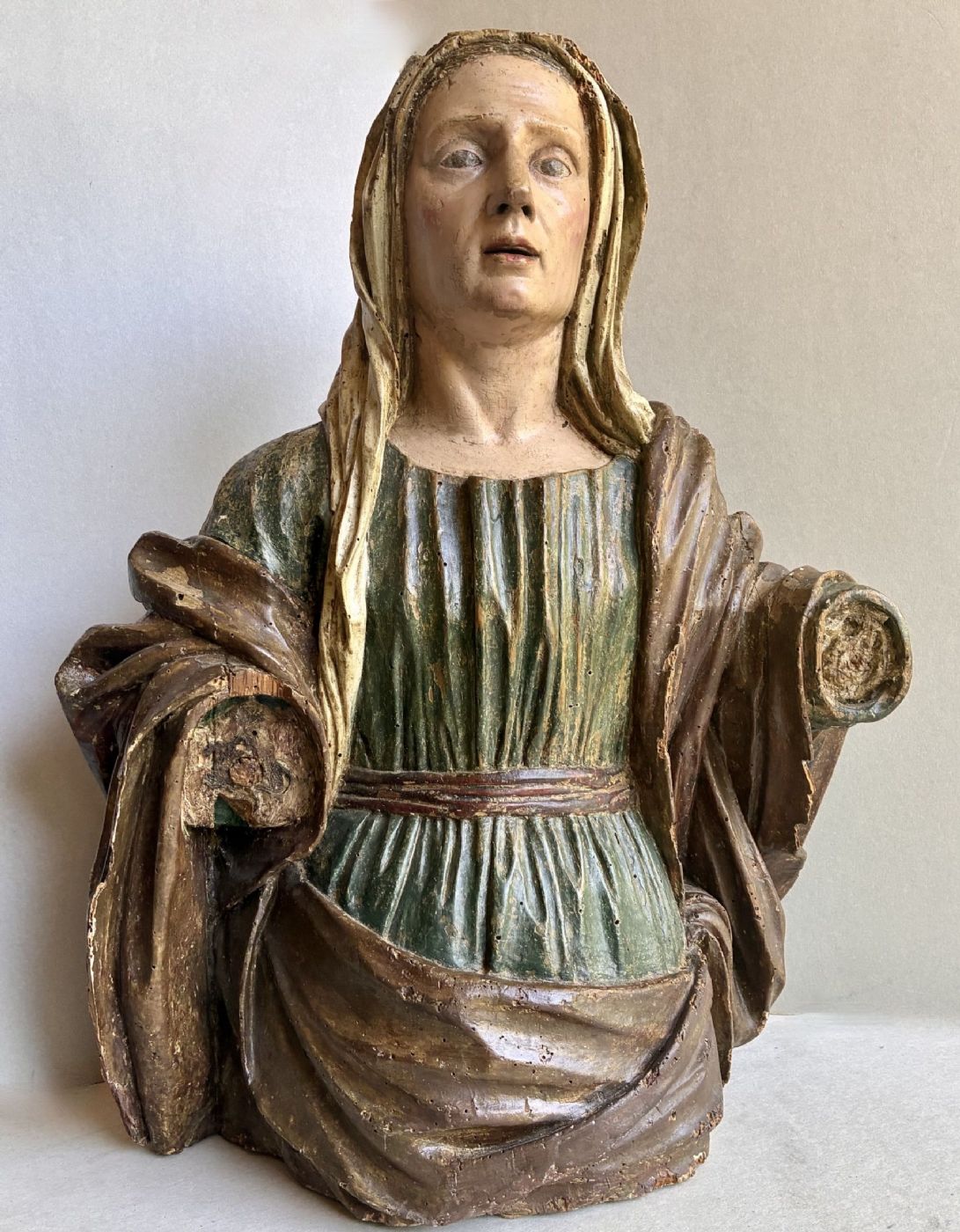
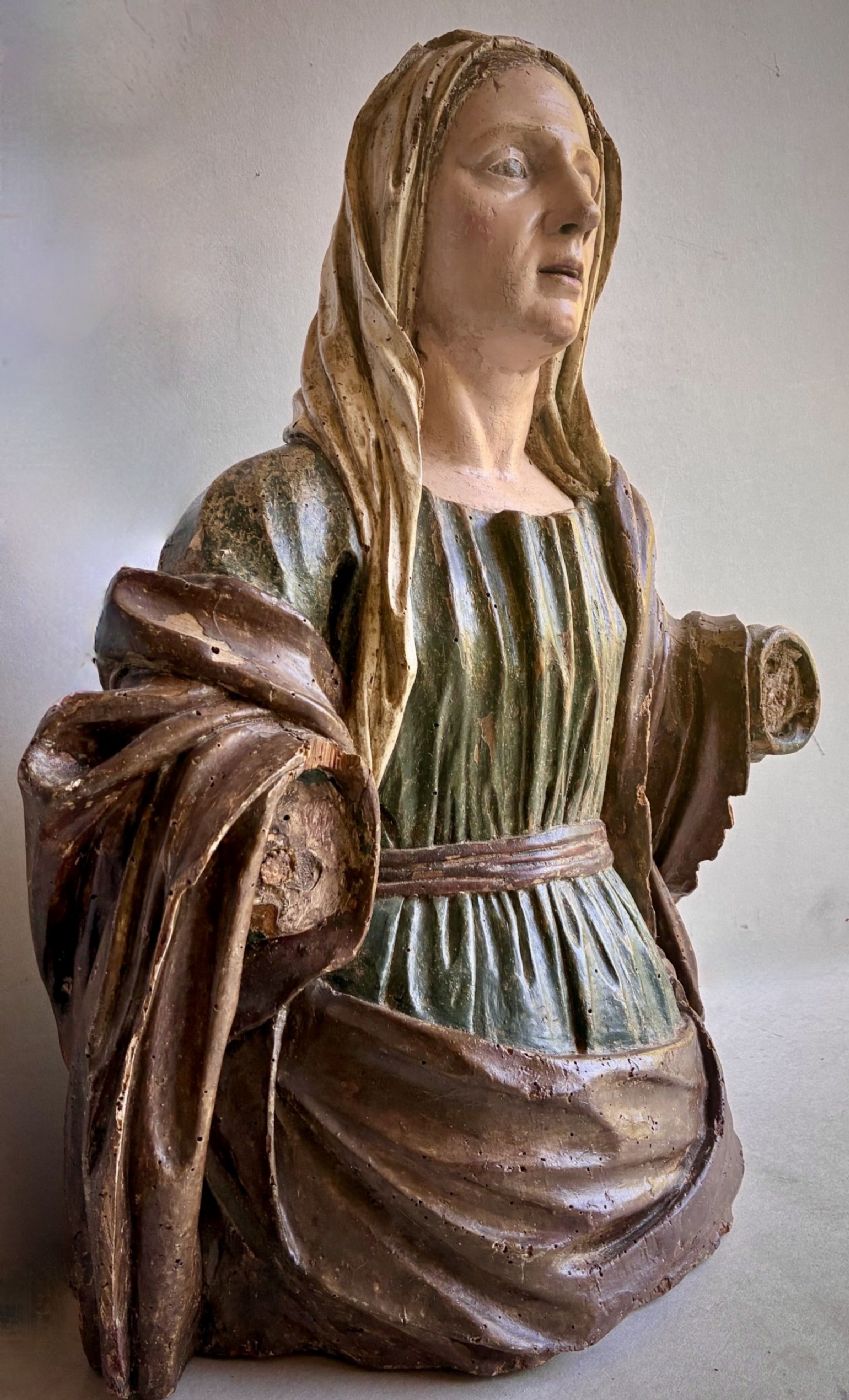
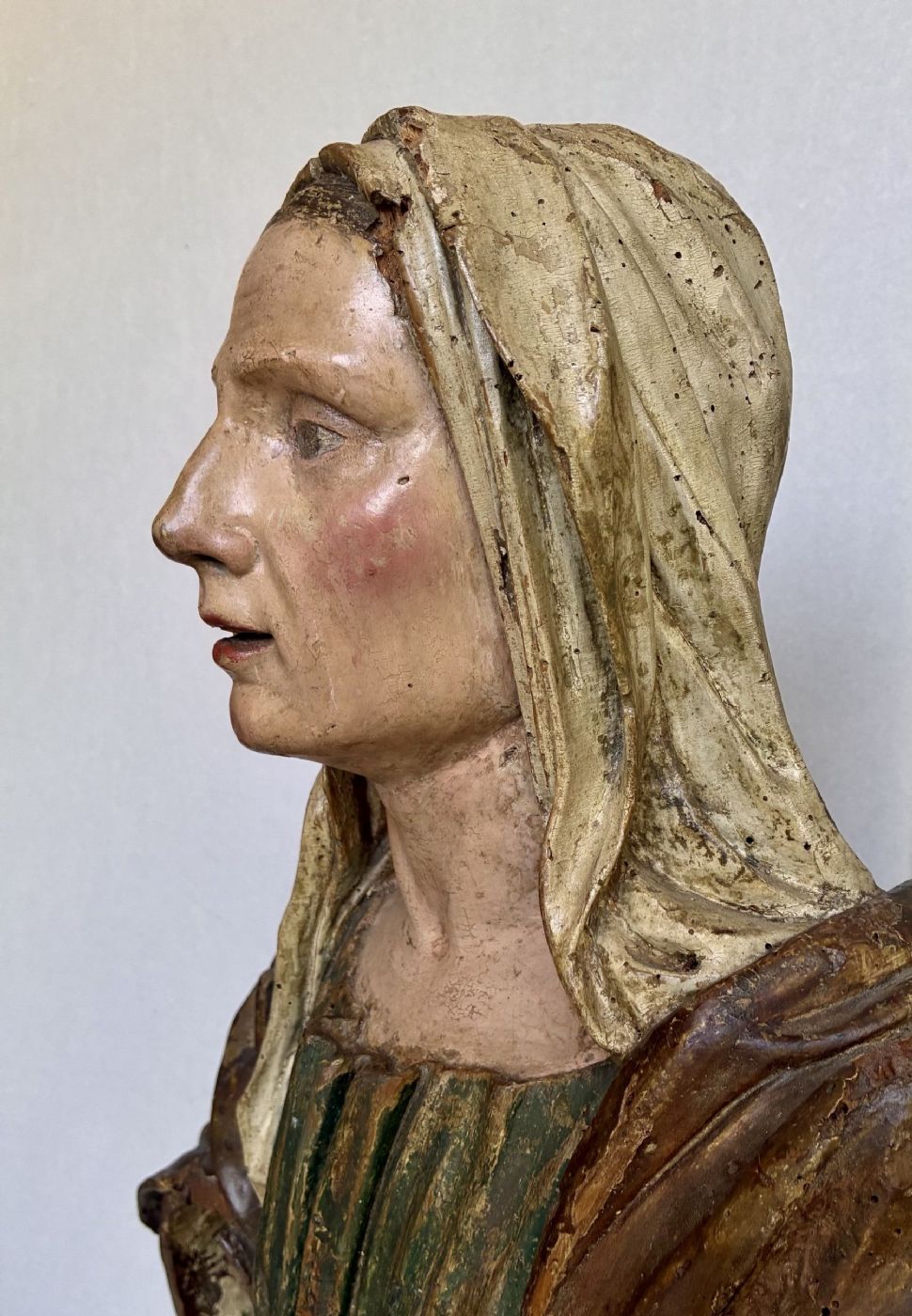
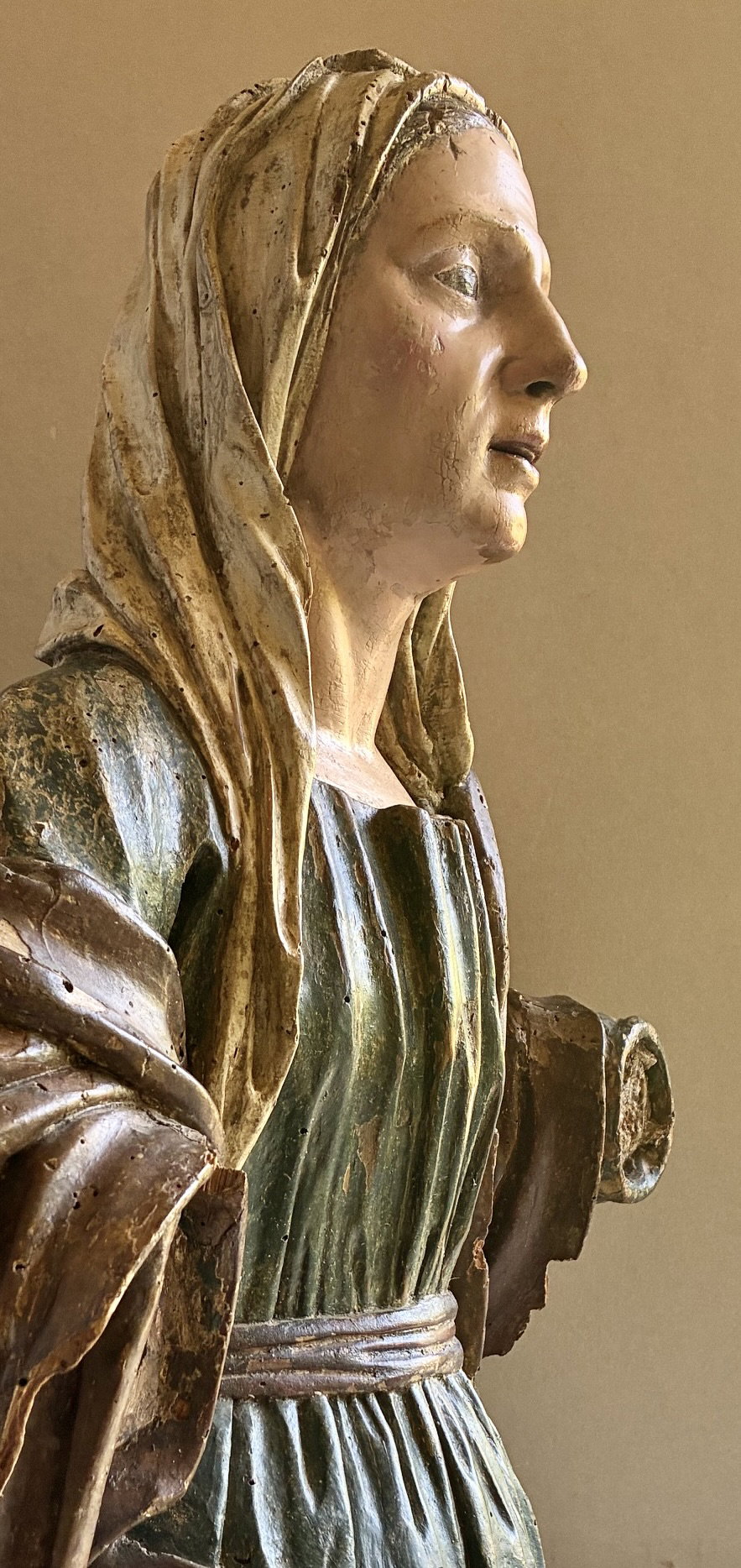
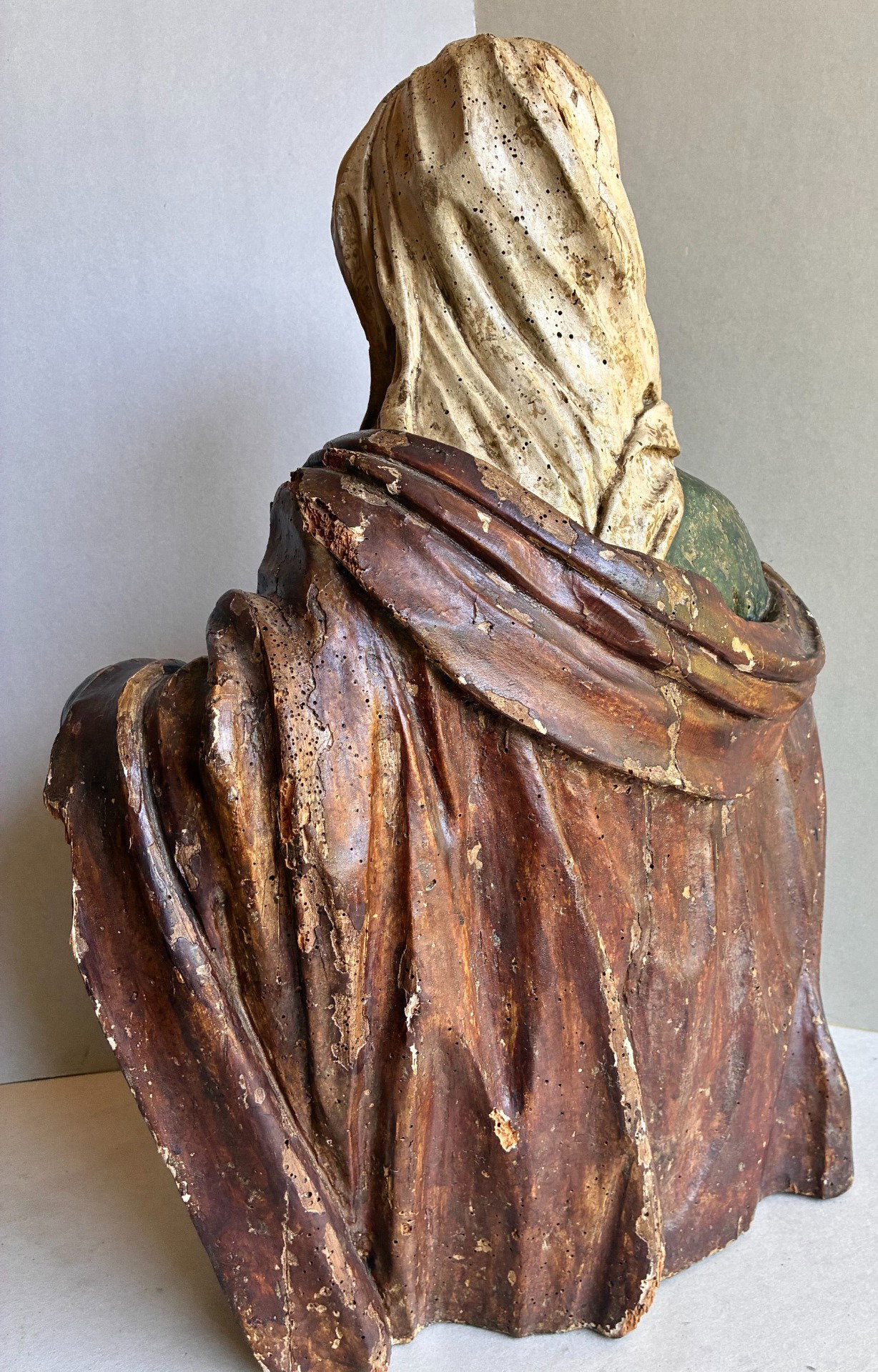
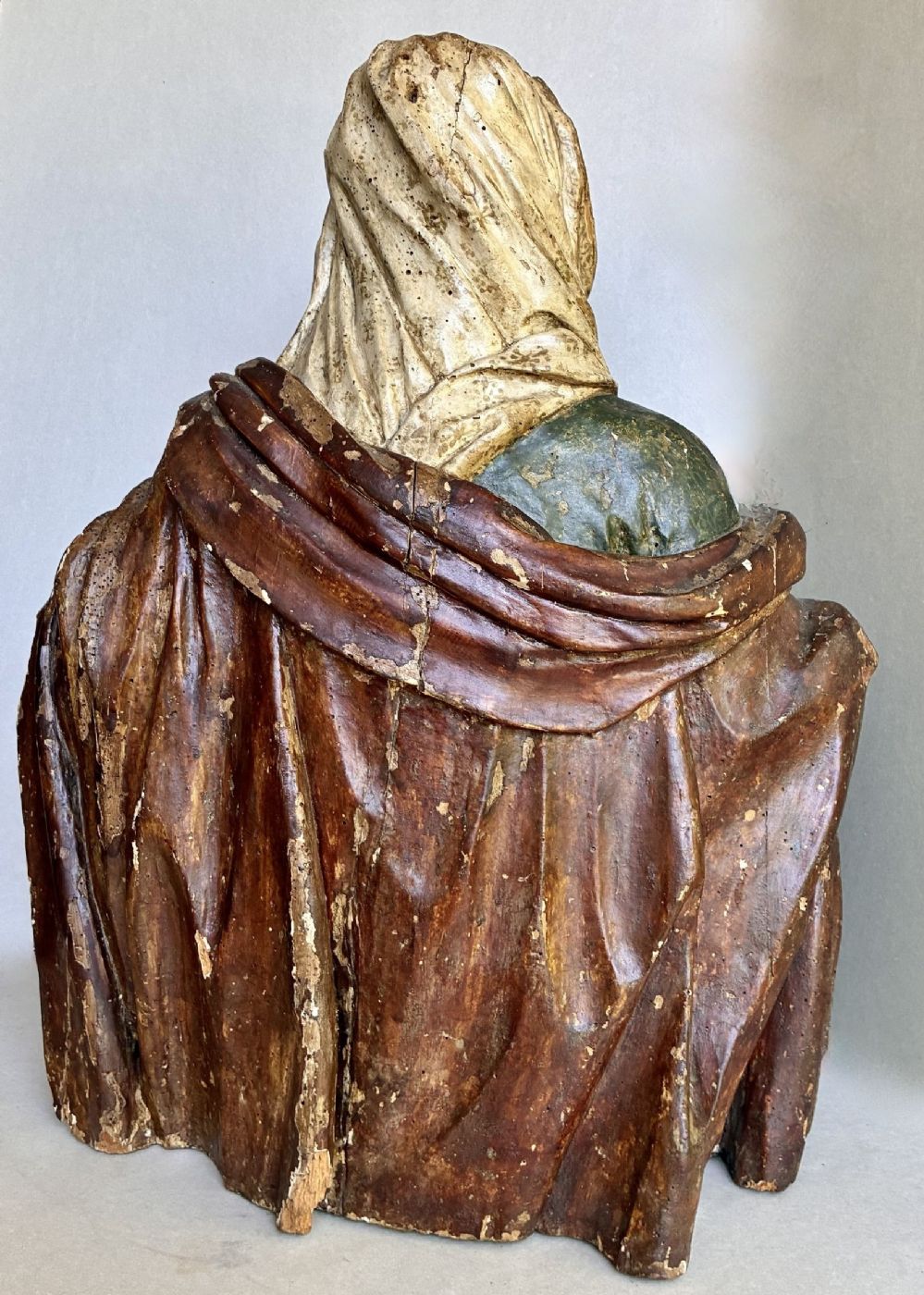
The subject, identifiable as "Grieving" in a Lamentation over the dead Christ, represents with intense expressive force one of the pious women (very likely a Mary) in an attitude of profound emotional participation; the green tunic, cinched at the waist by a sash, is surmounted by a brown mantle, while a large white veil frames the face, descending with linear drapery along the hips.
The psychological character is typical of Marigliano's poetics: the pain is not shouted but sublimated into a composed "manner," with wide-open eyes in an expression of stunned dismay and parted lips suggesting a subdued moan.
From a formal point of view, the sculpture reveals a close elective affinity with the master's mature wooden production; the most striking comparison can be seen in the Saint Catherine of Alexandria (Church of San Francesco, Padula), recently restored, with which it shares the plastic rendering of the face and the peculiar treatment of the fabrics.
The work fits perfectly within the Neapolitan classicism of the early 16th century, mediated by the teachings of Tuscan and Roman masters, of whom Giovanni da Nola was the greatest interpreter.