Late 19th century, French School
Allegory of Progress
oil on canvas, 246 x 206 cm
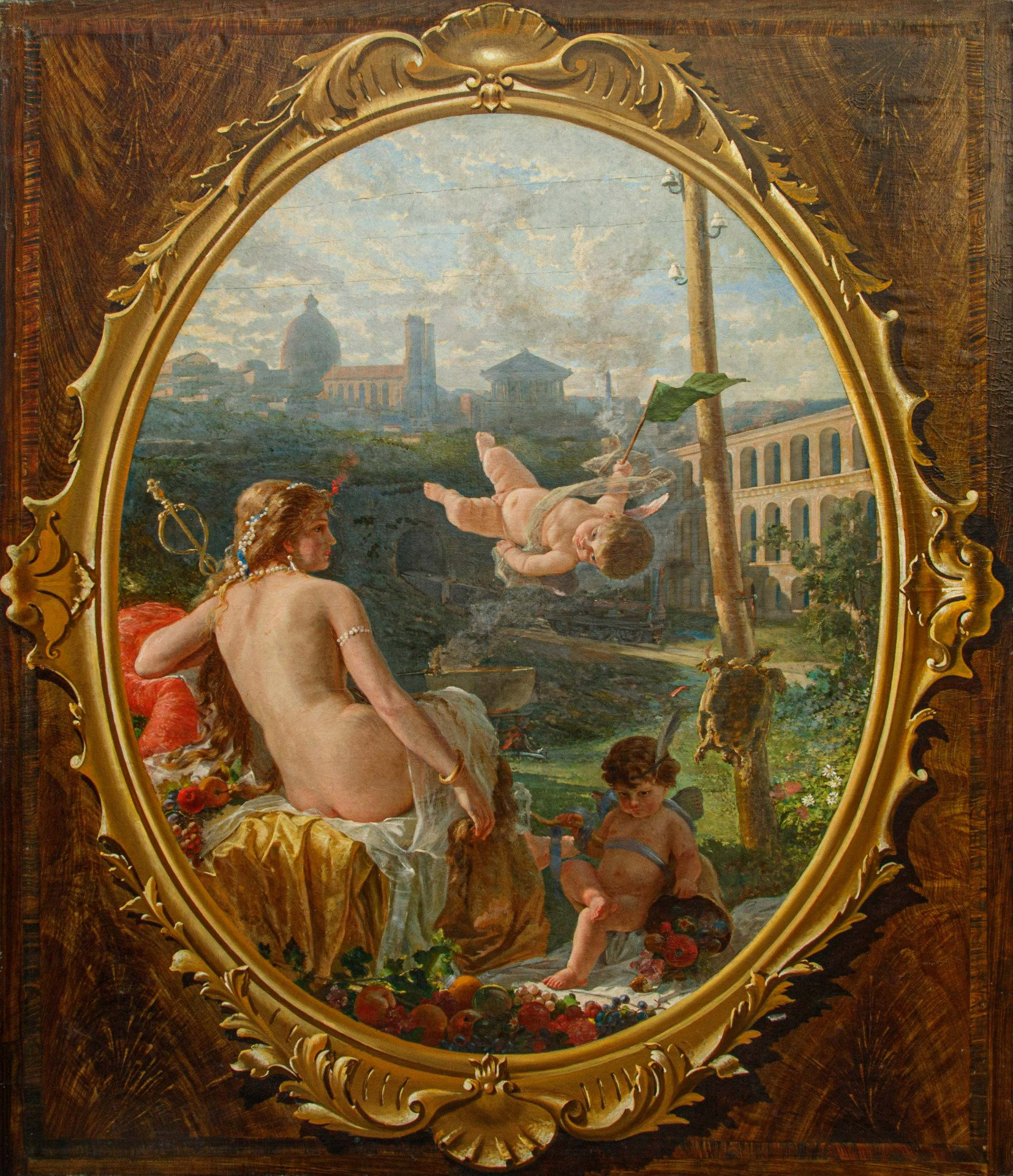
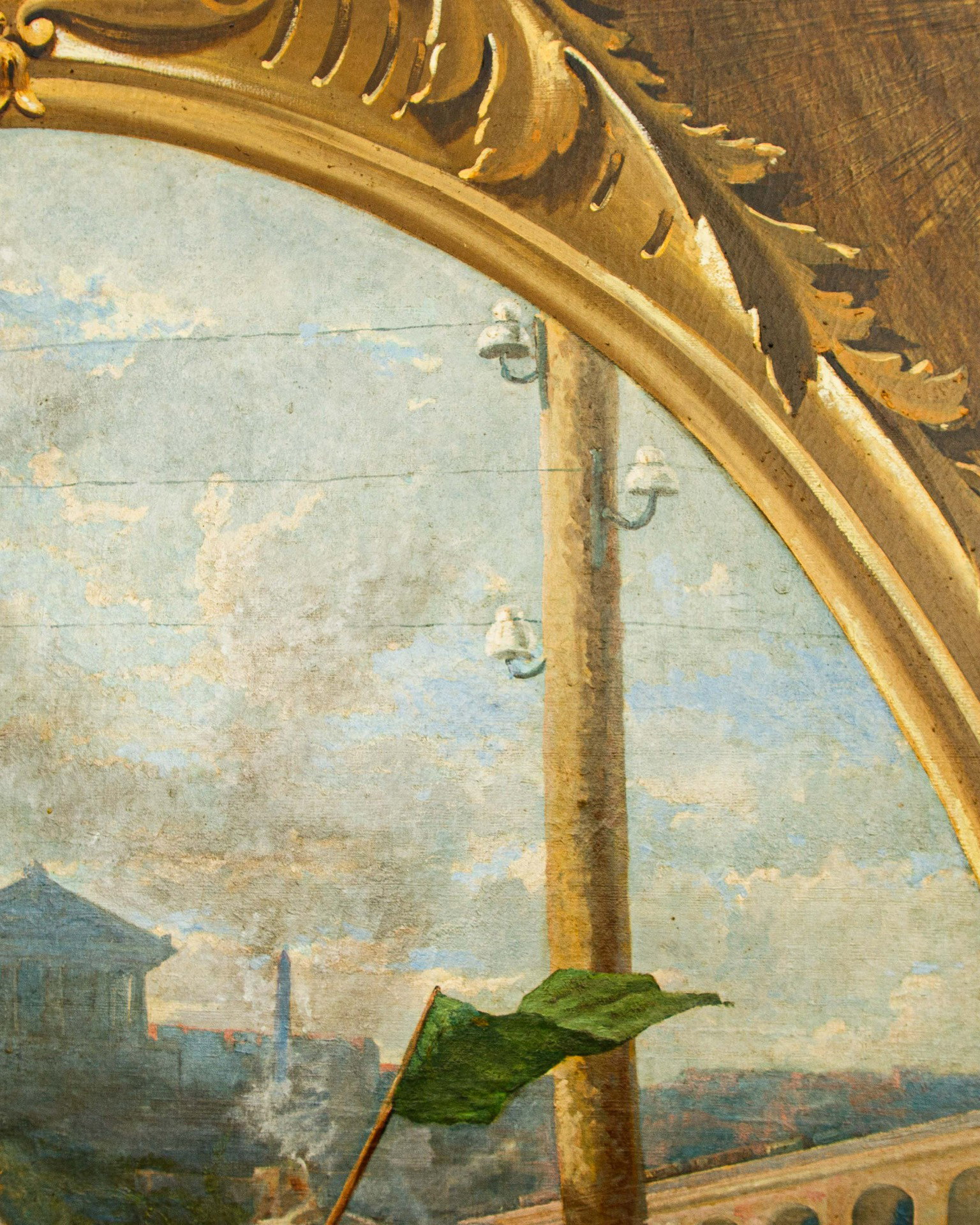
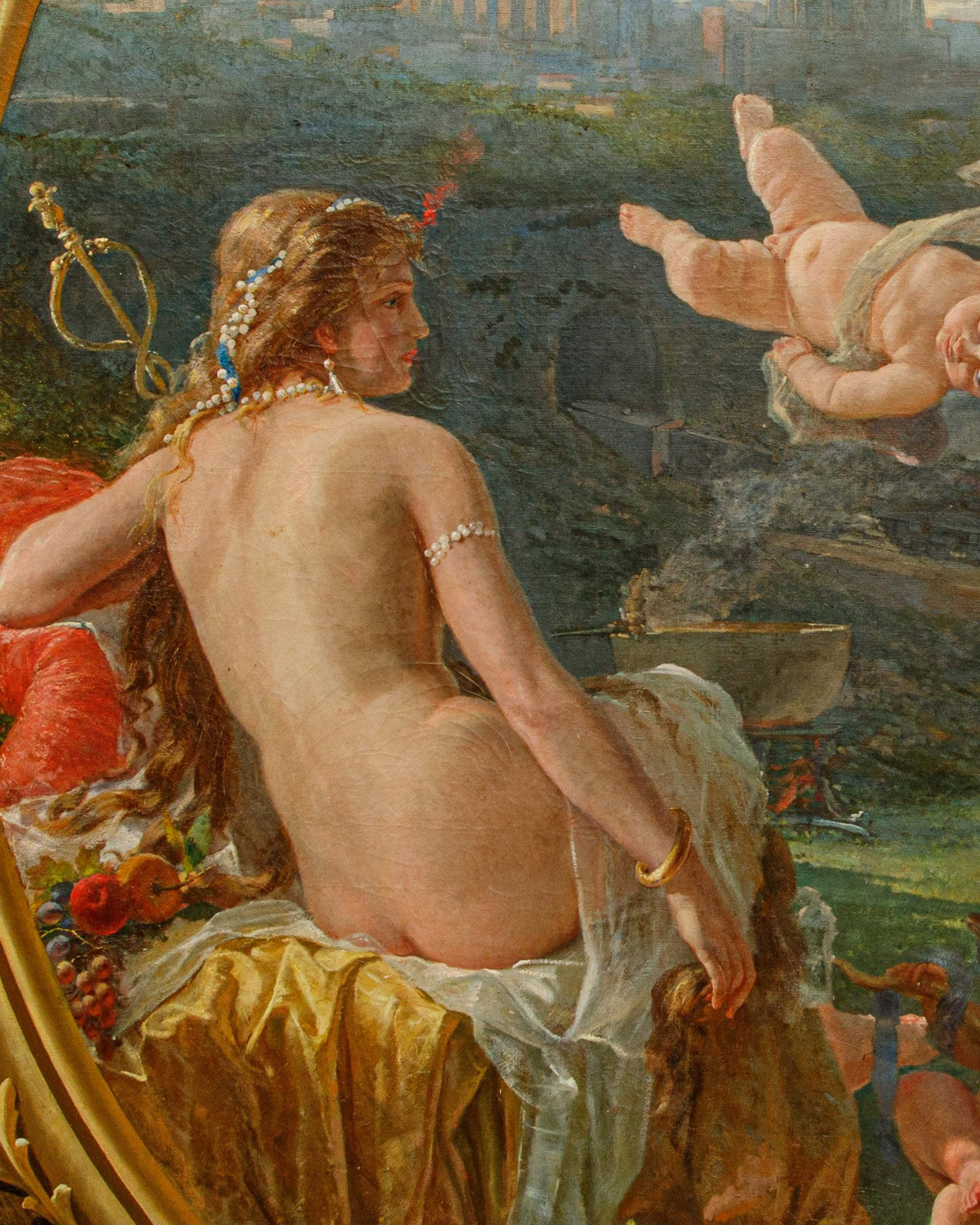
Recalibrate the text I will attach with this information: the painting (which is not a sketch for a fresco decoration, given its considerable size), was most likely created in the very early years of the 20th century, perhaps in the year 1900, when the Universal Exposition was organized in Paris, where the long-distance transmission of electric current thanks to cables/pylons (one is clearly visible on the right side of the painting's composition) was presented to the wider international public. The work presented is an ambitious allegorical composition, typical of the grand academic French decoration of the late 19th and early 20th centuries, aimed at celebrating the technological conquests and dynamism of the industrial era. The compositional structure and choice of subjects suggest a close correlation with the aesthetics of the Paris Universal Expositions, particularly those of 1889 or 1900, where the union of art and scientific progress became the central theme of public commissions.
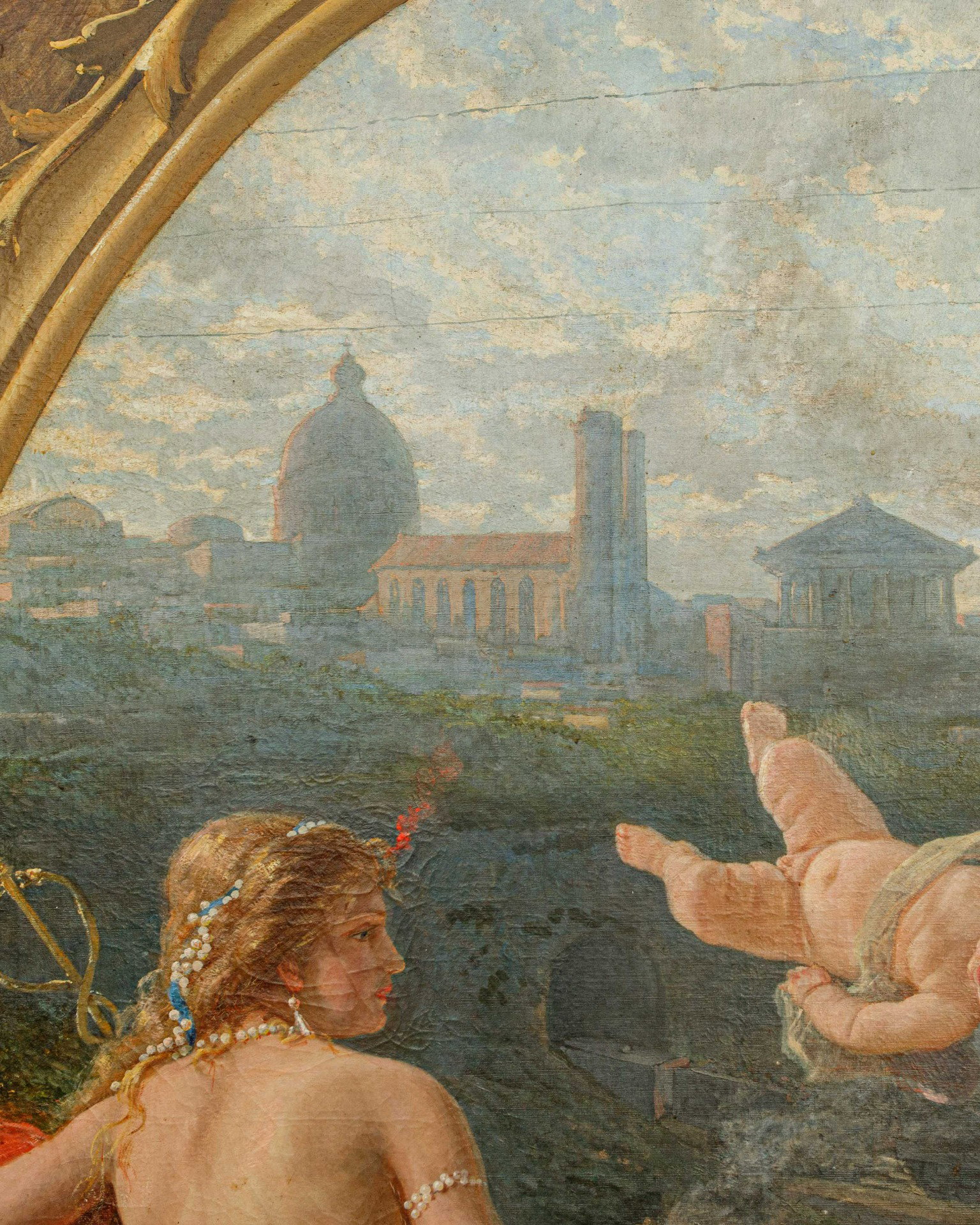
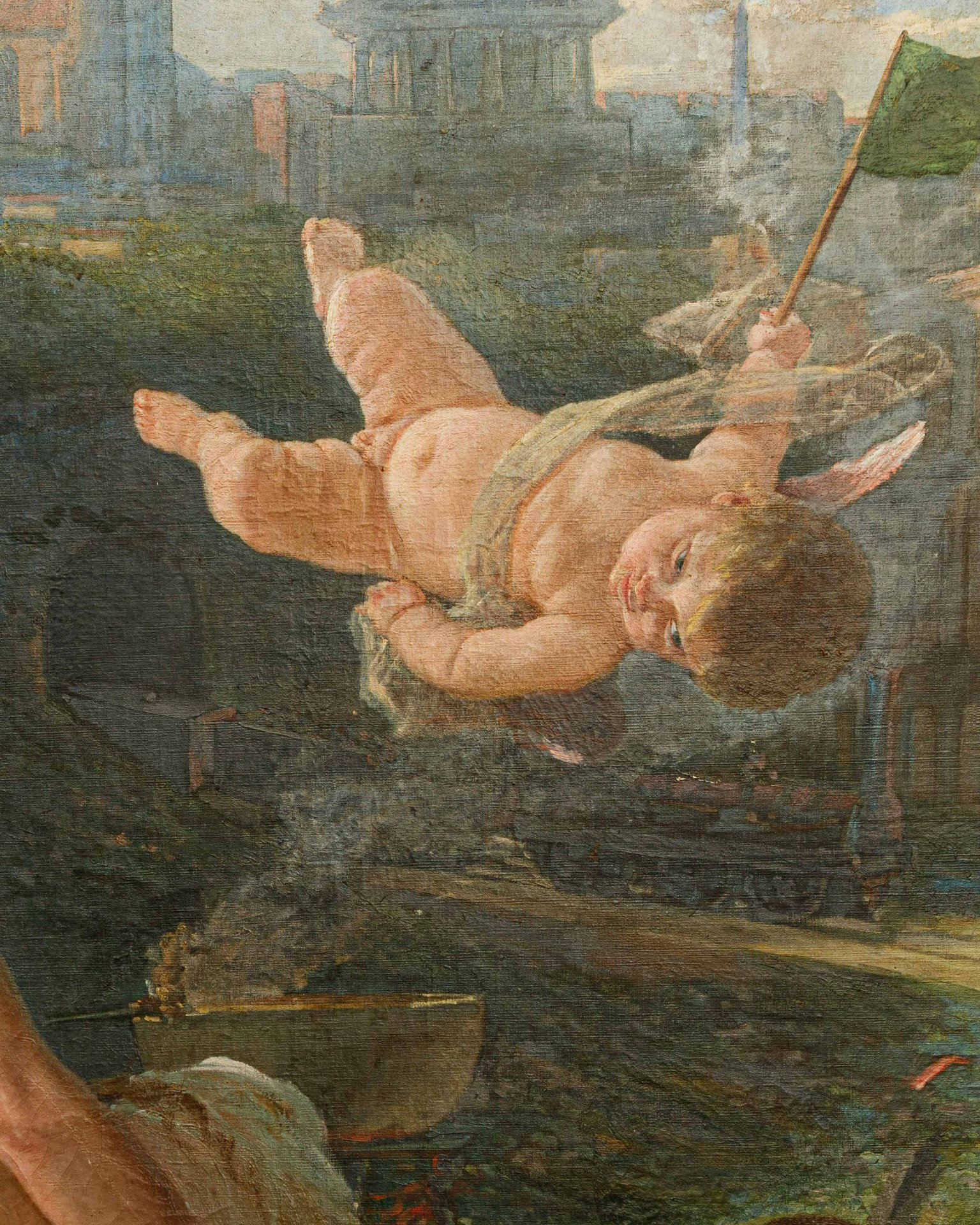
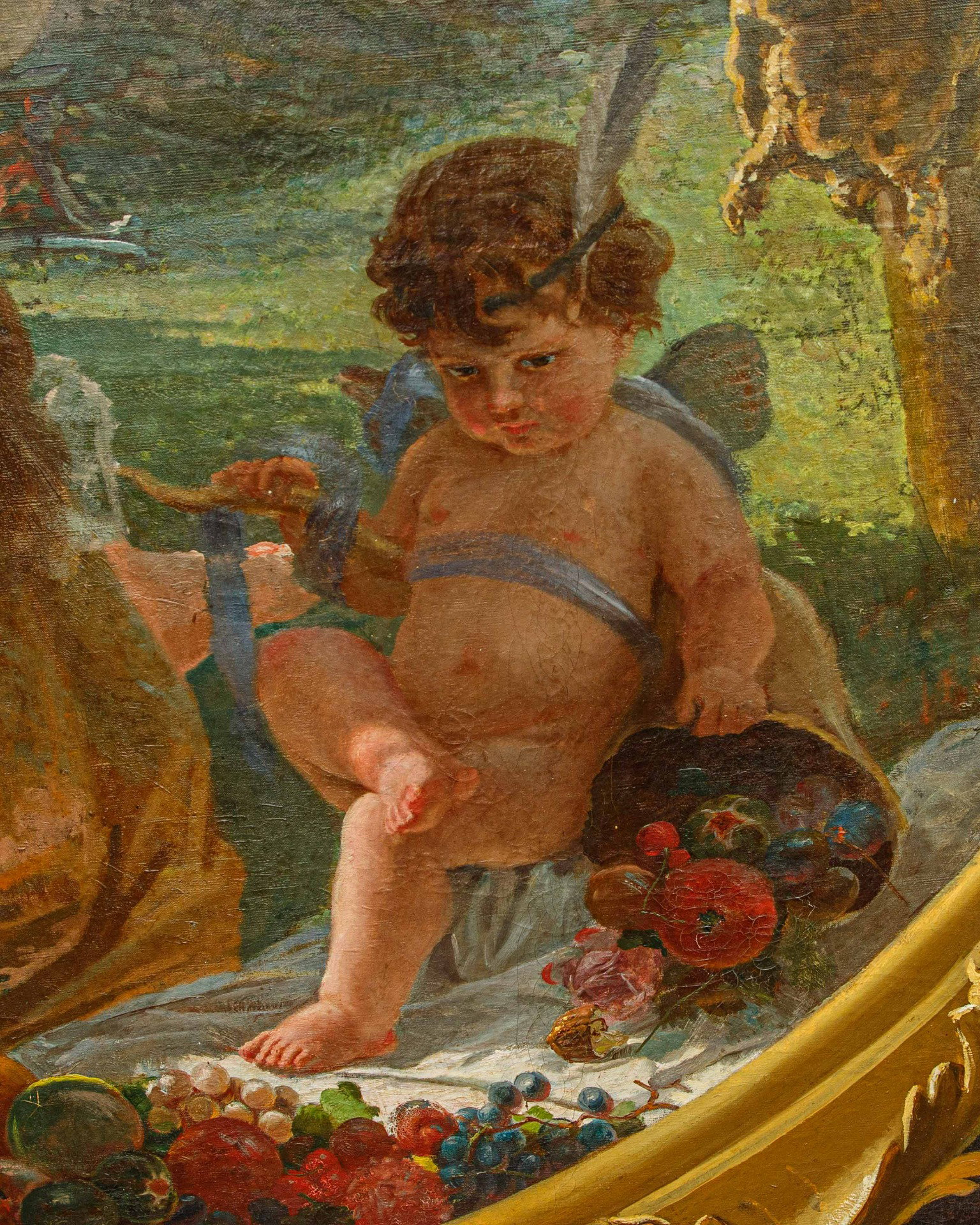
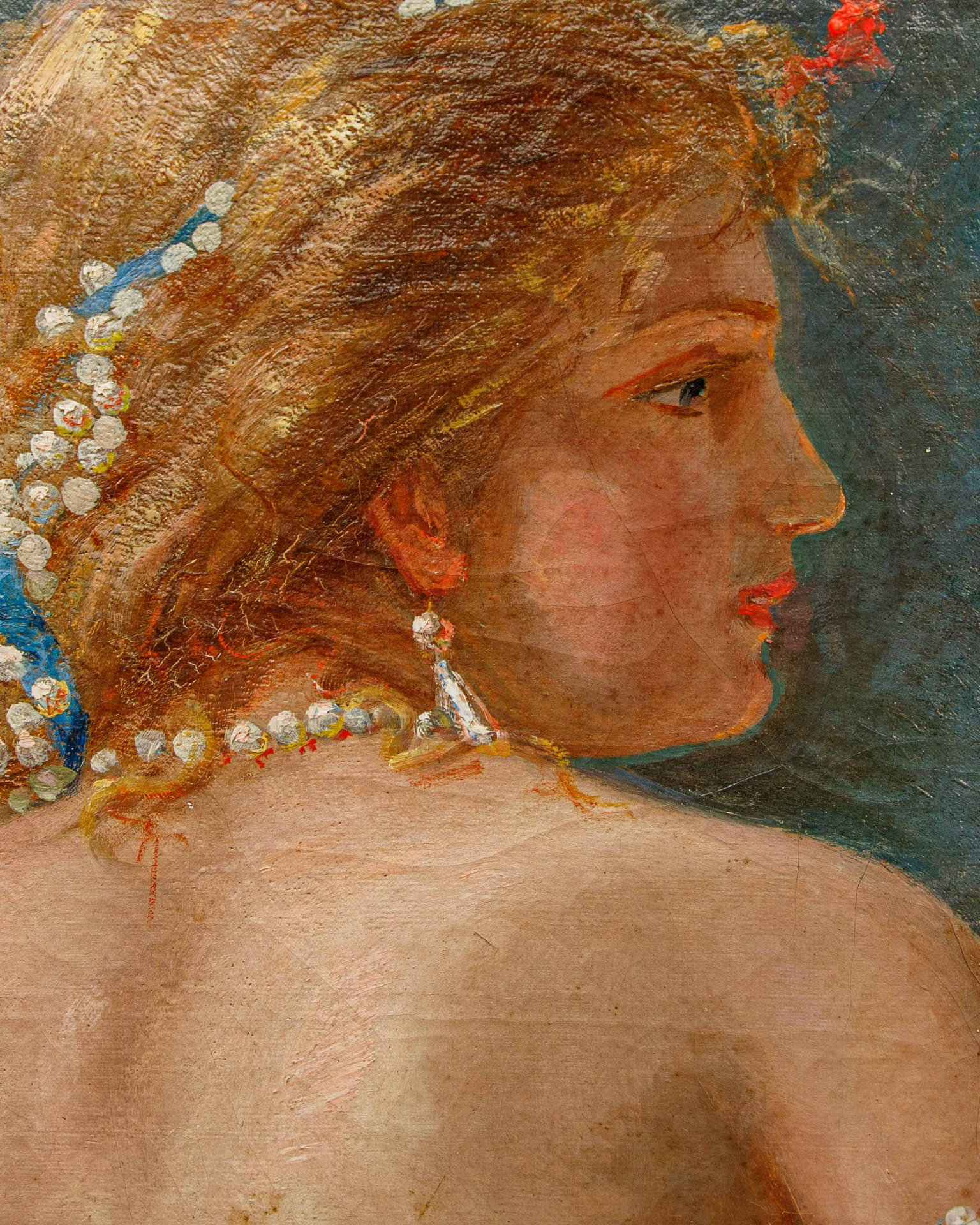
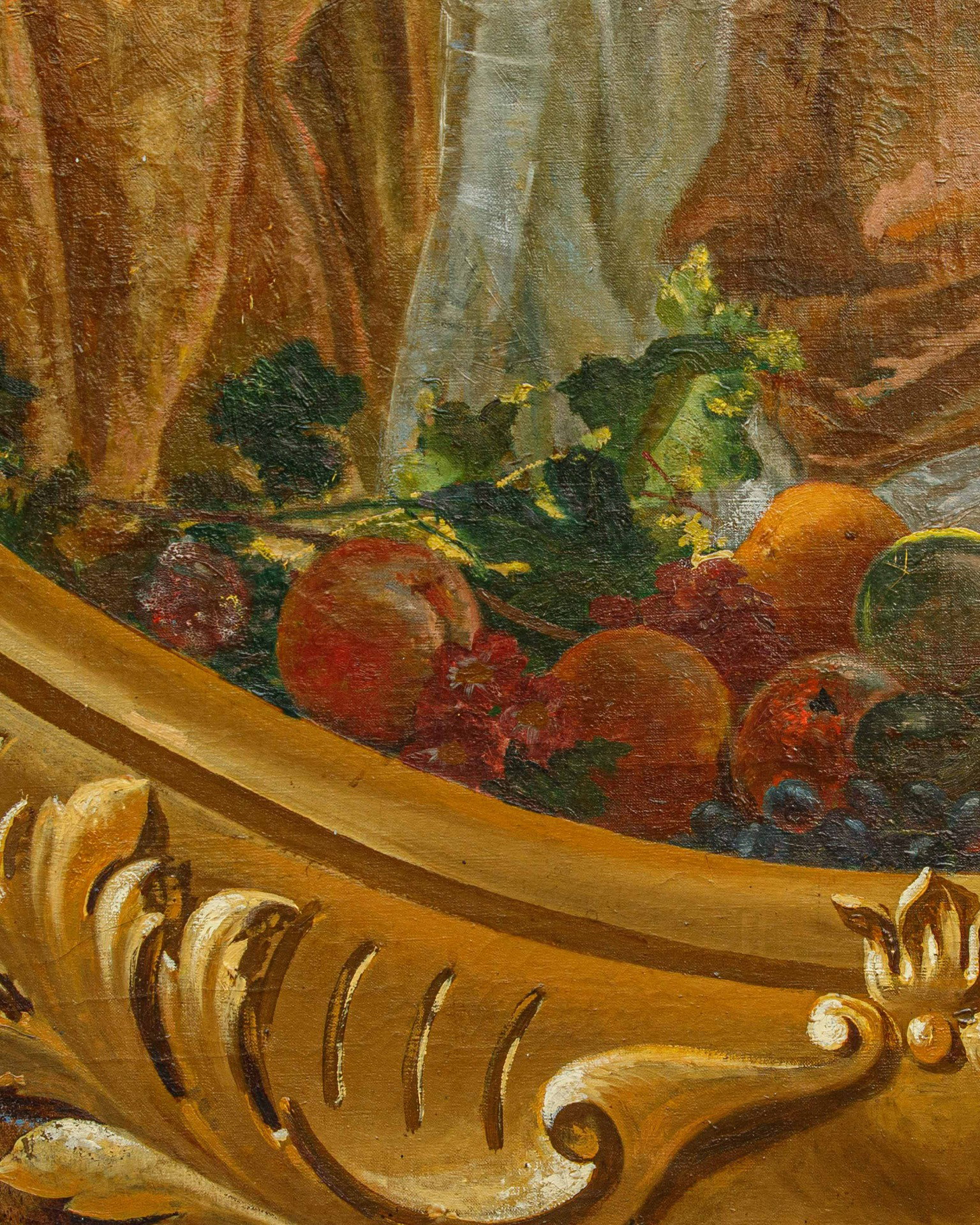
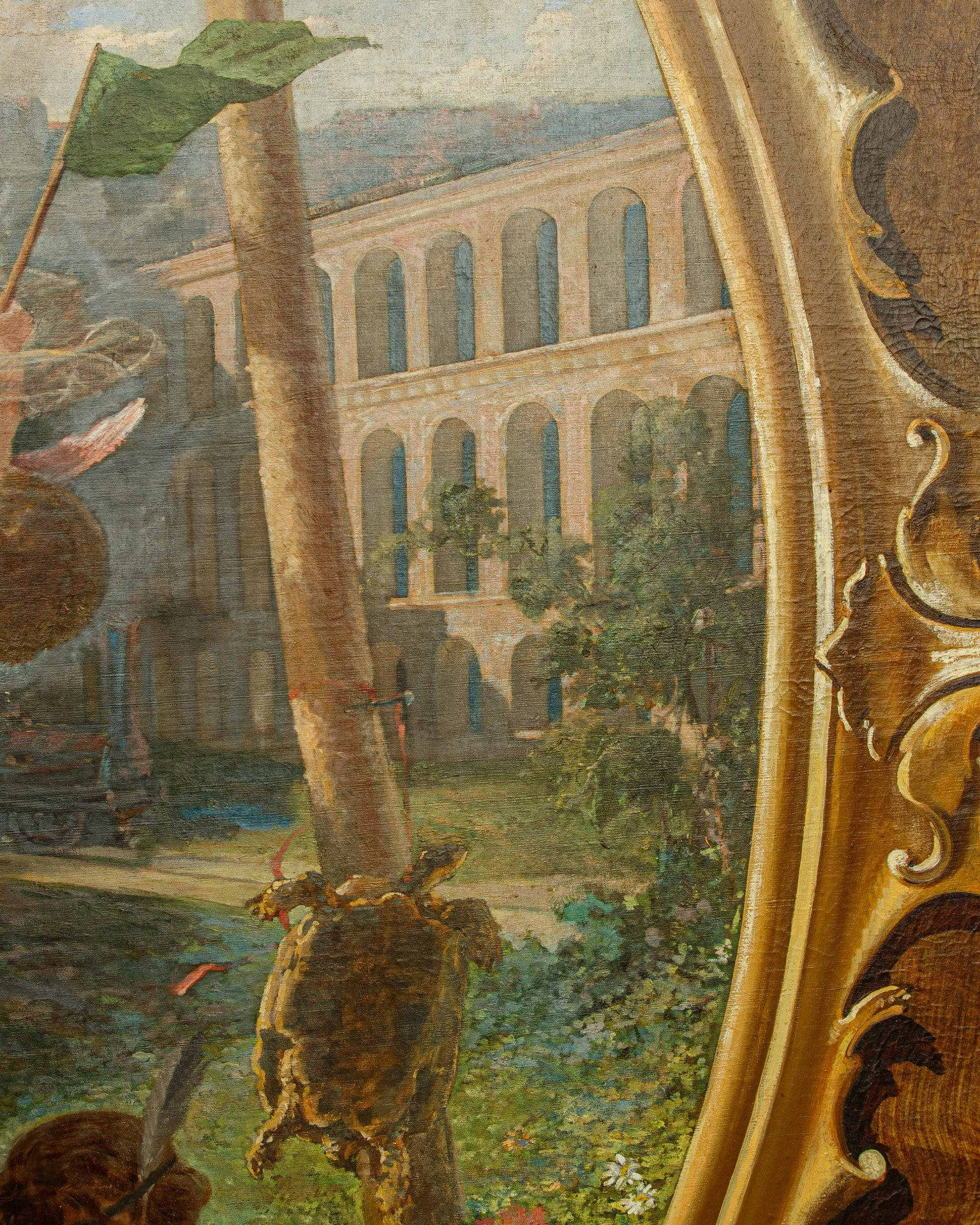
The composition intertwines the solemnity of classical myth with the aspirations of positivist modernity, staging the symbolic union between Aphrodite and Hermes. From the union of ideal beauty and industrious ingenuity arises the figure of the winged putto, who here sheds the guise of Eros to become a living emblem of the evolution of times and the vital impulse towards the future. The unusual detail of the hanging turtle, an ancient hermetic attribute, is reinterpreted here as protection for travel and a celebration of commerce, tireless engines of civilization. This epic of progress finds its monumental consecration in an ecumenical architectural background, where the towers of the Frauenkirche in Munich, the neoclassical facade of the Madeleine in Paris, and the solemn dome of St. Peter's in Rome coexist in an ideal European embrace, elevating the concept of speed and exchange to a new pillar of 19th-century universal culture.
The canvas is dominated by the central female figure, personification of Progress or Modernity, which stands out in an upward or forward-reaching motion. The flowing drapery and dynamic pose give a sense of almost futuristic speed ante litteram. Around her, the landscape is transfigured by the presence of machines: steam locomotives in full flight, smoke merging with clouds, and the first hints of electrical or telegraphic infrastructure.
The palette is bright, characterized by a contrast between the warm tones of flesh and fabrics and the metallic, cerulean, and smoky hues of the industrial background, creating an atmosphere of celebratory apotheosis.
The work serves as a bridge between classical heritage and mechanized reality. Every element is a specific attribute of the new era. The Winged or Luminous Figure represents the "Light of Intellect" that guides humanity towards the future. Often, in this period, this figure embodies Electricity, considered the vital force that would transform the 20th century. The Locomotive becomes the quintessential symbol of speed and the contraction of space-time. Its presence transforms the bucolic landscape into a "kinetic" landscape.
The grace of the female figure juxtaposed with the brute power of iron symbolizes the harmony that the Third French Republic sought to promote between aesthetics and industry: it is the union of Art and Technique. The painting aligns with Academic Naturalism or Institutional Symbolism. It is likely a sketch or a reduction for a mural decoration intended for an Exposition pavilion or a public building, such as a train station or a ministry.
The work is a precious testament to late-century Positivism. It does not merely portray a machine but seeks to deify the very concept of progress, elevating the train and industry to the rank of new myths of the modern era. The quality of the chiaroscuro and the management of volumes suggest an author of solid academic training, capable of infusing "solemnity" into subjects of a technical and mechanical nature.