Denys Calvaert (known as Dionisio Fiammingo, 1540, Antwerp – 1619, Bologna), workshop of
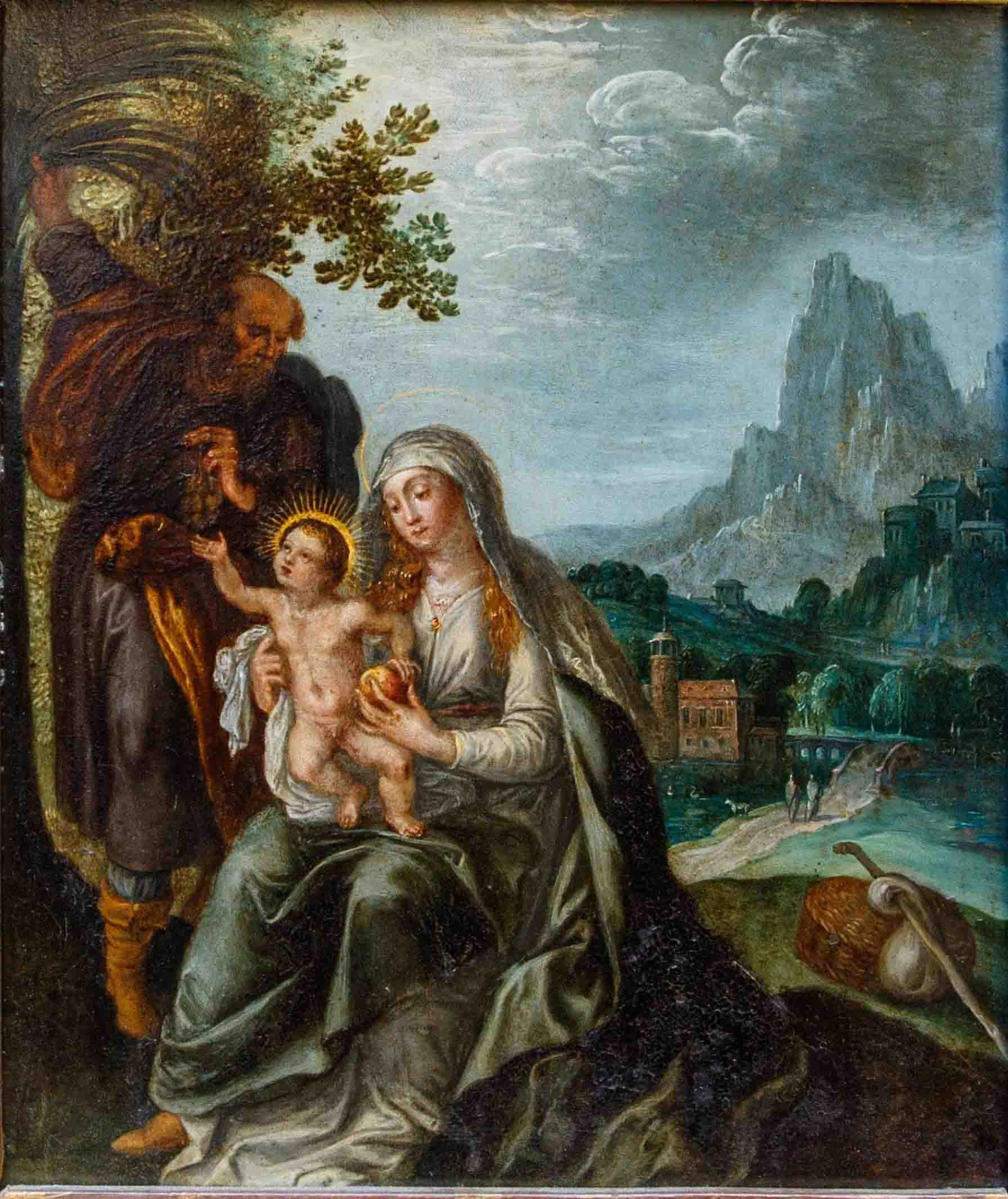
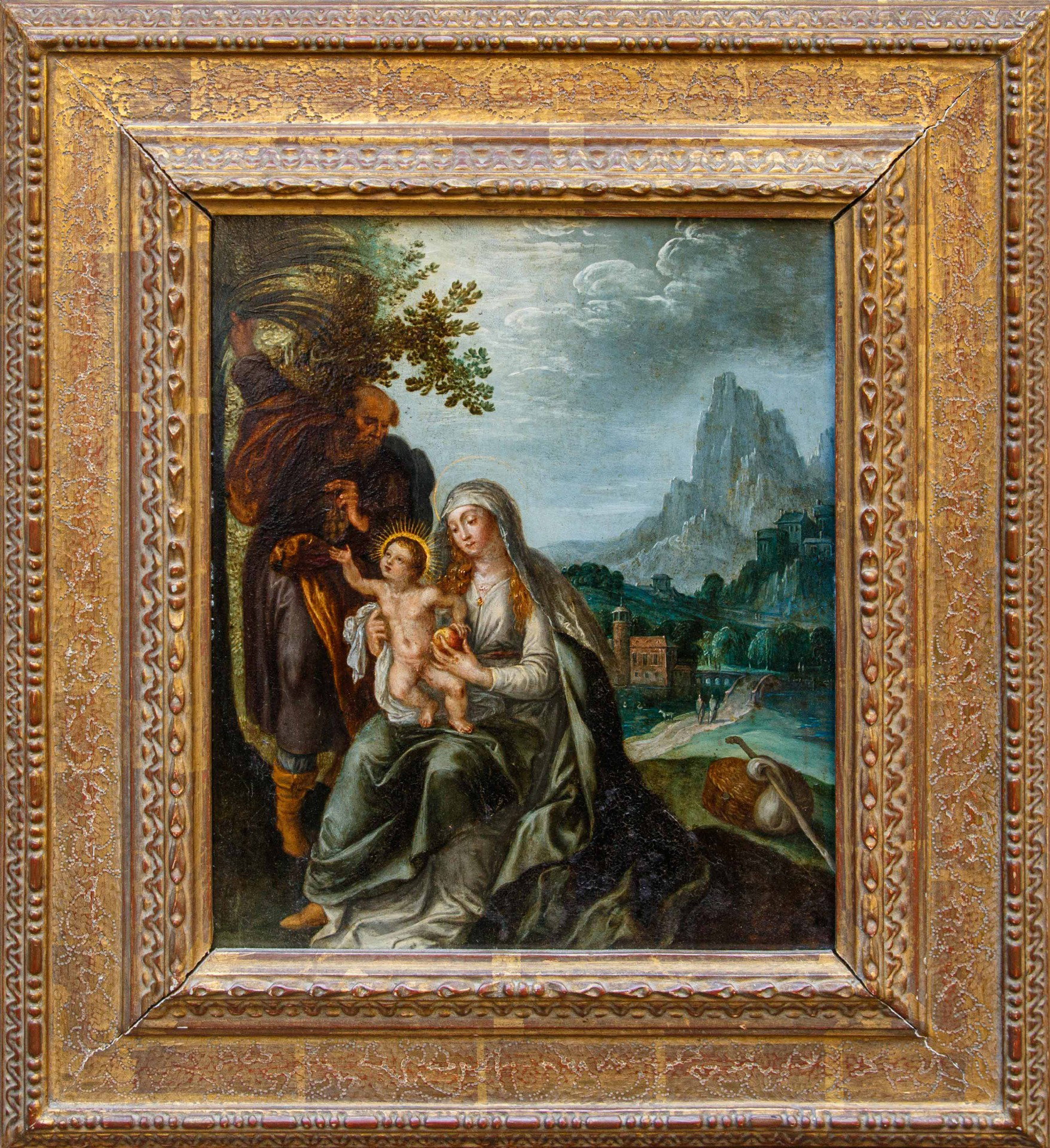
Holy Family
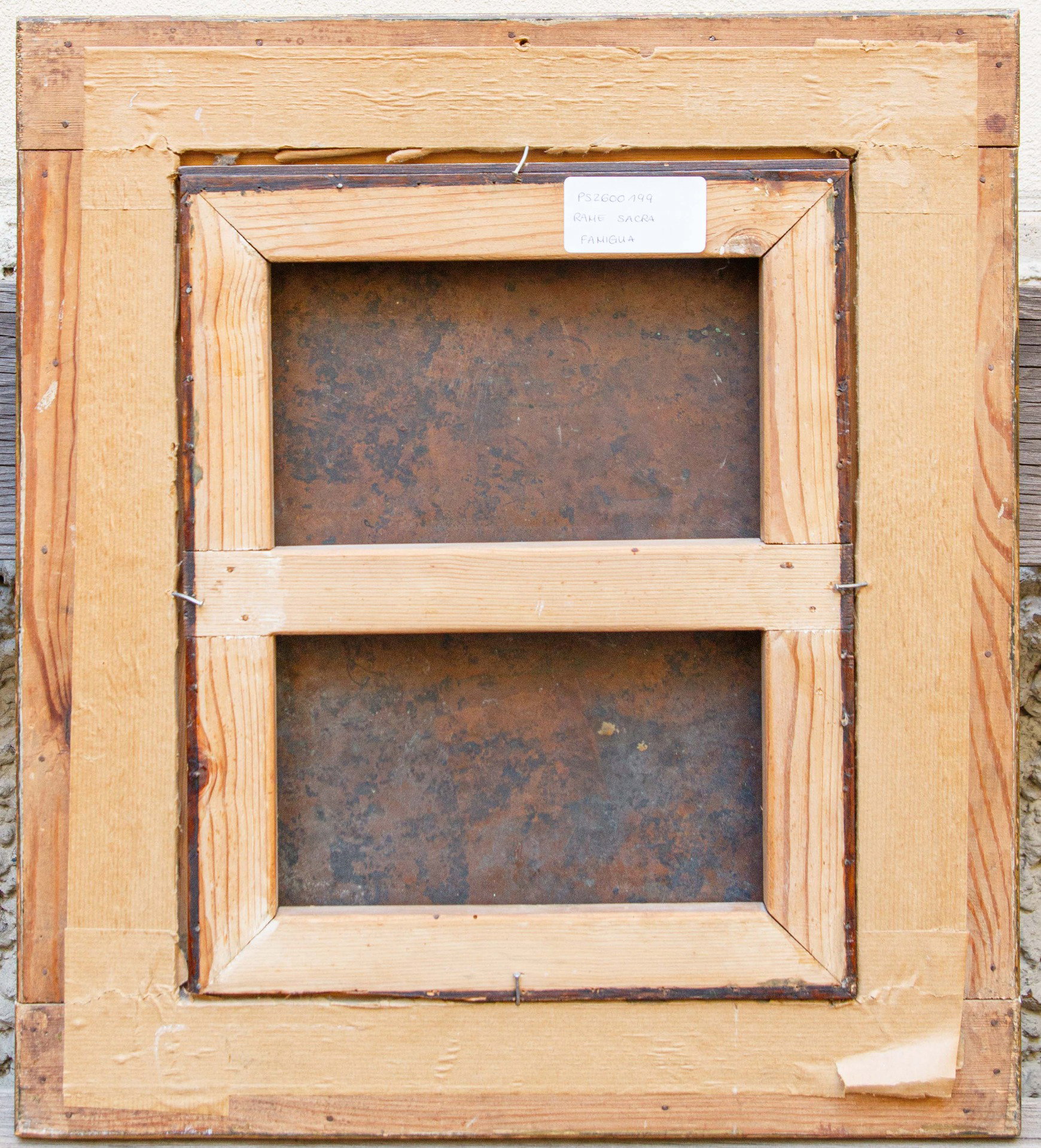
Oil on copper, 38 x 30 cm, Frame 51 x 45.5 cm
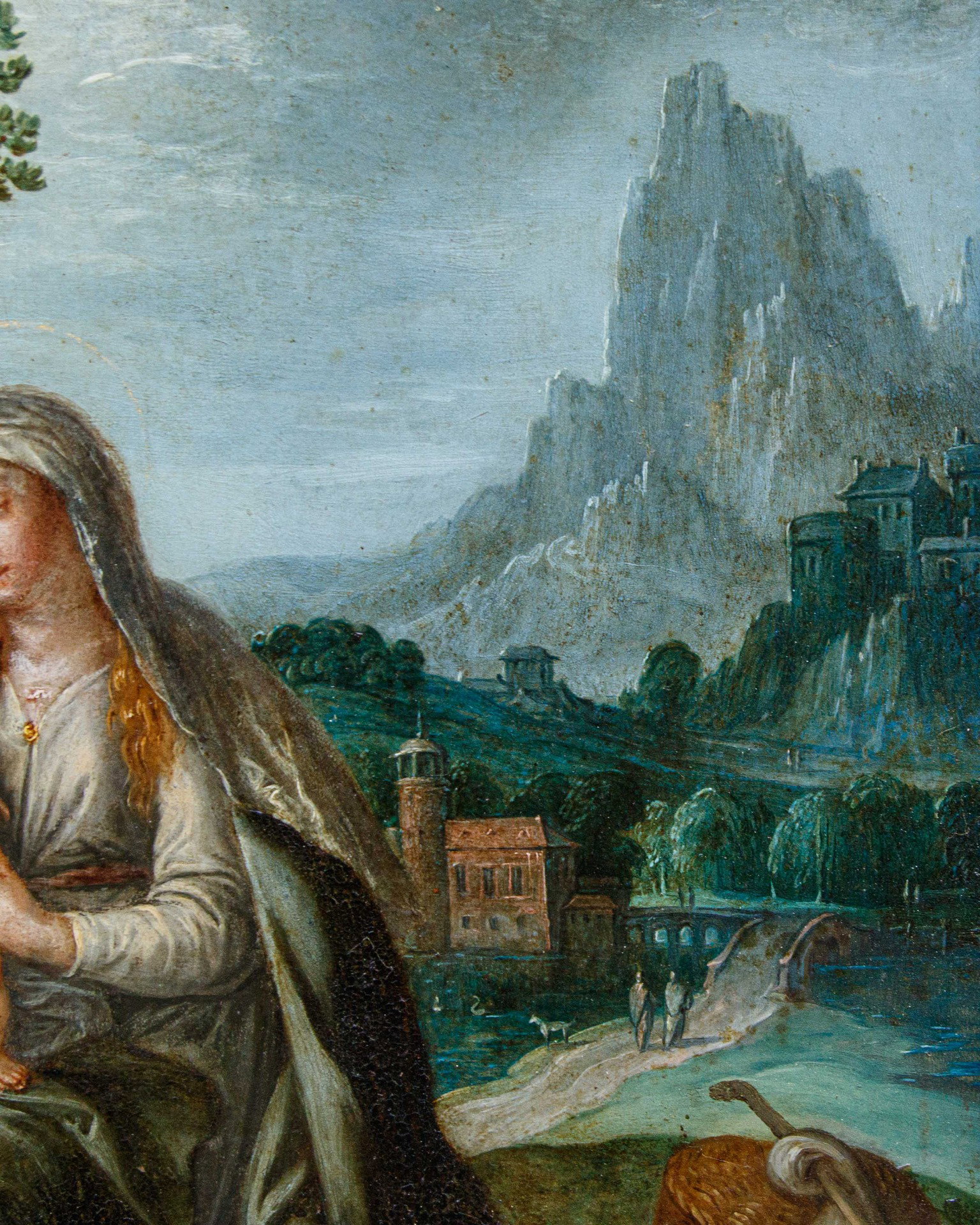
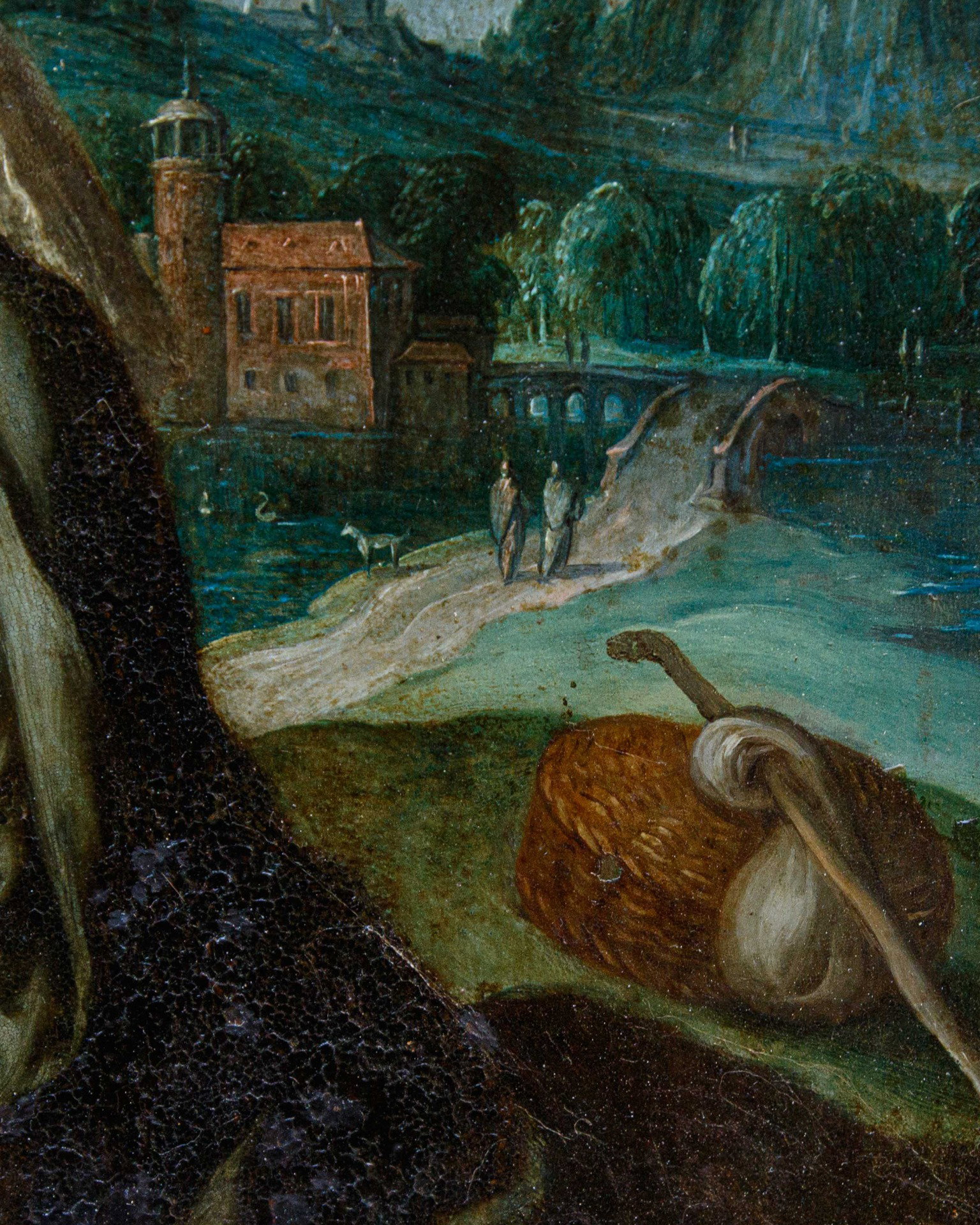
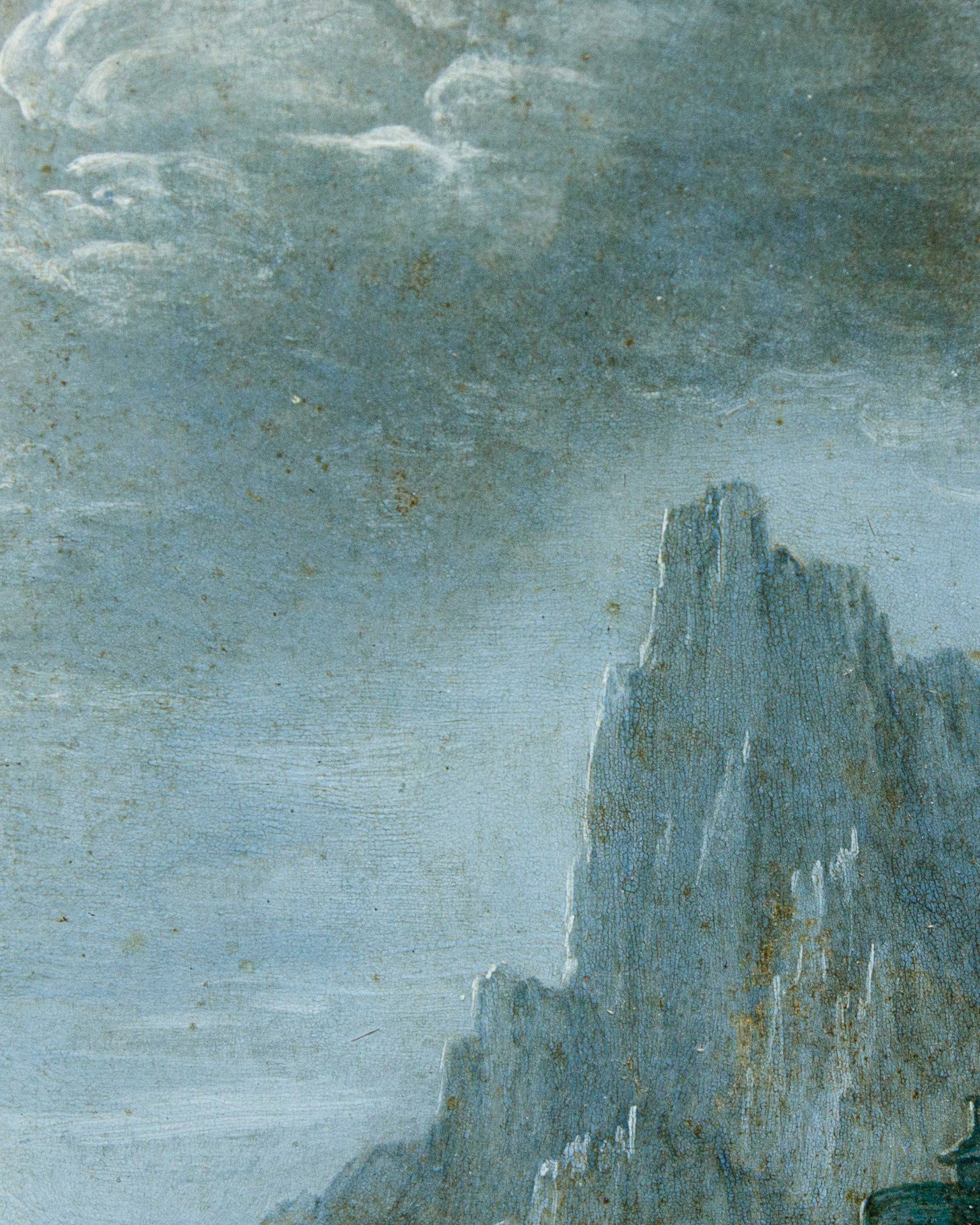
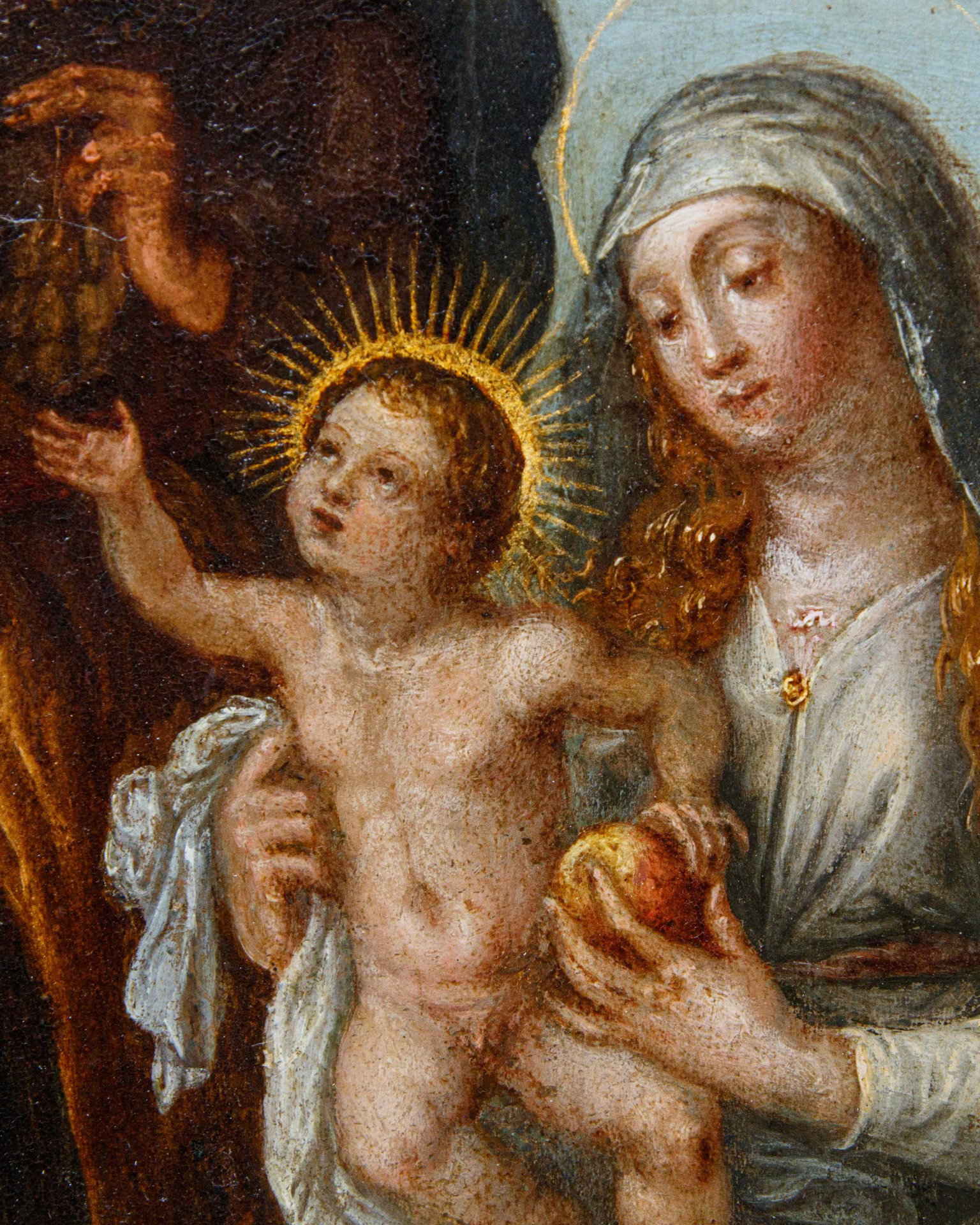
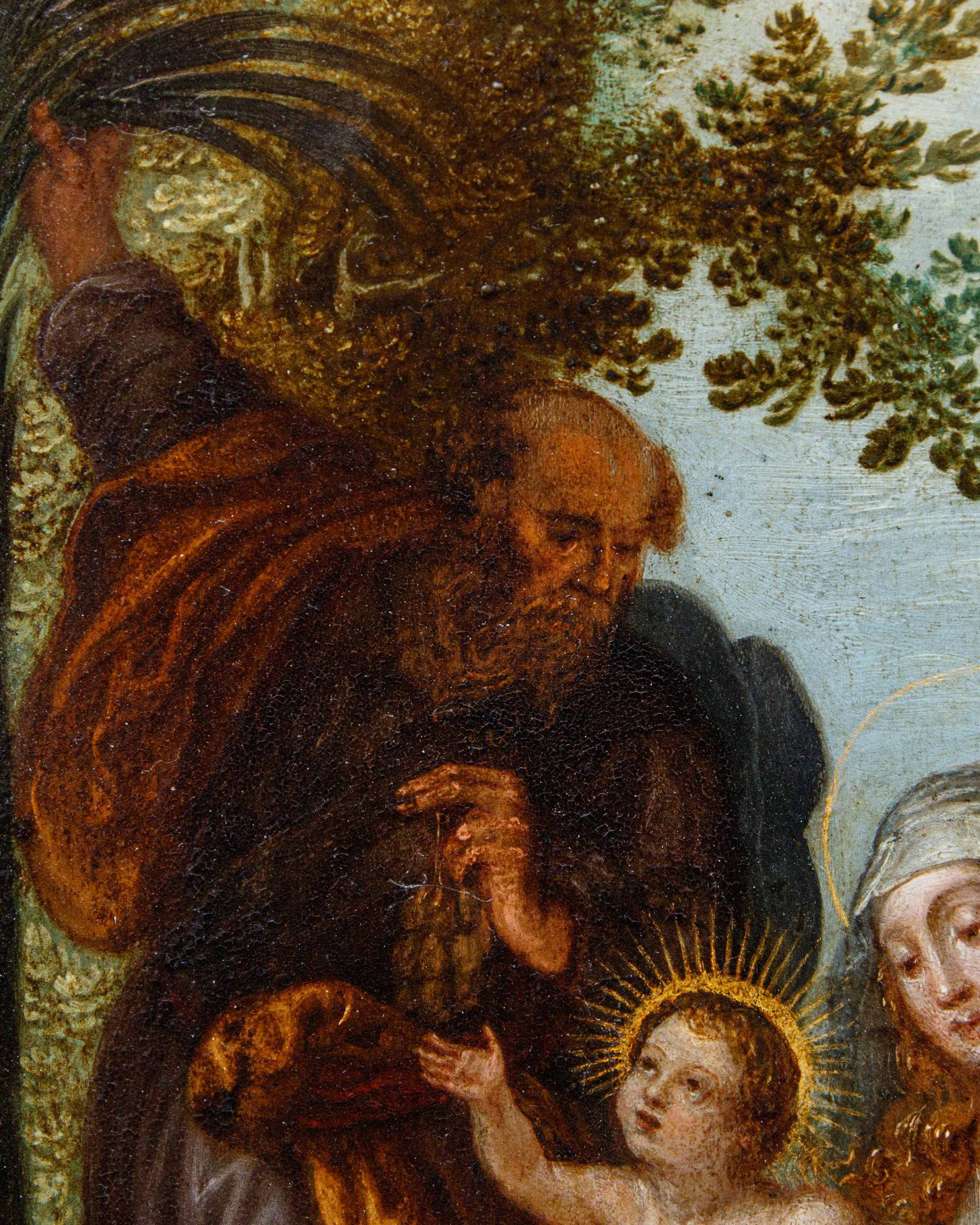
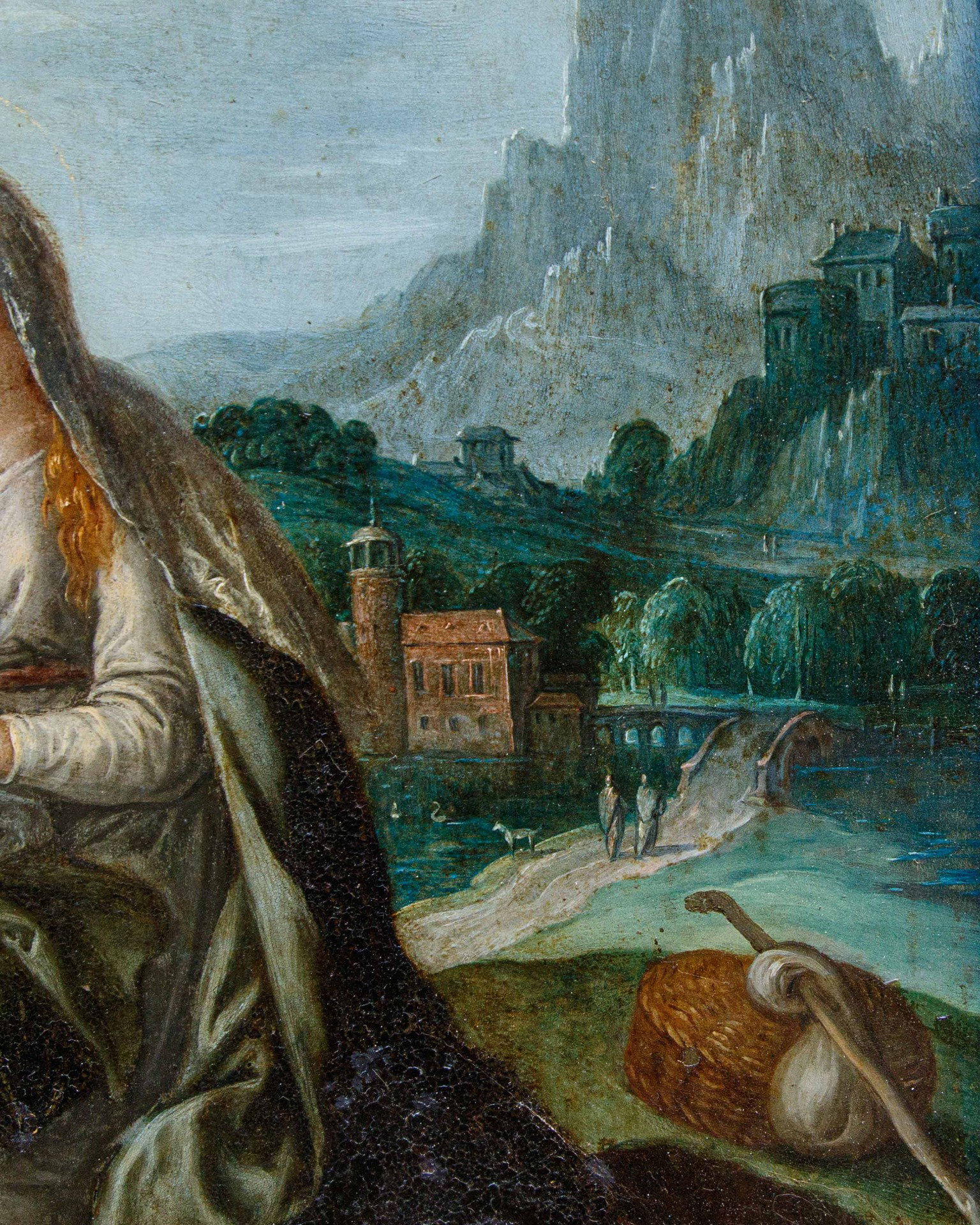
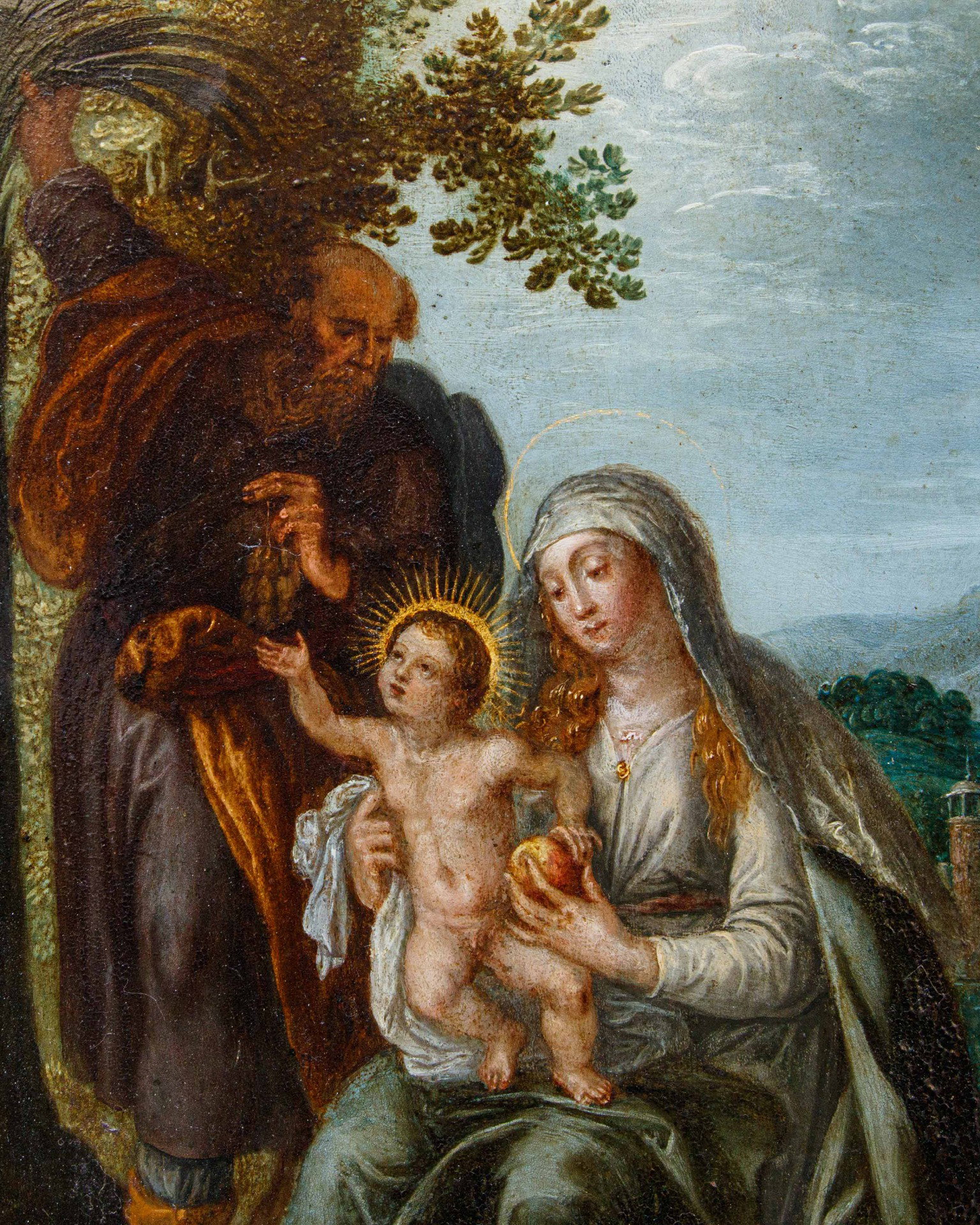
This work transports us to the heart of that fertile artistic "middle ground" that was late 16th-century Bologna, a crossroads where northern rigor met Mediterranean grace. The painting, attributable to the workshop of Denys Calvaert (also known as Dionisio Fiammingo), depicts a moment of intimate sacredness: the Rest on the Flight into Egypt. Denys Calvaert (Antwerp, circa 1540 – Bologna, 1619) is a pivotal figure in the history of Italian art. Initially trained as a landscape painter in his native Antwerp, he moved to Bologna around the age of twenty, entering the workshops of Prospero Fontana and Lorenzo Sabatini. Calvaert deserves extraordinary credit for founding one of the first and most prestigious painting academies in Bologna, where giants such as Guido Reni, Domenichino, and Francesco Albani were trained before they moved into the orbit of the Carracci. His biography is that of a tireless mediator: he brought to Italy the Flemish love for analytical detail and atmospheric landscape, merging it with the study of Raphael and, above all, with the soft chromaticism of Correggio. In this composition, the hand of the workshop re-proposes the master's favorite stylistic elements with an almost theatrical sensibility. The Virgin, whose face reveals a sweetness clearly inspired by Correggio's lesson, holds a lively, well-formed Child, who reaches out his hand towards an apple. This detail is not purely anecdotal: the fruit, a symbol of original sin, is here accepted by Christ as a sign of his future redemptive mission. Behind them, a shadowy Saint Joseph watches the scene with a trepidatious expression, almost underscoring his role as guardian of the divine mystery. What makes the painting a typical product of Calvaert's universe is the extraordinary background landscape. While the human figures speak the language of Italian Mannerism—with their elegant poses and iridescent drapery—the natural setting is a tribute to the artist's homeland. The rocky peaks, the perched castle, and the aerial view fading into shades of blue directly recall the tradition of Joachim Patinir and the Antwerp landscapists. It is a "constructed," fantastic landscape that serves to give a universal scope to the biblical episode. For a direct comparison, one can look at the Holy Family with the Young Saint John and Saint Elizabeth in the Pinacoteca Nazionale di Bologna or at the numerous versions of the Madonna and Child preserved in private collections, where Calvaert repeats this compositional scheme: monumental yet graceful figures in the foreground, immersed in a vibrant nature. Compared to the almost sculptural composure that Guido Reni would impose on his subjects, here we still sense a late-Mannerist "frenzy," an almost miniature-like attention to objects—such as the basket and the traveler's staff in the lower right—that lends to the sacred a domestic and tangible flavor. The work is therefore a perfect example of how Calvaert's workshop was able to produce images capable of speaking both to the hearts of the faithful and to the refined taste of Bolognese collectors of the time.