18th Century, Chest with hunting scenes
Description:
18th Century
Chest with hunting scenes
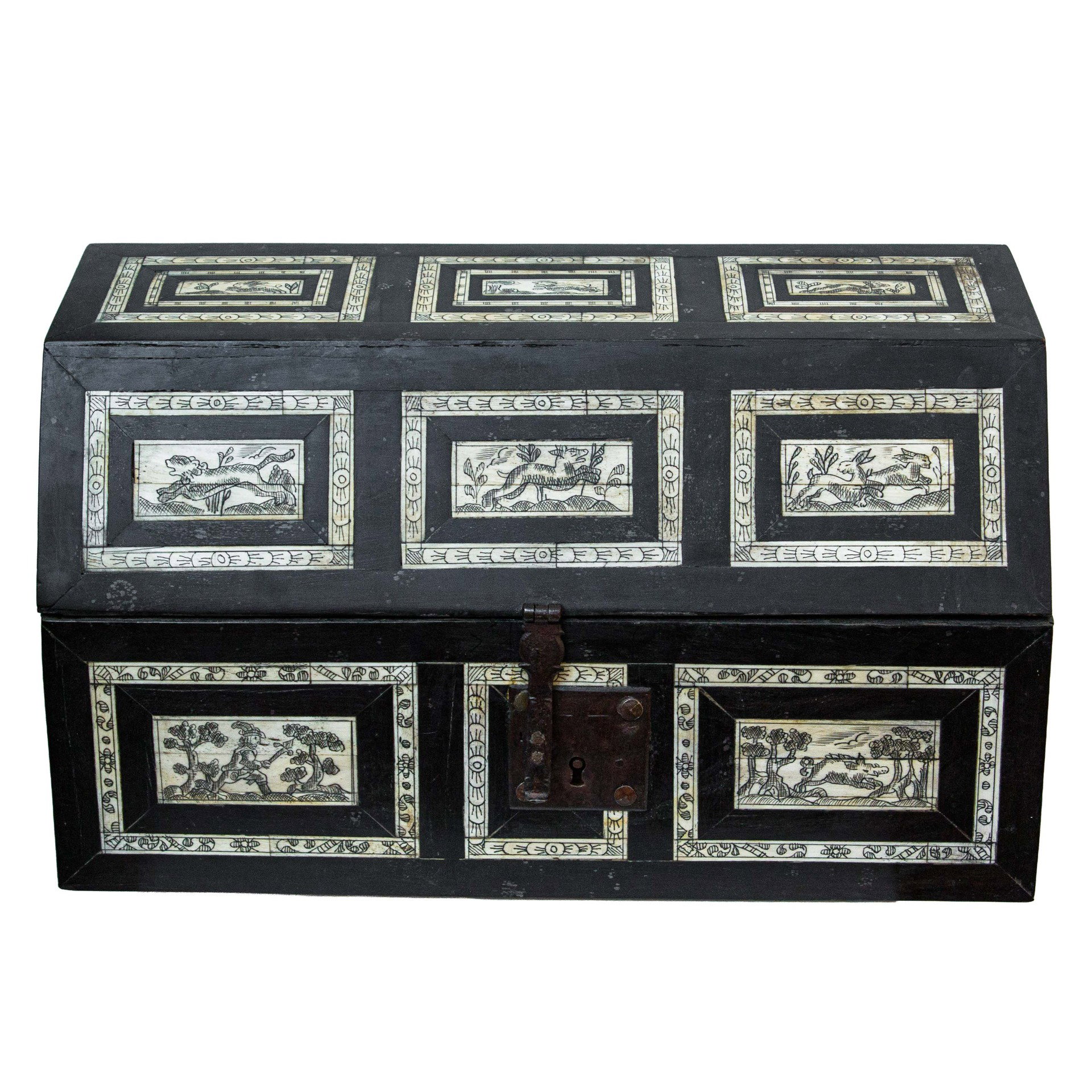
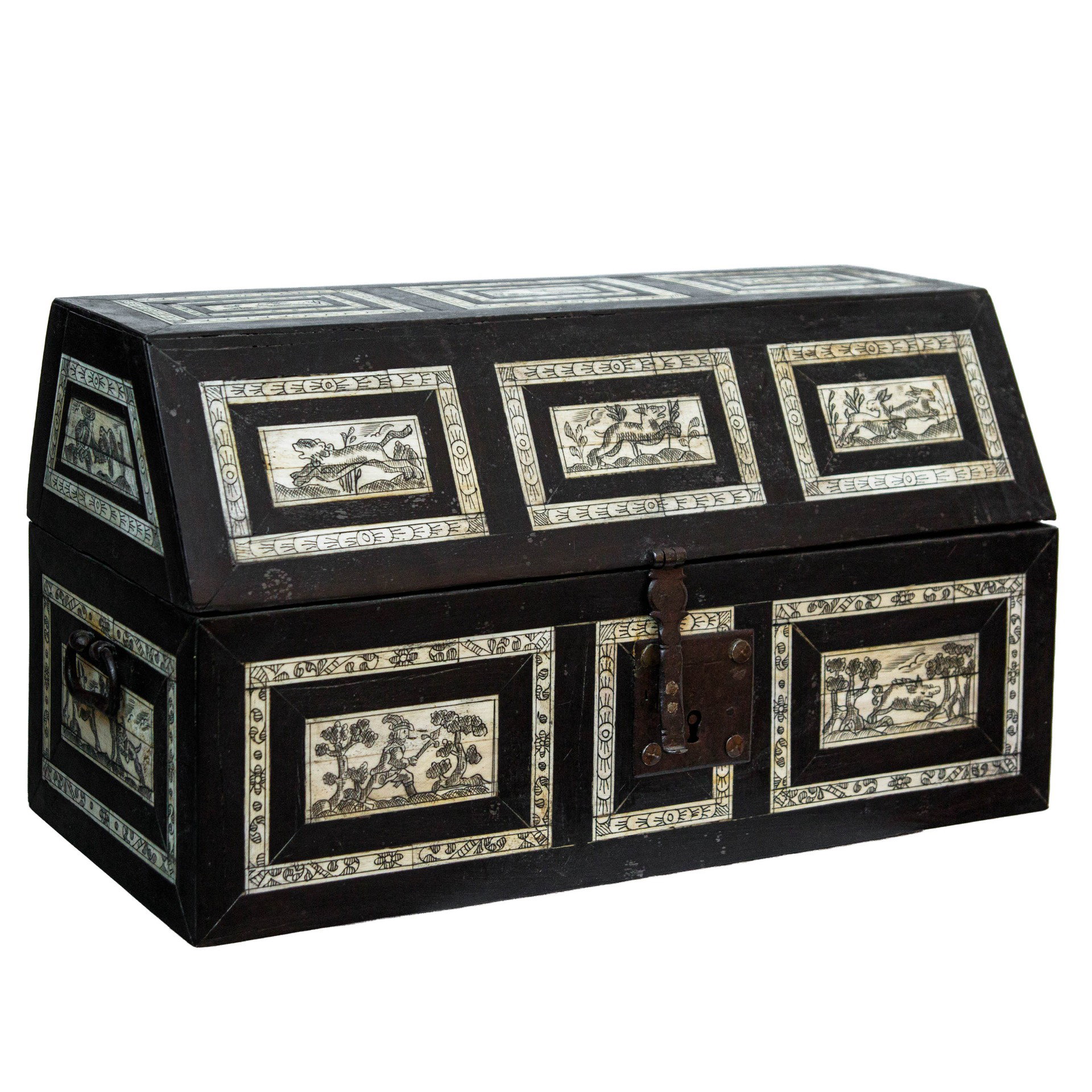
Ebonized wood inlaid with pyro-engraved bone plaques, cm 25 x 43 x 21
The work is accompanied by CITES certification
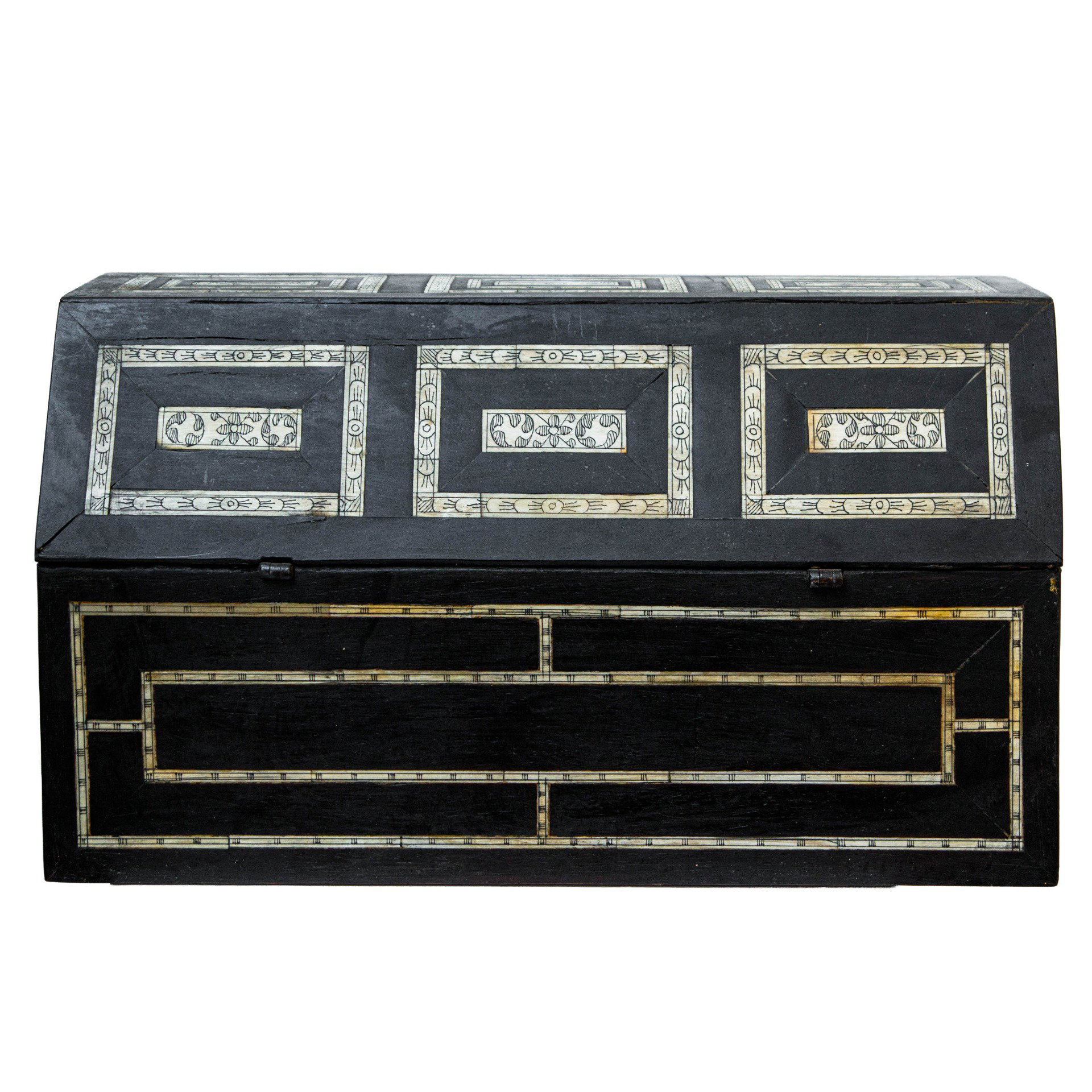
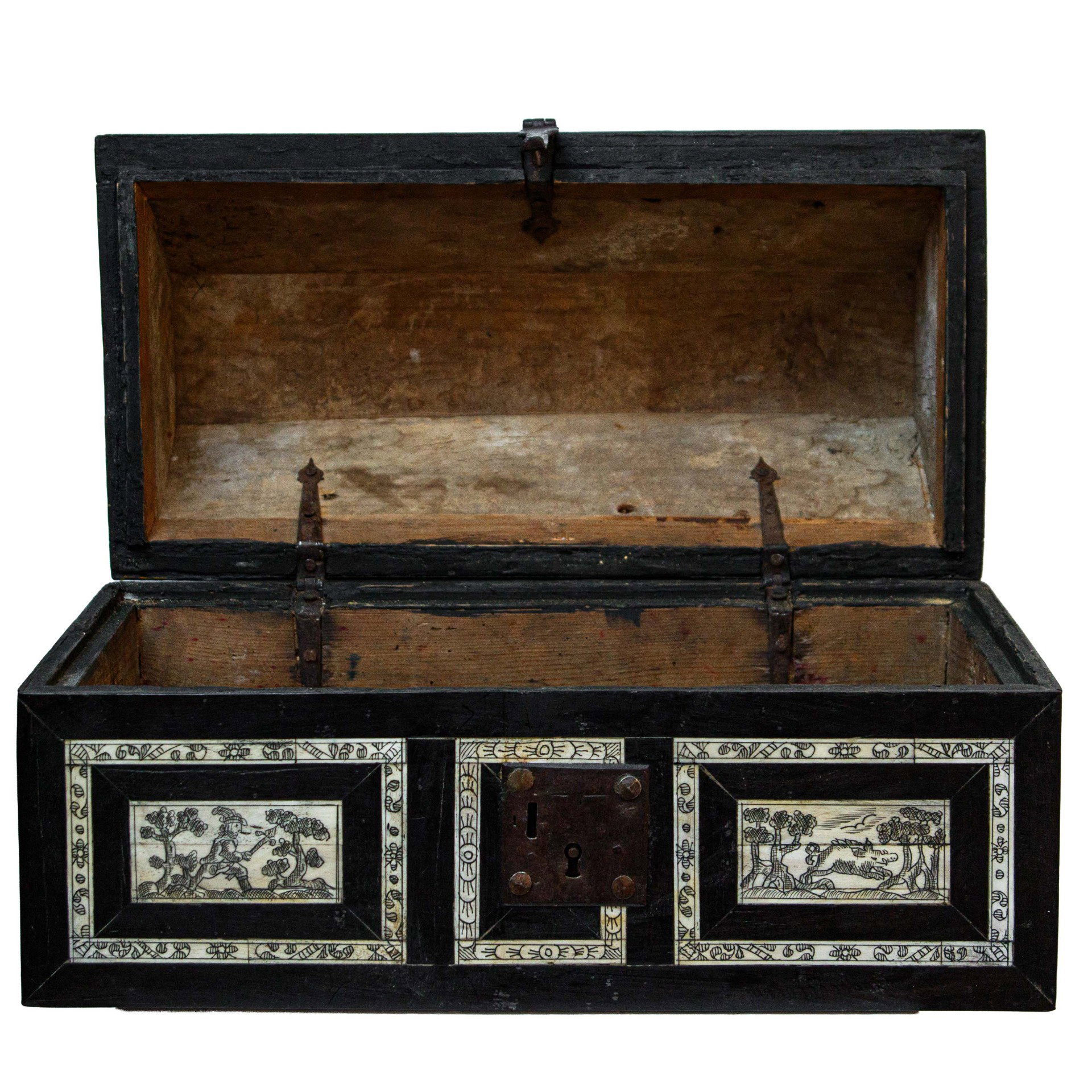
This refined chest, a wonderful example of cabinetmaking and decorative art, presents itself as a manufactured item of extraordinary elegance and artisanal skill, originally intended for the storage of valuables or confidential documents. The architectural structure of the object is defined by a rectangular body surmounted by a trunk lid with a characteristic truncated pyramid shape, which gives the ensemble a slender yet solid profile. The wooden surface has undergone a process of ebonization, a technique that, through the use of dark stains and finishes, gives common wood the noble, deep, and lustrous appearance of precious ebony, creating a color contrast of extreme visual impact with the light inserts. The true ornamental focus of the piece lies in the numerous bone plaques set into the sides, front, and lid, framed by thin decorative fillets that enhance their natural luminosity.
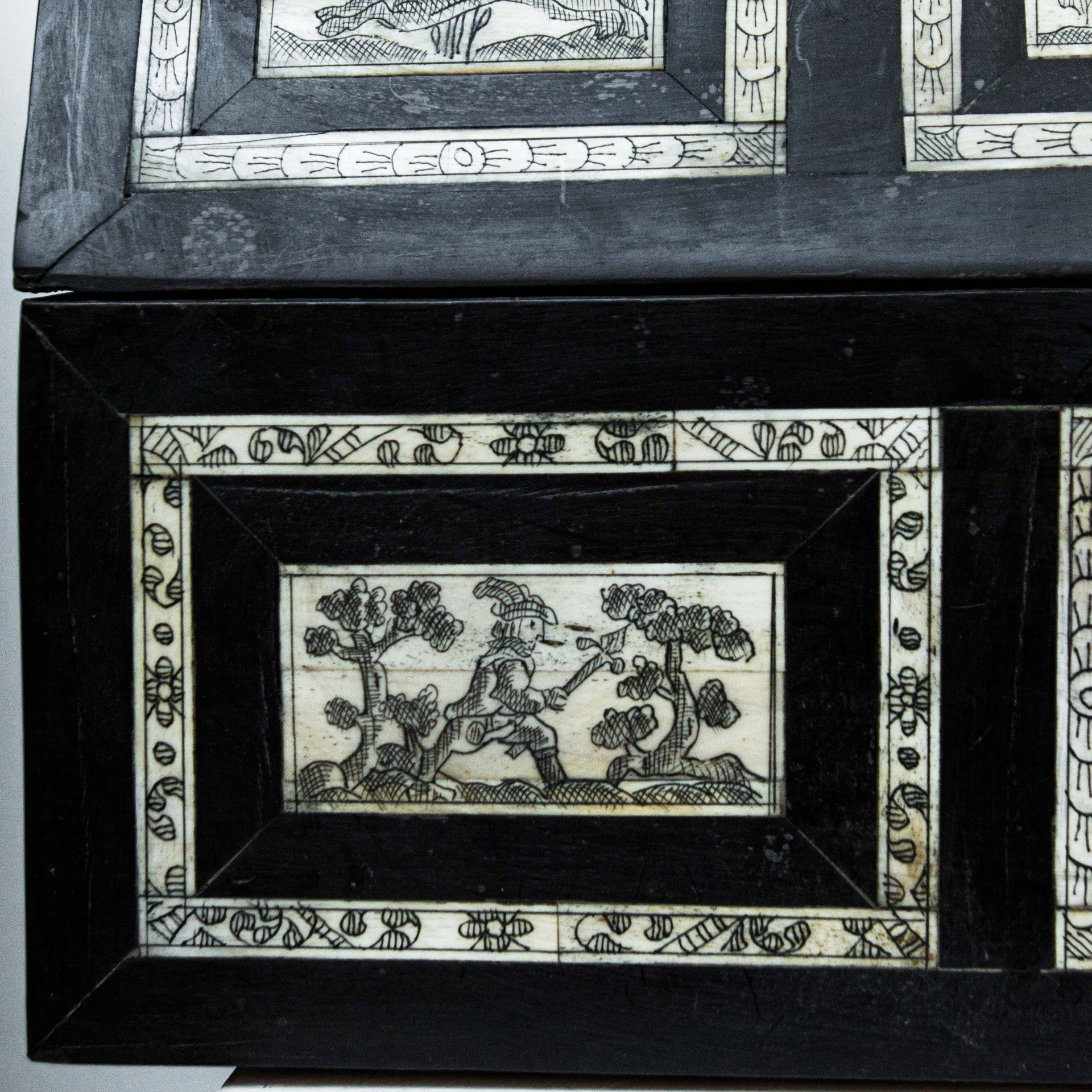
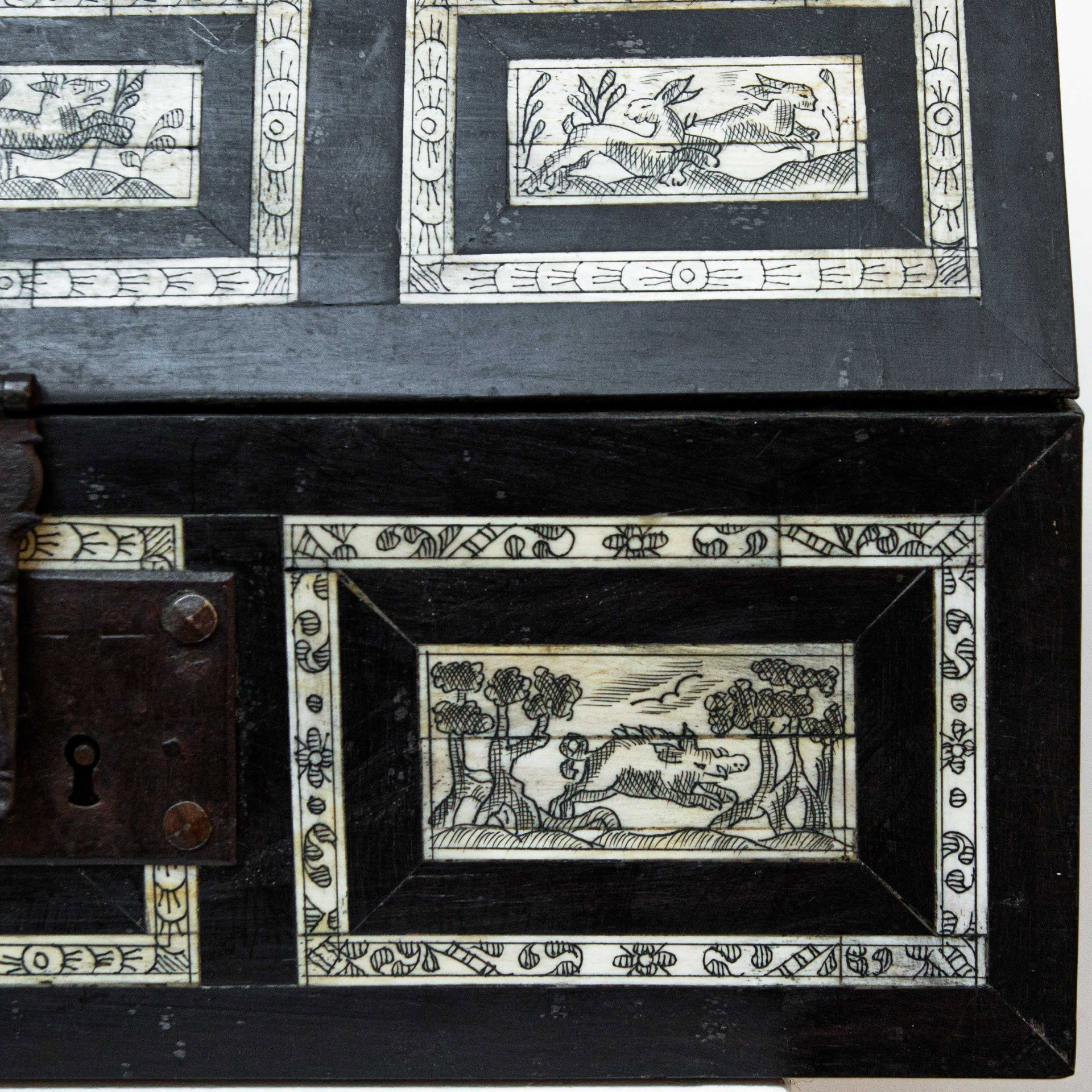
The decoration of these plaques has been carried out using the pyro-engraved bone technique, a process that requires a steady hand and extreme precision, as the design is imprinted on the organic surface using heated metal points or small heated burins that leave an indelible burnished mark. The engravings bring to life a lively cycle of hunting scenes, a theme dear to the aristocratic clientele of the time. In one of the central vignettes, the figure of a hunter is depicted in the act of pursuit, while in another plaque, it is possible to admire the noble figure of a falconer, with the bird of prey perched on his arm, a symbol of ritualistic and elitist hunting. The rest of the iconographic apparatus celebrates the dynamism of the wild world: massive boars running, agile hares darting through the undergrowth, and deer caught in a frenetic escape as they are pursued by fast and determined hounds.