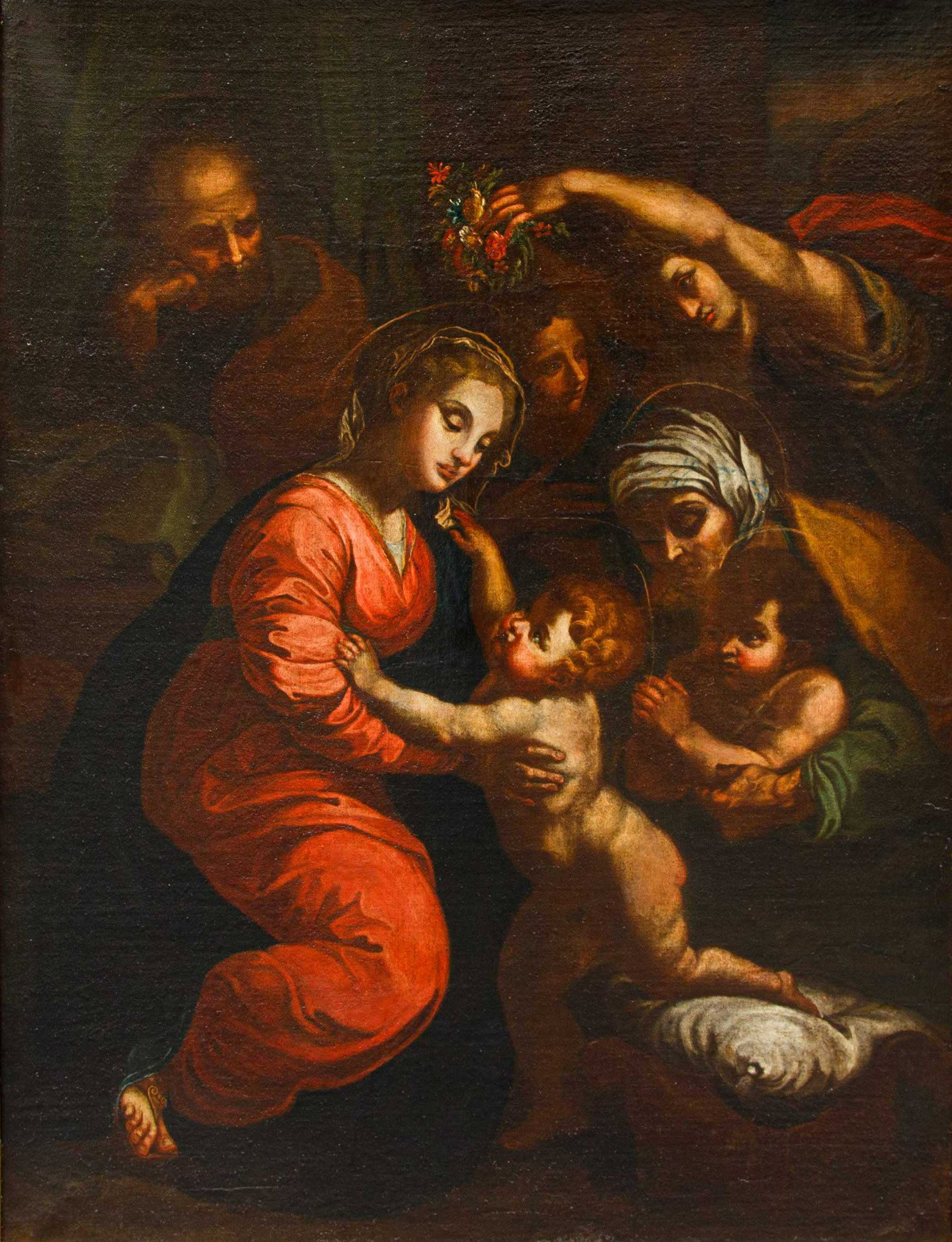
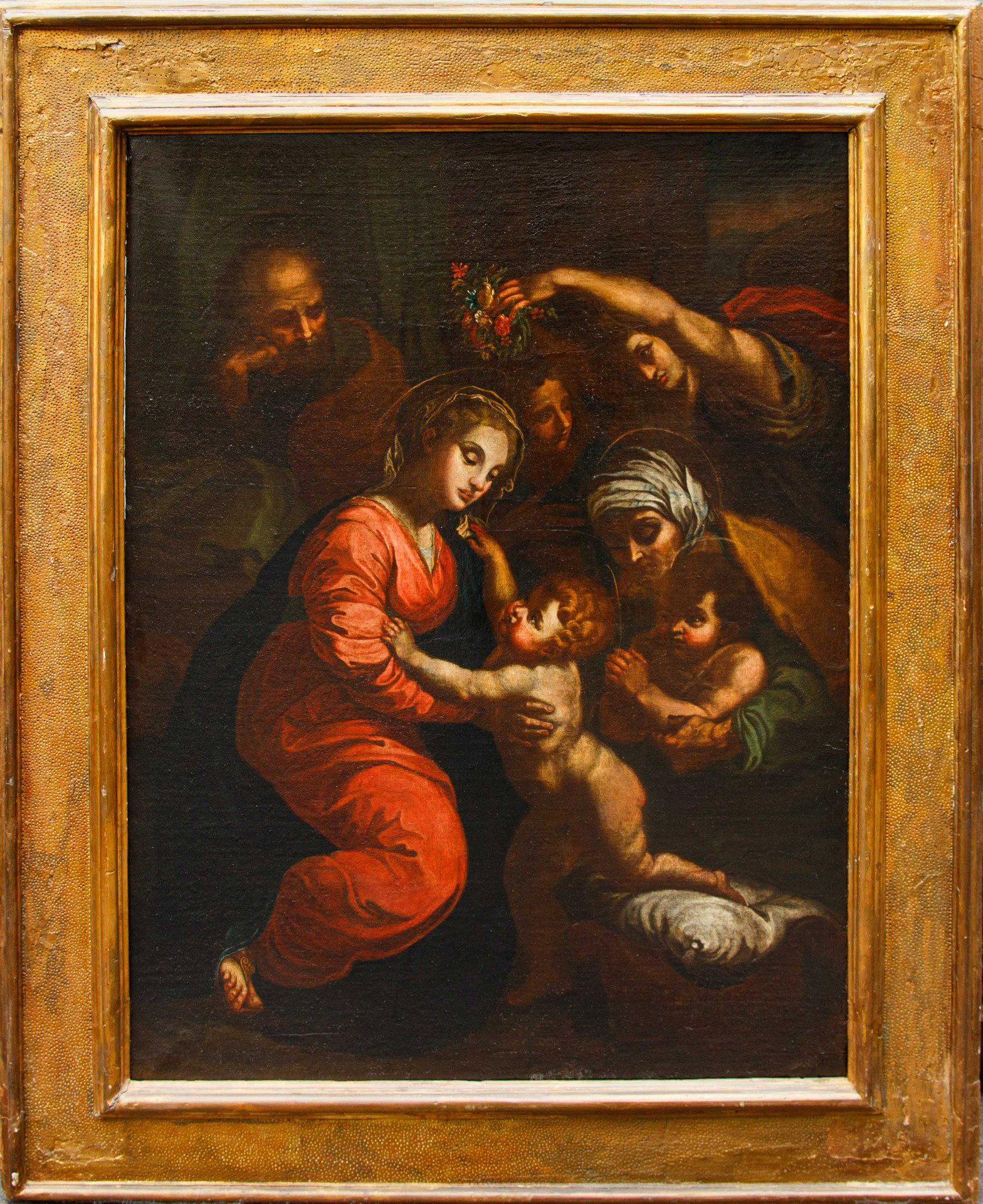
Follower of Raphael Sanzio (Urbino, 1483 – Rome, 1520), Holy Family
Description:
Follower of Raphael Sanzio (Urbino, 1483 – Rome, 1520)
Holy Family
Oil on canvas, 126 x 95 cm – with frame, 162 x 132 cm
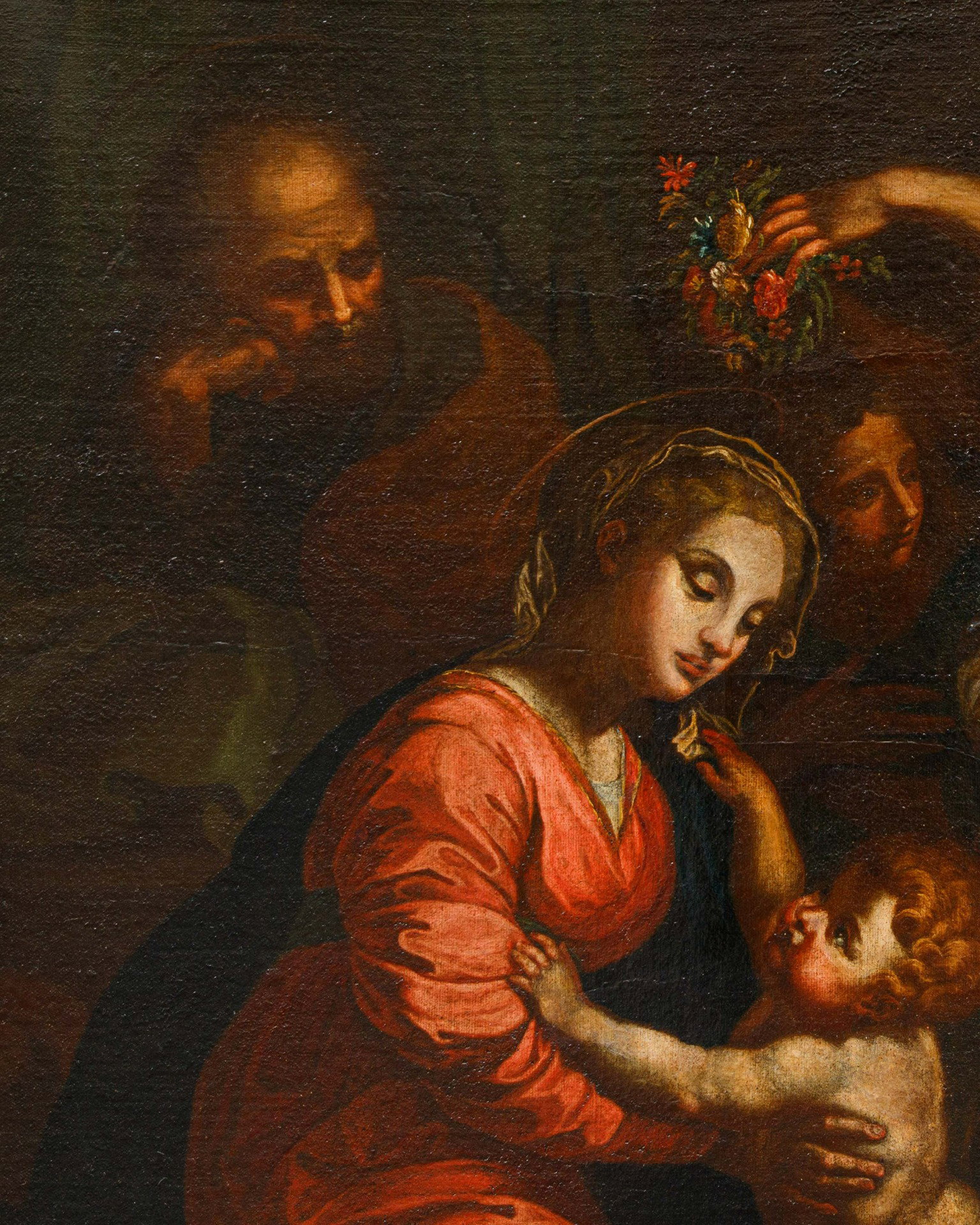
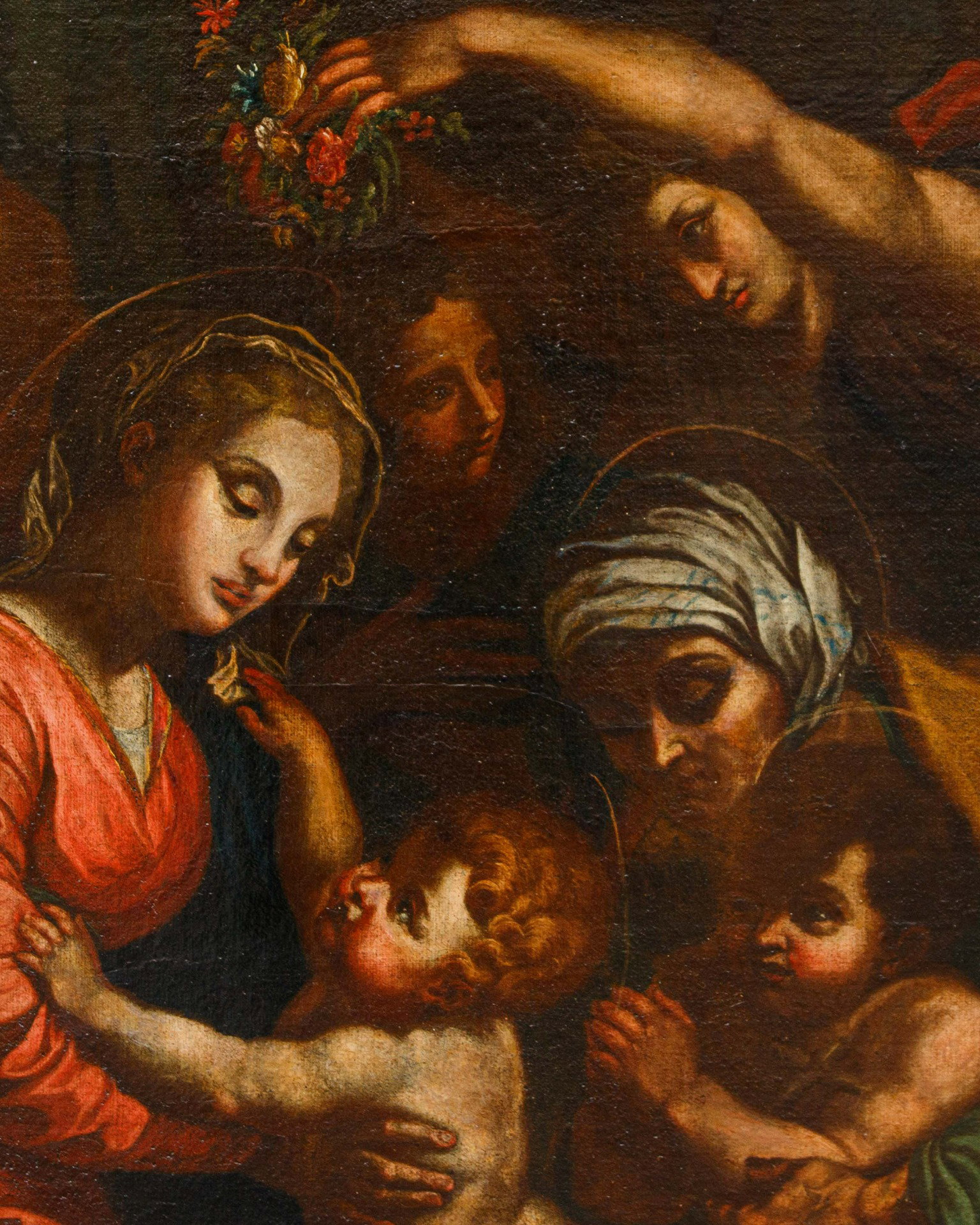
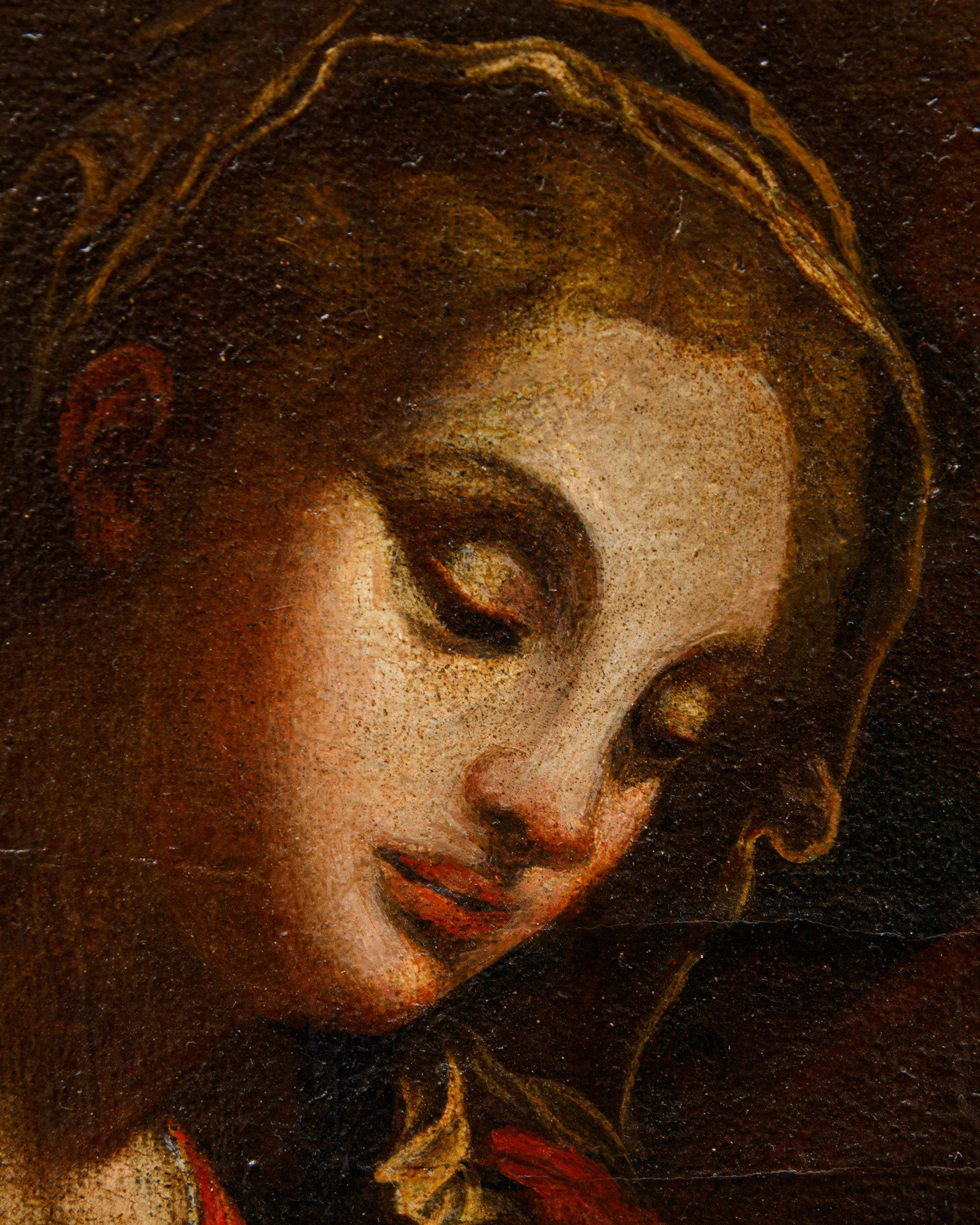
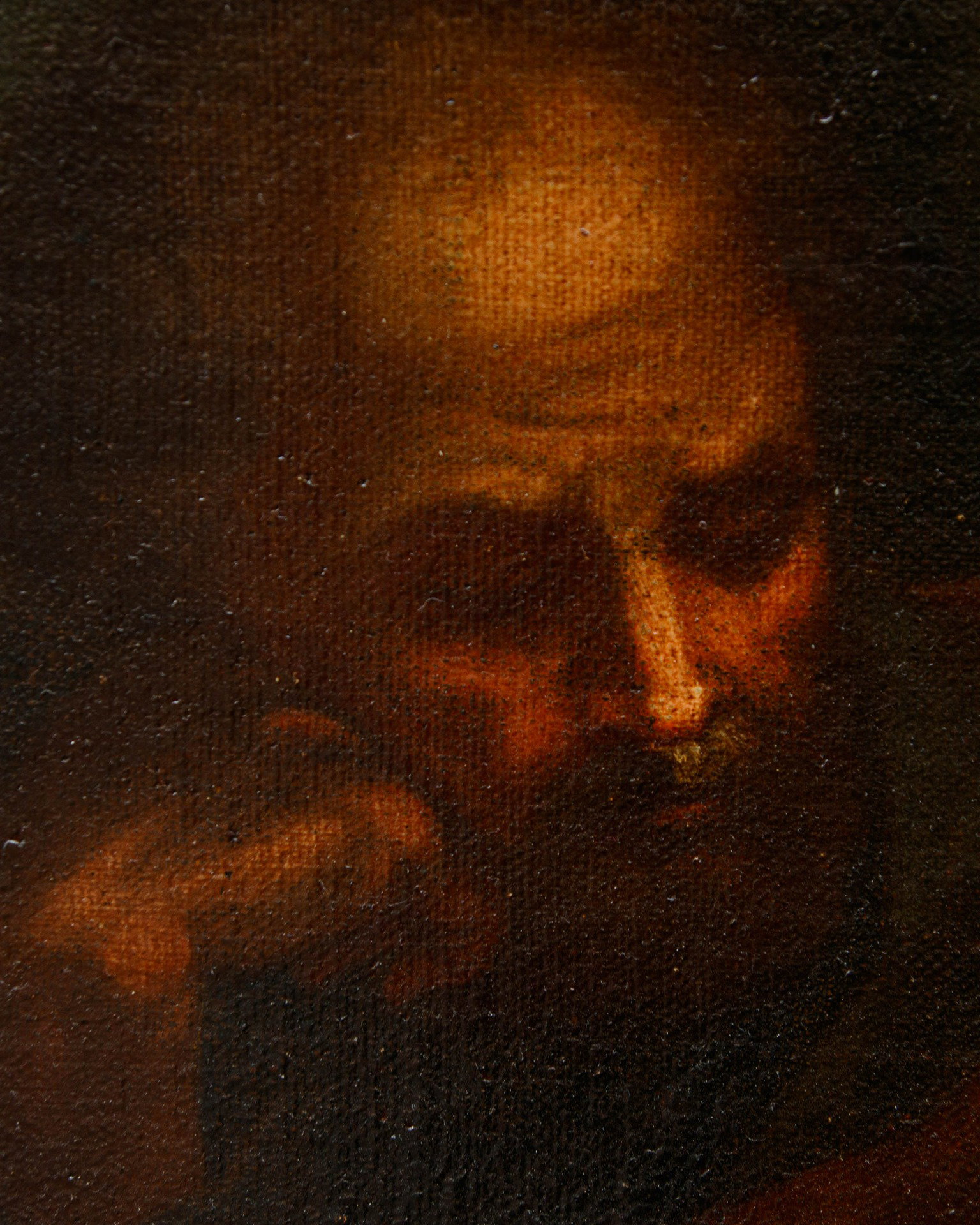
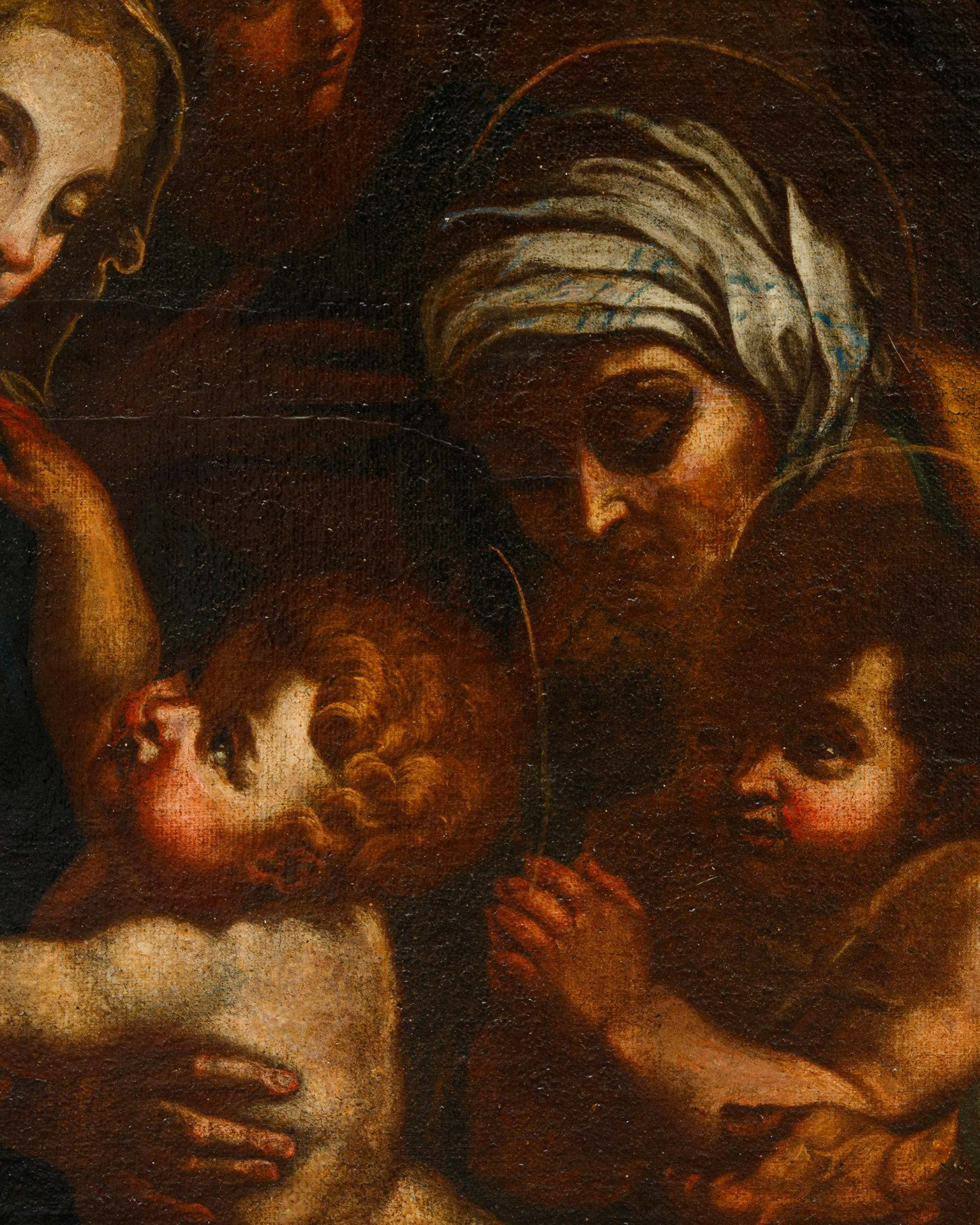
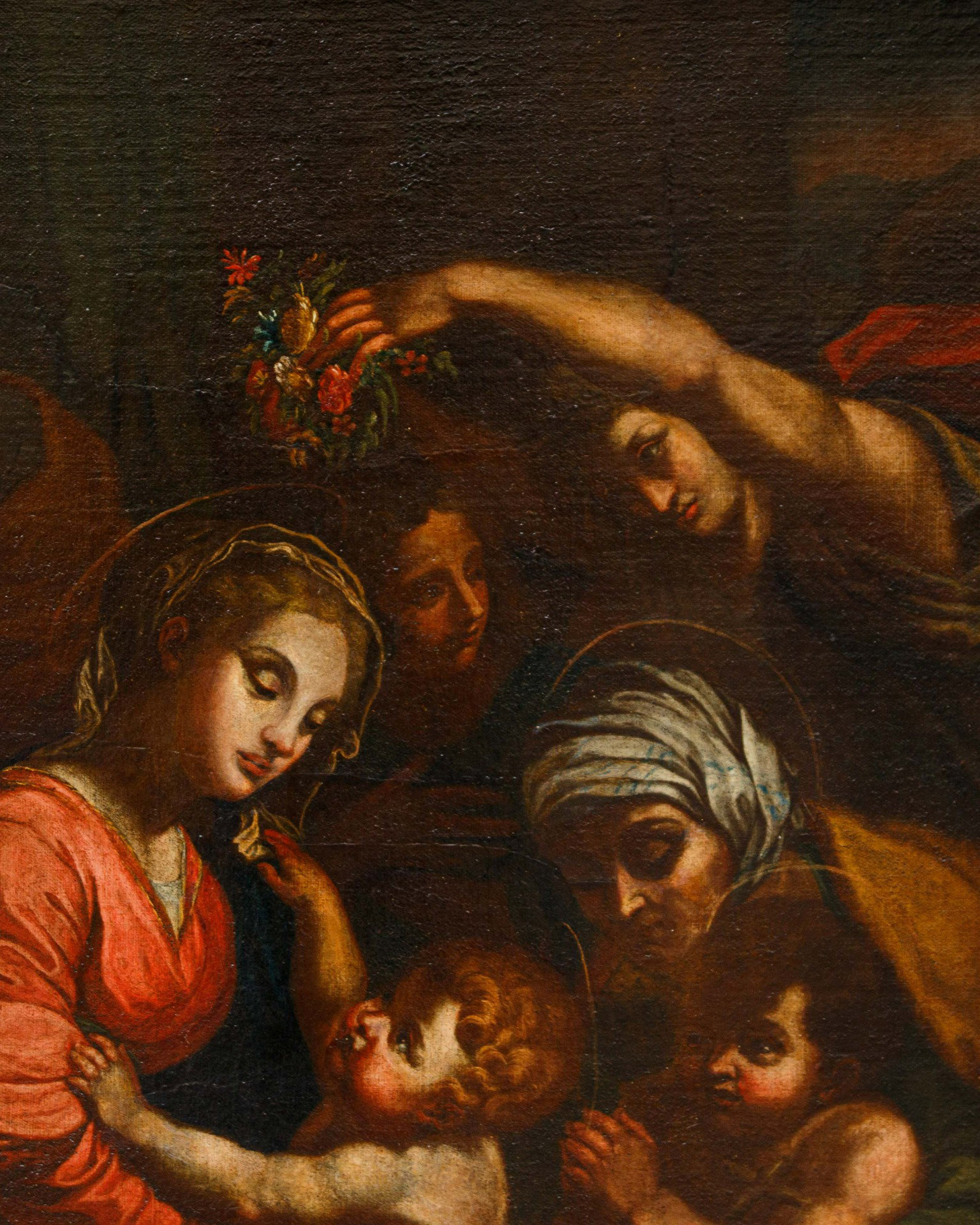
The work under examination, executed in oil on canvas by an anonymous follower of Raphael Sanzio during the 17th century, is a significant testament to the critical and iconographic fortune of Raphael's models in the Baroque era. The composition lovingly reworks the famous prototype of the Holy Family of Francis I, a masterpiece painted by Raphael in 1518 and now preserved at the Louvre Museum in Paris. The painting depicts a moment in which the Virgin, kneeling in the foreground and clad in a warmly hued robe, holds the infant Jesus, who lively stretches his body upwards. Beside them, Saint Elizabeth and the young Saint John the Baptist are recognizable in prayer, while in the background, emerging from the darkness with an almost monumental air, the figure of Saint Joseph watches over them. An angel, partially visible in the upper right part, is about to crown the Virgin with garlands of flowers, an element that accentuates the glorious dimension of the event. The link between this canvas and the original in the Louvre is not only thematic but structural. Raphael's painting, commissioned to be sent to King Francis I of France, immediately became a canon of formal perfection and compositional balance, serving as a compass for generations of artists. If Raphael's original shines for its chromatic clarity and drawing perfection, this 17th-century version offers a more chiaroscuro reading, typical of 17th-century taste, where shadows are deeper and the brushwork less smooth, while maintaining the grace of the physiognomies and the dynamism of the interaction between the characters. The choice to reproduce such a subject confirms how, a century later, Sanzio's manner continued to be perceived as the pinnacle of sacred art, capable of speaking to the faithful and collectors in a universal language.
It is important to emphasize that the Holy Family of Francis I is one of the most replicated works in art history. From the second half of the 16th century and throughout the 18th century, Raphael's workshop first, and countless copyists later, produced numerous versions of this subject. These variations, spread throughout Europe, range from faithful copies executed by direct pupils such as Giulio Romano, to freer and later interpretations such as the one analyzed here. The proliferation of such works documents not only the desire to possess an image of such high spirituality but also the fundamental role that author's copies played in the art market and in the teaching of academies, ensuring the persistence of Raphael's myth through the centuries and different regional styles.