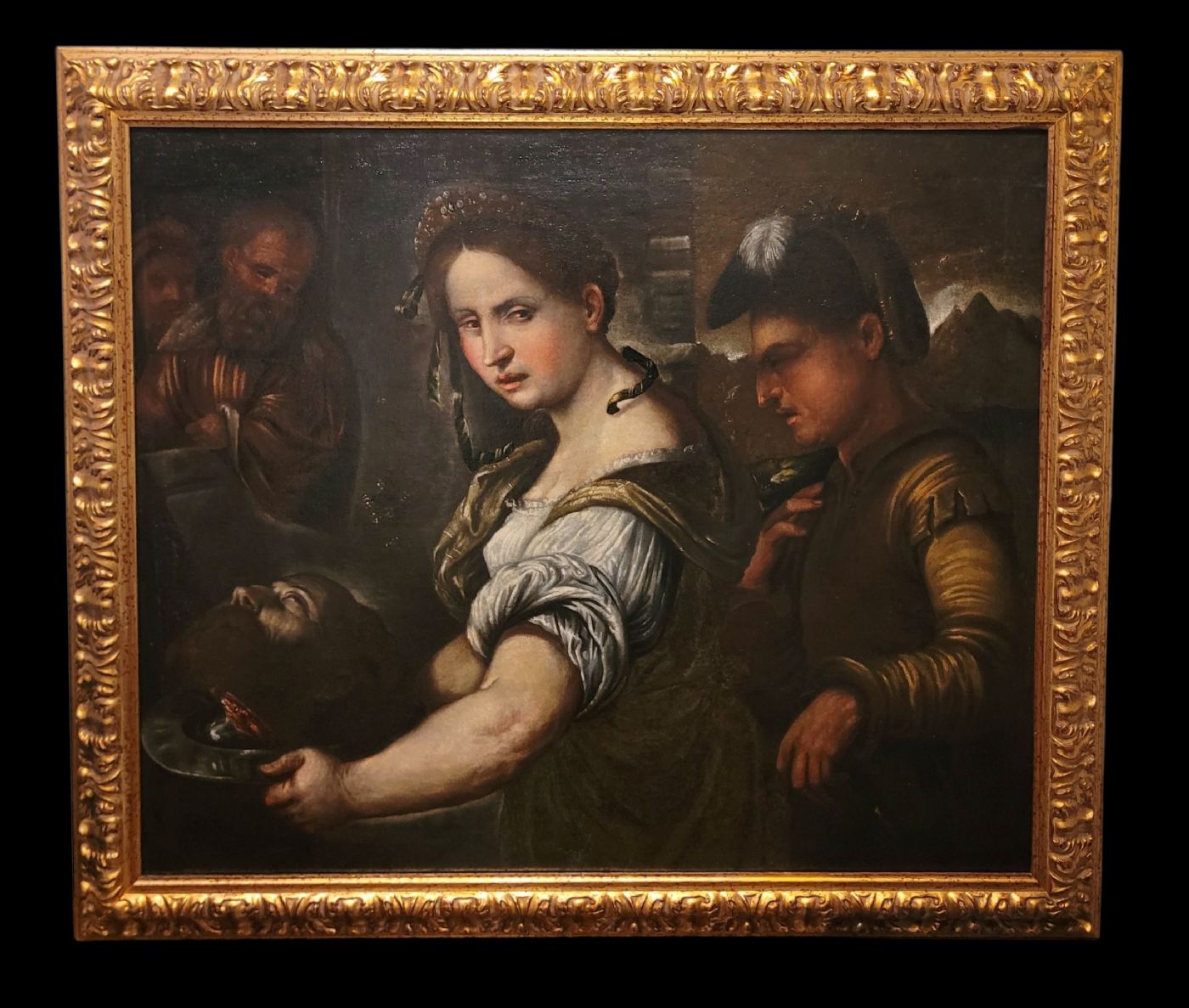
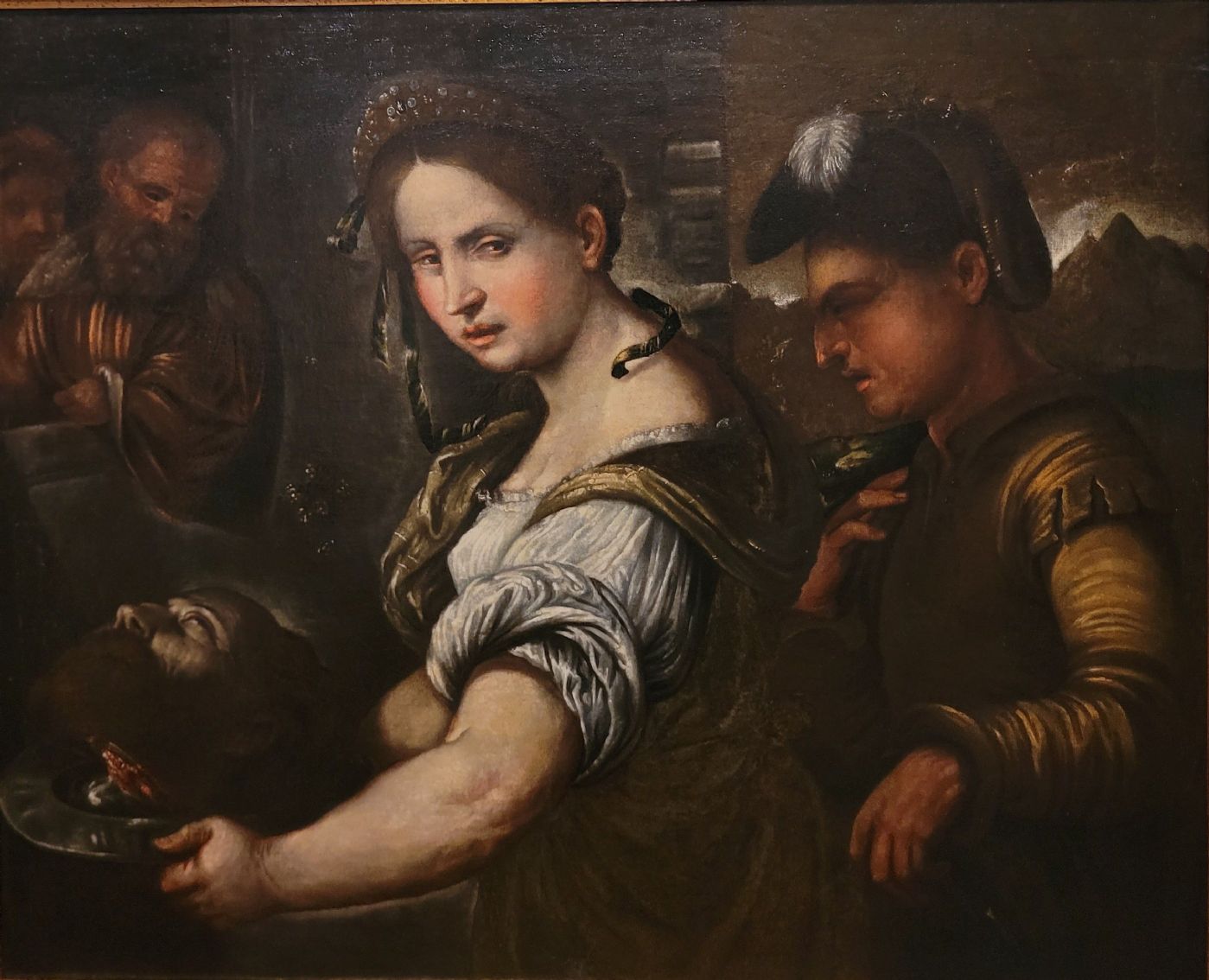
"Judith with the Head of Holofernes"
Lombard area/Romanino circle, late 16th - early 17th century.
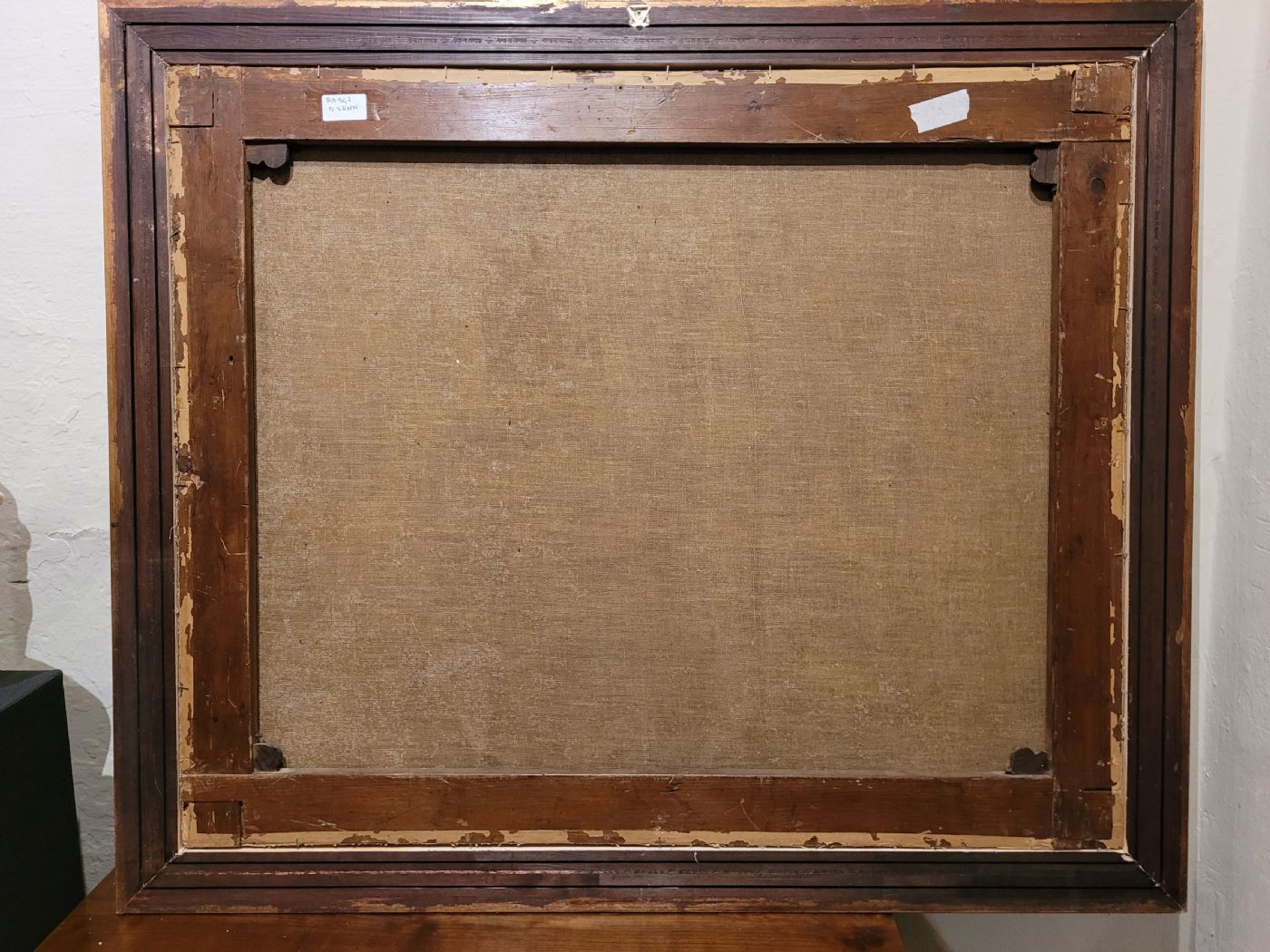
Oil on canvas with relining.
Recent frame 116x98 cm.
Canvas 83.5x102 cm.
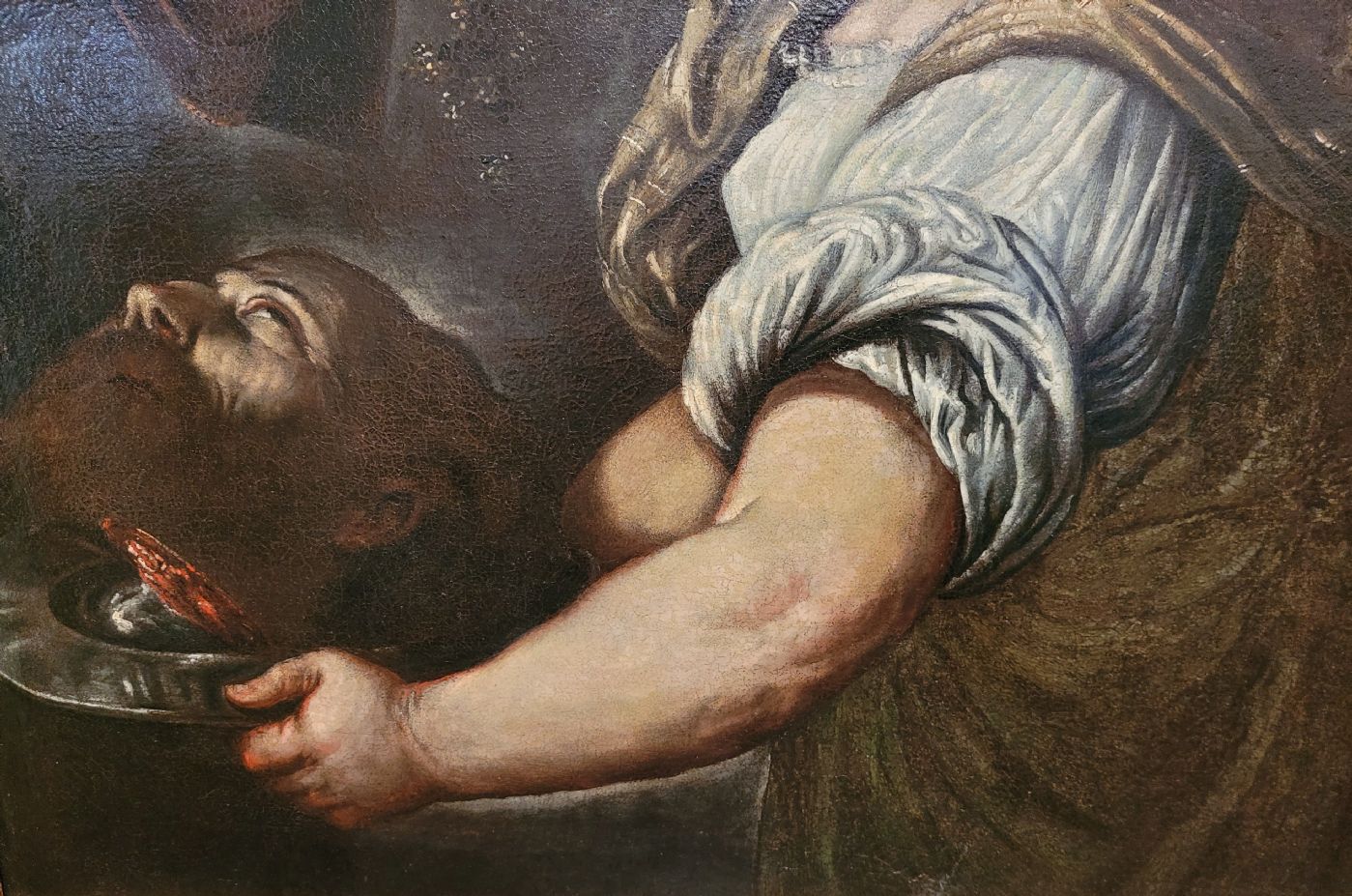
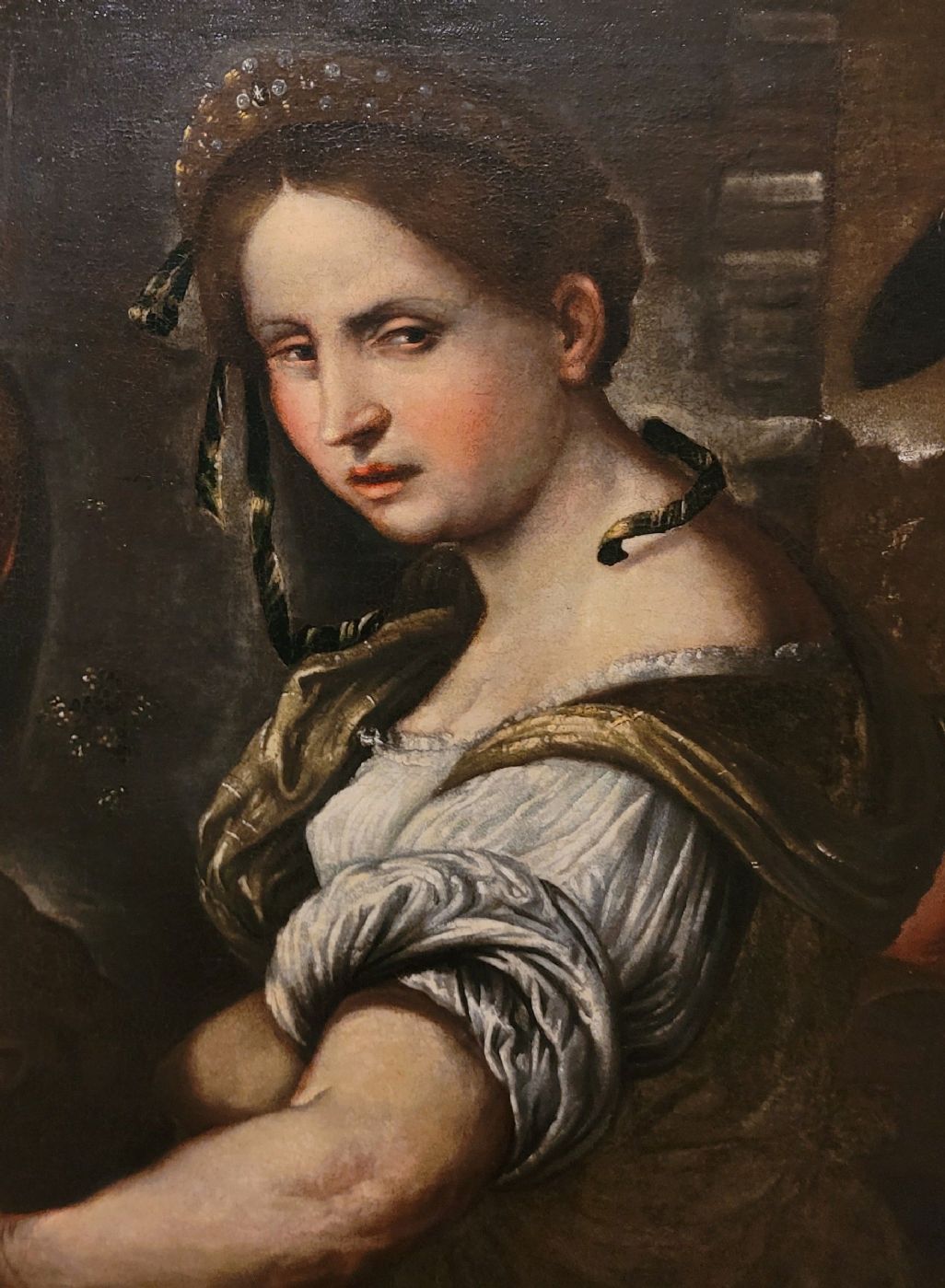
The work depicts the biblical episode of Judith, a heroine of the Old Testament, immediately after the beheading of the Assyrian general Holofernes.
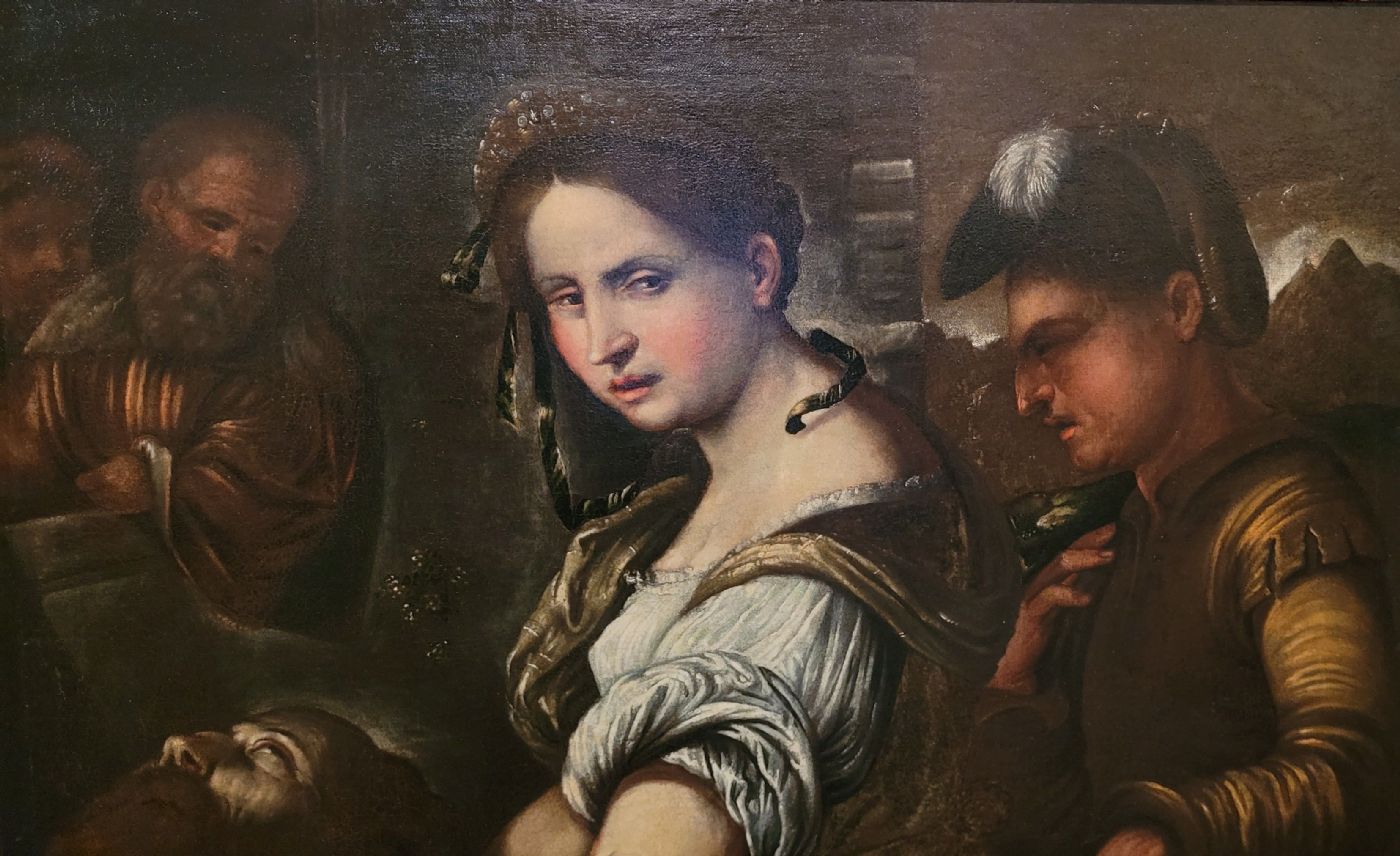
The protagonist, placed in the center of the composition, holds a dish with the severed head of the enemy. Her face, turned towards the viewer, is characterized by an intense and meditative expression, far from any celebratory emphasis.
To her right appears an elderly female figure, identifiable as the maidservant Abra, a traditional presence in the biblical narrative.
In the background, immersed in shadow, a secondary male figure is visible, contributing to the spatial depth and the subdued and uneasy atmosphere of the scene.
The work is distinguished by the strong psychological tension of the characters, where realistic faces emerge, sometimes marked and far from idealized beauty, with the use of dense and irregular light combined with shadow.
These elements suggest a harsher, earthly, and dramatic pictorial language, attributable to Lombard naturalism.
Judith is not depicted as a triumphant heroine, but as a morally aware figure, burdened by the weight of the action just completed.
The absence of theatrical gestures and the pensive expression of the protagonist transform the scene into a reflection on responsibility, necessary violence, and individual sacrifice.
The intense psychological characterization, the realistic rendering of the faces, and the treatment of light and pictorial material suggest a closer connection to the style of Girolamo Romanino or his circle.
Therefore, an attribution to a Lombard painter close to Girolamo Romano or his follower, active between the late 16th and early 17th centuries, is proposed.