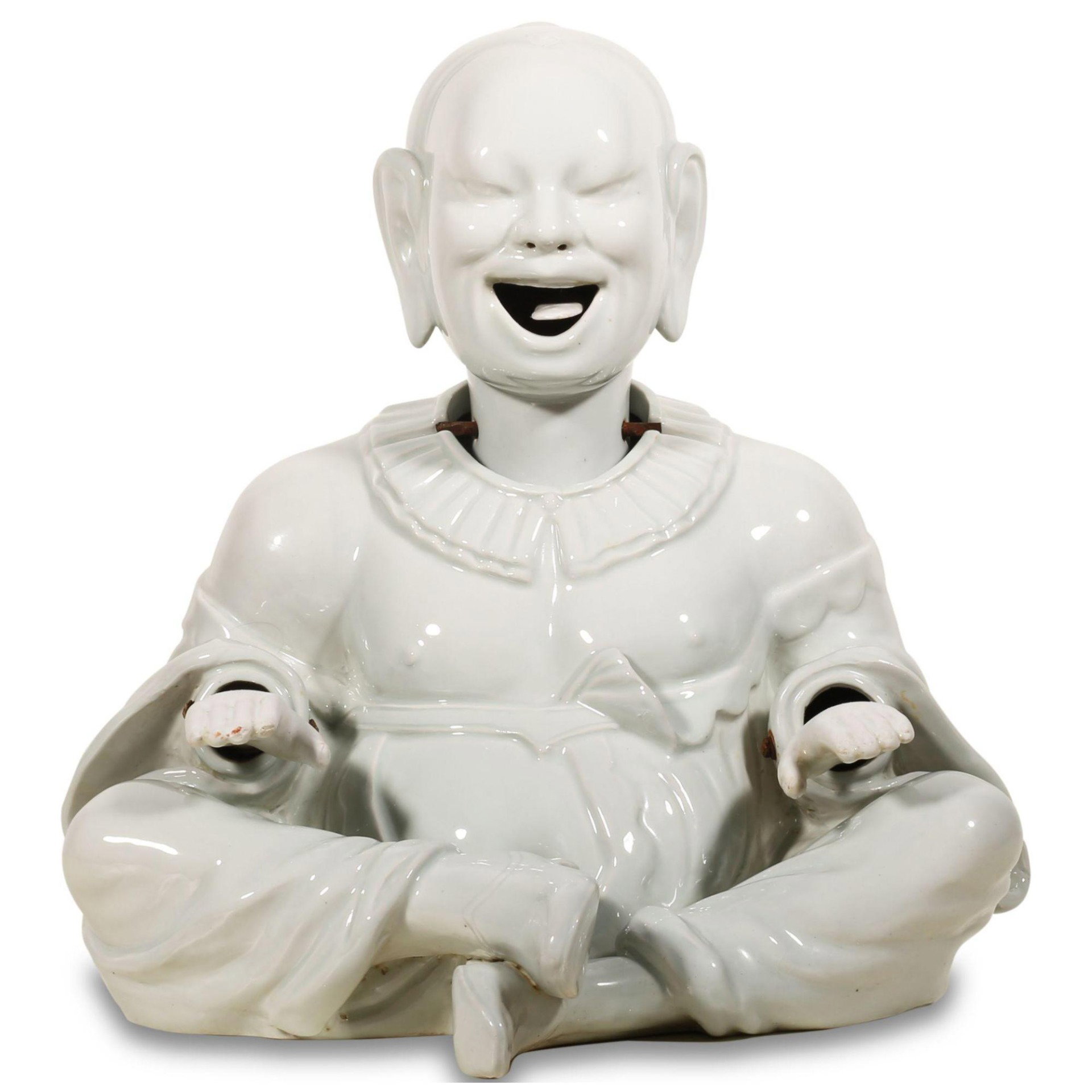
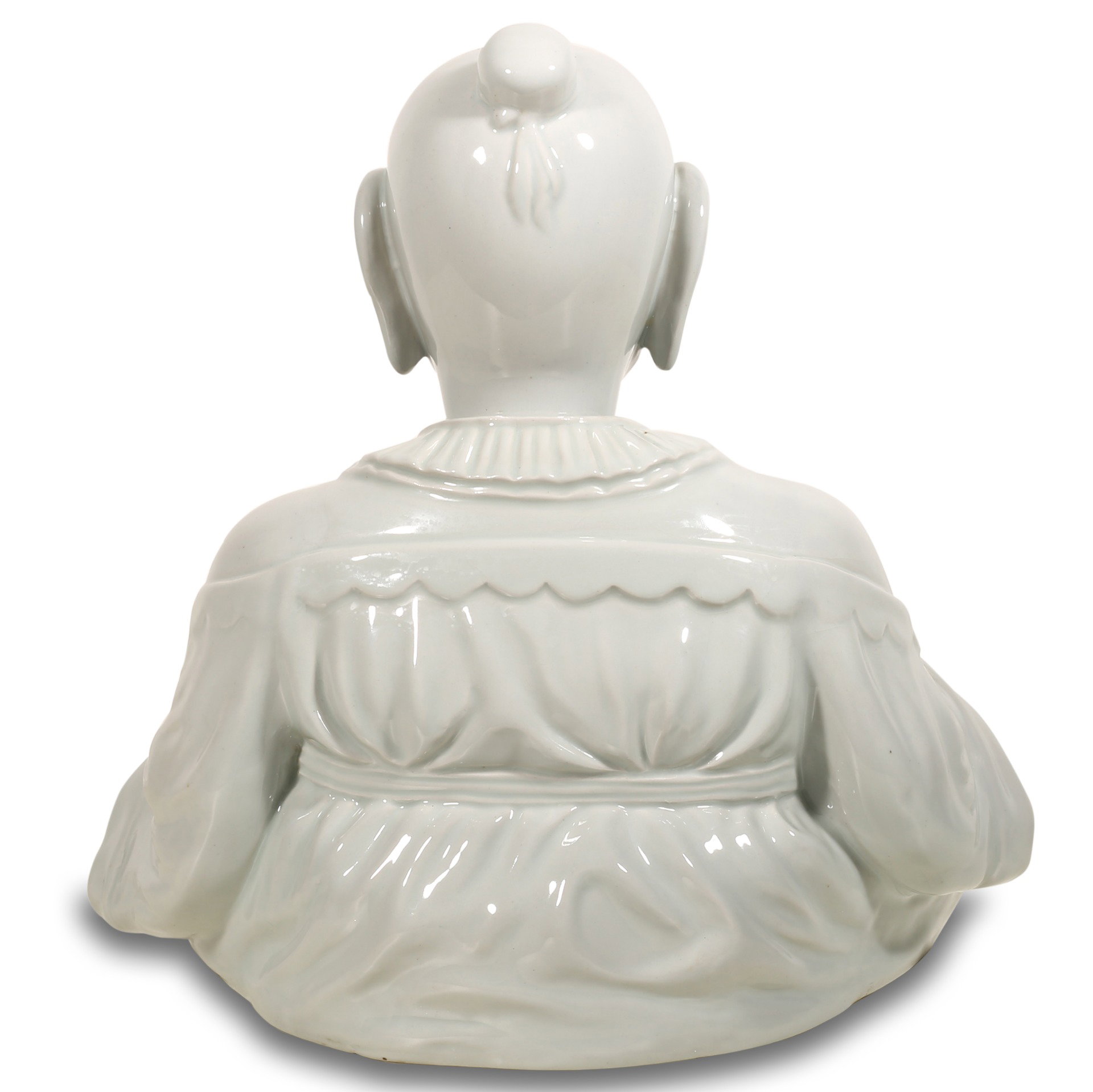
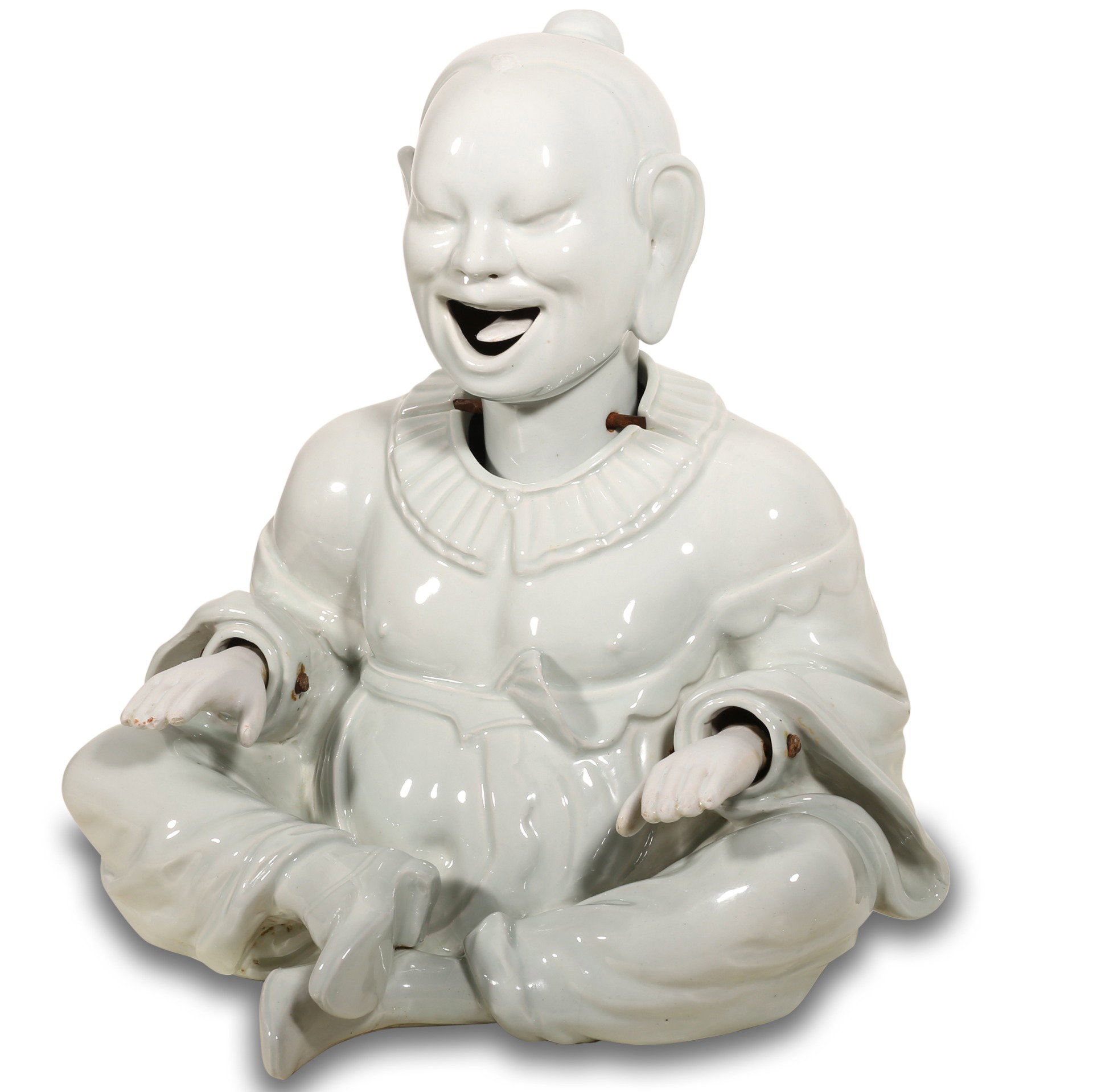
Porcelain Magot, late 19th century
Description:
Dimensions: H: 36 x W: 34 x D: 28 [cm]
Magot with a movable head, tongue, and hands. The material is entirely porcelain, with the exception of the biscuit hands.
Features
Material:
porcelain
Period:
late 19th century
Origin:
Italy
What are Magots?
The word "magot" comes from the French word for Barbary macaque. They are male or female figures with oriental features. The material used for their depiction was usually painted or decorated porcelain. The subject depicted, in a good-natured and charming way, is Pu-Tai, the Chinese god of happiness and abundance.
It is said that they brought good luck because, with their articulated head, tongue, and hands, they could warn of earthquakes.
They arrived in Europe between the late 17th and early 18th centuries, thanks to the first connections between European merchants (primarily Venetian) and the Chinese. In the following decades, they became status symbols to be displayed in aristocratic homes. They found fertile ground in Europe due to the fashion for the exotic that developed on the continent during the early decades of the 18th century. This fashion can be seen in various objects of the time, not just Magots, such as lacquered vanity items and furniture decorated with famous chinoiseries.
In just a few years, due to increased demand, European manufacturers also began to produce them to satisfy this new form of collecting.
From German manufacturers like Meissen Dresden Rudolstadt, to French ones like Saint Claude Samson and Chantilly, to Italian ones.
Throughout Northern Italy, true masterpieces were created. Unusual were the Piedmontese ones, made of papier-mâché.
Authenticity:
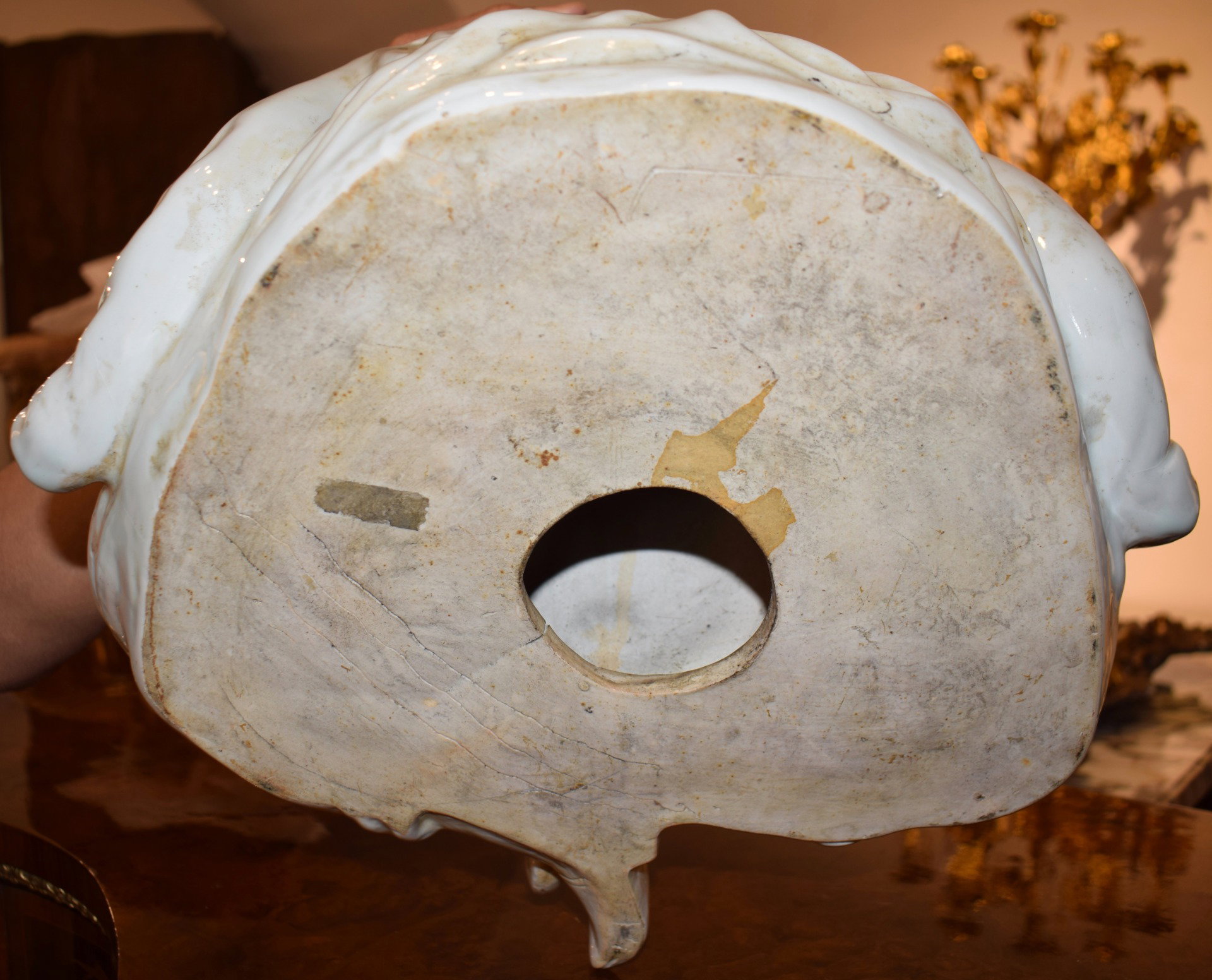
Completely intact to the naked eye and under infrared lamp. The magot has only been thoroughly cleaned. For porcelain, there is no such thing as patina (dirt that accumulates over centuries, which some buyers want to see on antique wooden furniture), so once cleaned, it looks like new.
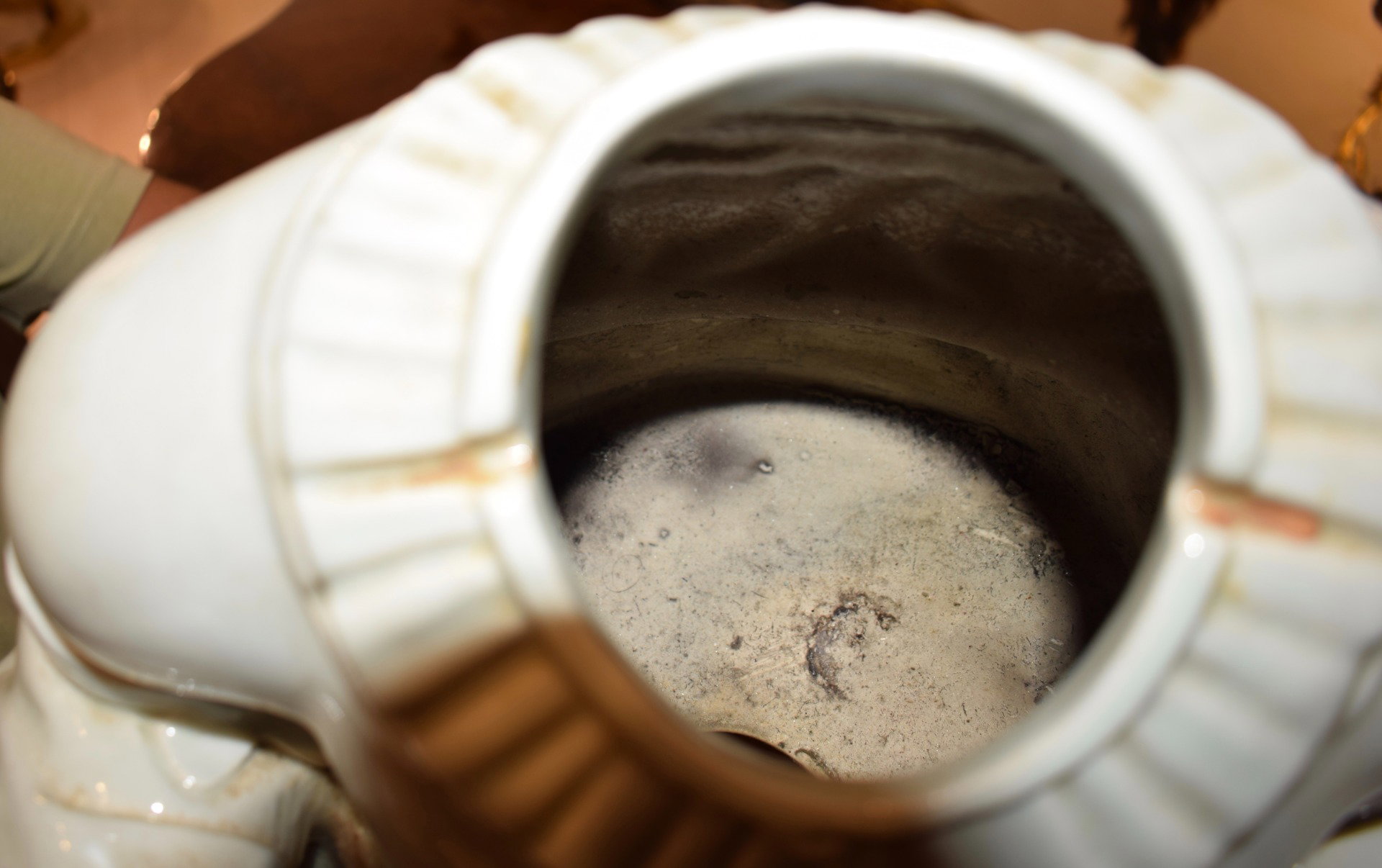
The signs of age and therefore originality can be seen through the patina on the bottom and inside, and sometimes, as in this case, through the presence of small striations along the entire surface.
Image captions: 1. Inside of the magot before cleaning. 2. Bottom of the magot still with its "patina". 3. Detail: biscuit hands. 4. Detail: striations along the entire surface, visible only up close and against the light.