Description:
Dimensions: h: 110; w: 68; d: 52 [cm]
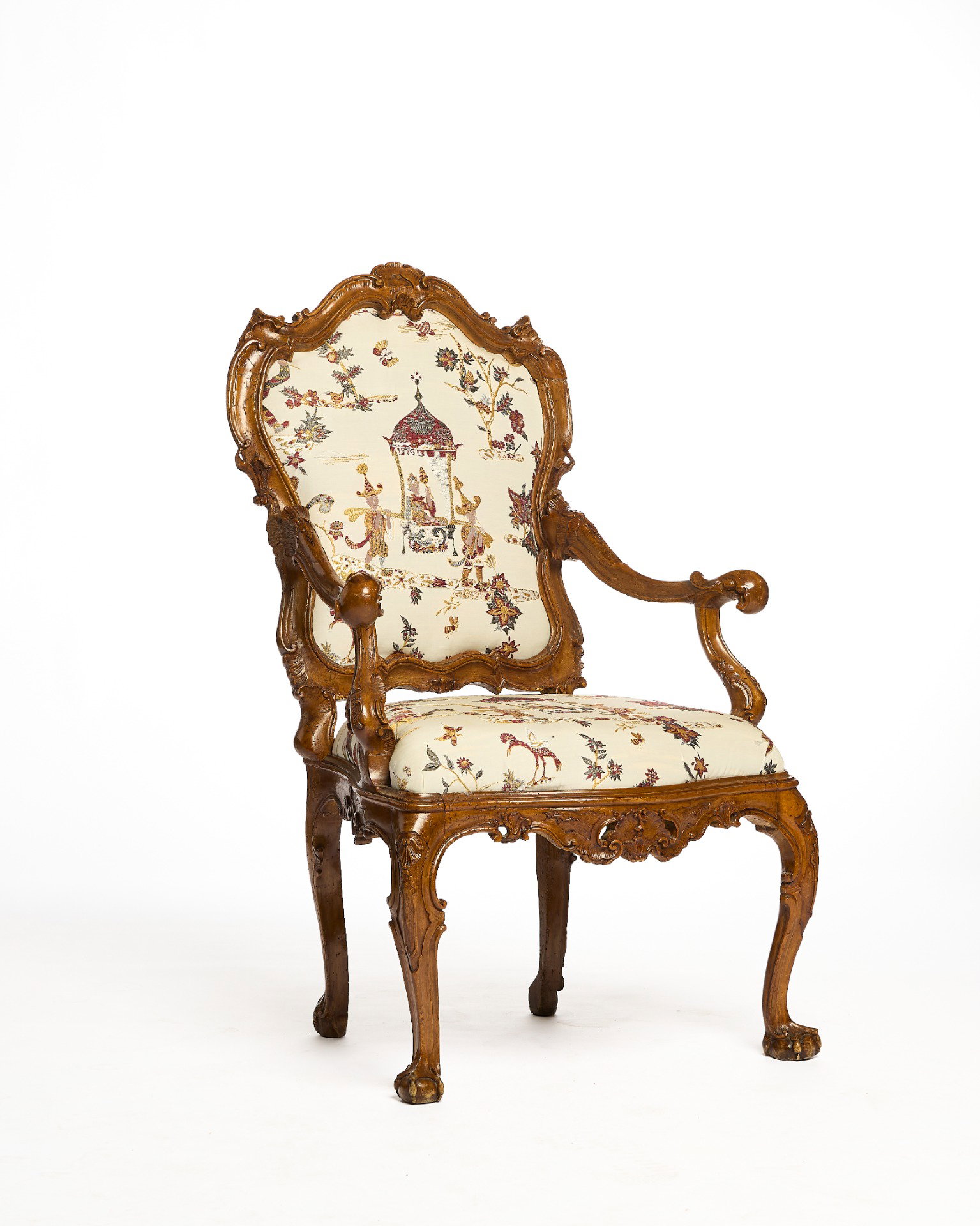
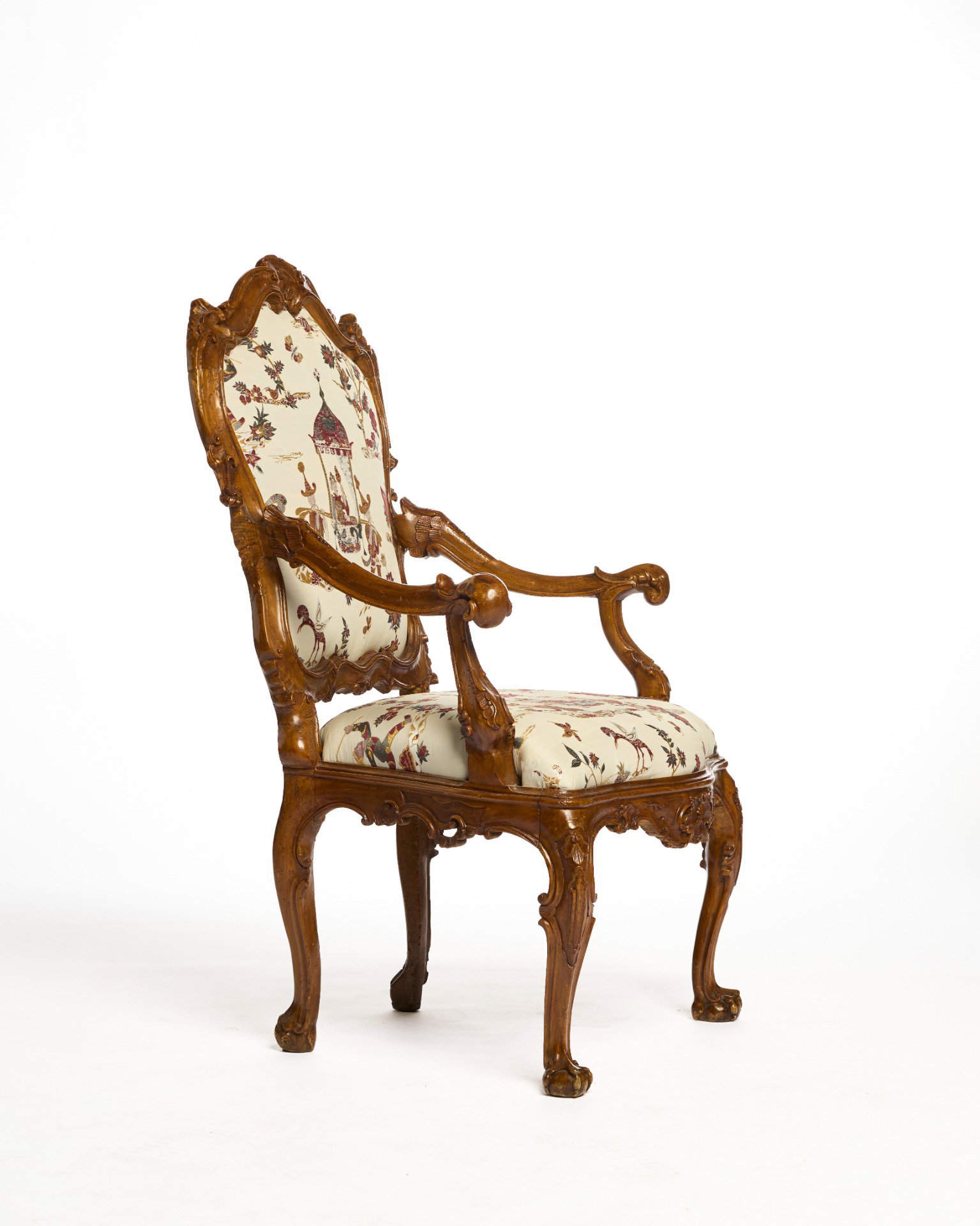
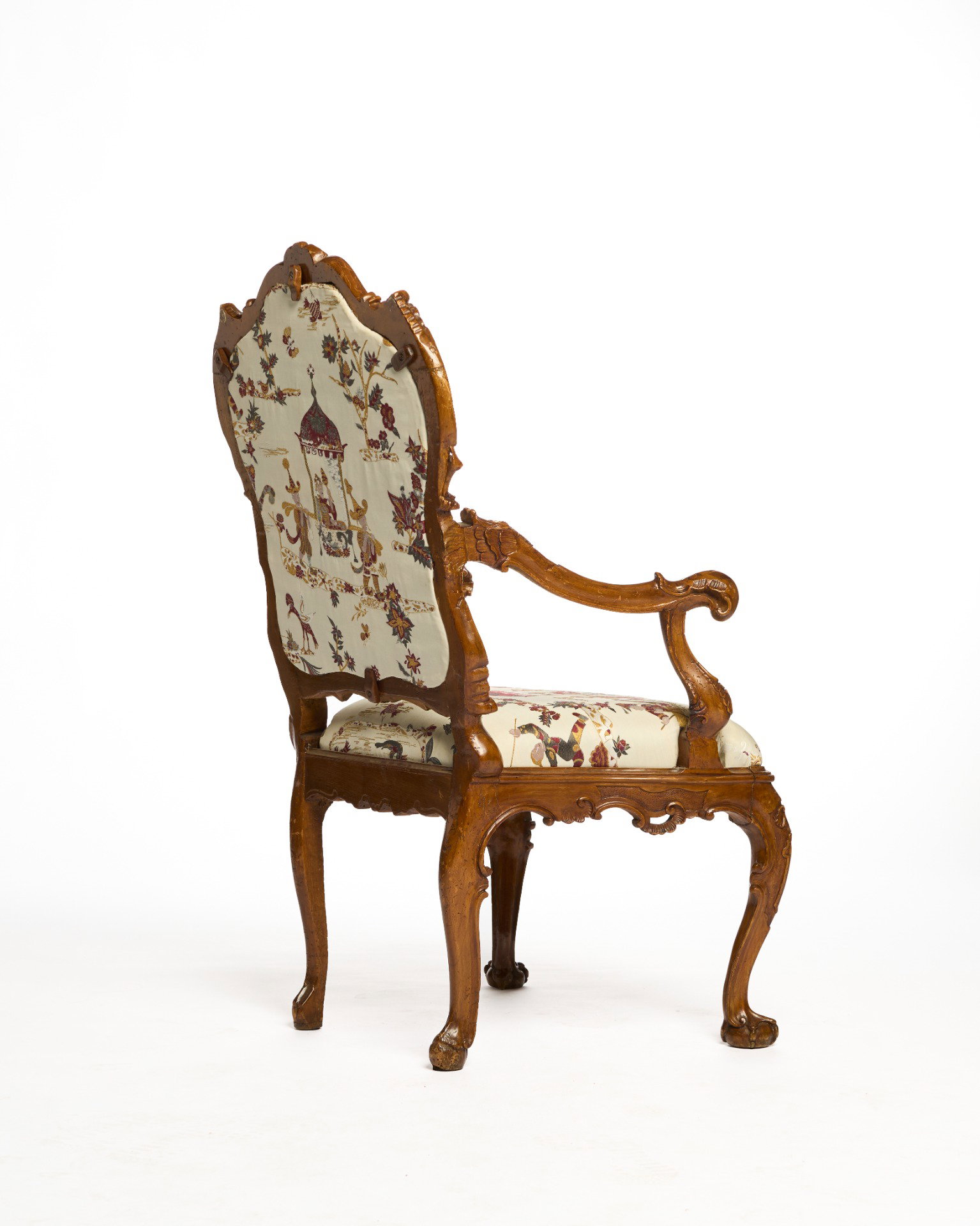
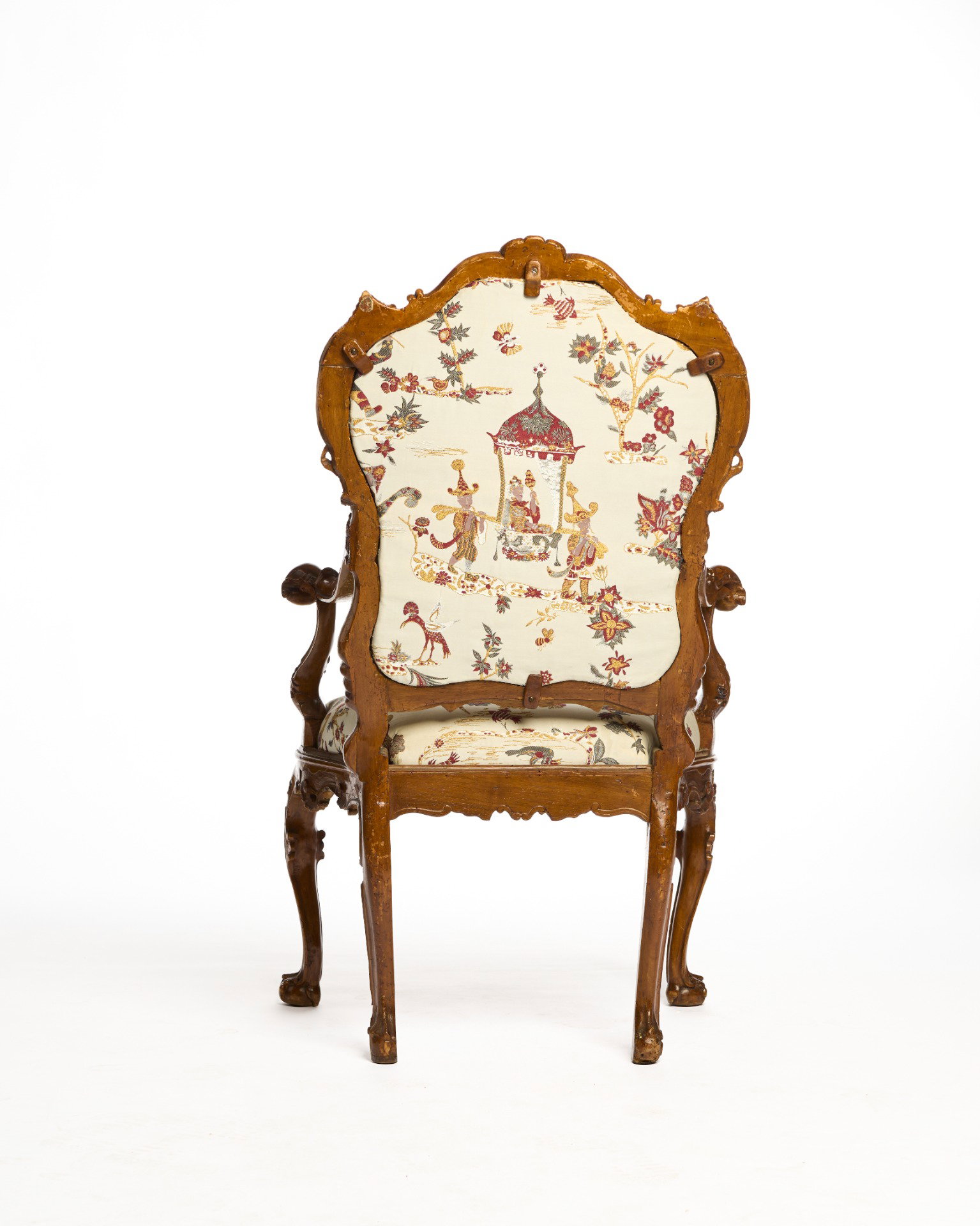
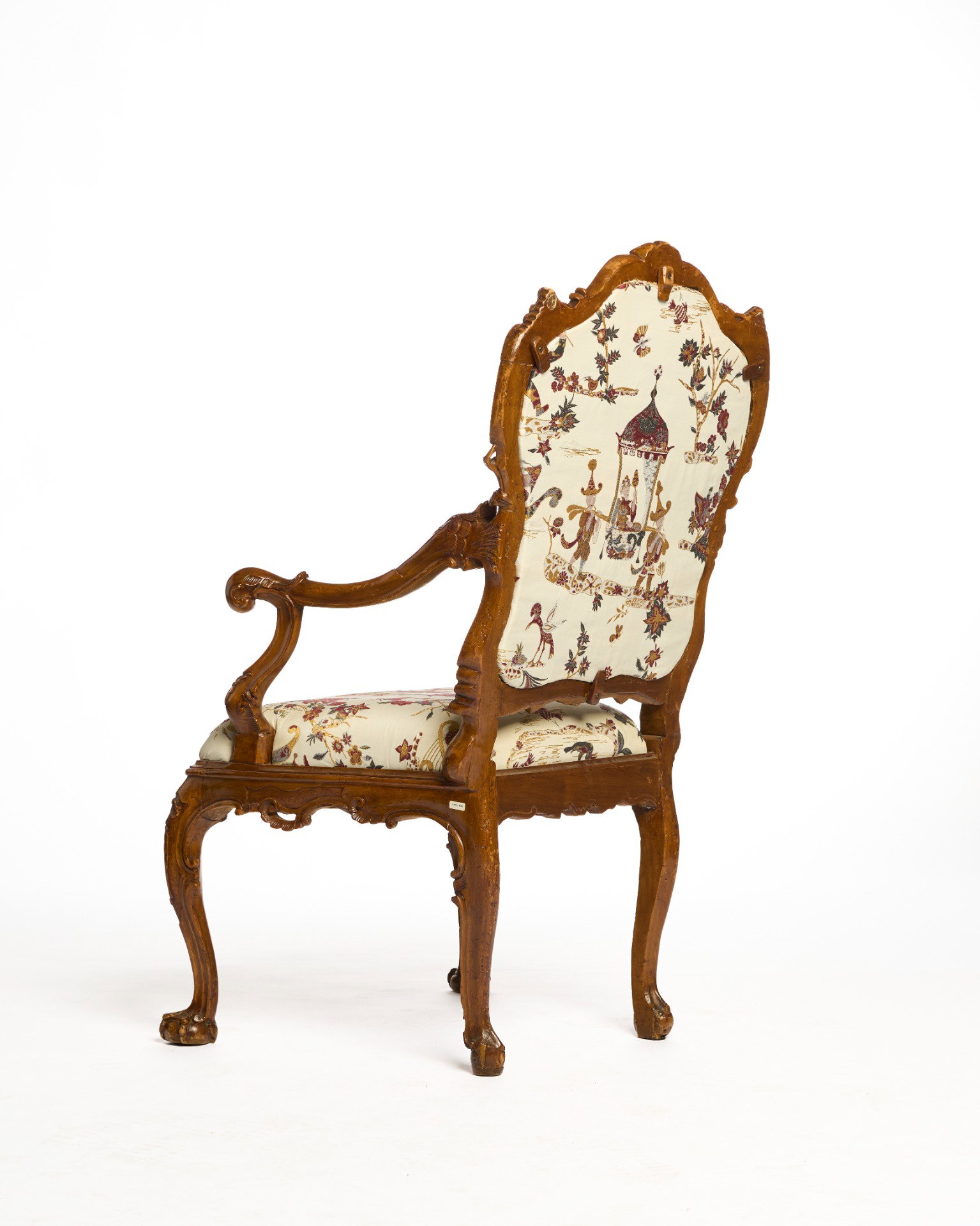
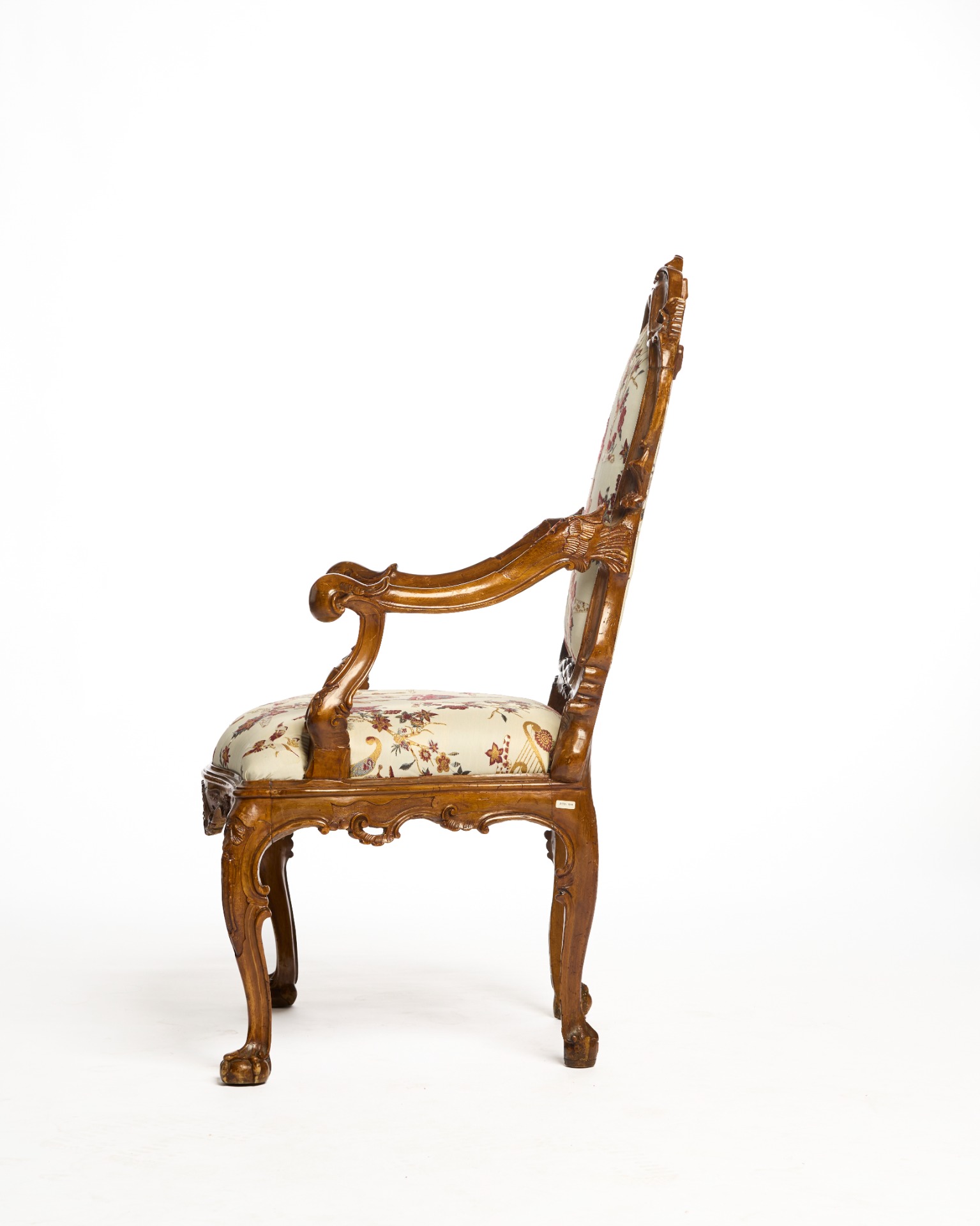
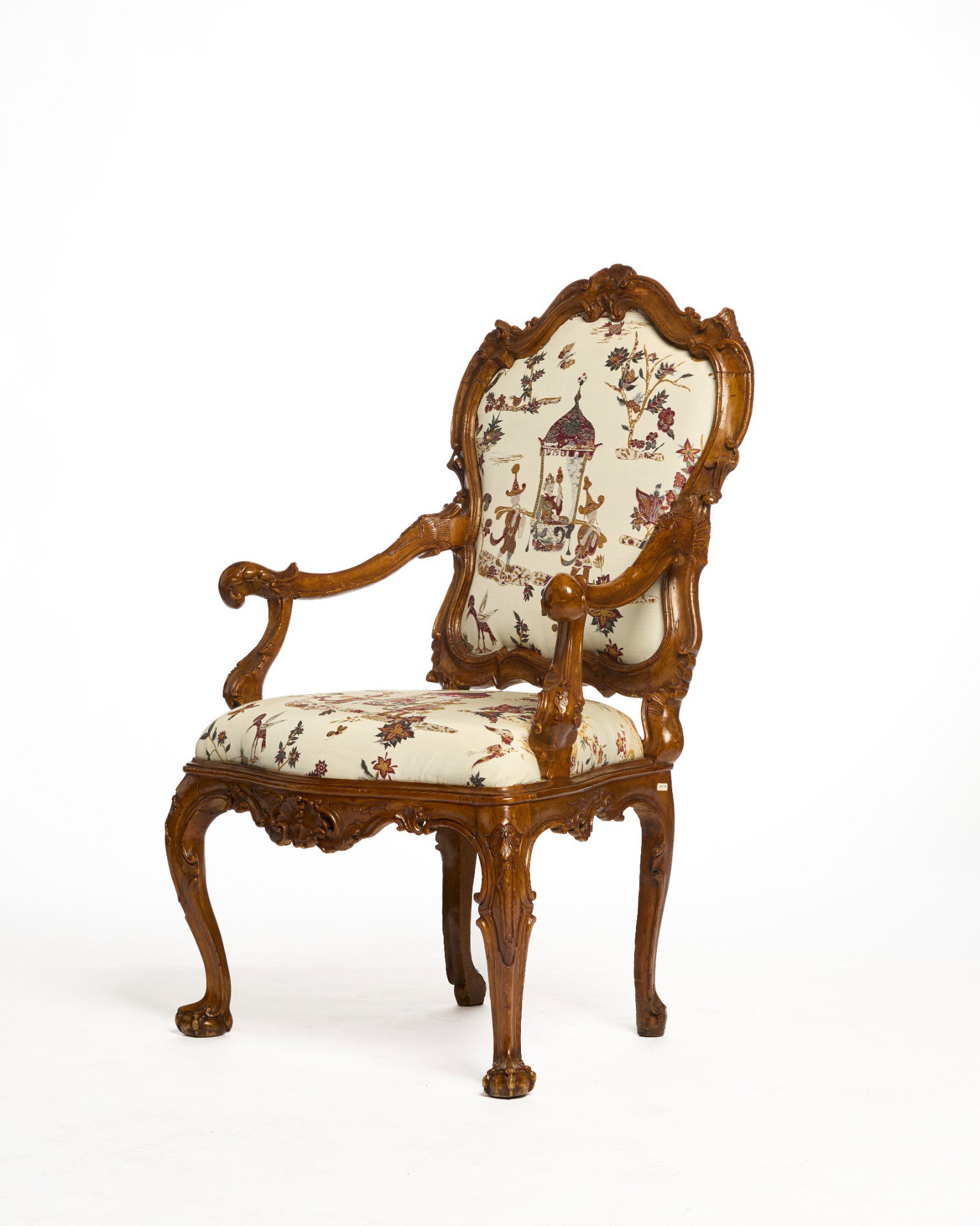
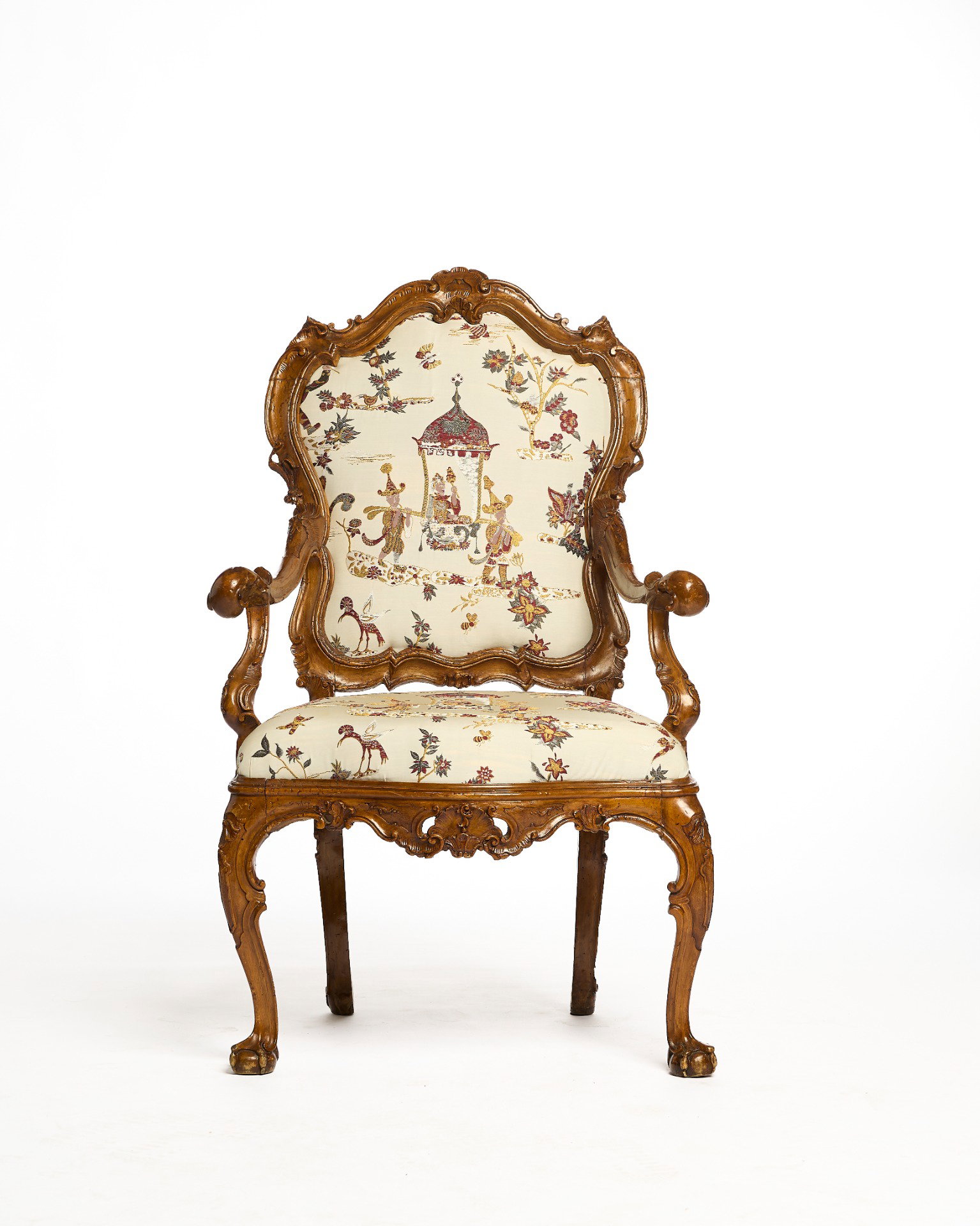
This 18th-century Venetian armchair dates back to the full Rococo period, with a carved wooden structure richly decorated with floral motifs and lion paw legs. The upholstery with "chinoiseries" features oriental scenes, reflecting the exotic and refined taste of the era.
Elegant and decorative, it embodies the opulence of the Venetian aristocracy.
Era
Eighteenth century, 1750
Material
carved walnut wood
Style
Louis XV
Origin
Venice
Type of legs and foot
Moved front legs with leonine paw termination, a distinctive element of mid-18th century Venetian production.
Structure and line of the backrest
Shaped back with a mixed profile, typical of the late Baroque Venetian taste.
Carving motifs
Carvings with foliage motifs and rocaille cartouches executed by hand, with excellent depth and movement.
The 18th-century Venetian armchair: Rococo elegance between form and carving
At the heart of 18th-century Venetian decorative art, the armchair was not just a piece of furniture, but a true symbol of social prestige. Among the most sought after by antique enthusiasts, 18th-century Venetian armchairs stand out for their fluid lines, sculptural richness and artisan quality.
Structural characteristics
Eighteenth-century Venetian armchairs belong to the Rococo taste, which preferred moving forms, elegant asymmetries and visual lightness. The shaped back, often high and undulating, welcomes the body with grace and grandeur. The curved, finely carved armrests blend harmoniously with the structure of the seat.
The front legs are almost always moved in a curl or lion's paw, while the rear ones are slightly arched, but simpler. The sinuous lines are accompanied by intense carving work with vegetal motifs, cartouches, volutes and shells, all executed by hand by master cabinetmakers.
Materials and techniques
The most used wood was walnut, appreciated for its resistance and ability to return detailed carvings. Sometimes softer woods were also used in models intended for gilding or lacquering, especially in aristocratic residences or palaces overlooking the Grand Canal.
The mortise and tenon construction without metal screws is typical of the era and still allows us today to distinguish an original structure from a modern copy.
Differences with other regional styles
Compared to the contemporary Lombard or Piedmontese production, Venetian armchairs are more spectacular and theatrical, with a greater emphasis on sculptural decoration. The French influence is present, but reinterpreted with typically Venetian flair, often according to the local Baroque architecture.