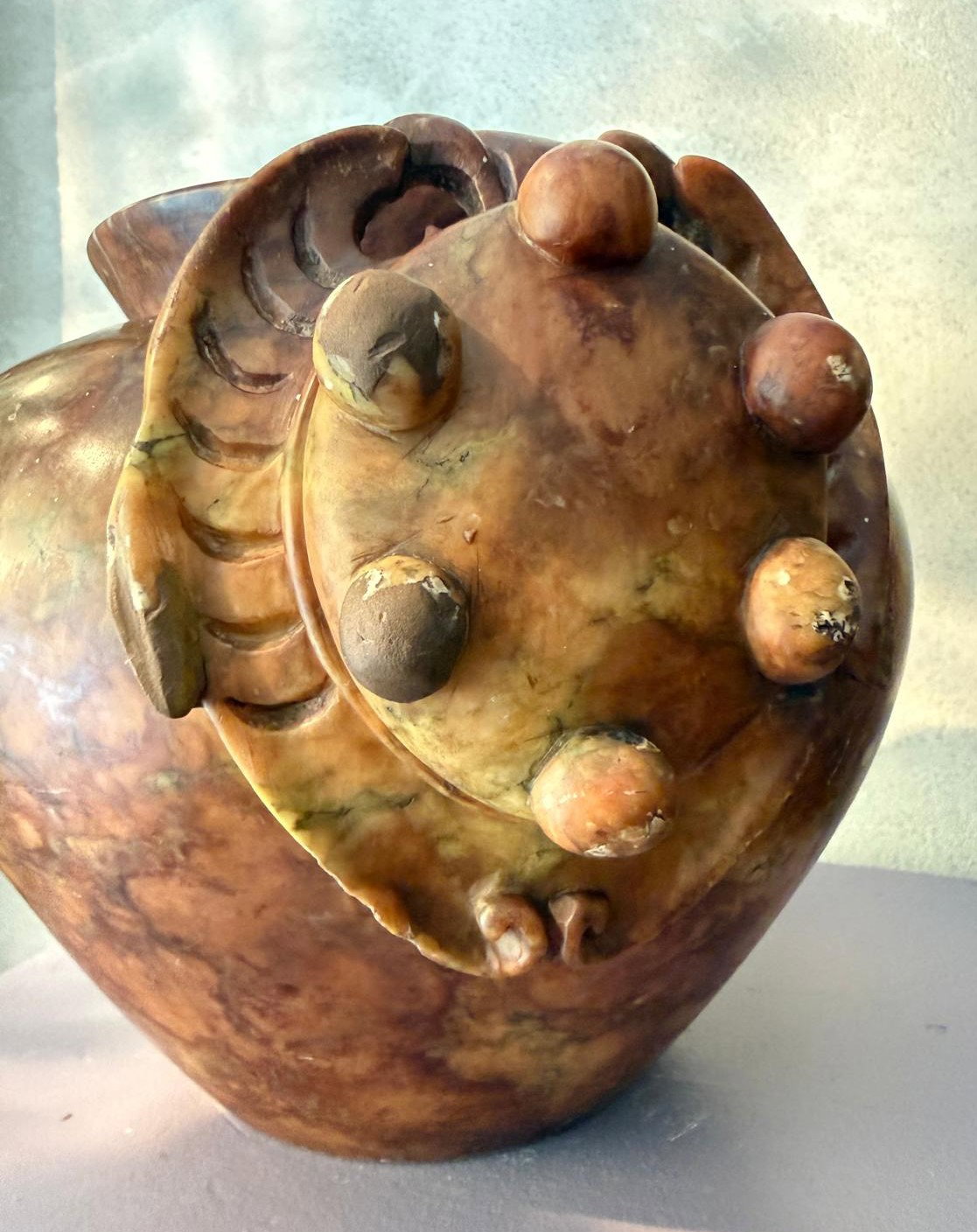
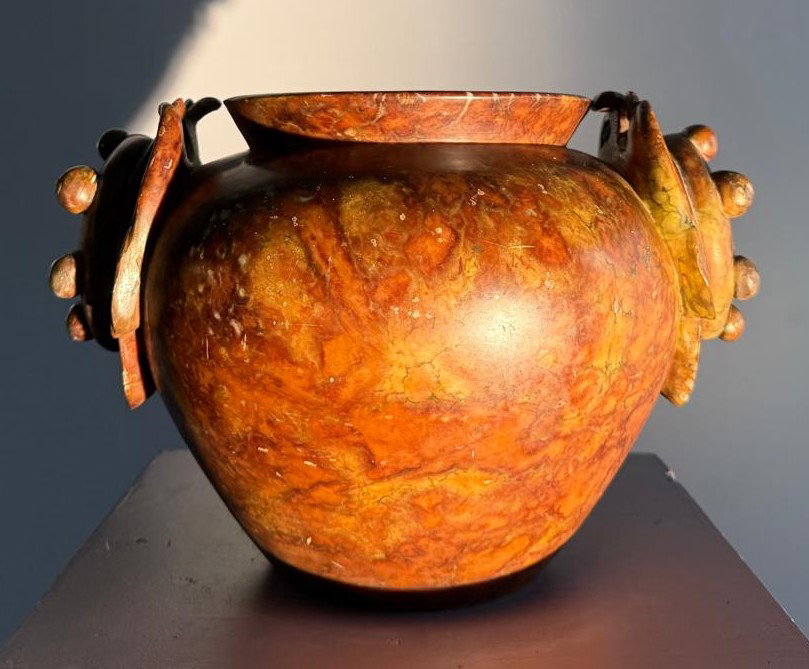
Vase in quince alabaster, Florence, late 16th – early 17th century
Description:
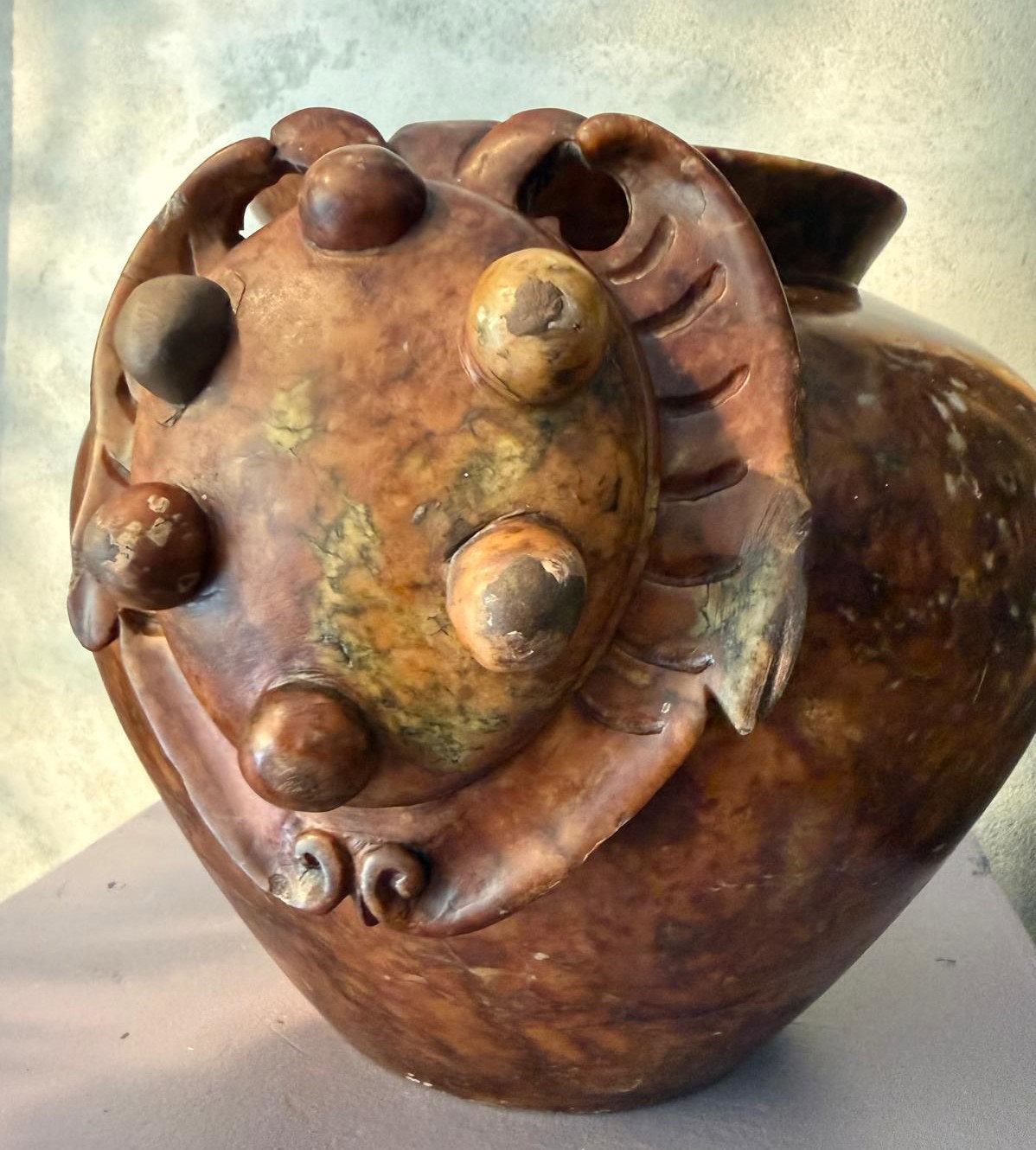
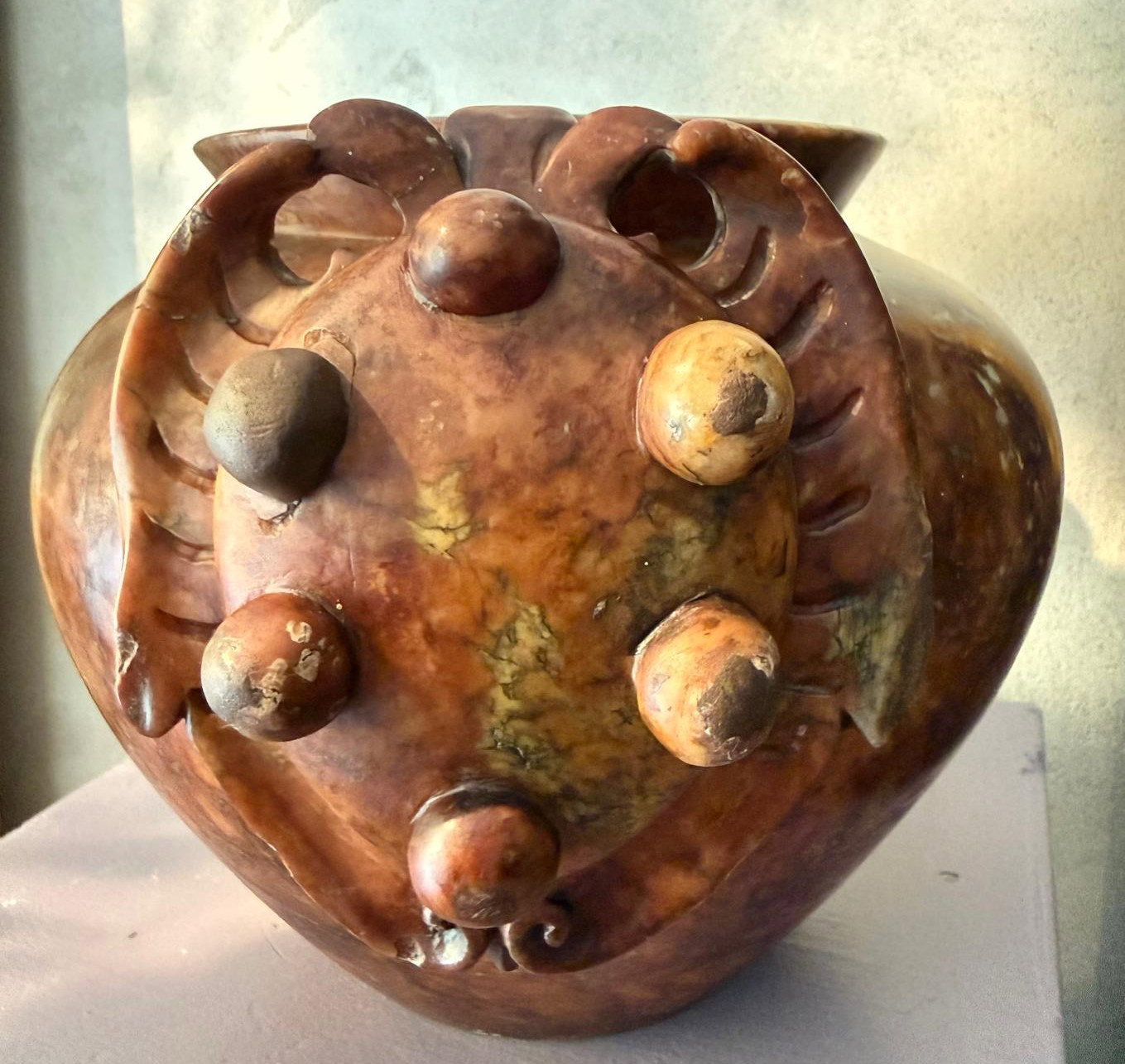
The vase, carved from a single block of quince alabaster, represents a significant example of Florentine stone production between the late 16th and early 17th centuries. The shape is embellished with two lateral handles, developed in cartouches decorated with six spheres in relief, which can be interpreted as heraldic bezants. This ornamental motif refers to the heraldic emblem of the Medici family, in particular the famous coat of arms with the six balls which, from the 15th century, became the dynastic symbol of the family.
The use of quince alabaster – a variety appreciated for its translucency and for the characteristic warm and irregular veins – demonstrates attention to precious and difficult to work materials, intended for high-ranking clients. The plastic rendering of the spheres, carved in relief, has not only decorative but also allusive value, configuring itself as a direct reference to the political and cultural prestige of the Medici in late Renaissance Florence.
From a typological point of view, the artifact is placed in a productive context that combines elements of Mannerist taste with a growing interest in the collection of stone objects, conceived not only as furnishings, but also as testimonies of belonging, status and family identity.
The vase, due to its material quality and evident symbolic value, can therefore be interpreted as part of that culture of "dynastic luxury" which, in Grand Ducal Florence, found in the decorative arts a powerful instrument of representation and memory.
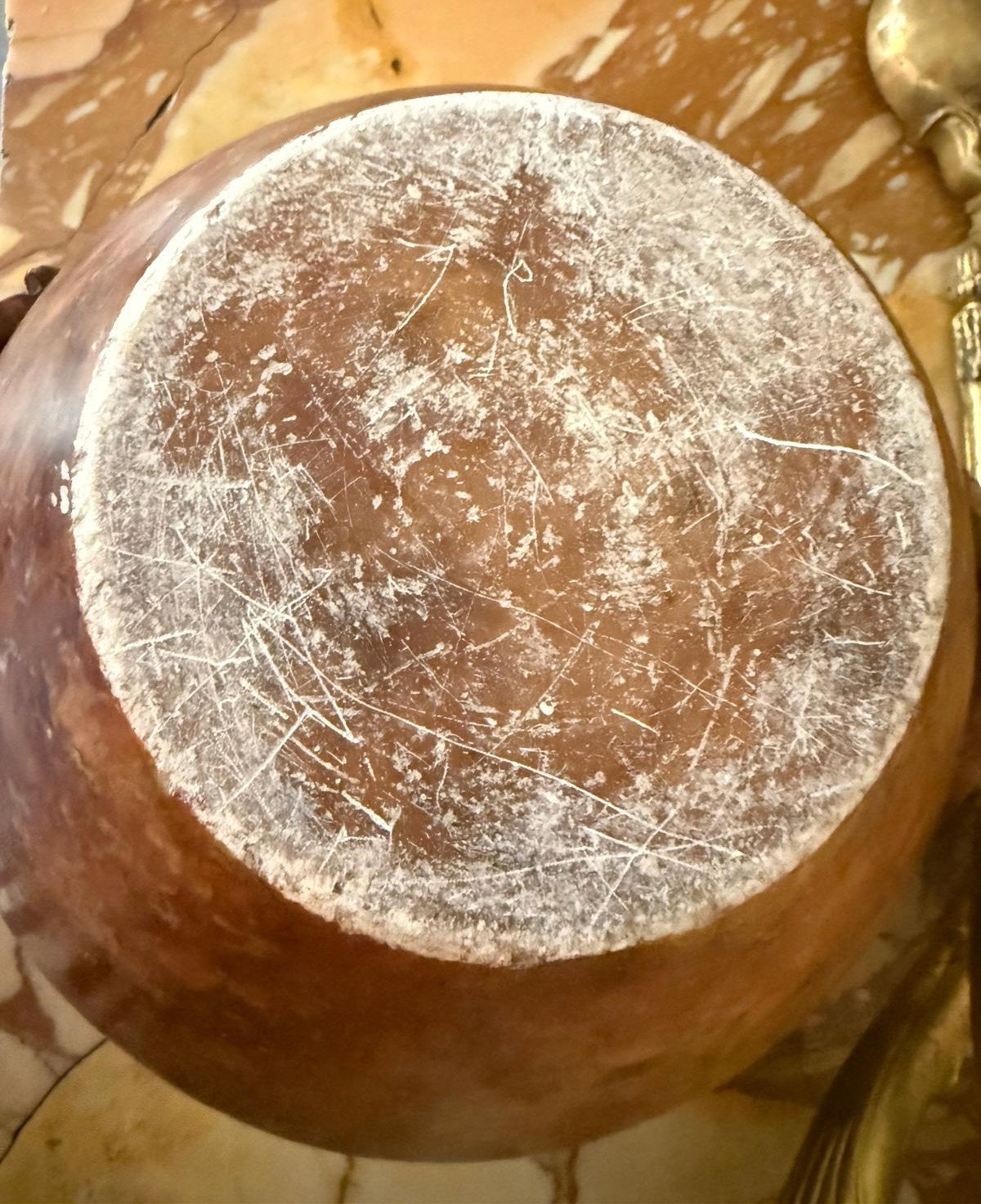
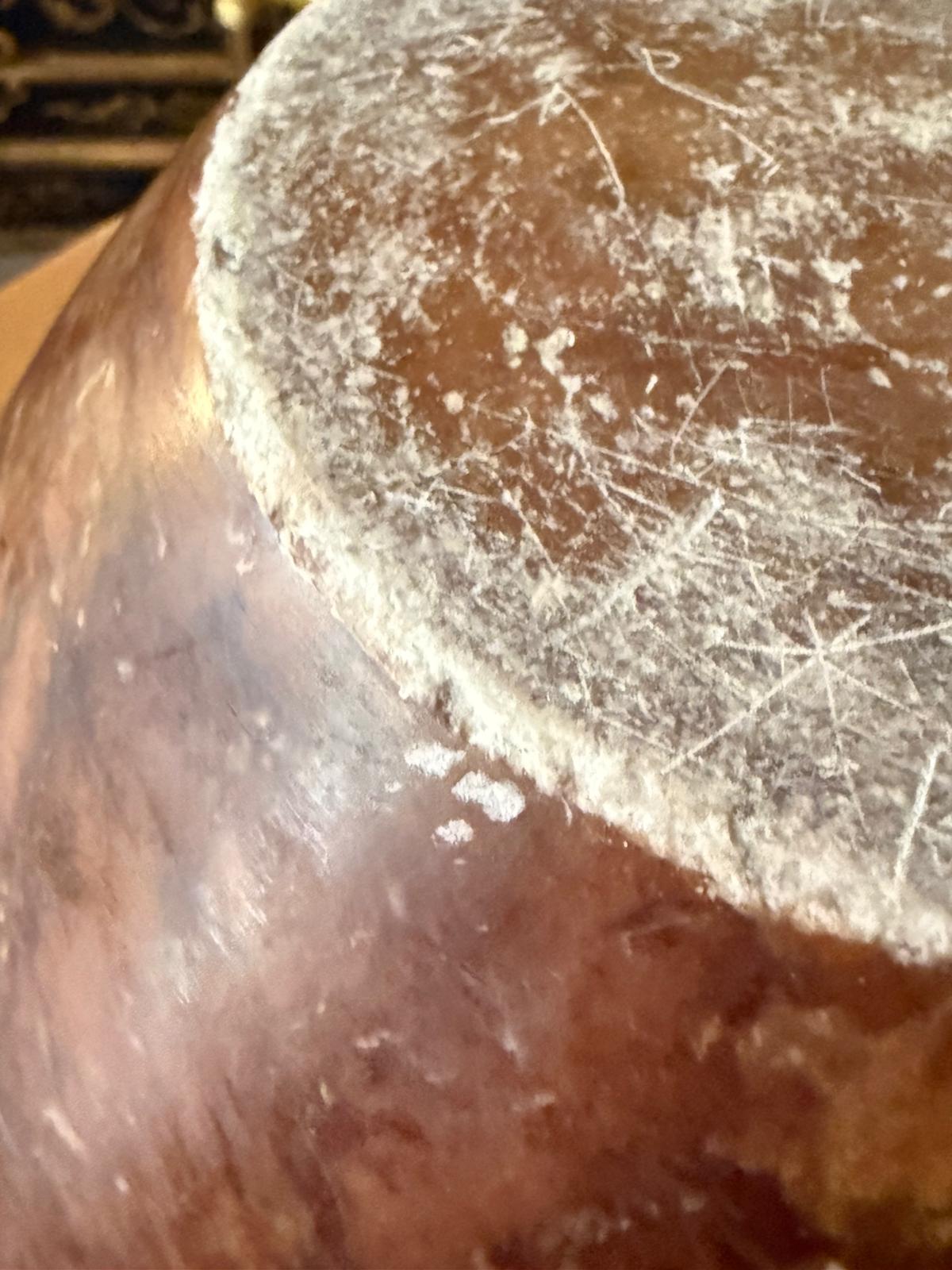
Wear on the underside of the vase and restoration to the cartouches and spheres, compatible with the era and use.

.jpeg)
.jpeg)
.jpeg)
.jpeg)