Bernardo Canal (1674-1744)
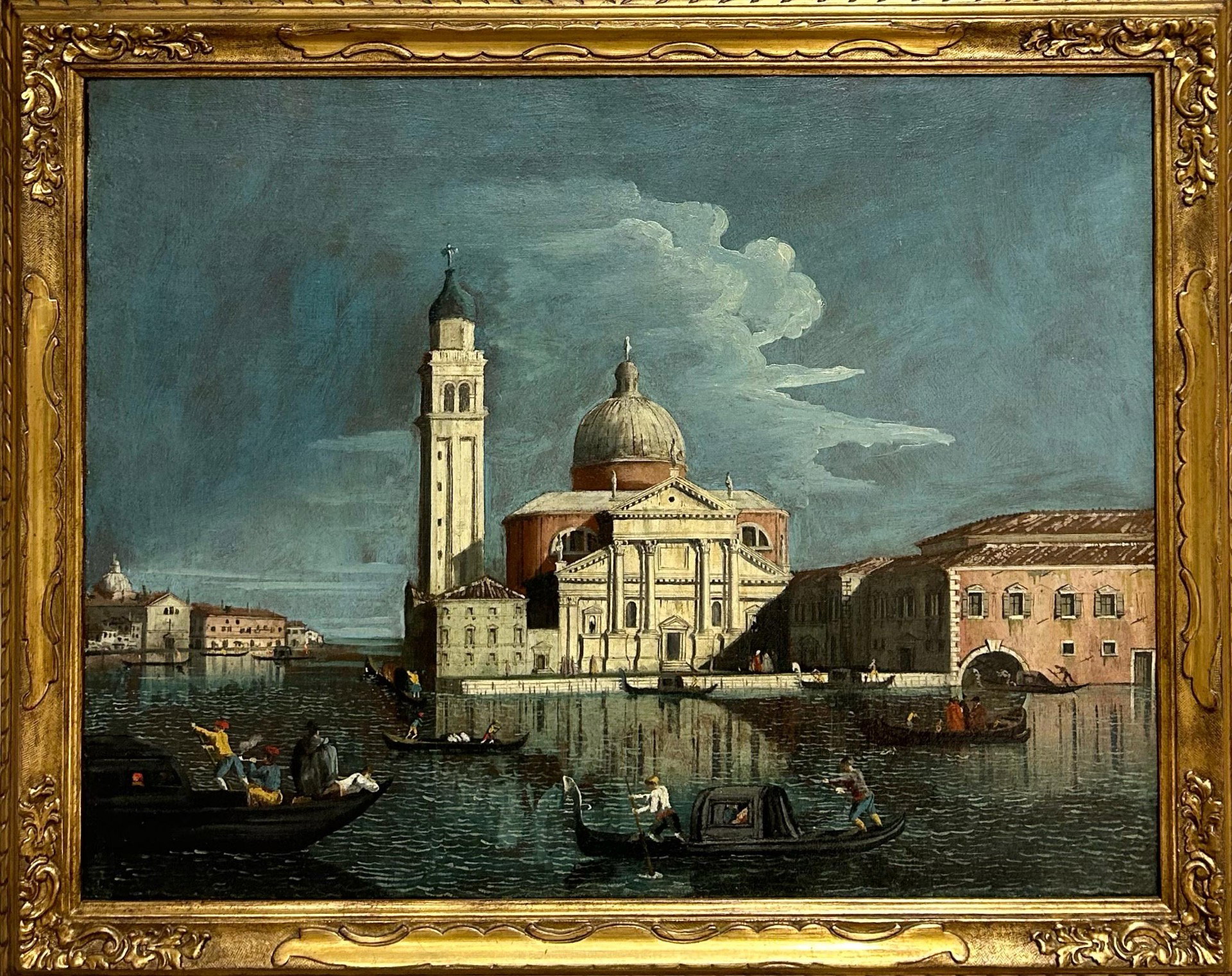
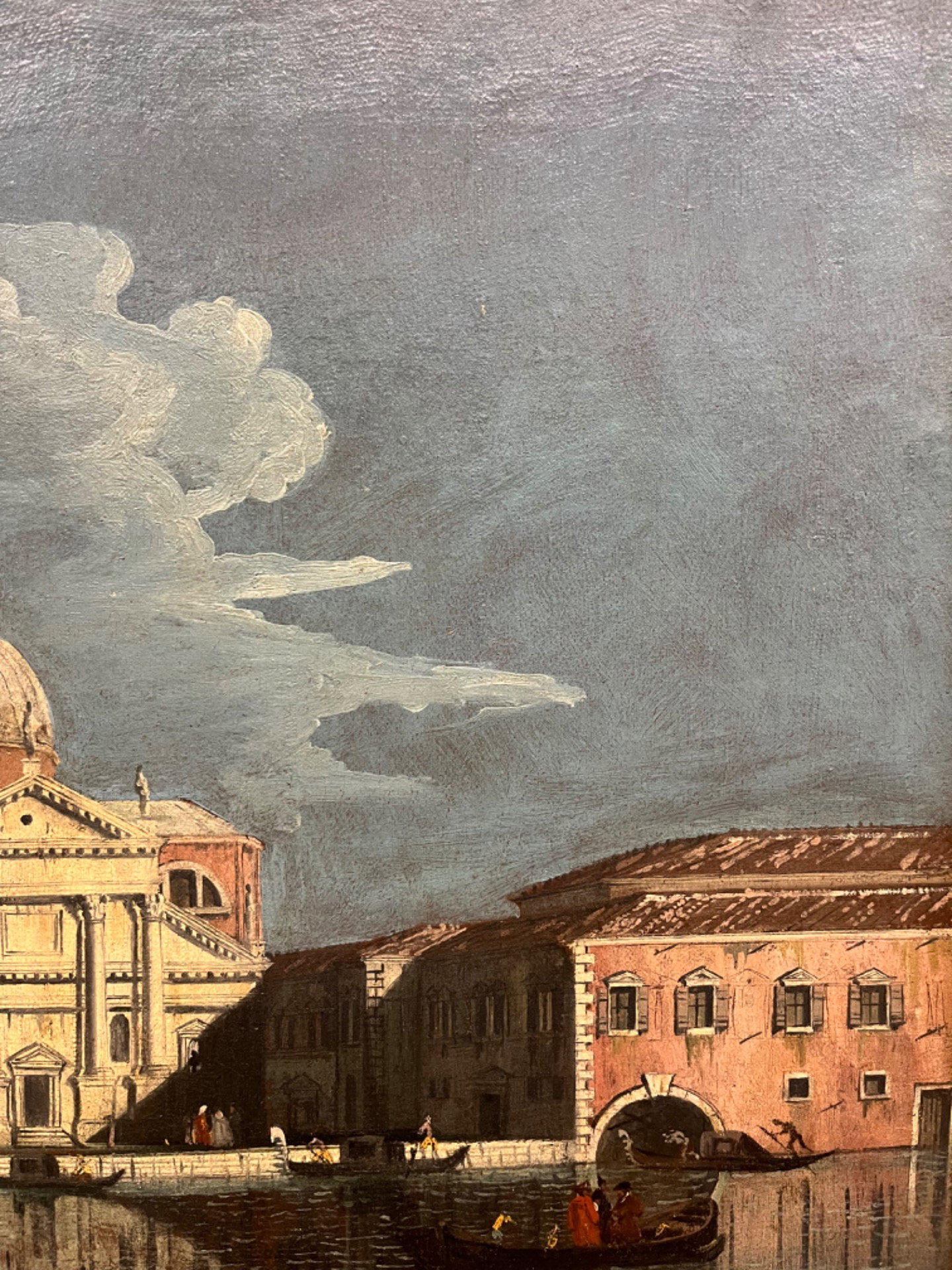
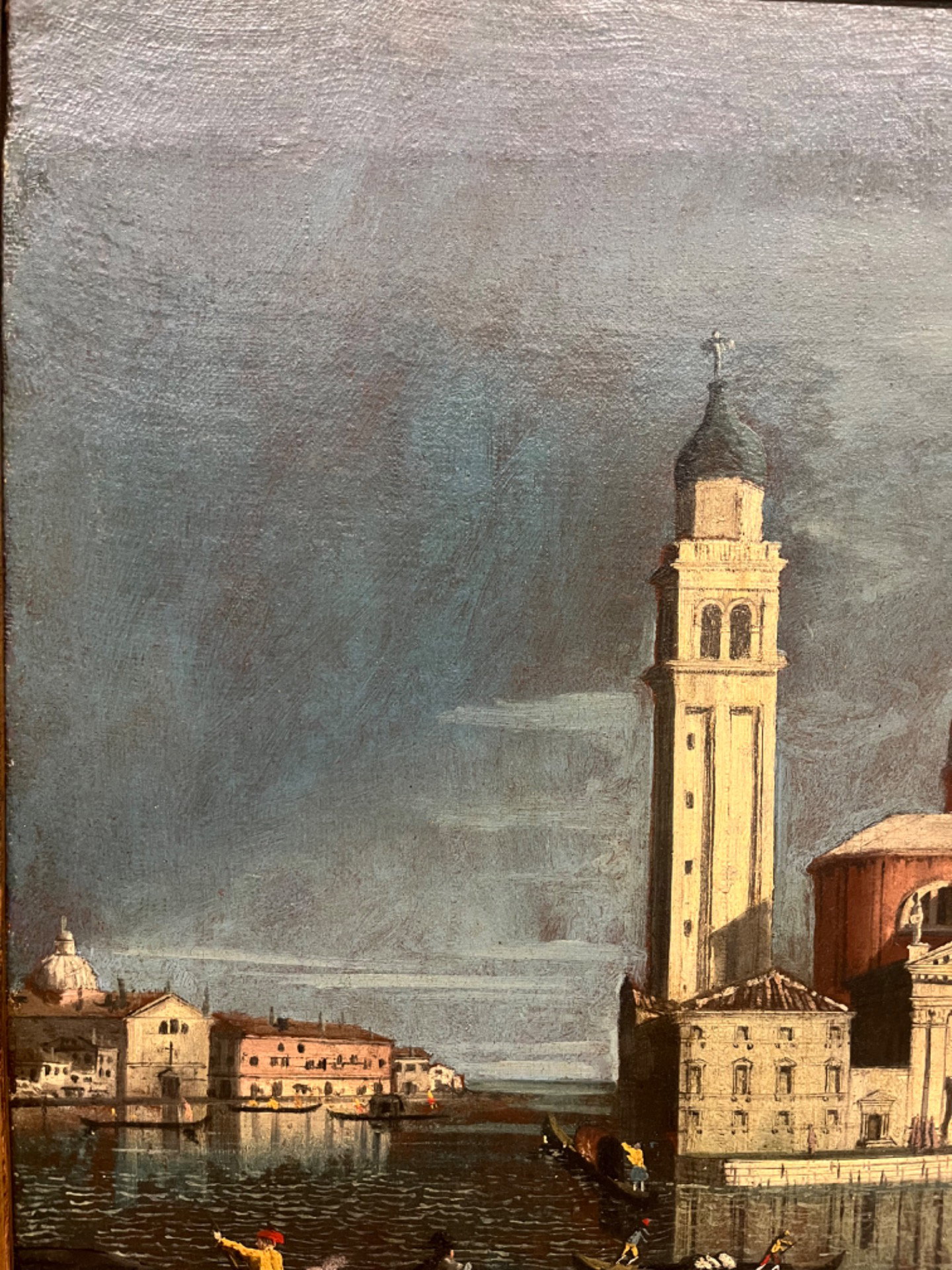
View of the church of San Giorgio Maggiore
oil on canvas
57 x 73 cm
Critical review by Prof. Dario Succi
This evocative, luminous view, depicting the church of San Giorgio Maggiore, is the work of BERNARDO CANAL (Venice 1674-1744), the father of the famous Antonio Canal known as Canaletto, with whom he worked as an appreciated set designer in the most important theatres of Venice and Rome between 1716 and 1720.
Already mentioned as a "painter" in the baptism certificate of his son Antonio (October 17, 1697), Bernardo Canal is registered in the registers of the fraglia (corporation) of Venetian painters in the years 1717 and 1737-1743. On December 28, 1739, he was elected to the position of Prior of the Collegio dei Pittori, of which he was a member, obtaining a recognition that seems to imply the enjoyment of considerable prestige.
Of Bernardo Canal, who had fallen into oblivion for over two centuries, not even a painting was known until Giuseppe Fiocco, on the occasion of the exhibition Venetian Painting. First exhibition of ancient art of Venetian private collections (Venice 1947, p. 12, nn. 71-72) made known two views bearing on the back of the original canvas the inscription "Bernardo Canal fecit 1735". The two paintings were part of a series of five Venetian views already preserved in the Palazzo Salom in Venice and . later transferred by the Salom family to Villa Mansi near Segromigno Monte (Lucca). The other three views, published by Rodolfo Pallucchini in 1969 (in the article "Notes for Venetian vedutismo" in the magazine "Muzeum i Tworka", Warsaw) also included that Piazza San Marco towards San Geminiano which constitutes one of the fundamental points of reference in the reconstruction of the artist's pictorial itinerary for the inscription existing on the back of the original canvas "Bernardo Canal fecit 1734" (the painting was reproduced in colour in the catalogue of the exhibition, curated by me, Luca Carlevarijs and the Venetian view of the eighteenth century, Palazzo della Ragione, Padua, 1994, p. 259). For other contributions of mine on the artist, see the essay "Bernardo Canal: set designer and vedutista" in the catalogue of the exhibition From Canaletto to Zuccarelli, the Veneto landscape of the eighteenth century, (Villa Manin, Udine, 2003, pp. 168-173) and the fact sheets in the volume The flower of Venice | Paintings from the 17th to the 19th century in private collections
(2014, pp. 180-186).
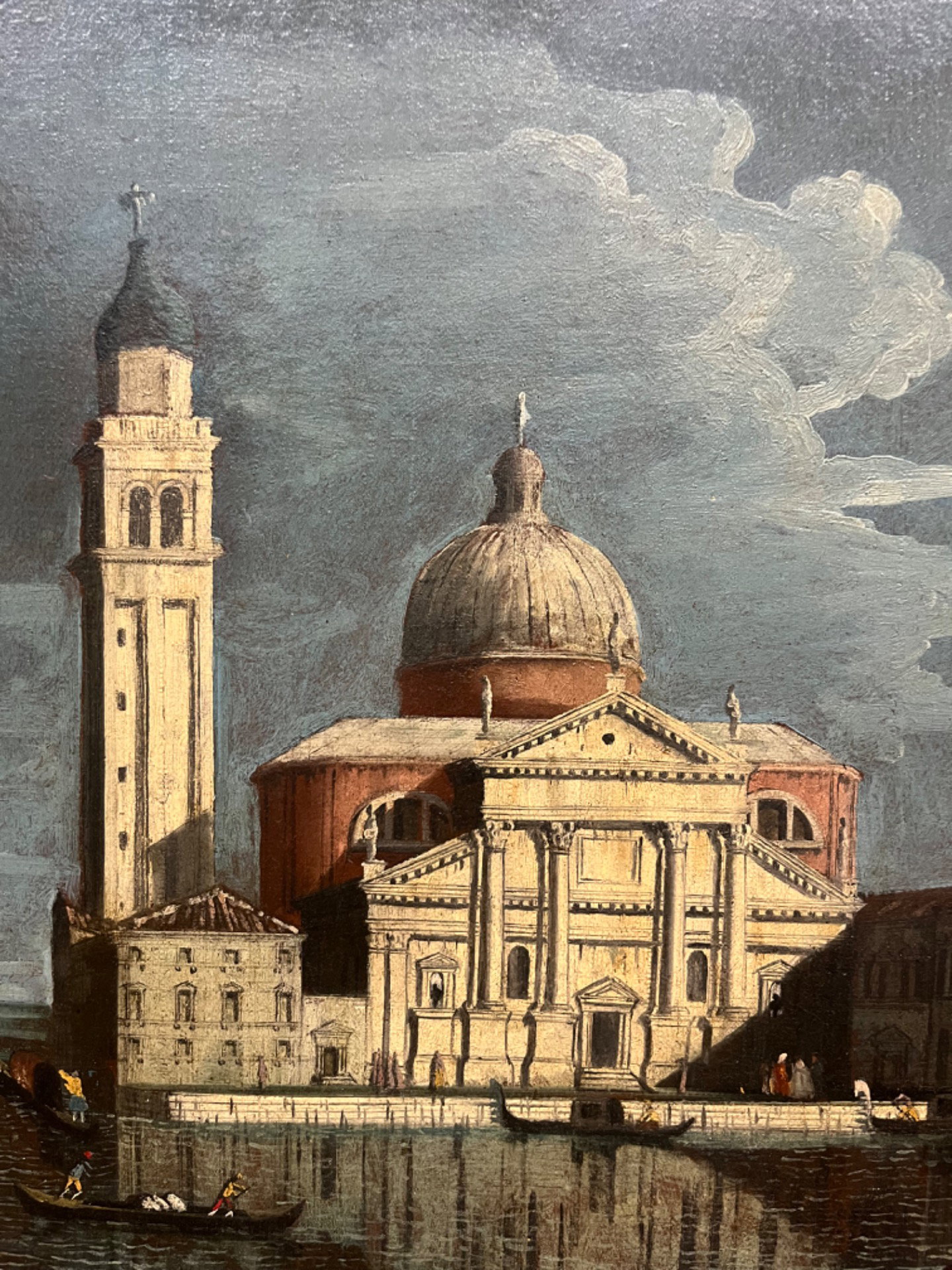
Bernardo Canal is an artist whose pictorial production can now be easily identified, not only for the peculiar stylistic and chromatic qualities, but also on the basis of comparison with other signed and dated views that have re-emerged in recent years, characterized by that diffused luminosity that exemplifies the expressive qualities of the painter in the various phases of the artistic itinerary. Bernardo Canal's works are characterized by an accurate, but not lenticular, rendering of the architectural elements, the pearly blues of the skies furrowed by cumulus clouds with a zigzagging pattern, the rounded contour impressed on the numbers of the figures inspired by the models of Canaletto or Richter.
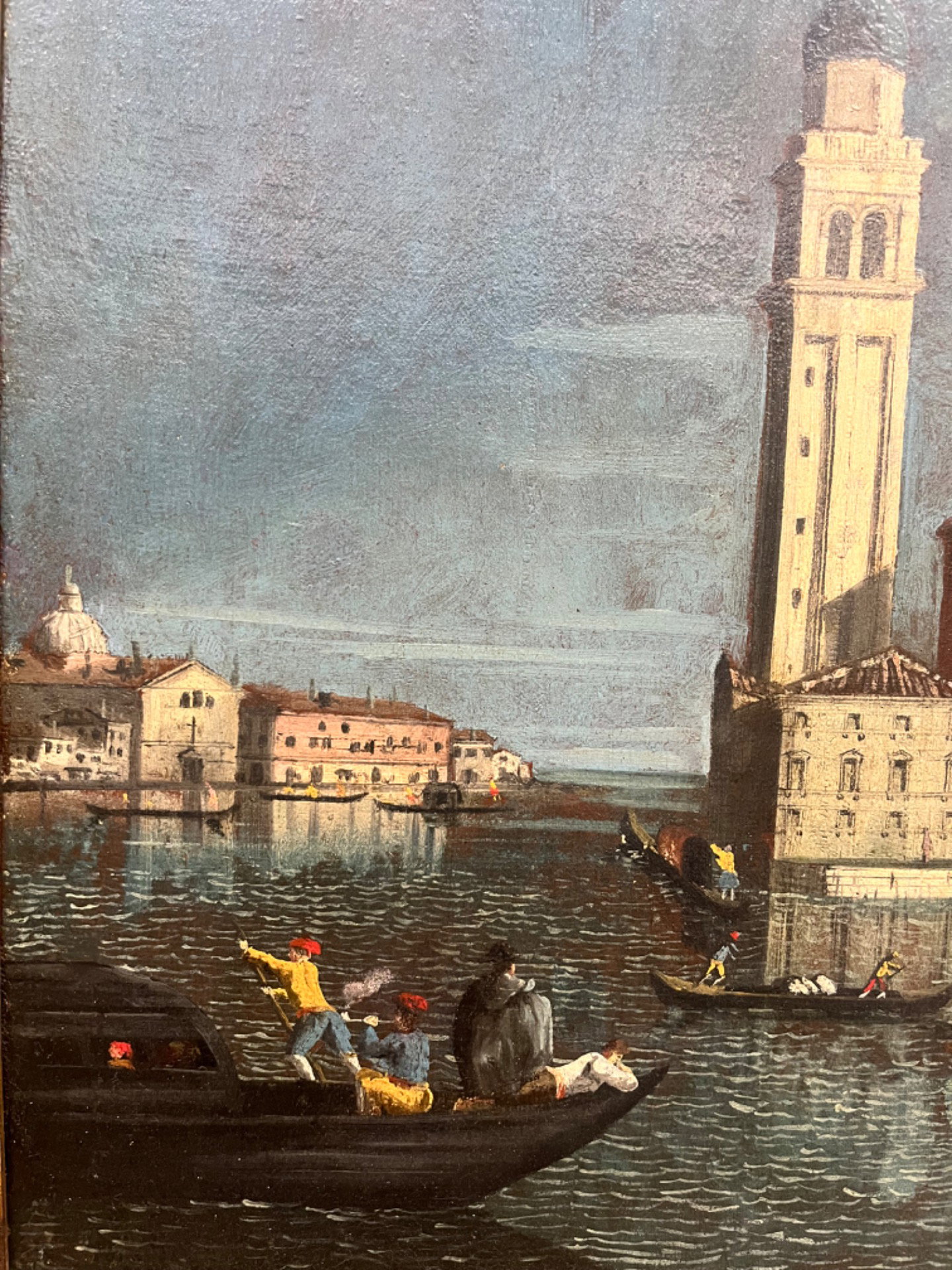
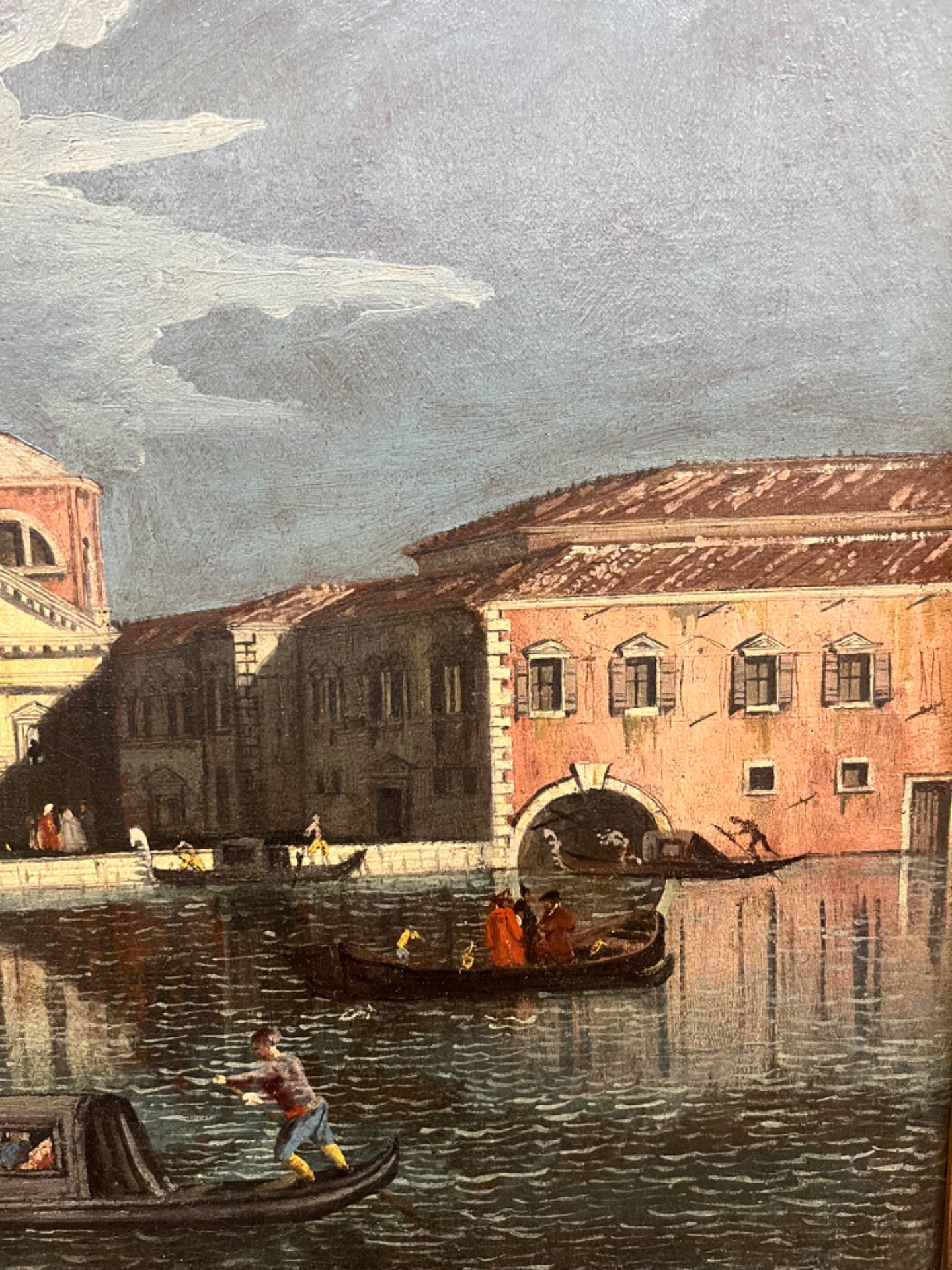
The painting studied here depicts the Basin of San Marco with the church of San Giorgio Maggiore taken with the top of the bell tower in the bulb shape whose renovation (replacing the previous inverted cone) was completed in 1727. The light effect, set on cold tones, with the facade of the church reflected in the lagoon waters animated by boats of various kinds and by vividly dressed rowers, is particularly successful.
A stylistically similar but small view (17x25 cm) depicting the entire complex of the island of San Giorgio Maggiore taken from a .. point of view slightly shifted to the right, was published in my volume "Il fiore di Venezia" (2014, p. 186) together with the pendant depicting "The church of Santa Maria della Salute."
The painting studied here, characterized by a attenuated chiaroscuro under. the sky moved by the typical zigzagging clouds, constitutes a notable document of the productive activity of the Venetian master datable around the 1730s.