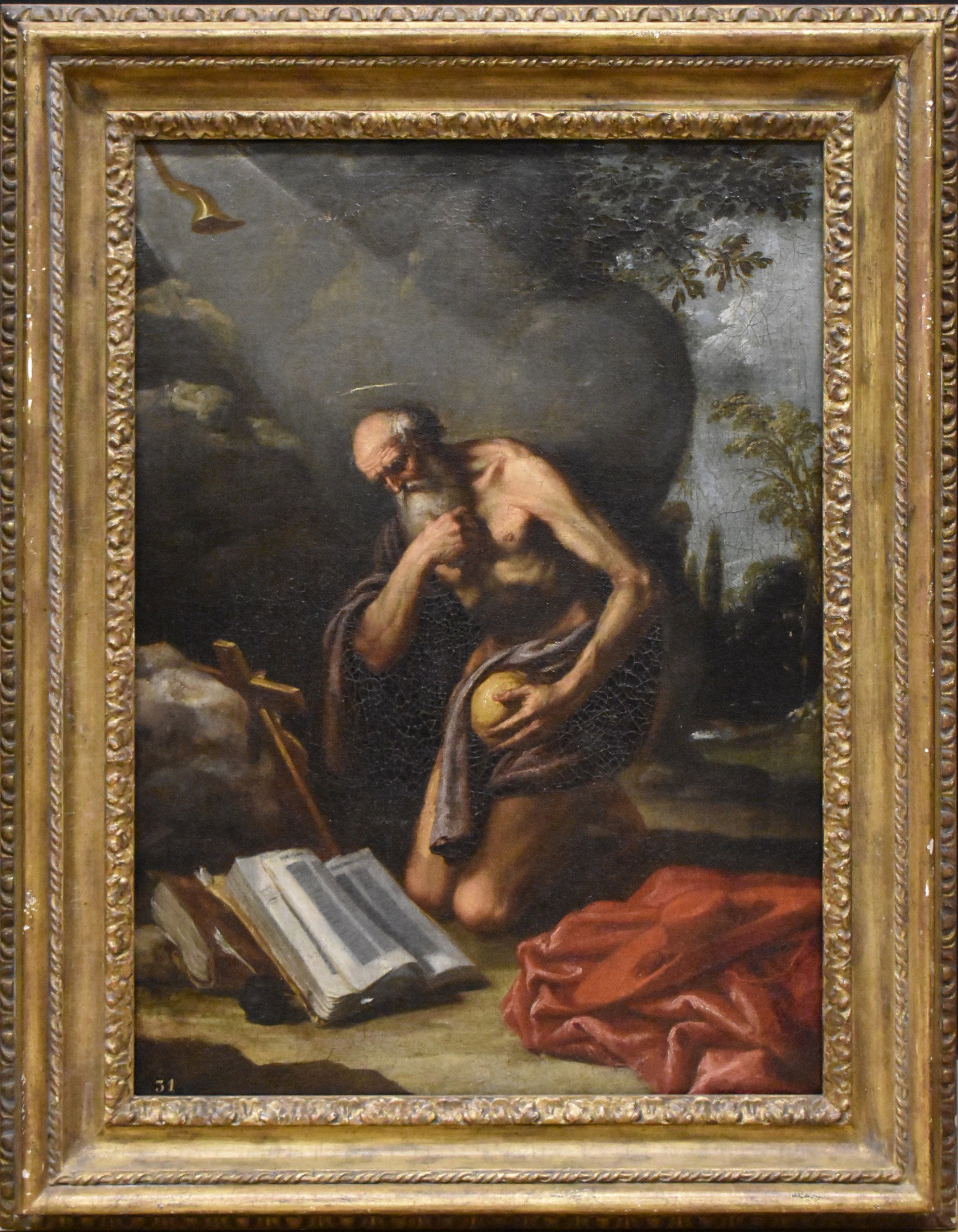
Orazio Fidani (Florence 1610 - Florence 1656)
Penitent Saint Jerome
oil on canvas
61 x 44 cm
The beautiful painting presented is an addition to the catalog of the painter
Orazio Fidani. A pupil of Bilivert, another Florentine active in Rome and Florence, from whom he derived his taste for subjects of intimate religiosity characterized by muted colors and set in tenuous shadows, Fidani gravitated towards a naturalism with soft and romantic undertones, not without connections to Furini, especially in the sfumato and enveloping chiaroscuro.
Ours, with a stylistic signature characterized by vivacity and swiftness of touch and a warm palette ranging from the brown-green tones of the background to the pinks of the complexions to the bright and iridescent red of the cloak abandoned on the ground along with the cardinal's hat, is in line with the production of the so-called Tuscan naturalists, that is, those painters who from the twenties of the seventeenth century - until the affirmation of the Baroque - drew from Caravaggism the lesson of the 'natural,' ennobling it on the tradition of Florentine drawing. The result of this attitude are canvases of various subjects that depict, as in this case, characters inserted into landscapes characterized by an abundant, but always idealized, nature, like the one in which our Saint Jerome is placed. The Doctor of the Church is caught in the act of beating his chest with the stone he holds in his right hand; he kneels in front of the crucifix leaning against the rock, not far from the volumes and the inkwell that allude to Jerome's revision of the Vulgate and his numerous exegetical writings.
In the upper left, in the beam of light that strikes the figure, appears the trumpet with which the angel of the Apocalypse announces the Judgment, thus stimulating reflection on death, a moment of reunion with God, to which, as a memento mori, also refers to the skull that the old penitent clutches to himself with his left hand.