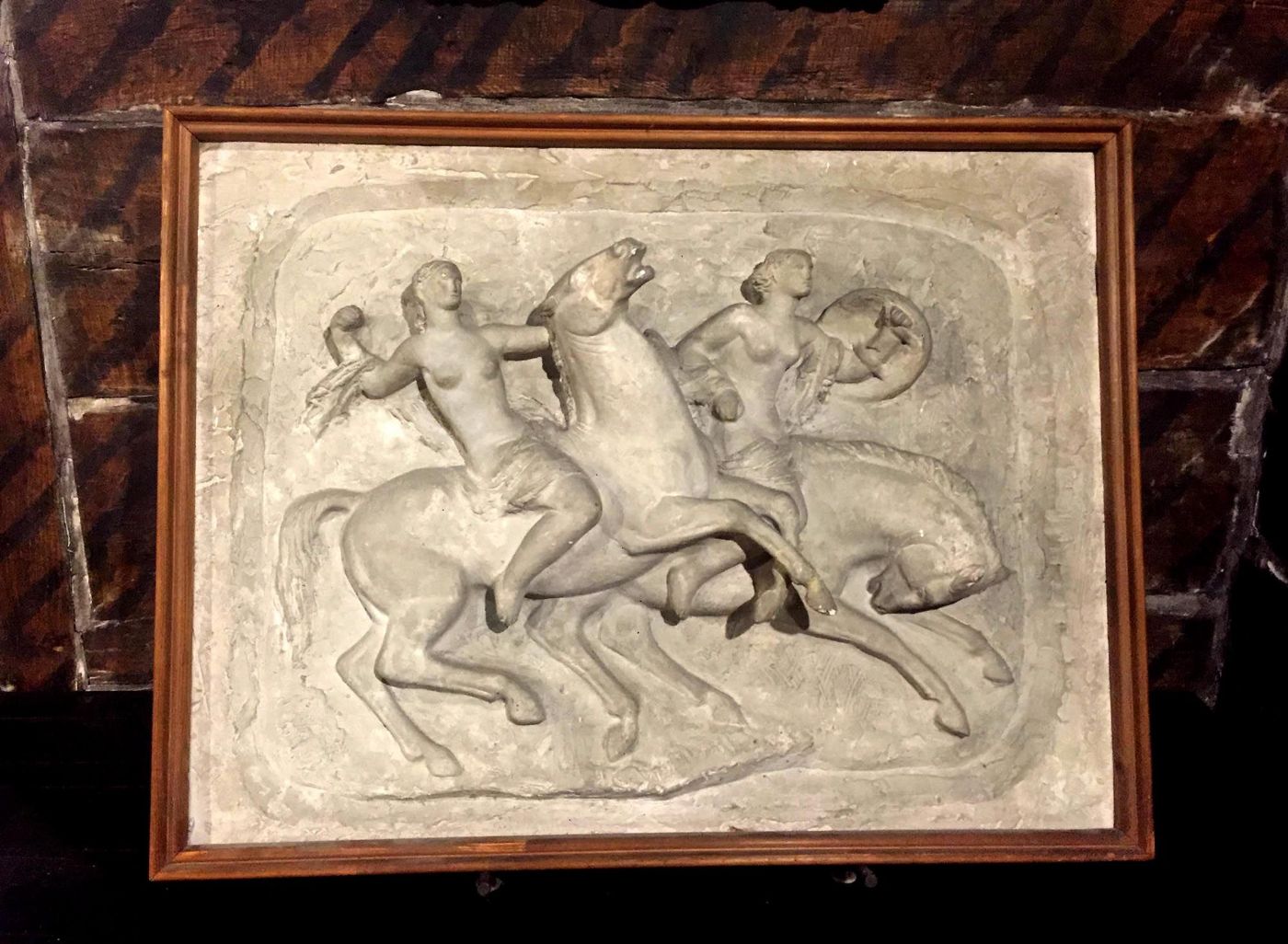
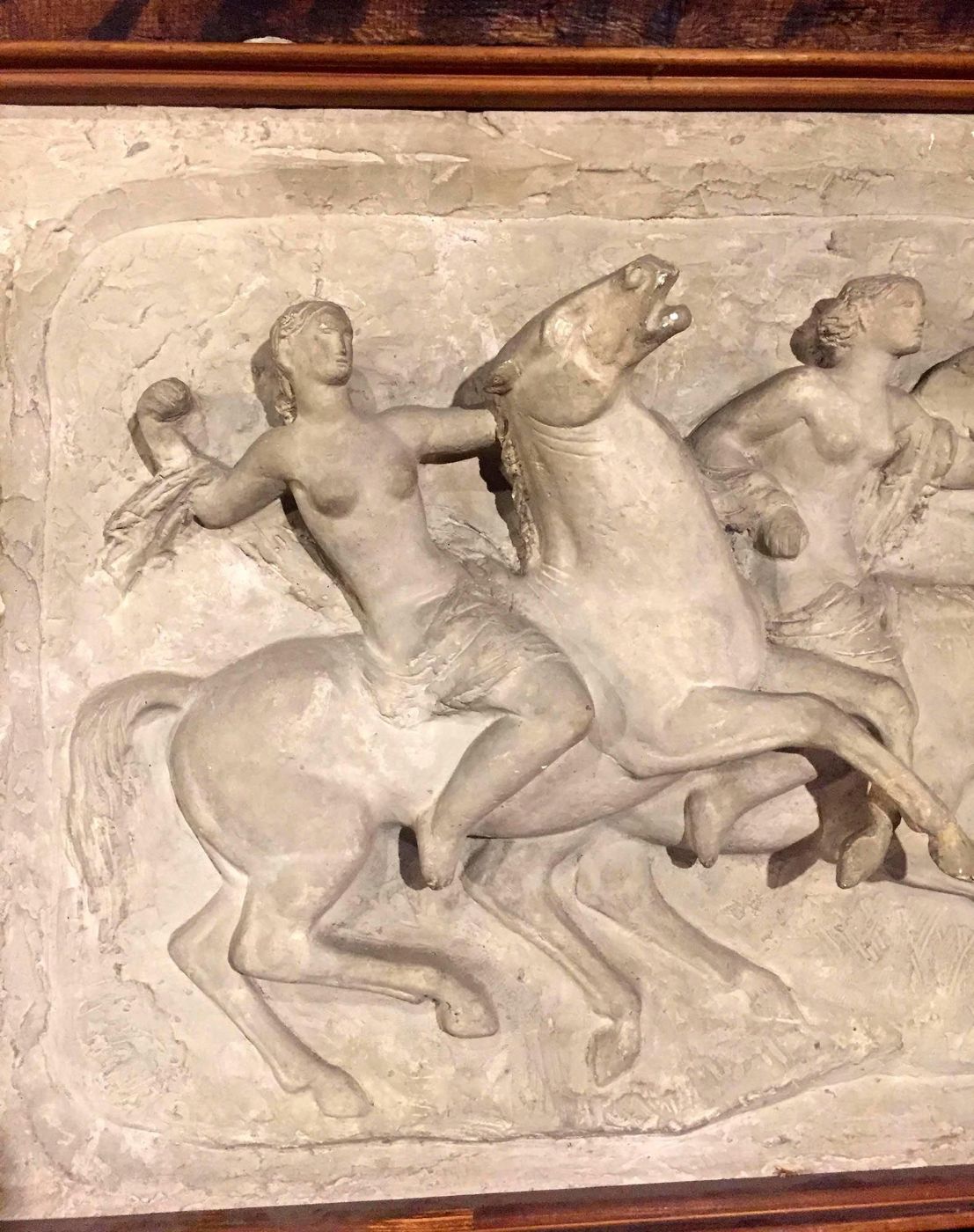
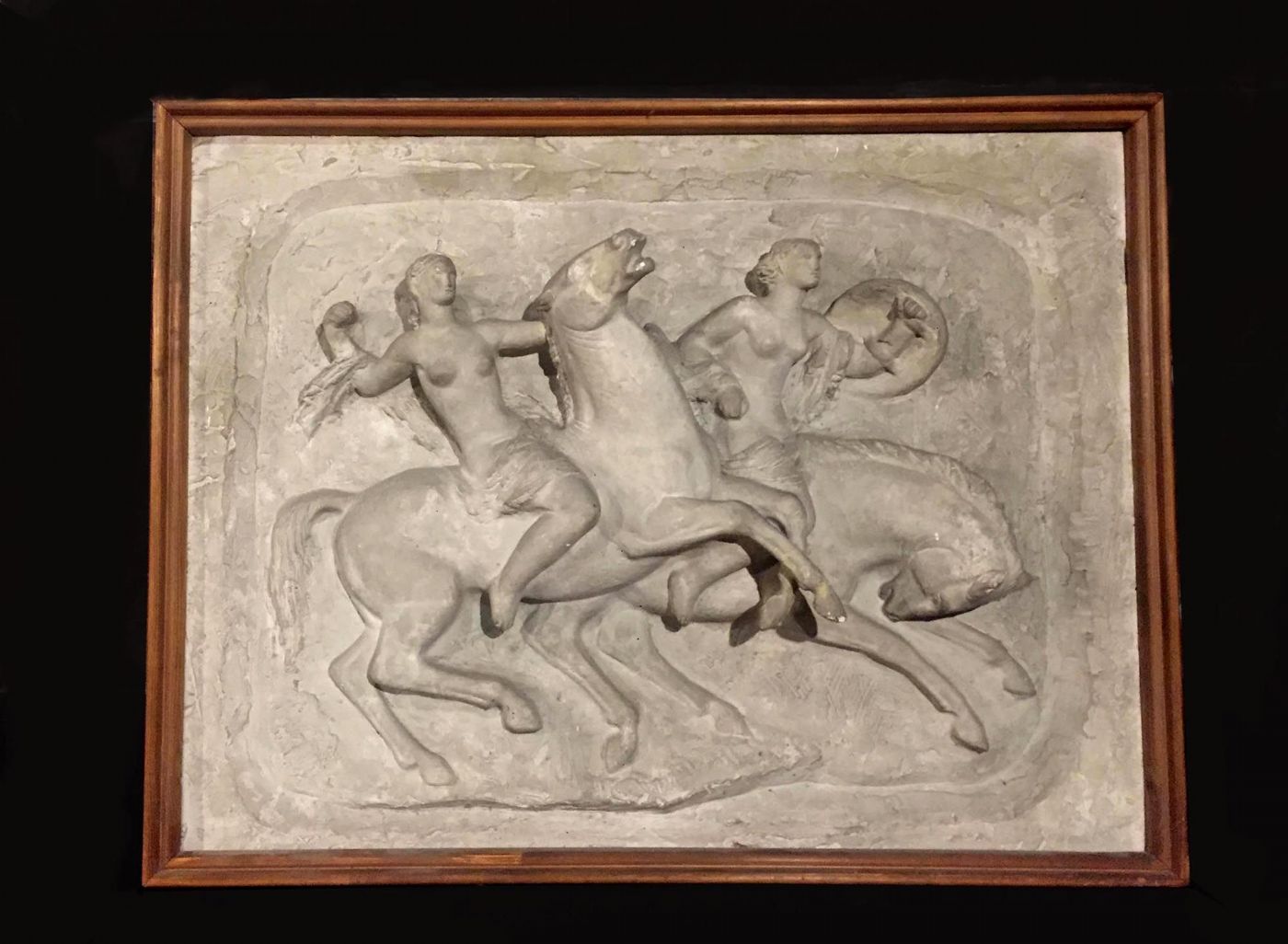
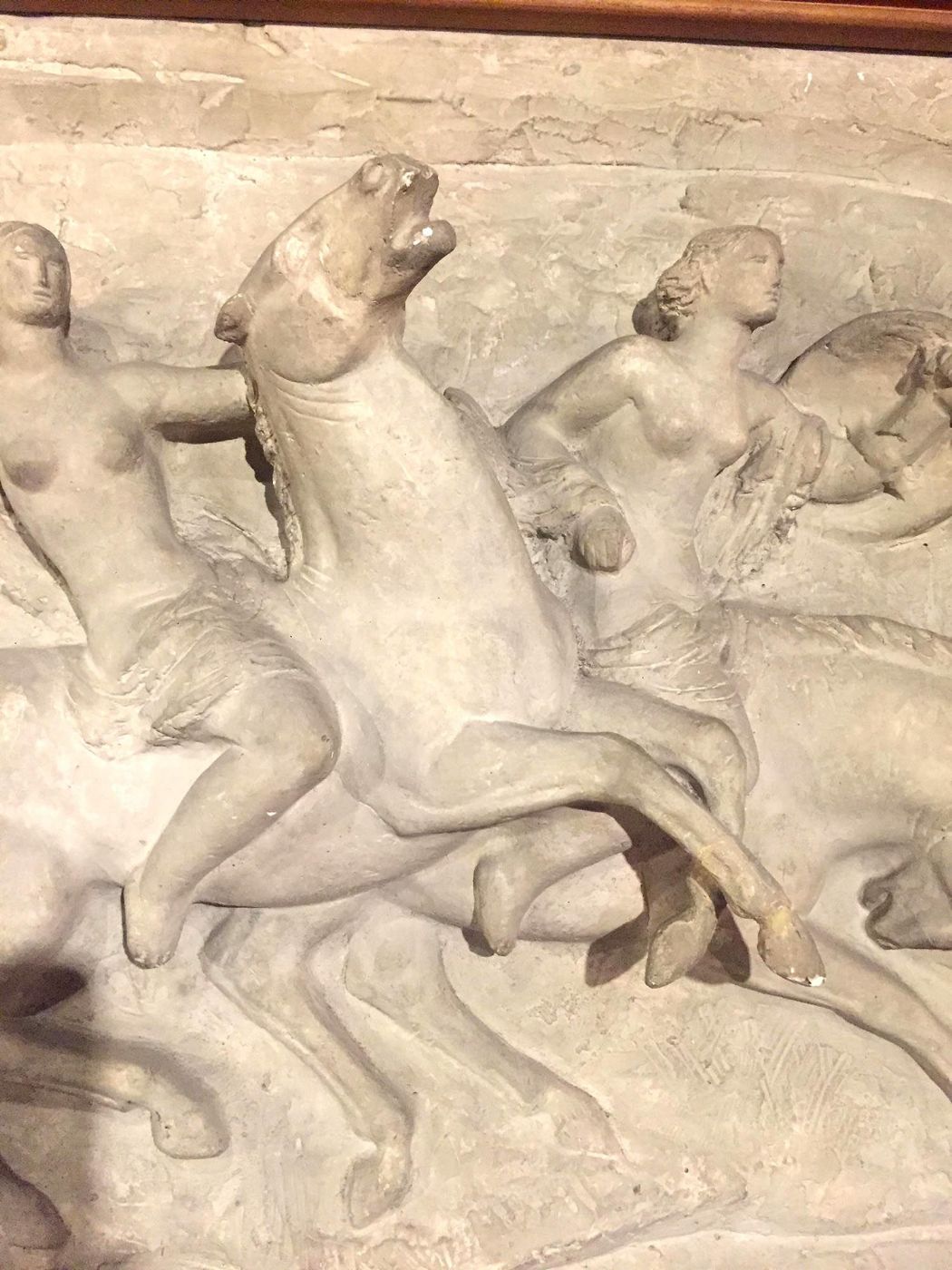
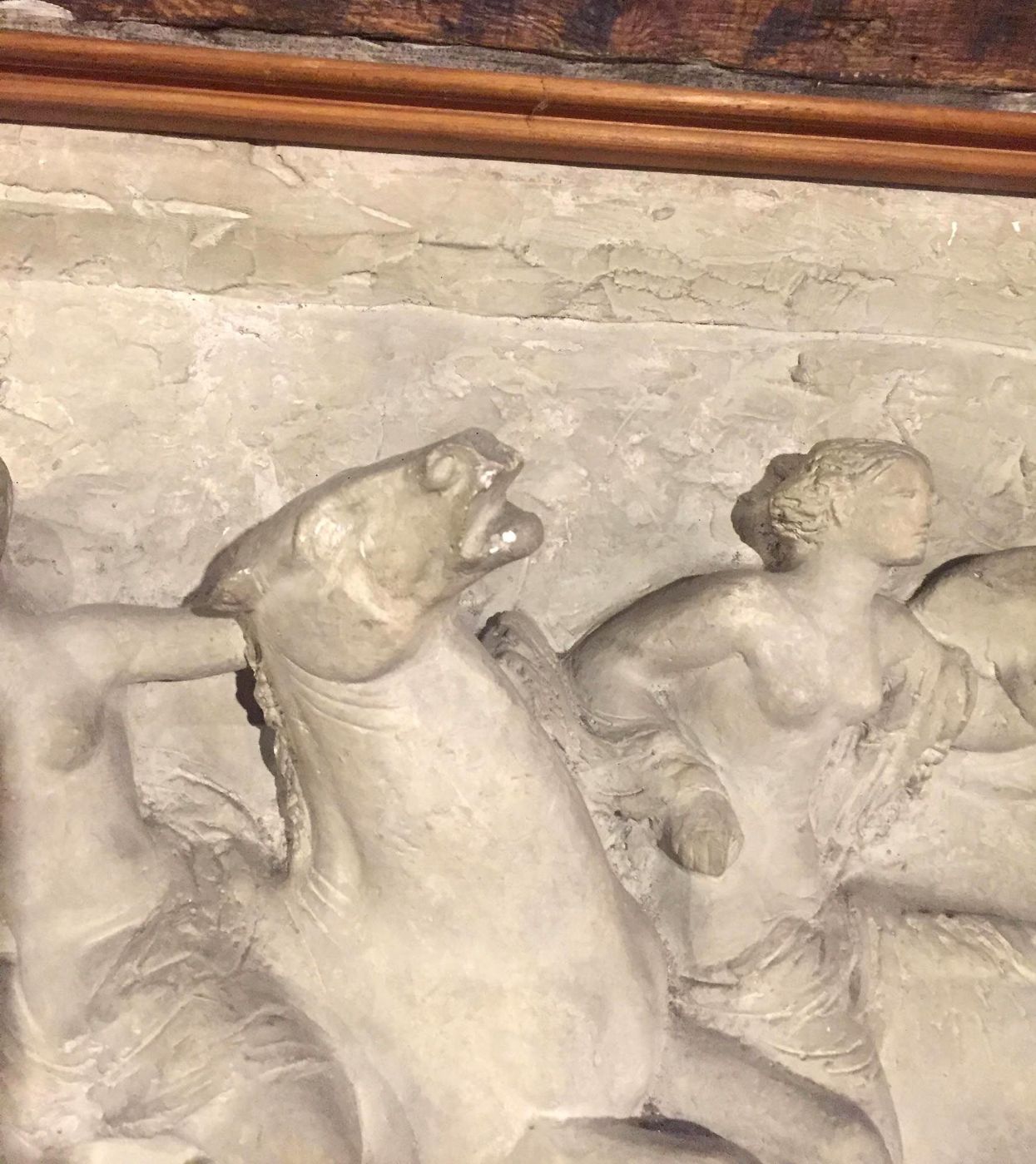
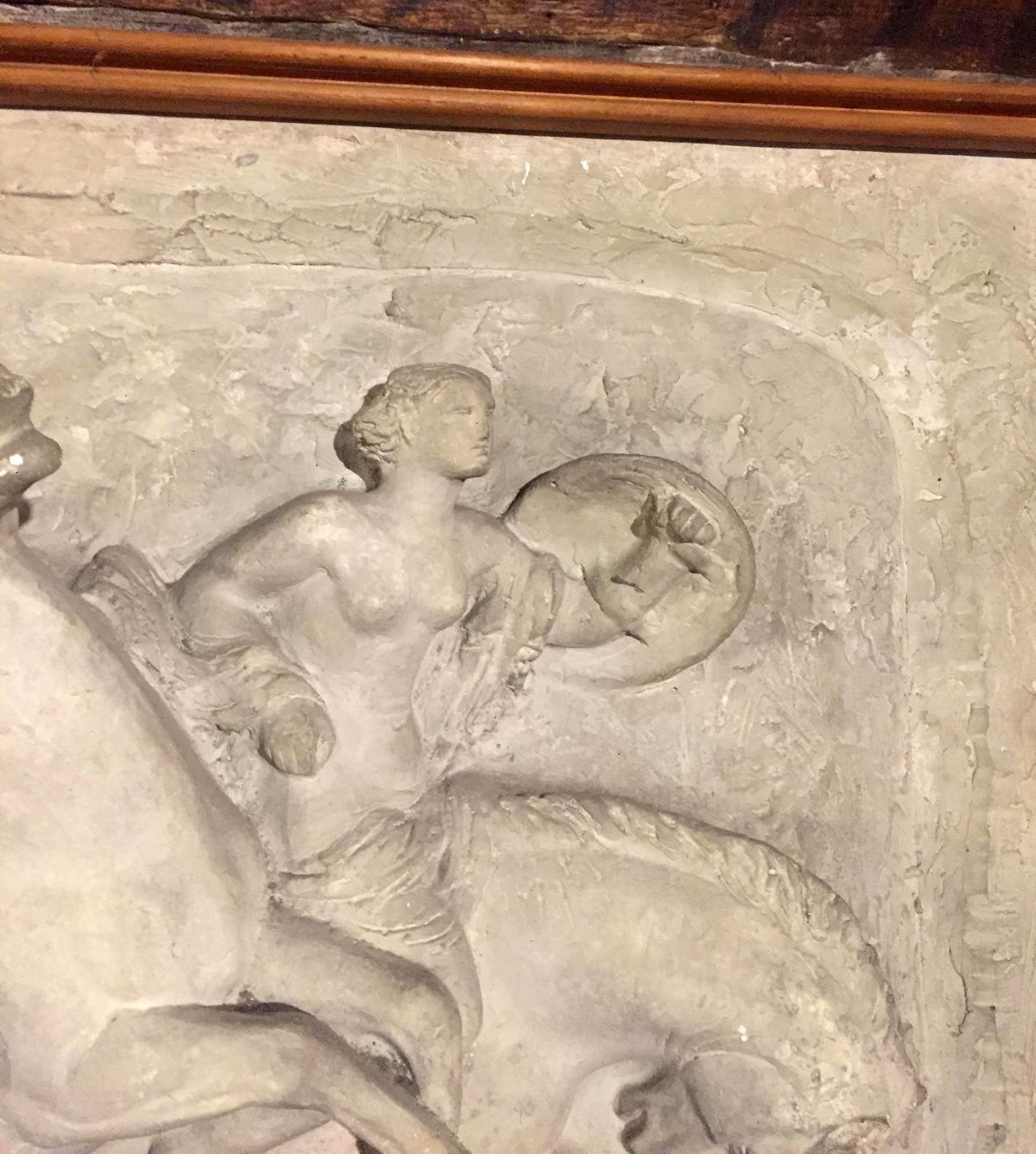
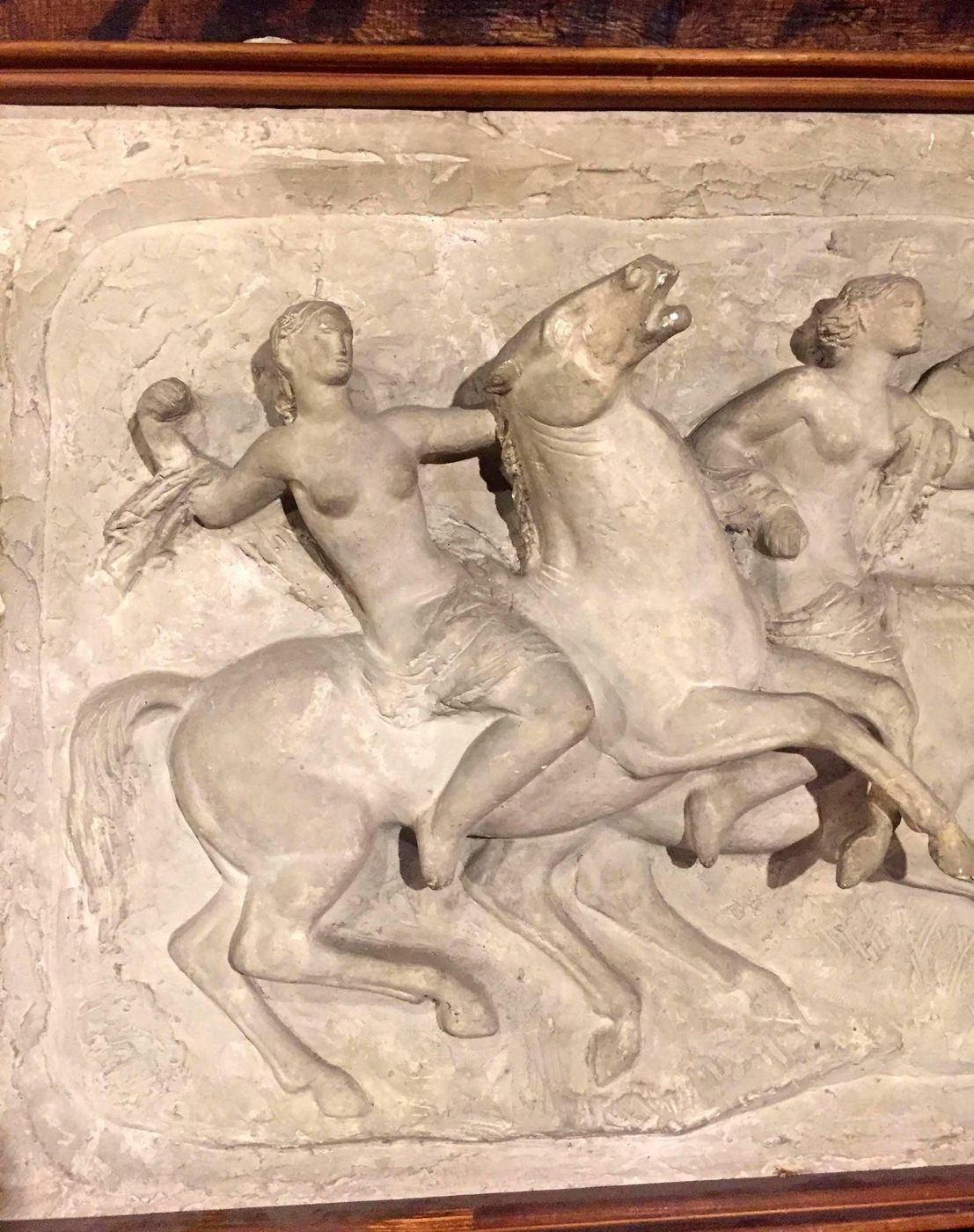
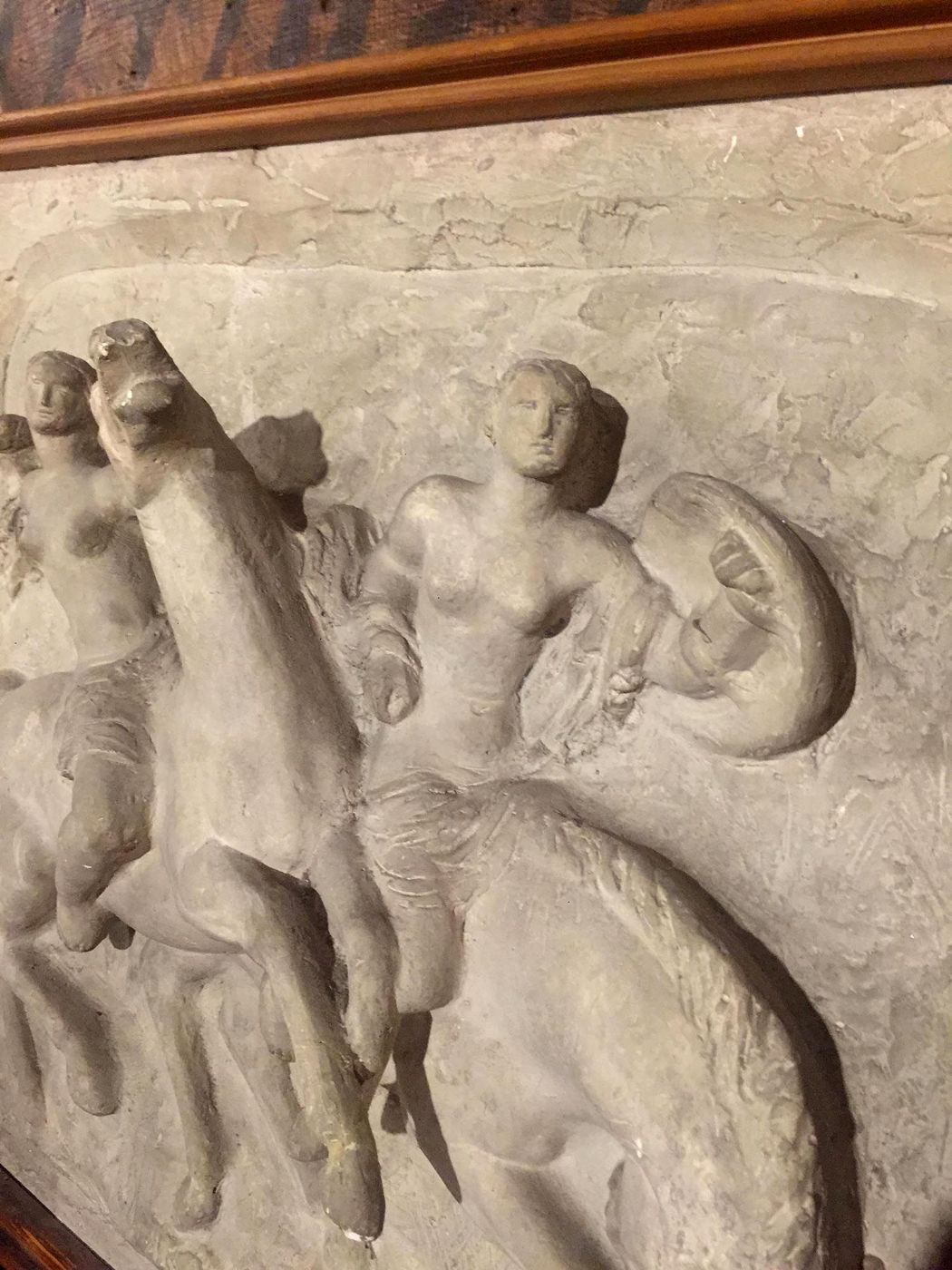
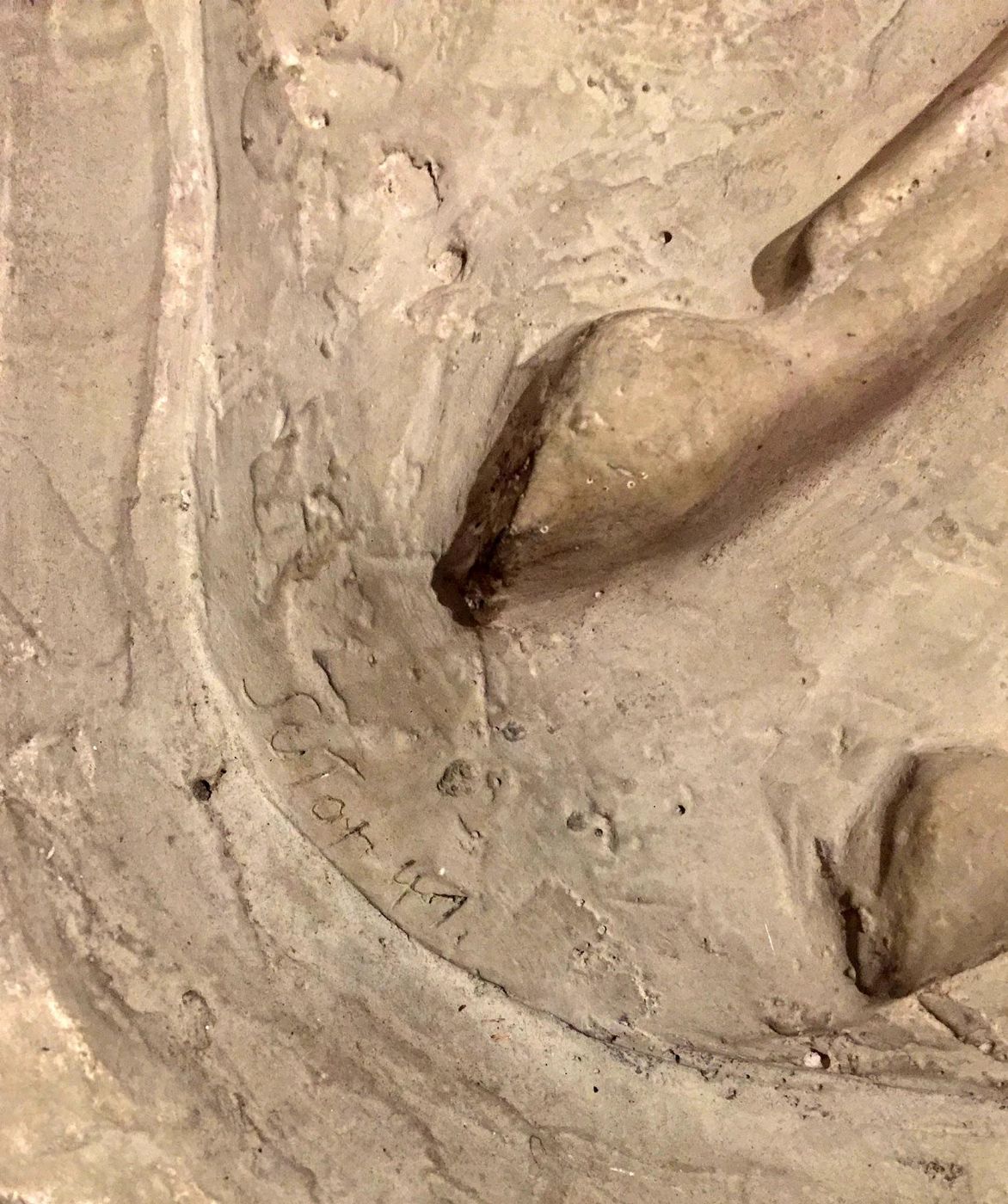
A plastic group of remarkable quality and sense of movement thanks to the skilled hand of the German artist Emil Sutor. It is a high and bas-relief with "in the round" parts. The author, as can be seen from the biography, was one of the most important sculptors of the twentieth century in Germany. Eclectic and singular in the search for subjects to illustrate, he went from ecclesiastical representations (Mother of God in Europe for the facade of the Frauenfriedenskirche 1928) to heroic scenes relevant to Nazi rhetoric, to the delicate depiction of the fawn "Bambi" (*see biography) created towards the twilight of his career and his life. An "all-round" artist, therefore, who also practiced sacred art in a high-quality manner. His works, especially those signed and dated like this one, are of absolute value.
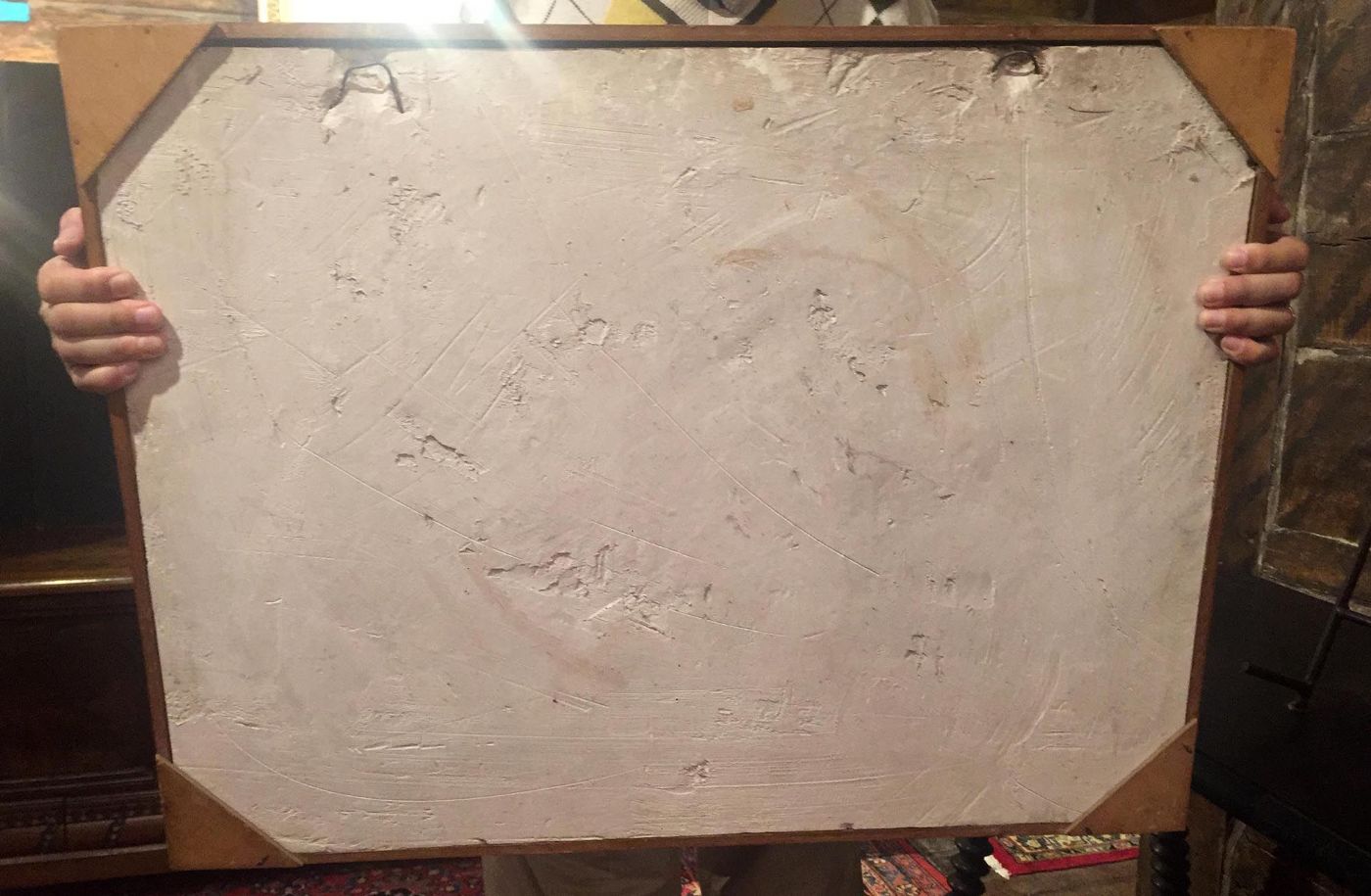
The ceramic panel, enclosed in a wooden frame, is in good condition, highlighting excellent plasticity and mastery of sculptural technique.
Germany - 1941
Measurements: height cm. 78 height cm. 60 depth cm. 16
BIOGRAPHY:
Emil Sutor (born June 19, 1888 in Offenburg - died August 13, 1974 in Karlsruhe) was a German sculptor, completed an apprenticeship in the sculpture workshop of Offenburg Simmler & Venator and attended the Karlsruhe Art Academy from 1907 to 1909 as a pupil of Hermann Volz, then at the Dresden Art Academy to study with Georg Wrba and, among other things, through subsequent stays in Leipzig, Munich and Paris to further his studies.
From 1919 he had his studio in Karlsruhe. From 1925 to 1936 he worked at the State Majolica Factory in Karlsruhe. His numerous, mostly ecclesiastical, commissions in many places of worship also derive from this collaboration. In 1928 he created the then largest self-supporting mosaic statue of the Mother of God in Europe for the facade of the Frauenfriedenskirche by the architect Hans Herkommer in Frankfurt-Bockenheim. He was a versatile artist and used various materials including ceramics, marble and wood. In an art competition organized for the 1936 Summer Olympics, he won a gold medal in the sculpture competition in the relief category for the reliefs "Hürdenläufer" "Hurdler" (now in the Tokyo museum) and "Hockeyspieler" "Hockey Player"
In 1937 Emil Sutor became a member of the NSDAP. Church art was not required during the Hitler years and Sutor worked extensively for the National Socialists. He created memorials of heroes and war and other heroic sculptures such as the "Germanic family". He designed one of his monumental SA monuments for the city of Singen.
In 1939, 1940, 1941, 1942 and 1944 Sutor was represented with twelve works at the Great German Art Exhibition in Munich. Of these, the NSDAP district administration of Cologne-Aachen acquired the "Mother" group in 1940 and the Reich Youth Leadership the "Europe" relief in 1942.
At the end of the war in 1948, Emil Sutor sought a new beginning with a return to ecclesiastical art.
In 1958, at the special request of the owner of the magazine "Burda", Franz Burda, Emil Sutor modeled a version of the Bambi (*) deer, the well-known German media award, for the Offenburg Burda publishing house. The Bambi sculpture was cast in bronze and gilded. Until 1999, the model created by Sutor remained unchanged. The Bambi is an important prize for the media and television awarded annually by the German “Media Company” Hubert Burda Medi. The Bambi award has also been given to Sophia Loren and Giorgio Armani. Until shortly before his death, Emil Sutor carried out numerous public assignments.