Venetian school of the 18th century
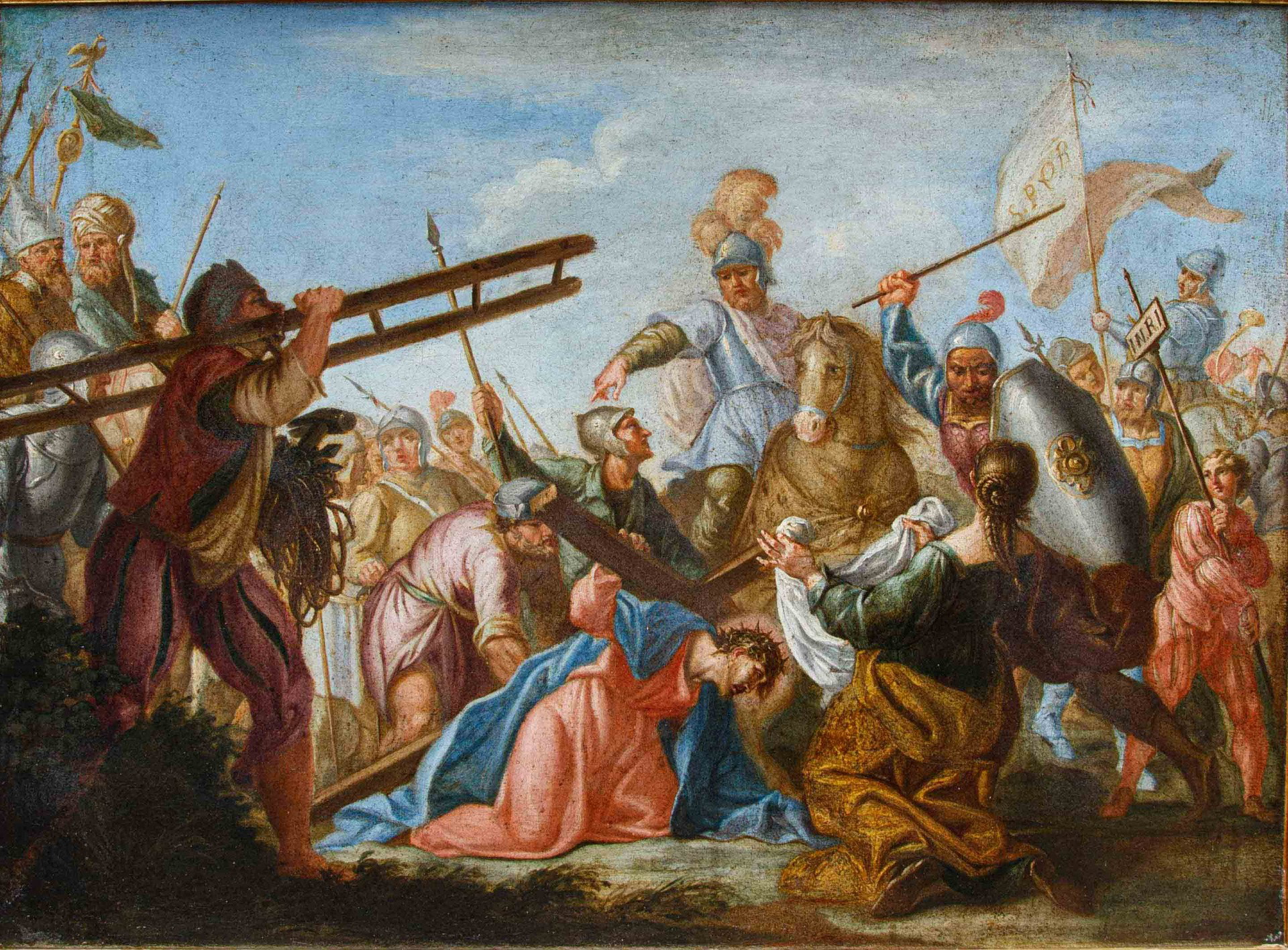
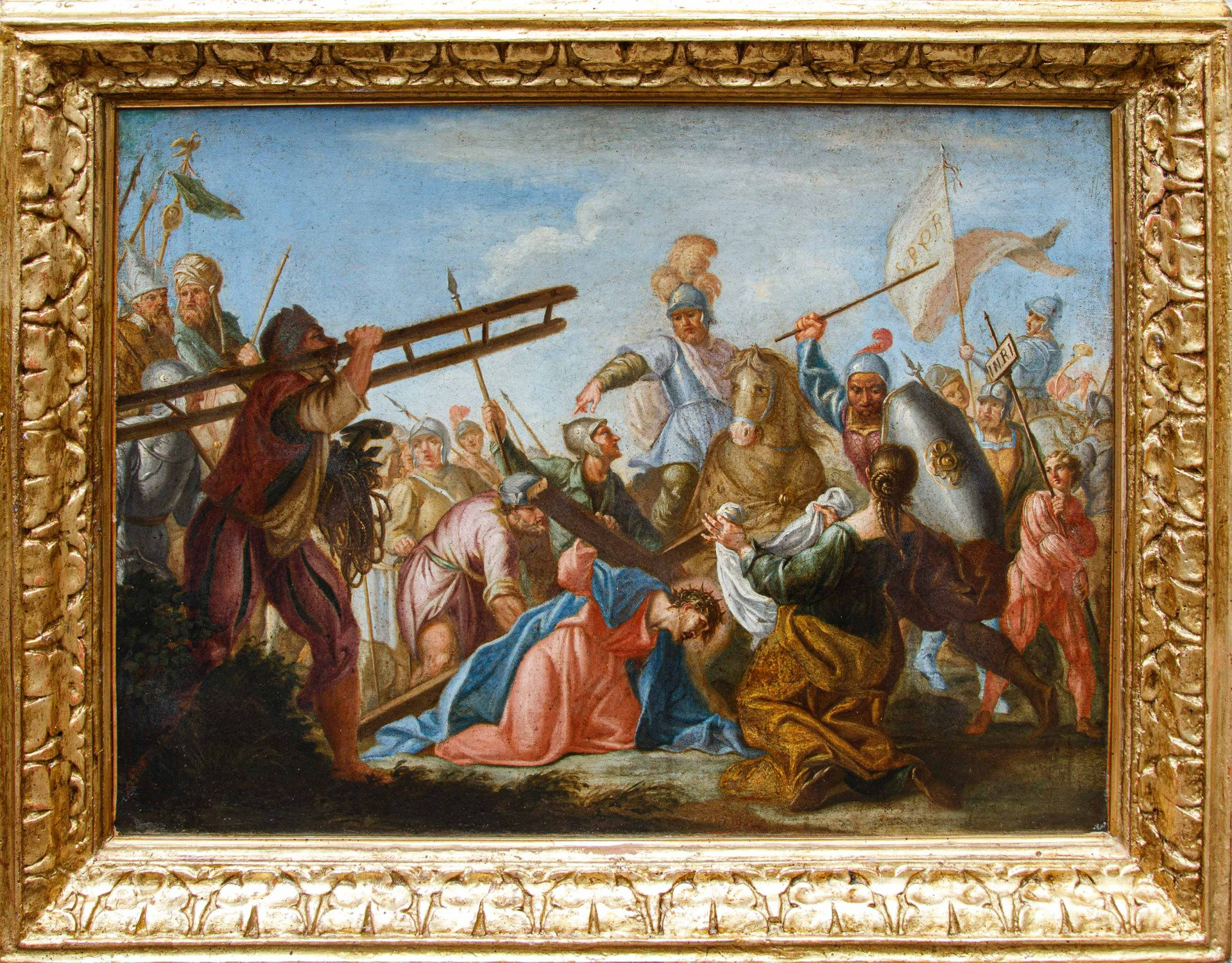
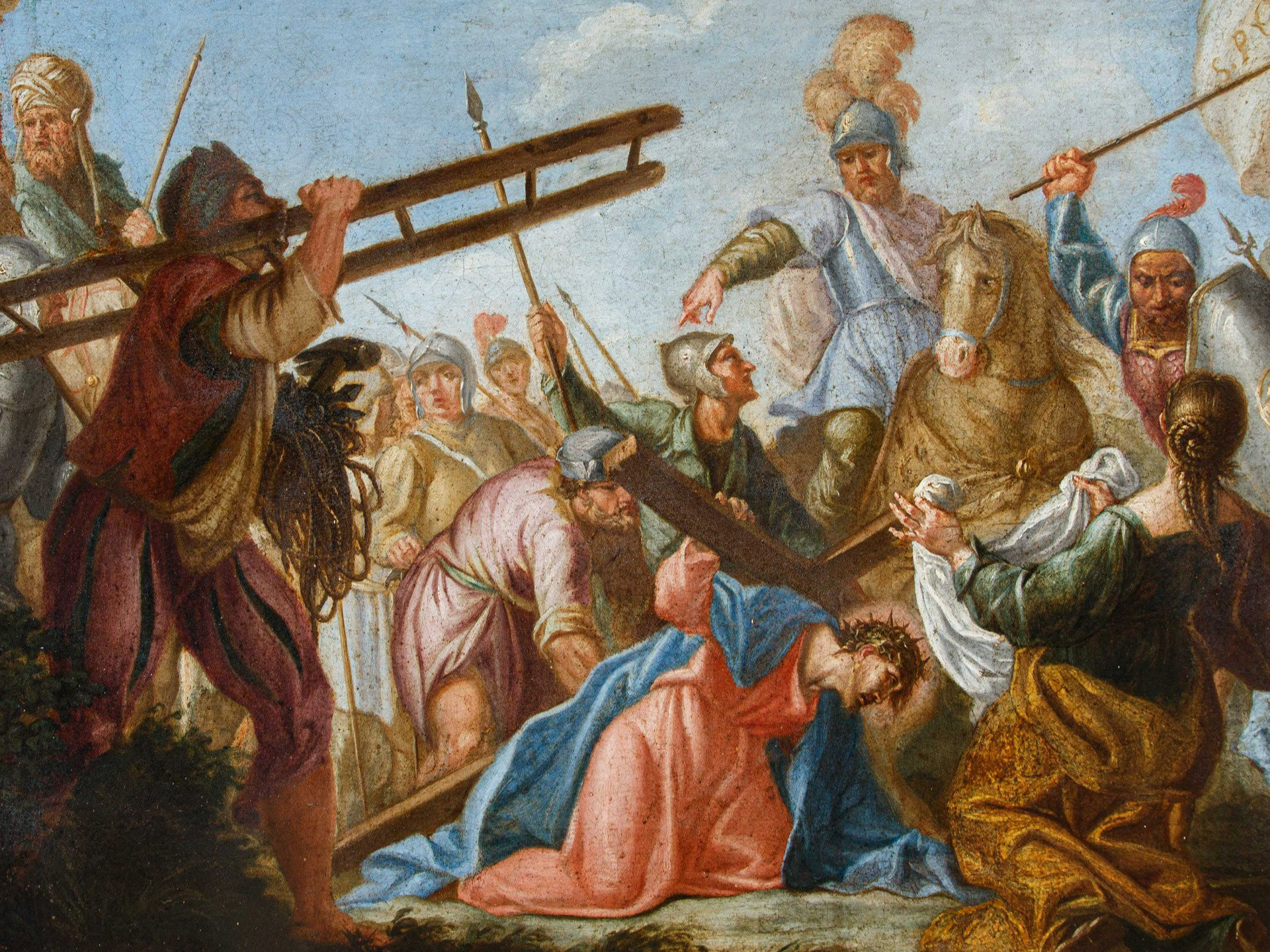
Christ meets Veronica during the ascent to Calvary
Oil on canvas, 60 x 79 cm – with frame, 79 x 98 cm
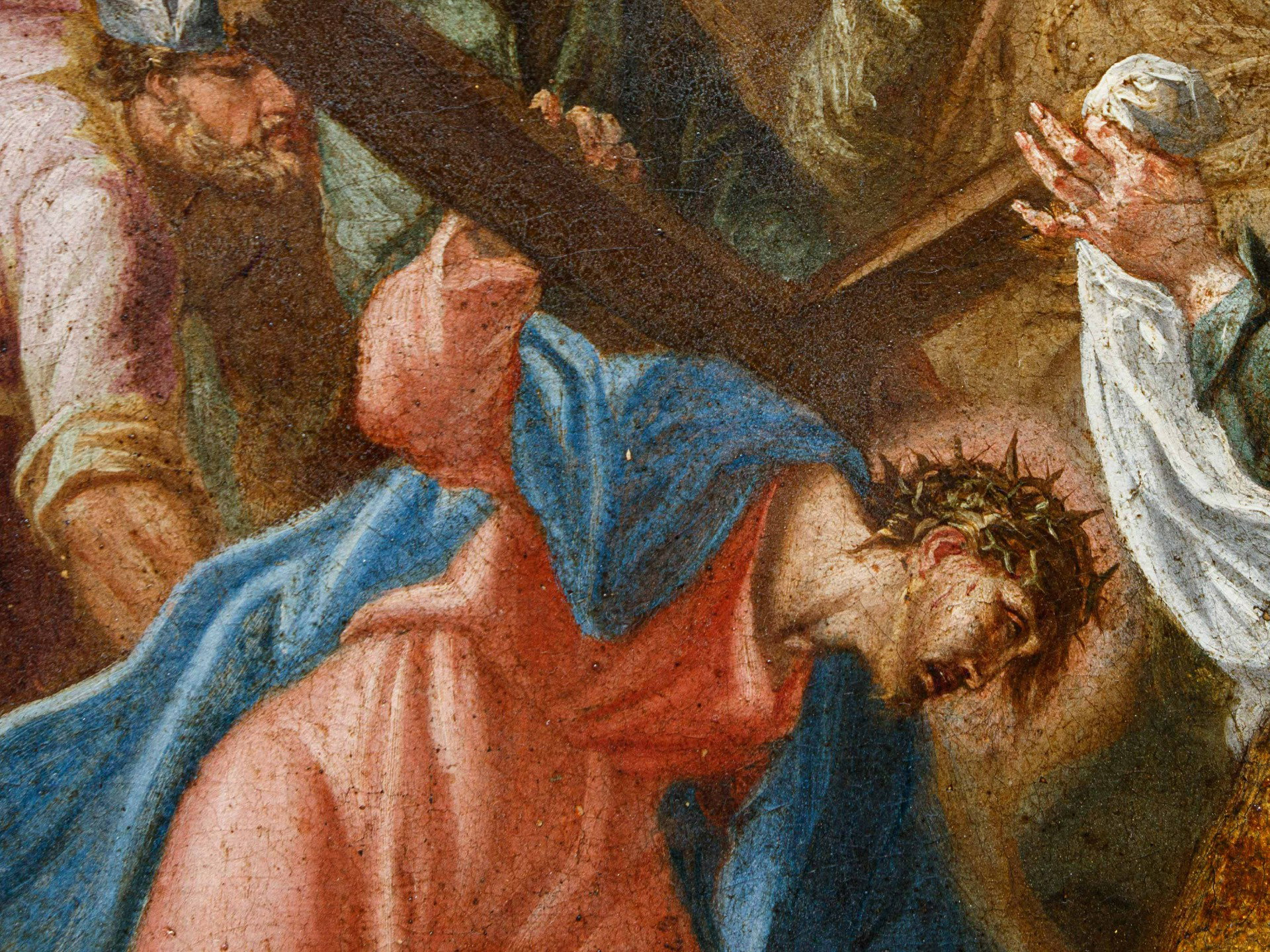
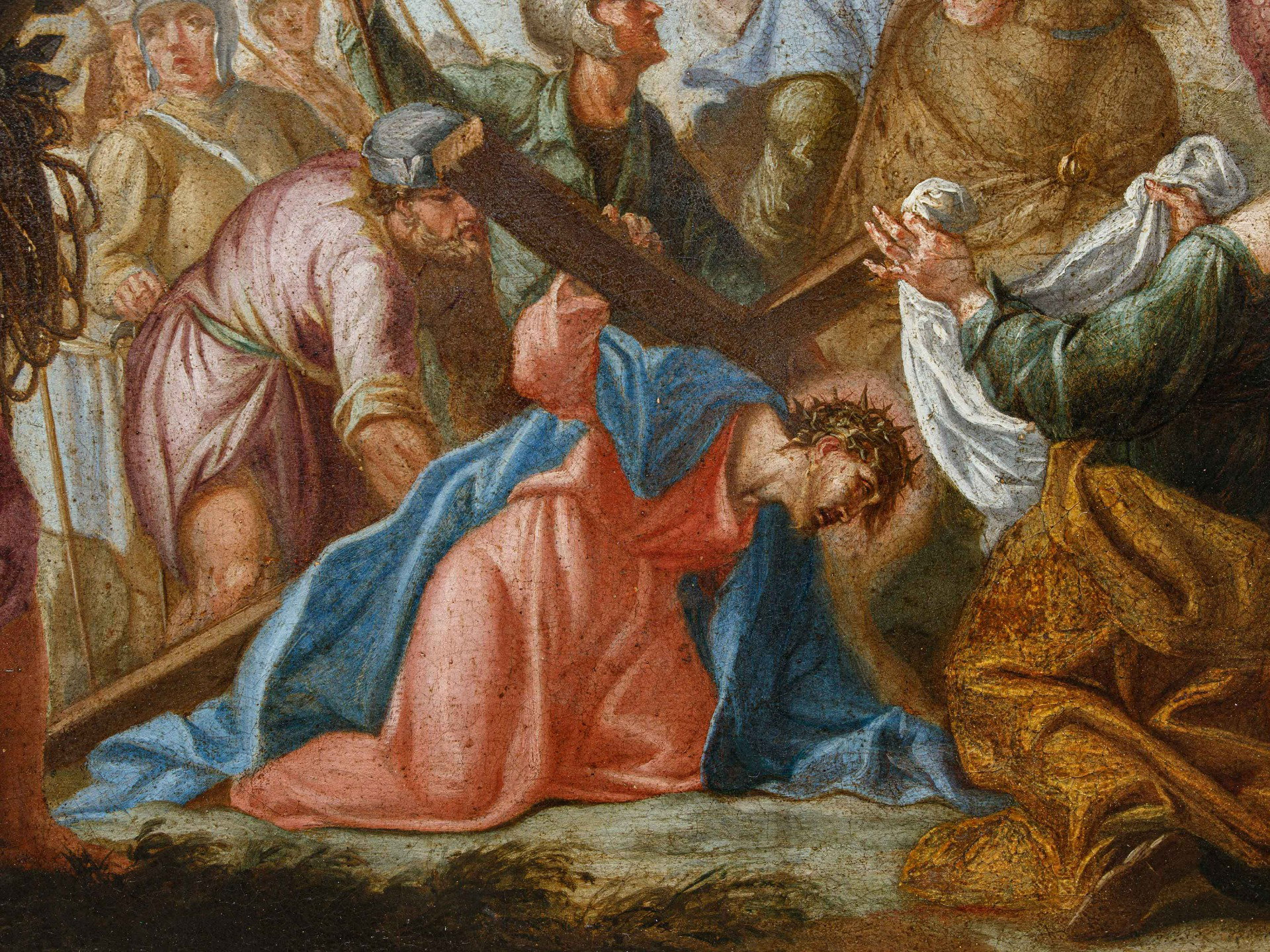
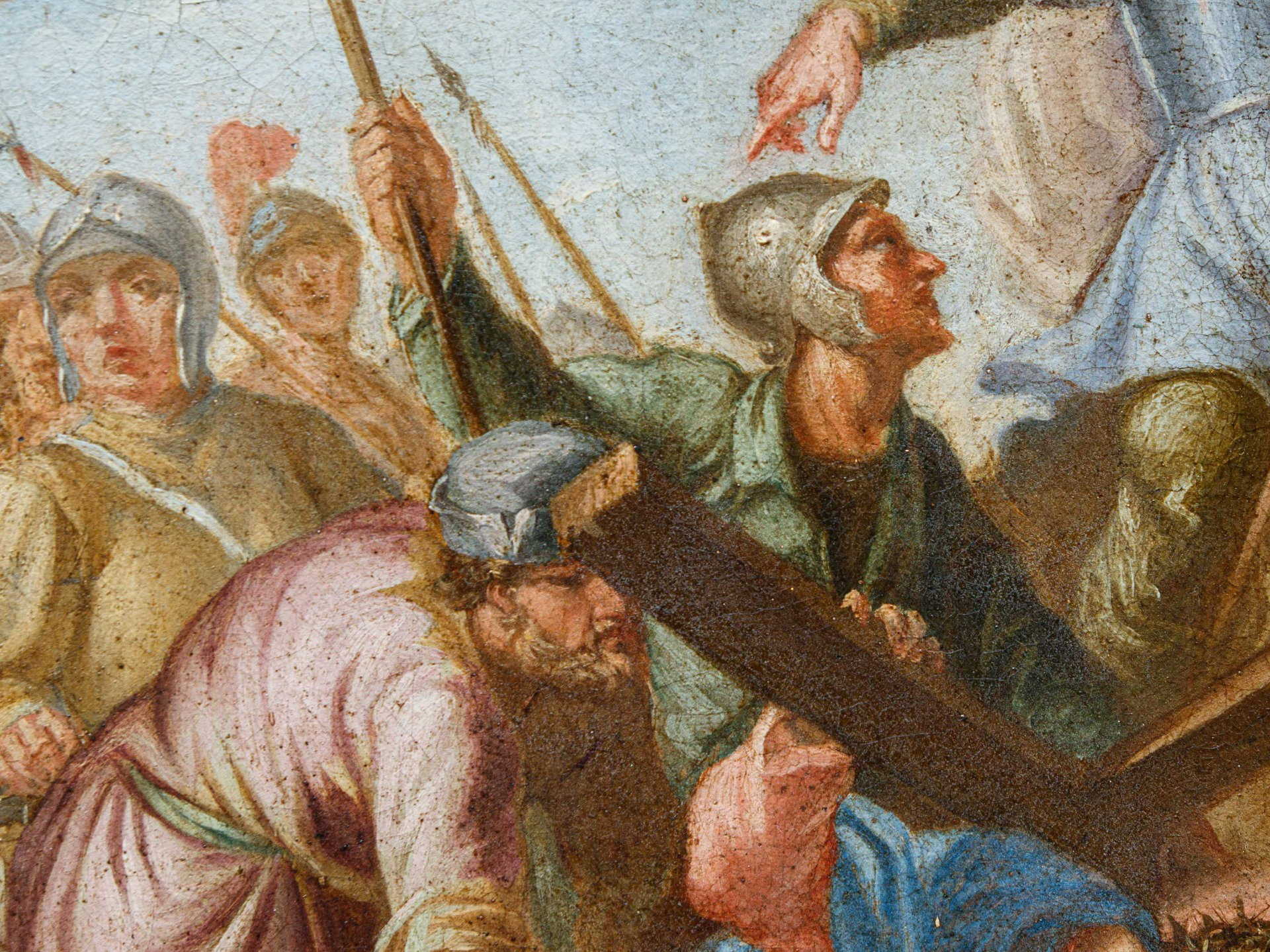
The pictorial work presented here, an oil on canvas dating back to the 18th century created by a painter of the Venetian school, offers a dramatic and engaging representation of the sixth station of the Via Crucis: the meeting of Jesus with Saint Veronica during the painful ascent to Mount Calvary. The event, although not narrated in the canonical Gospels, has deep roots in Christian tradition and popular devotion. The artist, with a mastery that recalls the great masters of the eighteenth-century Venetian school, has managed to imbue the canvas with a remarkable theatrical and dynamic charge. In the foreground, on the left, the imposing figure of a bearded man dressed in work clothes immediately attracts attention. He is the man in charge of the cross, who with tangible effort carries a ladder on his shoulders. In the background, a turmoil of soldiers on foot and on horseback, with helmets and lances, animates the composition, creating a sense of overwhelm and disorder. Among them, the figures of two soldiers stand out: one carries a wooden board with the inscription "INRI" (Iesus Nazarenus Rex Iudaeorum), the title of Jesus' condemnation, and the other a flag with the acronym "SPQR" (Senatus Populusque Romanus), which refers to the Roman imperial authority. In the center of the scene, Jesus, exhausted and suffering under the weight of the cross, is kneeling on the ground. His clothes, a blue tunic and a red cloak, and his face, marked by pain and crowned with thorns, are turned towards what will become Saint Veronica. The woman, with her face turned towards a soldier who is about to strike her, tries to hand Jesus a cloth of white linen (the shroud). The work, with its realistic rendering, clear luminosity, and attention to detail, follows the vein of the Venetian artistic tradition of the 18th century. The resonances with Giambattista Tiepolo's iconic painting on the same subject, now housed in the Church of Sant'Alvise in Venice, are evident: the dynamic composition, the dramatic use of light and shadow, the expressiveness of the characters, and the richness of the colors recall the unmistakable style of the Venetian master.