
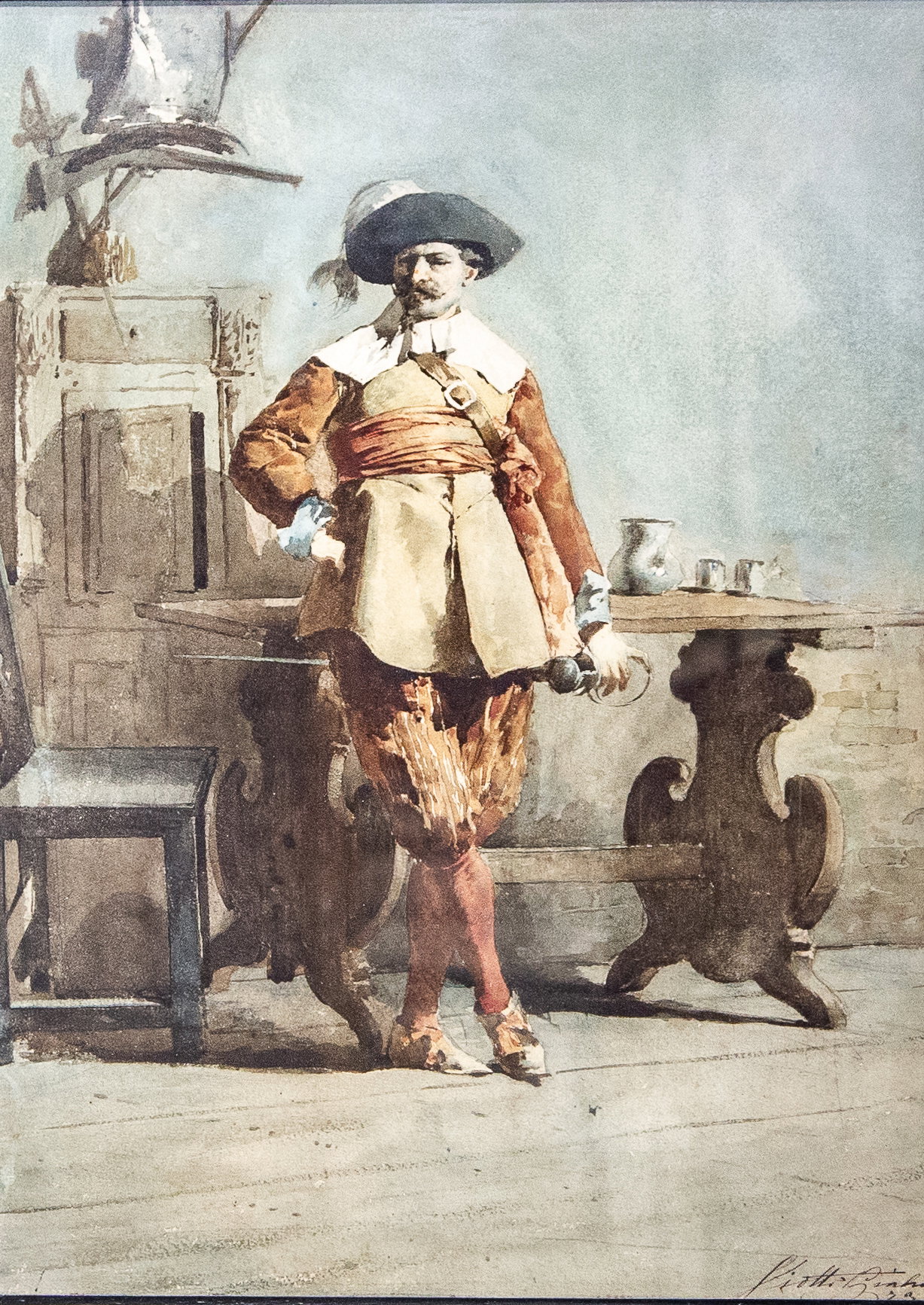
Giulio Viotti, "Gentiluomo", acquerello su carta, firmato, 1873
Tecnica: Acquerello su carta
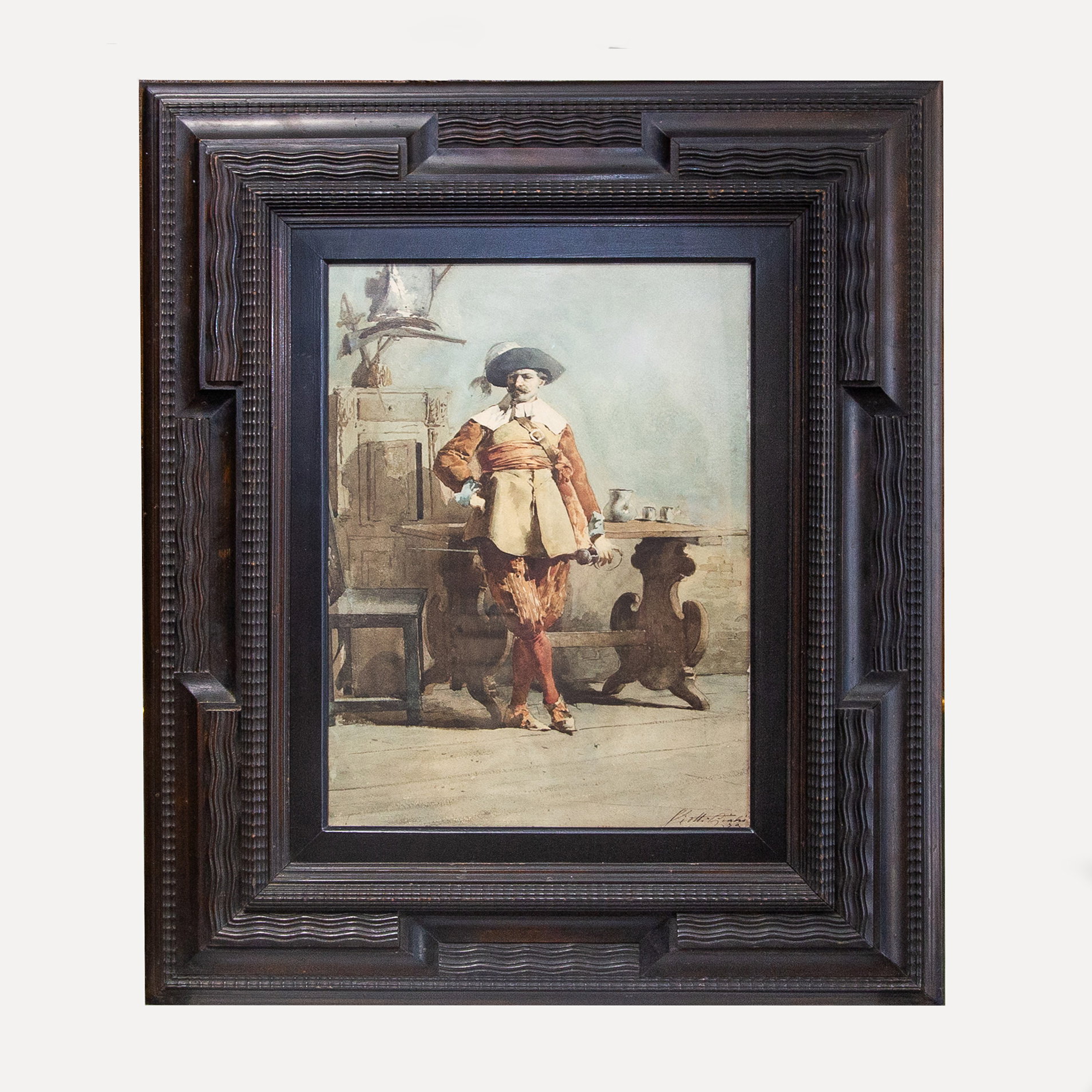
Misure: cm 45,5 x 33 (alla battuta) | In cornice: cm 74,5 x 63,5
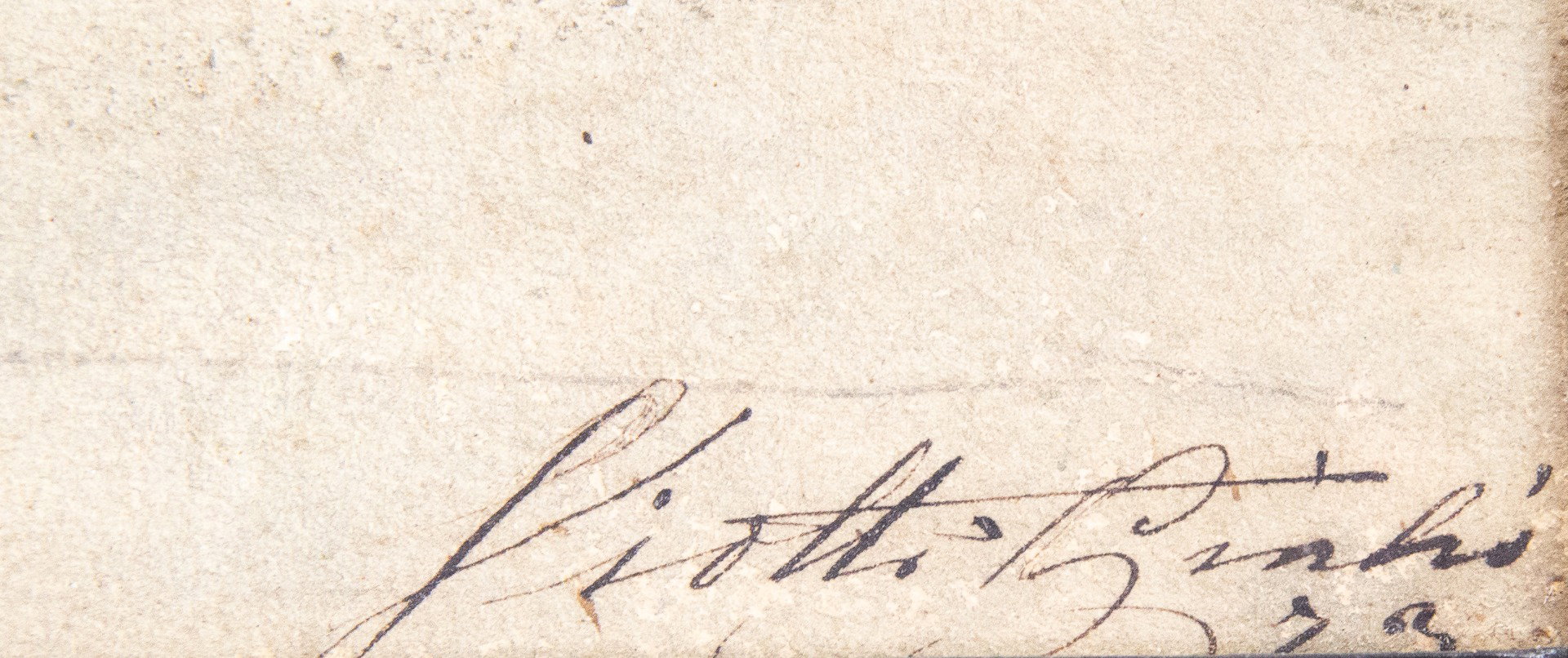
Firmato e datato: In basso a destra "Giulio Viotti 18[73]"
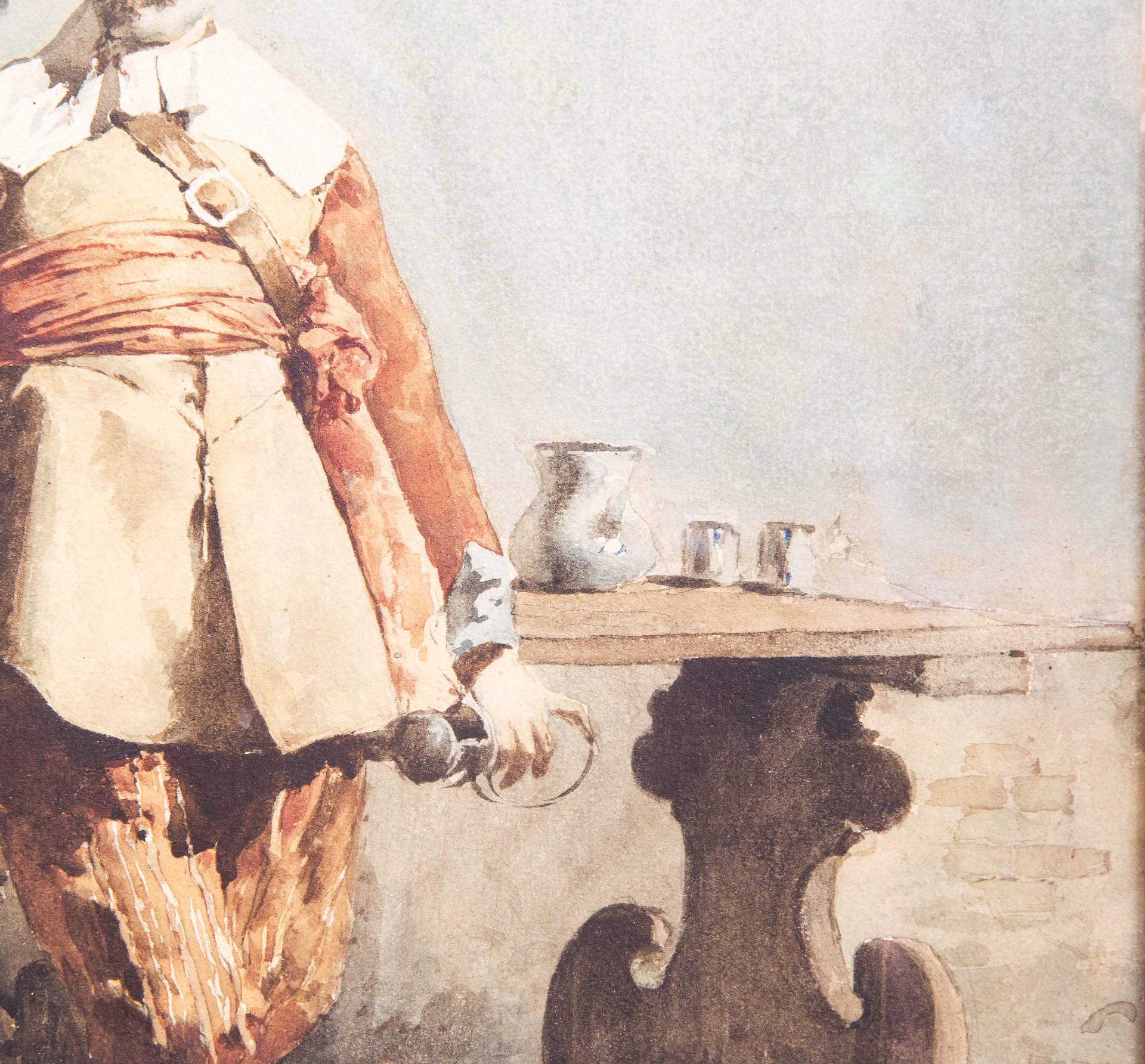
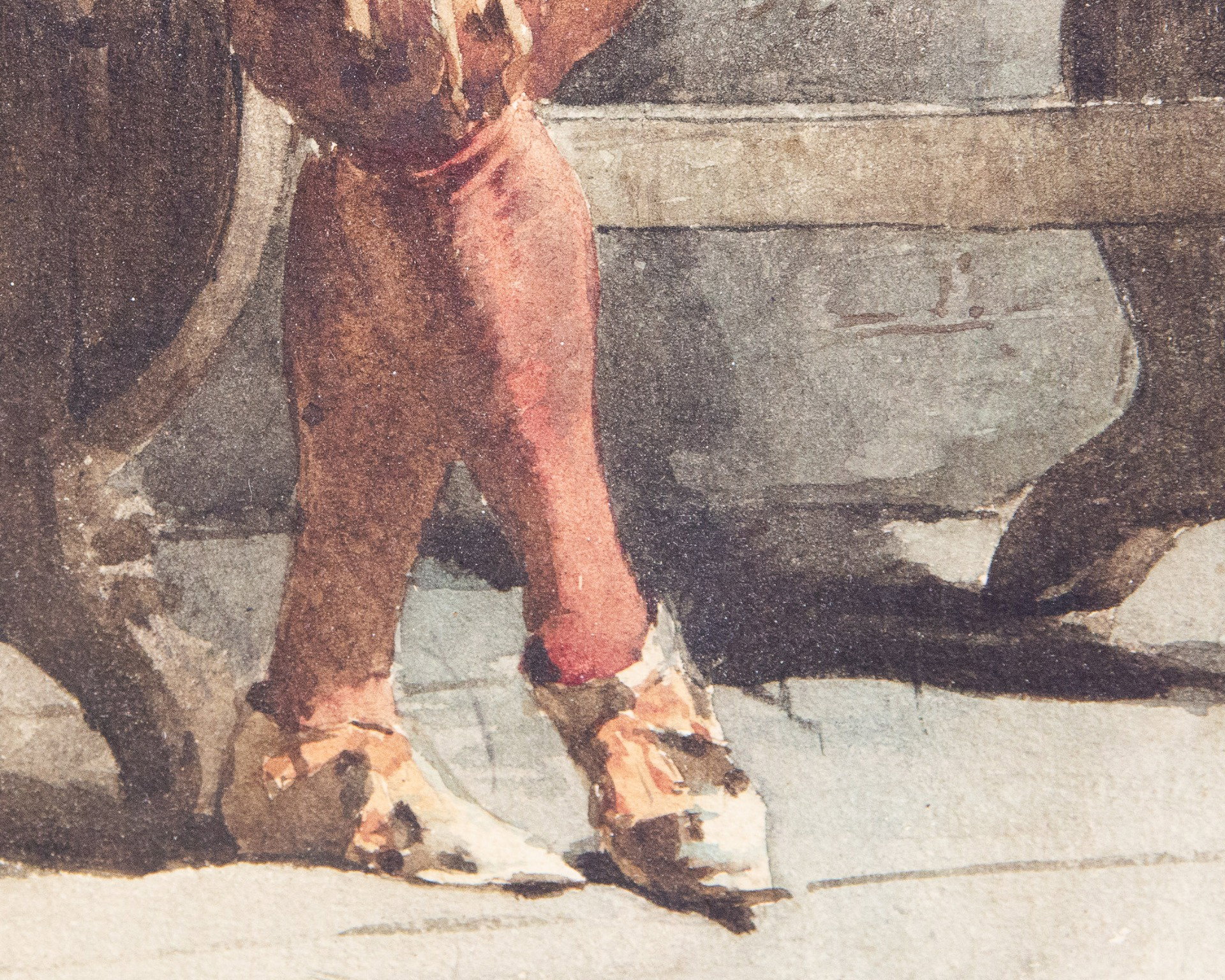
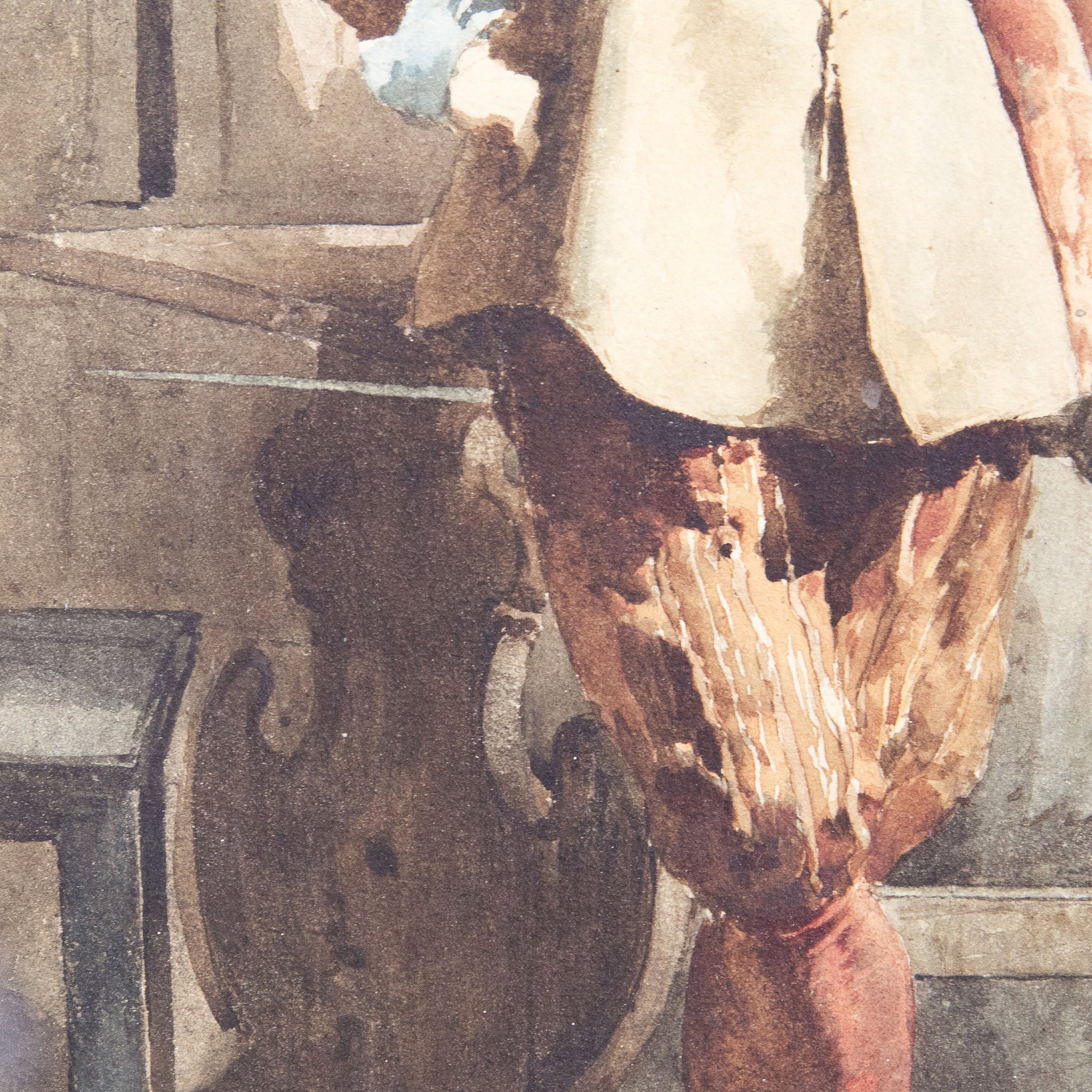
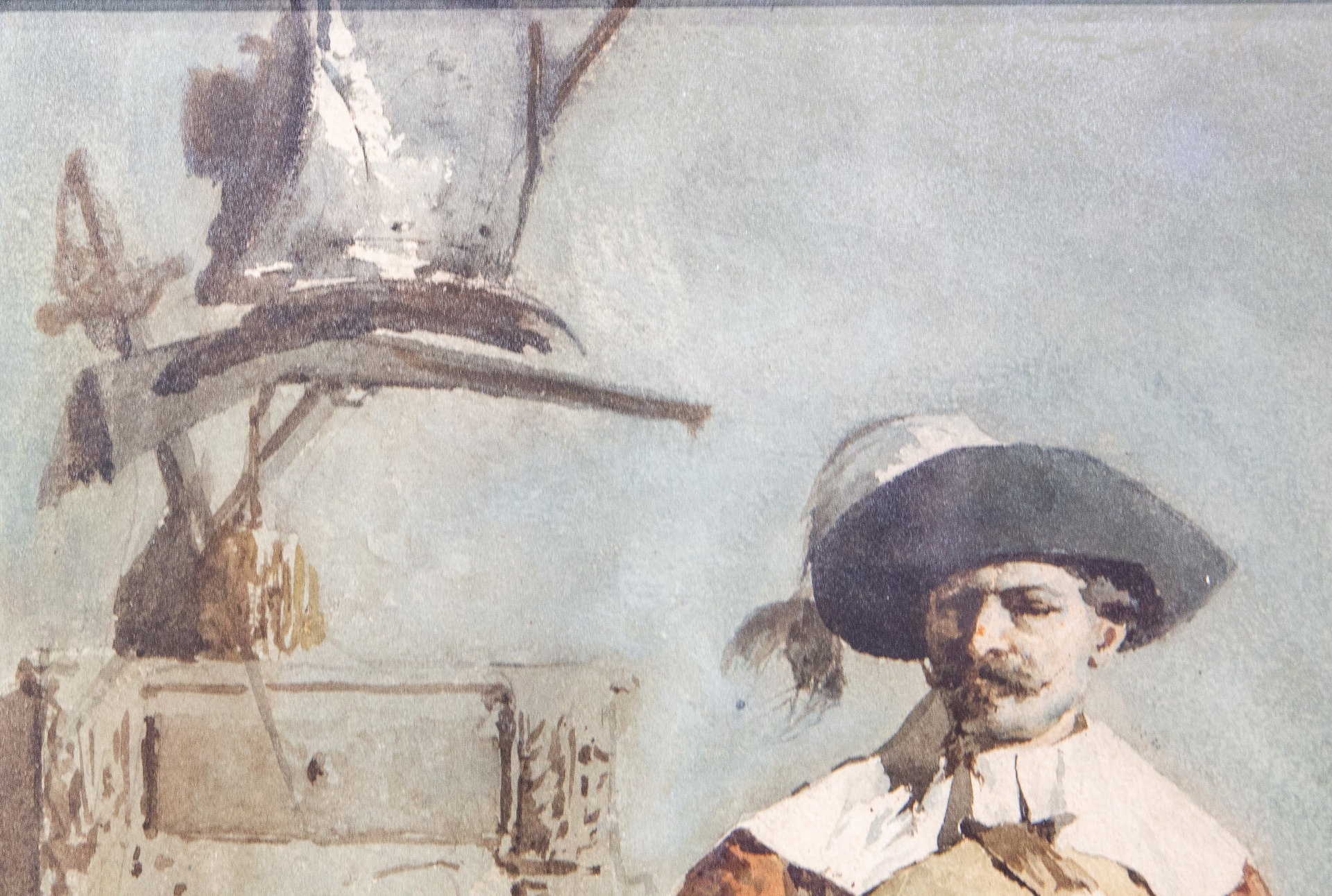
Raffinato e virtuosistico acquerello su carta raffigurante un gentiluomo in foggia secentesca, ritratto in piedi all'interno di un interno domestico di sapore storico. L'uomo, abbigliato con un elegante costume d'epoca arricchito da un ampio bavero bianco, un vistoso fascione arancione in vita e un cappello piumato, posa con fiera e disinvolta eleganza, appoggiando la mano sinistra sull'elsa della spada.
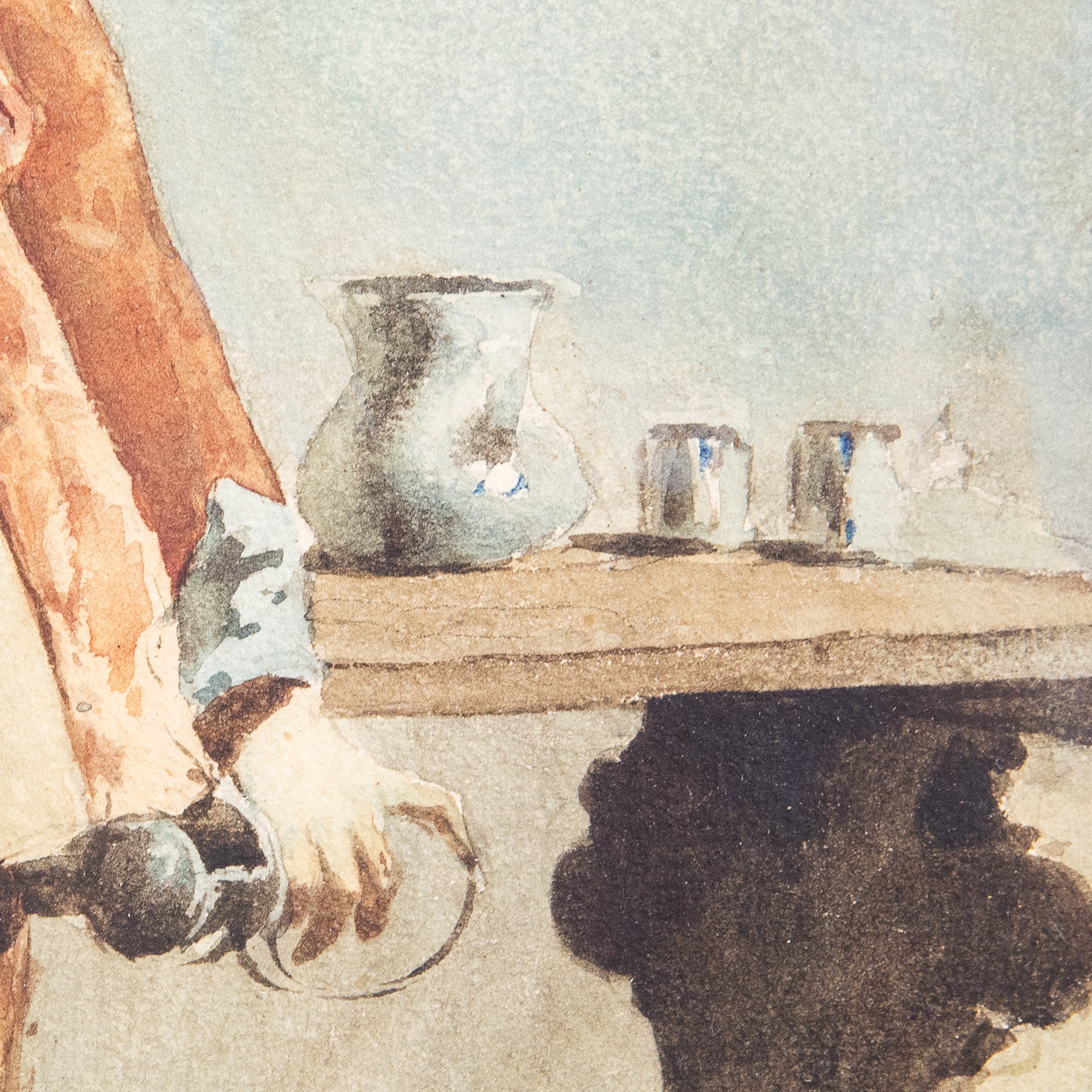
La composizione si distingue per una straordinaria freschezza esecutiva: la luce, che penetra lateralmente, modula i volumi con delicatezza e restituisce vibranti trasparenze cromatiche, tipiche della migliore produzione su carta dell'autore.
Formatosi all'Accademia Albertina di Torino sotto la guida di Andrea Gastaldi, Giulio Viotti è stato una delle figure più precoci e interessanti del panorama pittorico piemontese del secondo Ottocento. Il soggiorno romano segna una svolta fondamentale nella sua carriera grazie all'incontro con la pittura dello spagnolo Mariano Fortuny.
Rientrato in Piemonte, Viotti si legò al cenacolo della Scuola di Rivara, declinando la sua produzione verso il paesaggio e vivaci scene di genere di ambientazione medievale e romantica. La presente opera, databile al 1873, si colloca nel pieno della maturità artistica del pittore
Giulio Viotti, “Gentleman,” watercolor on paper, signed, 1873
Technique: Watercolor on paper
Dimensions: 45.5 x 33 cm (inside frame) | Framed: 74.5 x 63.5 cm
Signed and dated: Lower right “Giulio Viotti 18[73]”
A refined and virtuosic watercolor on paper depicting a gentleman in 17th-century attire, portrayed standing within a domestic interior with a historical atmosphere. The man, dressed in an elegant period costume adorned with a wide white collar, a striking orange sash at the waist, and a feathered hat, poses with proud and effortless elegance, resting his left hand on the hilt of his sword.
The composition stands out for its extraordinary freshness of execution: the light, entering from the side, delicately modulates the volumes and renders vibrant chromatic transparencies, typical of the artist’s finest works on paper.
Trained at the Accademia Albertina in Turin under the guidance of Andrea Gastaldi, Giulio Viotti was one of the most precocious and interesting figures on the Piedmontese painting scene of the late nineteenth century. His stay in Rome marked a fundamental turning point in his career thanks to his encounter with the painting of the Spaniard Mariano Fortuny.
Upon returning to Piedmont, Viotti became associated with the circle of the Rivara School, shifting his focus toward landscapes and lively genre scenes set in medieval and romantic settings. This work, dated 1873, belongs to the height of the painter’s artistic maturity