
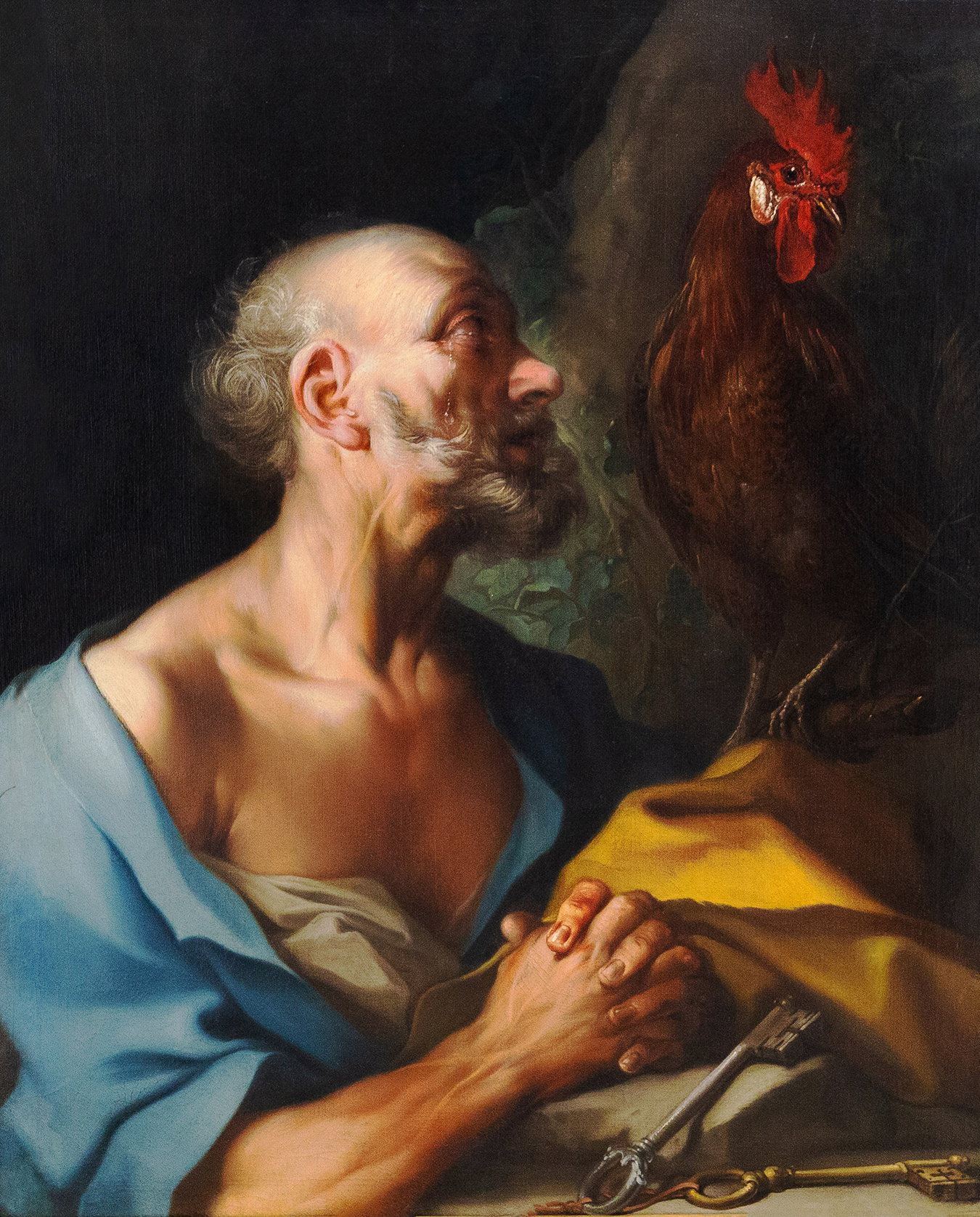
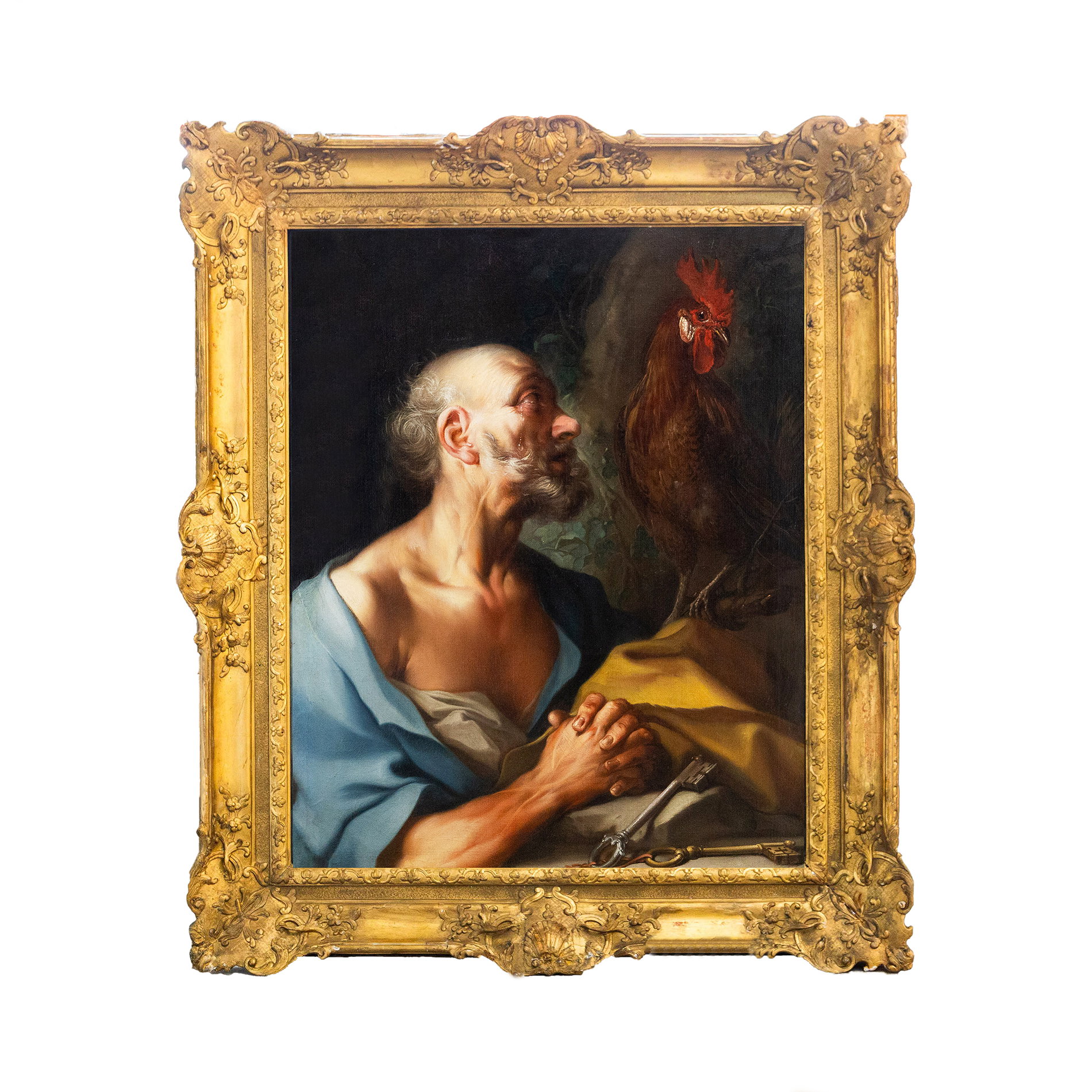
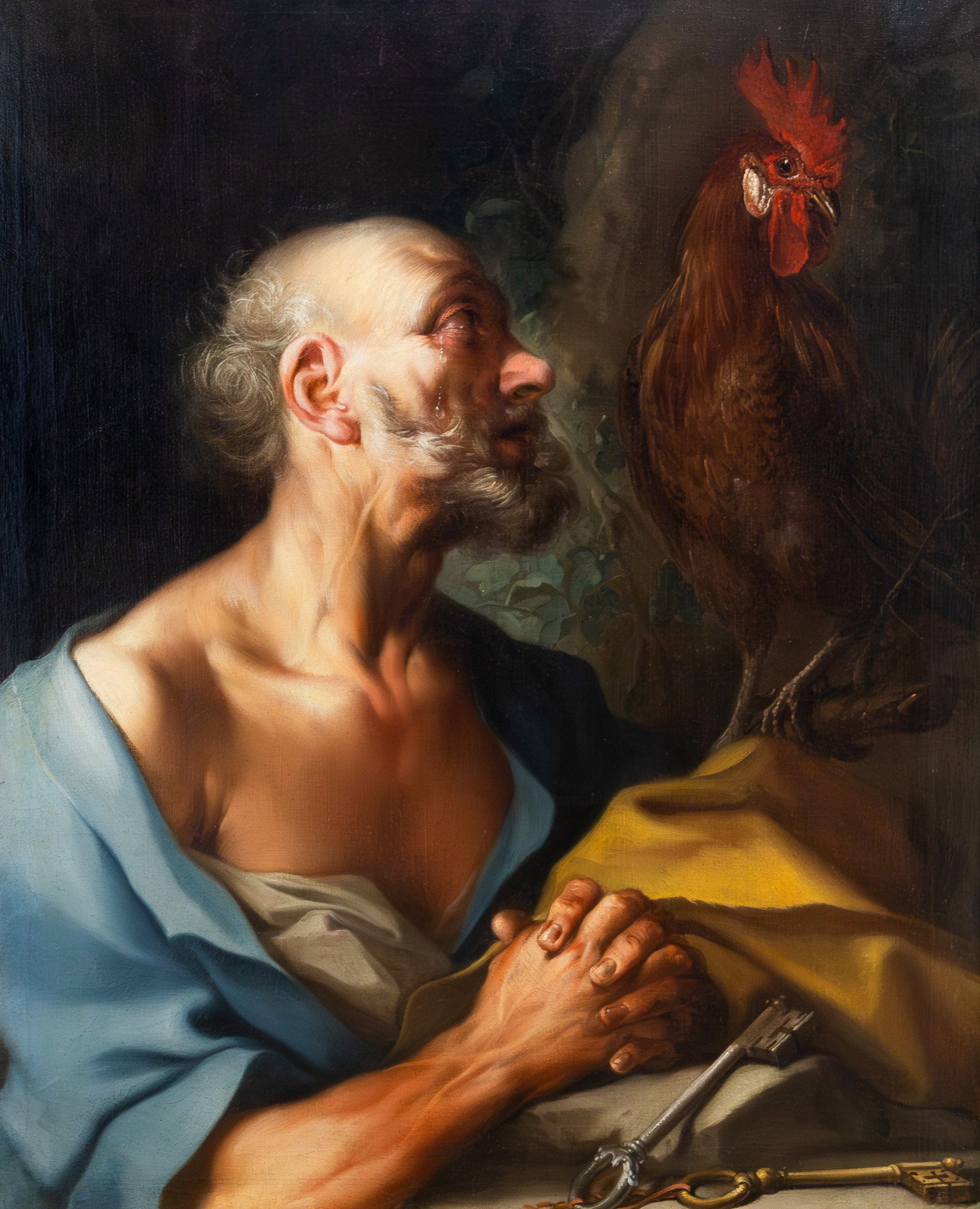
Ignazio Stern, “Il pentimento di Pietro”, olio su tela, 1721-1722
Il dipinto “Il pentimento di Pietro” (1721–1722) di Ignazio Stern, olio su tela di dimensioni H 92 × L 73,5 cm, In Cornice H 118 x L100 cm, rappresenta un episodio evangelico tra i più intensi e carichi di pathos della tradizione cristiana.
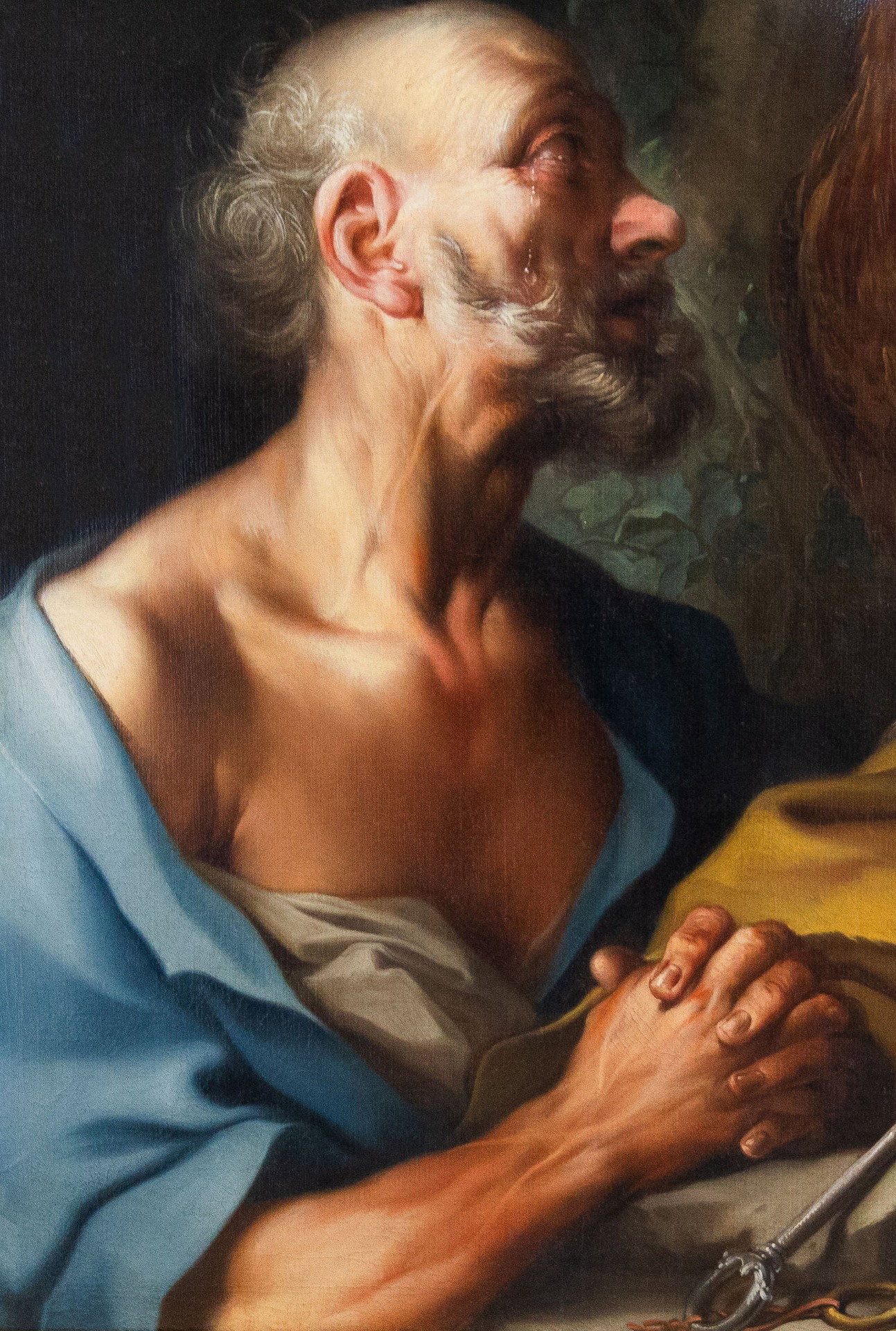
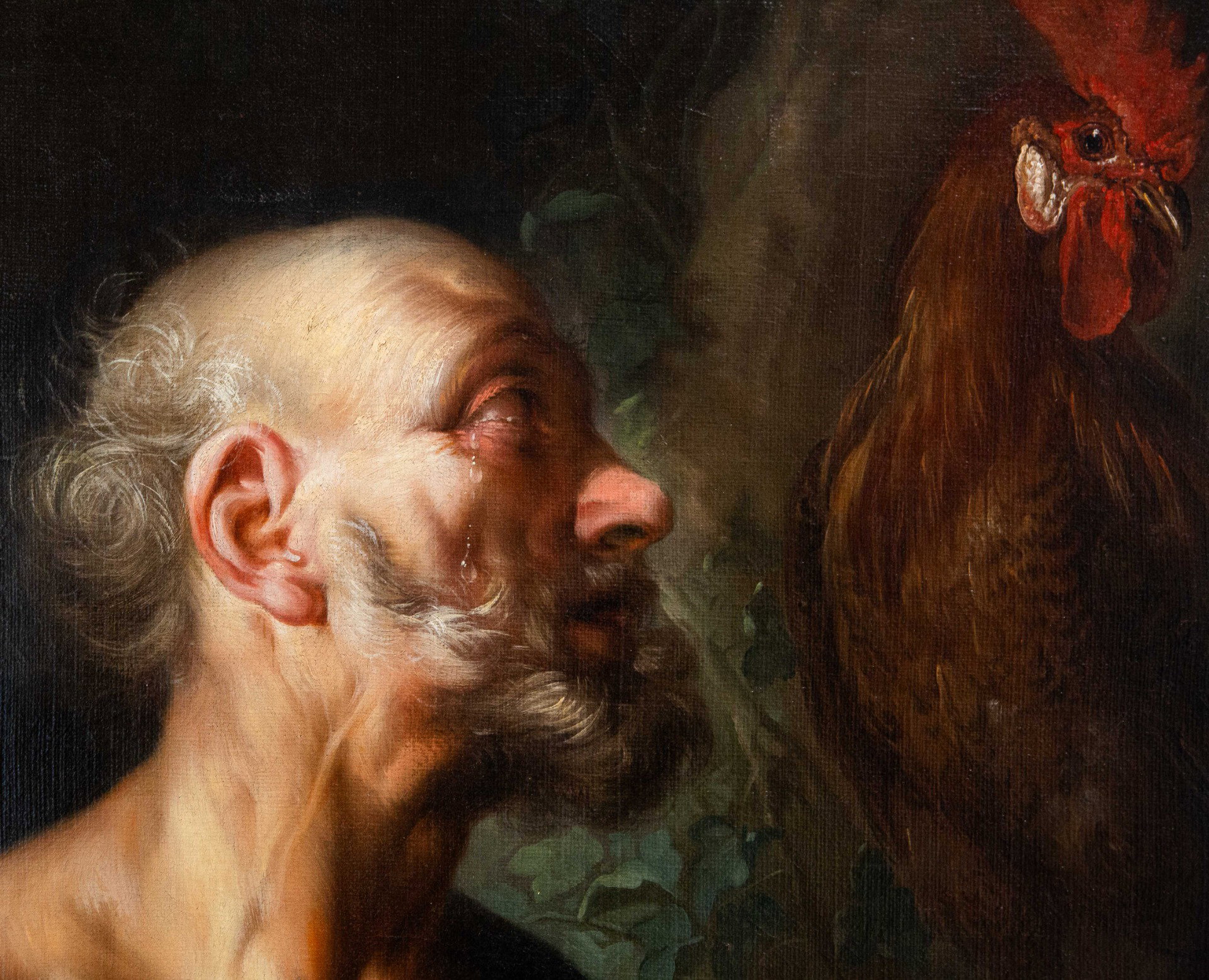
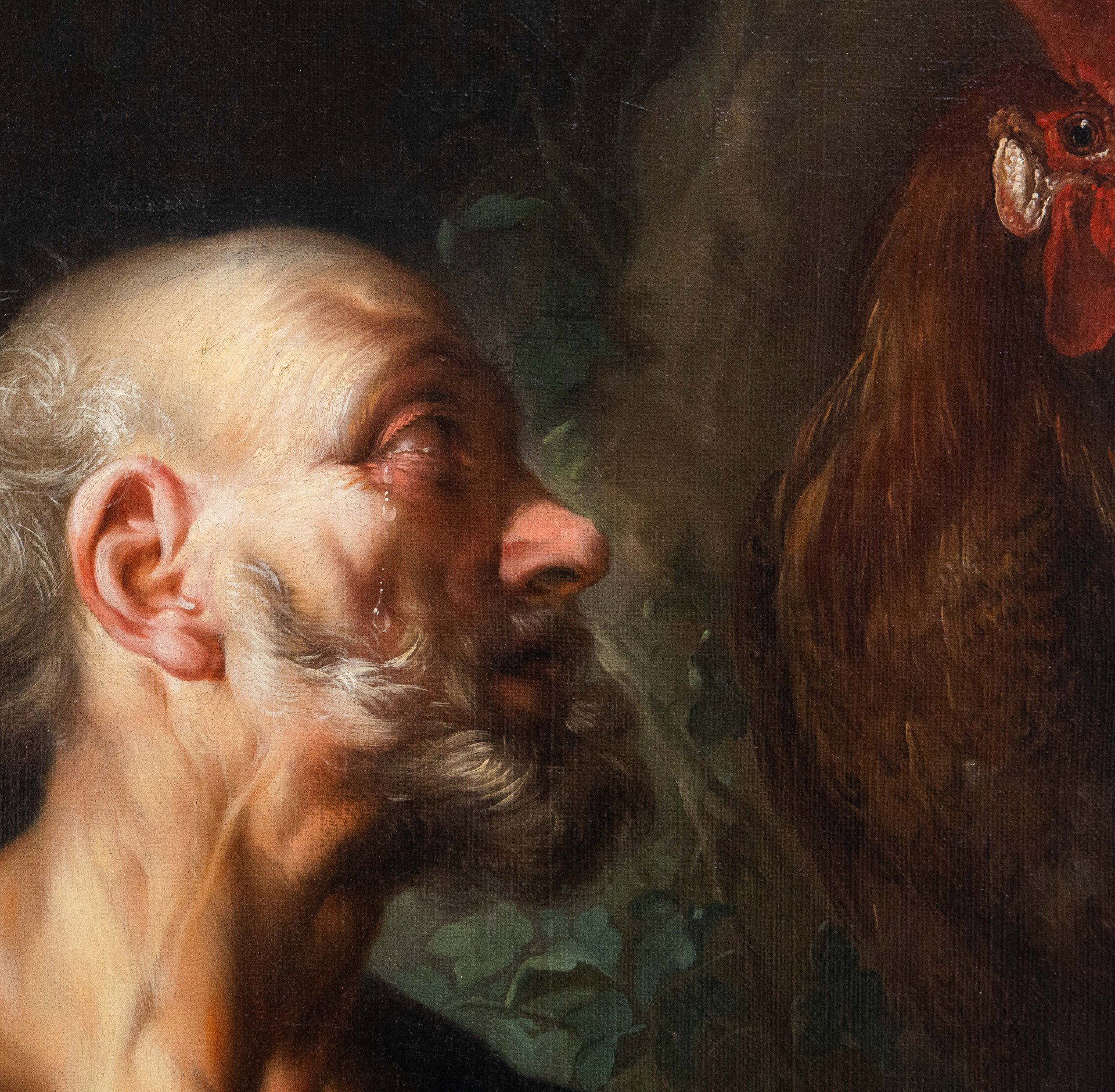
Il dipinto raffigura San Pietro nel momento del pentimento, dopo aver rinnegato Gesù per paura, come raccontato nel Vangelo di Matteo. L’apostolo, ricordando la profezia di Cristo al canto del gallo, esce e piange amaramente.
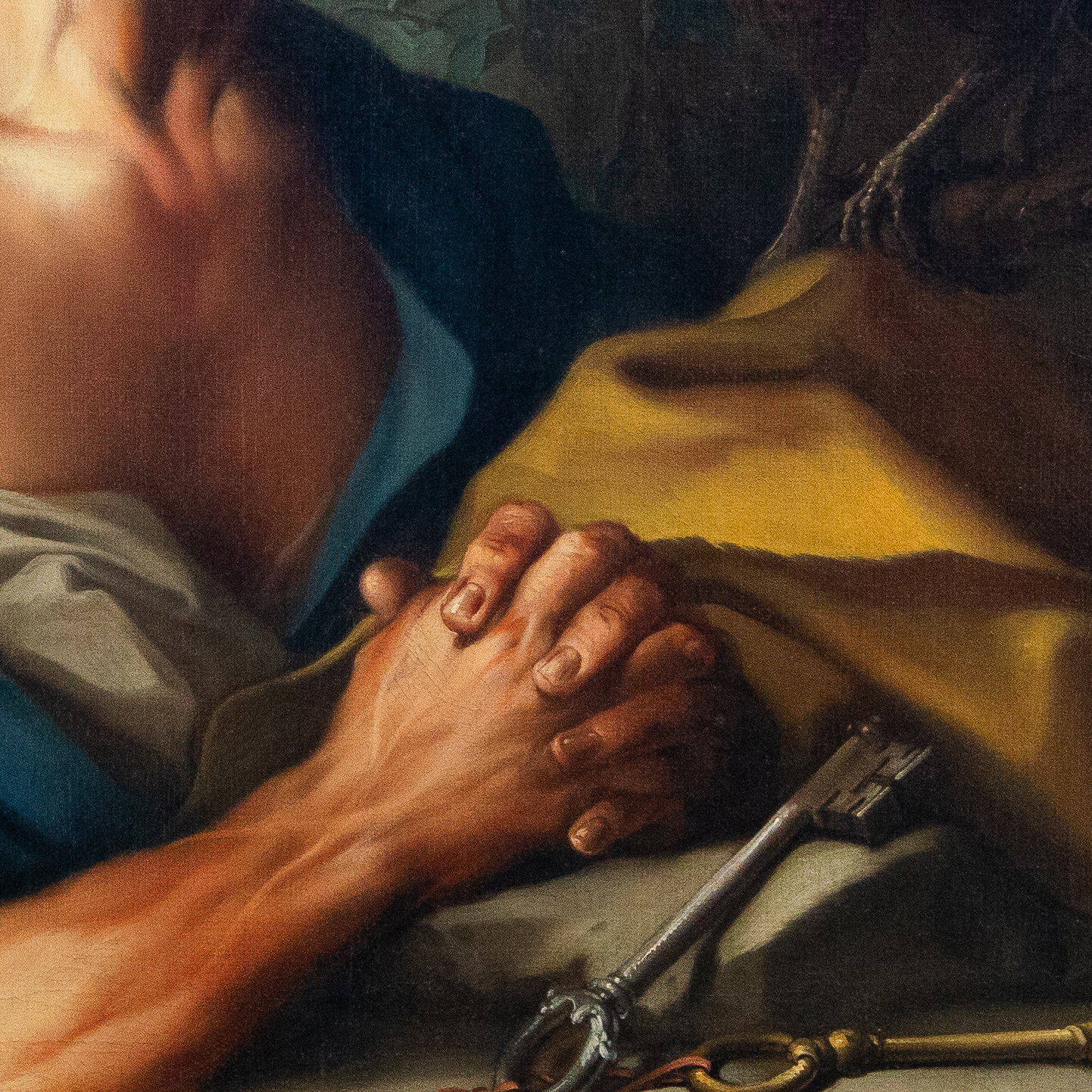
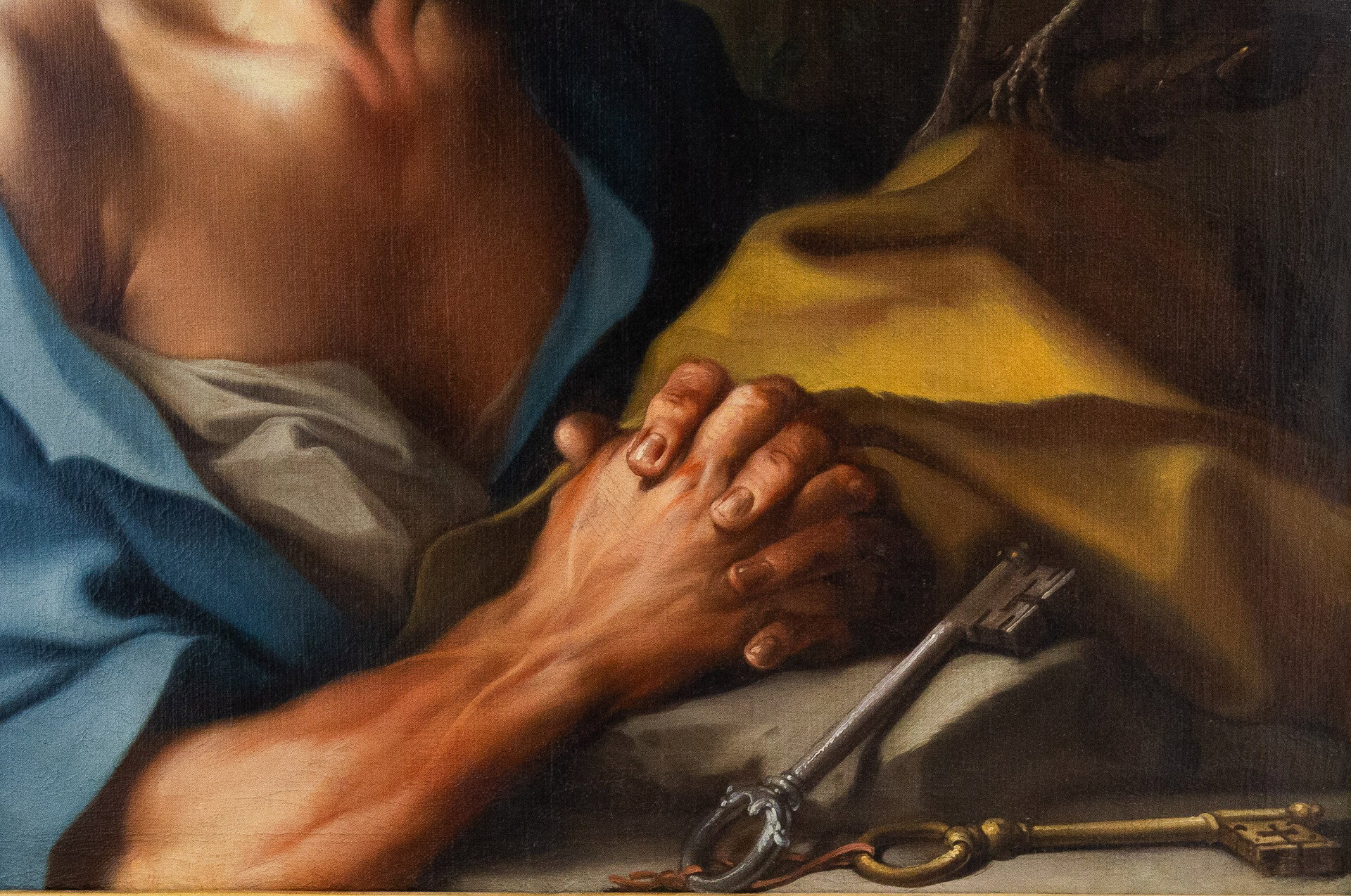
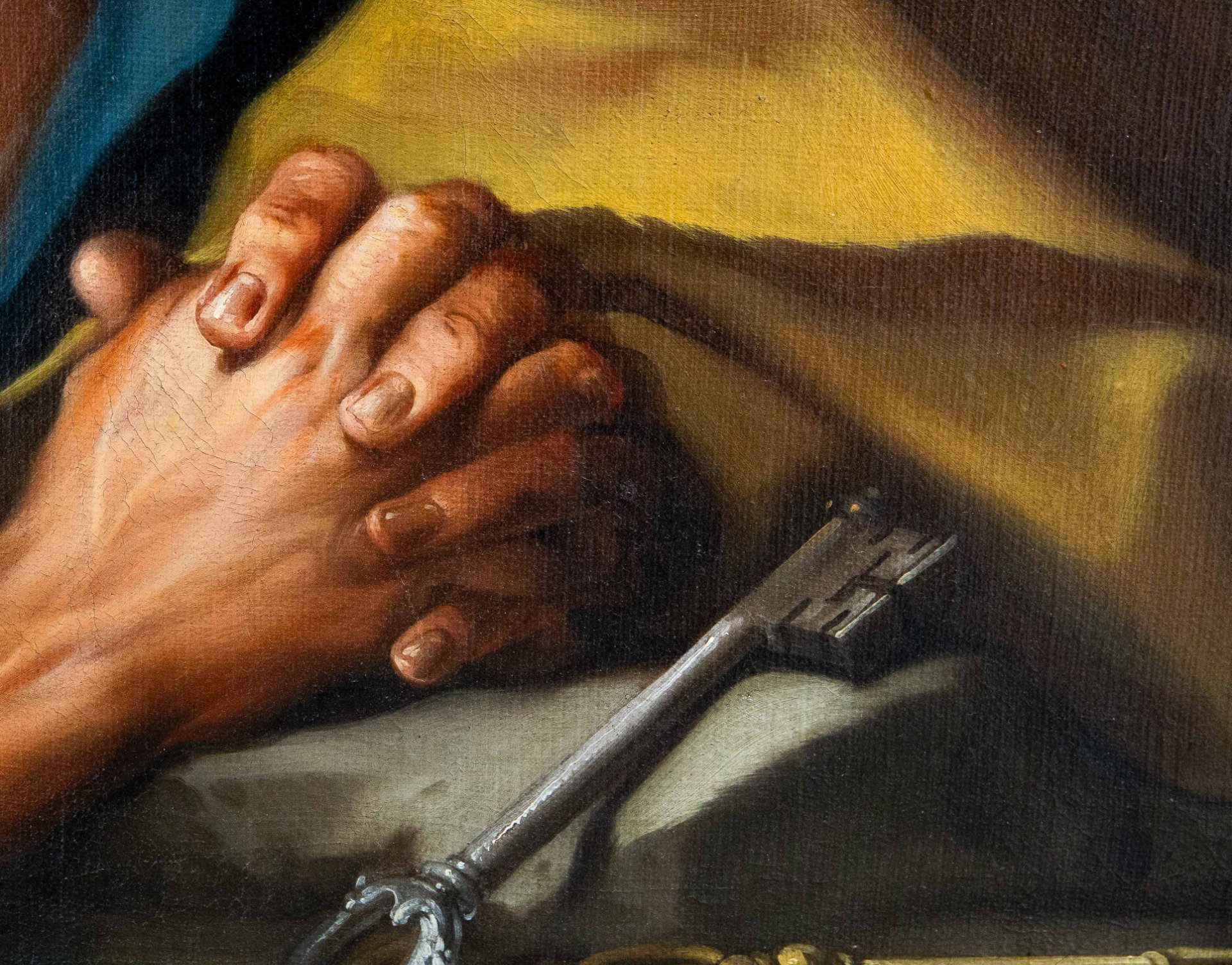
Gli elementi iconografici aiutano l’identificazione:
Le chiavi d’oro e d’argento simboleggiano il potere della Chiesa
Il gallo richiama il rinnegamento le vesti blu e gialle e la barba bianca sono attributi tradizionali
La tela, proveniente da una collezione privata non è citata negli studi, ma può essere attribuita con sicurezza a Ignazio Stern grazie al suo stile riconoscibile, che unisce classicismo emiliano, barocco romano e influenze nordiche.
Stern nacque in Baviera, si formò inizialmente con il padre e si trasferì presto a Roma. Successivamente lavorò a lungo a Forlì nella scuola di Carlo Cignani, dove realizzò le sue prime opere mature. Intorno al 1720 la sua pittura evolve verso forme più morbide e colori più delicati.
Il dipinto si colloca probabilmente tra il 1720 e il 1722, negli ultimi anni del periodo forlivese, quando l’artista raggiunge un equilibrio tra compostezza classica e sensibilità più dolce e raffinata.
Confronti con altre opere confermano l’attribuzione, rendendo questo San Pietro penitente un’aggiunta significativa al catalogo di Stern, tra i più eleganti pittori del Settecento emiliano e romano.
Ignazio Stern, "The Repentance of Peter," oil on canvas, 1721-1722
The painting "The Repentance of Peter" (1721–1722) by Ignazio Stern, oil on canvas, 92 x 73.5 cm (H 36.5 x W 29.5 in), framed 118 x 100 cm (H 46.5 x W 39.4 in), depicts one of the most intense and pathos-filled Gospel episodes in Christian tradition.
The painting depicts Saint Peter at the moment of repentance, after denying Jesus out of fear, as recounted in the Gospel of Matthew. The apostle, remembering Christ's prophecy at the cockcrow, goes out and weeps bitterly.
Iconographic elements aid identification:
The gold and silver keys symbolize the power of the Church.
The rooster represents denial; the blue and yellow robes and white beard are traditional attributes.
The canvas, from a private collection, is not cited in studies, but can be confidently attributed to Ignazio Stern due to its recognizable style, which combines Emilian classicism, Roman Baroque, and Nordic influences.
Stern was born in Bavaria, initially trained with his father, and soon moved to Rome. He subsequently worked for a long time in Forlì in the school of Carlo Cignani, where he created his first mature works. Around 1720, his painting evolved towards softer forms and more delicate colors.
The painting is likely dated between 1720 and 1722, the final years of his Forlì period, when the artist achieved a balance between classical composure and a softer, more refined sensibility.
Comparisons with other works confirm the attribution, making this Penitent Saint Peter a significant addition to Stern's catalogue, one of the most elegant painters of eighteenth-century Emilia and Rome.