




Orologio a pendolo, Robert & Frères, Epoca '800
Orologio pendola a portico, caratterizzato da una struttura architettonica con quattro colonne e un frontone arcuato.
Orologio completo ma da revisionare
Primi Ottocento (circa 1810–1840).
Lo stile a portico con colonne tornite e frontone semicircolare è tipico del gusto impero / tardo impero europeo.
Misure: H 55 x L 38 x P 15 cm
Materiali:
Legno ebanizzato nelle parti scure
Colonne in legno dipinto in finto marmo (tecnica molto diffusa nel periodo)
Decorazioni e cerchiature in ottone
Quadrante in smalto, con numeri romani
Suoneria:
Il movimento presenta due suonerie (tipicamente ore + mezze ore), com’era usuale negli orologi a pendolo con meccanismi di buona qualità.
Movimento interno:
In ottone, con pendolo visibile, azionato da pesi sospesi tramite funi.
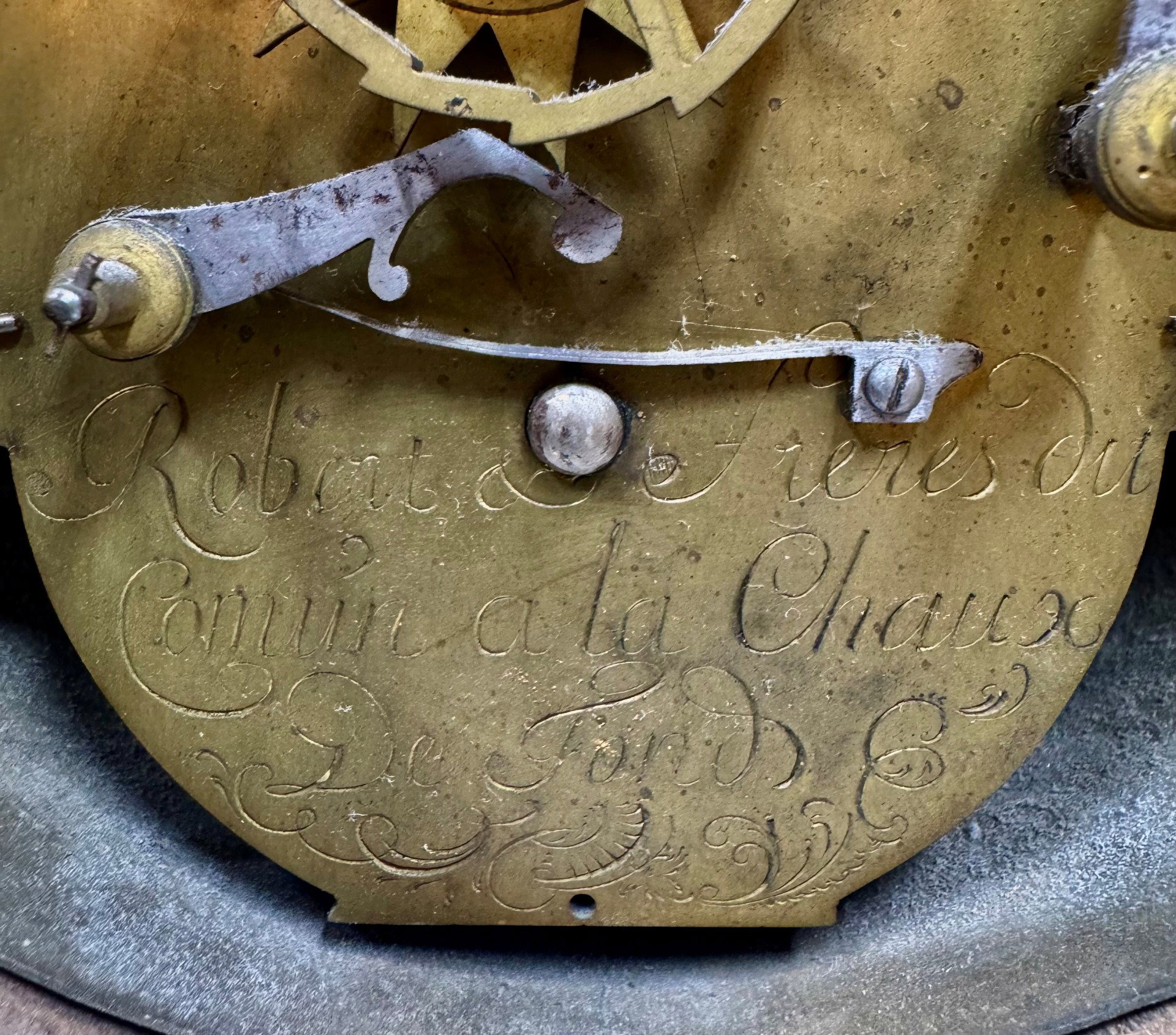
L’incisione sul movimento
Robert & Frères du Comun à La Chaux-de-Fonds
Robert & Frères: “Robert & Fratelli”.
Un’importante famiglia di orologiai svizzeri attiva tra XVIII e XIX secolo.
du Comun: indica una ramificazione o località associata alla famiglia Robert (probabilmente "Le Commun", zona nei pressi di La Chaux-de-Fonds).
à La Chaux-de-Fonds: città svizzera nel Canton Neuchâtel, capitale storica dell’orologeria, patrimonio UNESCO.
I Robert, incluso il ramo Robert & Frères, furono tra i produttori più attivi nel tardo Settecento e nella prima metà dell'Ottocento.
L’incisione indica quindi che il movimento è svizzero.
Pendulum clock, Robert & Frères, 19th century
Portico pendulum clock, characterized by an architectural structure with four columns and an arched pediment.
Clock complete but in need of servicing.
Early 19th century (circa 1810–1840).
The portico style with turned columns and semicircular pediment is typical of the European Empire/Late Empire style.
Dimensions: H 55 x W 38 x D 15 cm
Materials:
Ebonized wood in the dark parts
Columns in wood painted to imitate marble (a technique widely used at the time)
Brass decorations and rings
Enamel dial with Roman numerals
Chime:
The movement has two chimes (typically hours + half hours), as was usual in pendulum clocks with good quality mechanisms.
Internal movement:
Brass, with visible pendulum, driven by weights suspended by ropes.
Engraving on the movement
Robert & Frères du Comun à La Chaux-de-Fonds
Robert & Frères: “Robert & Brothers.”
An important family of Swiss watchmakers active between the 18th and 19th centuries.
du Comun: indicates a branch or location associated with the Robert family (probably “Le Commun,” an area near La Chaux-de-Fonds).
à La Chaux-de-Fonds: Swiss city in the canton of Neuchâtel, historic capital of watchmaking, UNESCO World Heritage Site.
The Roberts, including the Robert & Frères branch, were among the most active manufacturers in the late 18th and early 19th centuries.
The engraving therefore indicates that the movement is Swiss.