
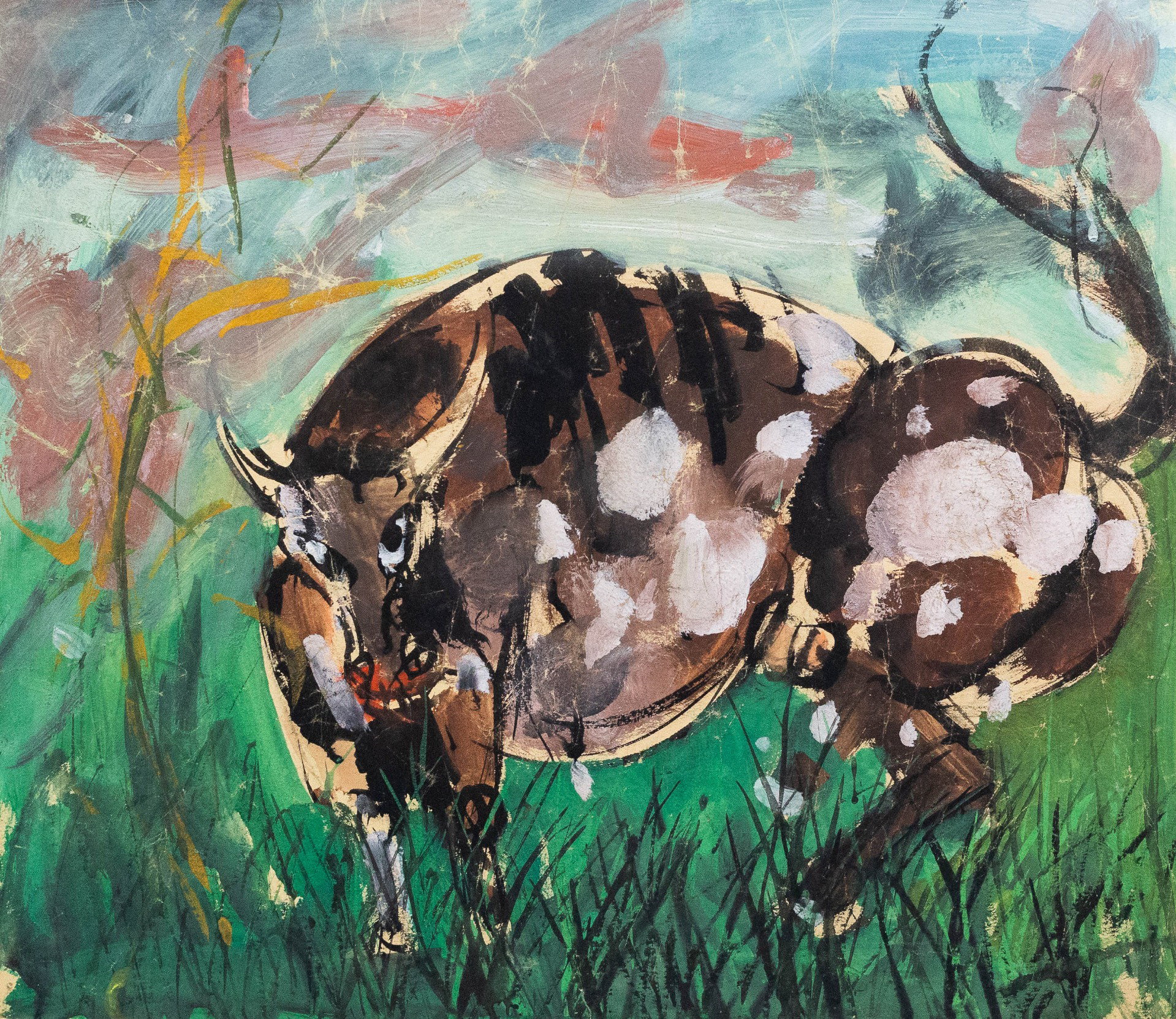
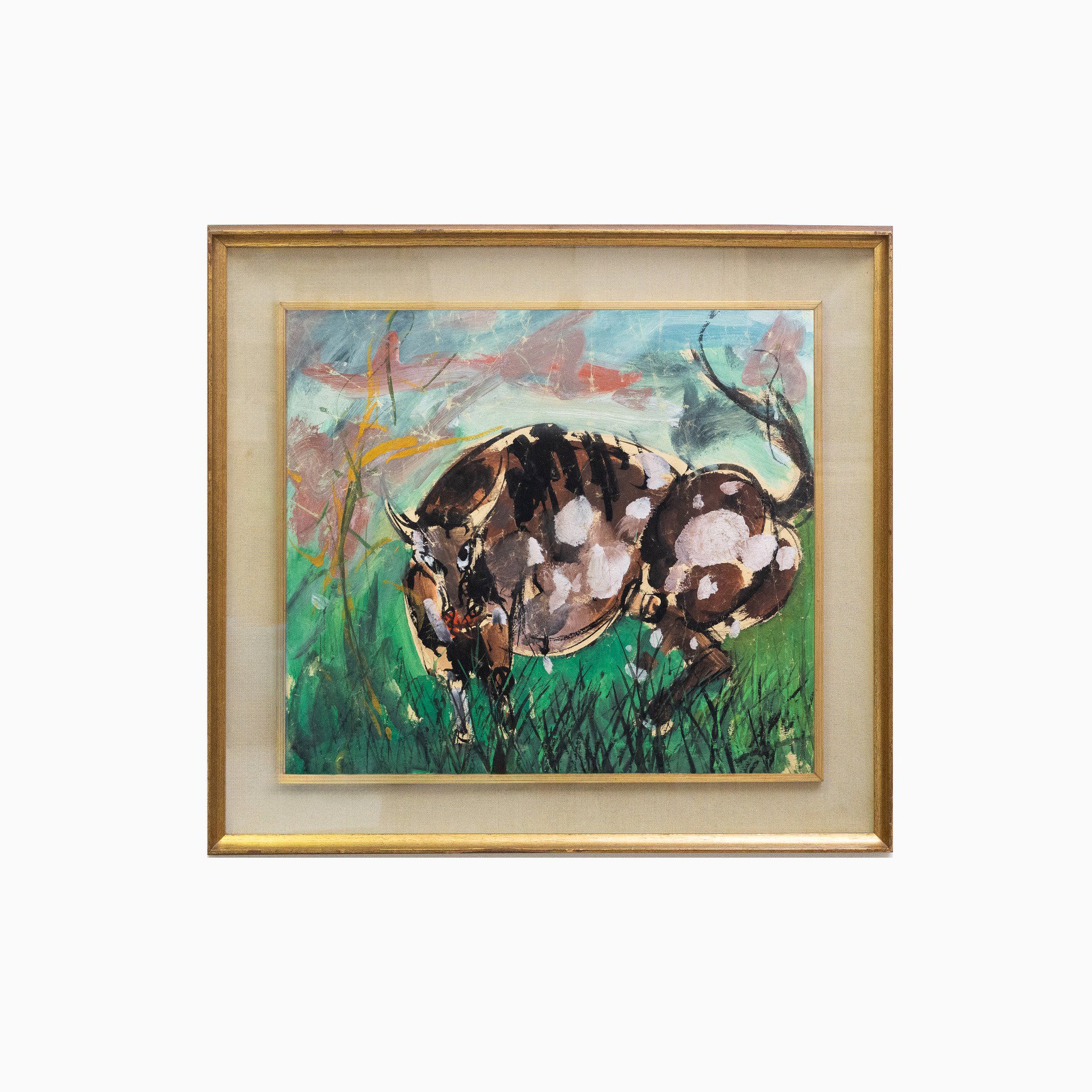
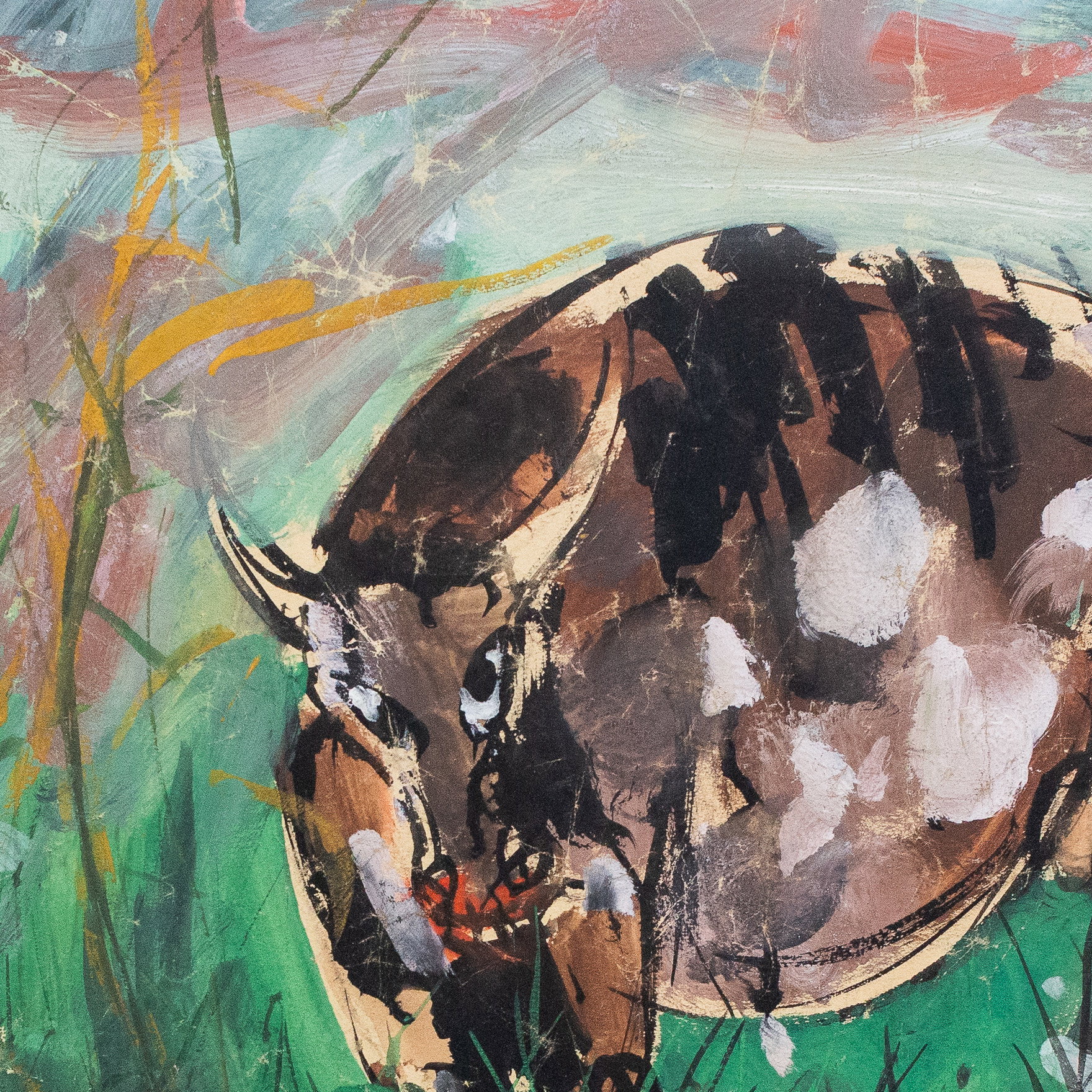
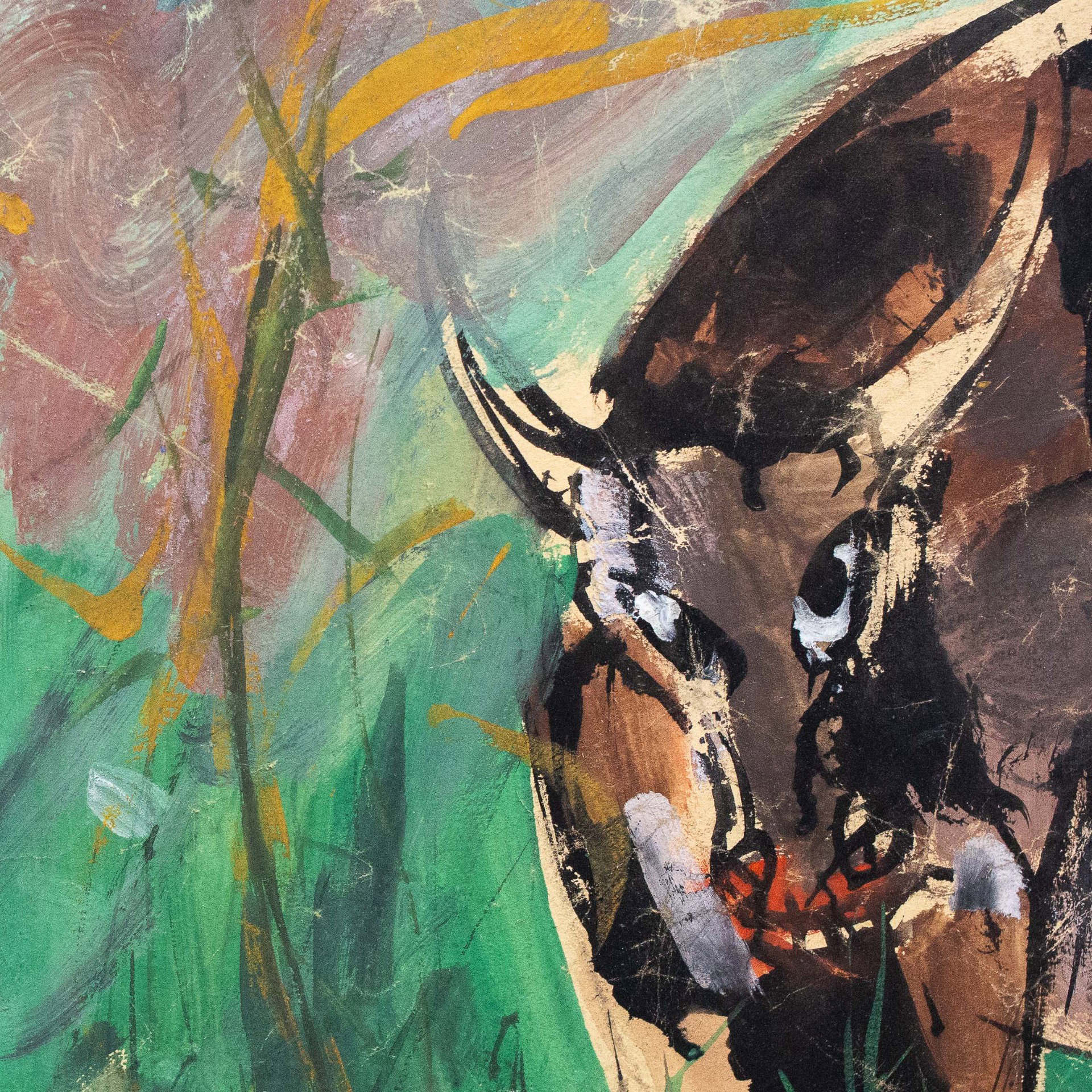
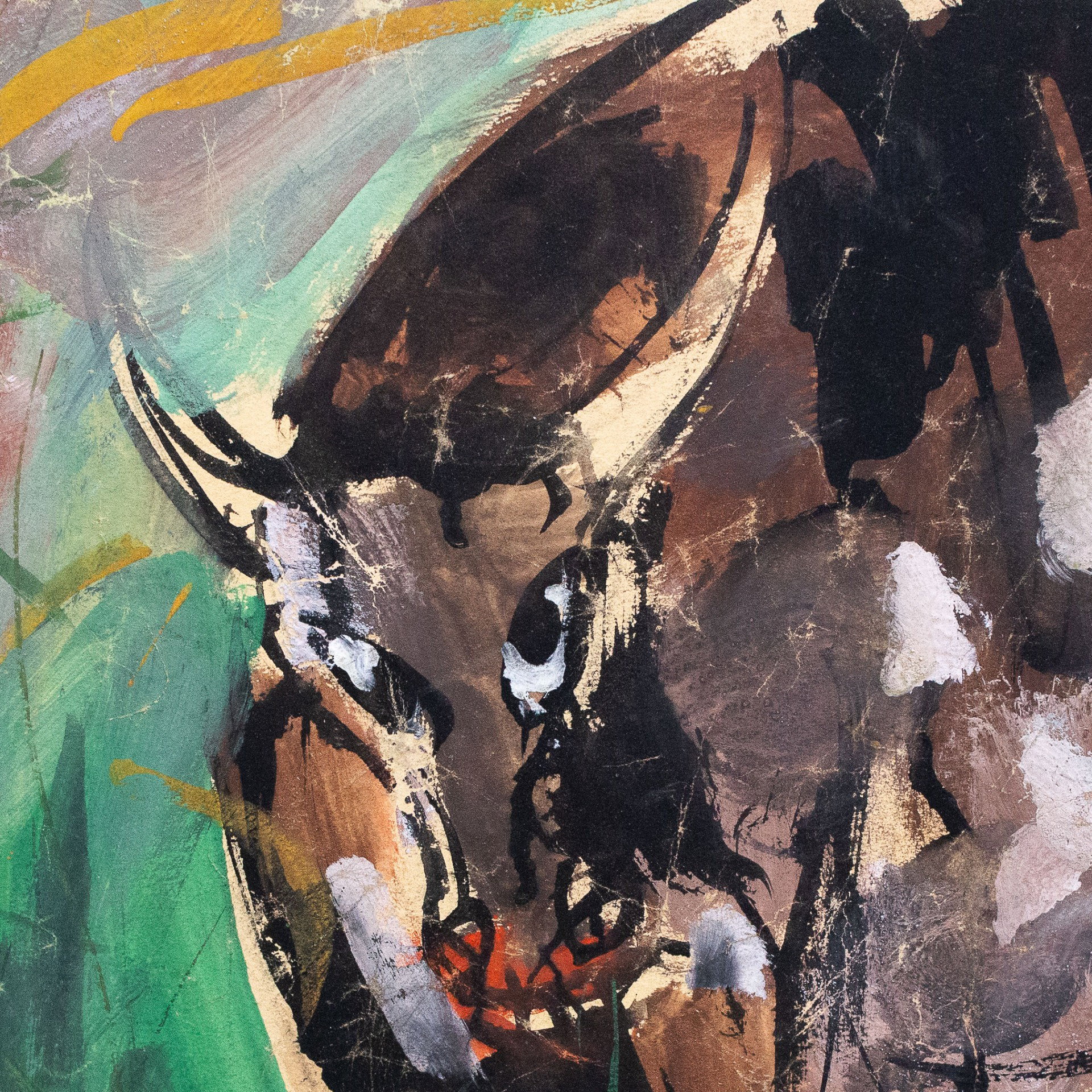
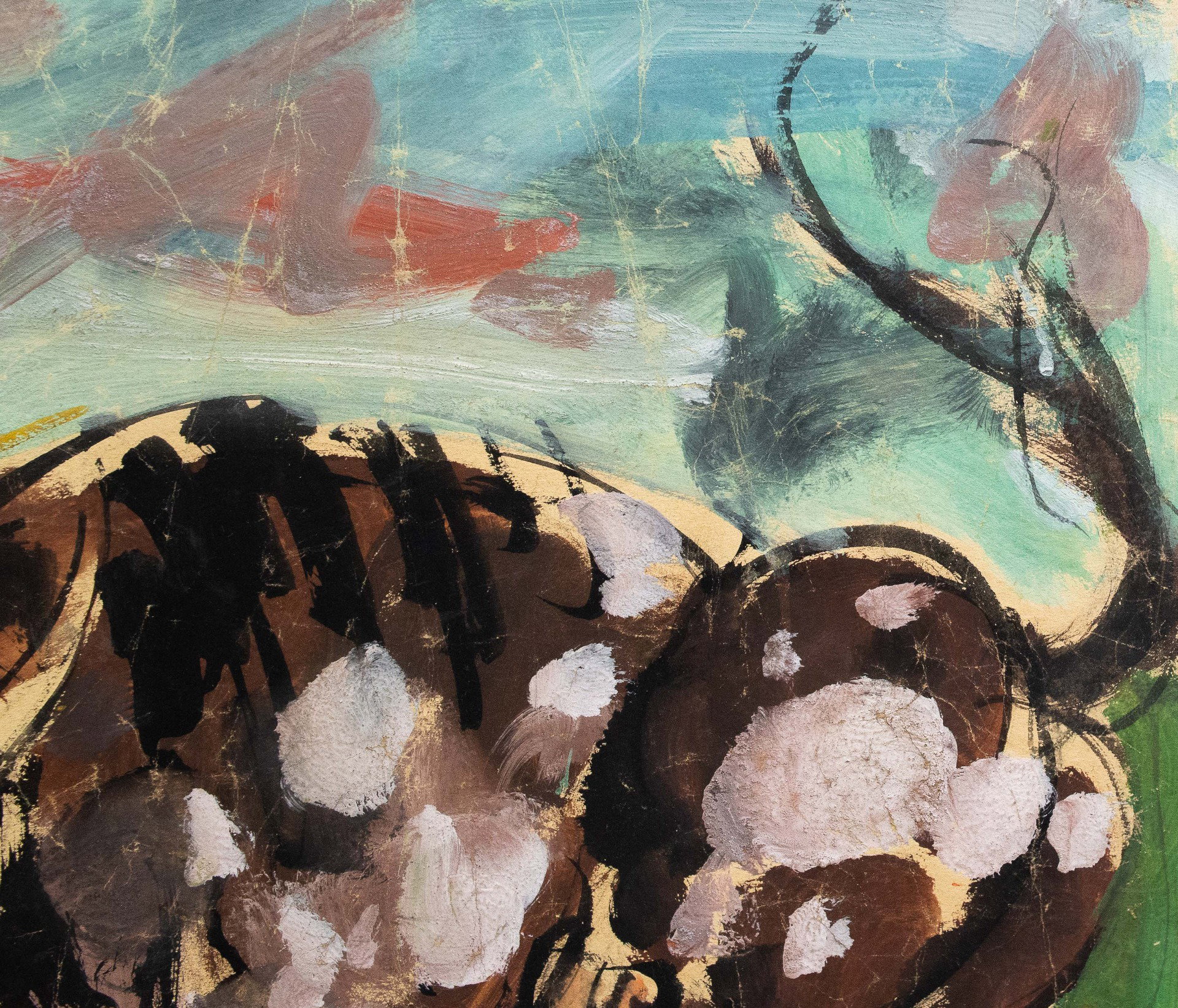
Luigi Spazzapan,"Il Toro", tempera su cartone, Prima metà del '900
Splendido dipinto di Luigi Spazzapan, uno dei protagonisti più liberi, indipendenti e creativi della scena artistica novecentesca. Tempera su cartone raffigurante un toro in corsa.
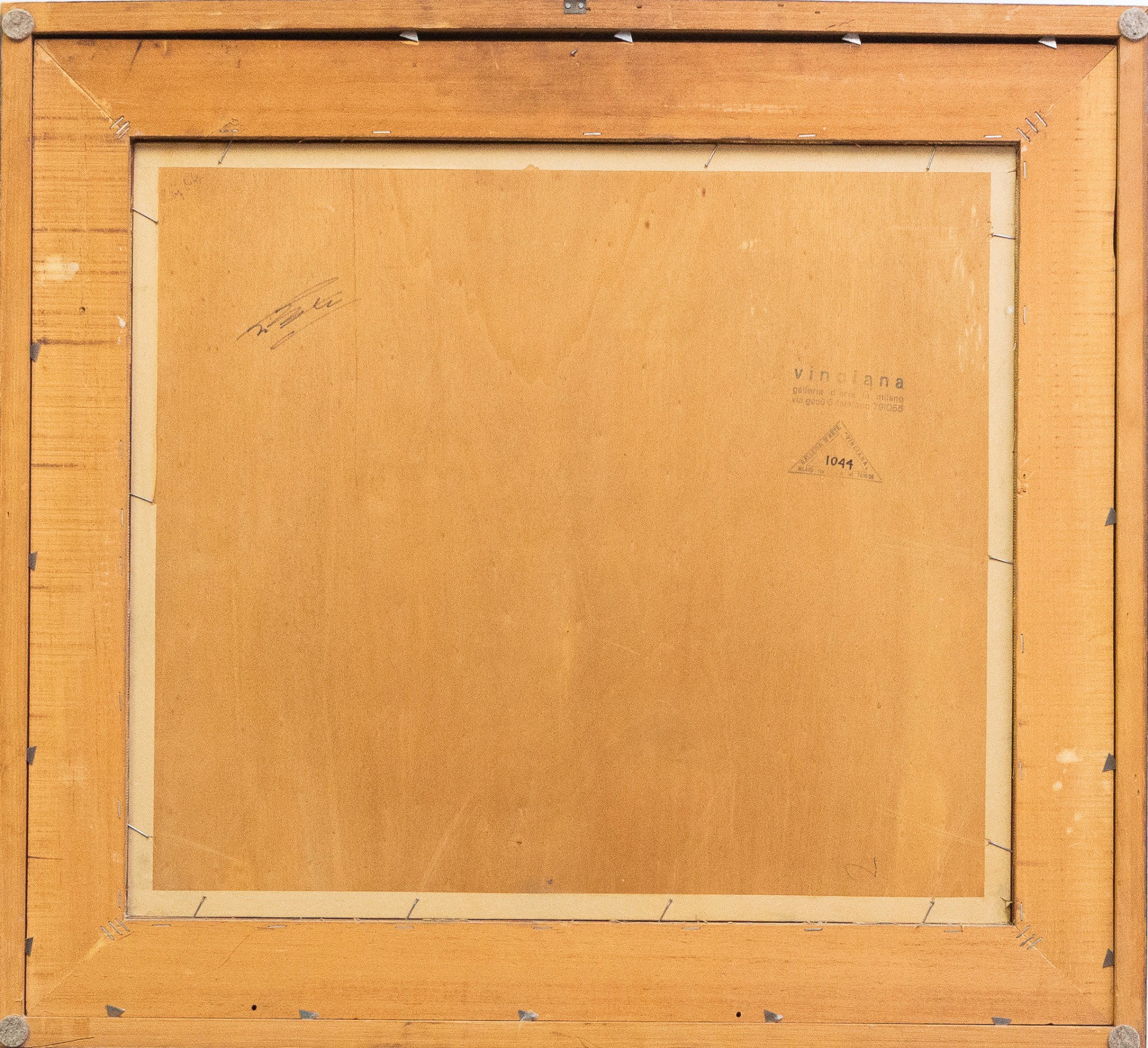
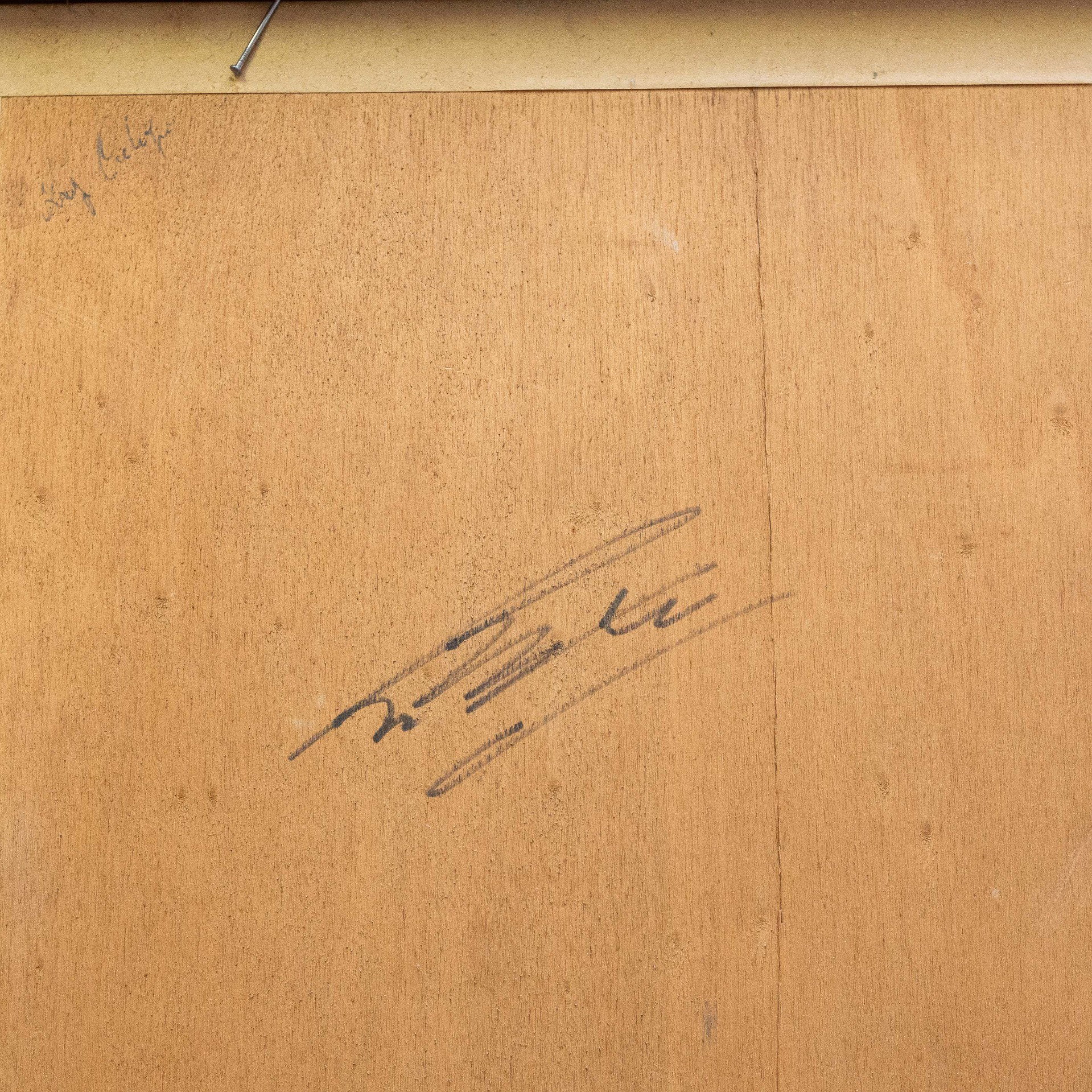
Al retro firma in alto a sinistra
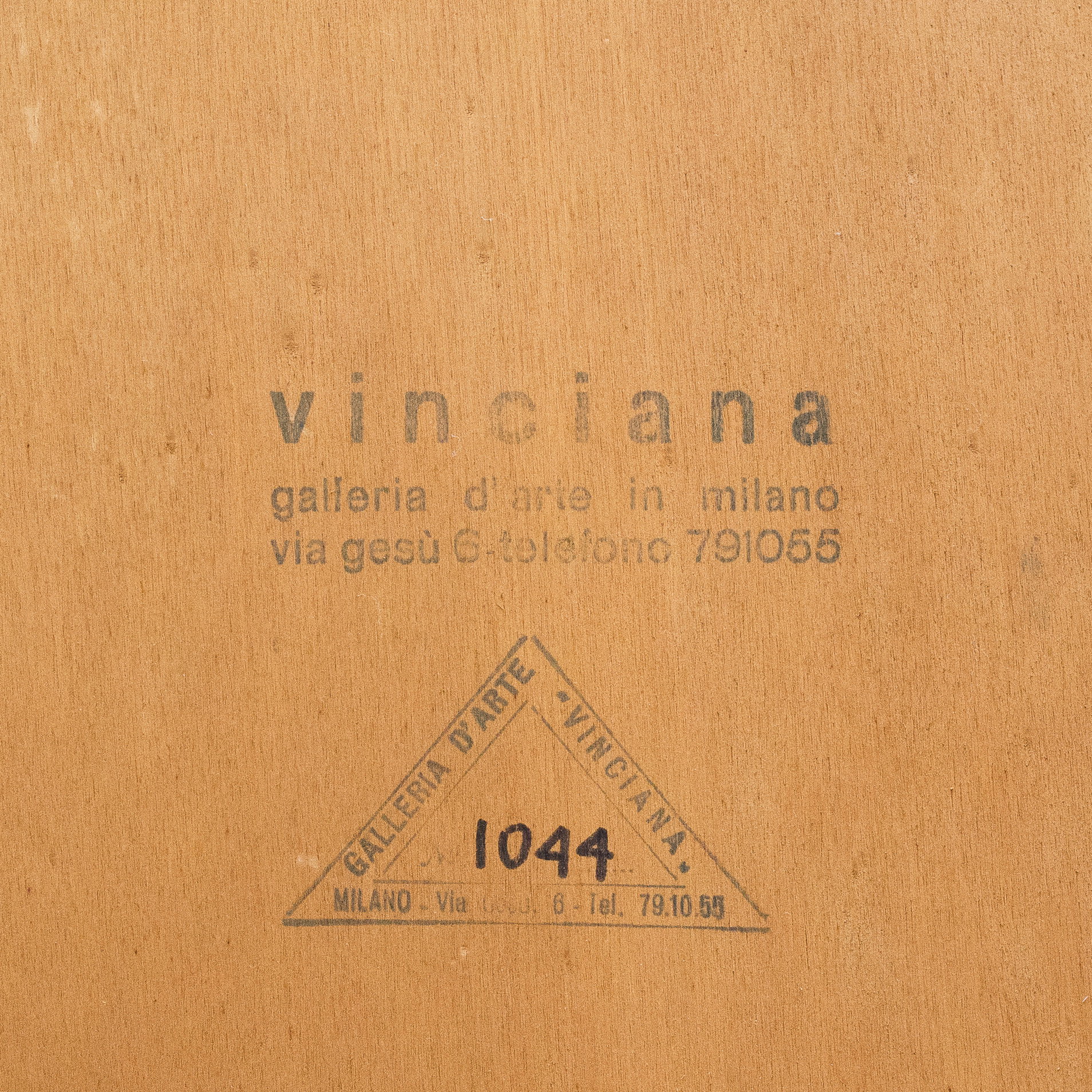
Timbro Galleria d'Arte "Vinciana", Milano
Misure: In cornice H 67,5 x L 87,5 / Cartone 47 x 66,5 cm
Biografia
Pittore, nato il 18 aprile 1889 a Gradisca, morto a Torino il 18 febbraio 1958. Seguì i corsi delle Scuole Reali di Gorizia. Ha insegnato disegno nelle scuole medie di Idria. Nel 1928 si trasferì a Torino. Conobbe i pittori del gruppo dei "Sei" e si avvicinò al gruppo del "Selvaggio" (Mucci, Zeglio, I. Cremona). Nel 1932 espose a Parigi con Menzio, Paulucci e Levi. Nel 1939 tenne una personale a Parigi alla Galerie Albert.
Dotato di un pungente istinto disegnativo e di un vivace senso del colore, dipinse, fino al 1955 circa, in termini di un post-impressionismo nervosamente abbreviato, vitalizzato da un'inquieta carica espressionista. talvolta introducendo angolose stilizzazioni, che si rifanno alla sua originaria cultura cubista e futurista. Dopo il 1955, la sua pittura ha subìto una radicale svolta in senso astratto e informale, documentata nella retrospettiva postuma allestita dalla Biennale di Venezia nel 1960. Tra le altre esposizioni S. aveva partecipato anche alla XXV , XXVIIe XXVIII Biennale.
Luigi Spazzapan, "The Bull," tempera on cardboard, First half of the 20th century
Splendid painting by Luigi Spazzapan, one of the most free, independent and creative protagonists of the 20th-century art scene. Tempera on cardboard depicting a running bull.
On the back signature in the upper left corner
Stamp Art Gallery "Vinciana," Milan
Measurements: Framed H 67.5 x W 87.5 / Cardboard 47 x 66.5 cm
Biography
Painter, born April 18, 1889 in Gradisca, died February 18, 1958 in Turin. He followed courses at the Royal Schools in Gorizia. He taught drawing in the middle schools of Idria. In 1928 he moved to Turin. He met the painters of the "Six" group and approached the "Selvaggio" group (Mucci, Zeglio, I. Cremona). In 1932 he exhibited in Paris with Menzio, Paulucci and Levi. In 1939 he held a solo exhibition in Paris at the Galerie Albert.
Endowed with a pungent drawing instinct and a lively sense of color, he painted, until about 1955, in terms of a nervously abbreviated post-impressionism, vitalized by a restless expressionist charge. sometimes introducing angular stylizations, harking back to his original Cubist and Futurist culture. After 1955, his painting underwent a radical turn in an abstract and informal direction, documented in the posthumous retrospective mounted by the Venice Biennale in 1960. Among other exhibitions S. had also participated in the XXV , XXVIIand XXVIII Biennale.