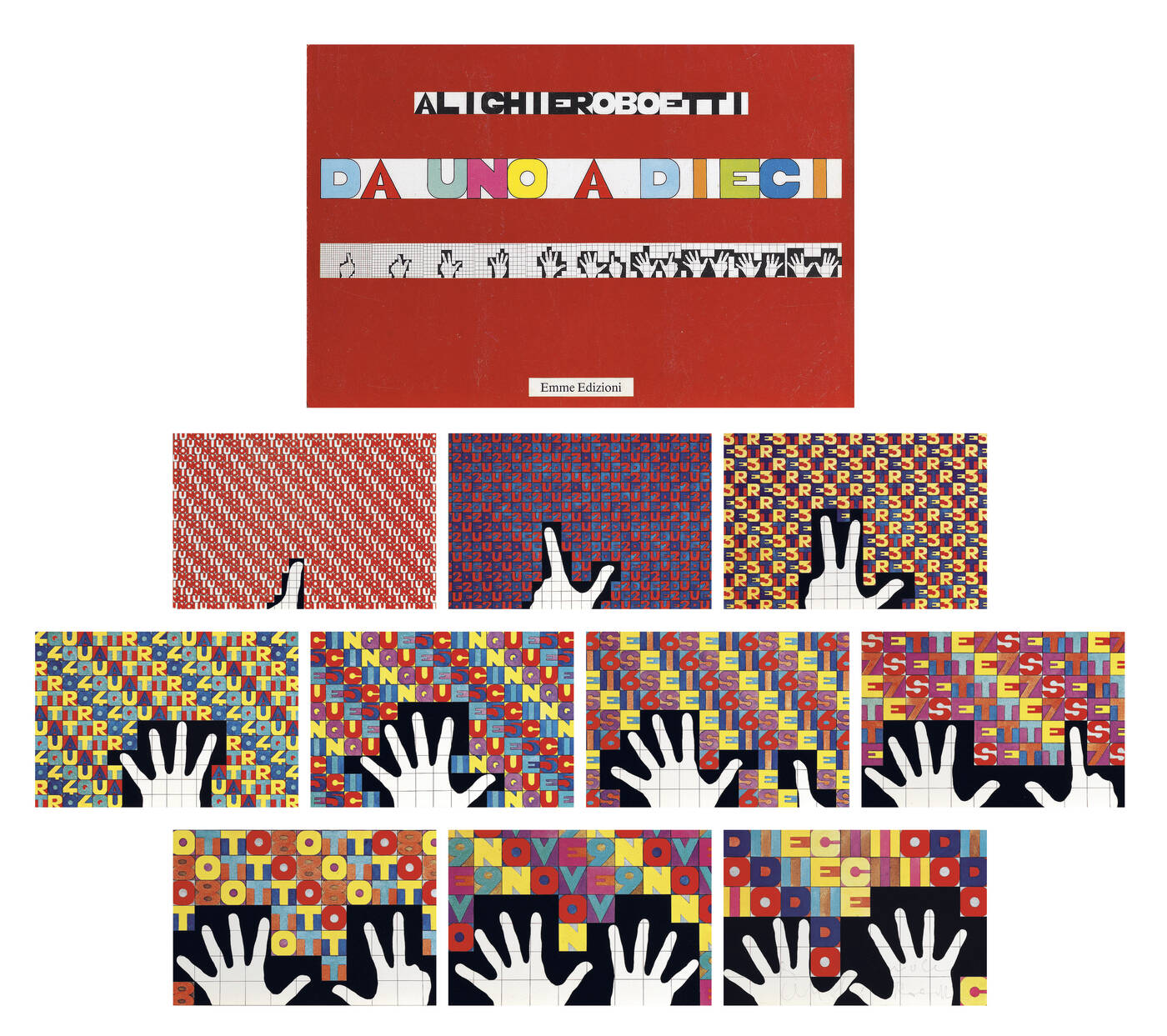
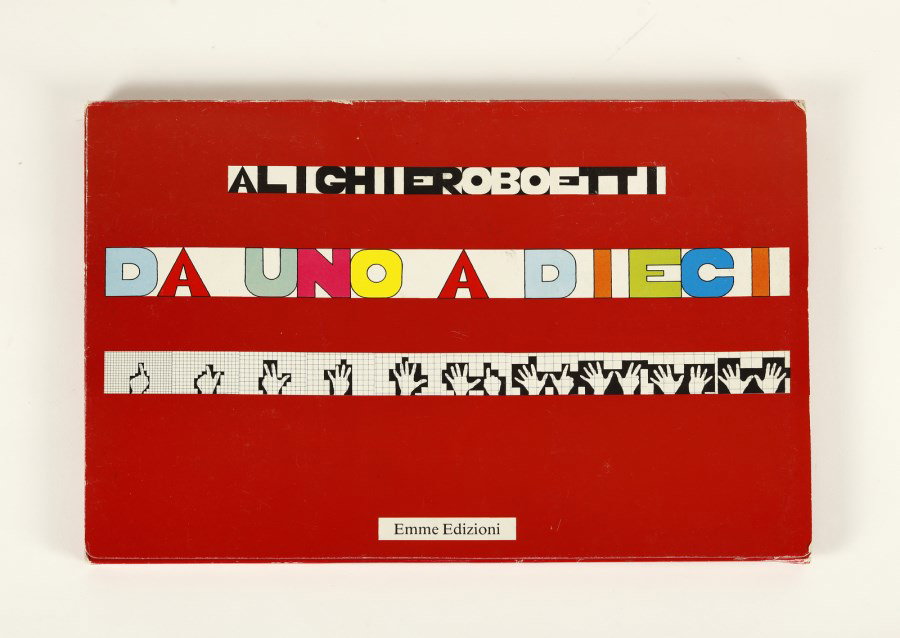
"De um a Dez", de ALIGHIERO BOETTI, Múltiplo sem tiragem, 1980
Turim 1940 - 1994 Roma
"De um a dez"
Pasta com 20 folhas soltas, cm 25x37 - Tiragem não indicada
Livro-jogo, múltiplo sem tiragem
Pasta e vinte folhas soltas em cartão.
24 x 36 cm (folha, cada)
25 x 37 x 1,3 cm (pasta)
Realizada em 1980. Publicada pela Emme Edizioni, Milão; tiragem não declarada.
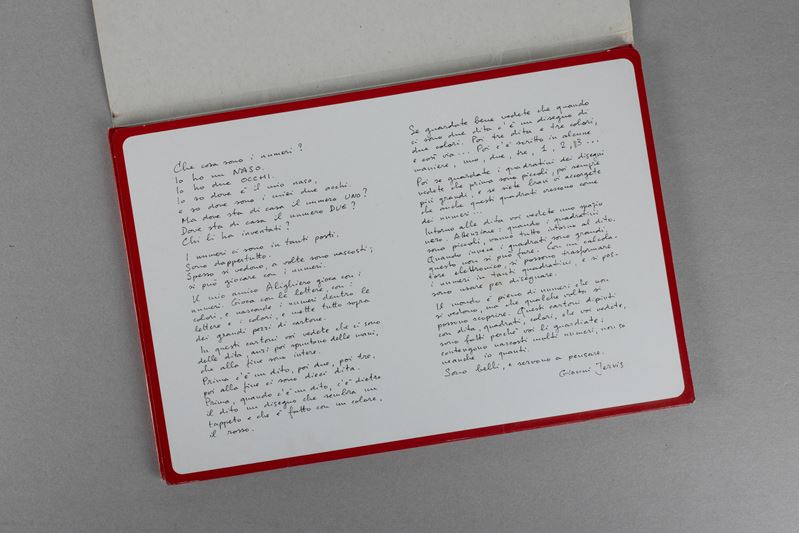
Apresentação de Gianni Jervis.
As pranchas coloridas variam de 1 a 10: a prancha com o número 1 tem uma cor, a prancha com o número 2 tem duas cores, até a prancha com o número 10 com dez cores.
Existem 10 mesas quadradas.
Da introdução de Jervis: "O que são números? Eu tenho um nariz. Eu tenho dois olhos. Eu sei onde está meu nariz e sei onde estão meus dois olhos. Mas onde fica o número um? Onde fica o número dois? Quem os inventou? Os números estão em tantos lugares. Eles estão em toda parte".
Proveniência: Coleção particular
Bibliografia: - G. Maffei, "O Livro do Artista", Milão 2003
- A. Moeglin-Delacroix, L. Dematteis, G. Maffei,
A. Rimmaudo, "Olhar e contar",
Mântua 2004
- M. Picciau, G. Maffei, "Alighieroboetti
Tuttolibro", Roma 2004
- L. Castagno, G. Cavaglià, "A arte do século XX
e o livro", Milão, 2004
- G. Maffei, "Livros e documentos. Arte Povera
1966-1980", Mântua 2007, pág. 59, em cores
"From One to Ten," by ALIGHIERO BOETTI, Multiple without print run, 1980
Turim 1940 - 1994 Roma
"From One to Ten"
Folder with 20 loose plates, 25x37 cm - Run not indicated
Librogioco, multiple without print run
Folder and twenty loose boards in cardboard.
24 x 36 cm. (sheet, each)
25 x 37 x 1.3 cm. (portfolio)
Made in 1980. Published by Emme Edizioni, Milan; print run not stated.
Introduction by Gianni Jervis.
The colored plates range from 1 to 10: the plate with the number 1 has one color, the plate with the number 2 has two colors, up to the plate with the number 10 with ten colors.
There are 10 square tables.
From Jervis' introduction, "What are numbers? I have a nose. I have two eyes. I know where my nose is, and I know where my two eyes are. But where does the number one belong? Where does the number two belong Who invented them? Numbers are in so many places. They are everywhere."
Provenance: private collection
Bibliography: - G. Maffei, "The Artist's Book," Milan 2003
- A. Moeglin-Delacroix, L. Dematteis, G. Maffei,
A. Rimmaudo, "Looking and telling",
Mantua 2004
- M. Picciau, G. Maffei, "Alighieroboetti.
Tuttolibro," Rome 2004
- L. Castagno, G. Cavaglià, "The art of the twentieth century
and the book," Milan, 2004
- G. Maffei, "Books and documents. Arte povera.
1966-1980," Mantua 2007, p. 59, in color


.jpg)

.jpg)