
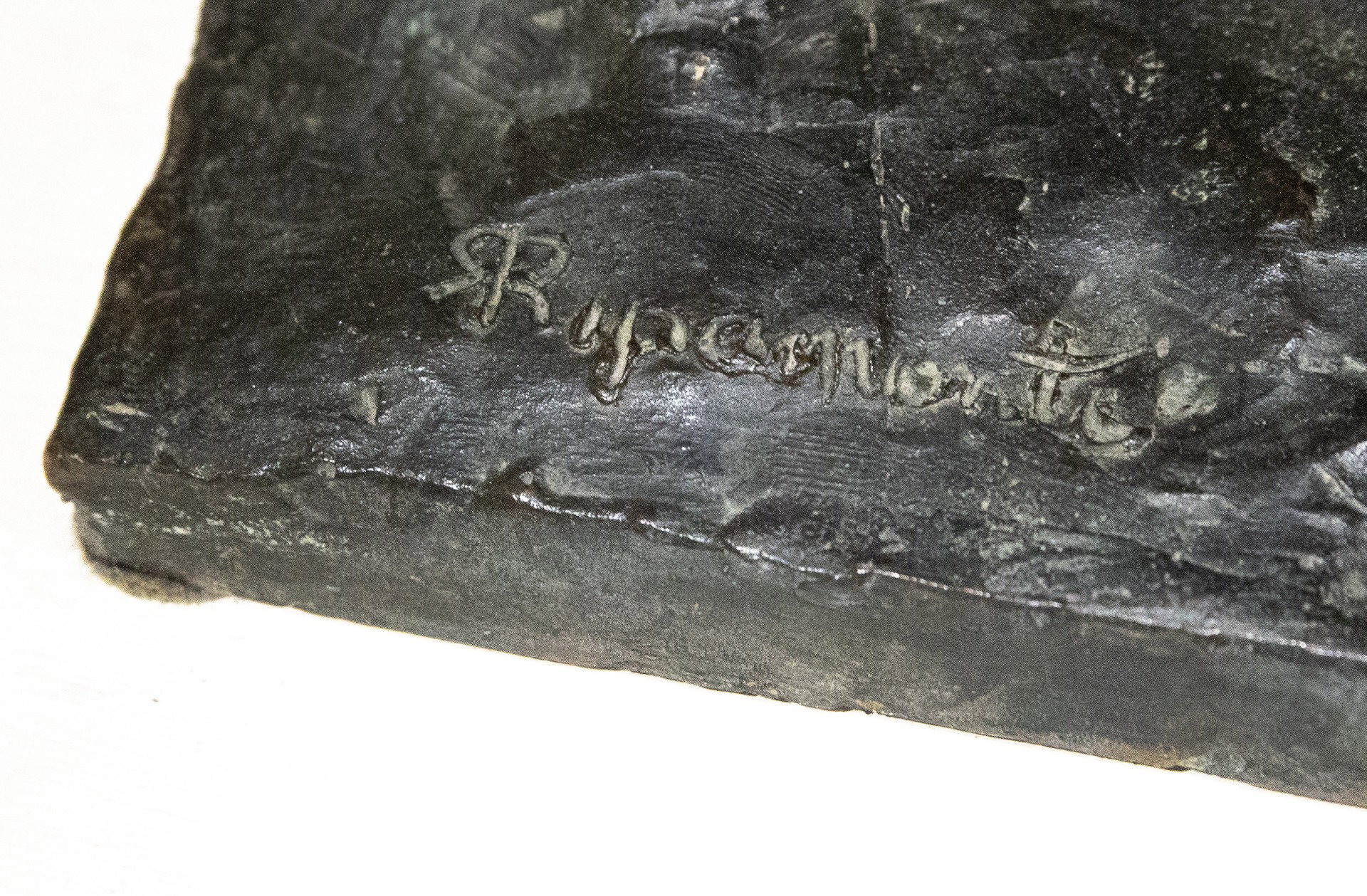
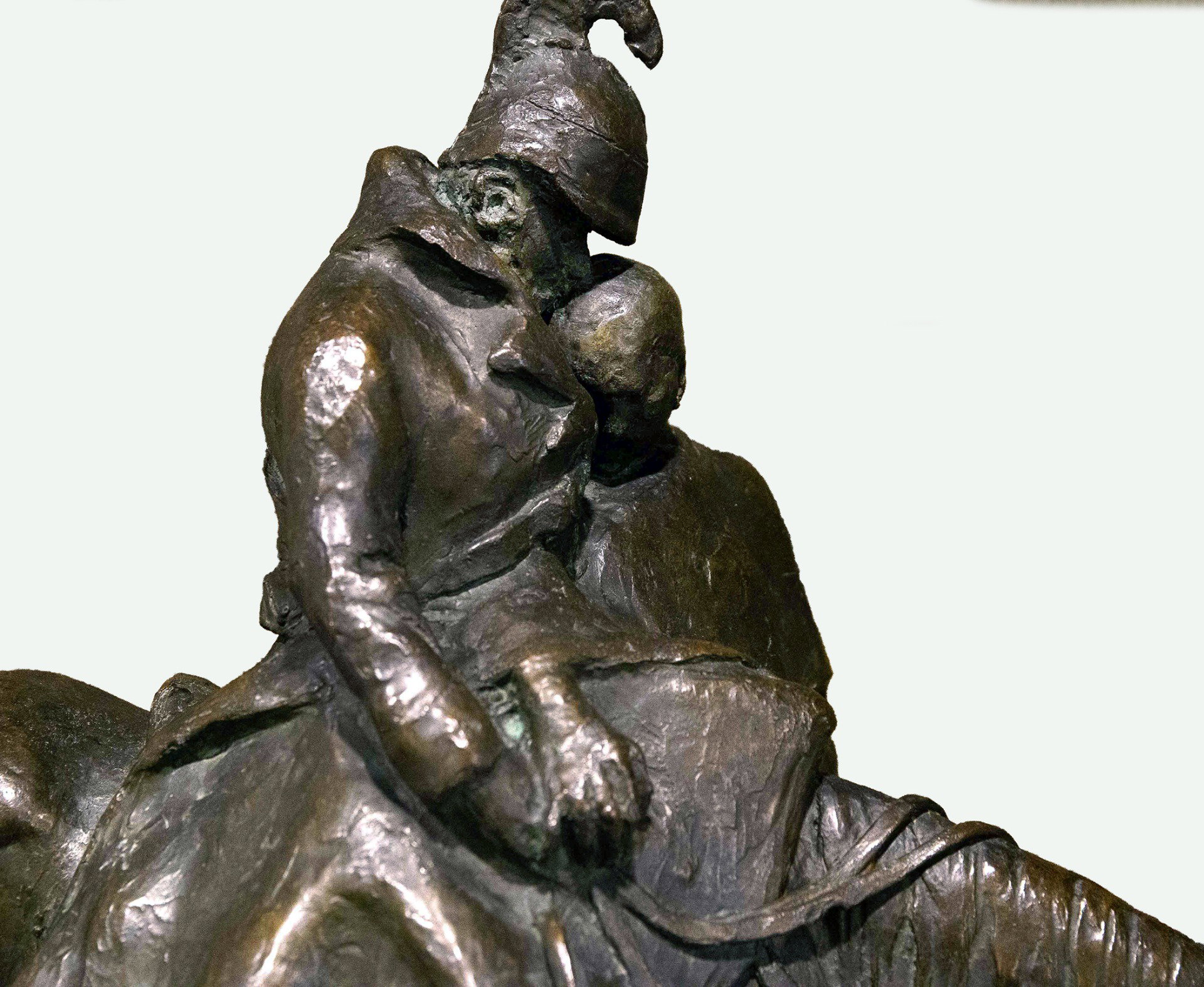

Riccardo Ripamonti, "Cavaliere", firmato, Epoca Fine '800 Primi '900
RICCARDO RIPAMONTI (1849-1930)
Cavaliere
Scultura in bronzo a patina scura, firmata.
Misure: cm 67 x 60 x 25.
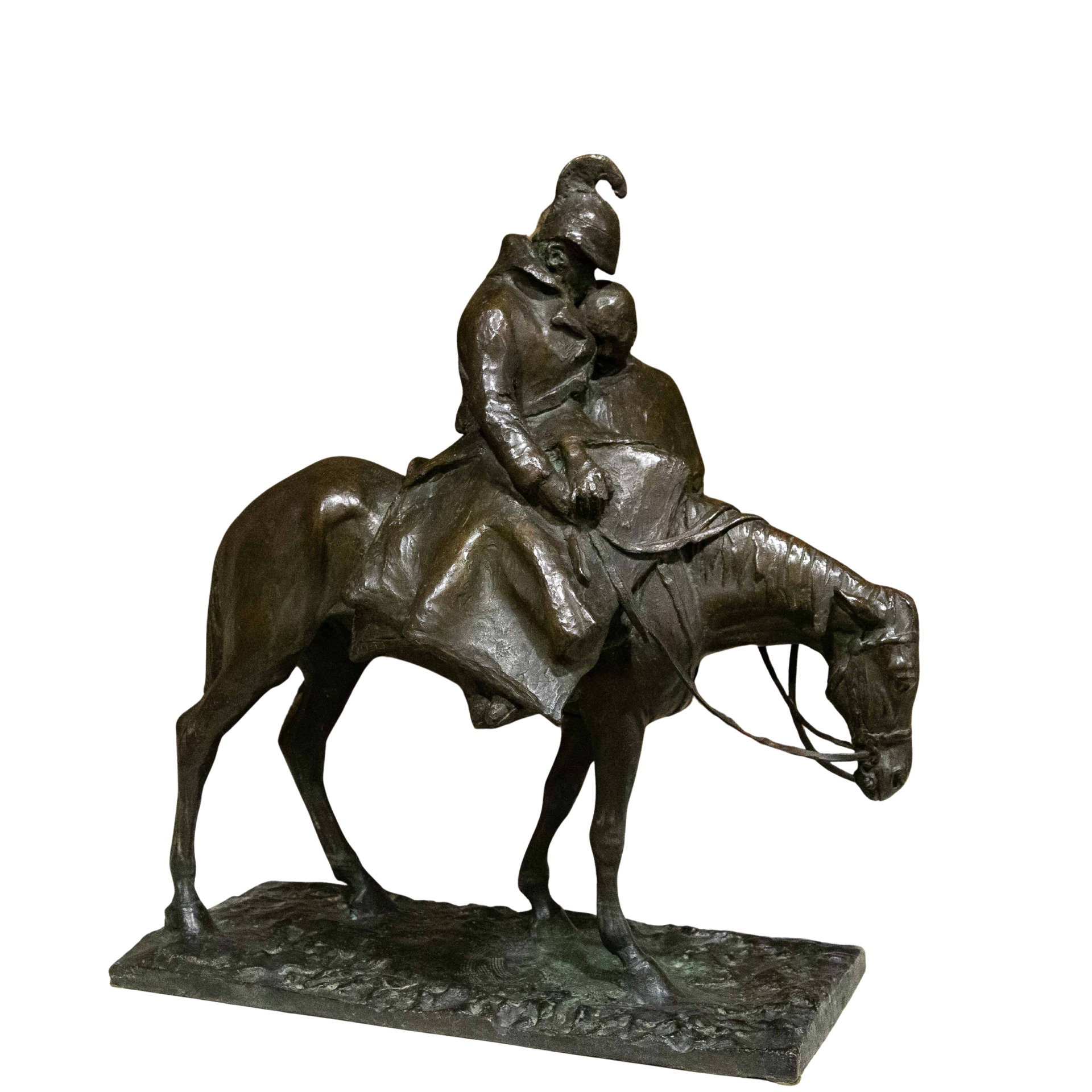
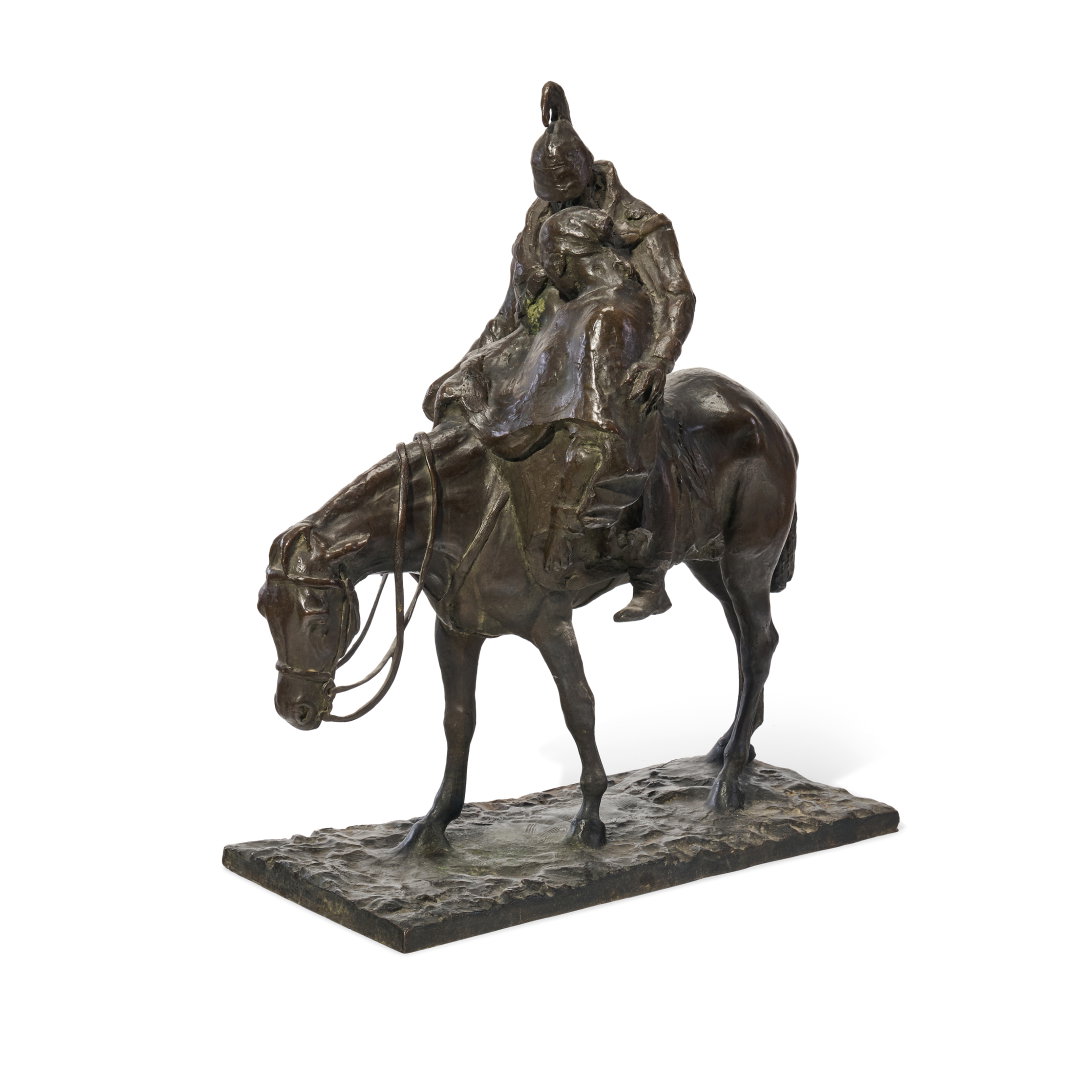
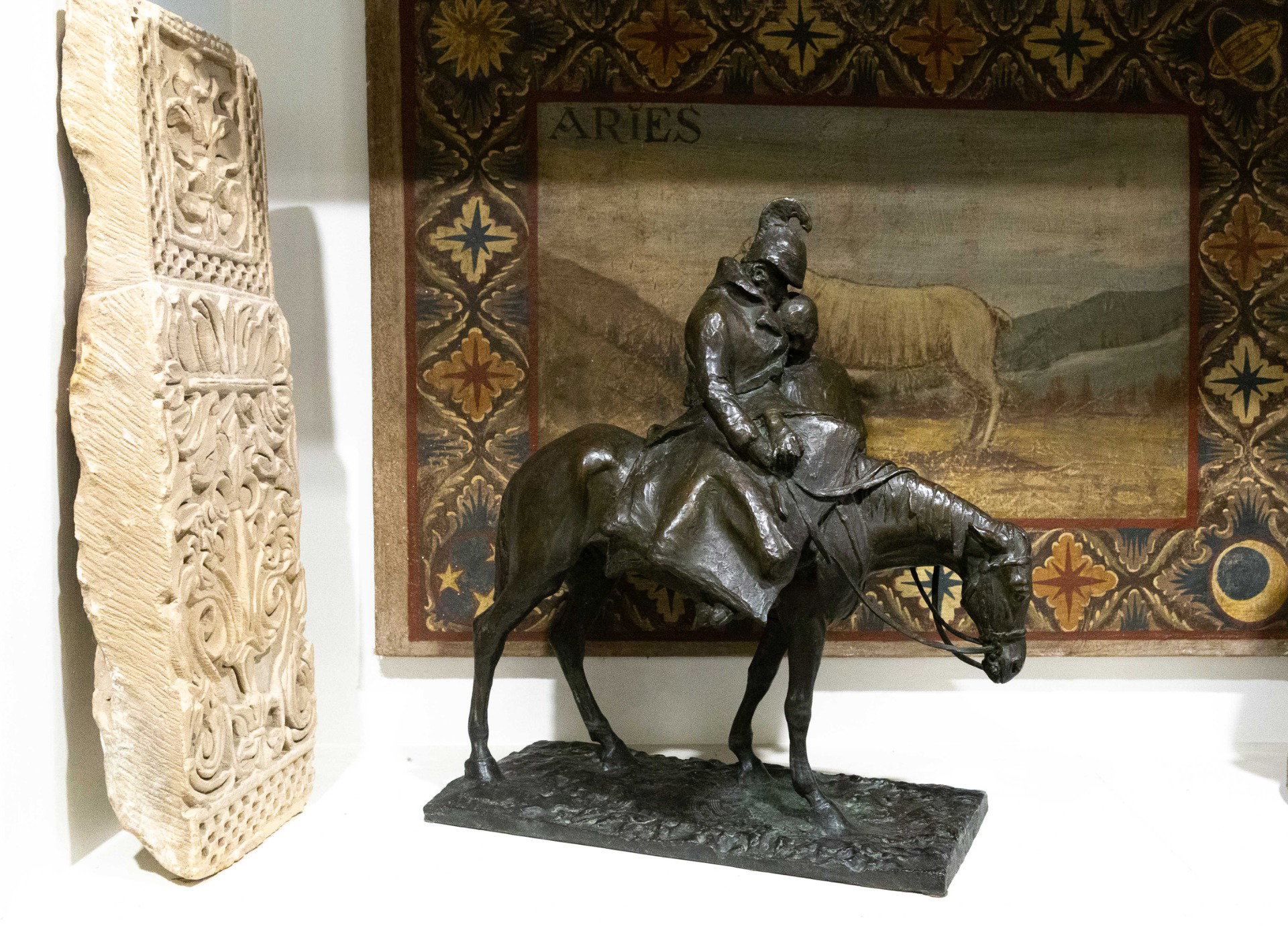
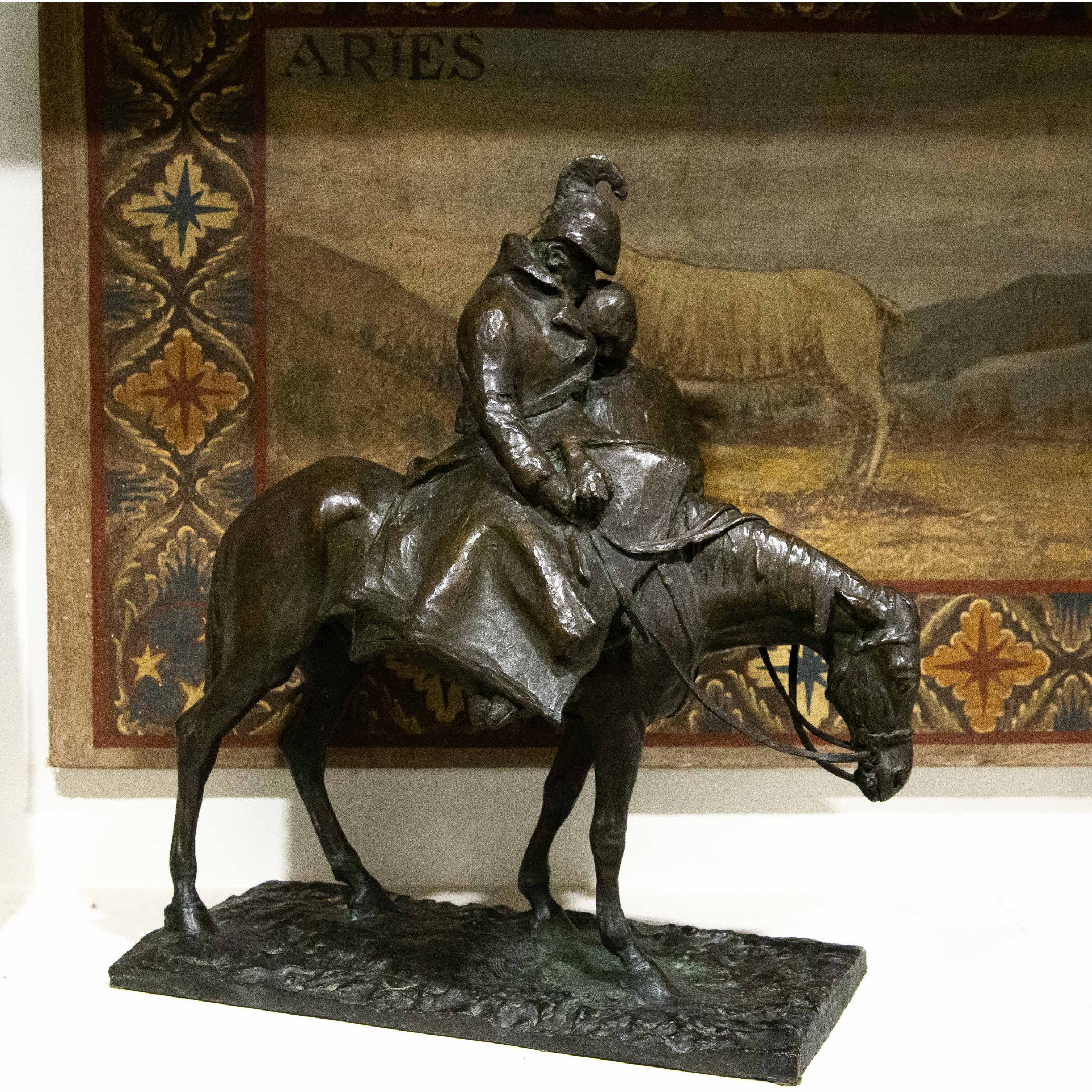
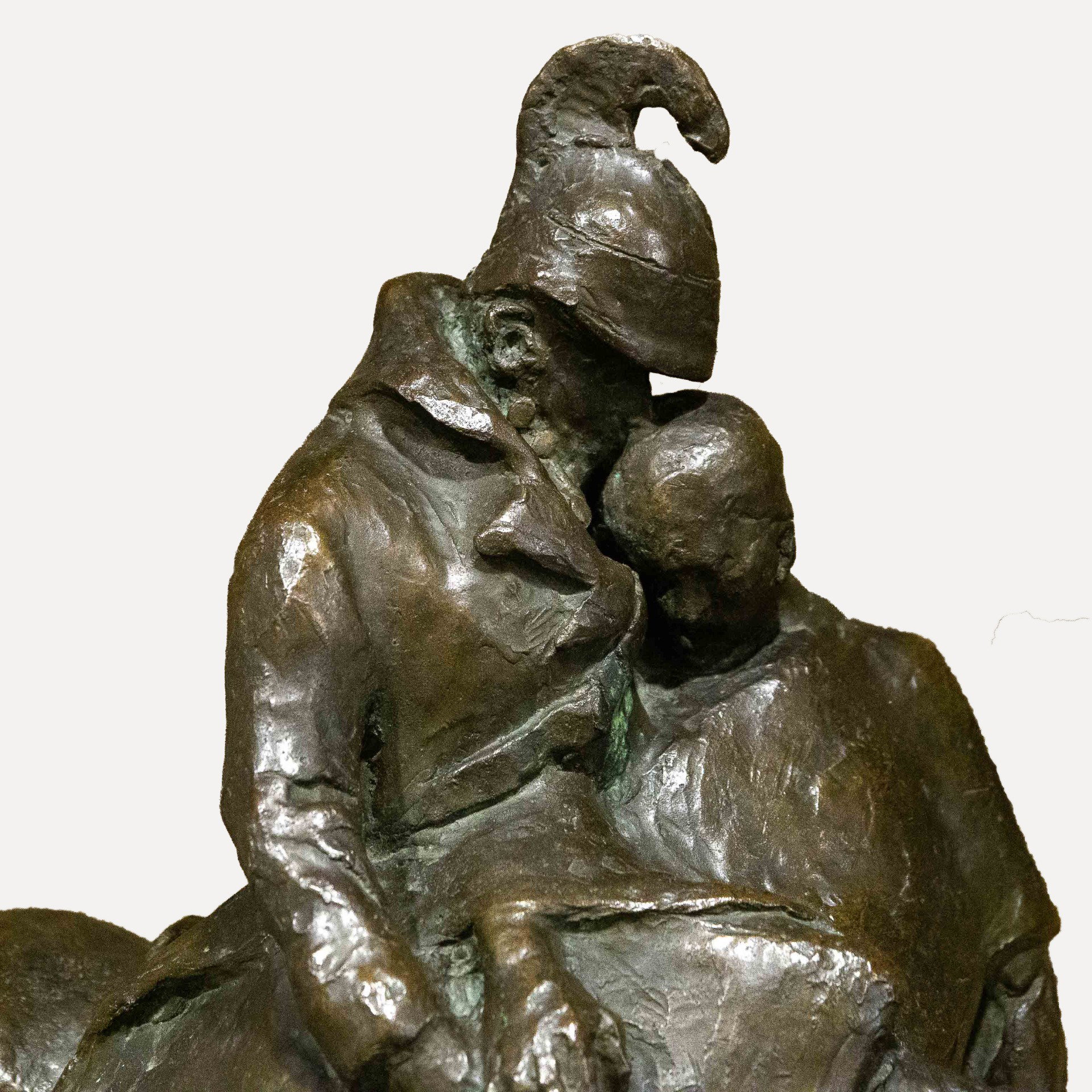
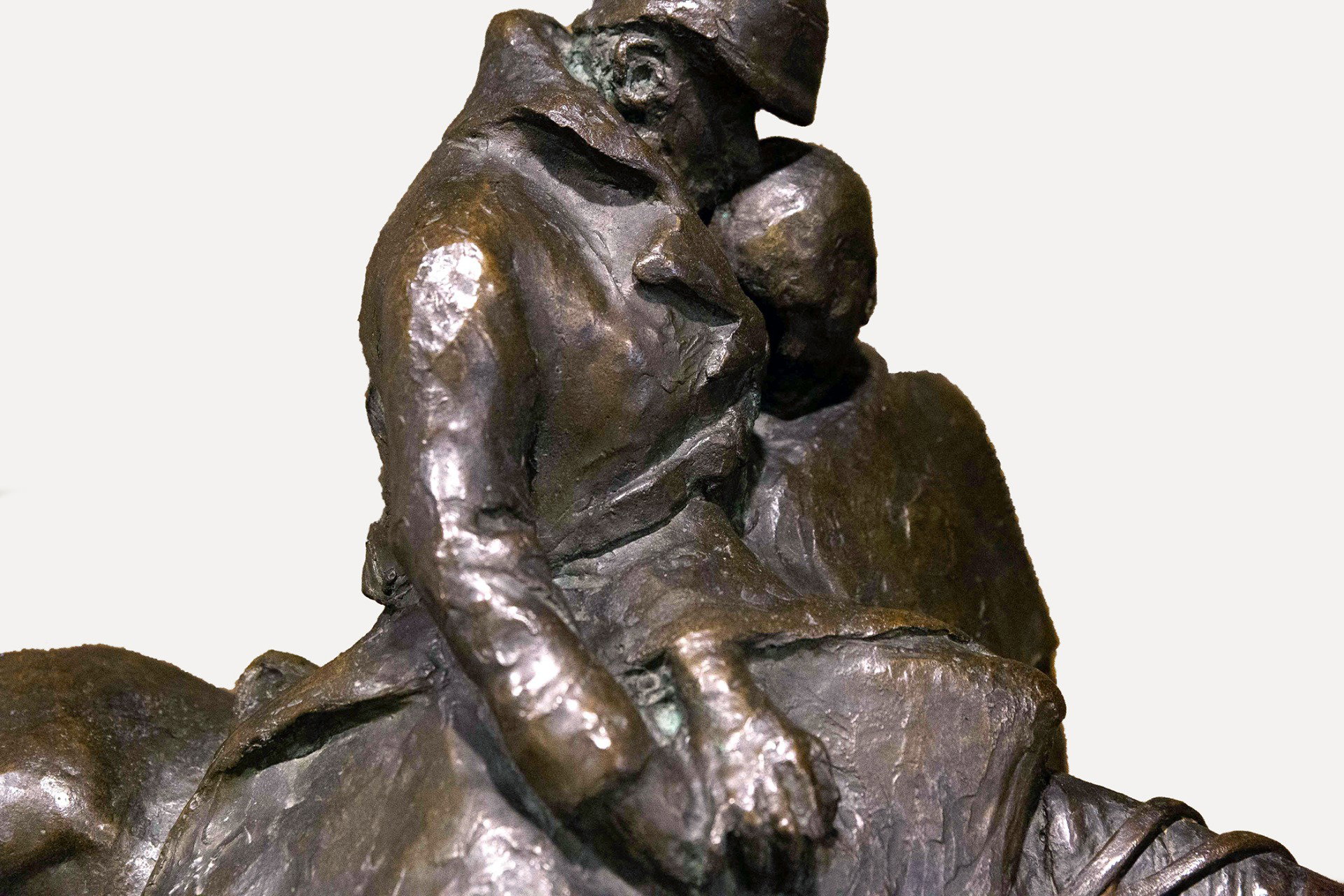
Importante scultura raffigurante cavaliere e dama in atteggiamento raccolto. L’opera evidenzia la sensibilità plastica di Riccardo Ripamonti, interprete della tradizione scultorea lombarda tra Otto e Novecento, capace di coniugare realismo descrittivo e intensa resa emotiva.
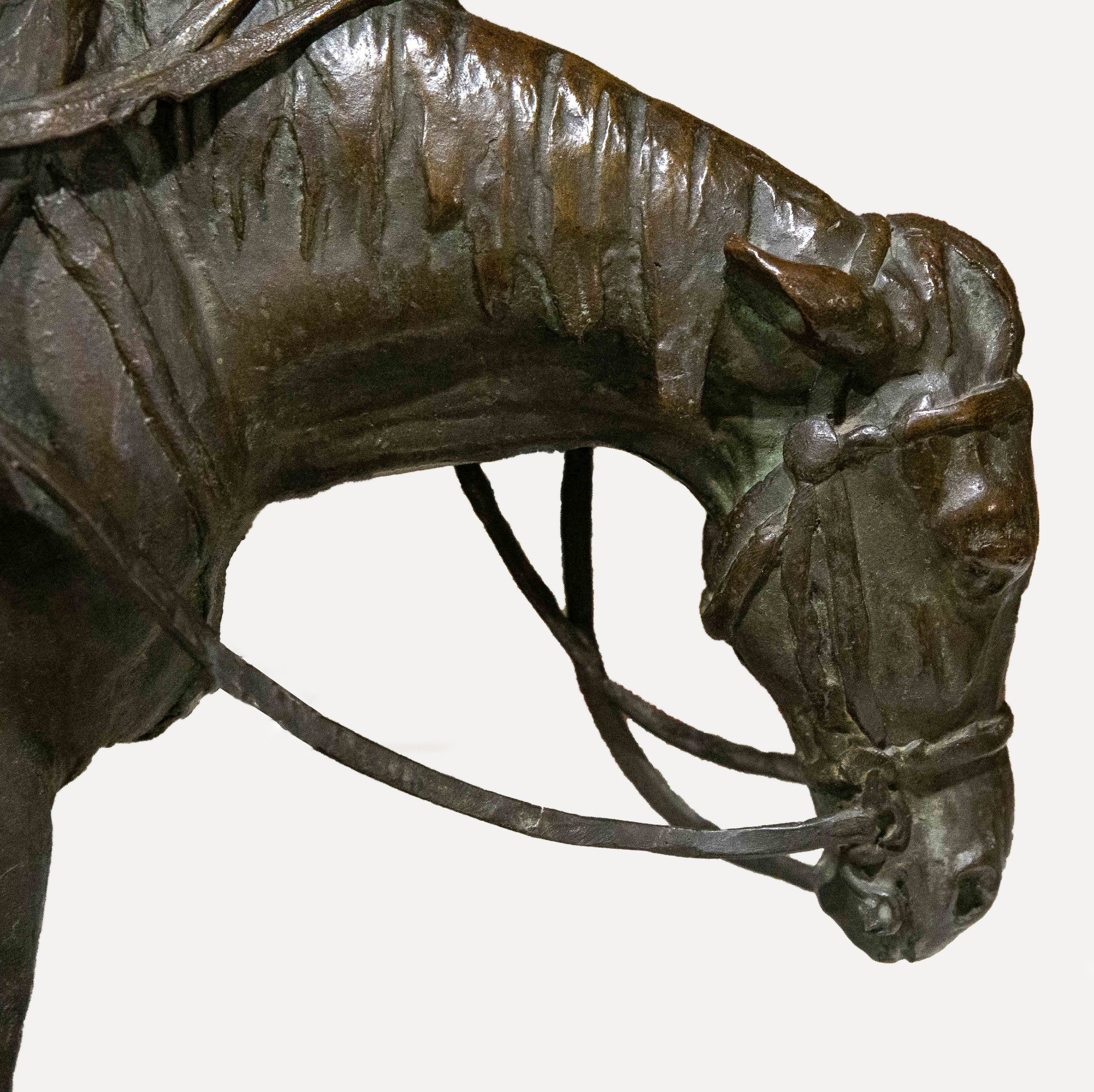
La composizione si distingue per il dinamico equilibrio dei volumi e per la raffinata modellazione delle superfici: il trattamento vibrante del panneggio e della figura equestre conferisce movimento e profondità alla scena, mentre la patina bruna valorizza i dettagli anatomici e le variazioni luministiche del bronzo.
Il soggetto, di gusto storicista e romantico, richiama l’interesse dell’artista per la rappresentazione narrativa e intimista, lontana dalla monumentalità celebrativa tipica della statuaria equestre ufficiale. La posa abbassata del cavallo e l’atteggiamento introspettivo del cavaliere accentuano il carattere poetico dell’opera.
Esemplare di notevole qualità esecutiva, testimonianza significativa della produzione bronzea italiana tra XIX e XX secolo
Riccardo Ripamonti, “Knight,” signed, Late 19th–Early 20th Century
RICCARDO RIPAMONTI (1849–1930)
Knight
Bronze sculpture with a dark patina, signed.
Dimensions: 67 x 60 x 25 cm.
An important sculpture depicting a knight and a lady in a intimate pose. The work highlights the artistic sensibility of Riccardo Ripamonti, a leading figure in the Lombard sculptural tradition between the 19th and 20th centuries, capable of combining descriptive realism with intense emotional expression.
The composition stands out for the dynamic balance of its volumes and the refined modeling of its surfaces: the vibrant treatment of the drapery and the equestrian figure lends movement and depth to the scene, while the brown patina enhances the anatomical details and the play of light on the bronze.
The subject, in a historicist and romantic style, reflects the artist’s interest in narrative and intimate representation, far removed from the celebratory monumentality typical of official equestrian statuary. The horse’s lowered stance and the rider’s introspective demeanor accentuate the work’s poetic character.
An exemplar of remarkable craftsmanship, a significant testament to Italian bronze production between the 19th and 20th centuries
Questo pezzo fa parte della storia e dello stile: Novecento: Arte, Design e Antiquariato del XX Secolo.