


Scultura in marmo di Carrara, Fine XIX – Inizi XX secolo
Stile Liberty
(cm 89 × 25 × 25)
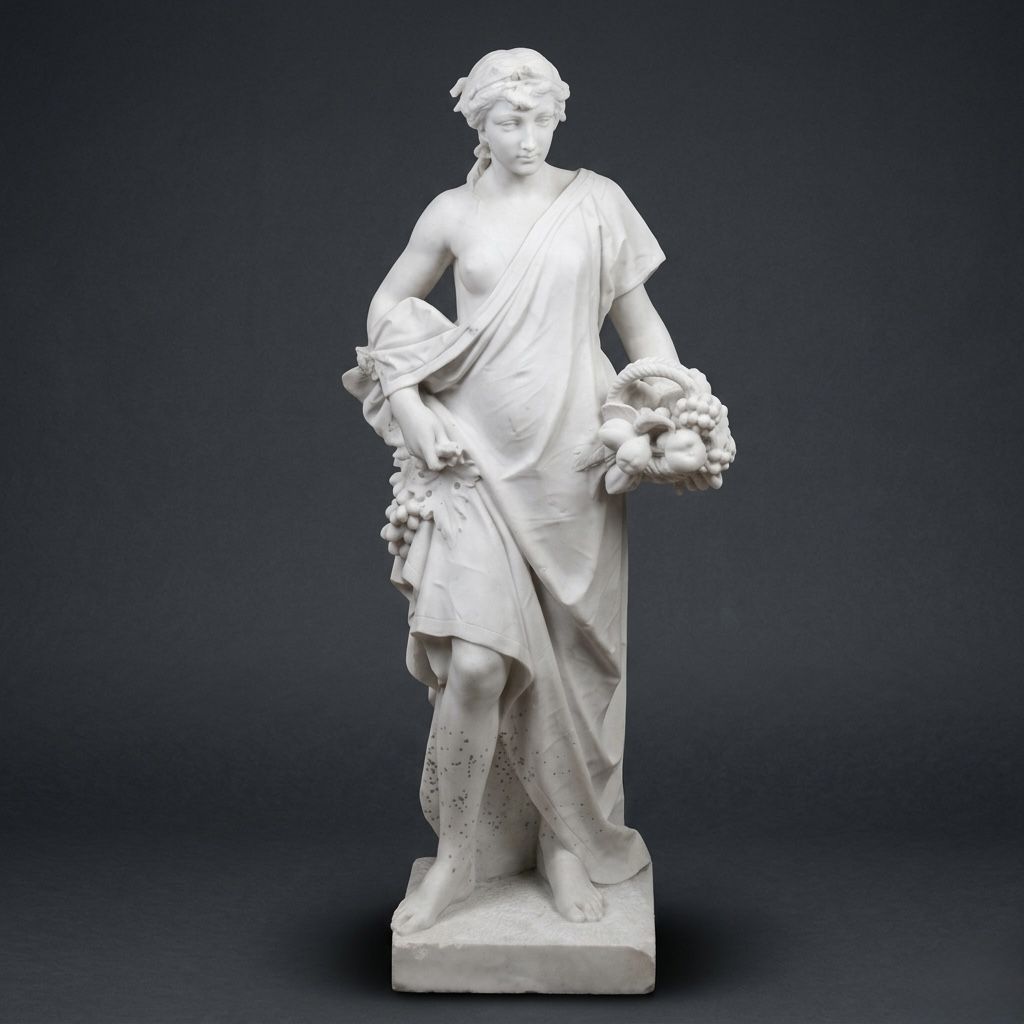
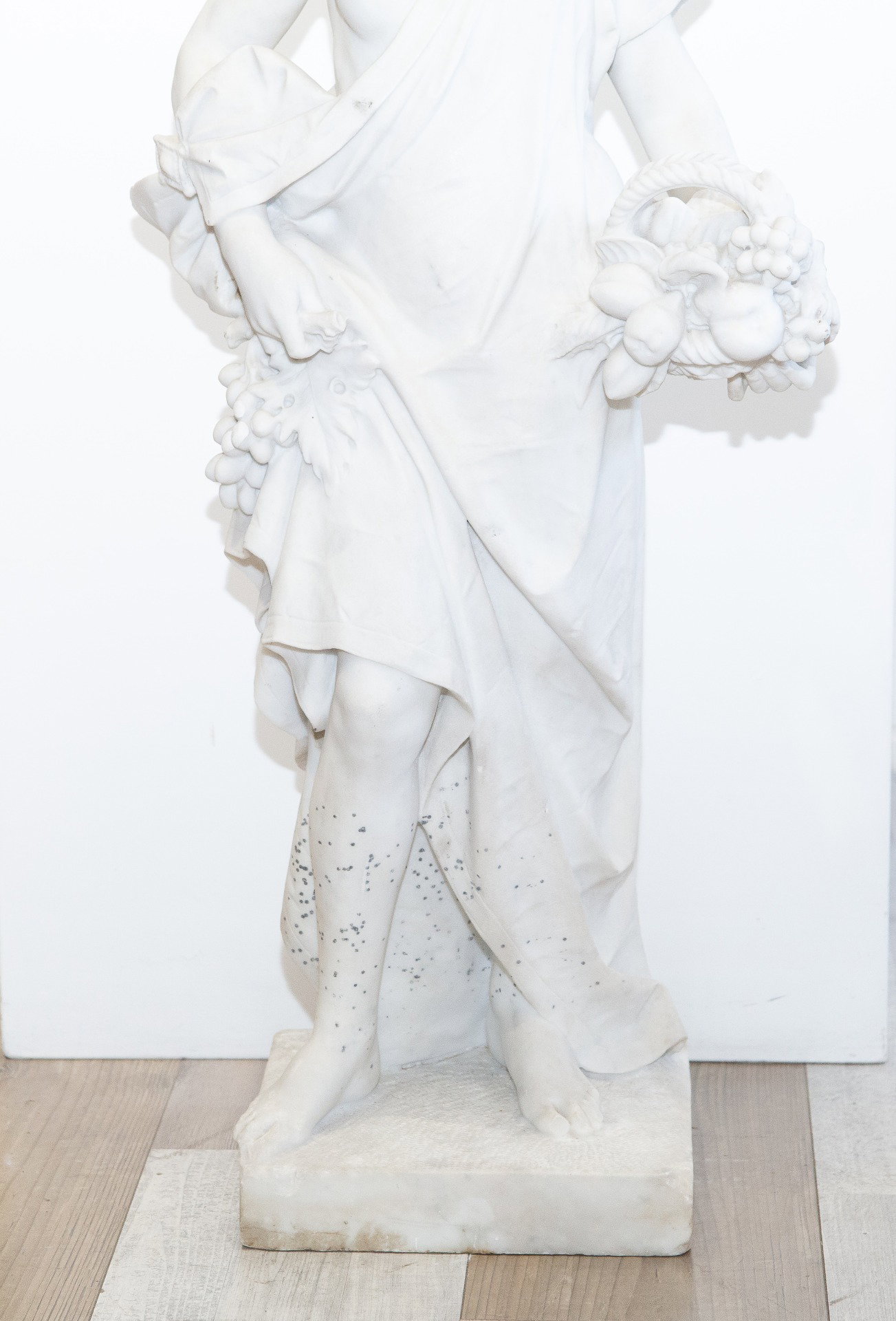
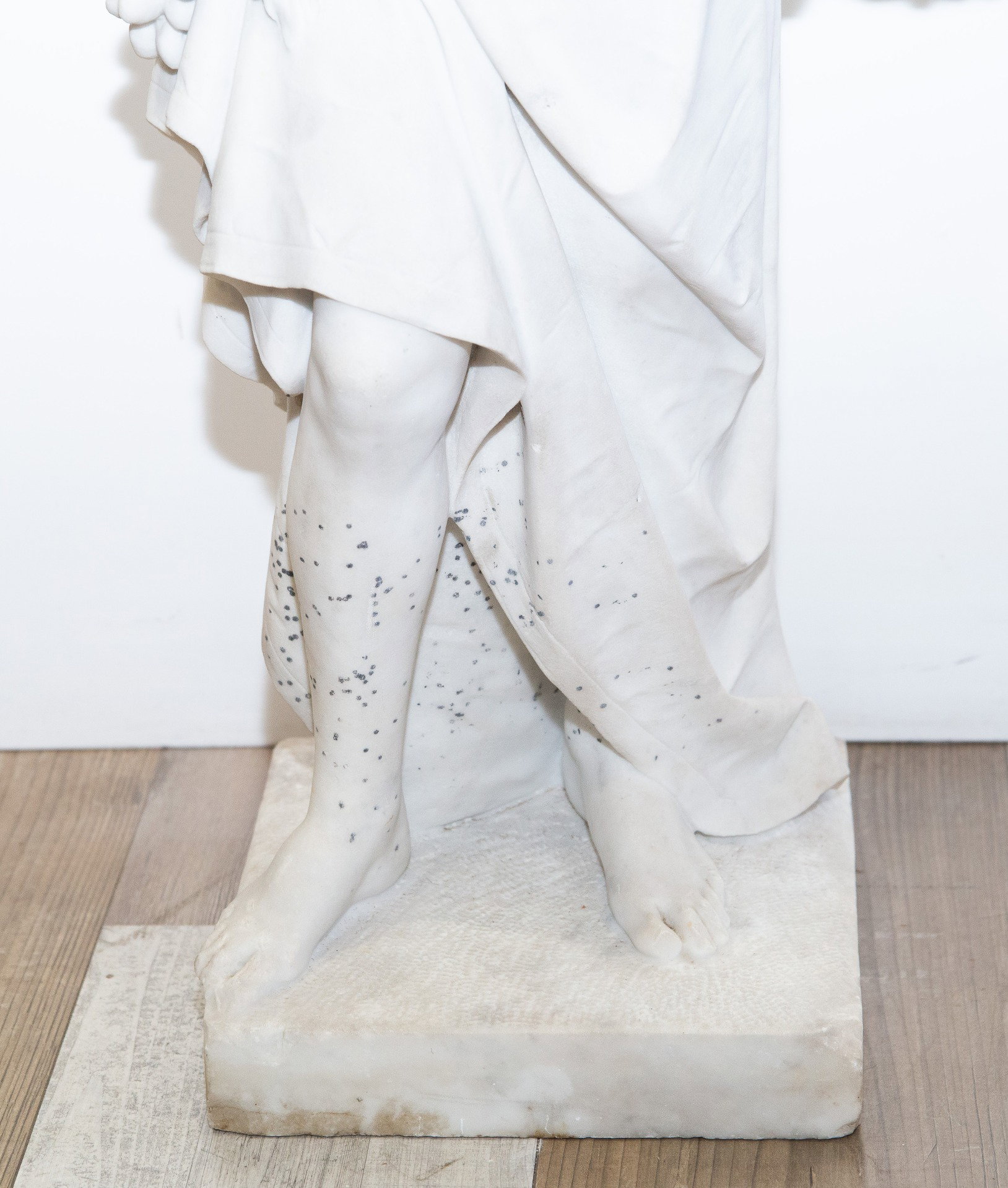
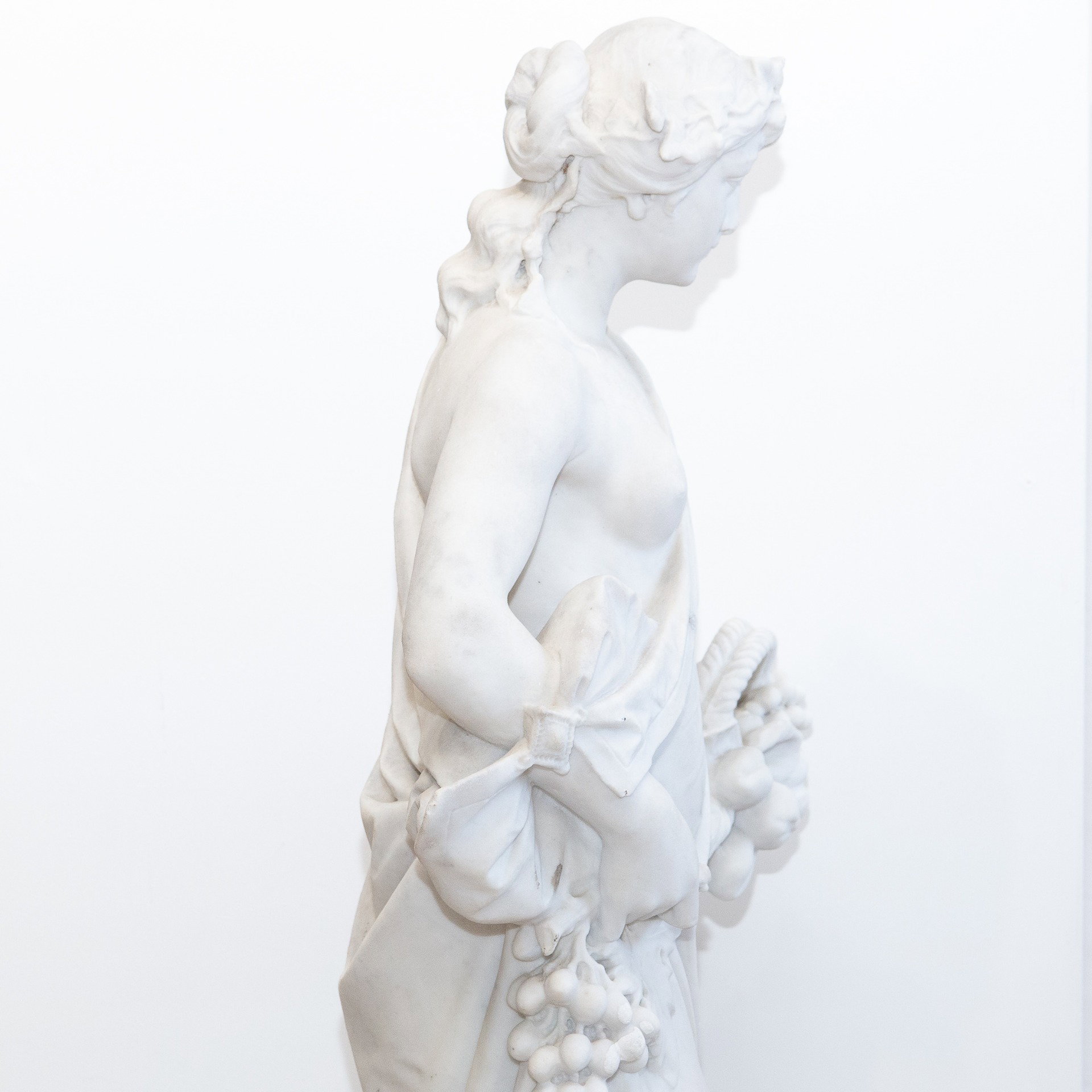
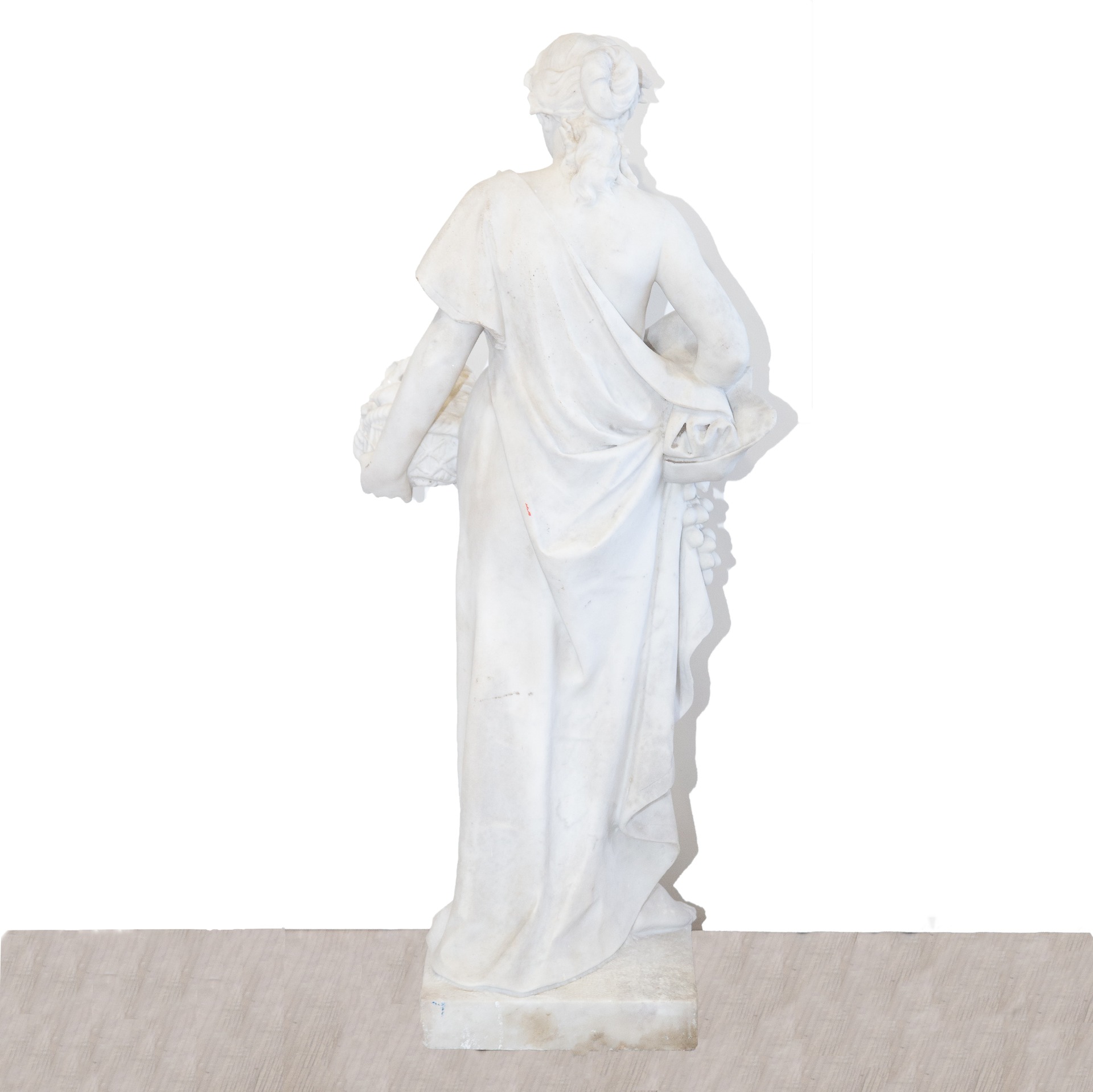
Raffinata scultura a tutto tondo in marmo bianco di Carrara, espressione della sensibilità estetica tra la fine dell’Ottocento e i primi anni del Novecento, in piena diffusione dello stile Liberty. L’opera raffigura una giovane figura femminile in atteggiamento raccolto e aggraziato, colta in un momento di quieta introspezione.
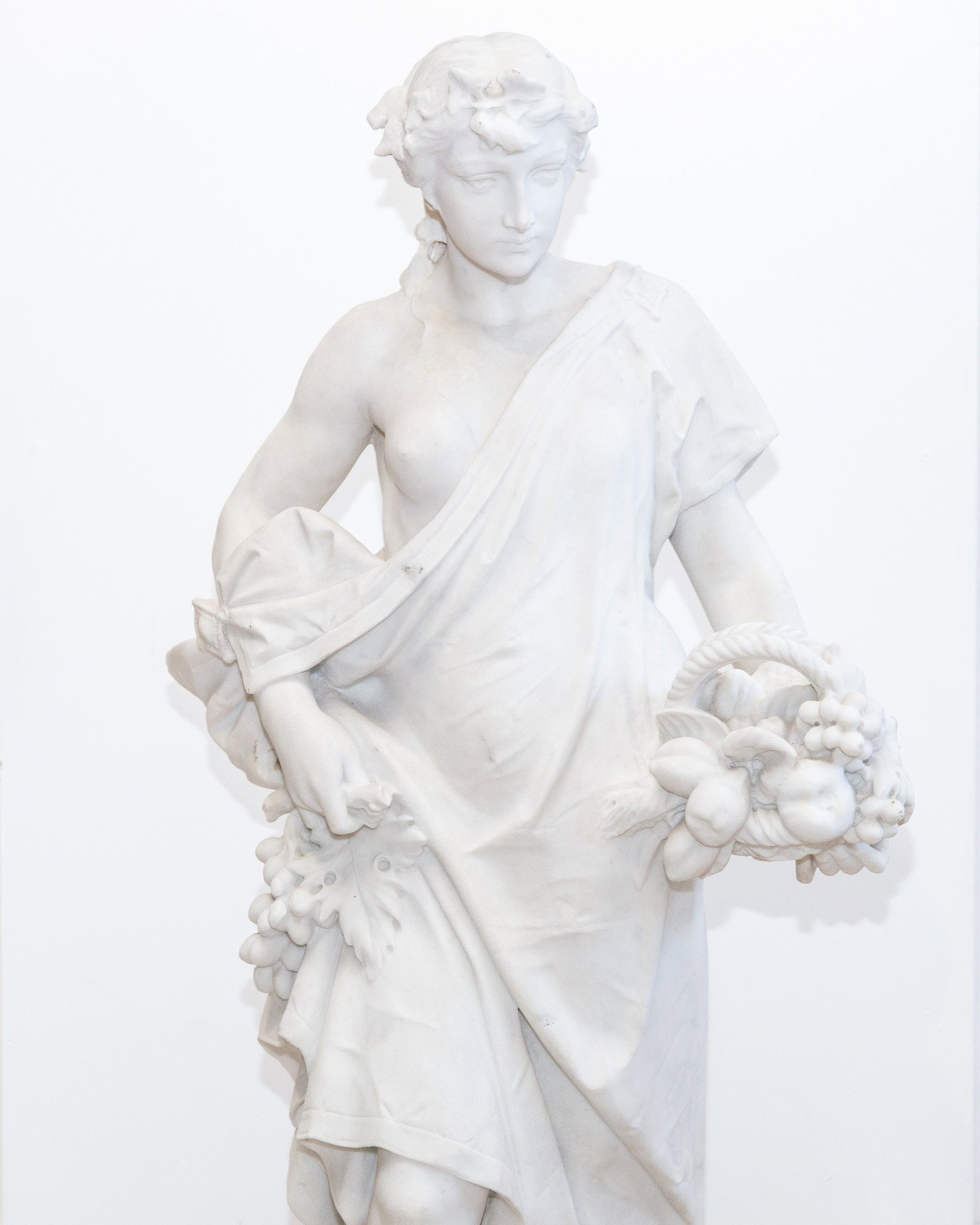
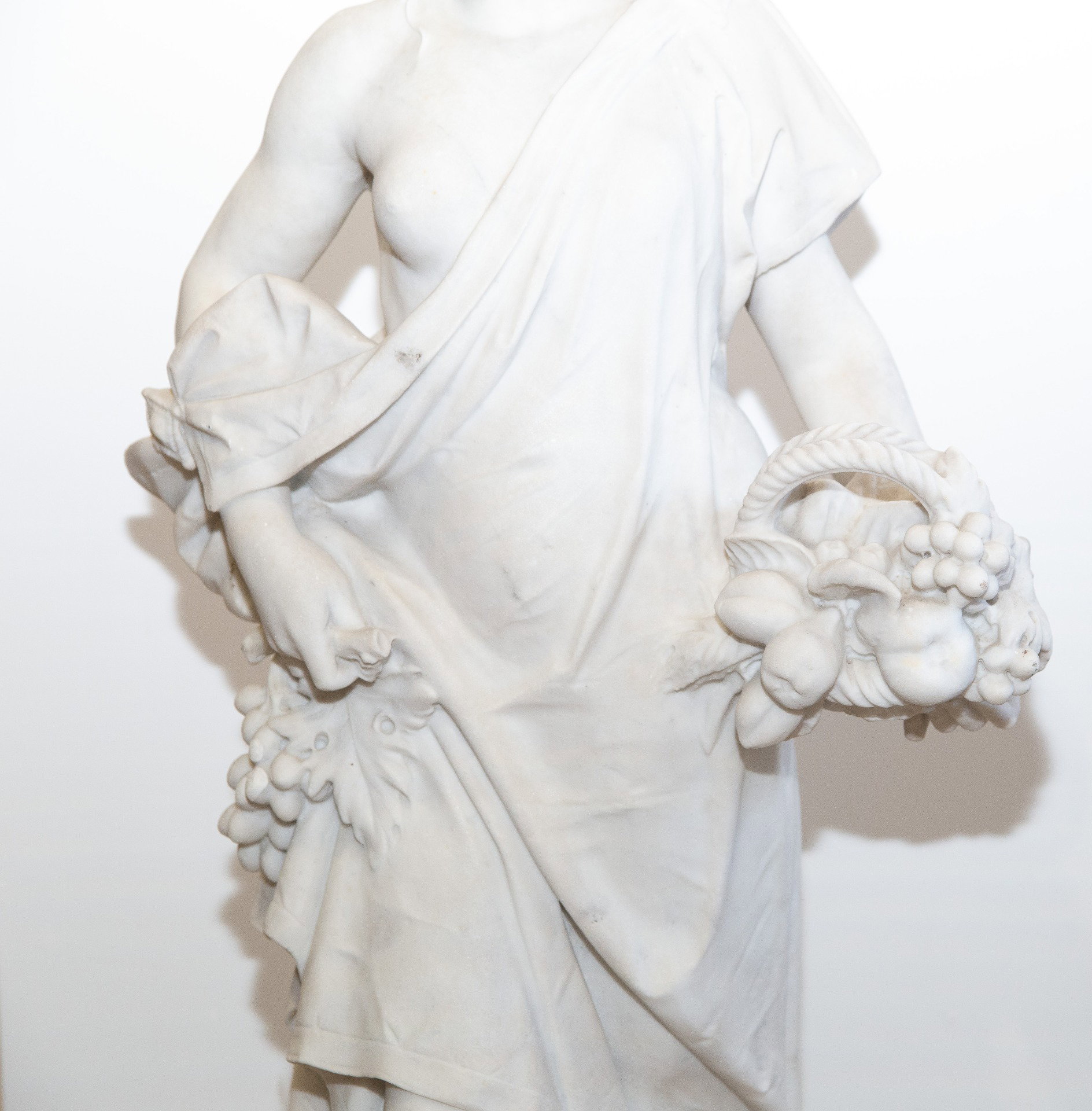
La composizione si distingue per l’equilibrio delle proporzioni e per la naturalezza del movimento: il corpo, leggermente flesso, è avvolto da un panneggio morbido e fluente che aderisce con eleganza alle forme, lasciando scoperta parte del busto. Nella mano destra la figura sostiene un cesto colmo di frutti, elemento simbolico che richiama i temi della natura, dell’abbondanza e del ciclo vitale, particolarmente cari al linguaggio decorativo Liberty.
L’opera si inserisce nel gusto decorativo della Belle Époque, in cui la figura femminile diviene soggetto privilegiato, interpretata secondo canoni di grazia, armonia e naturalismo. Il richiamo alla natura e la morbidezza delle linee rimandano pienamente al linguaggio Liberty, con influenze che dialogano tra scultura accademica e sensibilità moderna.
Carrara marble sculpture, late 19th – early 20th century
Art Nouveau Style
(89 × 25 × 25 cm)
A refined full-round sculpture in white Carrara marble, an expression of the aesthetic sensibility of the late 19th and early 20th centuries, at the height of the Art Nouveau style. The work depicts a young female figure in a collected and graceful pose, captured in a moment of quiet introspection.
The composition is distinguished by its balanced proportions and natural movement: the slightly bent body is wrapped in soft, flowing drapery that elegantly adheres to the curves, leaving part of the torso exposed. In her right hand, the figure holds a basket full of fruit, a symbolic element that recalls the themes of nature, abundance, and the life cycle, particularly dear to the Art Nouveau decorative language.
The work fits into the decorative taste of the Belle Époque, in which the female figure became the privileged subject, interpreted according to canons of grace, harmony, and naturalism. The reference to nature and the softness of the lines are fully reminiscent of the Art Nouveau language, with influences that dialogue between academic sculpture and modern sensibility.