
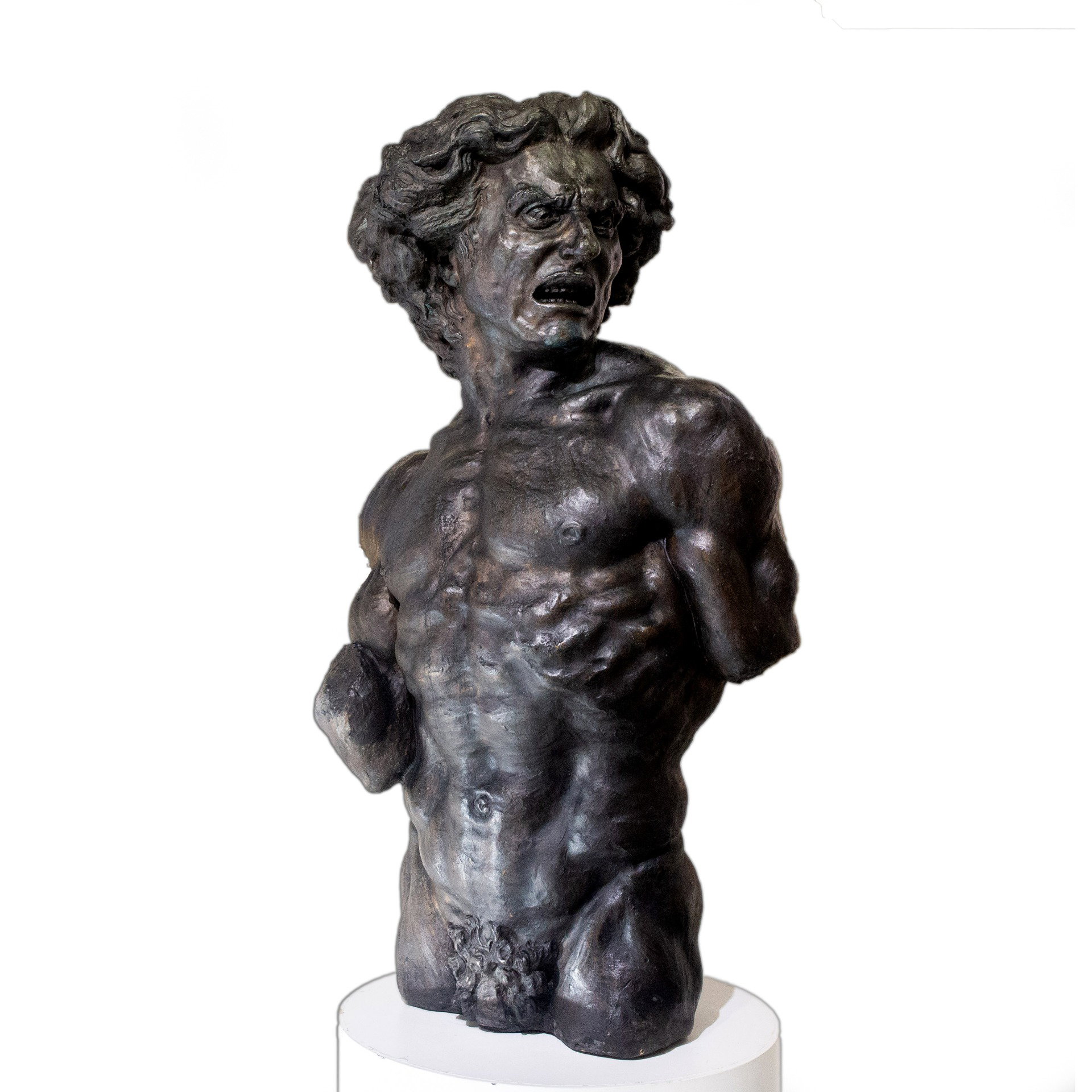
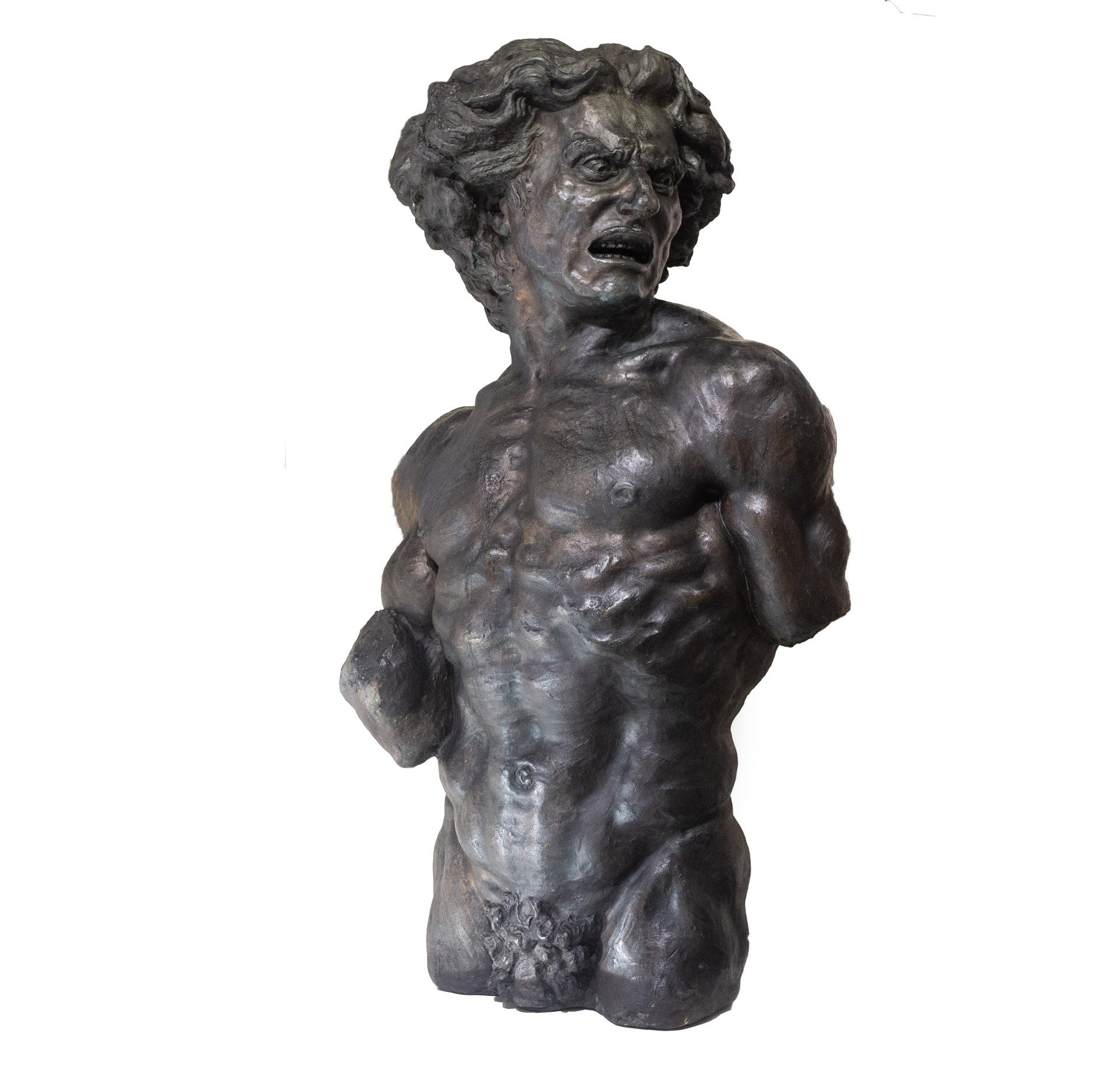
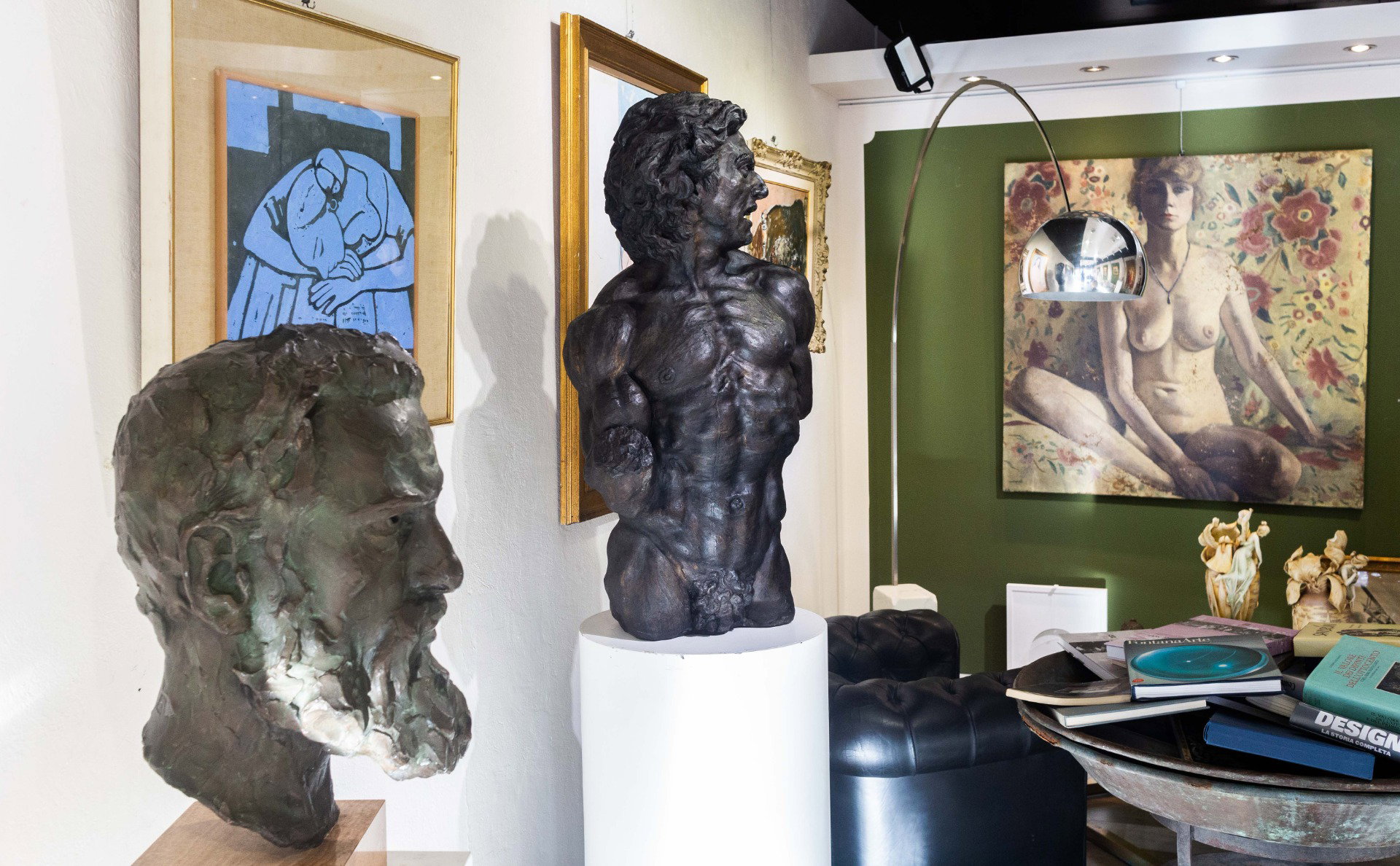
Scultura in bronzo, di Francesco Barbera detto Sandrún,"Beethoven", Epoca '900
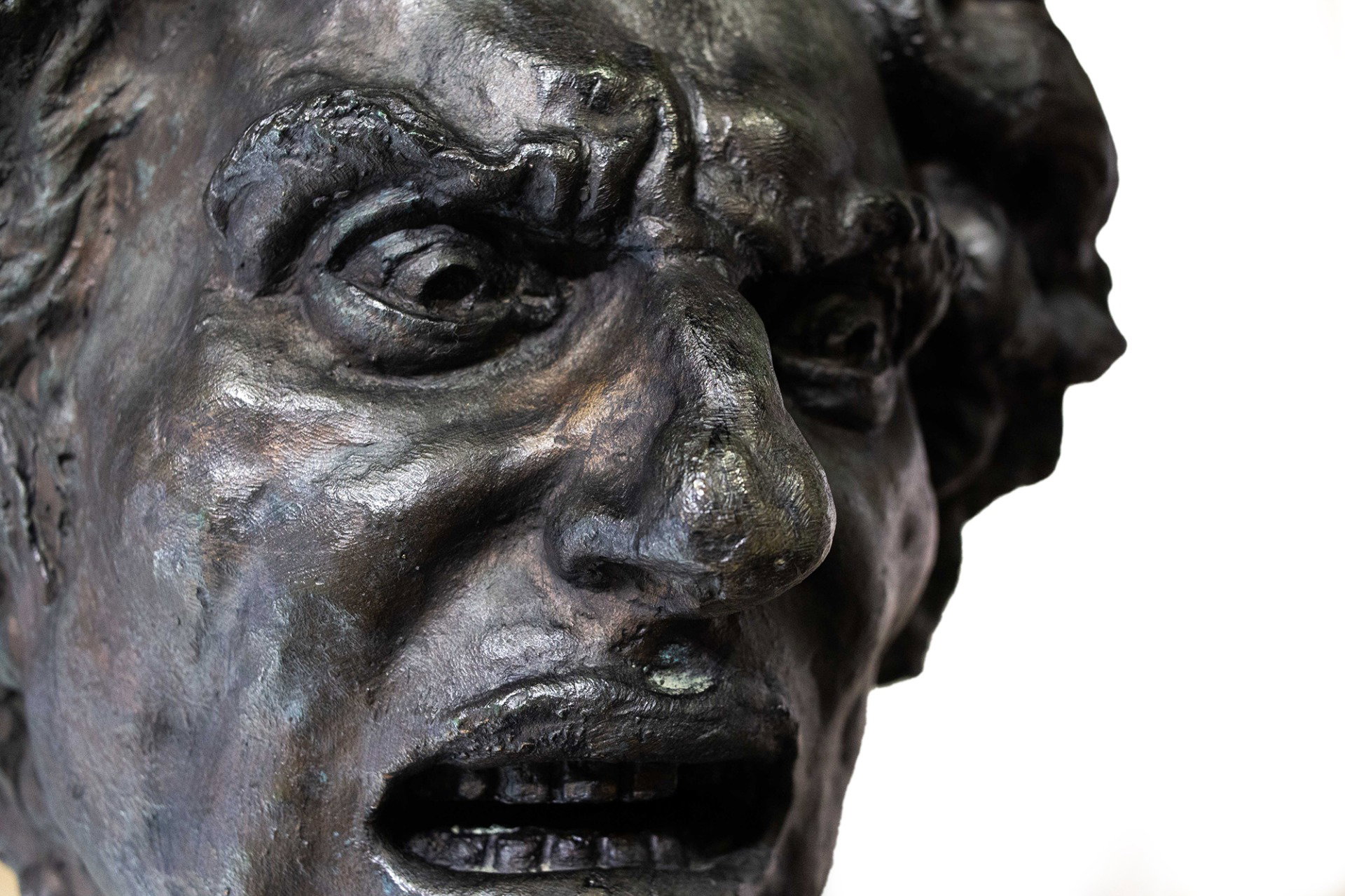
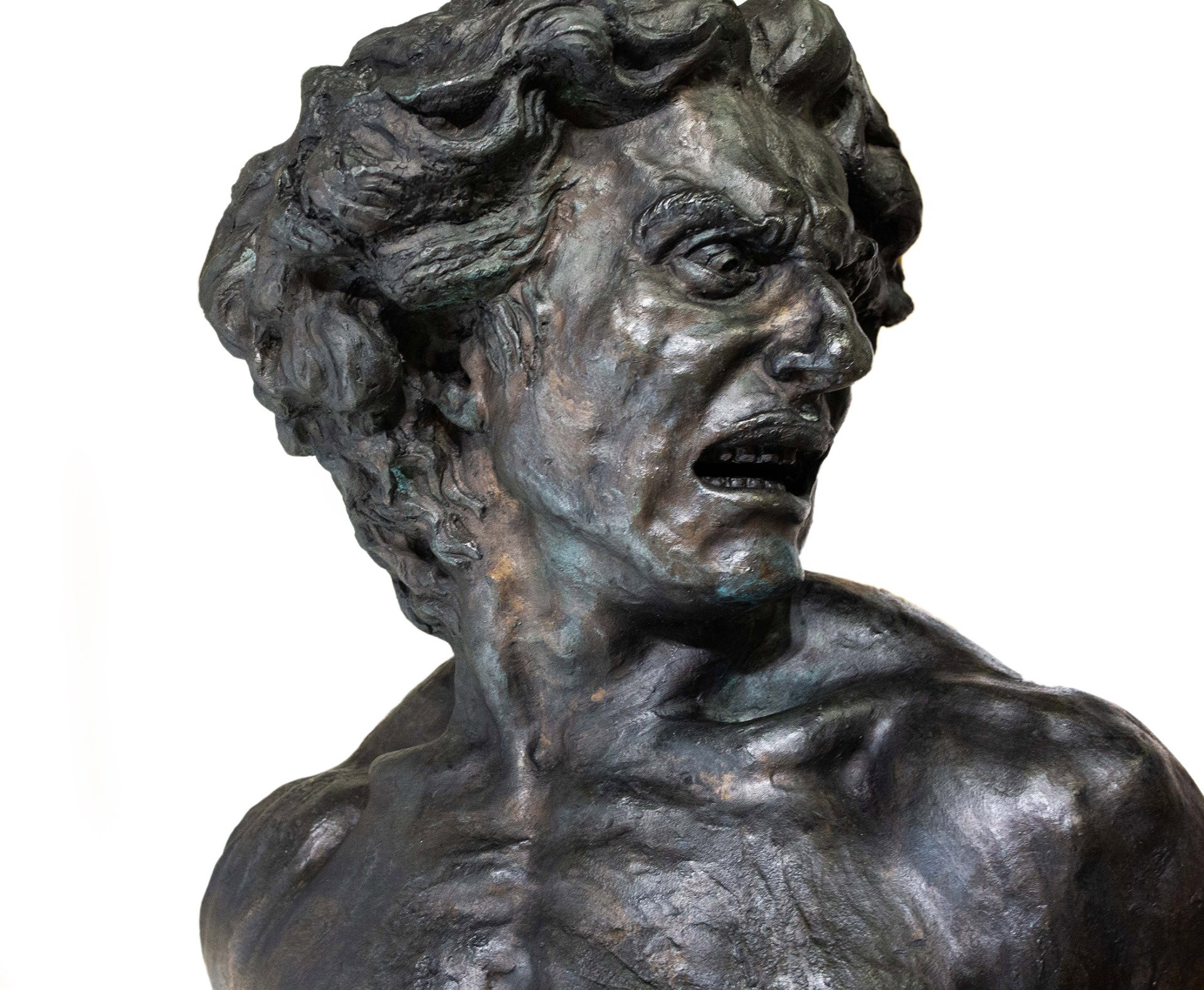
Splendida ed imponente scultura bronzea raffigurante uno dei massimi esponenti della musica classica Beethoven.
Beethoven (senza data).
Bronzo, cm. 55×106x42.
Ottime condizioni
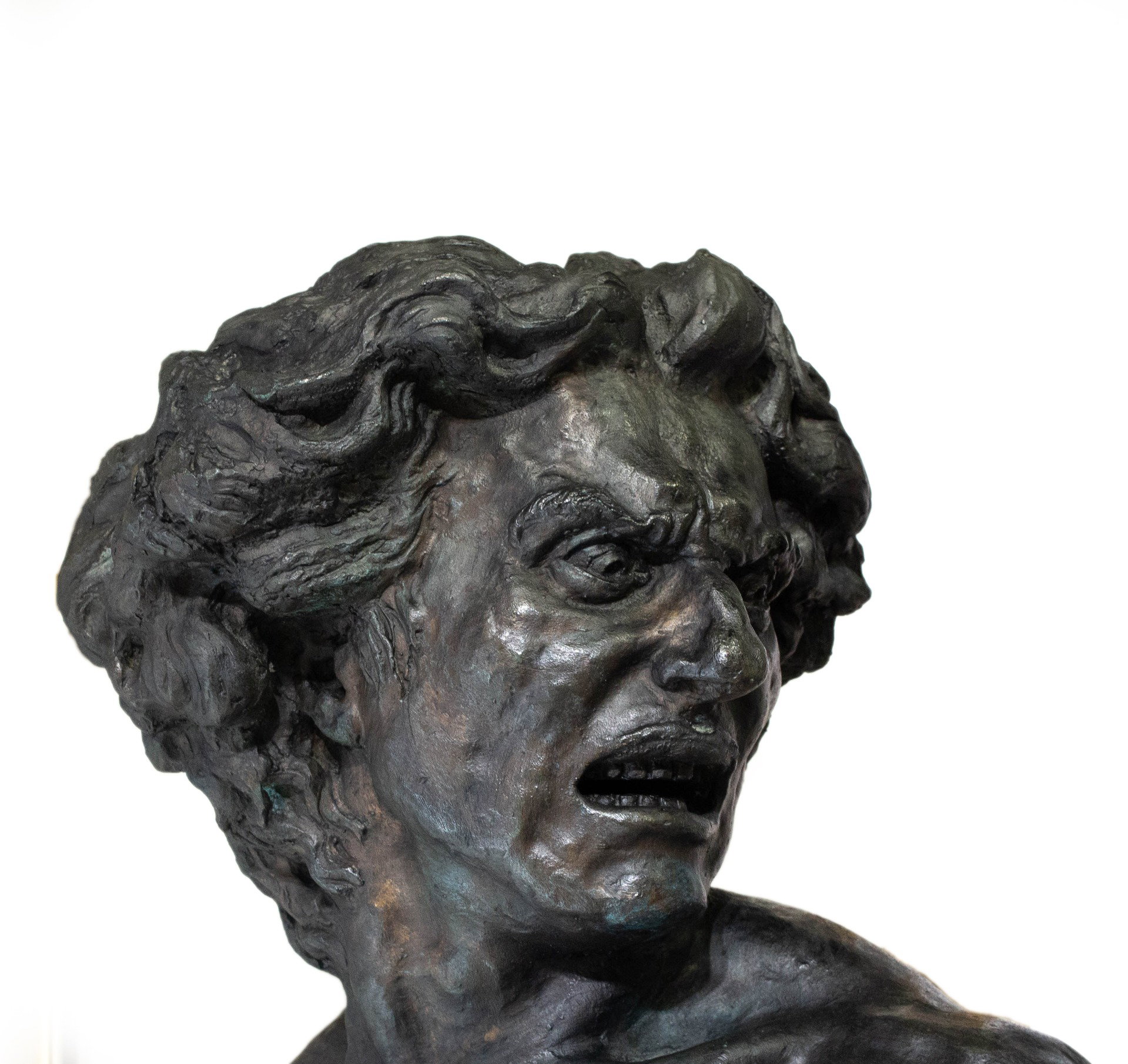
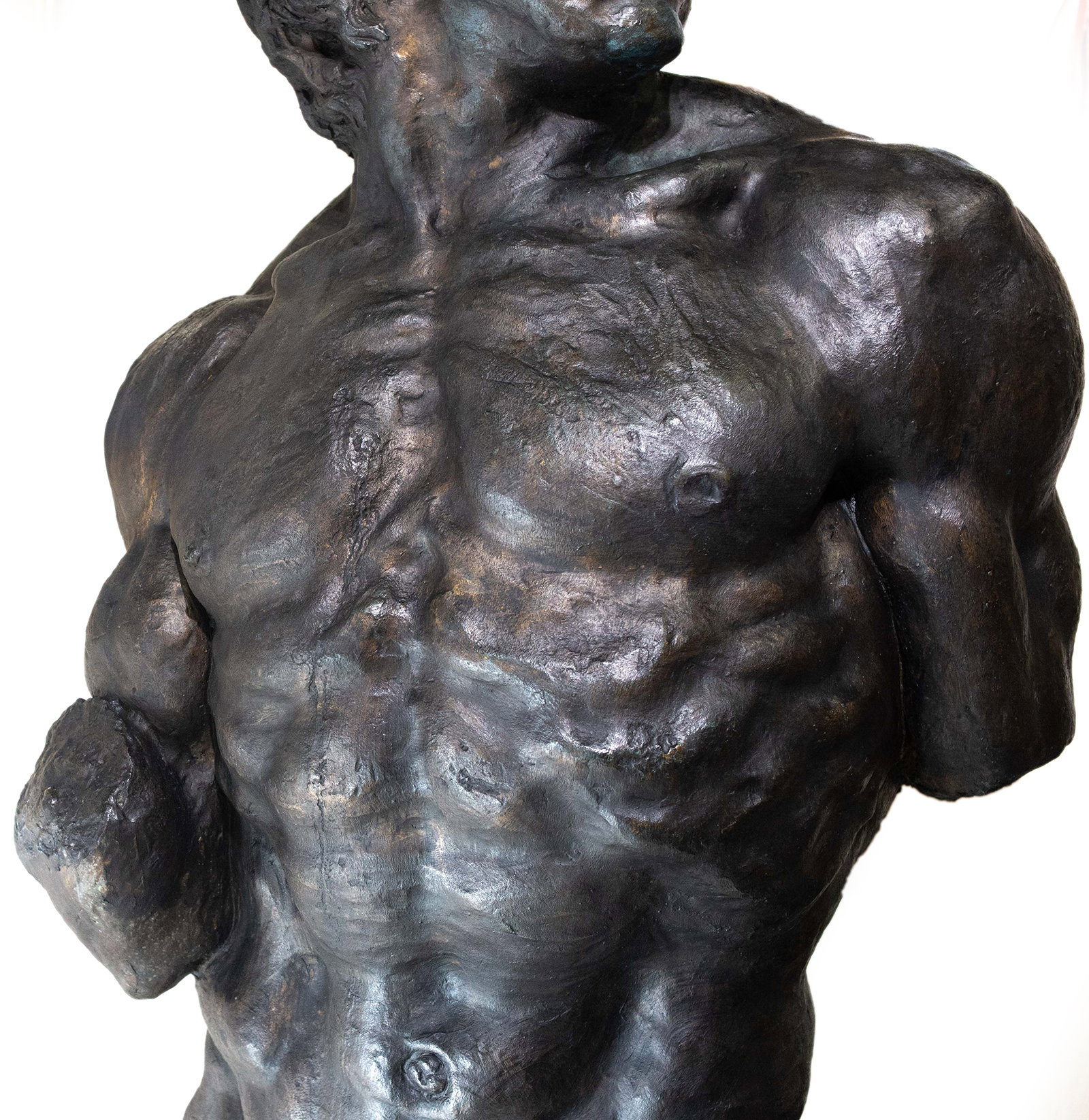
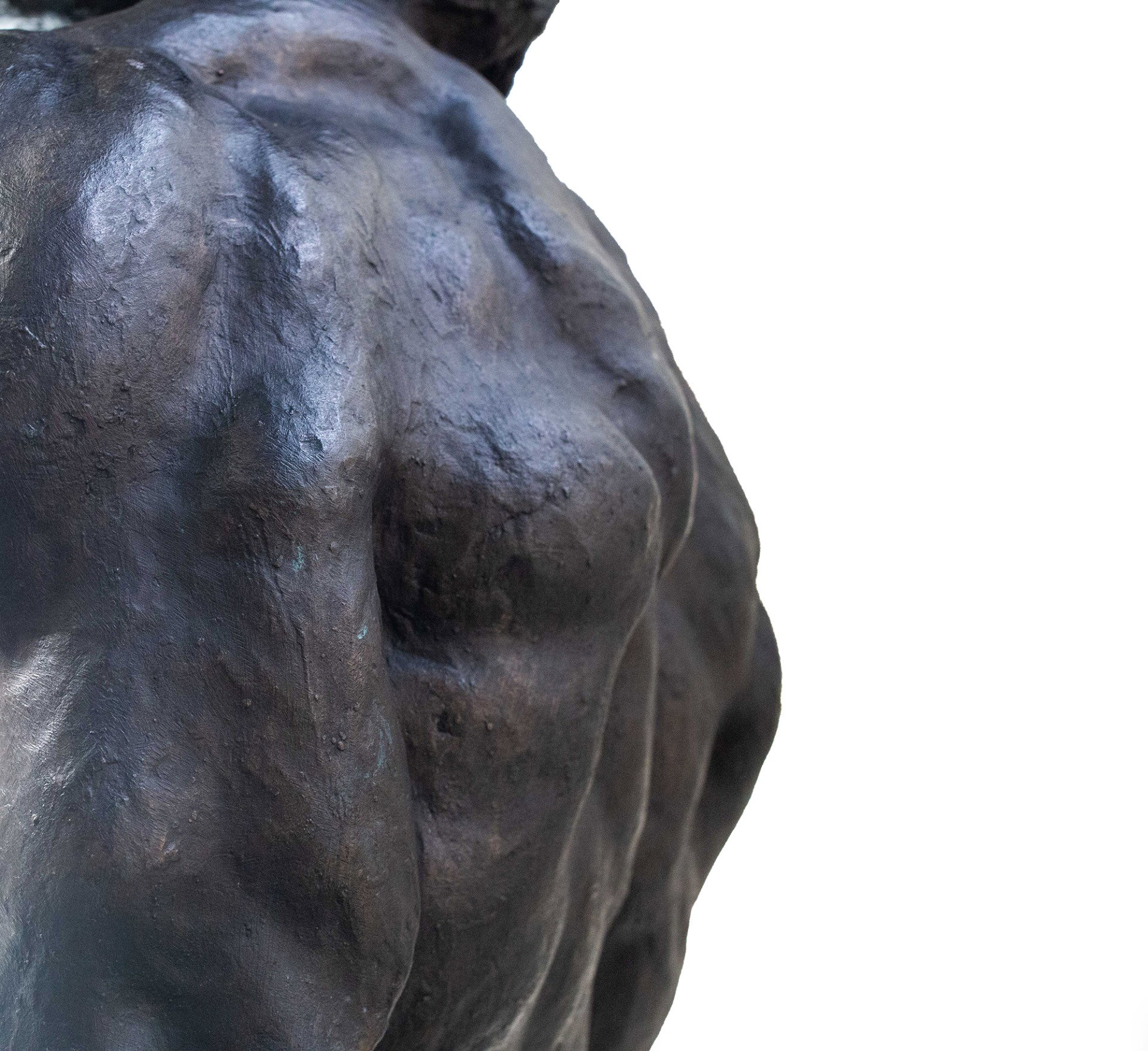
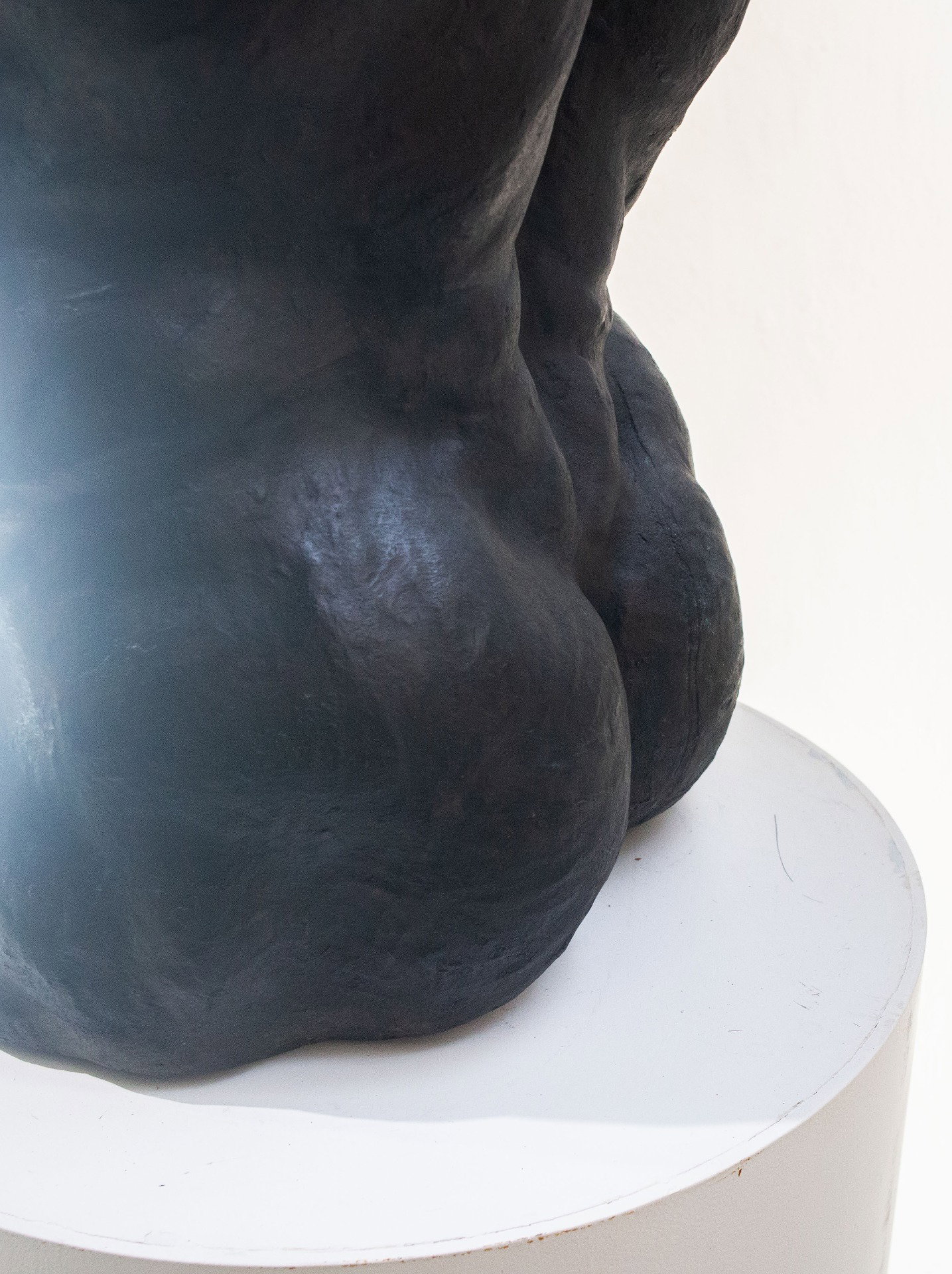
Il michelangiolismo di Sandrún appare evidente in questa poderosa interpretazione del grande musicista viennese, visto come un eroe omerico. La perfezione anatomica, tesa nello sforzo della creatività artistica, sembra concentrarsi sui lineamenti contratti del volto. La bocca aperta, lo sguardo intenso, i capelli medusei: tutto ci parla di un uomo eccezionale, sovrumano e soprattutto - per la sua nudità lirica e bella - vero nel senso sandroniano del termine.
Misure: cm. 55×106x42.
Biografia
Franceschino Barbera nasce a Sordevolo il 10 marzo 1927. È conosciuto come Sandrún (Sandrone), il nome di battaglia che aveva assunto durante la guerra partigiana e con il quale firmerà quasi tutti i suoi lavori.
[...] Alla fine della guerra inizia la sua avventura artistica come autodidatta.
Il Futurismo Torinese fa la sua comparsa nel Biellese con la creazione del Museo Civico di Biella: ne sono esponenti locali Nicola Mosso, Franco Costa, Luigi Pralavorio. Esso però incontra la prevedibile ostilità di un ambiente in cui la tradizione continua ad avere un peso con il quale occorre fare i conti. "Sandrún" respira questa "aria" a piedi polmoni, ma continuerà a seguire la sua strada, vincendo tutte le pressioni dei colleghi che vorrebbero "scolarizzarlo" e piegarlo ai canoni del gusto dominante. Certo farà il monumento ai partigiani, consentirà la moltiplicazione in cotto del volto di Lenin, modellerà Stalin dalle proporzioni inusitate, ma resterà sempre caparbiamente ancorato alla severa tradizione scultorea ottocentesca francese, fatta di "colpi d'accetta", di linee forti, "eroiche", dinamiche e, tuttavia, non priva di una sua originalità. Di quel clima, invero pesante, "assolutista", Vi rimarrà addosso, come una seconda pelle, un concetto ben preciso: l'uomo al centro delle sue pulsioni creative e delle sue opere.
Bronze sculpture, by Francesco Barbera known as Sandrún, "Beethoven," 1900s era
Splendid and imposing bronze sculpture depicting one of the greatest exponents of classical music Beethoven.
Beethoven (undated).
Bronze, 55×106x42 cm.
Very good condition
Sandrún's Michelangeloism is evident in this powerful interpretation of the great Viennese musician, seen as a Homeric hero. The anatomical perfection, strained in the effort of artistic creativity, seems to focus on the contracted features of the face. The open mouth, the intense gaze, the medusa-like hair: everything tells us about an exceptional man, superhuman and above all - because of his lyrical and beautiful nudity - true in the Sandronian sense of the term.
Measurements: 55×106x42 cm.
Biography
Franceschino Barbera was born in Sordevolo on March 10, 1927. He is known as Sandrún (Sandrone), the battle name he had assumed during the partisan war and with which he will sign almost all his works.
[...] At the end of the war he began his artistic adventure as a self-taught artist.
Turin Futurism makes its appearance in the Biella area with the creation of the Civic Museum of Biella: local exponents are Nicola Mosso, Franco Costa, and Luigi Pralavorio. It, however, encounters the predictable hostility of an environment in which tradition continues to have a weight that must be reckoned with. "Sandrún" breathes this "air" at the foot of his lungs, but he will continue to follow his own path, overcoming all the pressures of colleagues who would like to "school" him and bend him to the canons of the dominant taste. Of course he will make the monument to the partisans, he will allow the terracotta multiplication of Lenin's face, he will model Stalin of unusual proportions, but he will always remain stubbornly anchored in the severe French nineteenth-century sculptural tradition, made up of "hatchet strokes," of strong, "heroic," dynamic lines and, nevertheless, not devoid of his own originality. Of that admittedly heavy, "absolutist" climate, a very precise concept will remain on you, like a second skin: man at the center of his creative impulses and his works.