Description:
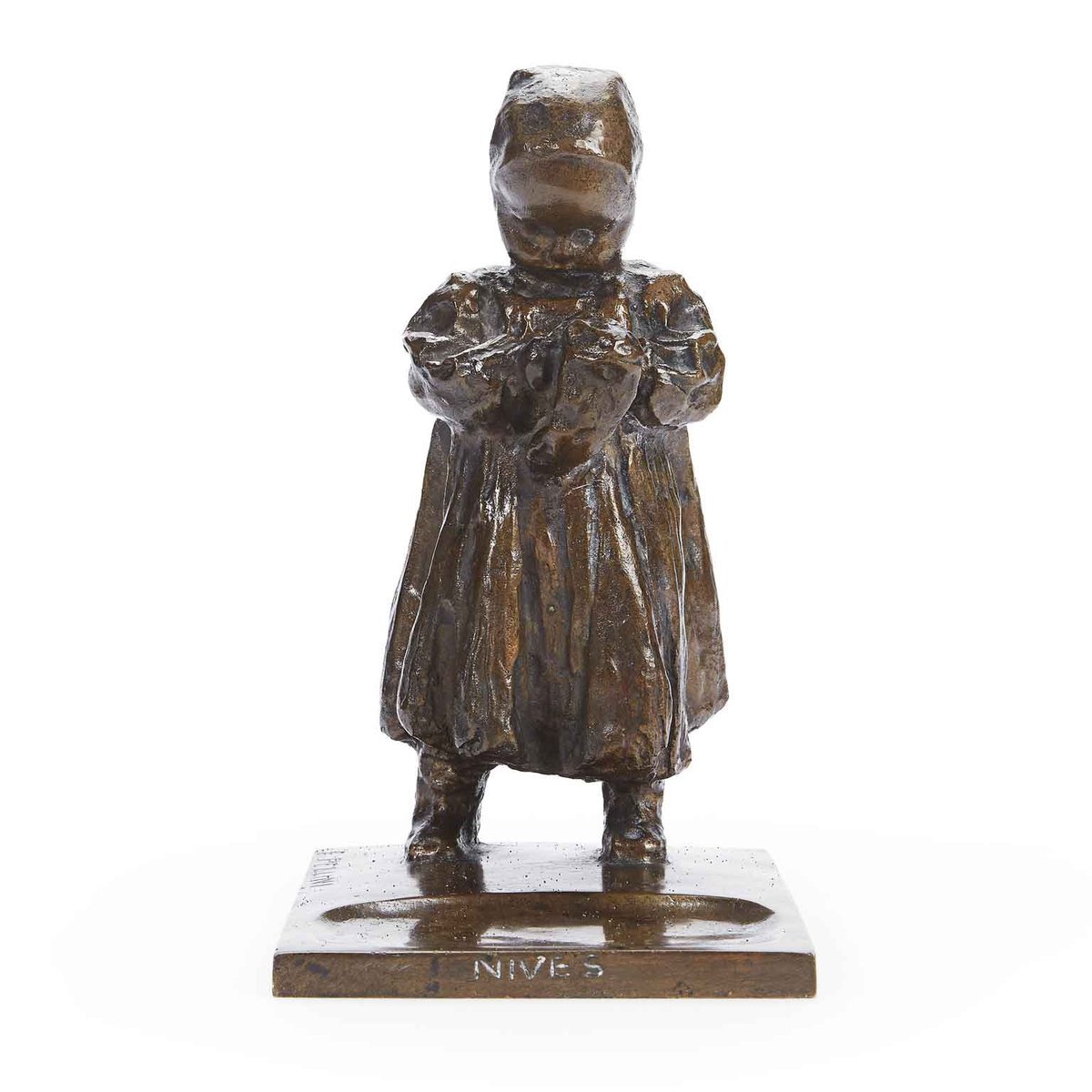
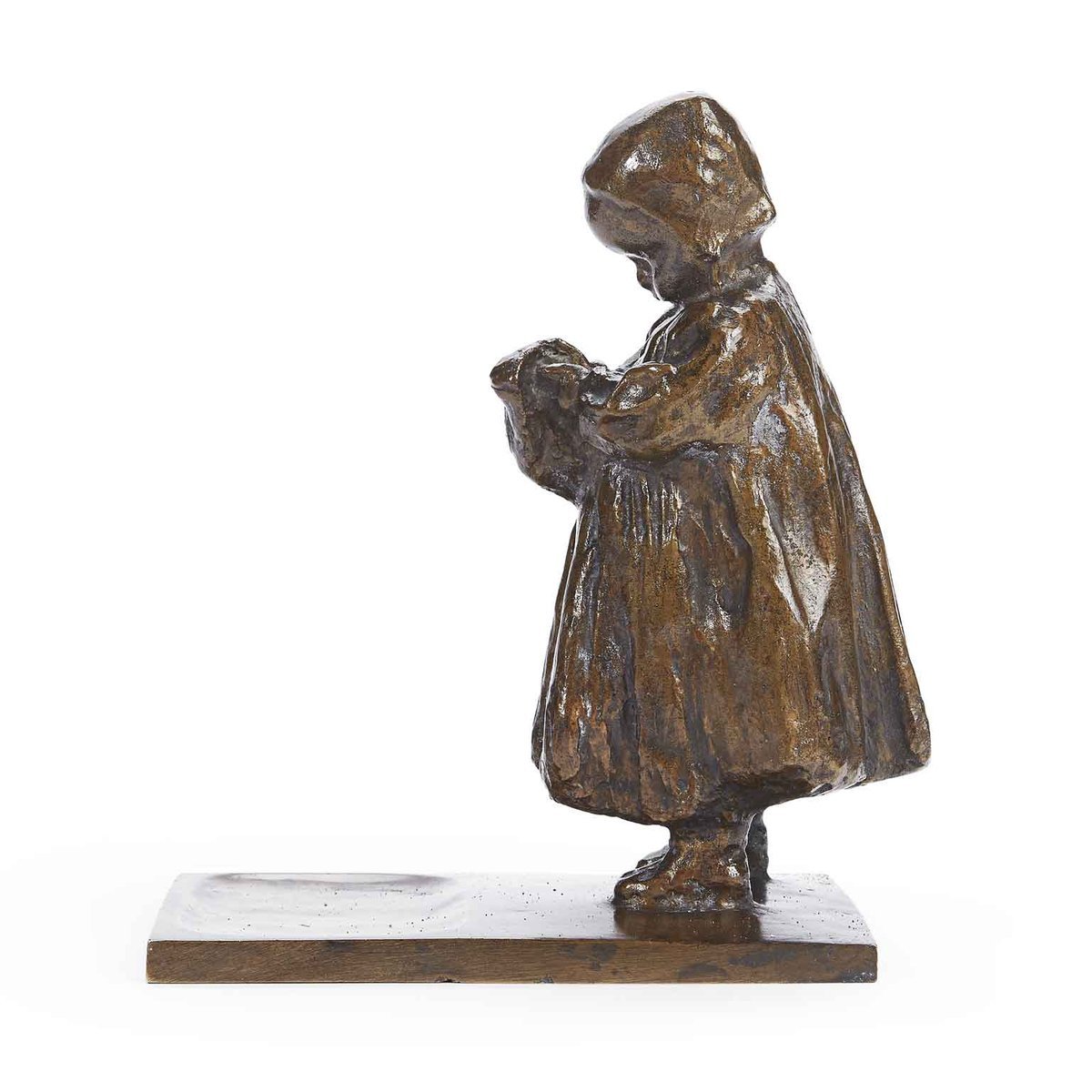
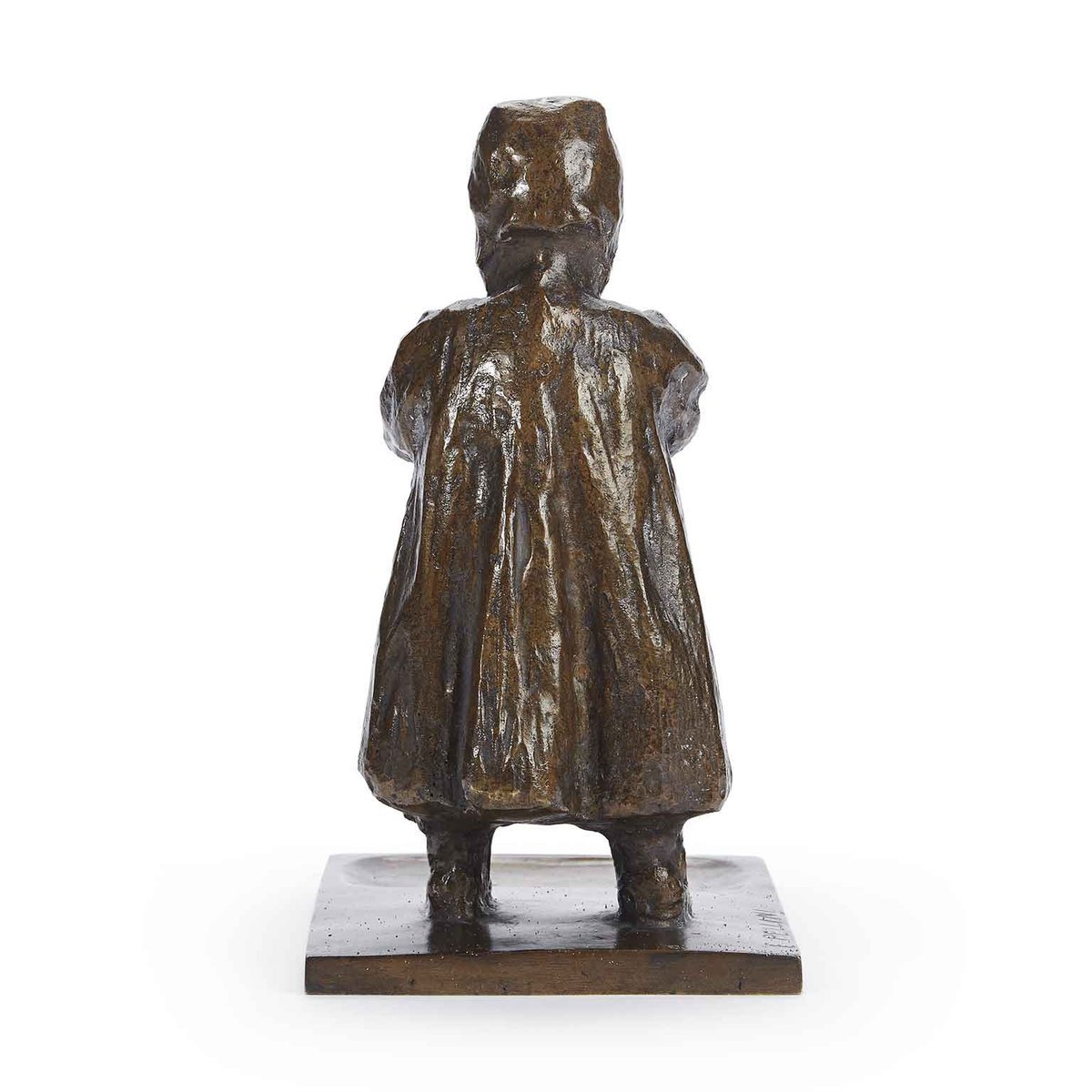
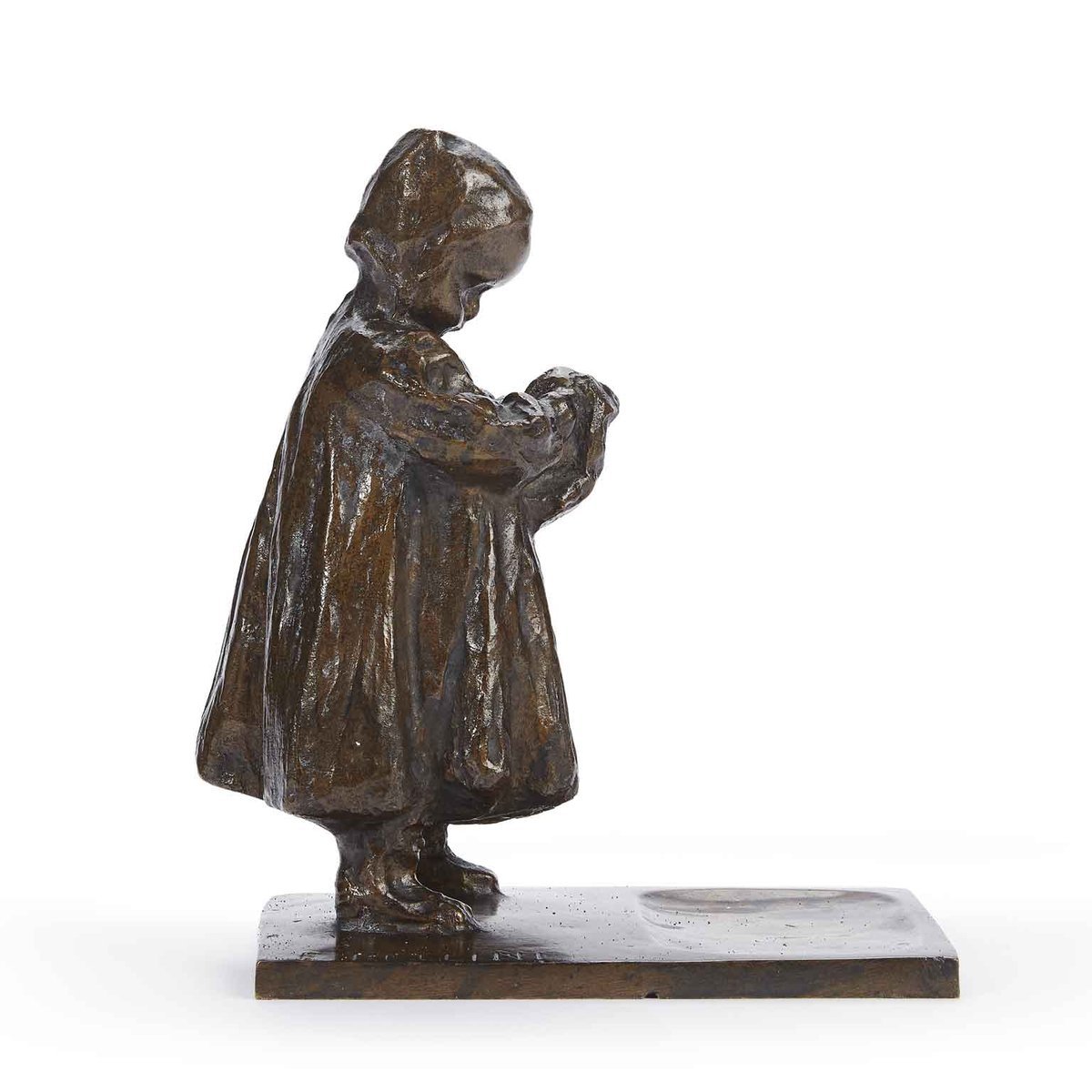
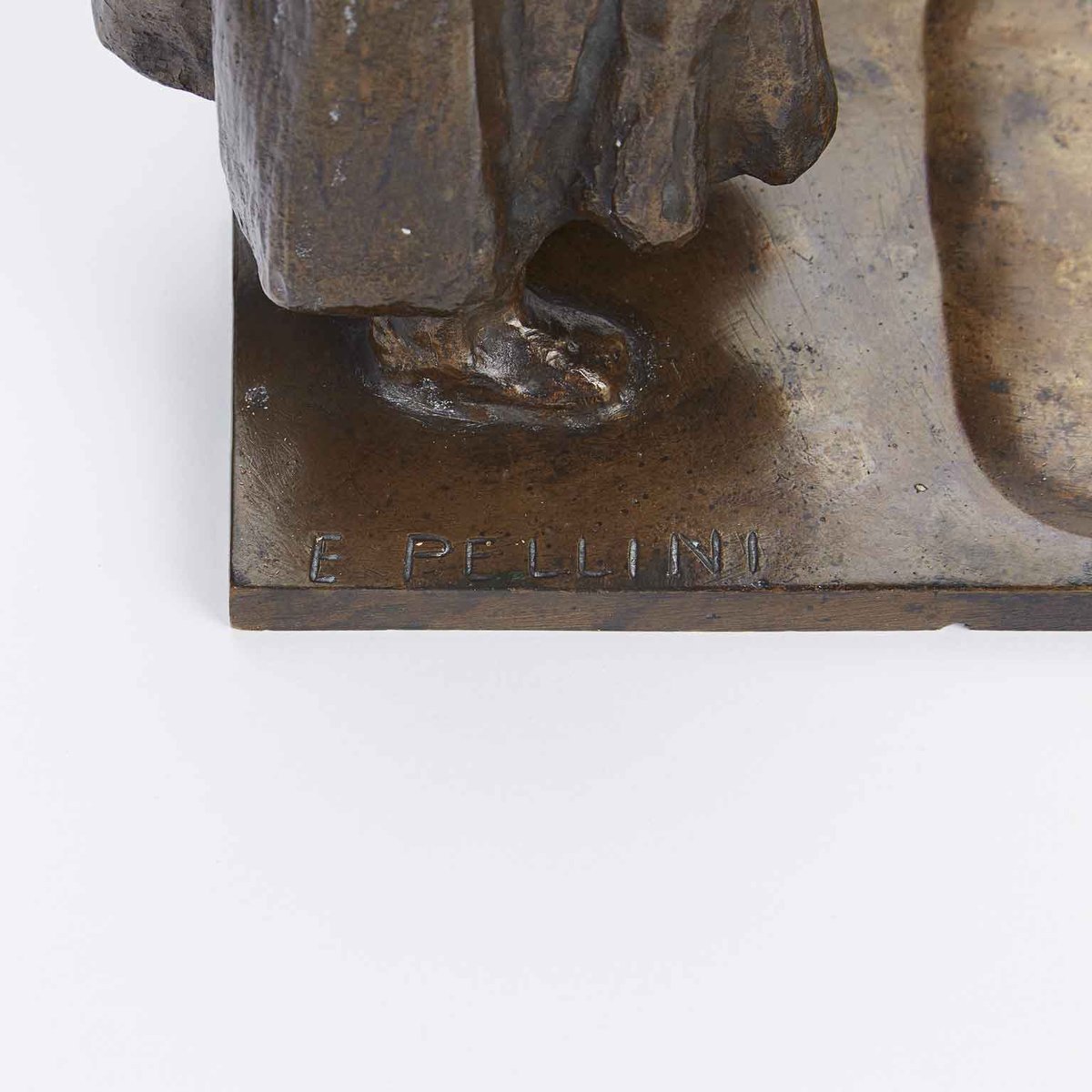
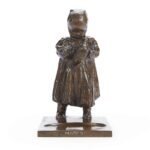
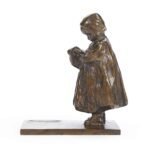
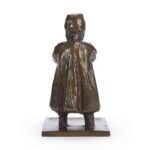
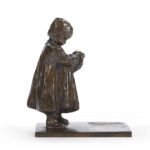
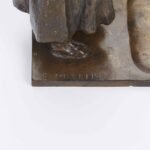
Eugenio Pellini Nives Primi 1900, bronze casting with dark patina, signed by the artist E. Pellini (1864-1934) on the left side of the rectangular base; on the front edge, also in capital letters, is the inscription Nives, the name of the firstborn daughter from his 1903 marriage to Dina Magnani. In excellent condition, the sculpture dates back to the early 20th century and comes from a private Milanese collection. Resting on a square base with a slight indentation for small objects on the front, the little girl, dressed in a smock and cap, is depicted intently observing an indecipherable object she holds in her hands. Eugenio Pellini was born on November 17, 1864, in Marchirolo, then in the province of Como (now Varese), to Andrea and Carolina Pellini. He attended elementary school up to the fourth grade; in 1878, he moved to Milan to live with his brother Oreste and began his apprenticeship in the workshop of the marble craftsman Biganzoli. In 1888, he started attending the Brera Academy and created his first significant works, notably "Lo spazzacamino" (The Chimney Sweep). On November 10, 1891, he won the Oggioni Triennial Prize, which included specialization at the Academy of Rome. Eugenio thus began a long artistic journey through Italy, a path that would take him to Florence, Rome, and Sicily. Subsequently, in Paris, he encountered the sculpture of Medardo Rosso and Rodin, artists who would prove fundamental to the evolution of his style. He returned to Milan in 1893 and created several monumental sculptures, such as "L'angelo del dolore" (The Angel of Sorrow) for the Macario tomb and "Cristo nel Getsemani" (Christ in Gethsemane) for the Lardera tomb. His artistic consecration was completed in 1897 with the victory at the Tantardini Prize, where he presented the work "Madre" (Mother); with this sculptural group, he was invited to represent Lombard sculpture at the 1900 Paris Universal Exposition, where he received further awards. Due to the unrest affecting Milan, the sculptor took refuge in Varese. In the early 1900s, he returned to Milan and obtained a teaching position at the Scuola Superiore degli Artefici del Castello Sforzesco, an activity he maintained until 1929. In 1903, he met his future wife, Dina Magnani, a model at the Brera Academy, with whom he had three children: Nives, Eros (a future sculptor), and Silvana. He participated in all the Venice Biennales, starting from 1905; he was present at the Roman Secession, the Brera Triennale, and numerous international exhibitions. Meanwhile, the serious illness that had already affected him during the world conflict worsened around 1925; despite pressing work commitments, he had to abandon his career as an artist and teacher. He passed away in Milan on May 28, 1934, in his home on Via Curtatone (now Via Siracusa); he is buried in the cemetery of Marchirolo.Period: 1900 Height: 16.5 cm Width: 9.5 cm Depth: 13.5 cm art. A1176