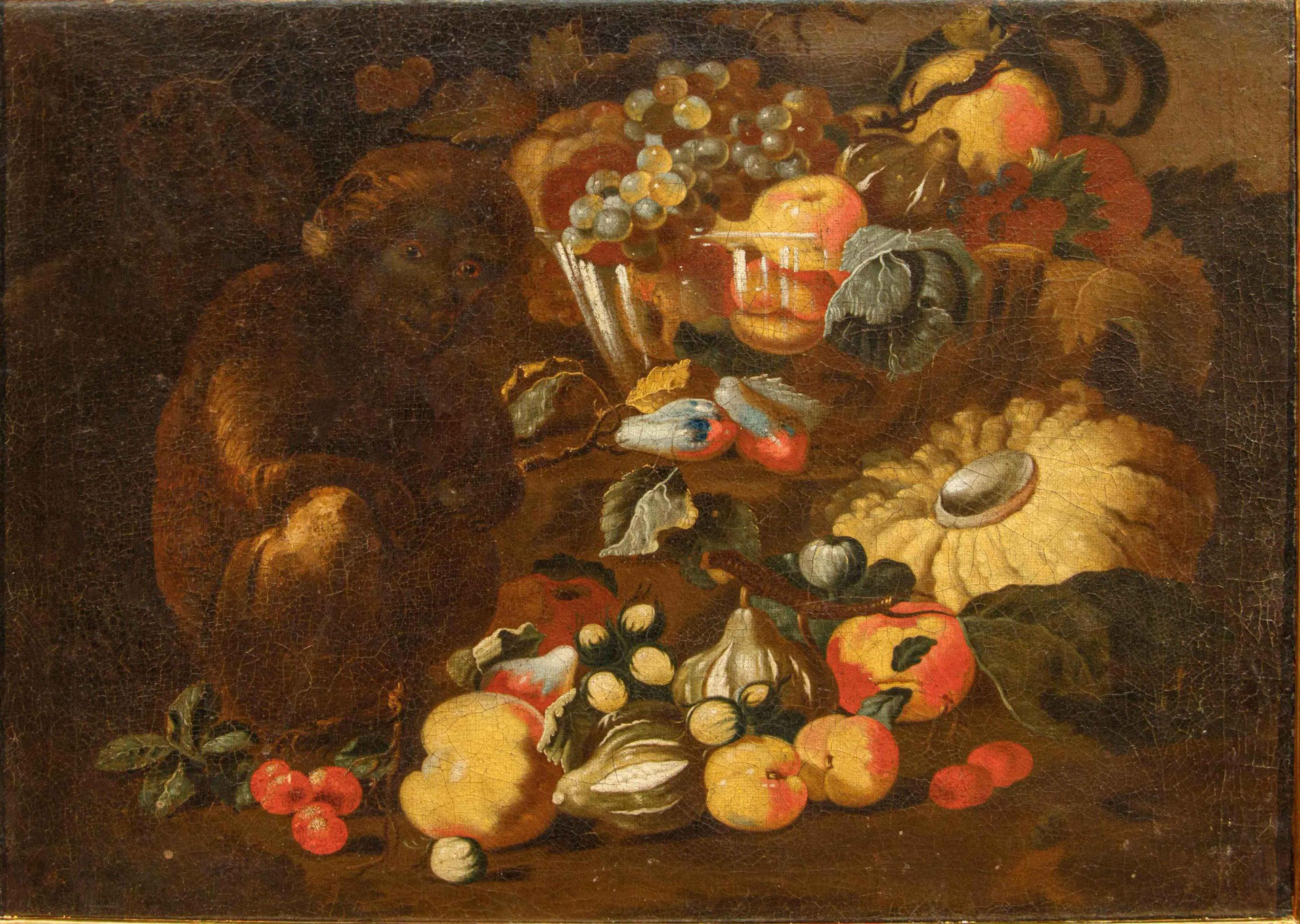
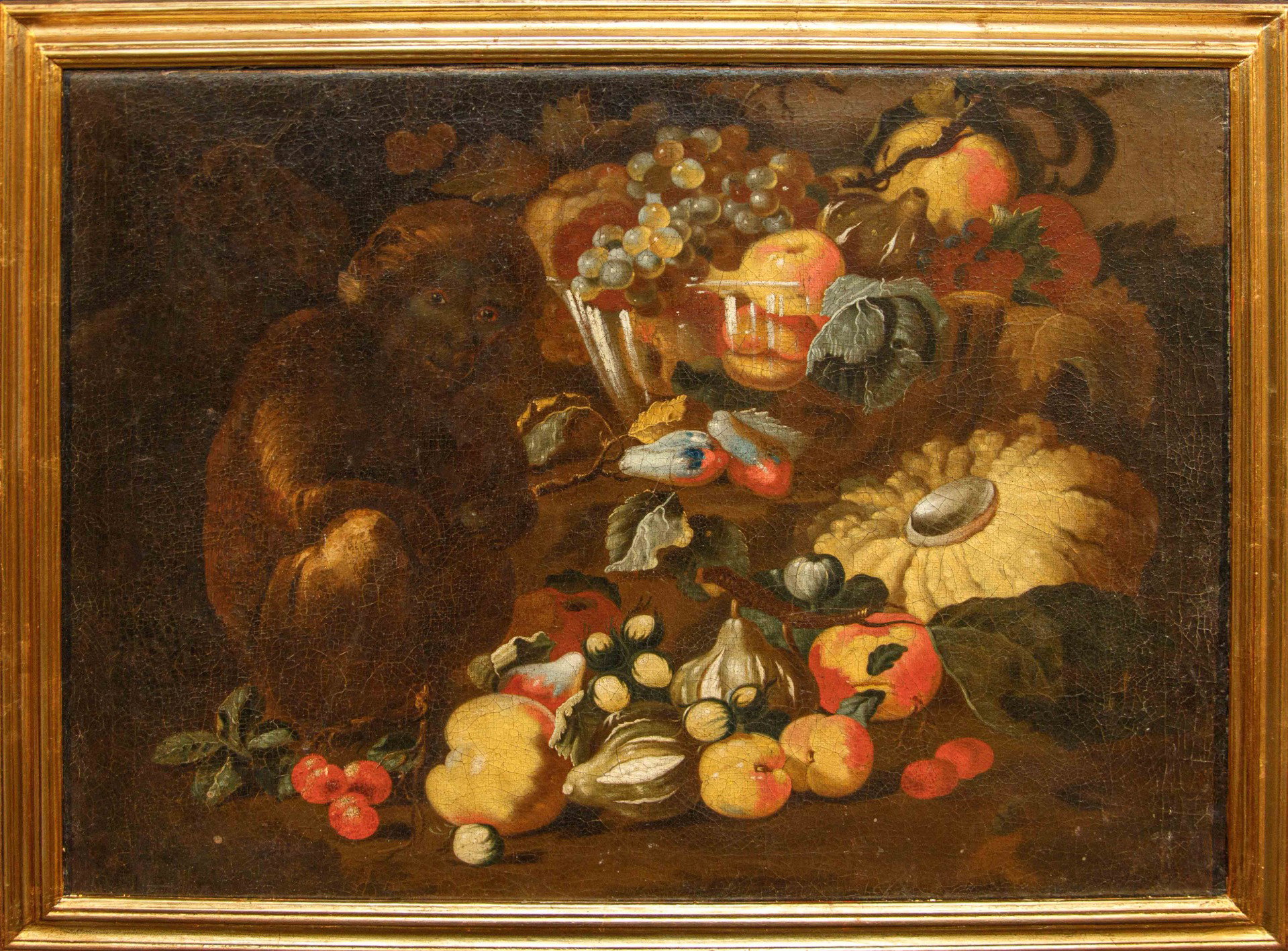
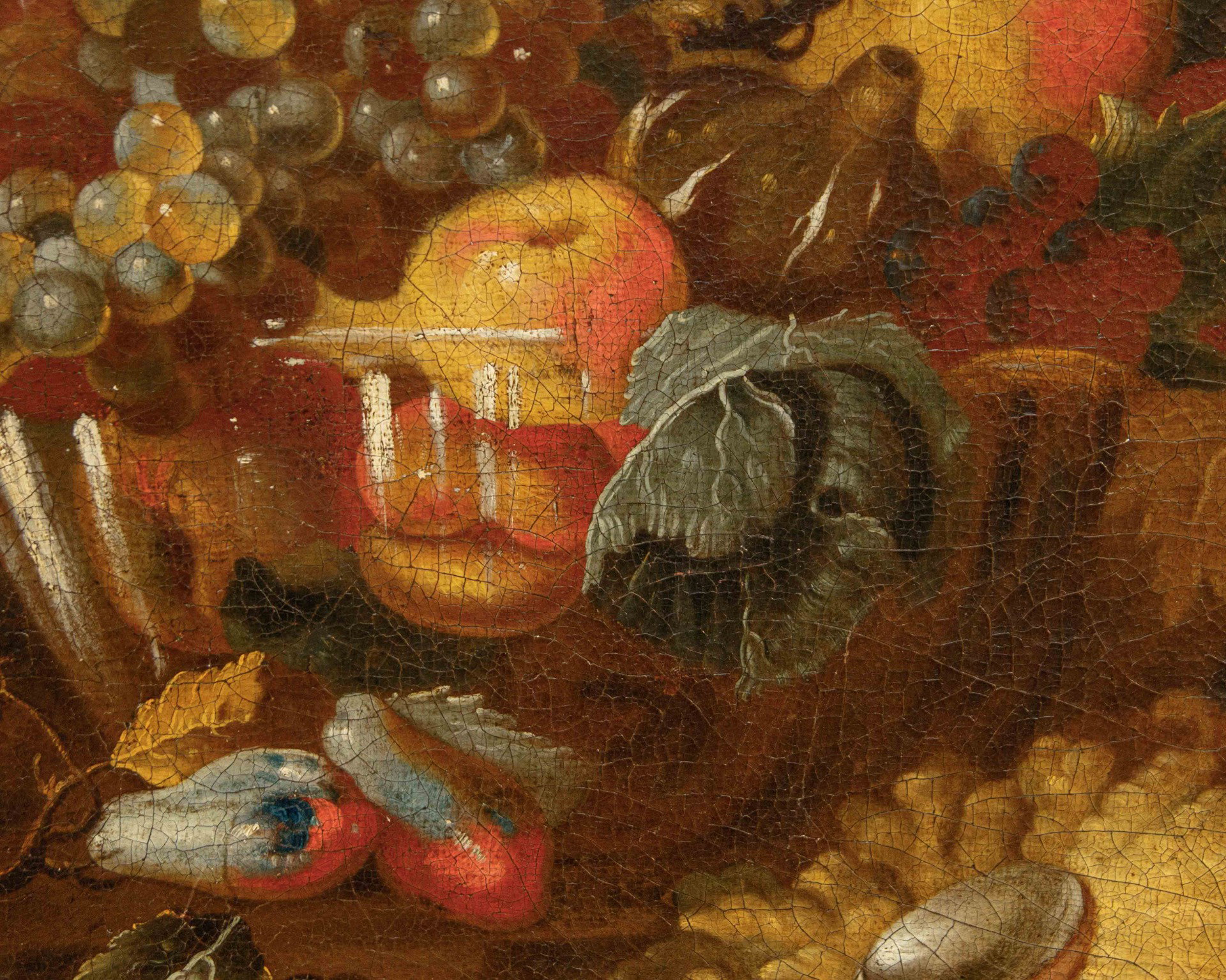
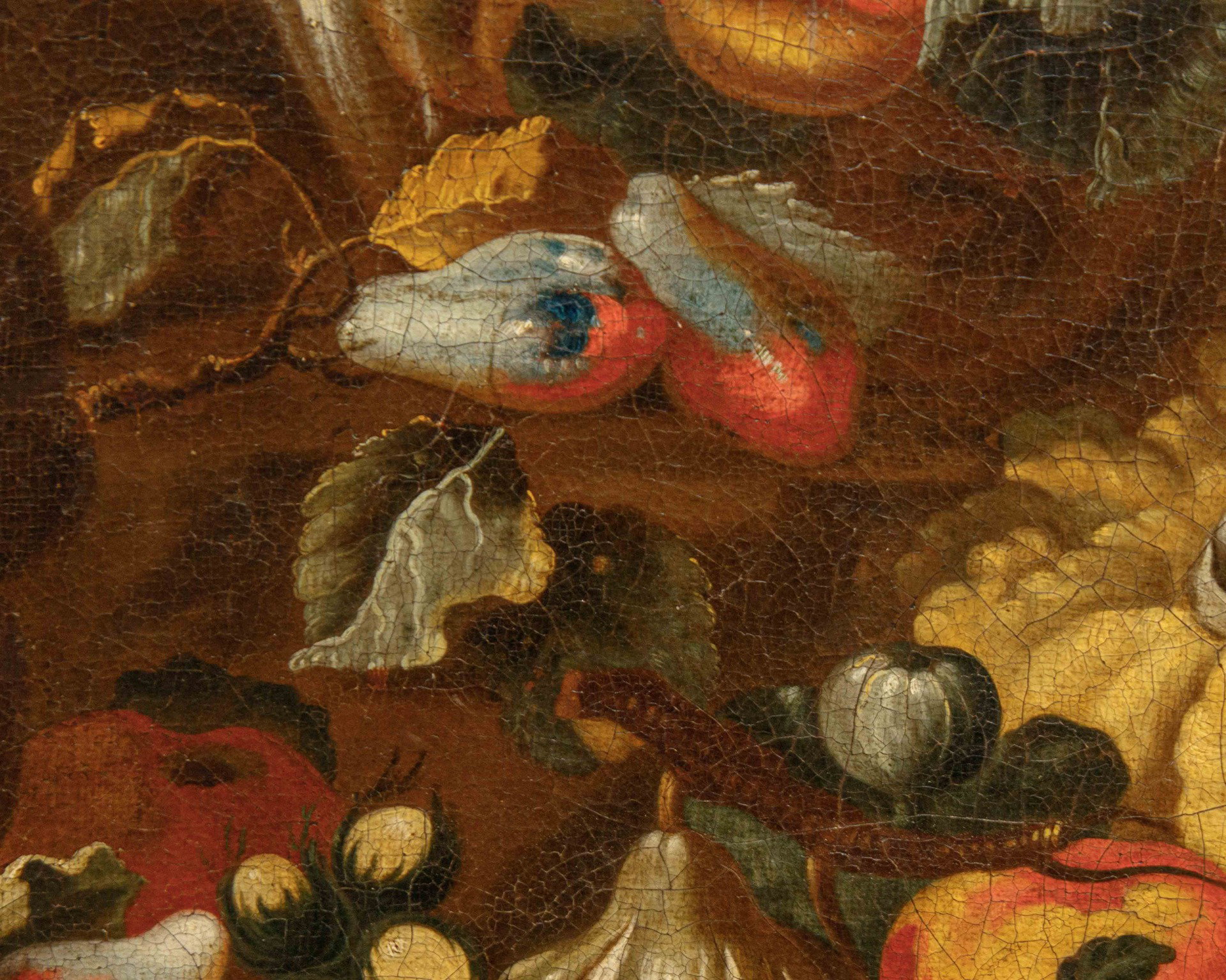
Bottega degli Spadino (Rome, late 17th century – early 18th century), Still life with fruit, pumpkin and monkey
Description:
Bottega degli Spadino (Rome, late 17th century – early 18th century)
Still life with fruit, pumpkin and monkey
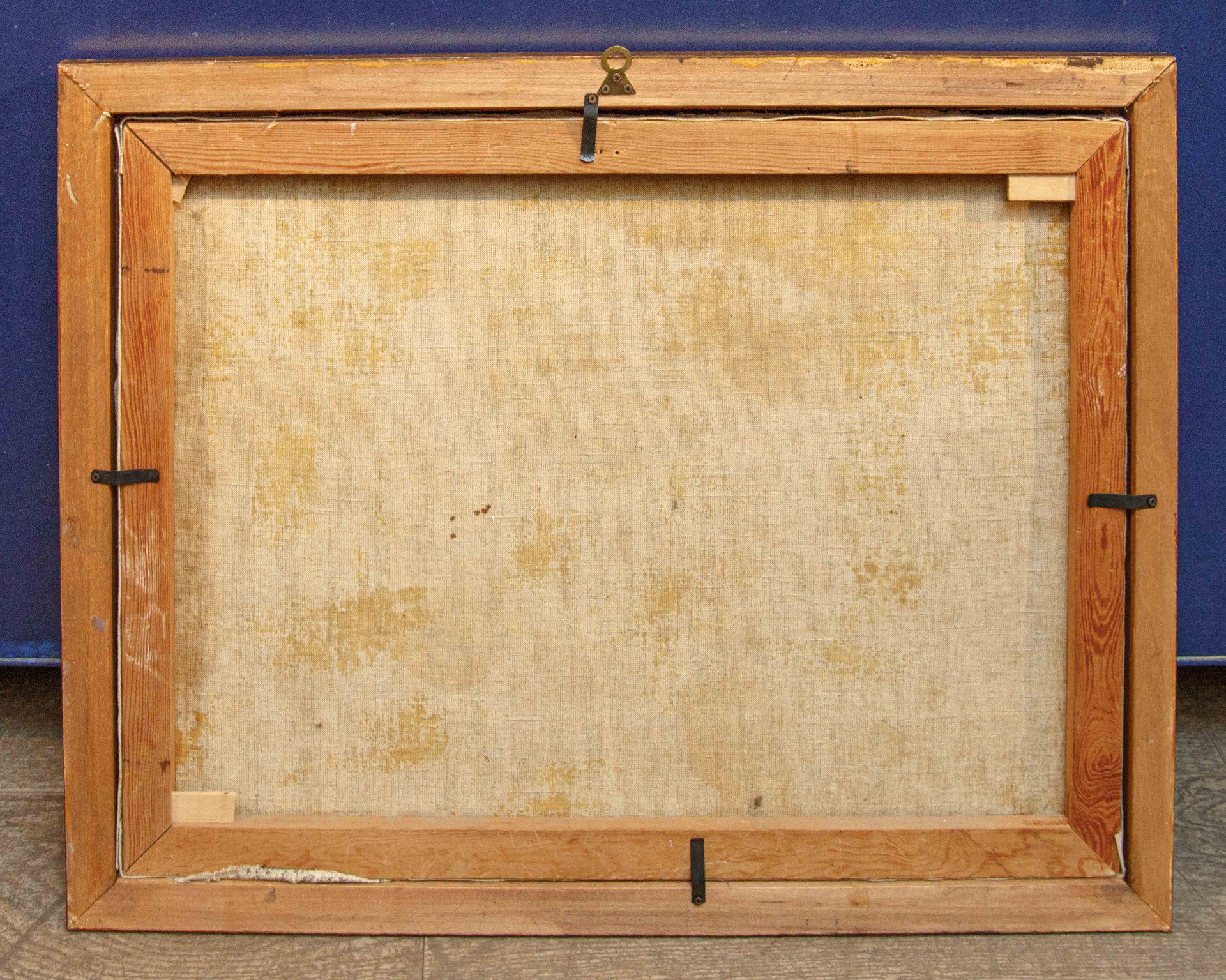
Oil on canvas, 55 x 73 cm
With the frame, 64 x 81 cm
The canvas in question represents a significant example of Roman Baroque still life painting from the turn of the 17th and 18th centuries, a period of great success for this decorative genre intended for the galleries of the Roman aristocracy. The work can be attributed to the production of the famous Castelli family, known as the Spadino.
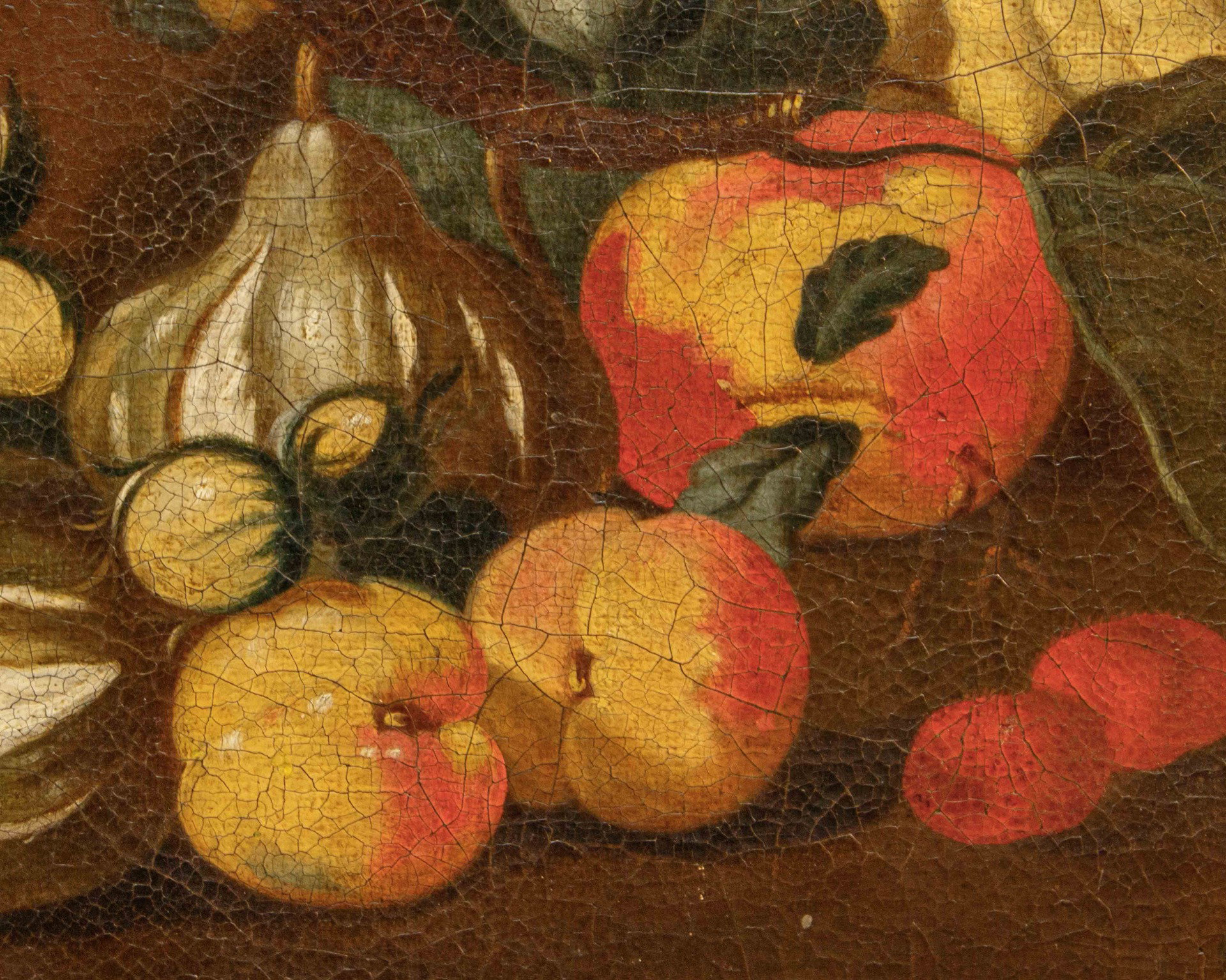
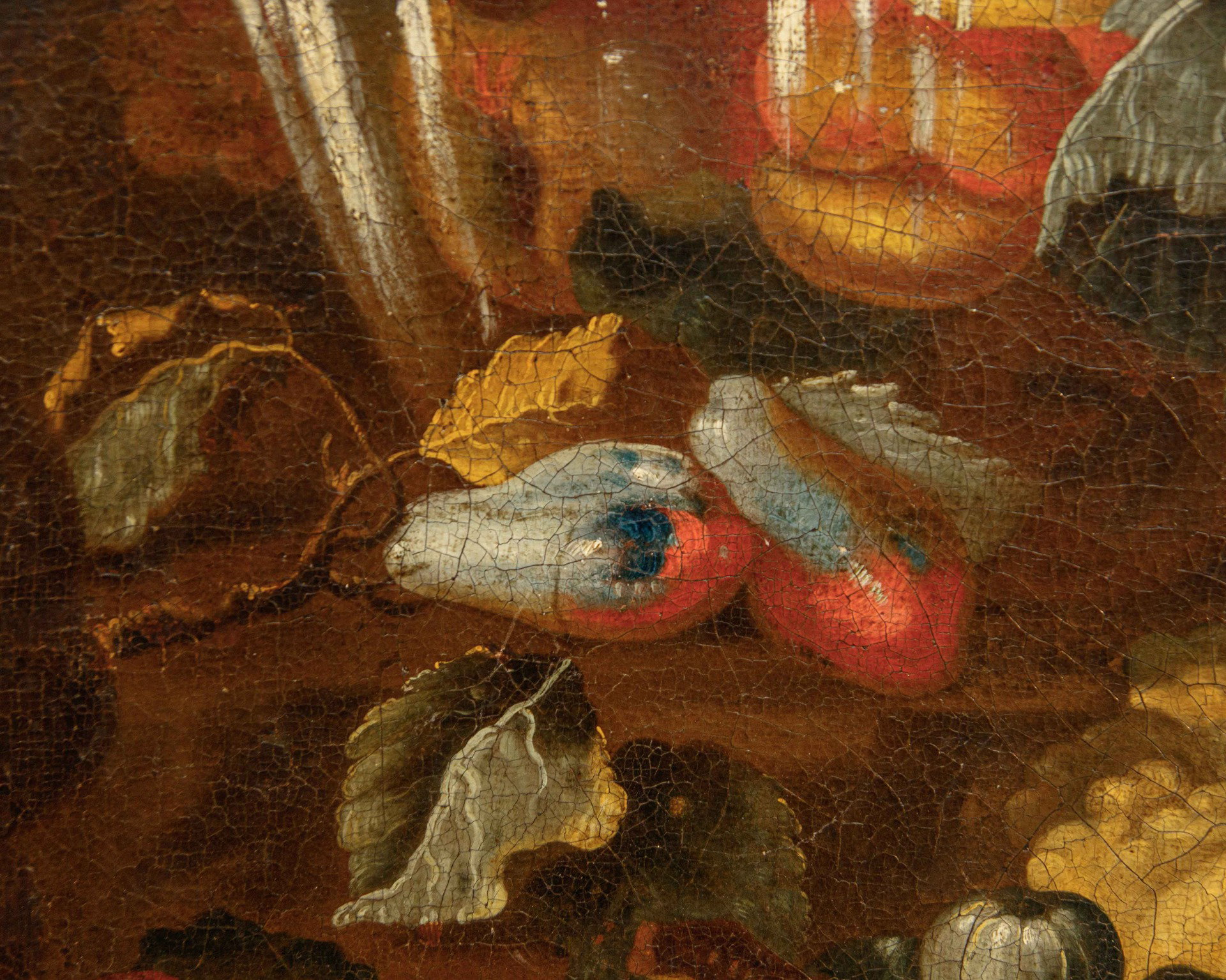
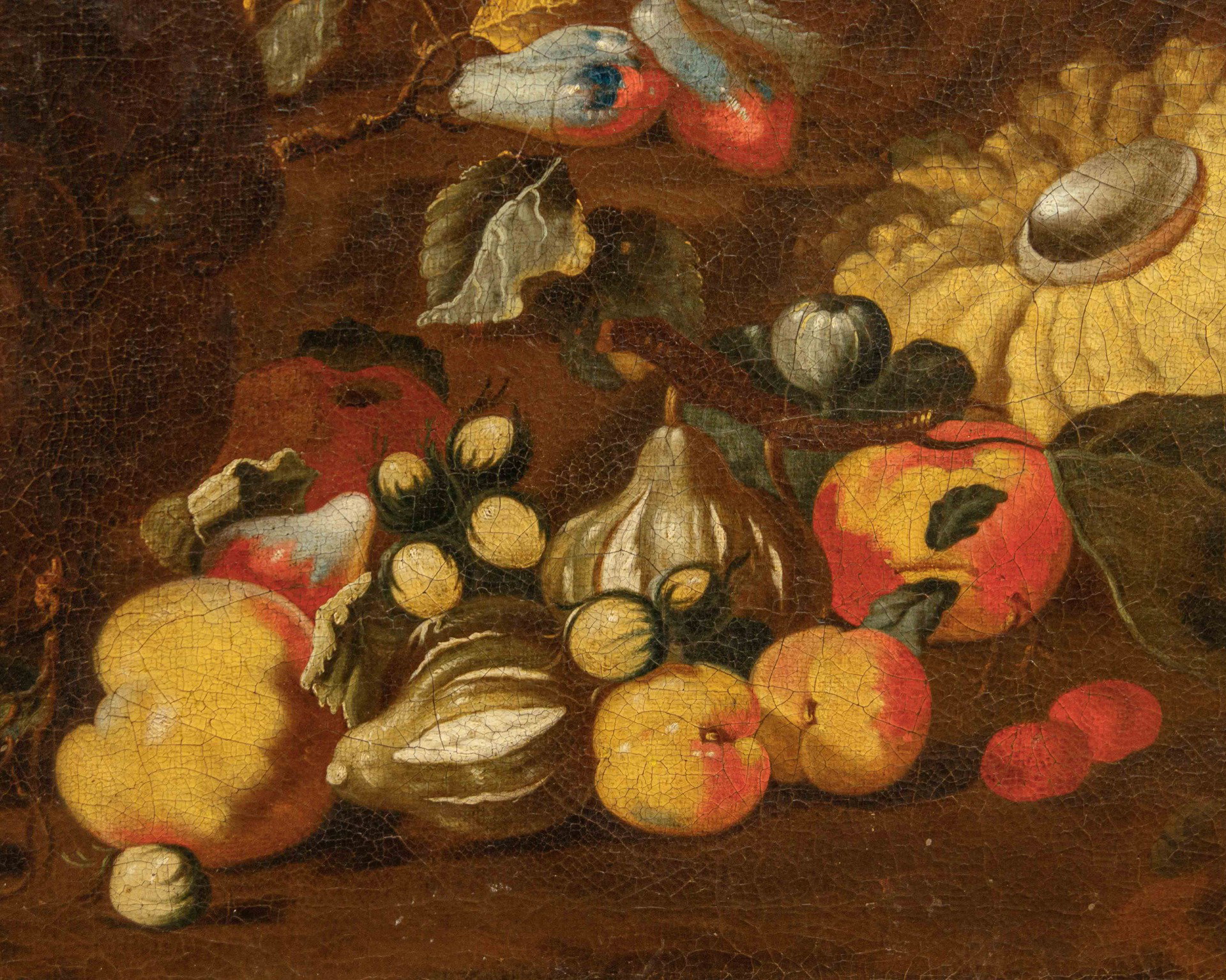
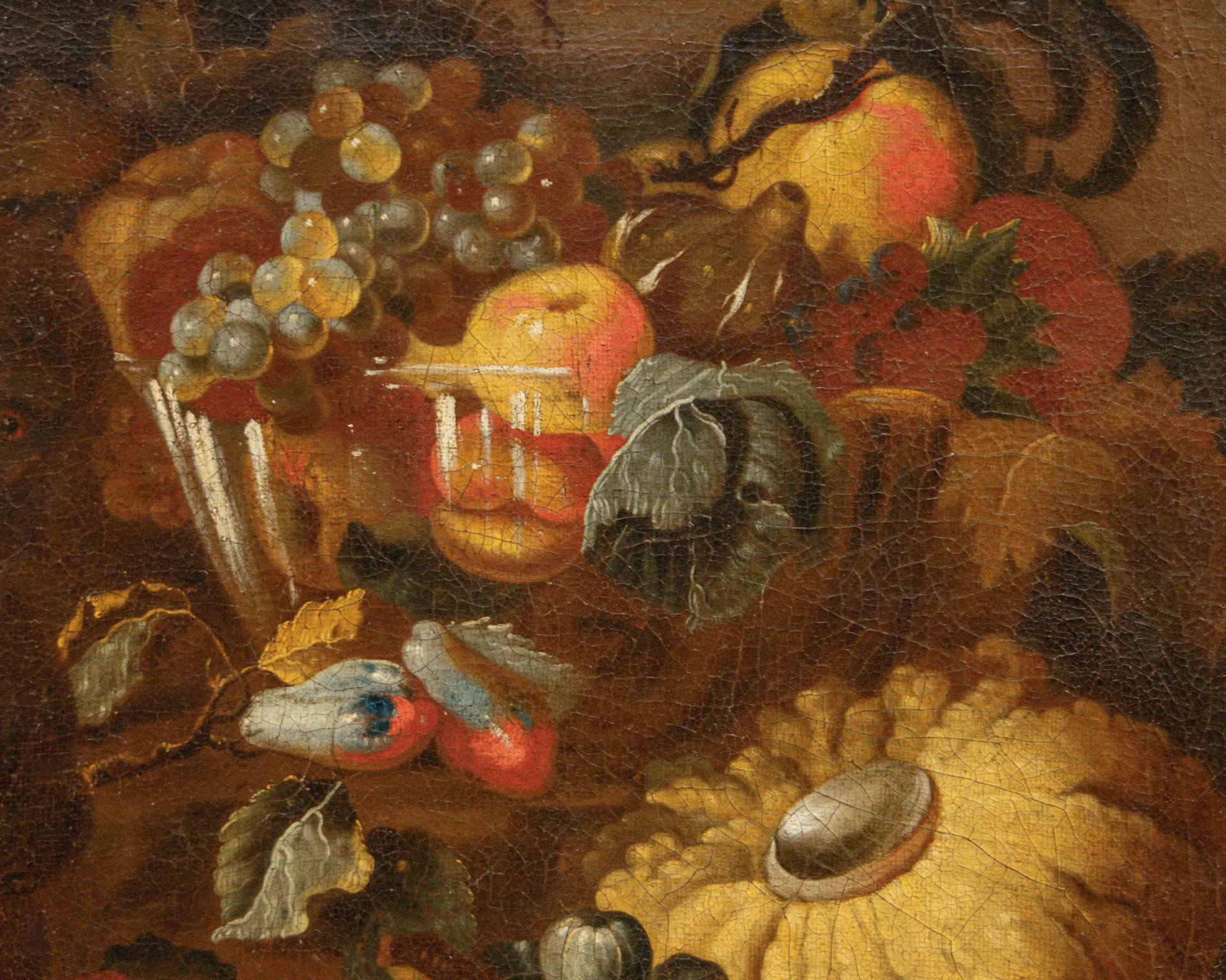
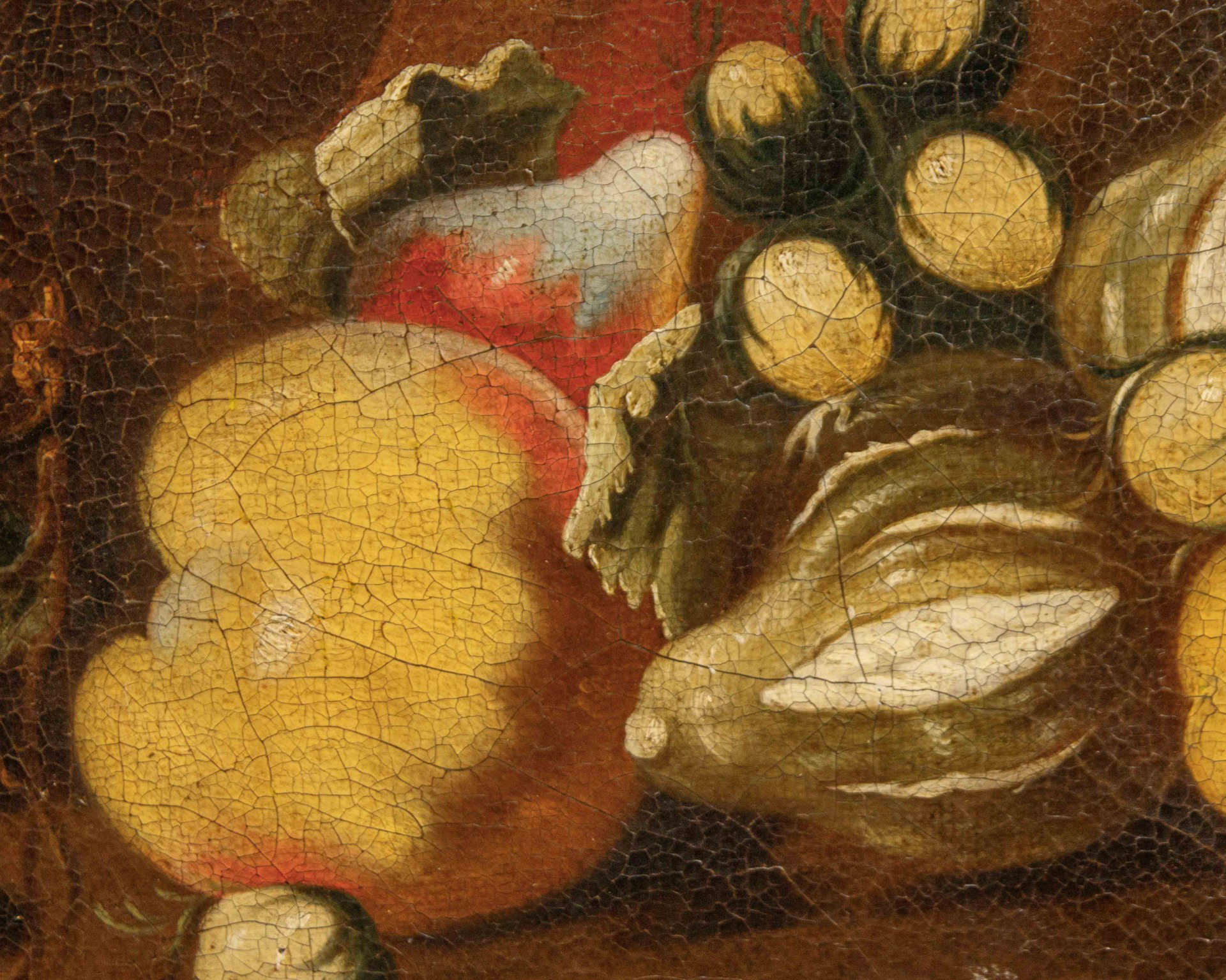
The compositional structure is organized around a dense pyramid of vegetables that emerge with plastic force from a dark background, clearly in the Caravaggesque tradition. The painting technique reveals the characteristic 'manner' of the Spadino, distinguished by a thick, material brushstroke capable of rendering the diverse textures of the fruits: note the depiction of the opened figs, the bluish glazes on the plum skins, and, above all, the masterful handling of the bunches of grapes, whose berries are defined by small touches of pure light that simulate their transparency and plumpness.
The lighting, which strikes the scene from the side, not only models the volumes but also accentuates the dramatic contrast between the sunlit fruit and the surrounding density of shadow. The inclusion, on the left, of a primate figure — likely a macaque — adds a narrative and lively element to the composition. The animal, rendered with a more frayed brushstroke to describe its fur, acts as a link between the observer and the inanimate objects, in keeping with a taste for the exotic and anecdotal widely prevalent in the Roman Baroque.
The painting finds precise parallels in several confirmed works by Giovanni Paolo Castelli, such as the compositions housed at the Galleria Spada in Rome, where Castelli explores the theme of autumn fruit with the same sensitivity for microscopic detail. Although the quality of execution strongly suggests the master's hand, the participation of the workshop, particularly his son Bartolomeo Castelli the Younger, cannot be ruled out. The latter inherited his father's repertoire, maintaining the same lighting scheme but sometimes simplifying the formal solutions. In this canvas, however, the skillful handling of whites and the rendering of glassy transparencies indicate a very high level of quality, worthy of Giovanni Paolo's maturity. The work thus stands as a precious document of Roman collecting tastes, testifying to the Spadino's ability to synthesize Northern European naturalistic rigor with Italian scenic exuberance.