Victor Freudemann (Berlin, 1857 – Venice, c. 1922), View of Venice
Description:
Victor Freudemann (Berlin, 1857 – Venice, c. 1922)
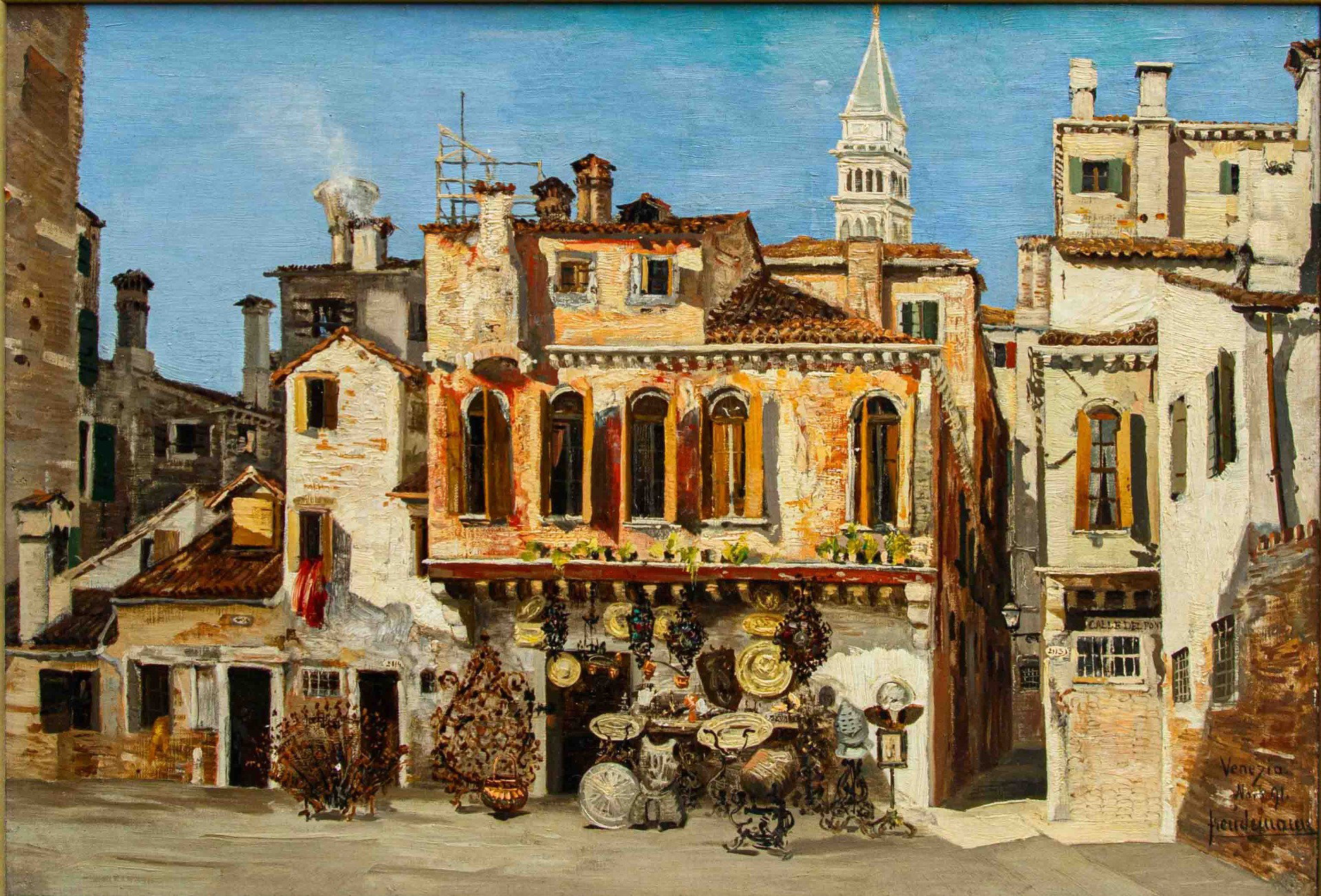
View of Venice, 1891
Oil on canvas, 48 x 67 cm
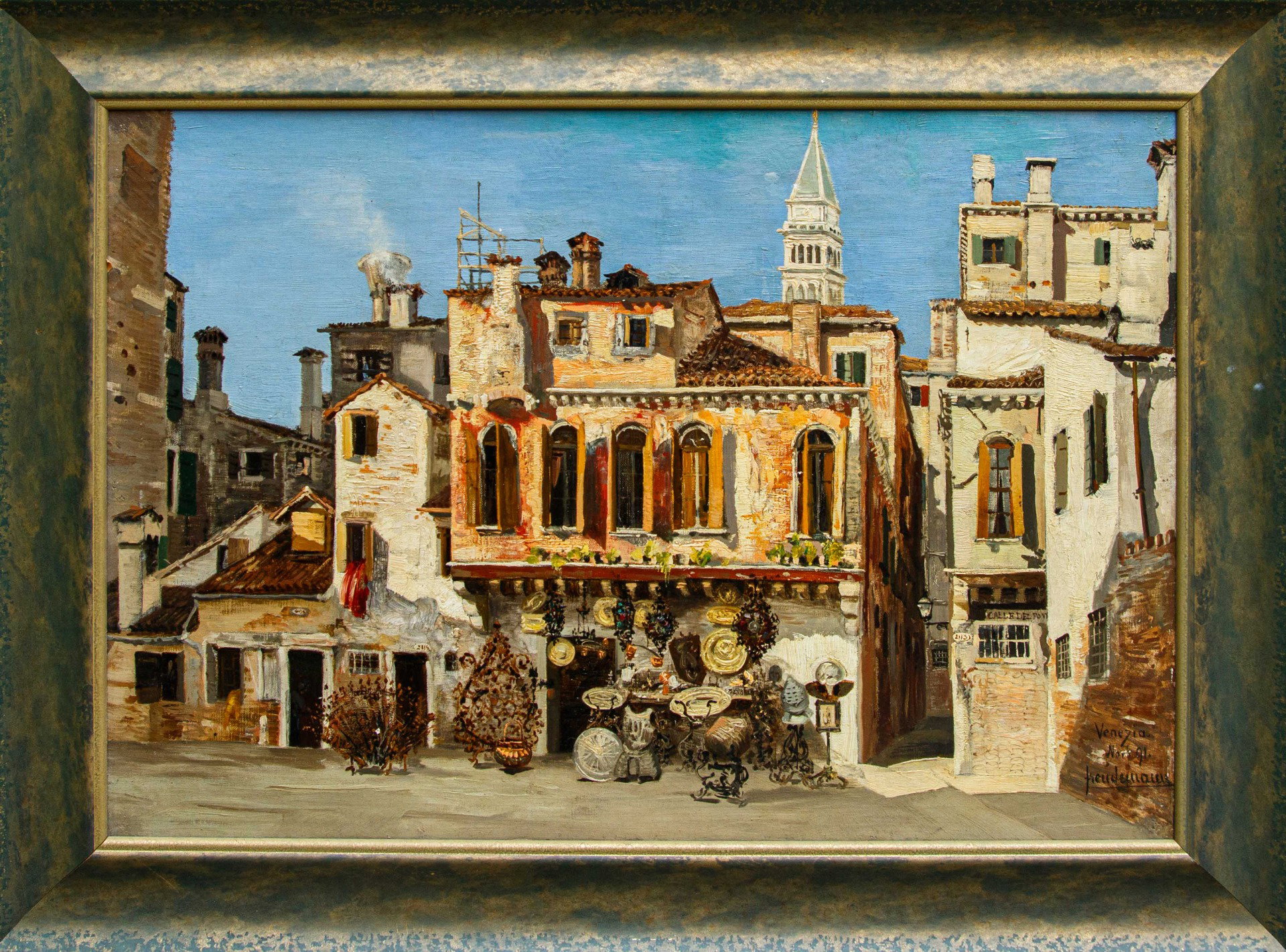
With frame, 61 x 81 cm
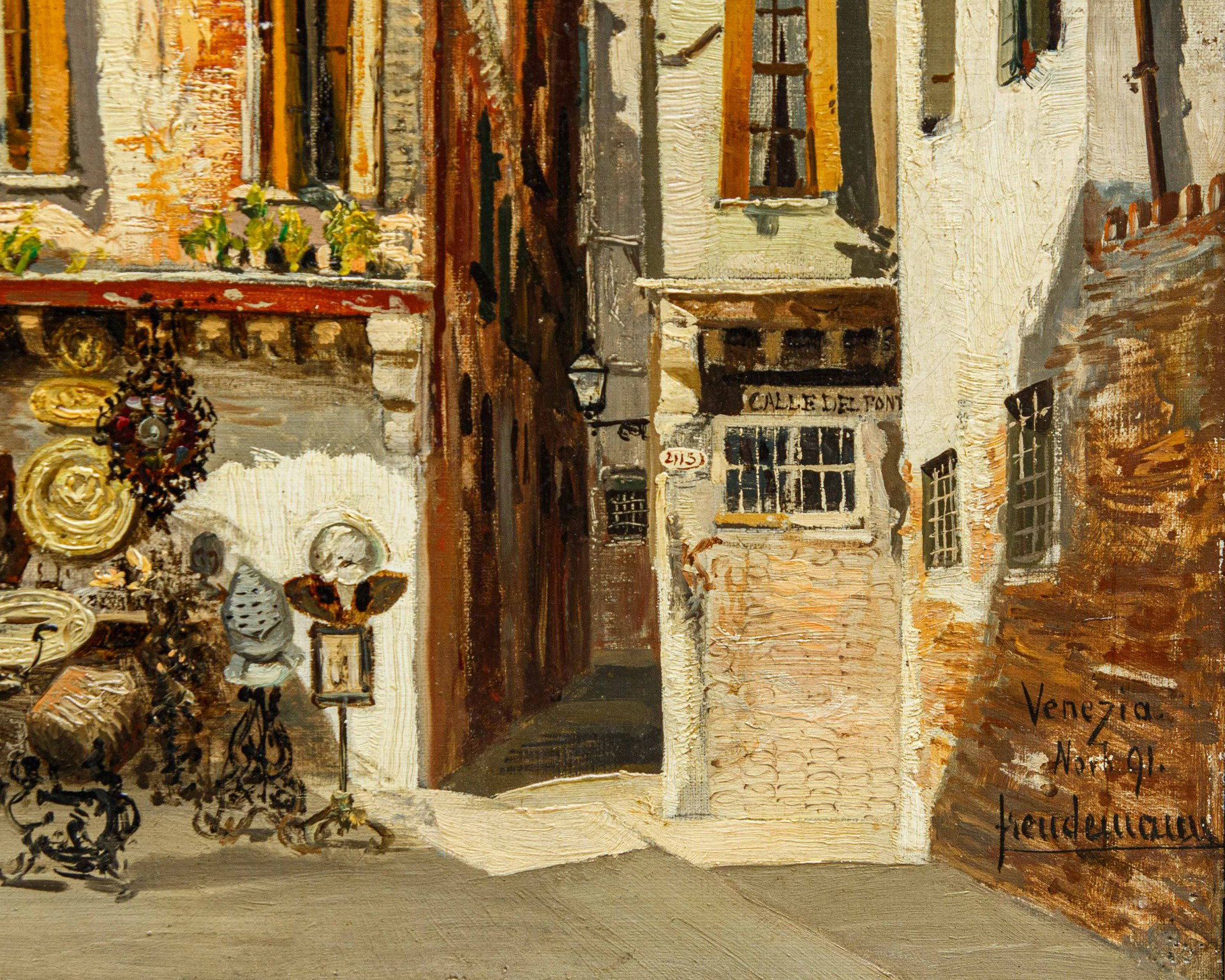
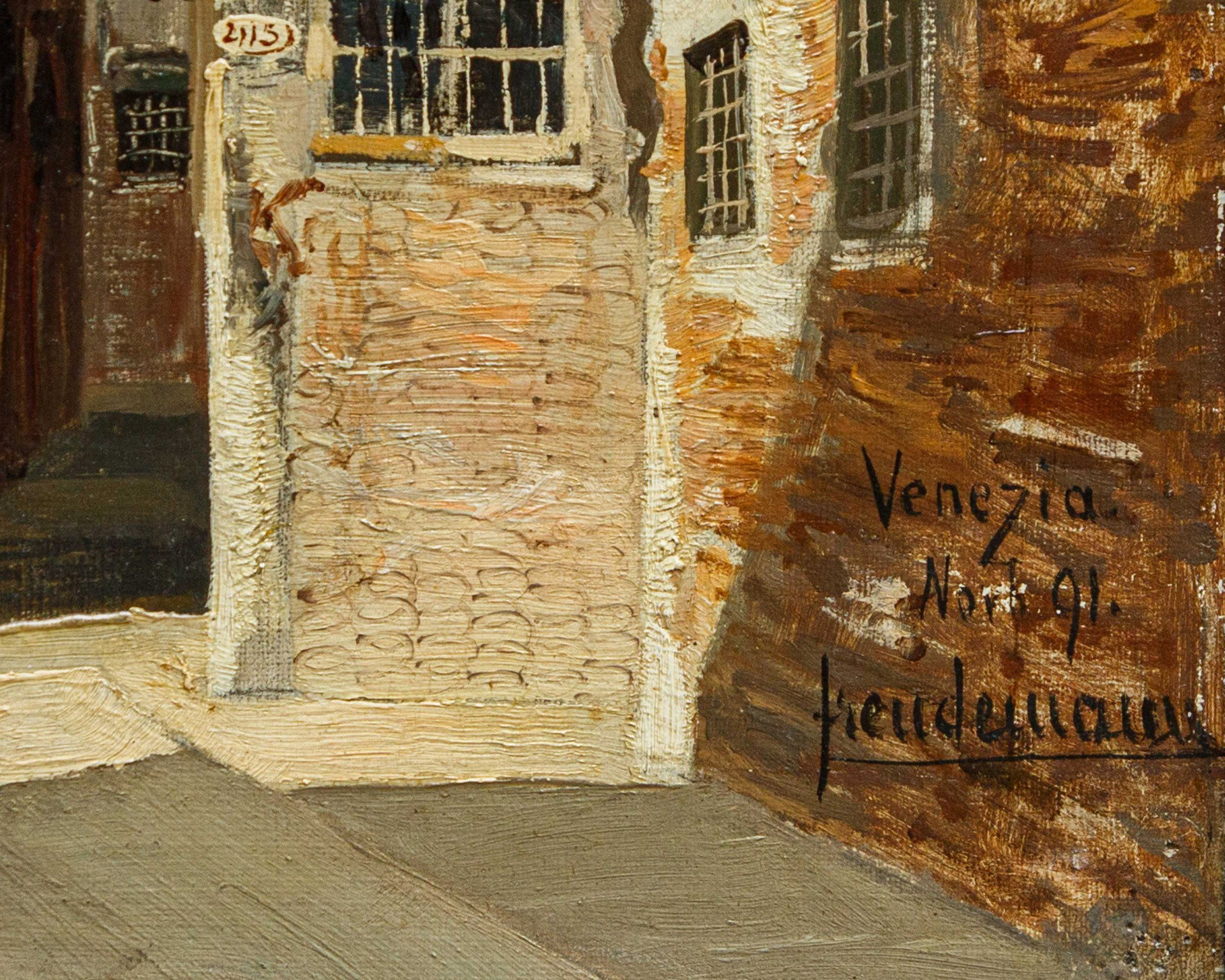
Signed and dated lower right
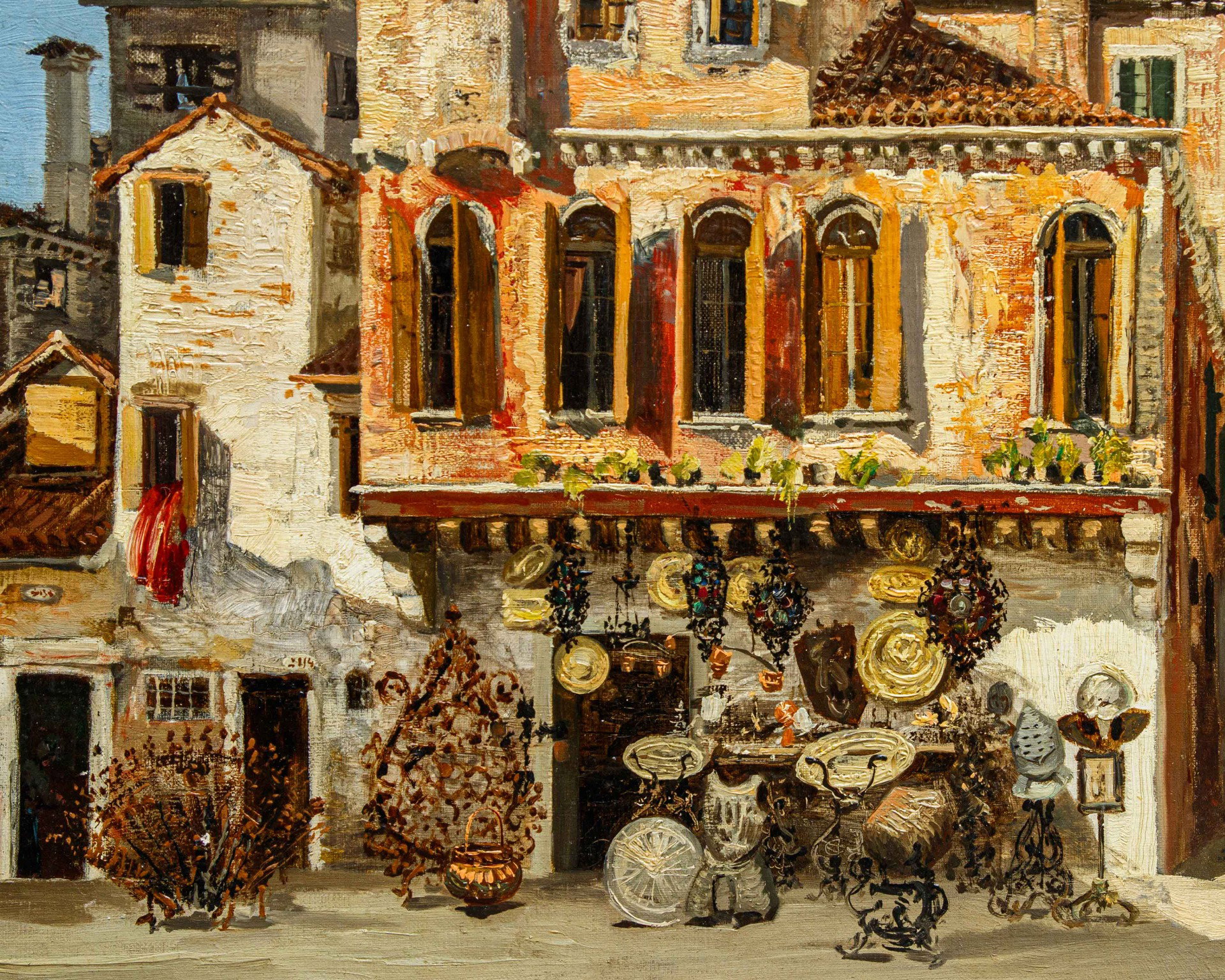
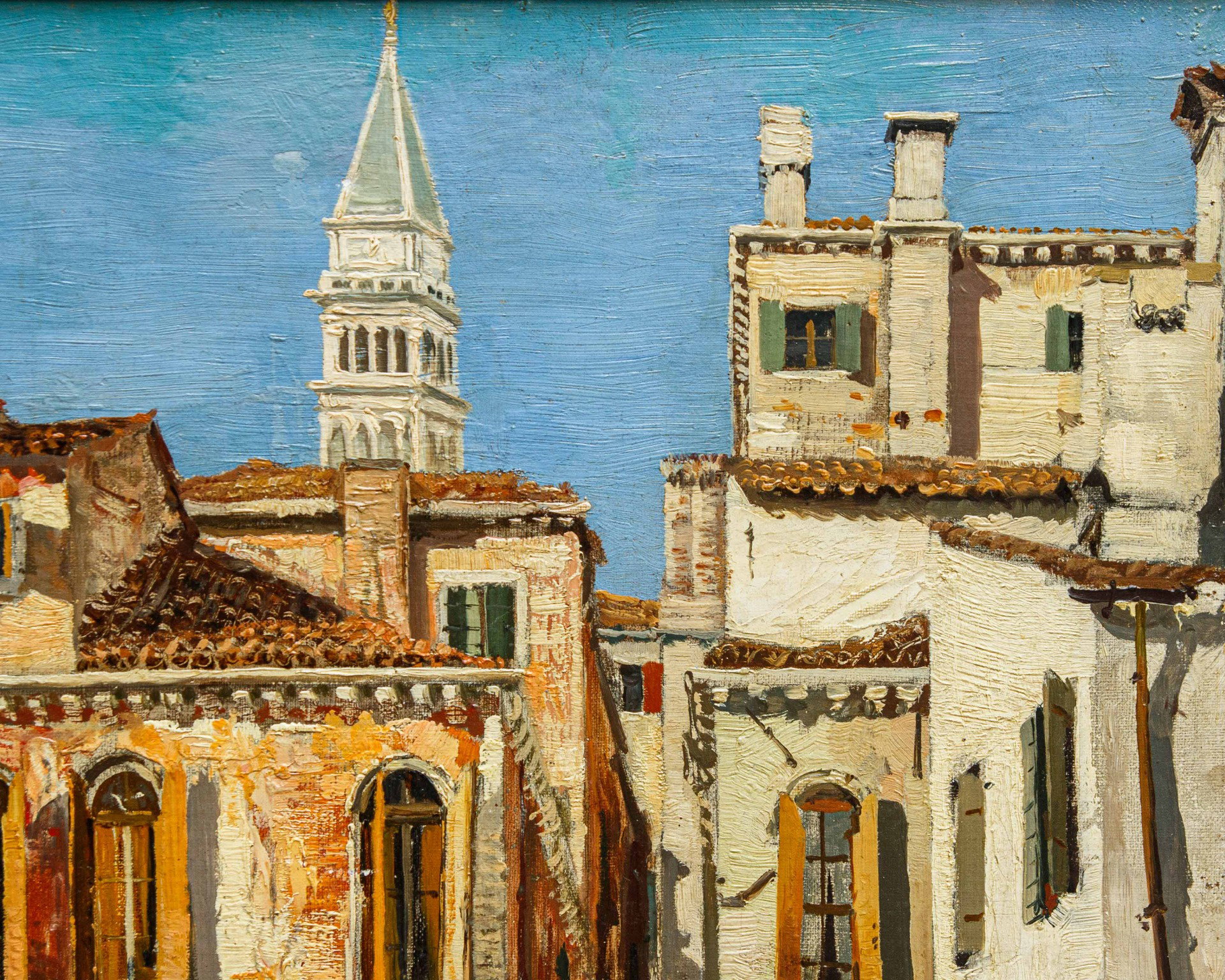
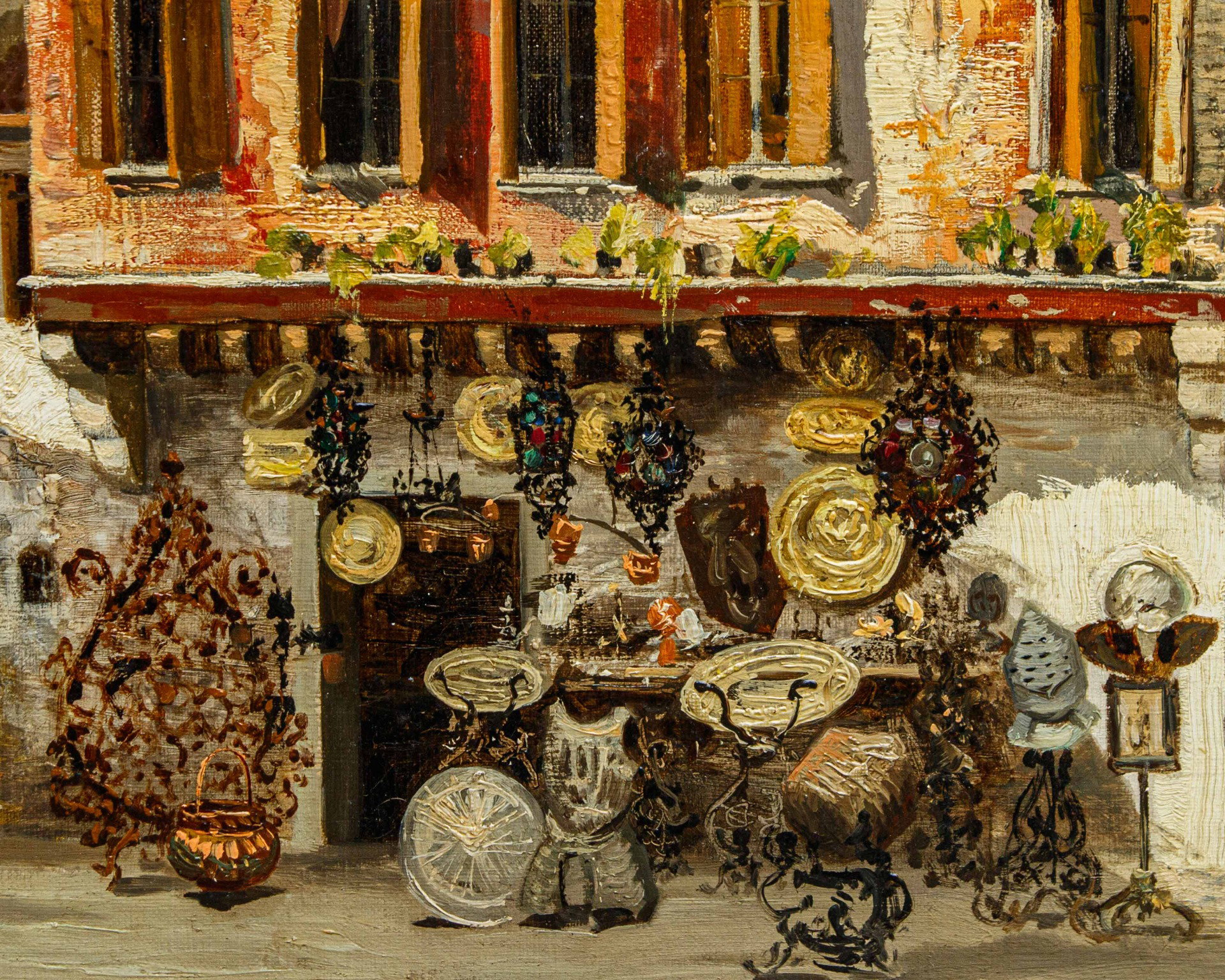
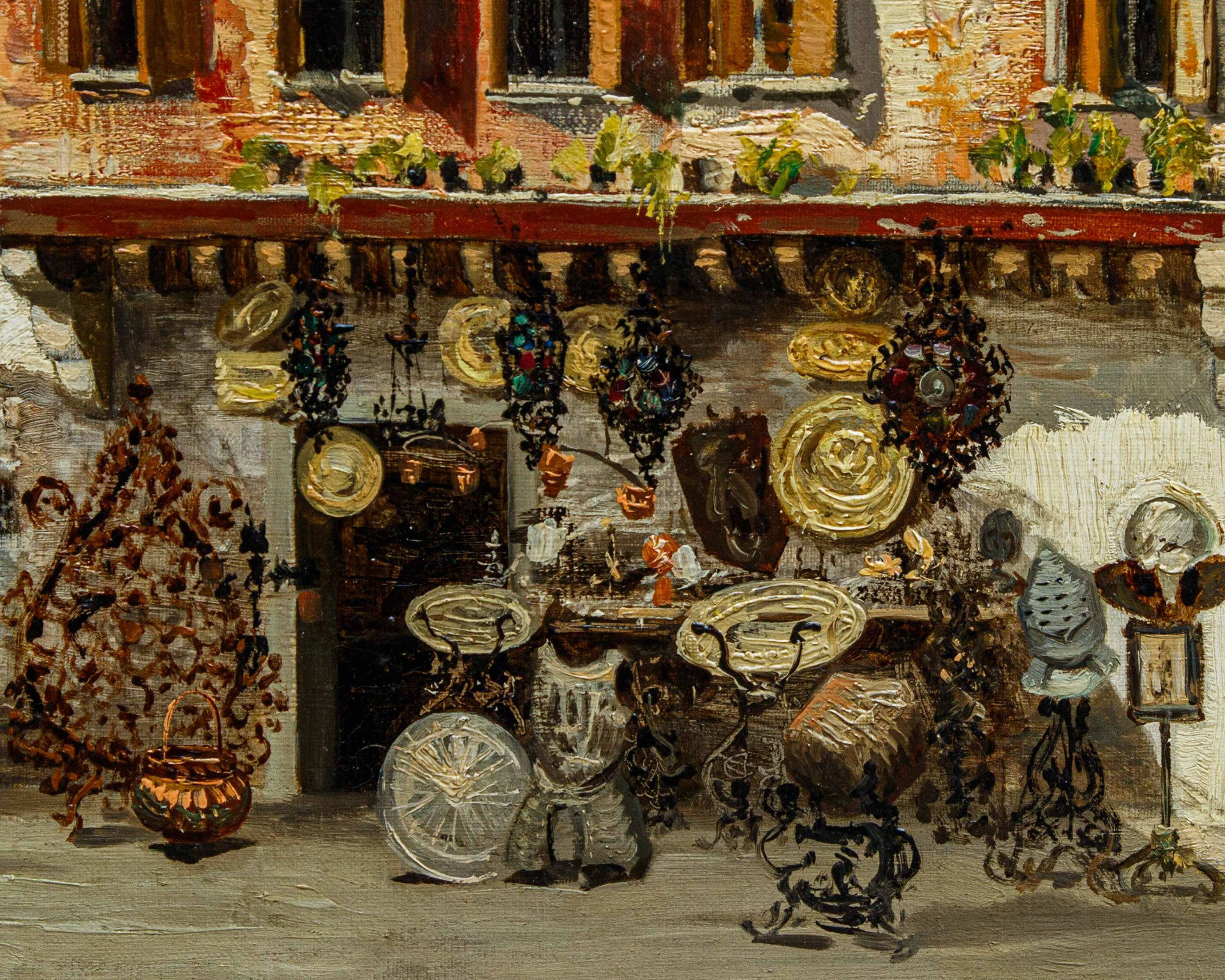
The work in question, created in 1891 by the German artist Victor Freudemann (Berlin, 1857 – Venice, c. 1922), as indicated by the signature and date applied lower right, depicts a picturesque urban view of a Venetian calle. Born in 1857 in a rapidly expanding Berlin, Freudemann grew up breathing the atmosphere of a city that was becoming the beating heart of the German Empire. His training took place within the rigorous walls of the Berlin Academy of Art, where he learned the precision in drawing and attention to detail typical of the Prussian school. However, Freudemann did not remain bound by the dogmas of the past; his career unfolded in a time of profound ferment, at the crossroads between old academic realism and the new vibrations of Impressionism arriving from France, distinguishing himself above all as an attentive observer of landscapes and daily life. His canvases became a mirror of the Brandenburg March, that silent and melancholic territory of pine forests, still lakes, and immense skies surrounding the capital. Freudemann had the rare ability to ennoble the simplicity of German nature, using a brushstroke that, while remaining faithful to form, became freer and more luminous over the years. He was not just a landscape painter; his work also includes genre scenes, small interior views, and portraits that reveal a deep sensitivity to light, as if wanting to capture not only the appearance of objects but the very atmosphere of the moment. His presence in the art chronicles of the time is constant; he was a regular exhibitor at the Great Art Exhibition of Berlin, the most prestigious showcase for artists of the era, and remained a respected figure within Berlin's professional associations. A particularly evocative chapter in Victor Freudemann's work is dedicated to his stay in Venice, a stop that for an artist of Prussian training represented much more than a simple journey; it was an encounter with a light radically different from the grey, filtered light of the North. When Freudemann arrived in the lagoon, he was faced with a chromatic challenge that profoundly influenced his artistic maturity, pushing him to temper his Berlin academic rigor in favor of a more vibrant and atmospheric brushstroke. In his Venetian views, the artist did not limit himself to postcard reproductions of the most famous monuments but sought to capture the almost magical interaction between the monumental architecture and the viewer. His canvases dedicated to Venetian canals and palaces show particular attention to reflections and that golden haze that envelops the city at sunset or in the early morning hours. It is precisely in this Italian parenthesis that his evolution towards Impressionism strongly emerges: the drawing becomes less sharp, allowing patches of color and luminous contrasts to define the shapes of bell towers and buildings. The painting shown here captures a snapshot of daily life in one of the many Venetian calli, a subject that Freudemann preferred over canonical monumental views. The scene is dominated by the warm sunlight hitting the facade of the main building, beneath which appears to be a copper shop (or a coppersmith's workshop), painted with a dense materiality, through full-bodied brushstrokes to render the texture of peeling plaster and exposed bricks, where the tones of ochre, pink, and sienna blend together. This material approach, typical of his maturity, creates a sense of solidity and "lived time." On the right, the inscription "Calle di Pon.." also appears, likely referring to the Calle del Ponte de l'Anzolo: the hypothesis would be further supported by the pyramidal cusp of St. Mark's bell tower visible in the background.