Description:
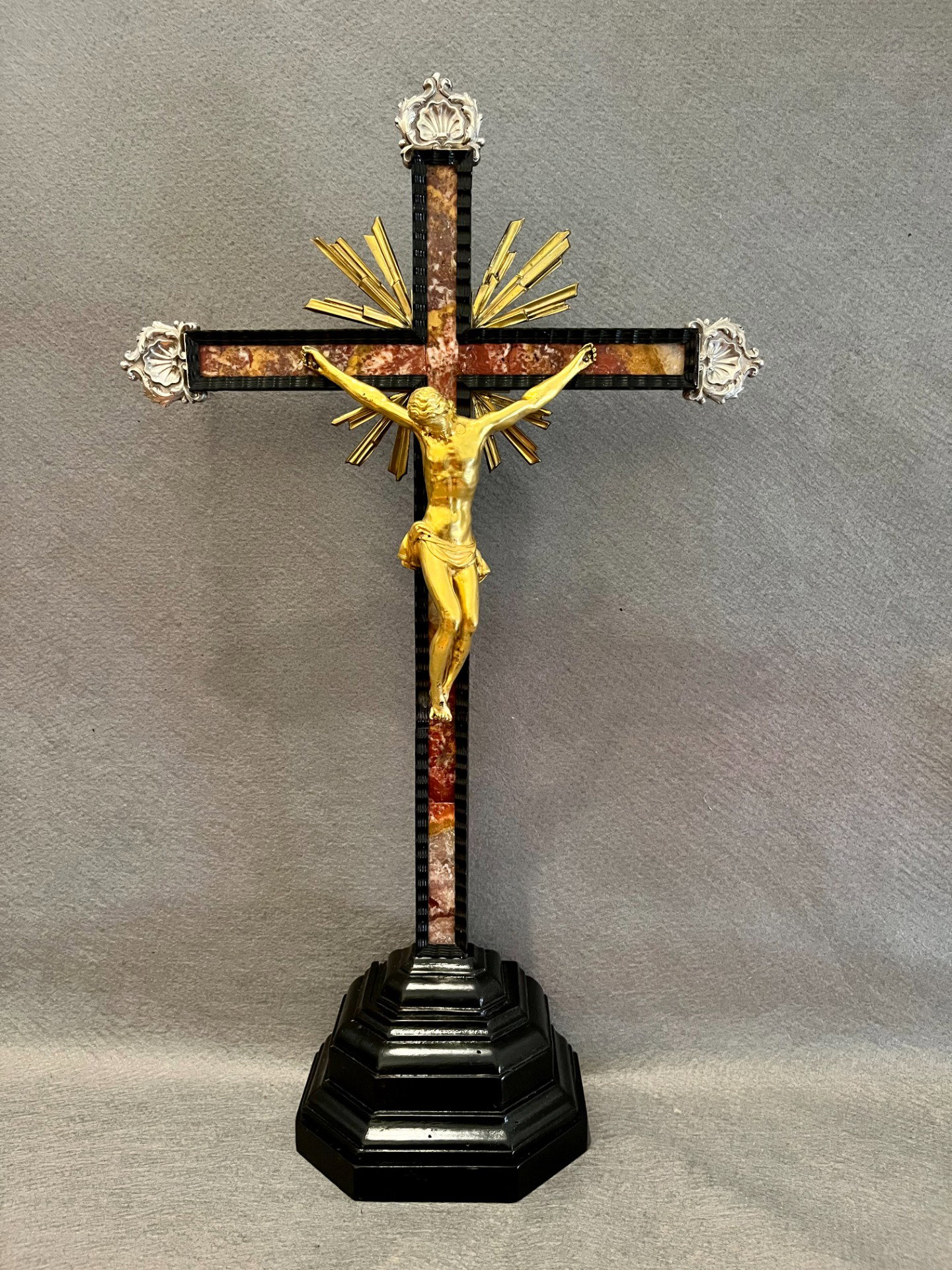
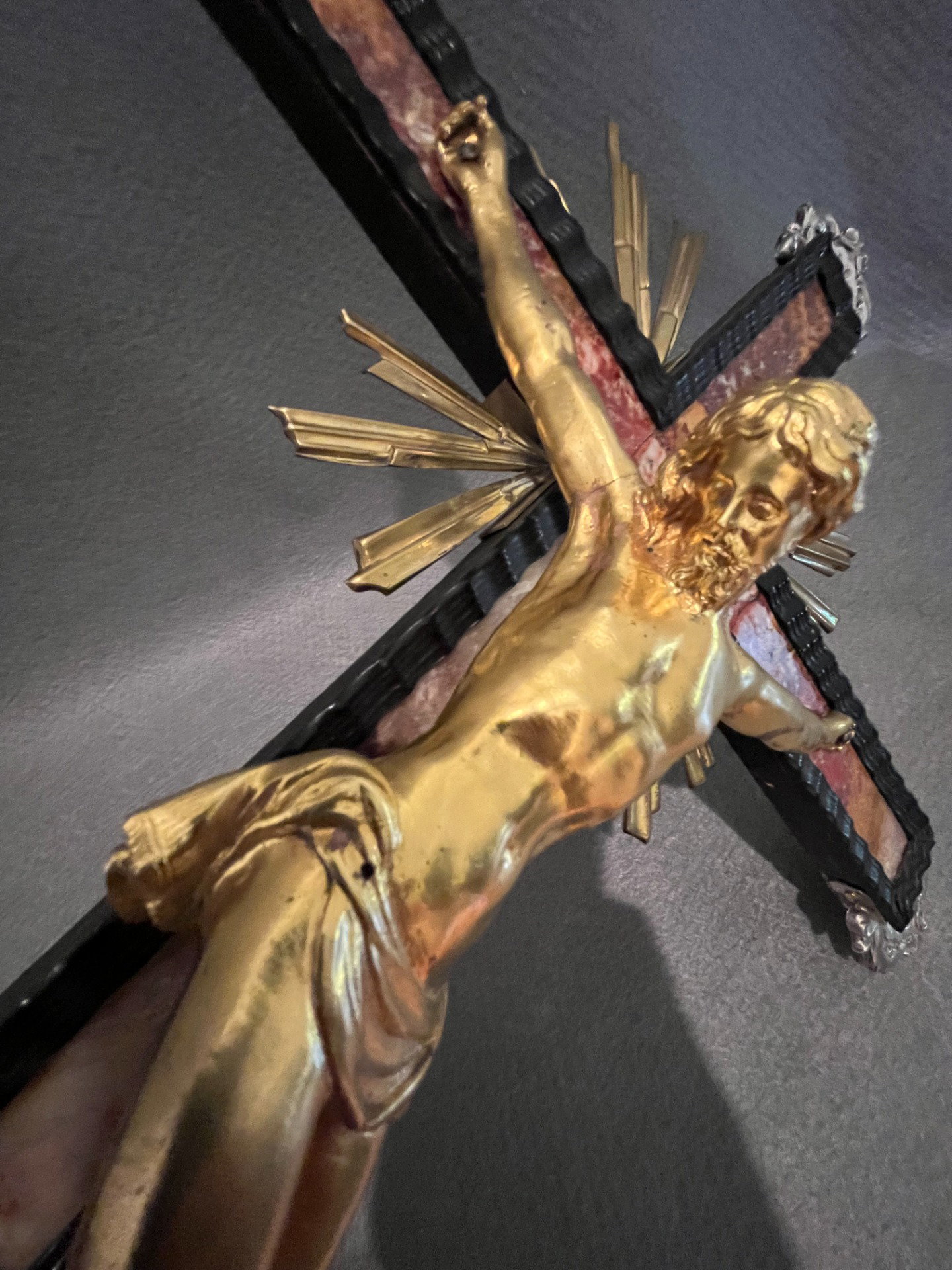
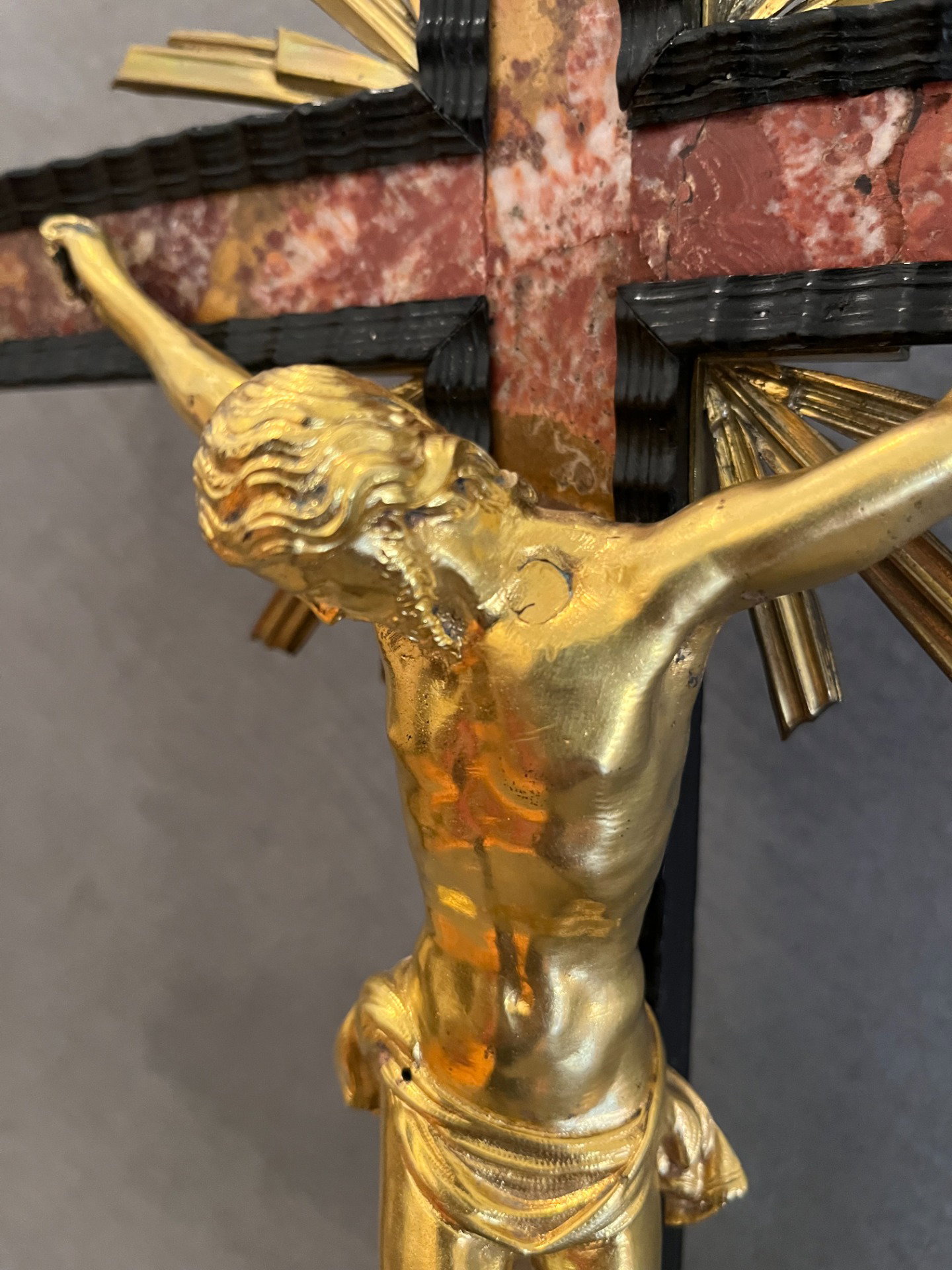
Important artefact of devotional sacred art, this table crucifix can be attributed to Italian Baroque production between the 17th and 18th centuries, intended for private prayer and domestic devotion. The work is distinguished by its refined combination of precious materials and the high-quality execution of its decorative components.
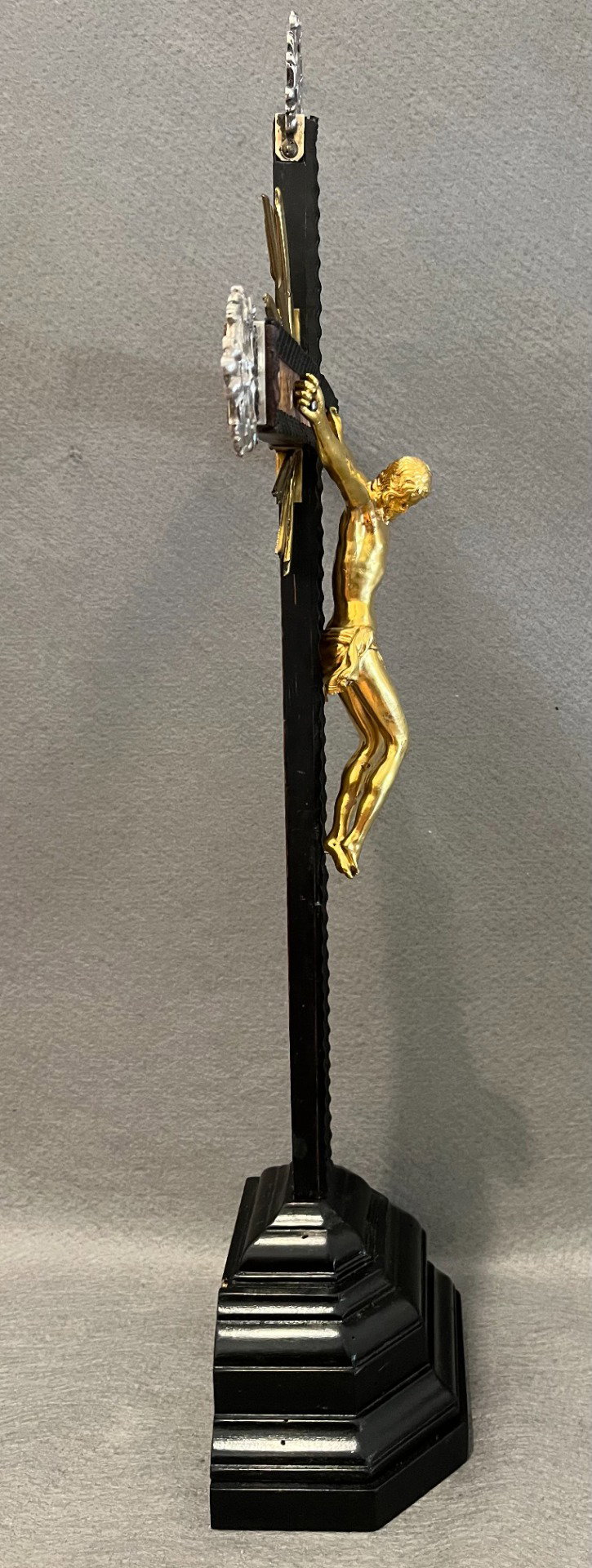
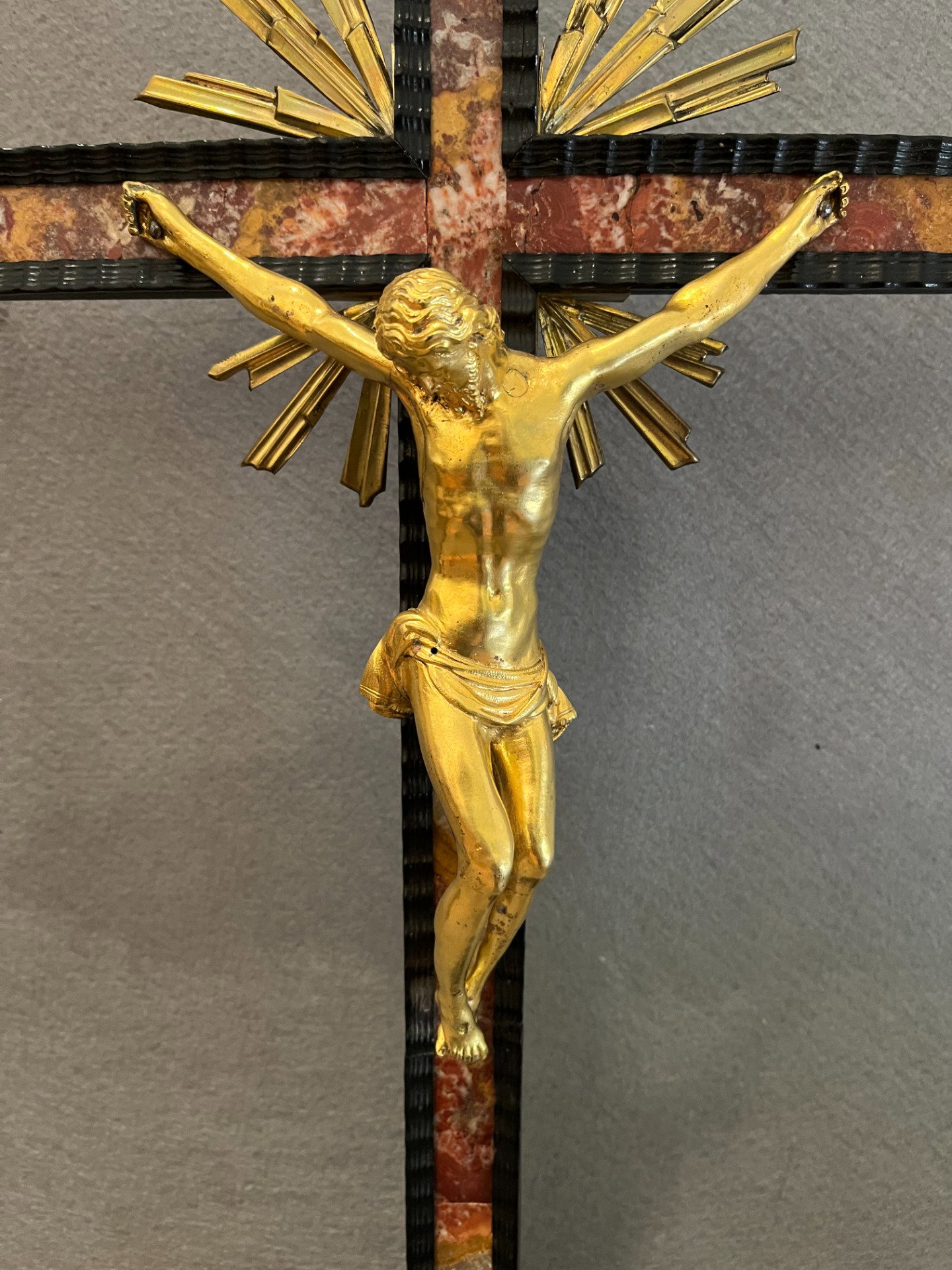
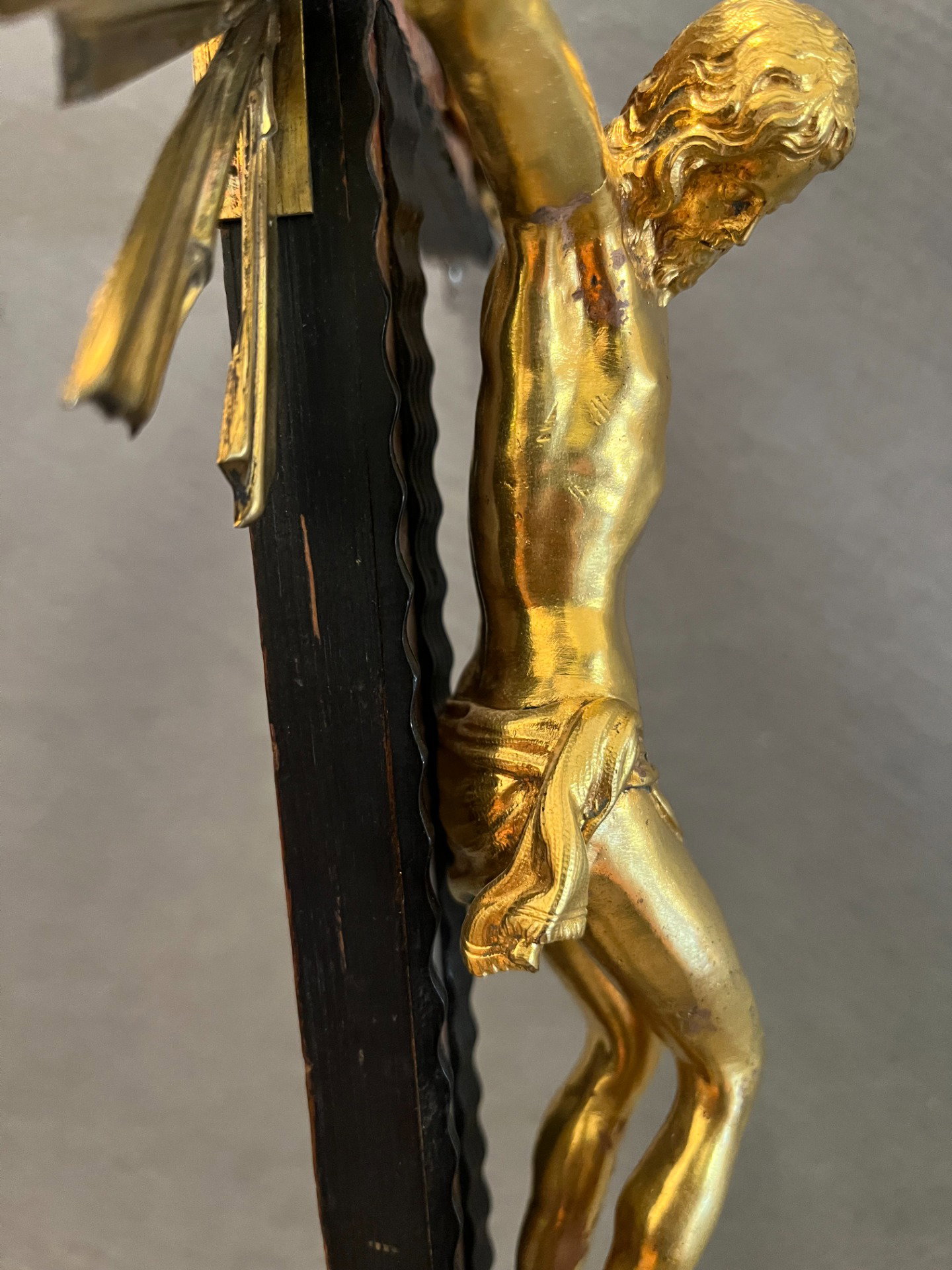
The body of Christ, made of finely chiseled gilded bronze, is depicted according to the traditional iconography of the Christus Patiens, with particular anatomical attention and intense expressive rendering. The figure emerges with strong plastic evidence against the dark background of the cross, creating a refined chromatic and material contrast.
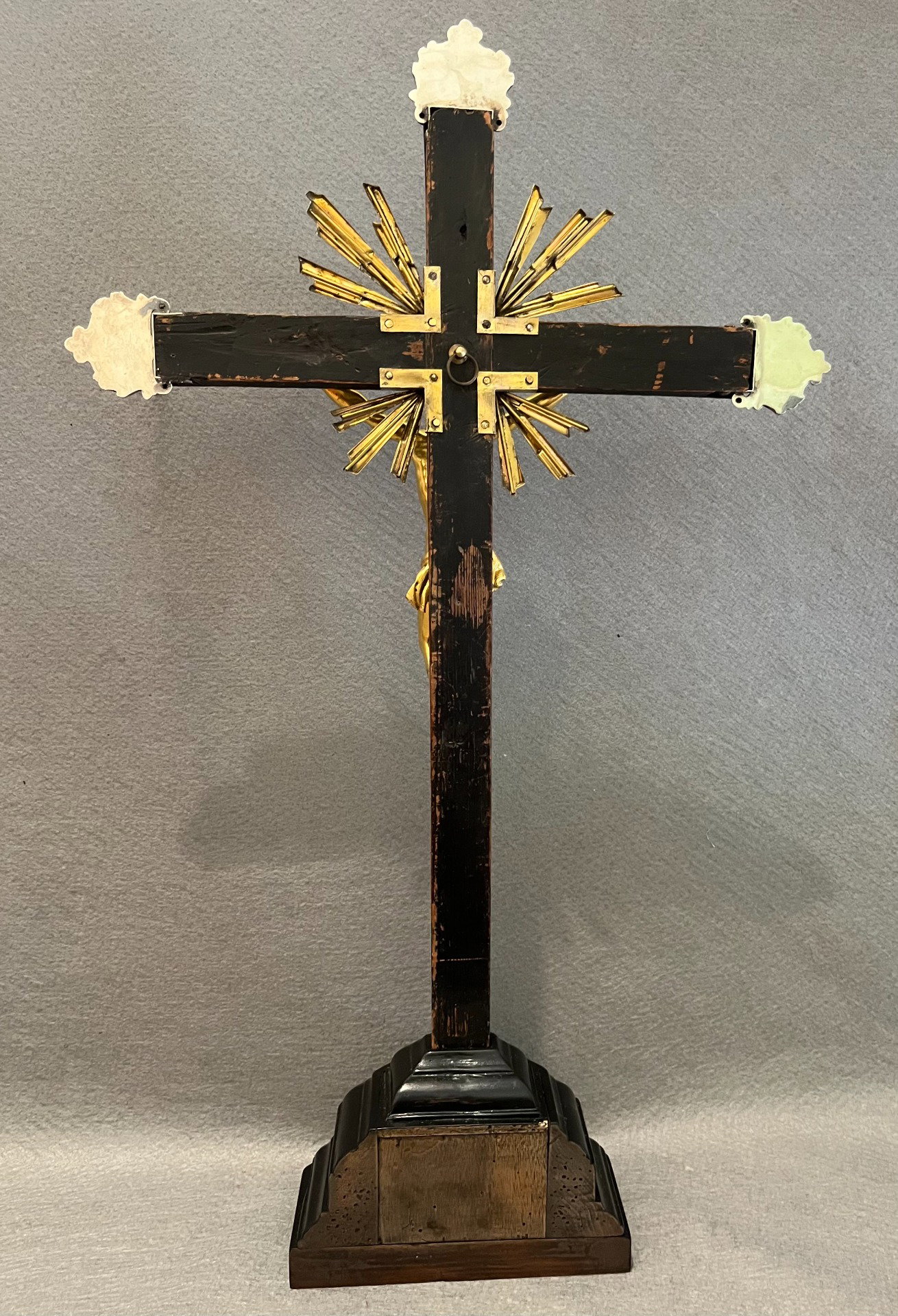
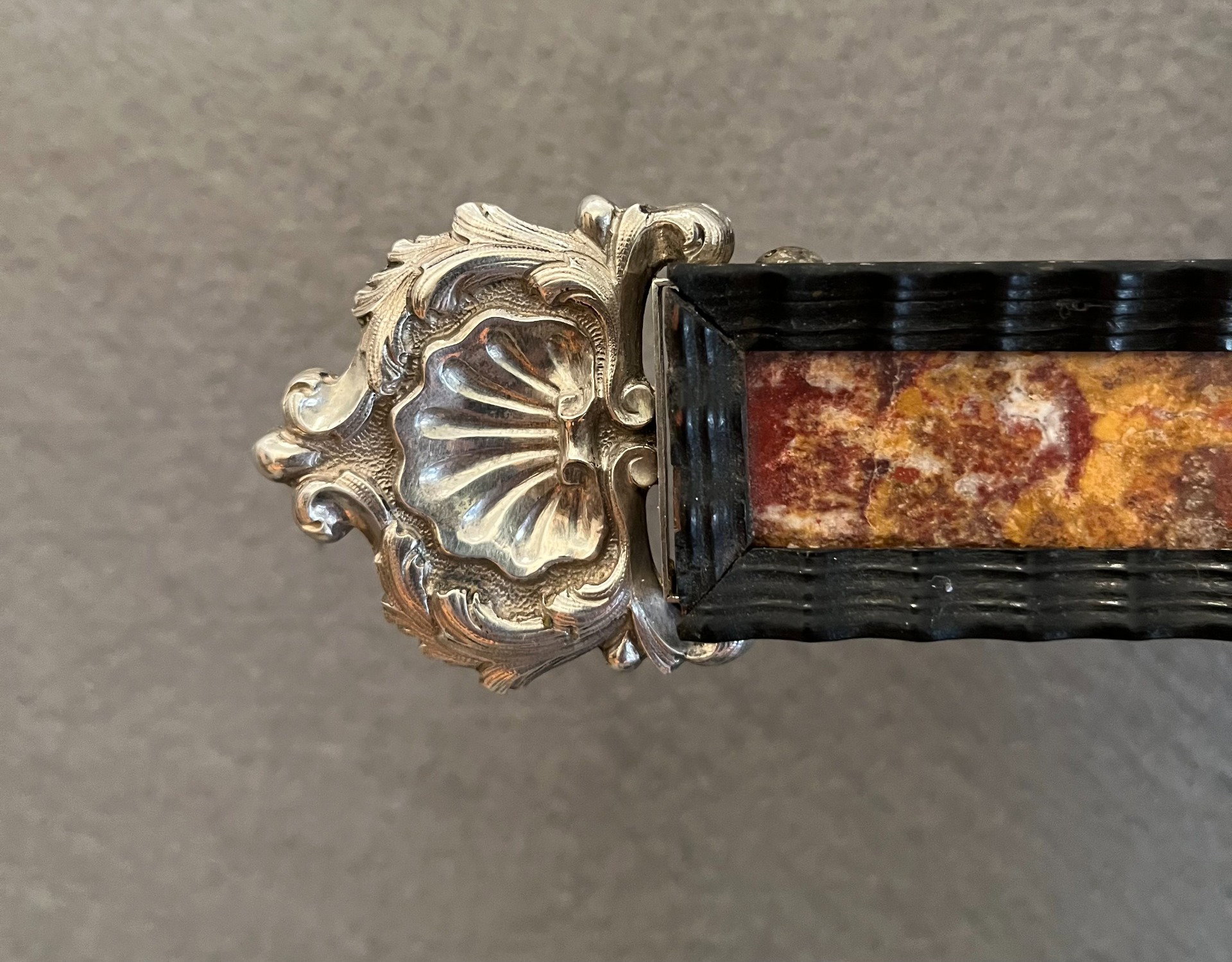
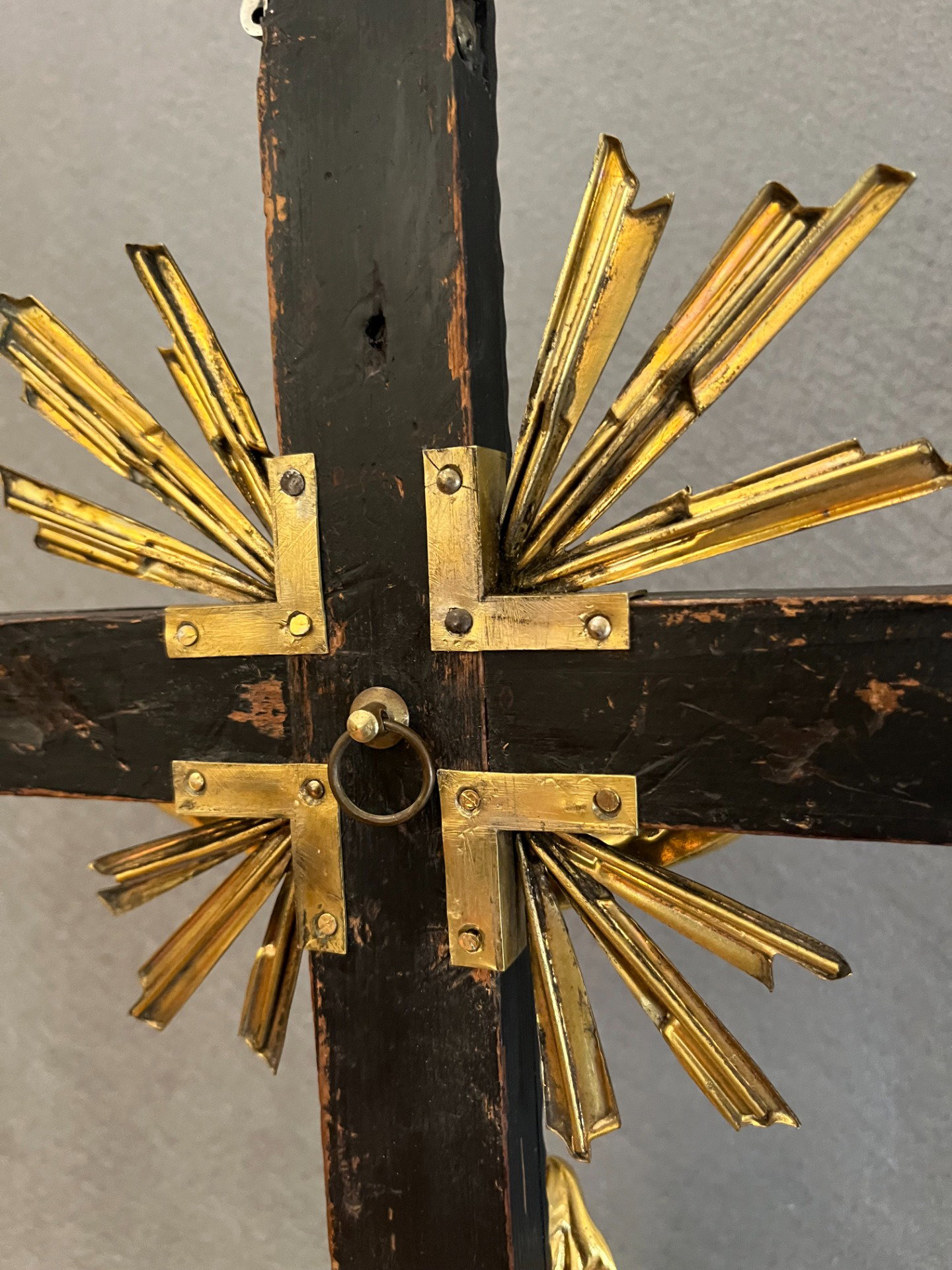
The structure of the cross features elegant alabaster veneer on the arms, enclosed within an ebony wood molding. The terminals are embellished with embossed silver corner pieces decorated with shell motifs and leafy volutes, ornamental elements typical of the Baroque taste. Behind Christ's head, a golden nimbus opens, a symbol of divine light and celestial glory.
The crucifix rests on a stepped octagonal base of ebonized wood, likely added but consistent with the type of liturgical and devotional furnishings of the 17th and 18th centuries.
For its stylistic characteristics and quality of materials, the work is comparable to the production of specialized workshops in central Italy, particularly from the Florentine or Roman sphere, active between the 17th and 18th centuries and known for the combined use of gilded bronzes, hard stones, and precious woods.
Technique: gilded bronze, alabaster, embossed silver, and wood
Dimensions: 69 x 41 cm (cross 56 x 41 cm)
Period: 17th - 18th century
Restoration: minor conservation interventions
Provenance: private collection