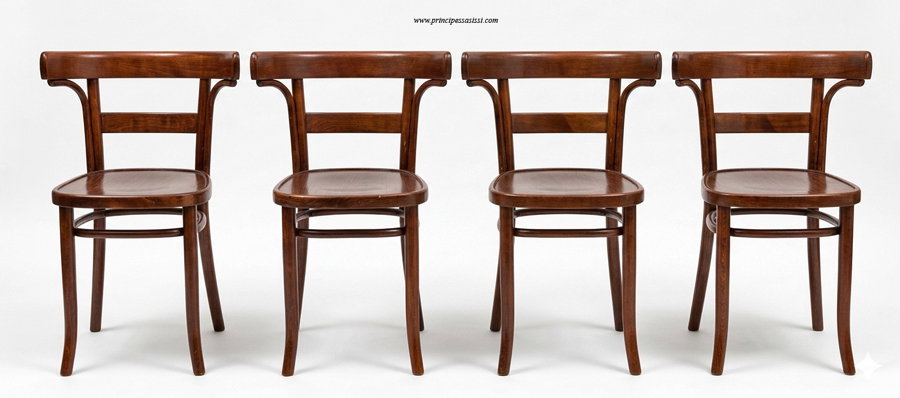
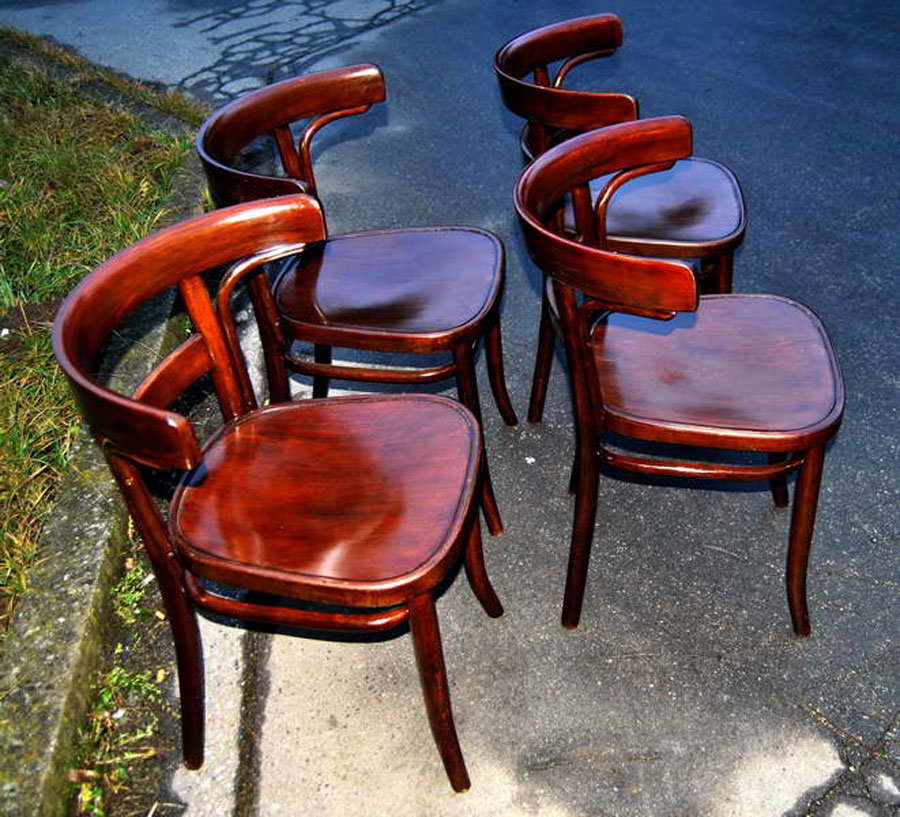
Rare set of four original and intact Michael Thonet theatre armchairs. Production c. 1880-85
Description:
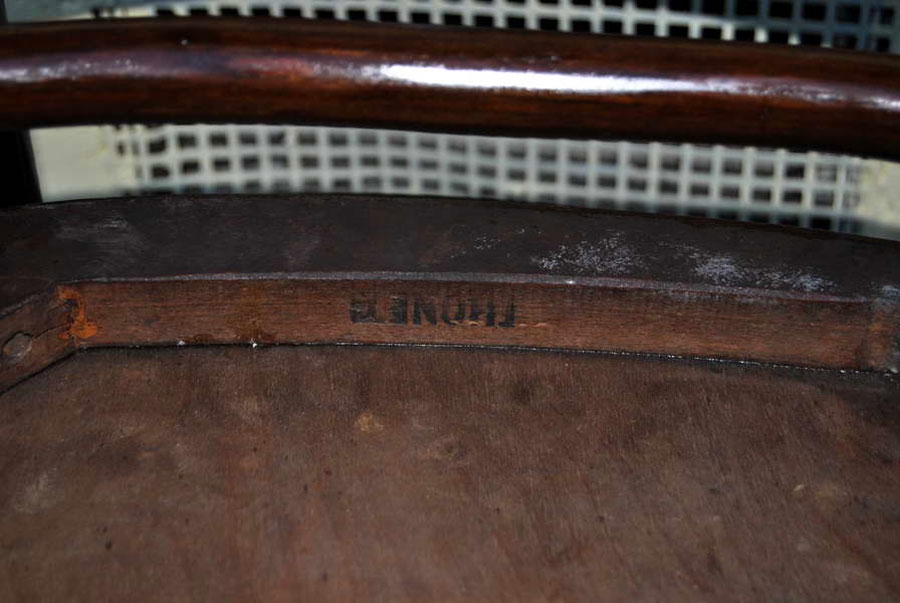
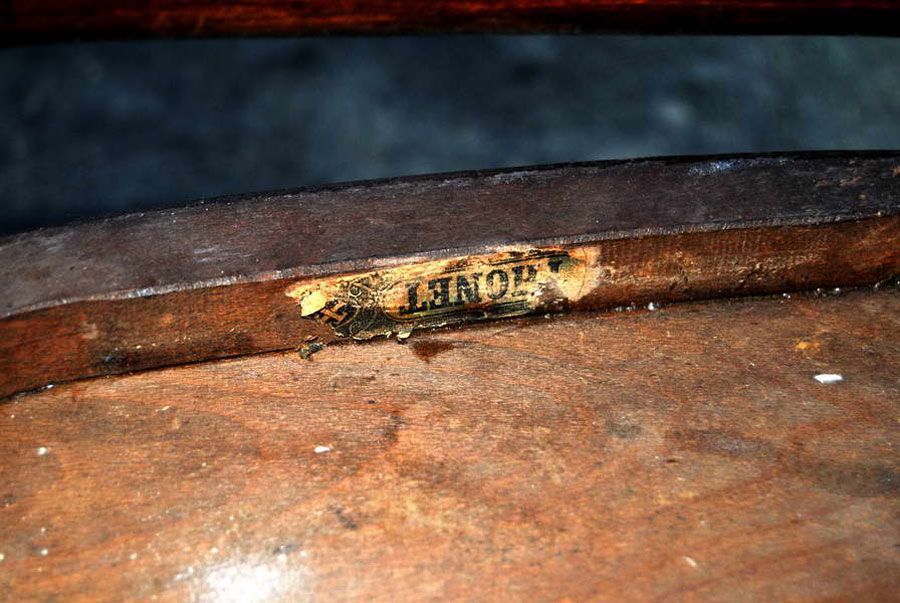
Rare set of four theatre armchairs by Michael Thonet from the production period c. 1880-85. Intact. Steam-bent beechwood. With original fire stamp and manufacturer's label. Max height 76, seat height 46, max width 41, max depth 50. Stained and natural steam-bent beechwood. French polished. Objects intact with fine French polish finish. Manufacturer's stamp and label. Vienna c. 1880.
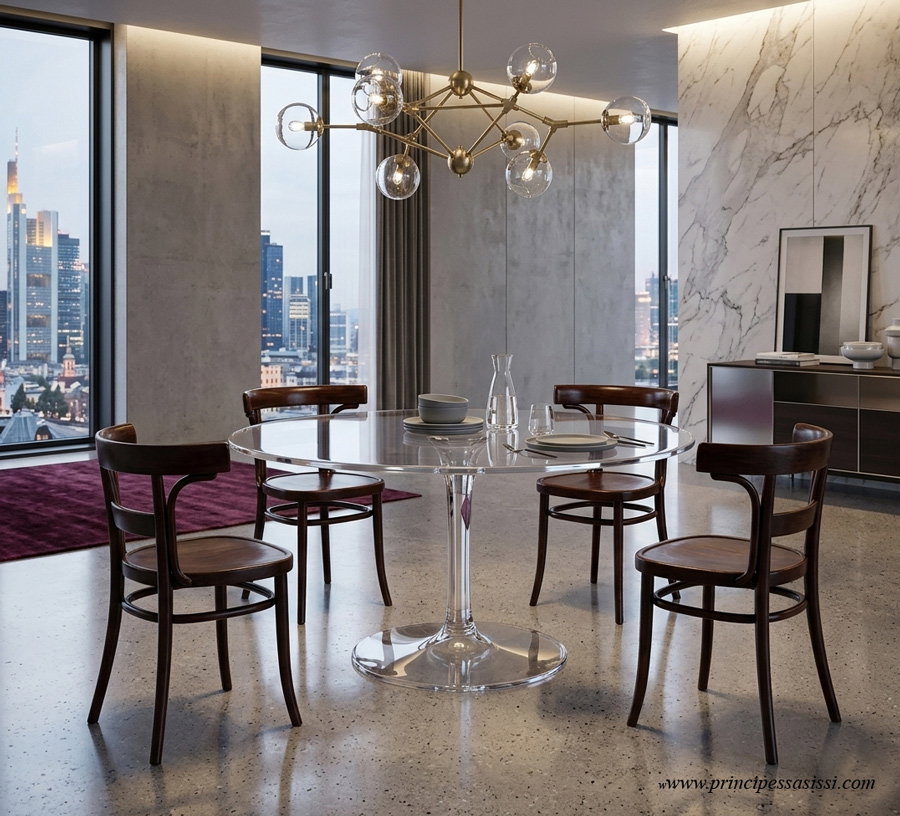
Observe the second photo, which is a hypothetical computer simulation where the pieces are imagined in a high-end modern interior design context. A striking "modernity" and abstraction emerge for pieces conceived 140 years ago. Adding a great touch of class and elegance to the ensemble. The high antique Viennese cabinetmaking of the early designers, including Michael Thonet, transcends time, even when compared to the lines of the most avant-garde contemporary furniture.
History of the prestigious Thonet manufacture.
Around 1830, Thonet conducted experiments with veneer strips softened in boiling glue before inventing "bentwood furniture." In 1842, Prince Metternich, impressed by the talent of the Rhenish cabinetmaker, summoned him to Vienna. Here, Michael Thonet, along with his sons, dedicated himself to creating parquet flooring and furniture for the Liechtenstein Palace and Schwarzenberg Palace. With the creation of chair no. 4 for Café Daum on Vienna's Kohlmarkt, he quickly conquered the Viennese café scene, laying the foundation for the development of furniture for "collectivities," i.e., public spaces. With the revolution of 1848, many people lost their jobs and found new employment in Thonet's new factories, where steam engines were in operation. Success arrived in 1859 when the company Gebrüder Thonet, founded by Michael's sons, presented chair no. 14 made of solid bentwood, the famous "Viennese Thonet chair," now considered an icon of design history. The Thonet brothers quickly understood the need to integrate new trends and technical developments into their work, adopting certain nascent ideas. From the outset, they presented their creations at the industrial and craft exhibitions of the time. The multilingual catalogs of Gebrüder Thonet helped promote the products abroad, and they soon became bestsellers. This led to the establishment of sales branches in neighboring countries as well as more distant ones, developing a worldwide distribution network for Thonet furniture.
The development of an innovative technique for bending solid wood (using hot steam), first by boiling the glue and then by steaming it using an autoclave, before giving it the desired curve in metal molds and making it rigid again by drying it in ovens. This latter process was patented in 1842. Michael Thonet died in Vienna in 1871, and his sons continued the business. The most valuable original Thonet furniture dates from the "artisanal and design" phase of the mid-nineteenth century. The first models, created around the mid-century first in Boppard and then in Moravia, are reference objects in the history of design and furniture, with museum relevance. Production from the last third of the 19th century remains of considerable artistic and collector interest, as production was still carefully done, limited in quantity, and used techniques similar to the prototypes. The Austrian Museum of Applied Arts in Vienna and the Thonet GmbH museum in Frankenberg, Hesse, house one of the largest collections of original Thonet chairs.
Our Thonet furniture gallery, click on the following link
Principessa Sissi ® antichità. High antique gallery in Udine
The gallery of our antique chairs
Principessa Sissi ® antichità. High antique gallery in Udine