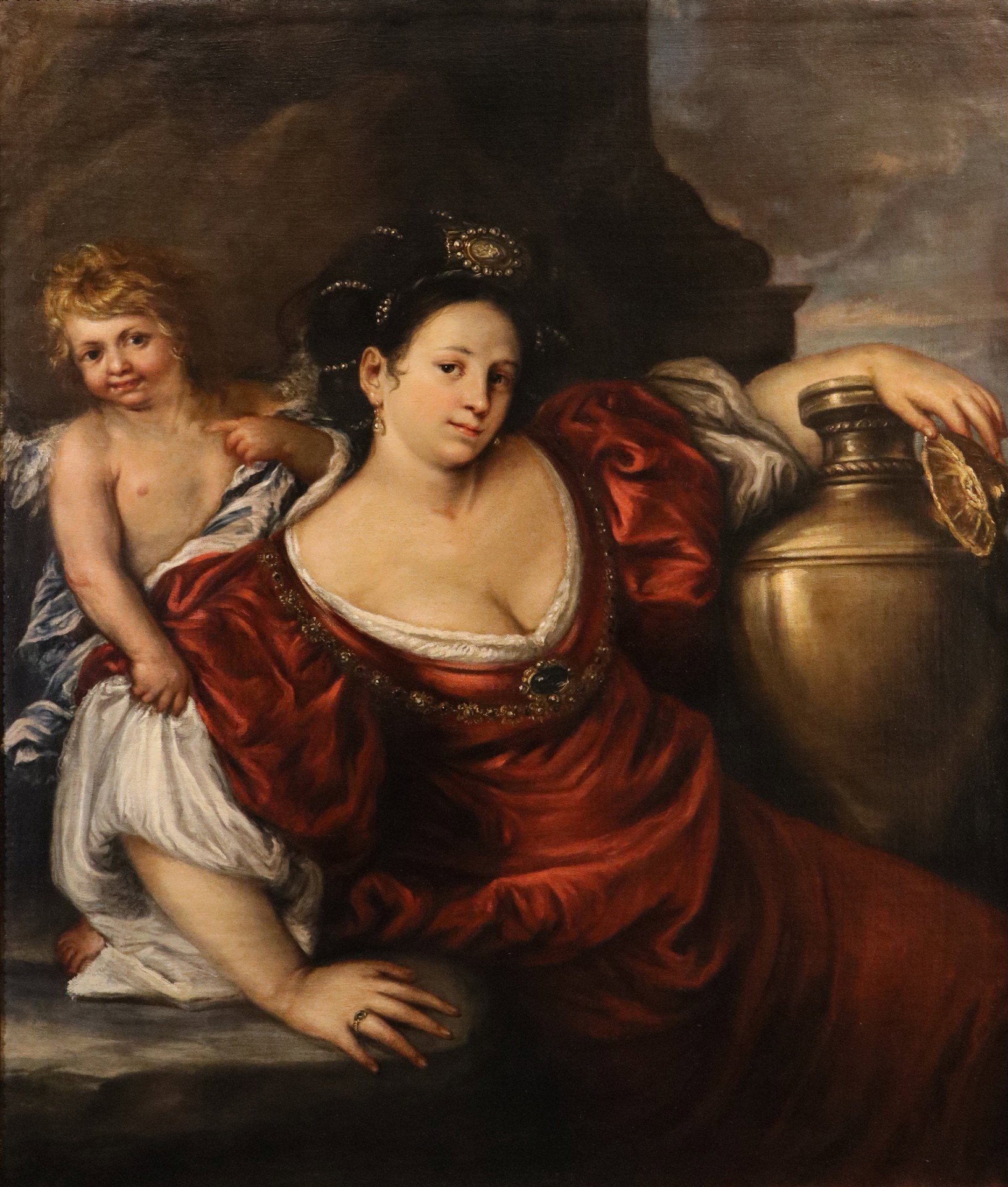
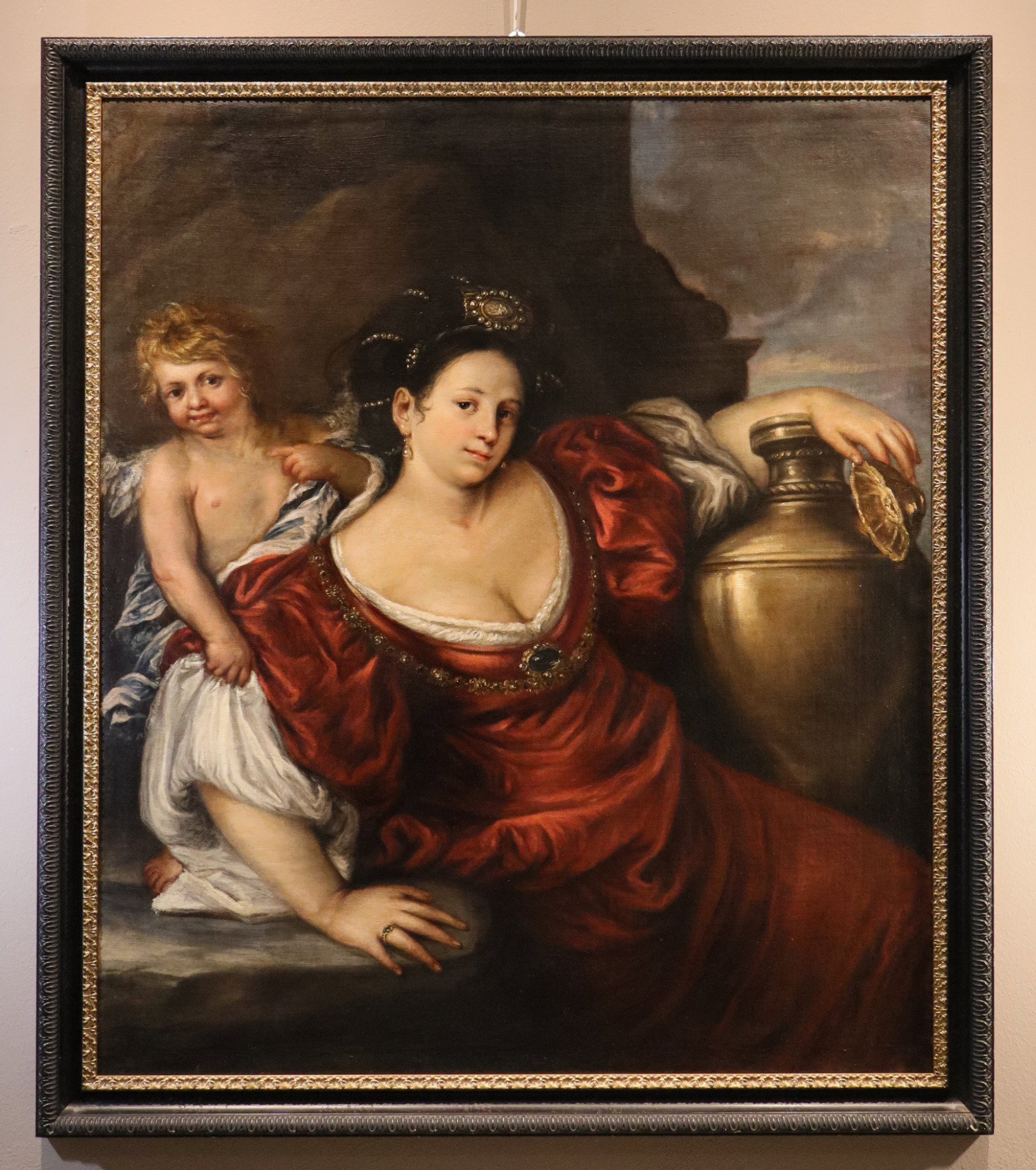
Queen Artemisia with Cupid, Francesco Cairo (Milan 1607 - 1665) workshop of
Description:
Francesco Cairo (Milan 1607 - 1665) workshop of
Queen Artemisia with Cupid
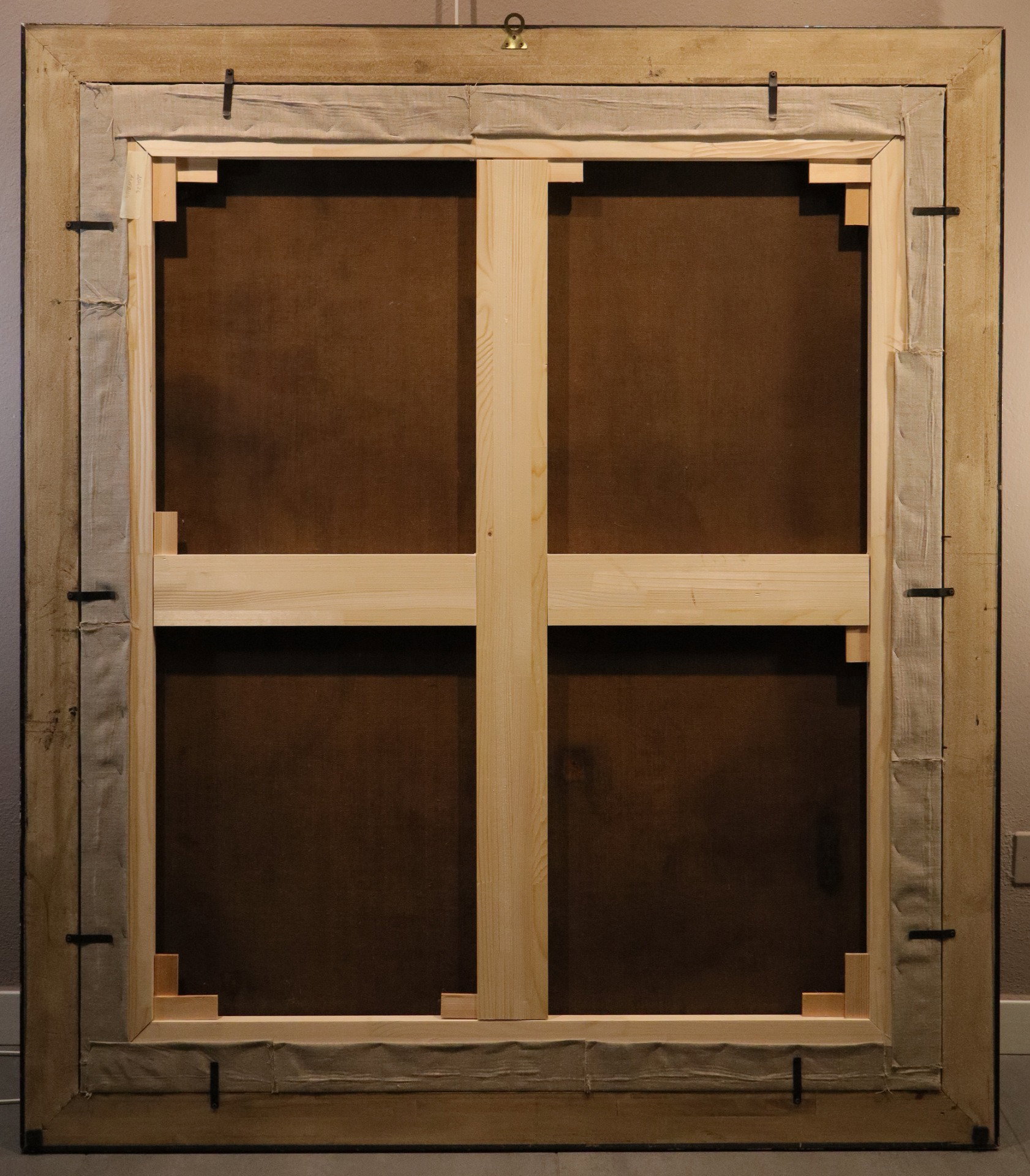
Oil on canvas
cm. 129 x 109 cm - Framed 143 x 125cm.
Reference bibliography: Francesco Cairo 1607-1665. - Exhibition Catalogue. - Publisher: Bramante Editore- Edizioni Lativa, Varese, 1983 (pp. 241-249, nos. 55, 63, 70, 110, 179, 183)
FULL DETAILS OF THE PAINTING (CLICK HERE)
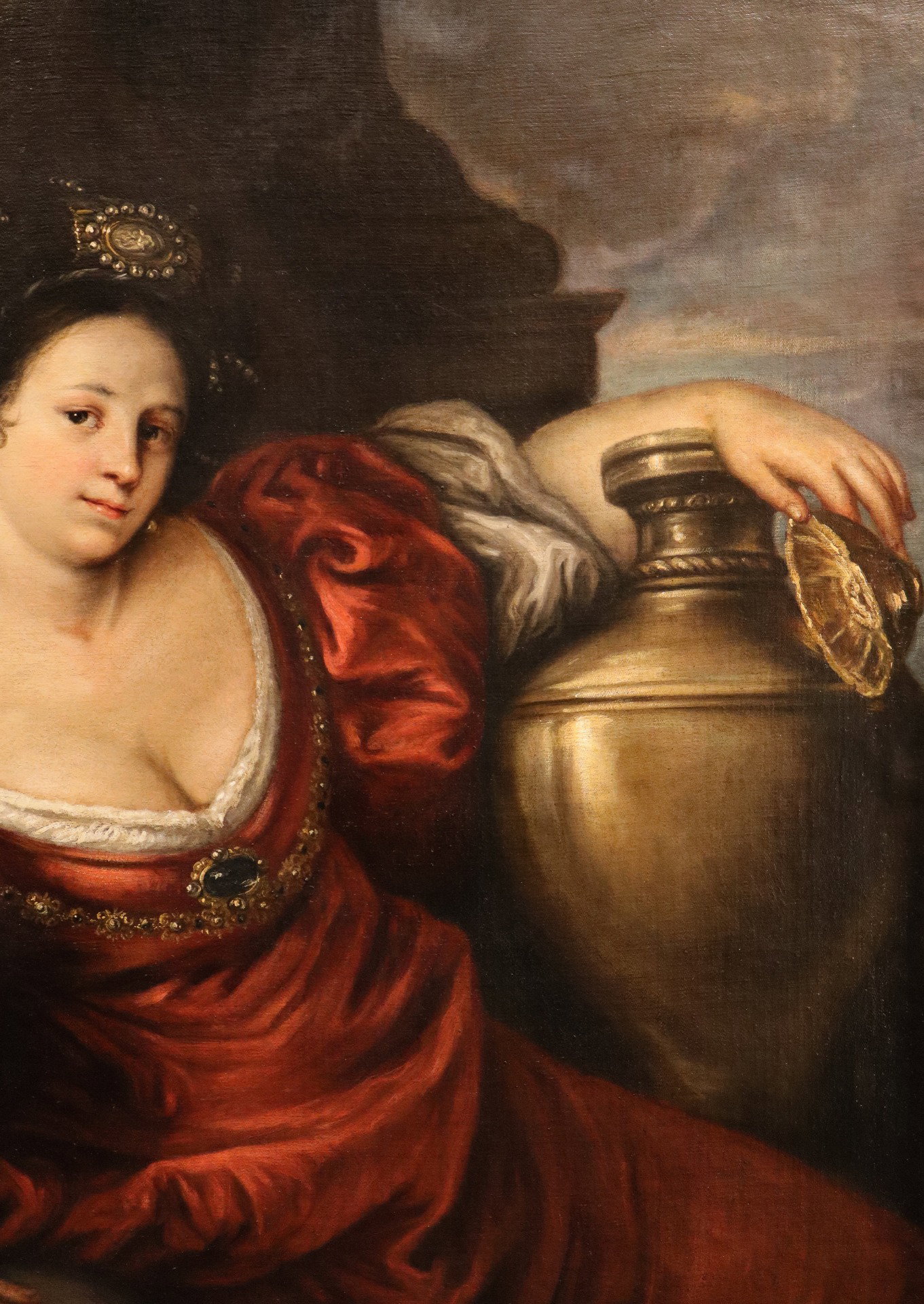
The extraordinary characteristics of expressive strength and theatricality typical of Lombard Baroque painting of the 17th century are expressed with all their intensity in this splendid painting, which depicts the Greek sovereign Artemisia II of Caria, devoted wife and at the same time sister of King Mausolus (352 BC).
Ancient historiography narrates that, upon the death of her consort, she visibly managed the kingdom's power for several years, honoring her husband with the construction of the mythical Mausoleum of Halicarnassus, one of the Seven Wonders of the ancient world. According to myth, the queen decided to become the human tomb of the deceased herself, swallowing his ashes so that he could continue to live in her, as an ultimate gesture of love, a sort of allegory of eternal marital love.
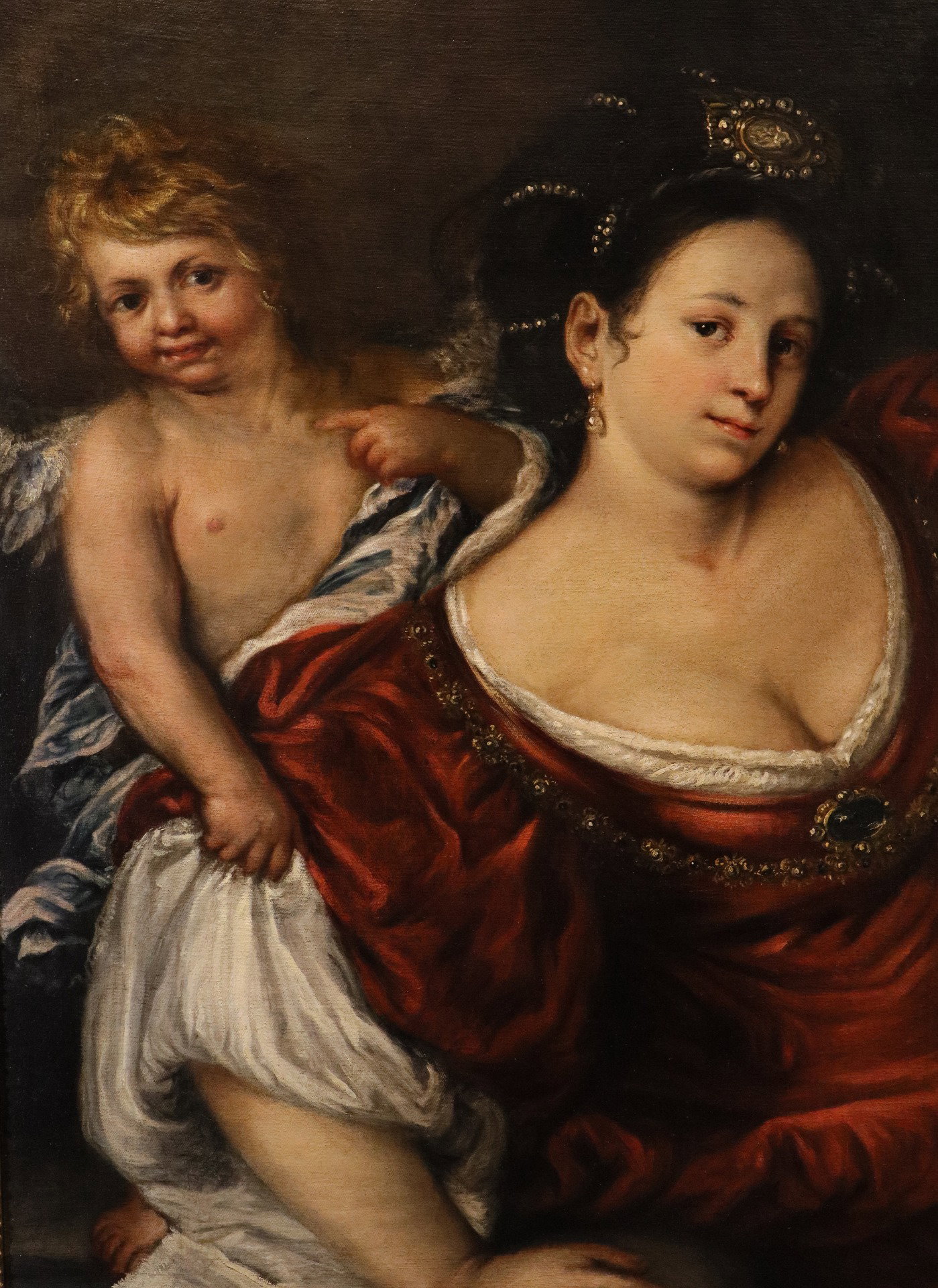
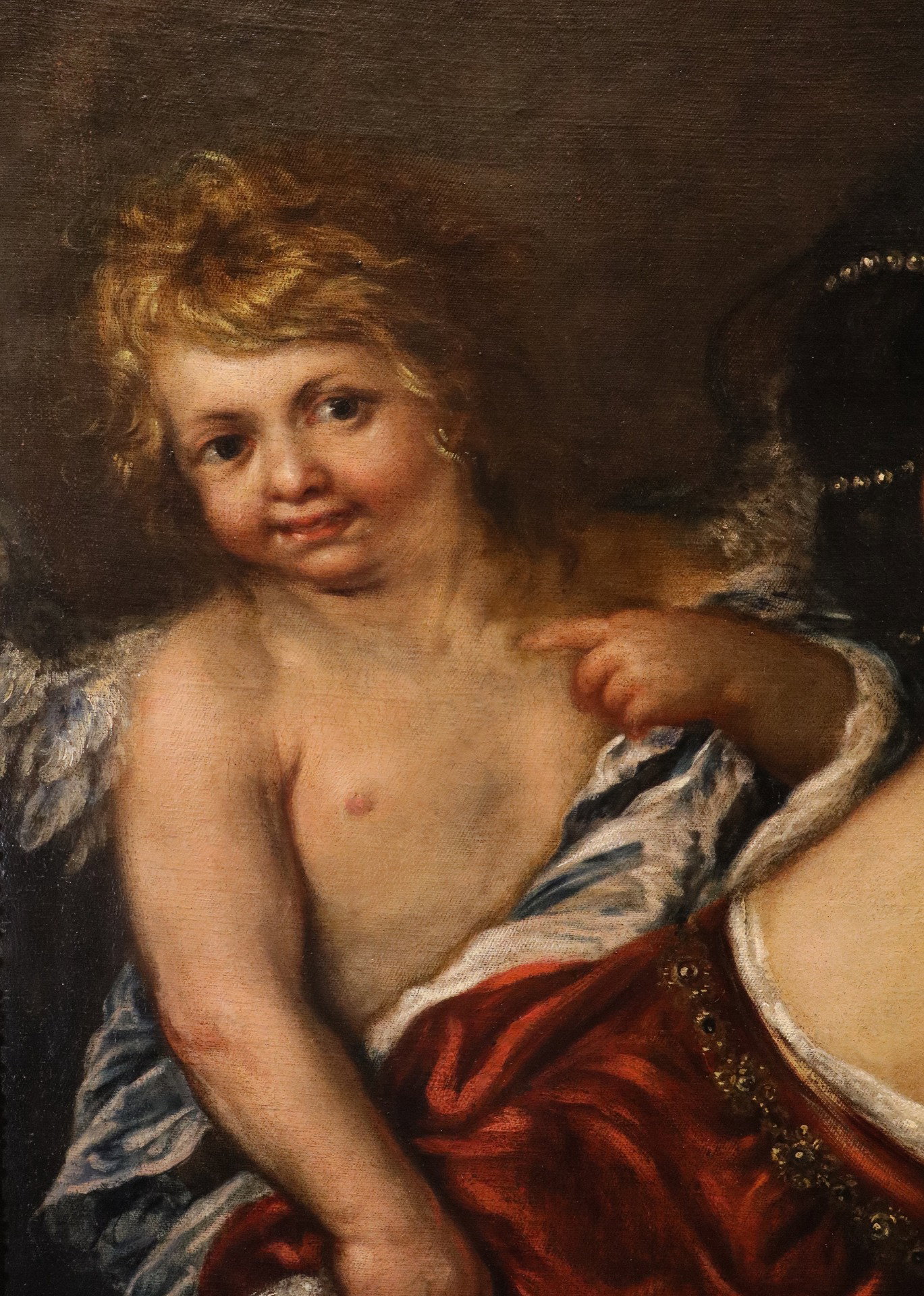
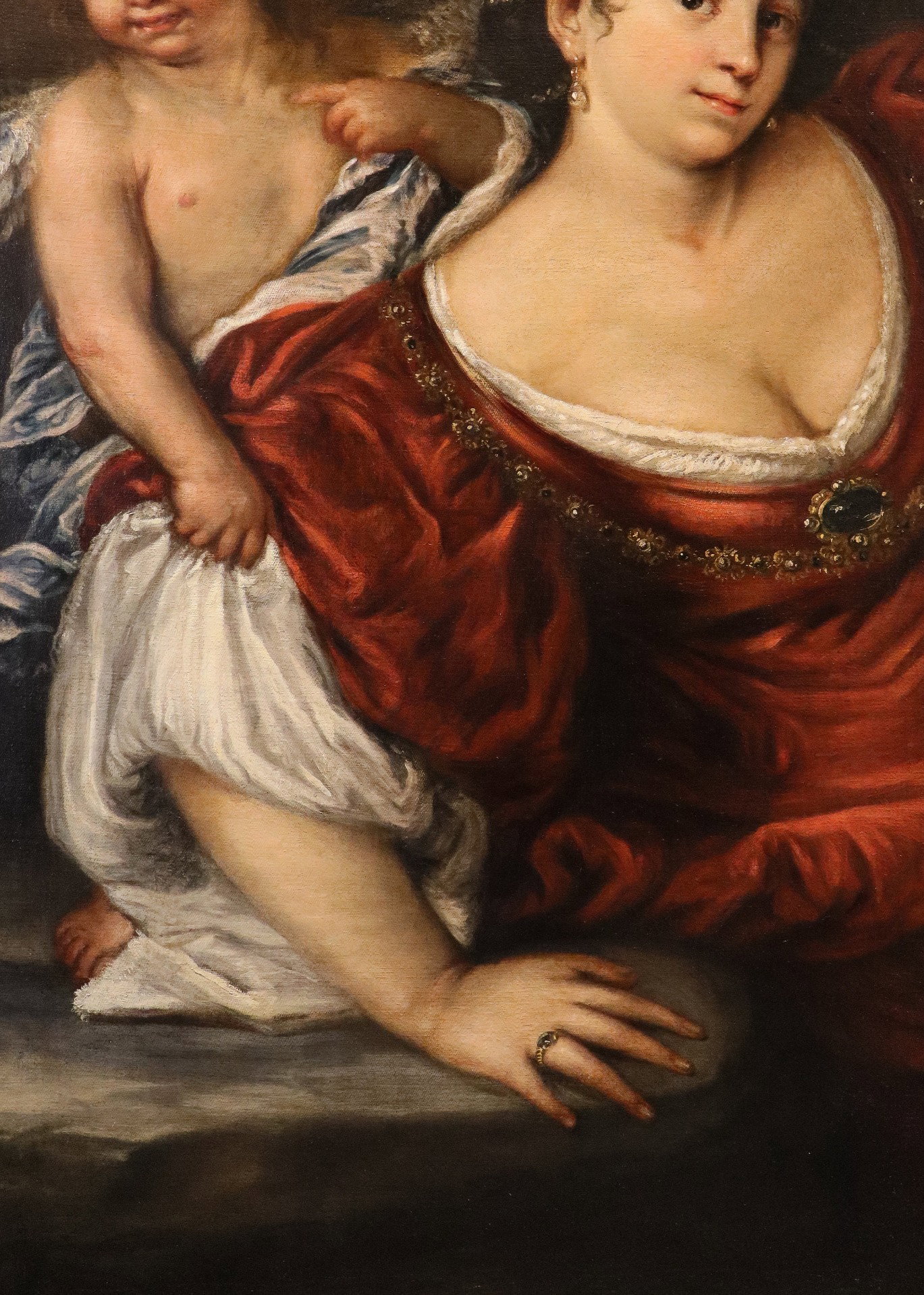
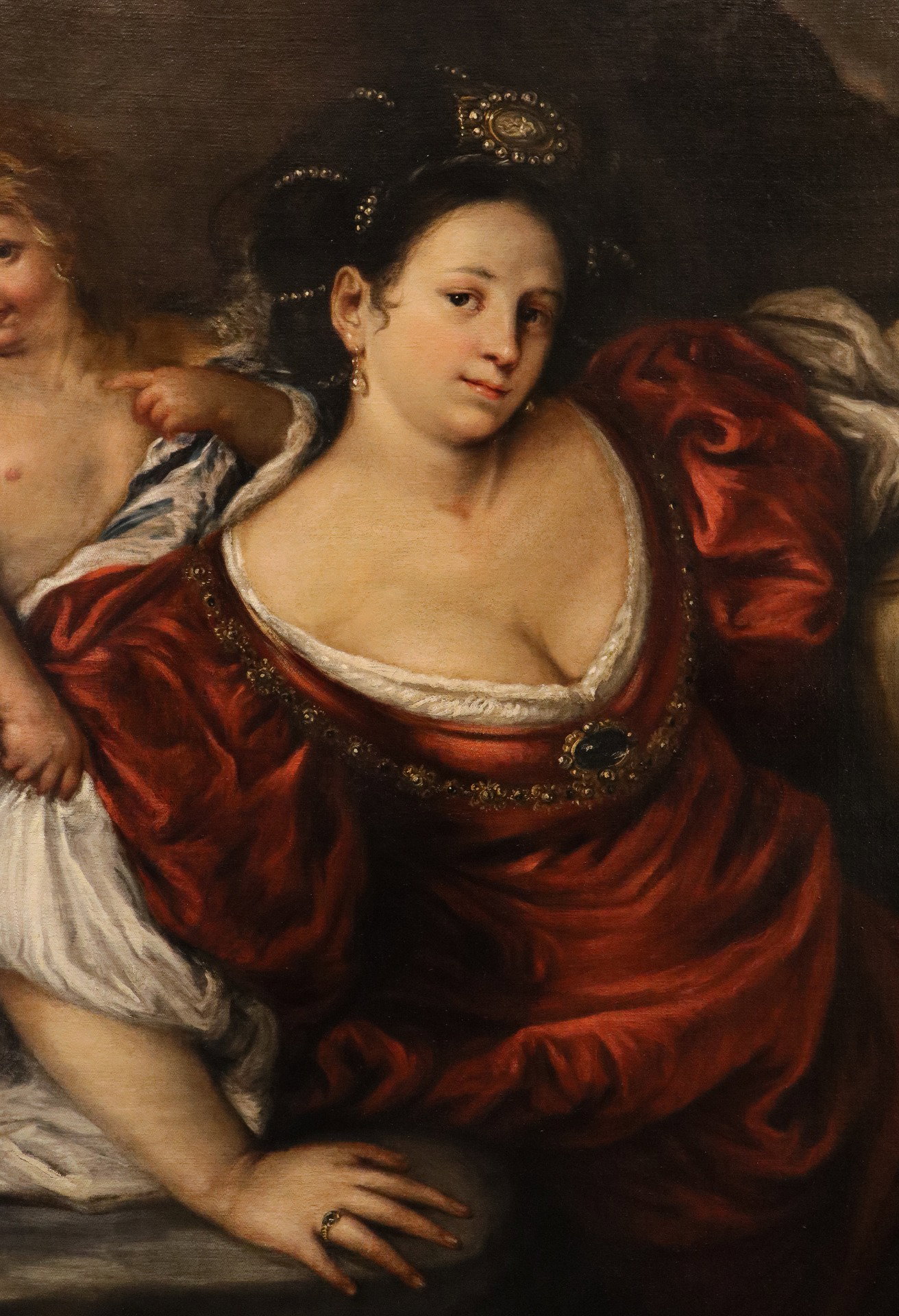
A small Cupid has been portrayed by her side, trying to distract her from her melancholic thoughts.
The young woman, extremely charming, dominates the scene with her regal figure, depicted in royal attire and accessories as she turns her gaze directly towards the viewer, and prepares to embrace the precious urn and the cup, which will become her identifying attributes.
Thanks to this extreme act, the heroine was represented in Baroque iconography as a model of marital fidelity and virtuous behavior: Artemisia fits into the thematic vein of 'exempla virtutis' (models of moral and Stoic virtue, which include other female figures such as Lucretia, Cleopatra, or Judith), in which women embody a tragic and earthly dimension, departing from classical and idealized academic beauty.
In 17th-century painting, moreover, stories of female heroism become a pretext for the sensual representation of the body, suggesting an erotic reading alongside the moral one offered by the theme. These women, always beautiful, were often depicted in ambiguous attitudes, as was fashionable at the time and delighted patrons.
A favorite theme of Italian Baroque painting, this canvas offers a dramatic yet intimate interpretation, carried out with the scenic mastery of a painter who becomes an "able director of human sentimental drama."
Our canvas, of beautiful craftsmanship, reprises the famous 'Artemisia with Cupid' by the 17th-century painter Francesco Cairo, preserved at the Pinacoteca Malaspina (Civic Museums of the Visconti Castle of Pavia), coming from the prestigious Milanese collection of Carlo Giuseppe di Firmian.
It is considered the original version by Francesco Cairo (dating from around 1648-1650) later replicated, also with the help of his workshop, in numerous versions.
As indicated in the catalog of the art exhibition dedicated to the artist Francesco Cairo (Francesco Cairo 1607-1665. Exhibition Catalogue. Publisher: Bramante Editore- Edizioni Lativa, Varese, 1983), there are six versions that differ from each other with small variations (pp. 241-249, nos. 55, 63, 70, 110, 179, 183), such as the absence of Cupid in no. 110 of the catalog, or no. 70, larger in size, which should correspond to the 'print proof' of the original prototype that remained in the painter's studio.
The painting we are offering, which does not correspond to any of the six versions mentioned above, is a further variation of the subject which, due to its quality of execution, psychological intensity, and period, is in our opinion easily attributable to an author from the workshop who took up the original prototype with irrelevant variations.
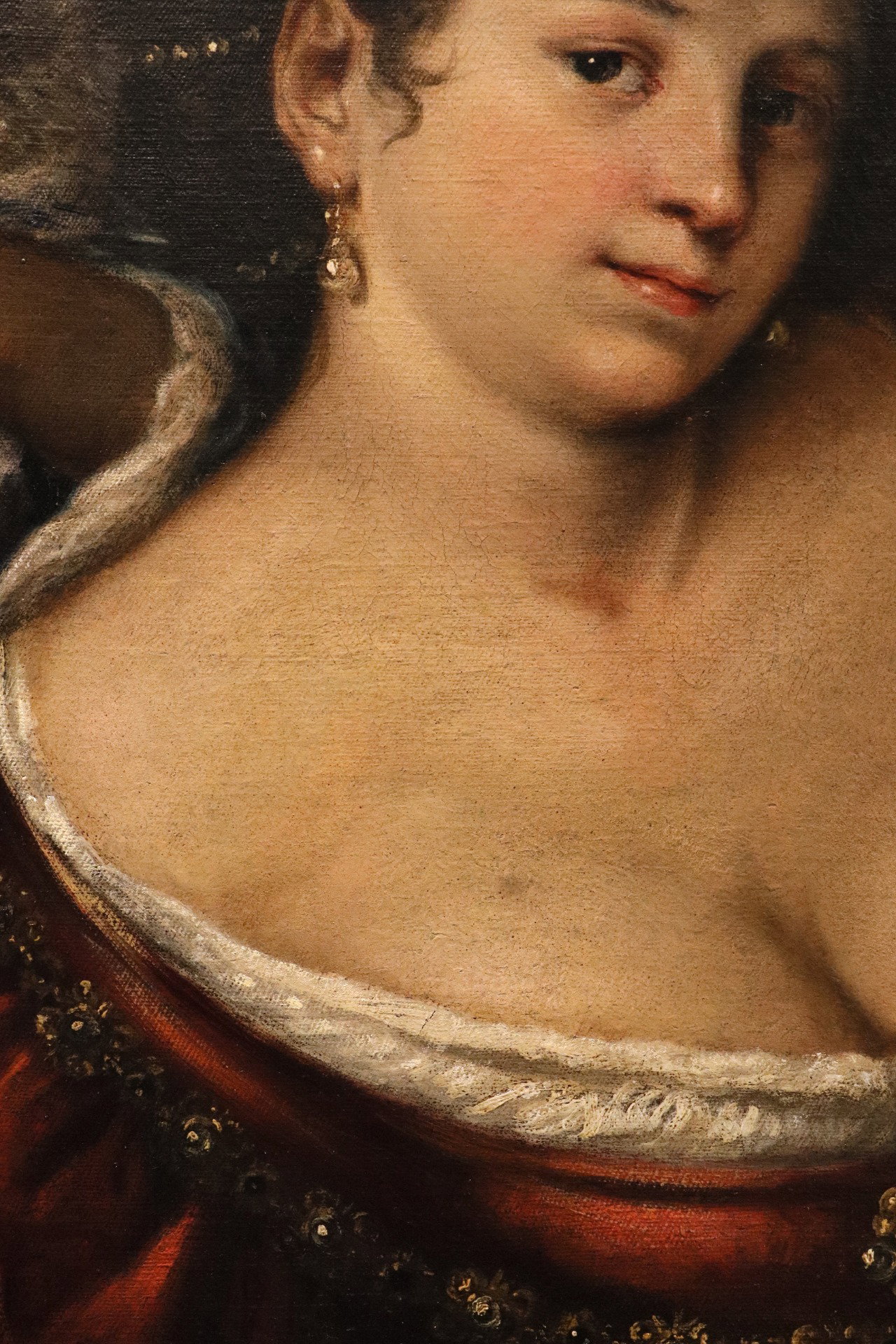
Every detail of the composition reflects Cairo's poetics, with a style that blends Venetian and Flemish influences: the sensuality of the queen and the sumptuousness, looks towards the Baroque Genoa of Rubens and Van Dyck, while the dense and synthetic brushwork recalls the lesson of Titian and Veronese, combined with the Caravaggesque opulence typical of the 17th century.
Francesco Cairo, also known as Cavalier Cairo (Milan, 1607 - 1665), was an important Italian painter of the 17th century, trained under the influence of Morazzone, he distinguished himself by a dramatic style, imbued with chiaroscuro and strong pathos.
This composition in particular is undoubtedly one of the highlights of his studio production, with its red drapery, jagged and textured, which envelops the opulent forms of the woman, the almost brazen amplitude of the pose, and the winking cupid.
ADDITIONAL INFORMATION:
The painting is complete with a pleasant frame and is accompanied by a certificate of authenticity and a descriptive iconographic sheet.
We handle and organize the transport of purchased works, both for Italy and abroad, through professional and insured carriers.
Should you wish to see this or other works in person, we will be pleased to welcome you to our new gallery in Riva del Garda, Viale Giuseppe Canella 18. We look forward to seeing you!
Contact us for any information or to arrange a visit, we will be happy to answer you.
Follow us also on:
https://www.instagram.com/galleriacastelbarco/?hl=it
https://www.facebook.com/galleriacastelbarco/