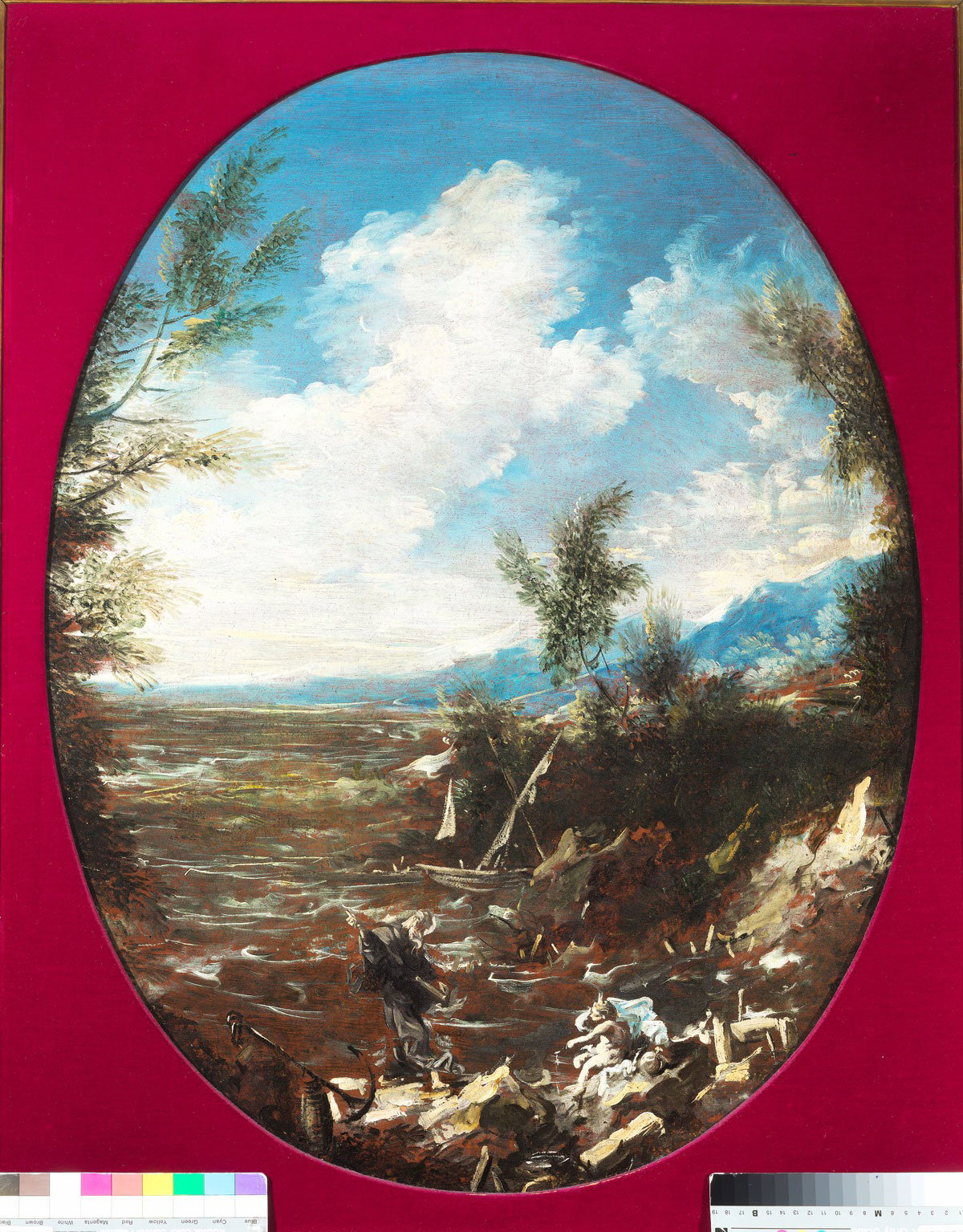
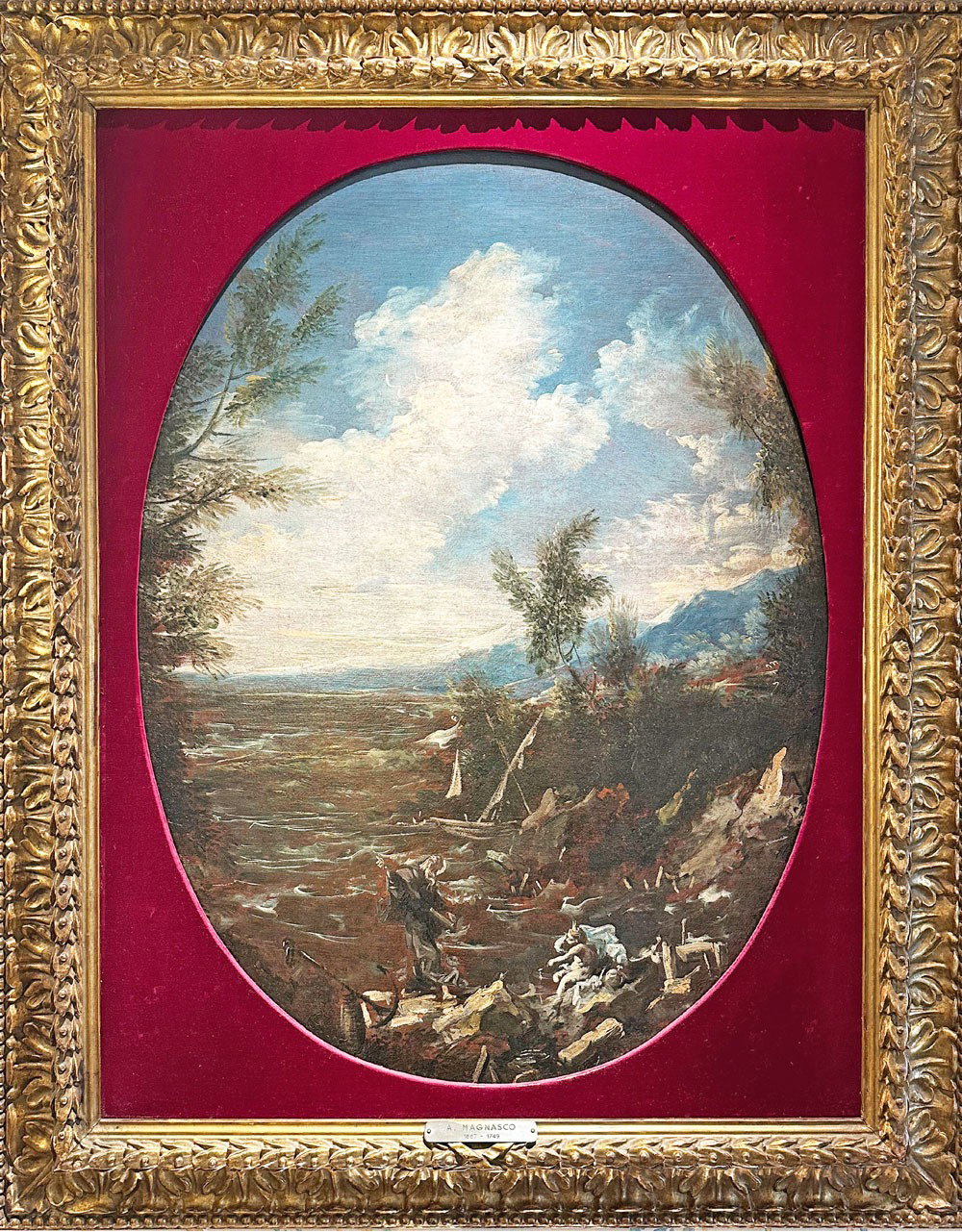
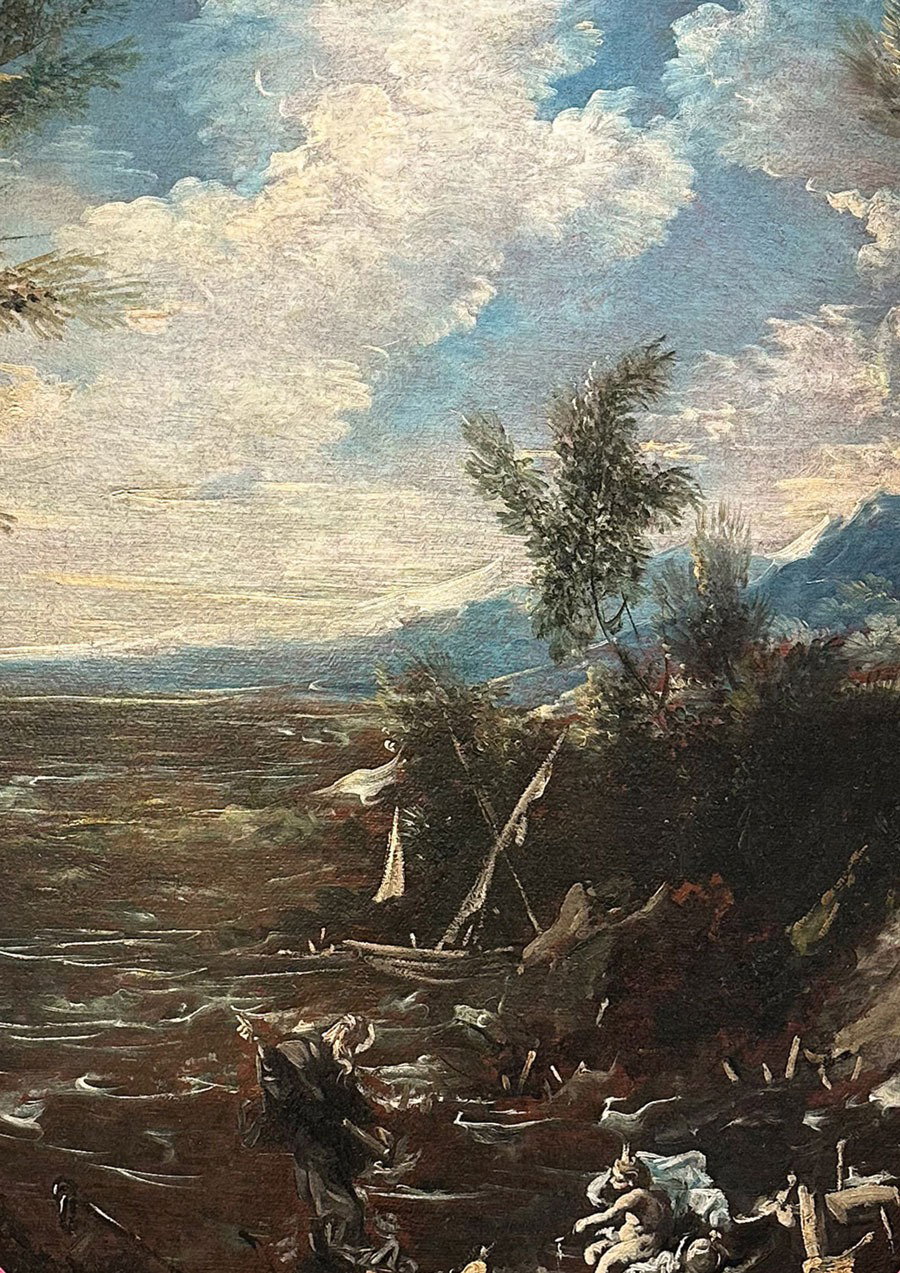
The oval-shaped painting by Magnasco, known as Lissandrino (Genoa, 1667 Milan, 1749), tackles a subject dear to Christian tradition: the meeting of Saint Augustine with the Child intent on pouring water from the sea, an allegorical episode linked to the mystery of the Trinity. The work is distinguished by the atmospheric quality of the landscape, rendered with a free and vibrant touch, in which the luminous sky, the moving clouds, and the dark, jagged shore become the true protagonists of the composition. The small figures of Saint Augustine and the Child, depicted with a few rapid strokes, are naturally integrated into a vision of strong poetic suggestion. According to the attached text, direct analysis of the painting and its favorable state of conservation allow the work to be entirely attributed to Magnasco's hand, recognizing in it the quick and nervous brushwork that is one of the most typical characteristics of the Genoese master. In this sense, the painting is fully situated within Lissandrino's highest production, where narrative invention and executive freedom achieve a balance of particular intensity. Height 95.5 cm, width 73.5 cm.