Bartholomäus Spranger (Antwerp, 1546 – Prague, 1611) workshop
Aristotle and Phyllis
Oil on canvas (64 x 54 cm – Framed 79 x 72 cm.)
Full details of the work (click HERE)
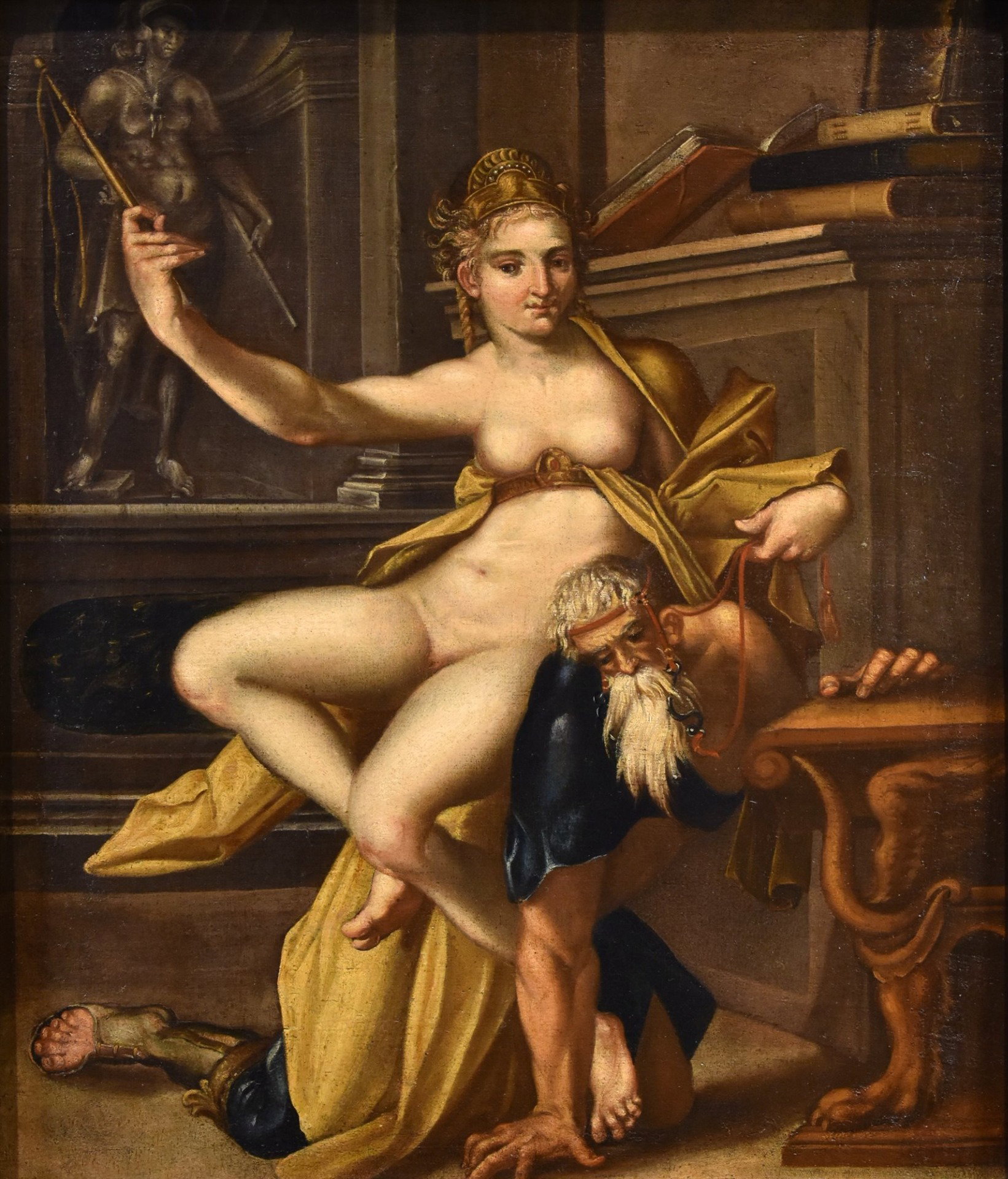
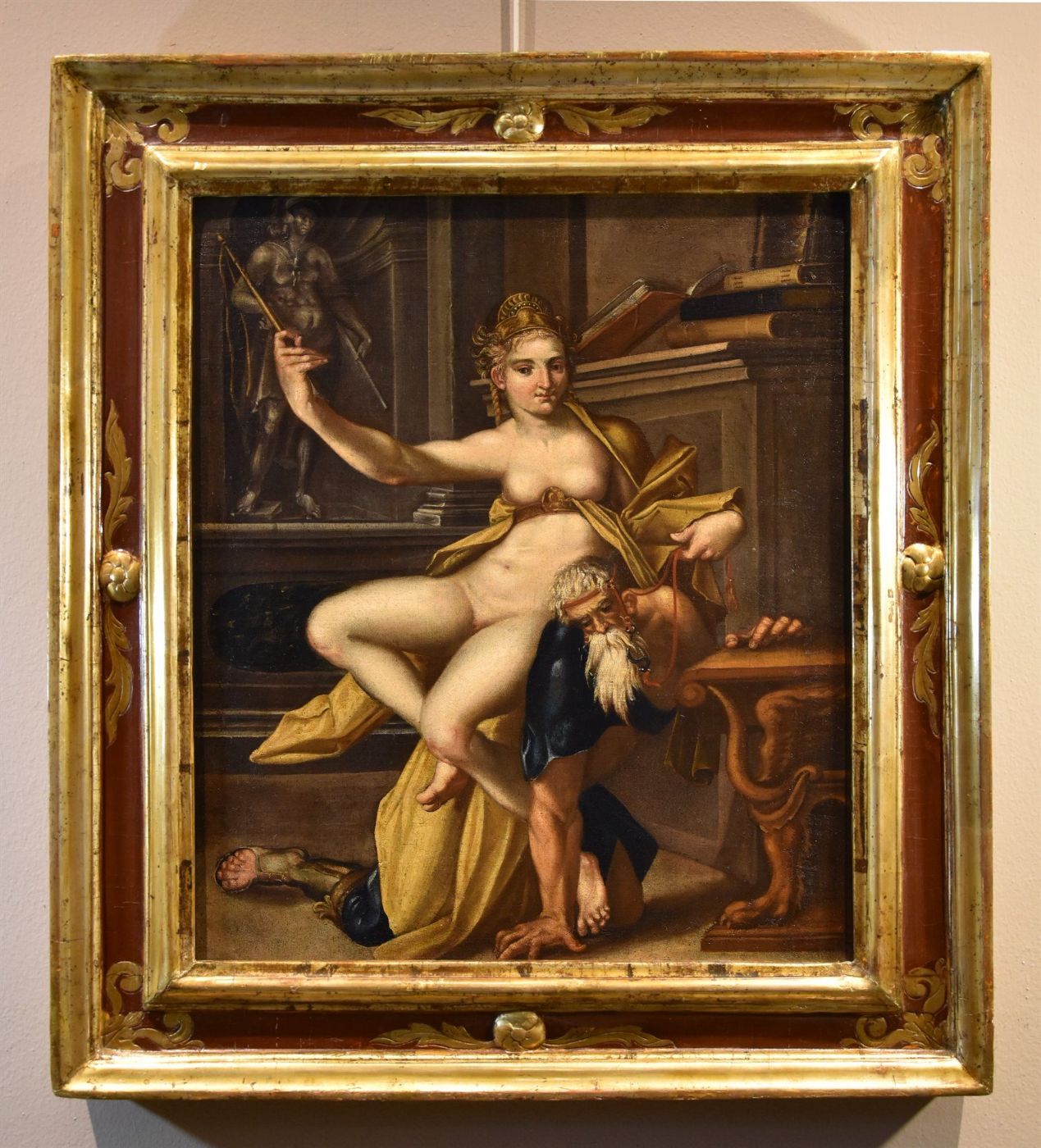
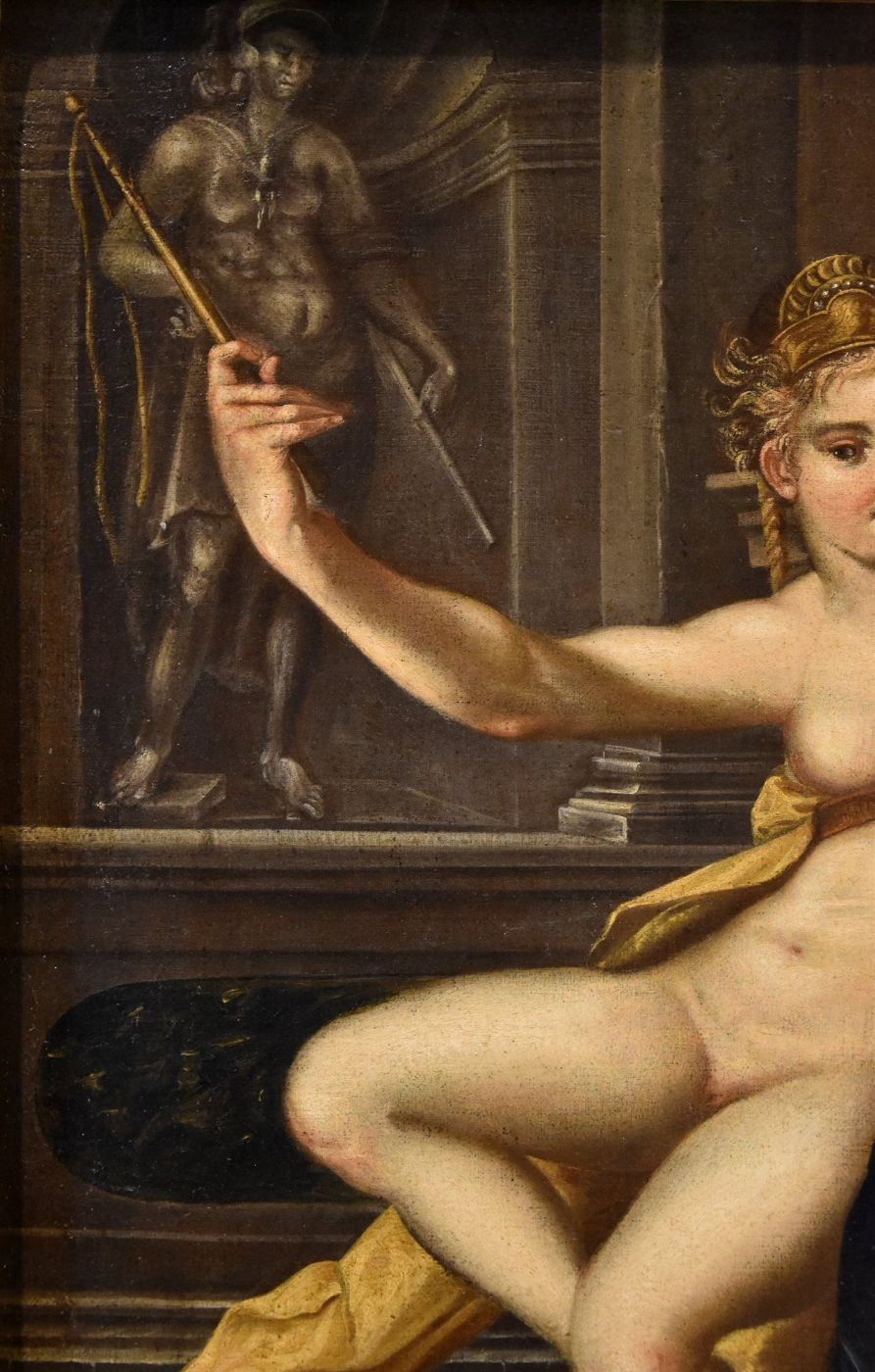
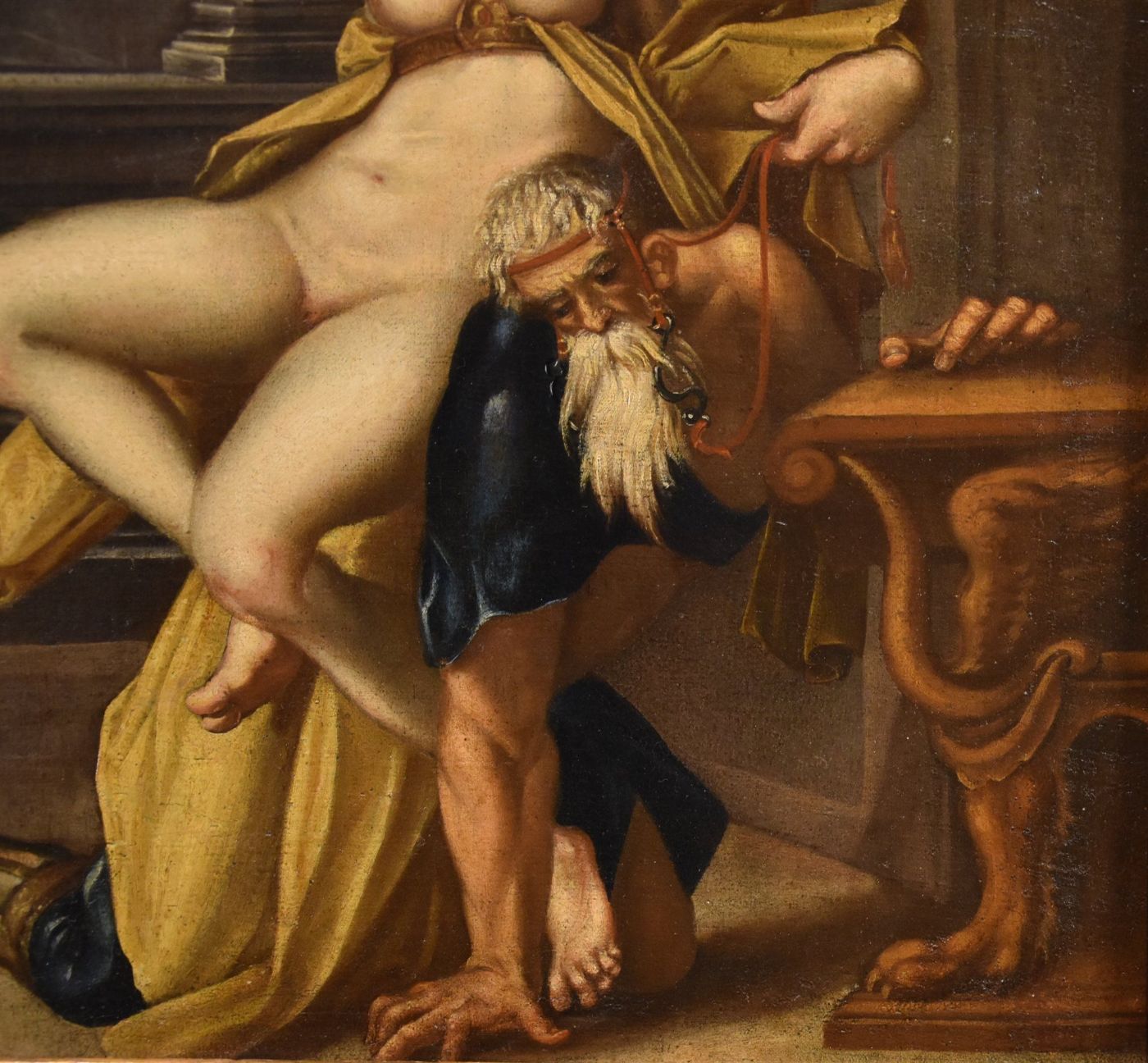
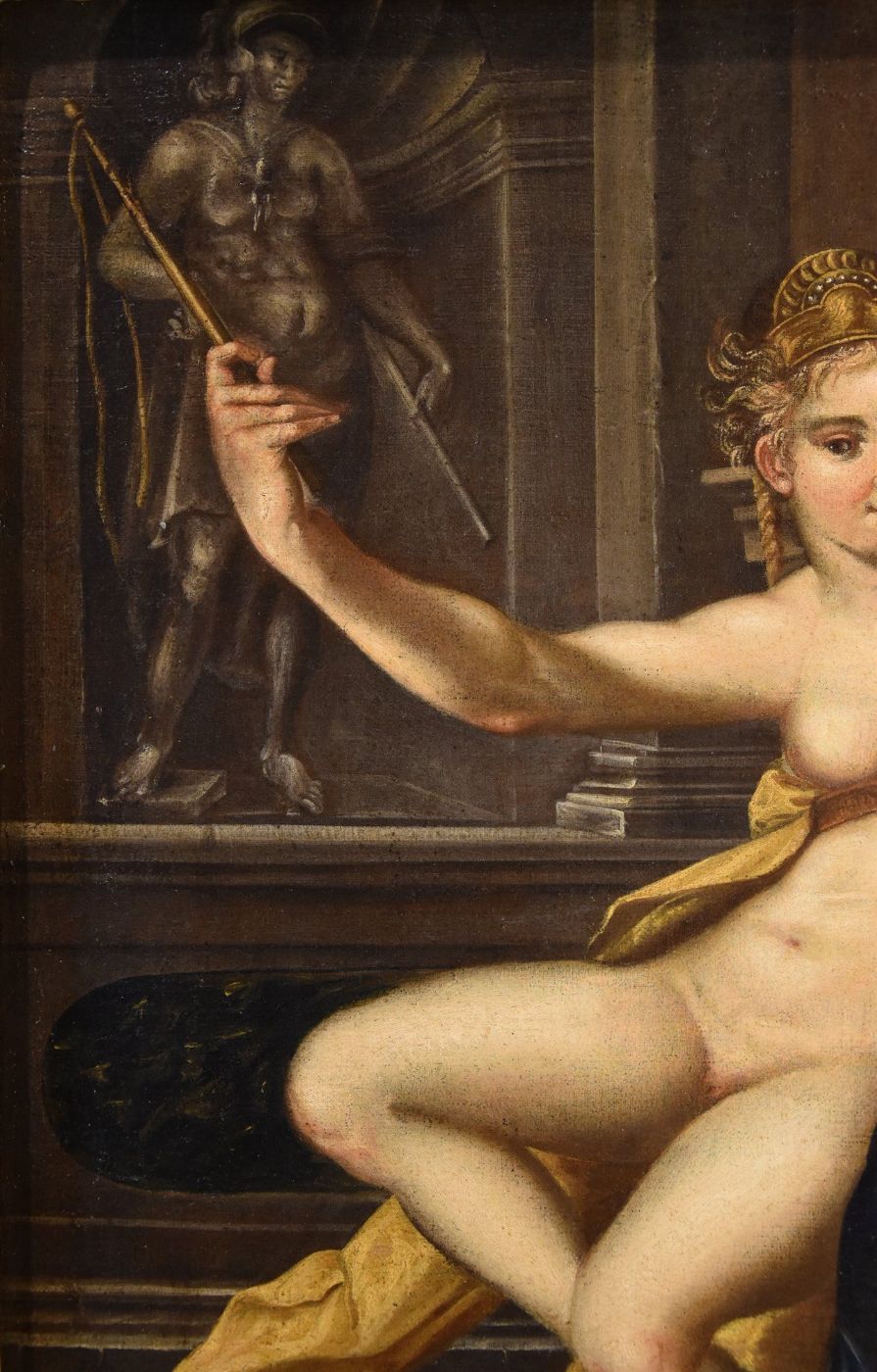
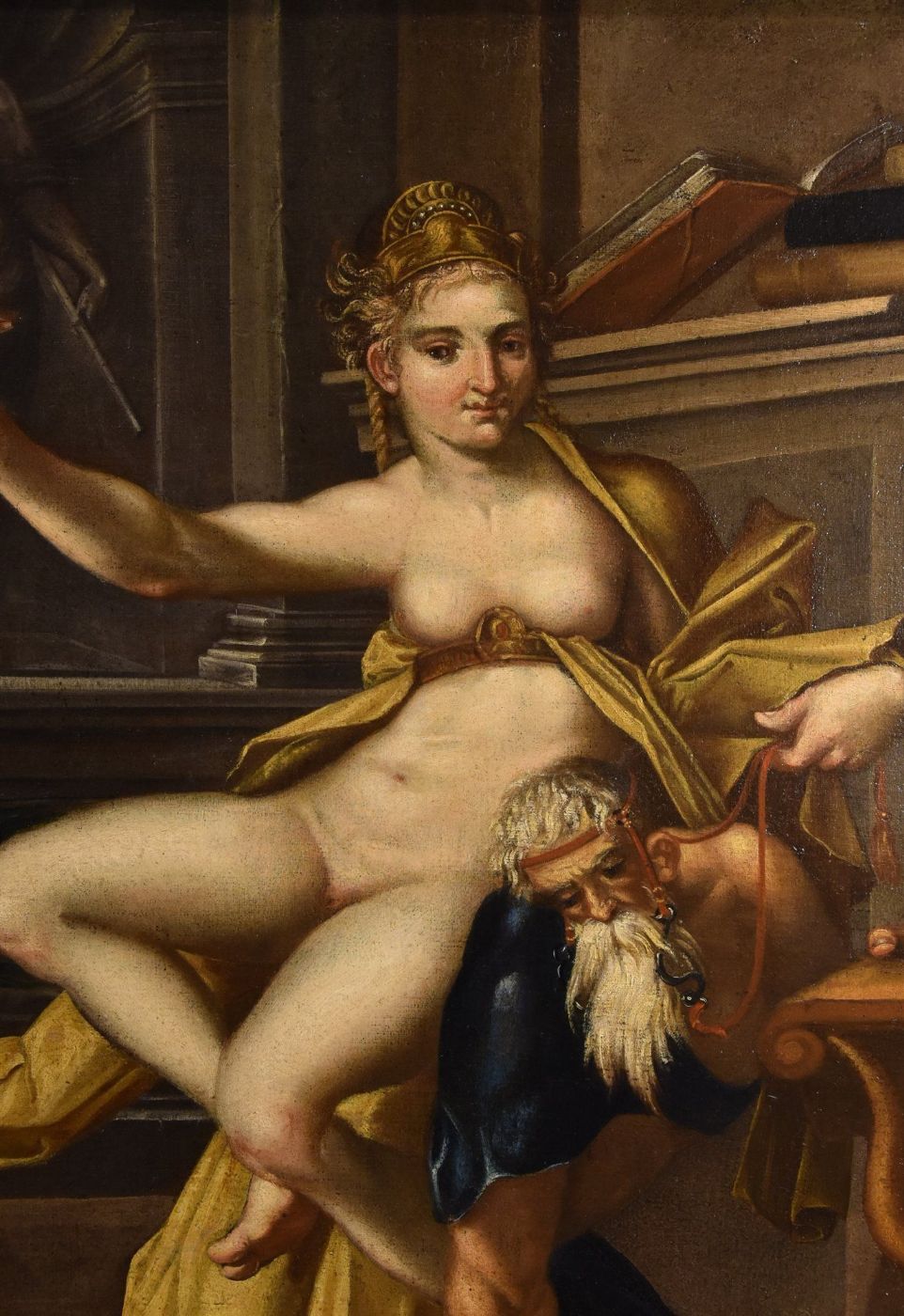
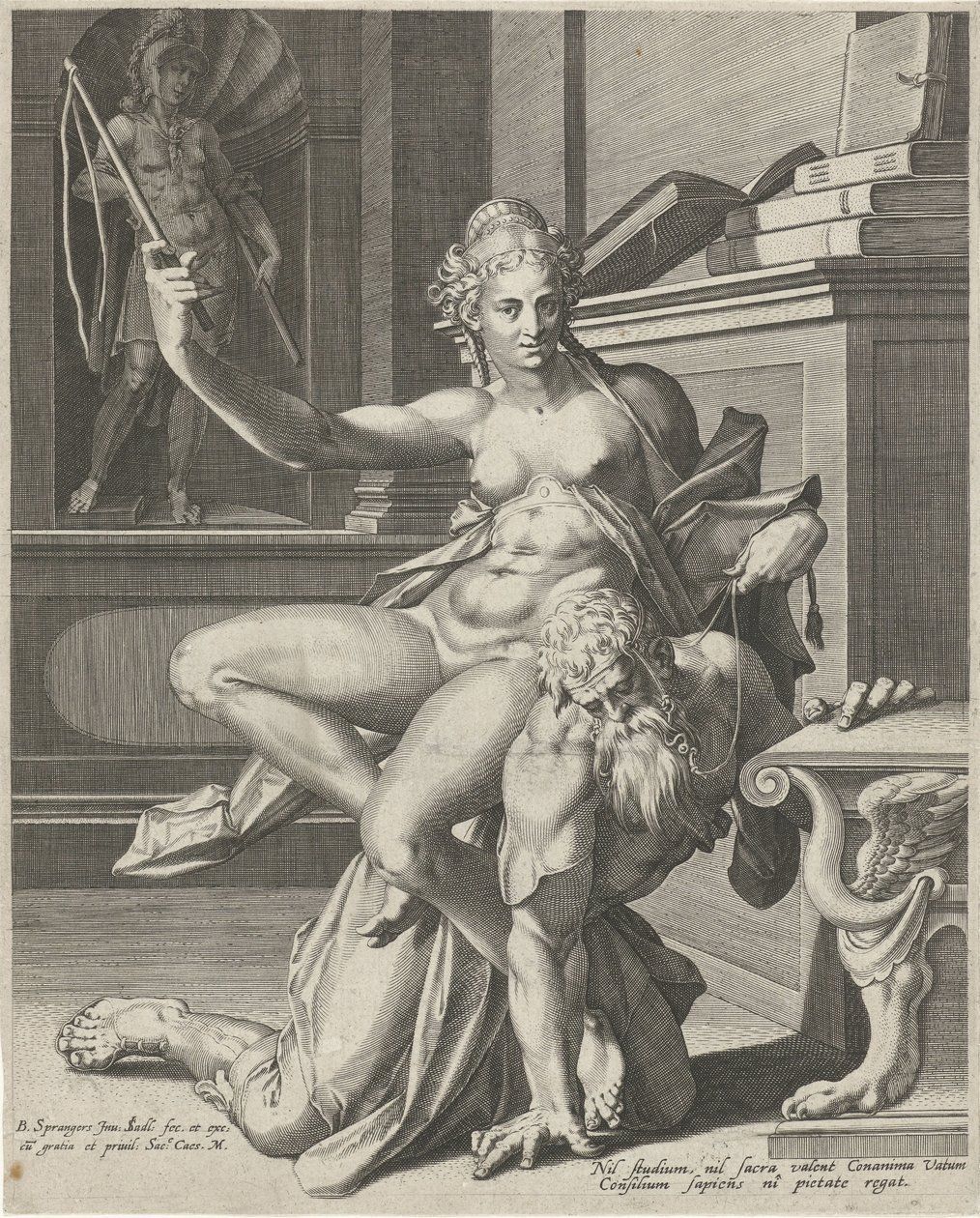
The curious subject of the proposed painting, quite widespread between the Middle Ages and the Renaissance, draws inspiration from the medieval legend that tells how the philosopher Aristotle, known for his wisdom, was seduced and subjugated by the young and beautiful Phyllis.
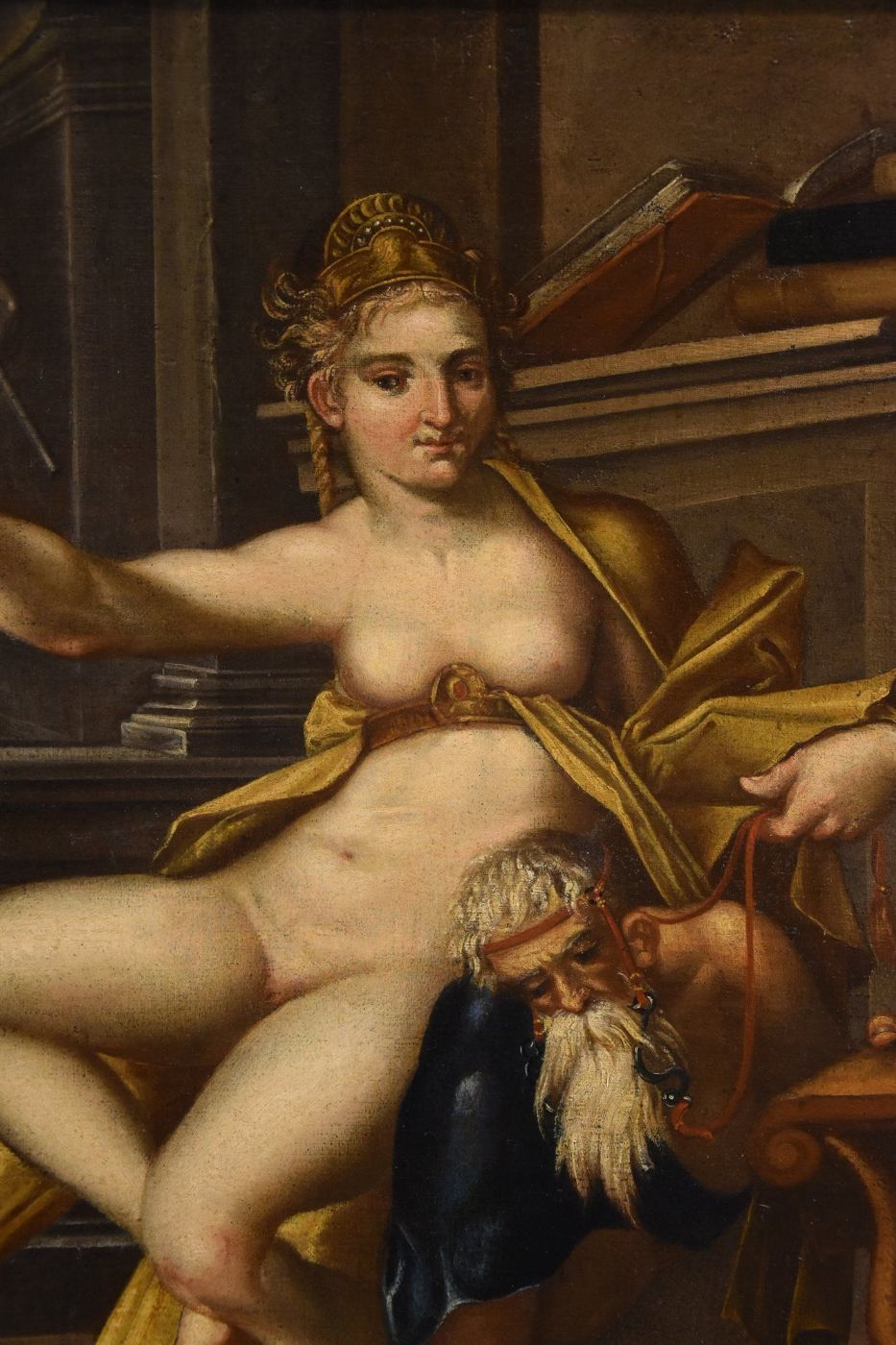
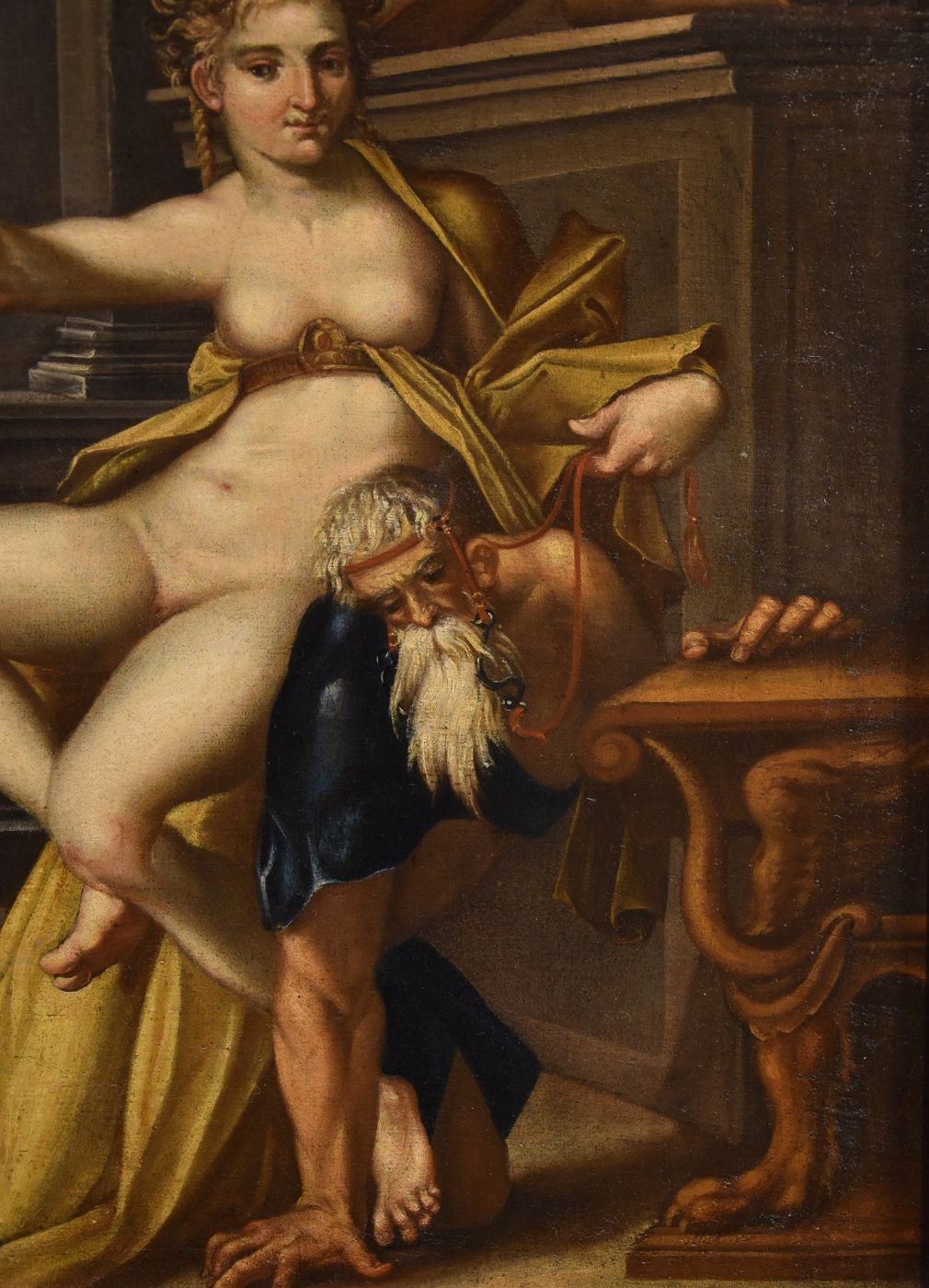
Despite the self-discipline he so professed, the great scholar fell in love with the girl to the point of becoming her plaything, here immortalized on his knees while being ridden by her, thus demonstrating the power of seduction over reason.
The story was interpreted as a warning about female power and the vulnerability of men, without distinction, even the wisest: it is therefore a sort of moralizing fable intended to warn against the pleasures of the flesh.
The iconography is taken from an invention by Bartholomäus Spranger (Antwerp, 1546 – Prague, 1611), a leading exponent of European Mannerism and active at the Habsburg court in Prague, in service to Emperor Rudolf II. The original painting, now lost, was later preserved thanks to Sadler's engraving, which we present in the attached images.
From a stylistic point of view and considering the period, we can easily consider our work as an example from his workshop or, more likely, from an author in his close circle, therefore datable to the very first decades of the seventeenth century.
Considering Spranger's role as the emperor's trusted painter, it is hypothesized that this amusing illustration was created for the personal pleasure of Emperor Rudolf, a great patron and collector of art but at the same time a lover of women, alluding to his weakness and thus ironically warning him.
If even the learned Aristotle, whose erudition is evident from the books piled on the shelf, proved powerless against female wiles, anyone, including the emperor, would have been justified in succumbing to the temptations of the flesh.
ADDITIONAL INFORMATION:
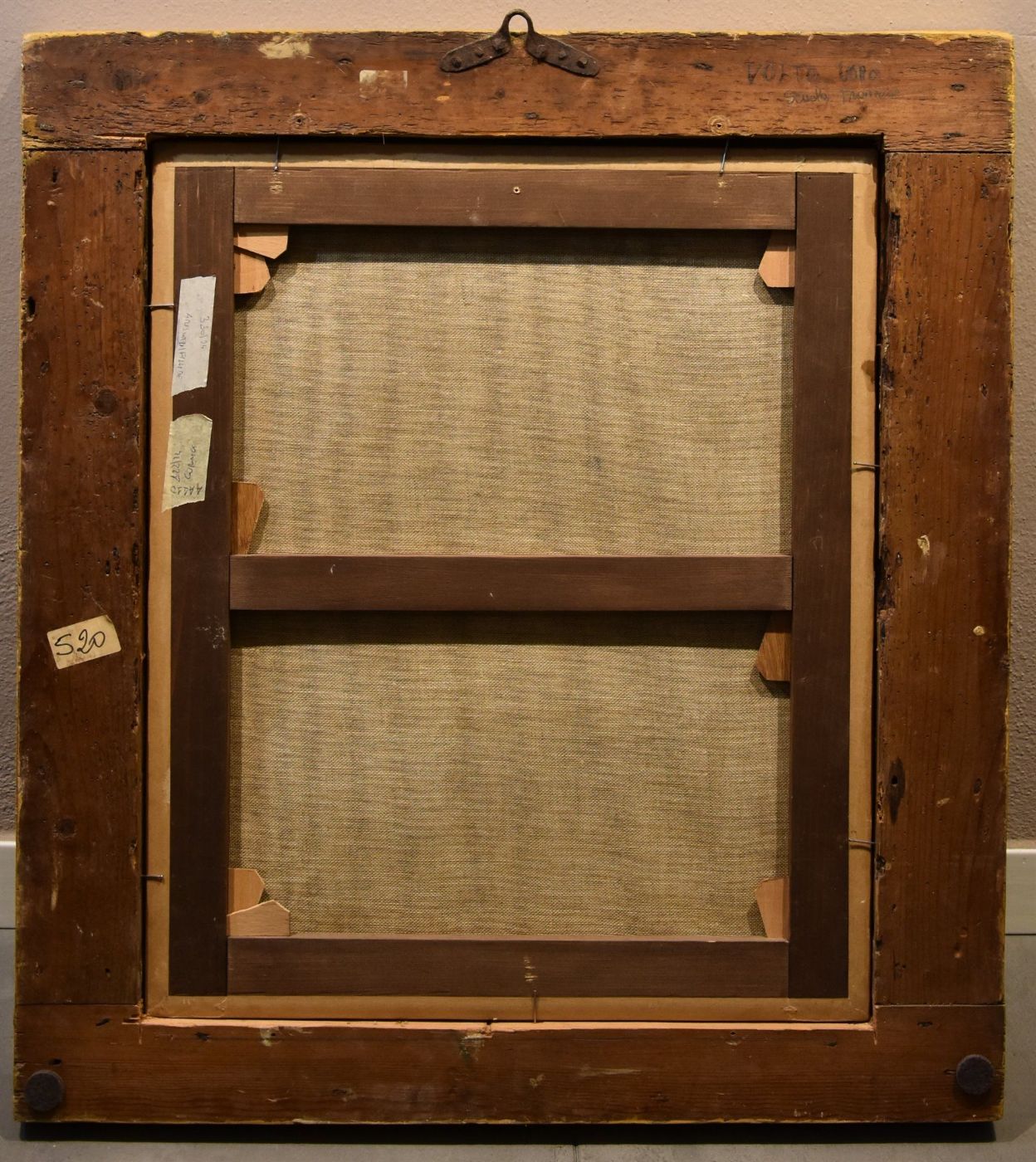
The work is sold complete with a pleasant antique frame and is accompanied by a certificate of authenticity and a descriptive iconographic sheet.
We handle and organize the transport of purchased works, both within Italy and abroad, through professional and insured carriers.
It is also possible to view the painting in our gallery in Riva del Garda; we will be happy to welcome you to show you our collection of works.
Contact us, without obligation, for any additional information.
Follow us also on :
INSTAGRAM https://www.instagram.com/galleriacastelbarco/?hl=it
FACEBOOK https://www.facebook.com/galleriacastelbarco/