Massacre ordered by the Triumvirs
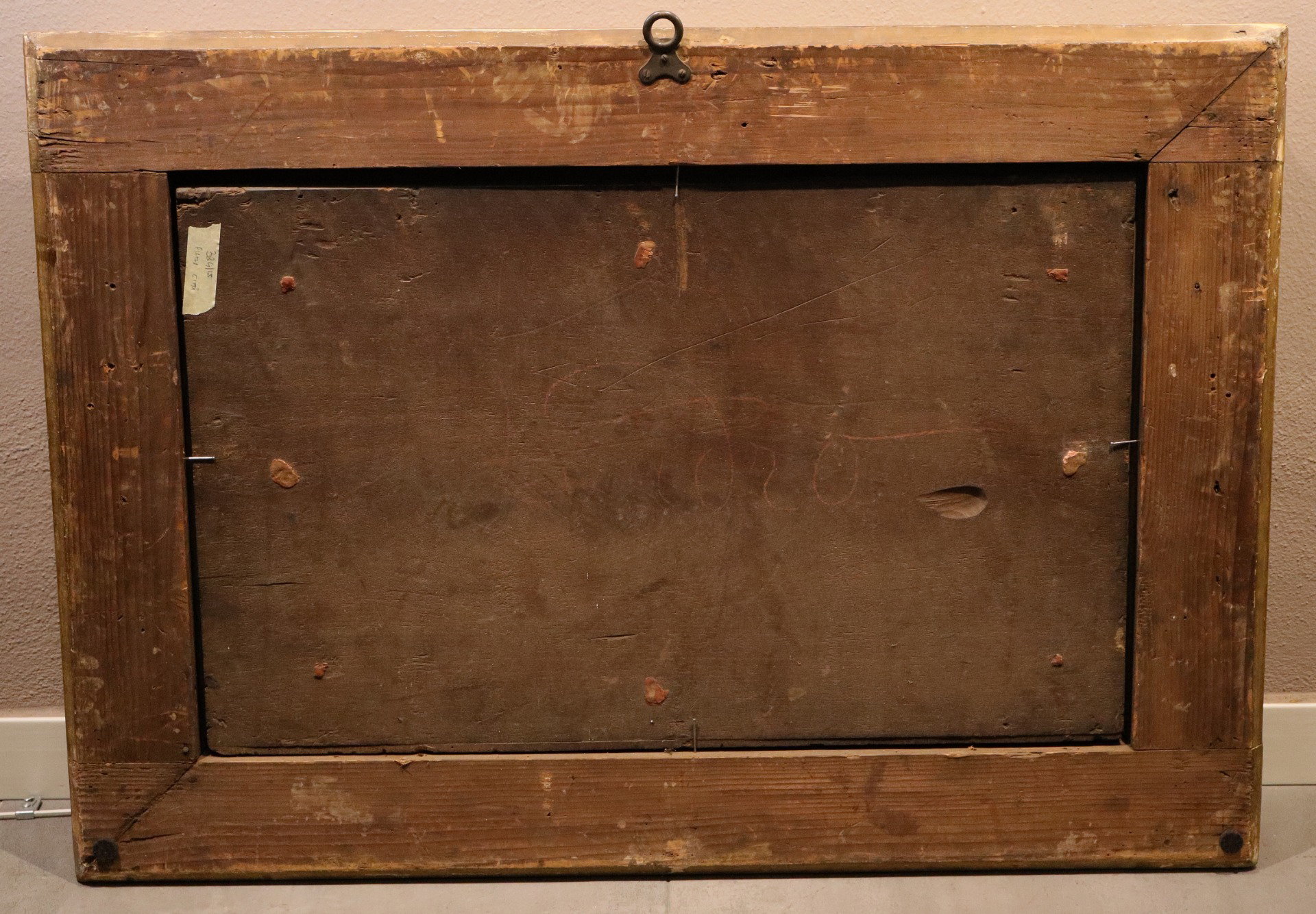
Oil on panel (48 x 77 cm. - Framed 71 x 100 cm.)
COMPLETE DETAILS OF THE PAINTING (CLICK HERE)
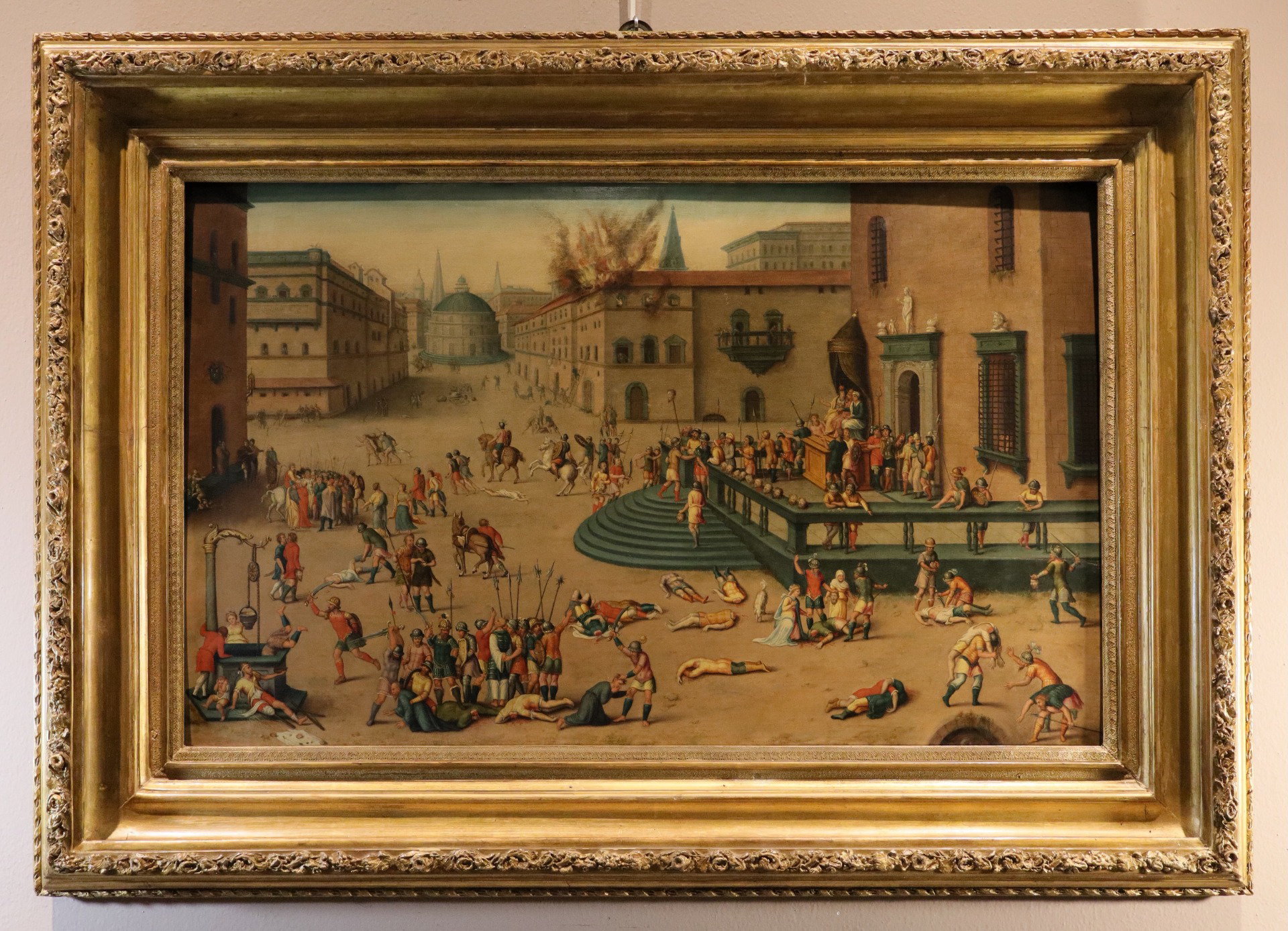
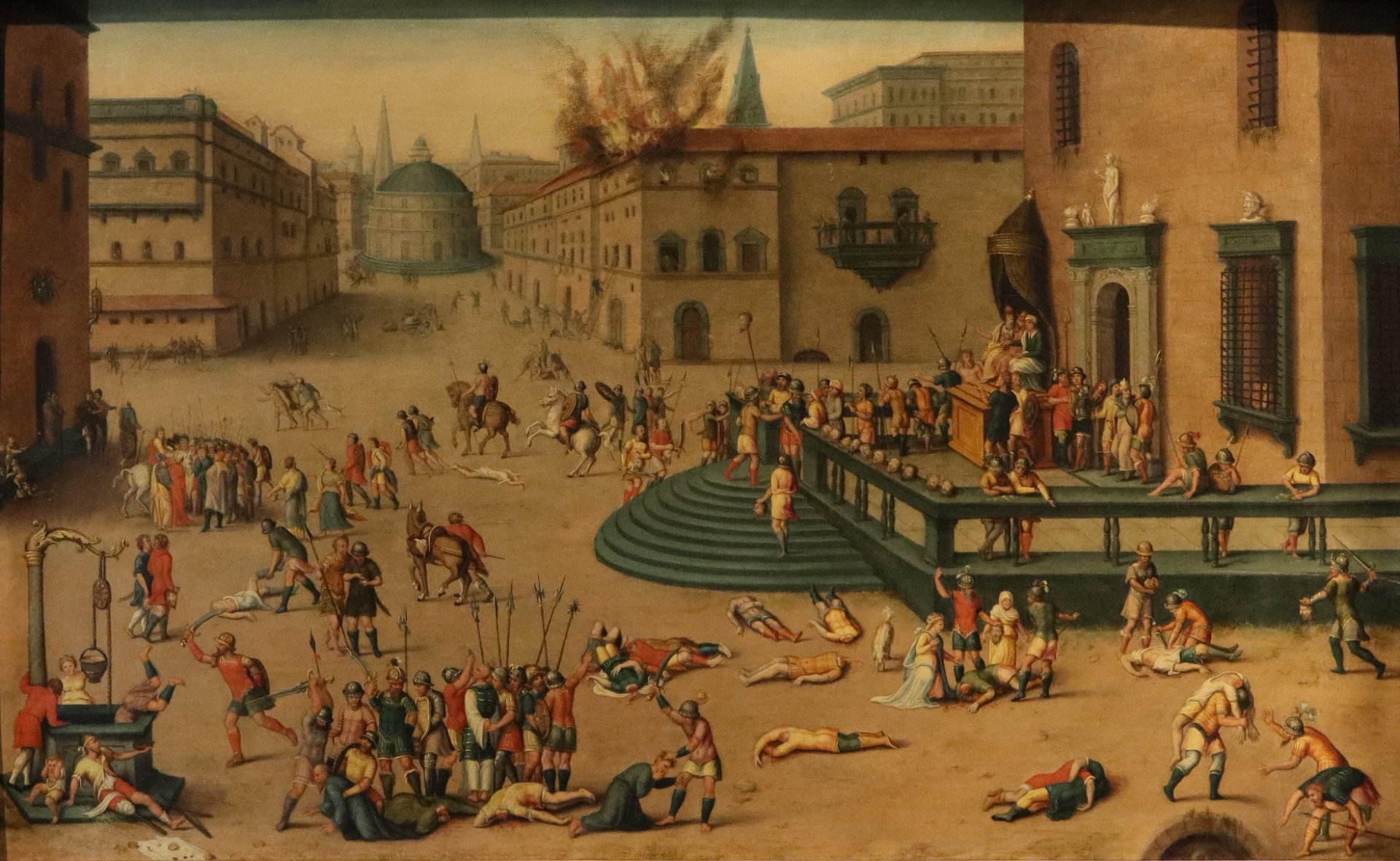
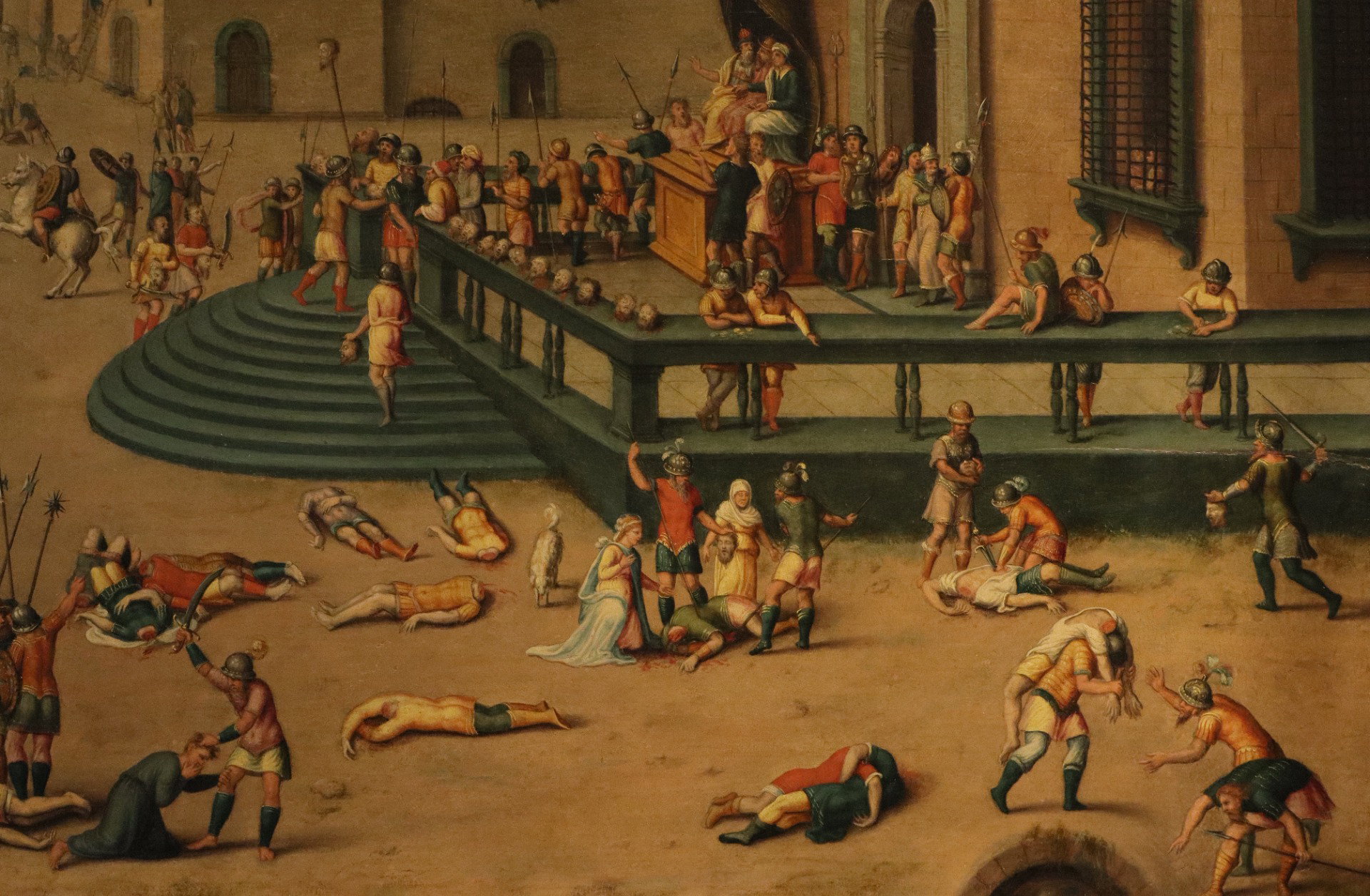
The intriguing painting under study depicts the 'Massacre ordered by the Triumvirs' and is a work attributable to the workshop of Antoine Caron (Beauvais, 1521 - Paris, 1599), or to an author from his close circle, one of the main artists of the School of Fontainebleau and court painter to the Valois, working closely with Queen Catherine de' Medici.
The subject of the work is set in Rome in 43 BC, during the persecutions carried out by the Second Roman Triumvirate, led by Octavian (the future Augustus), Mark Antony, and Marcus Aemilius Lepidus, who were responsible for the deaths of political opponents to consolidate their power. They caused a veritable massacre, killing about 300 senators and over 2,000 equestrians; among the most famous victims was the orator and philosopher Cicero, assassinated by Mark Antony's assassins.
The interesting aspect is the 'contemporary' interpretation relative to the political situation at the time of the author: it is indeed an allegory of the tragic situation in 16th-century France during the French Wars of Religion, alluding to the persecutions against Protestant Huguenots during the reign of Henry II of France.
The parallel between ancient Rome and contemporary France is evident in the aspect of the 'triumvirate' evoked by Caron, which refers to the three main French Catholic exponents - Anne de Montmorency, Francis, Duke of Guise, and Jacques d'Albon - namely the Catholic Triumvirate, responsible for initiating a series of bloody conflicts.
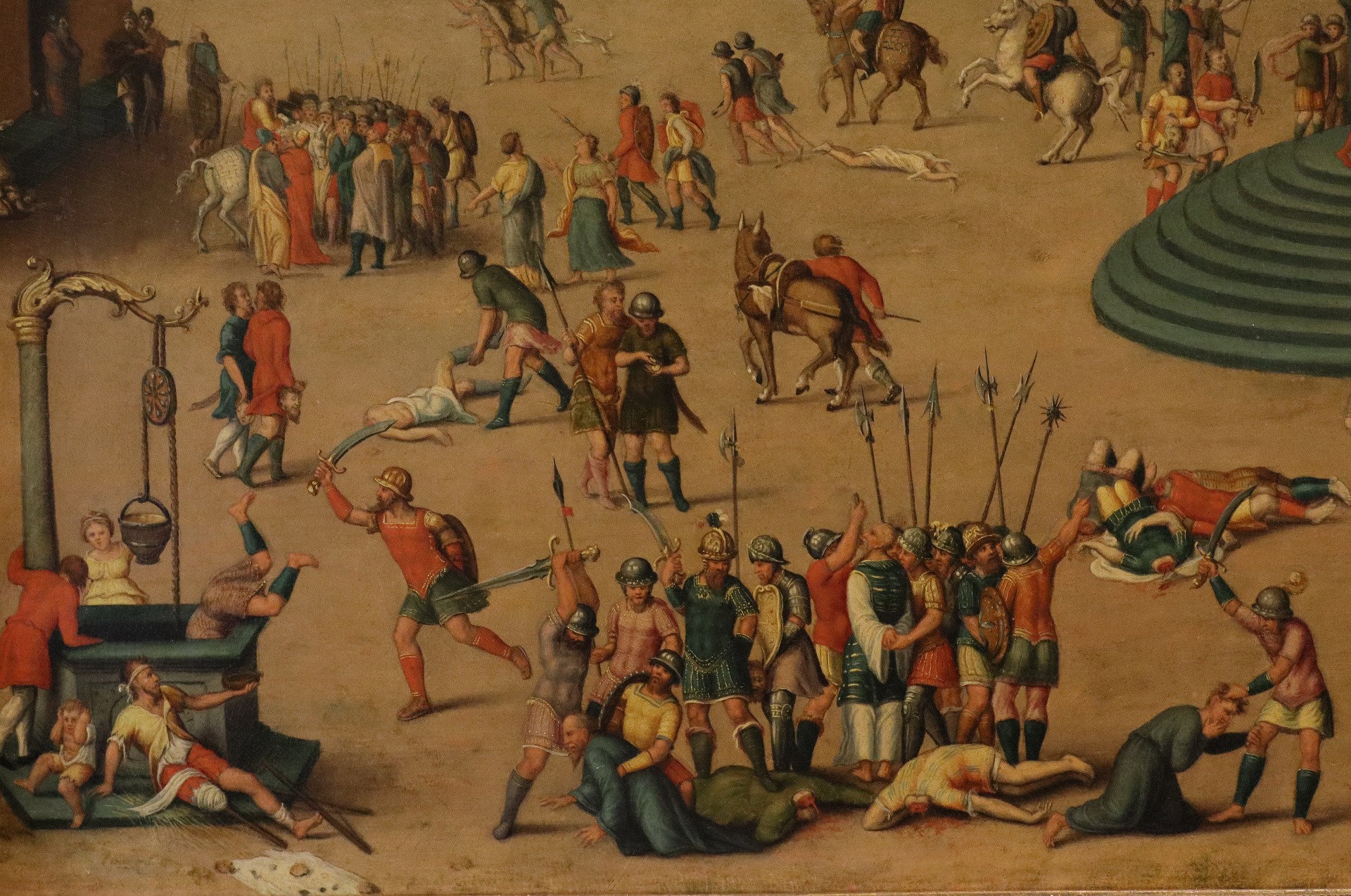
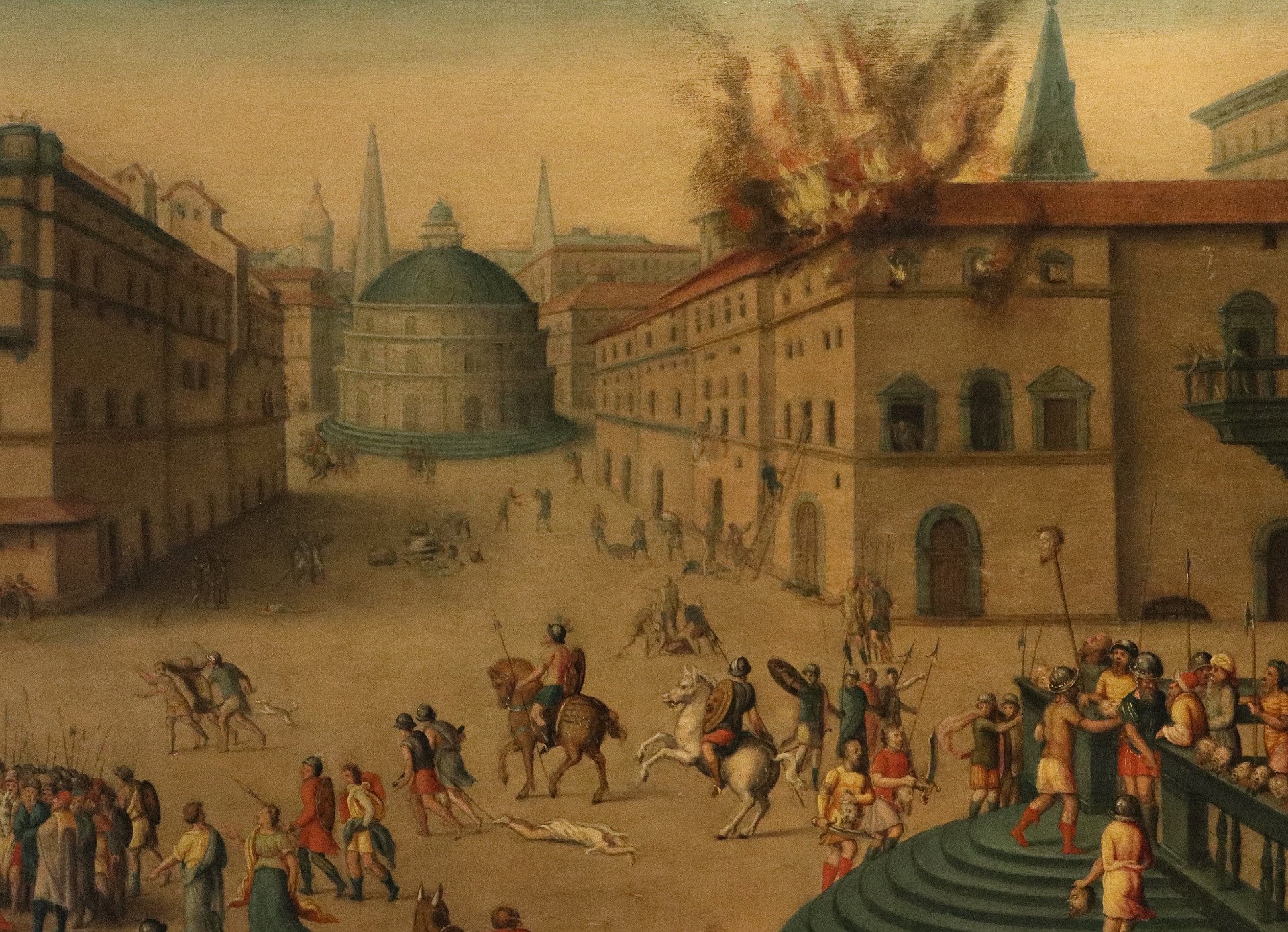
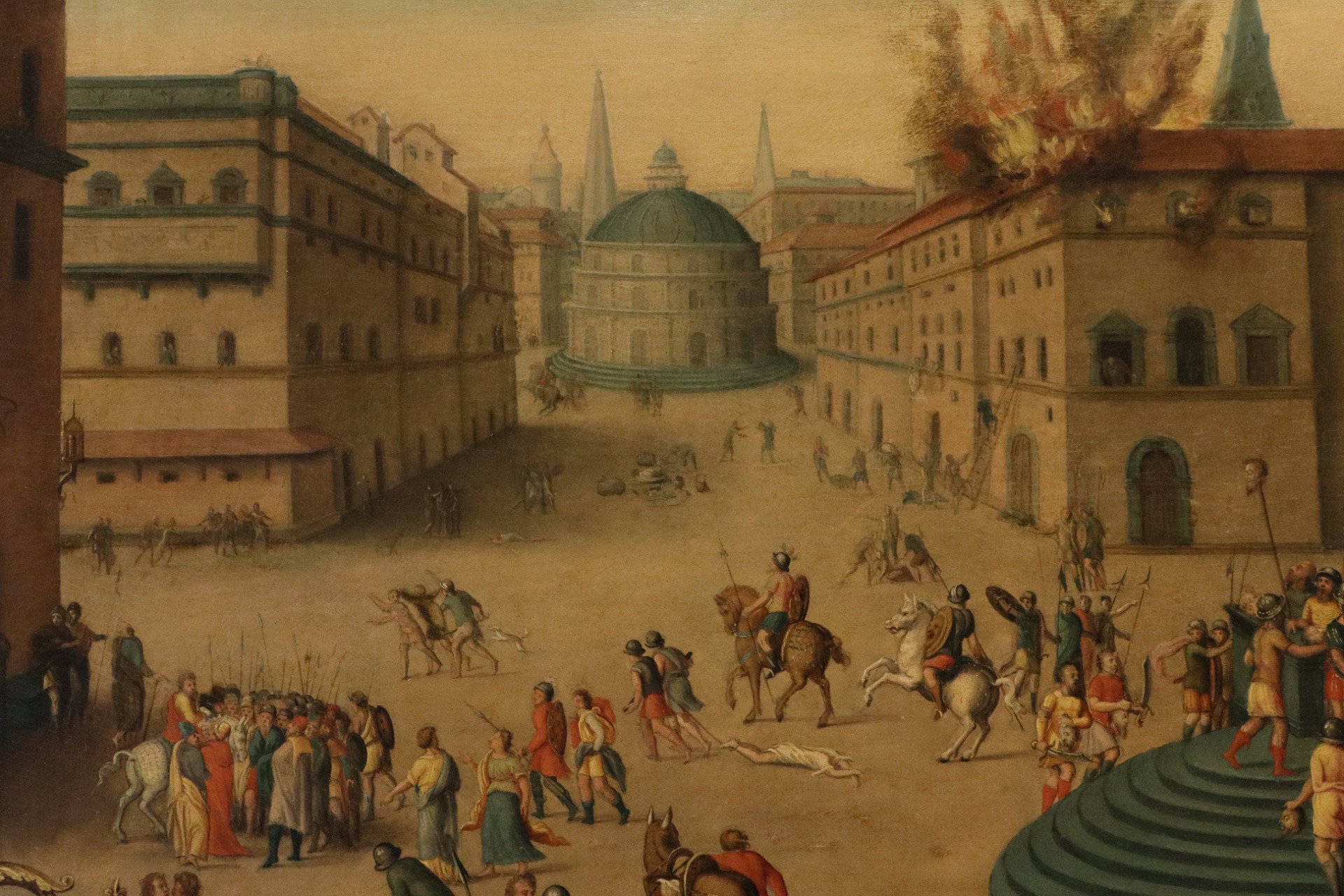
Let us now delve into the complex composition: we are in the midst of the turmoil of a city in upheaval, with soldiers attacking citizens in a square, scenes of violence near a well, and smoke in the background.
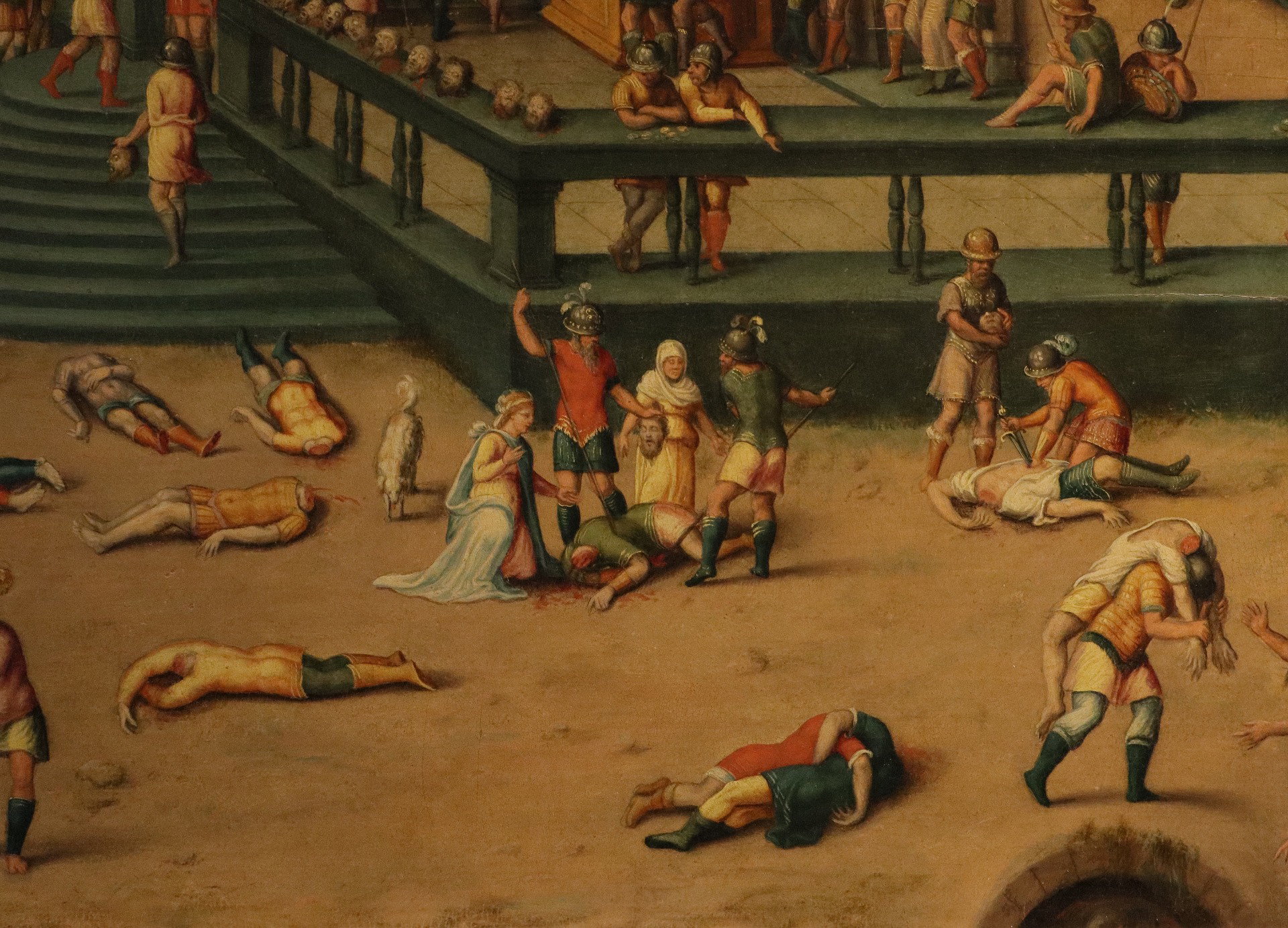
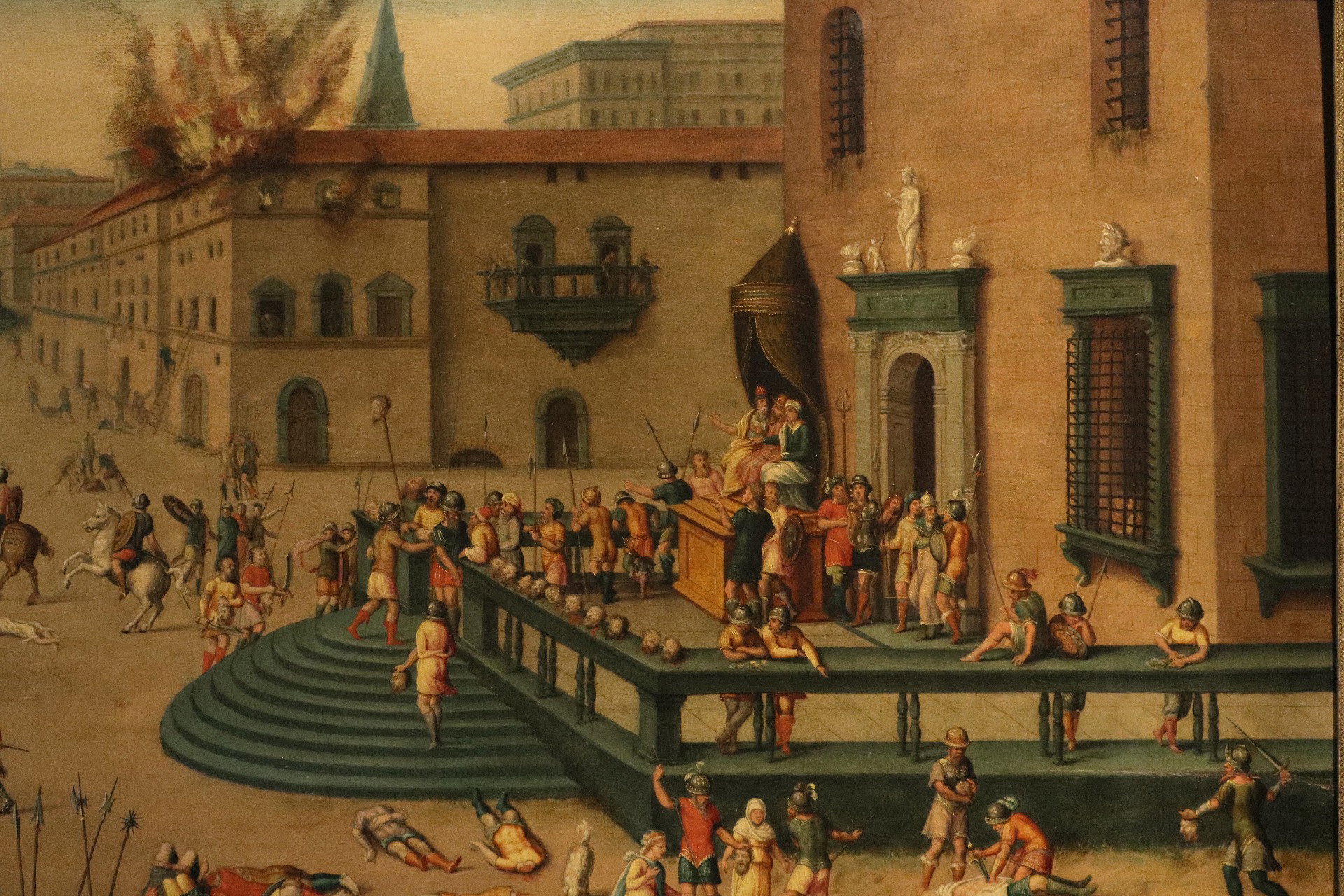
The entire scene is constructed as a succession of tragic episodes: decapitations, bodies being dragged, suppliant women, killed children, soldiers attacking prisoners.
The human figures, elongated and theatrical, fully belong to the Mannerist culture of the School of Fontainebleau, highlighted by the vibrant colors of their clothing — reds, blues, and yellows — which contrast with the pallor of the lifeless bodies.
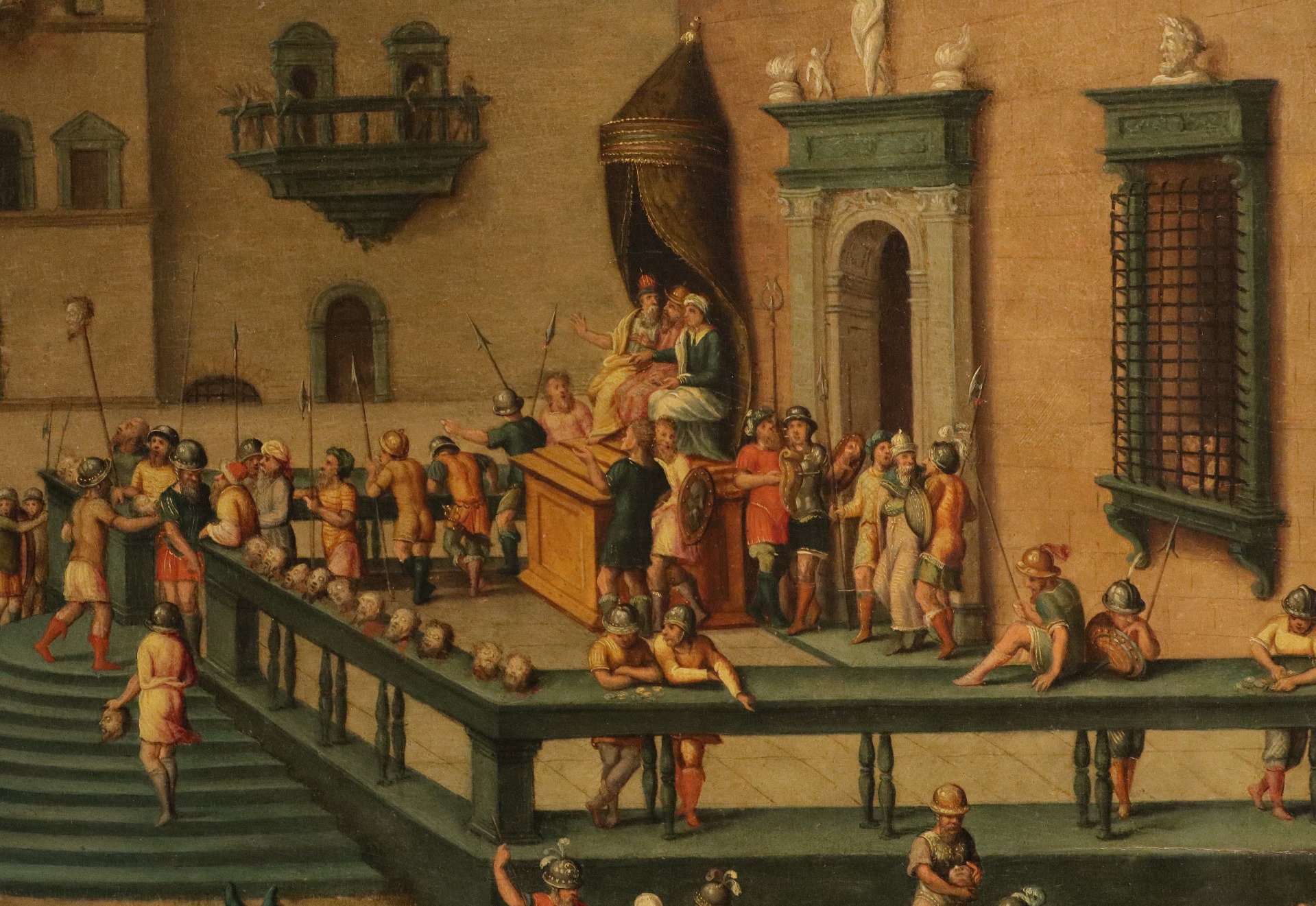
We can easily recognize the triumvirs in the center, seated on a raised platform, watching with cold detachment the massacre unfolding before their eyes. At the foot of the platform, sacks of coins are visible, symbolizing the reward intended for the assassins and informers, while the severed heads of the victims are brought before the rulers.
The architectural scenography that sets the scene is fascinating: the violence unfolds in an ideal Rome reconstructed through ancient monuments and architecture inspired by the engravings in the Speculum Romanae Magnificentiae published by Antonio Lafreri around 1550.
The contrast between the geometric precision of the urban setting and the chaos of the massacre creates a tragic and apocalyptic atmosphere, and the influence of Italian Mannerism is evident, especially in the theatricality of the poses and the spatial construction.
The theme of the Triumvirate massacre, which was very popular in the 16th century, was revisited by Caron on numerous occasions: the most famous painting is undoubtedly the signed one preserved at the Louvre, dated 1566, although there is also a second version, dated around 1562, preserved at the Musée départemental de l'Oise.
Our composition, which represents a compositional variant, is found in a famous engraving by Jean de Gourmont, based on the exact same compositional model, preserved at the Bibliothèque Nationale de France (https://gallica.bnf.fr/ark:/12148/btv1b53128809x.item), which is believed to refer to a lost prototype by Caron himself.
Although rare, we can find some works attributed to Caron or his workshop on the antiquarian market, examples of which are listed below:
Imm.1 - Circle of A. Caron, Christie's London, 7.12.2023, lot 39, https://www.christies.com/en/lot/lot-6452027
Imm.2 - Workshop of A. Caron, Dorotheum Vienna, 21.10.2014, lot 281, https://www.dorotheum.com/en/l/3376601/
Imm.3 - Follower of A. Caron, Christie's South Kensington, 29 Mar, 2017, lot 8,
Imm.4 - Follower of A. Caron, Sotheby's London, November 1, 2007, lot 28, https://www.sothebys.com/en/auctions/ecatalogue/2007/old-master-paintings-l07727/lot.28.html
ADDITIONAL INFORMATION:
The work is complete with a pleasant gilded frame and a certificate of authenticity and an iconographic descriptive sheet.
We handle and organize the transport of purchased works, both within Italy and abroad, through professional and insured carriers.
It is also possible to view the painting in our gallery in Riva del Garda; we would be pleased to welcome you to show you our collection of works.
Contact us, without obligation, for any additional information.
Follow us also on:
INSTAGRAM https://www.instagram.com/galleriacastelbarco/?hl=it
FACEBOOK https://www.facebook.com/galleriacastelbarco/