Carlo Francesco Nuvolone (Milan 1609 - Milan 1662) attributable
The suicide of Queen Sophonisba
Oil on canvas
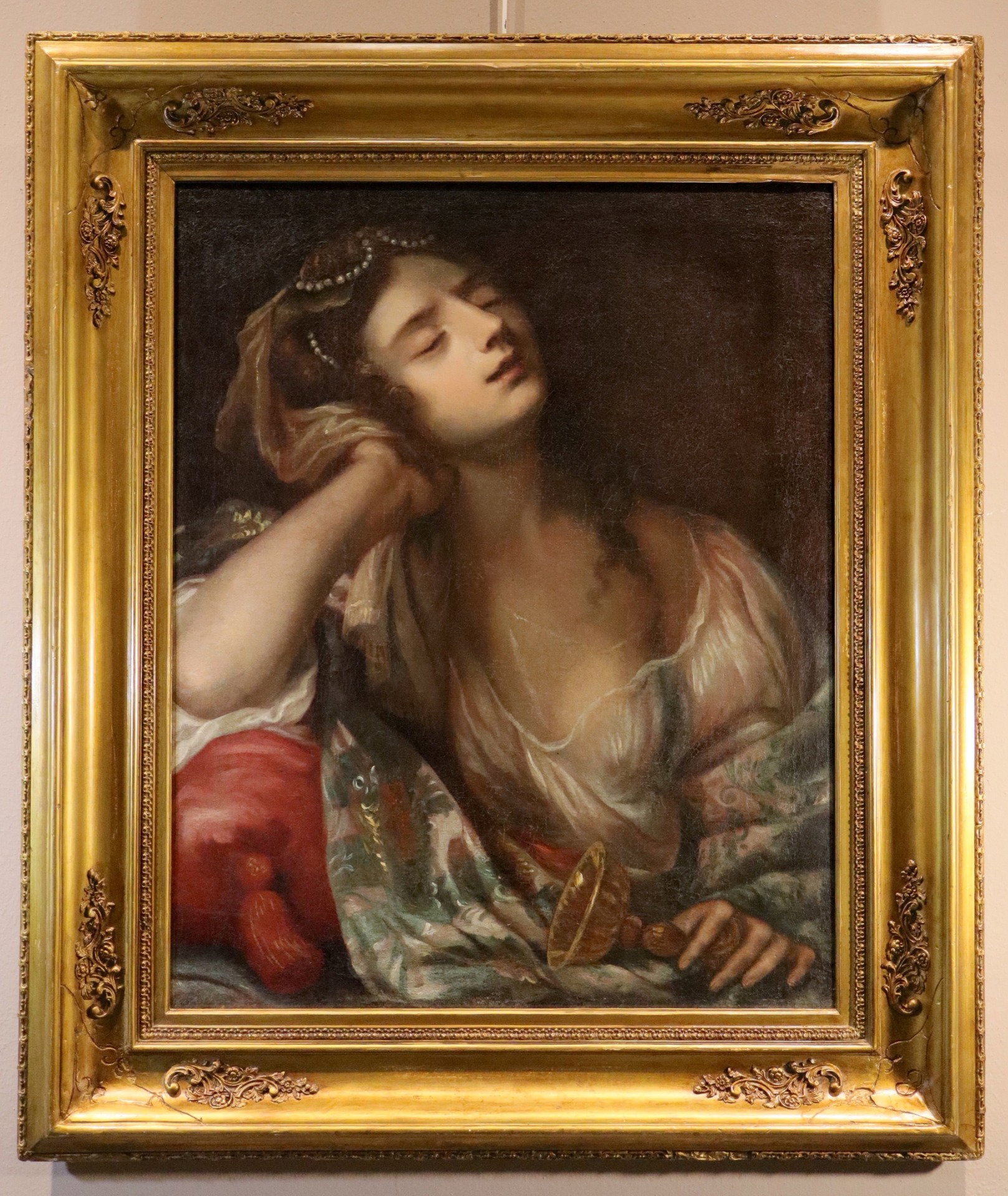
76 x 60 cm. - In frame 100 x 85 cm
FULL PAINTING DETAILS (CLICK HERE)
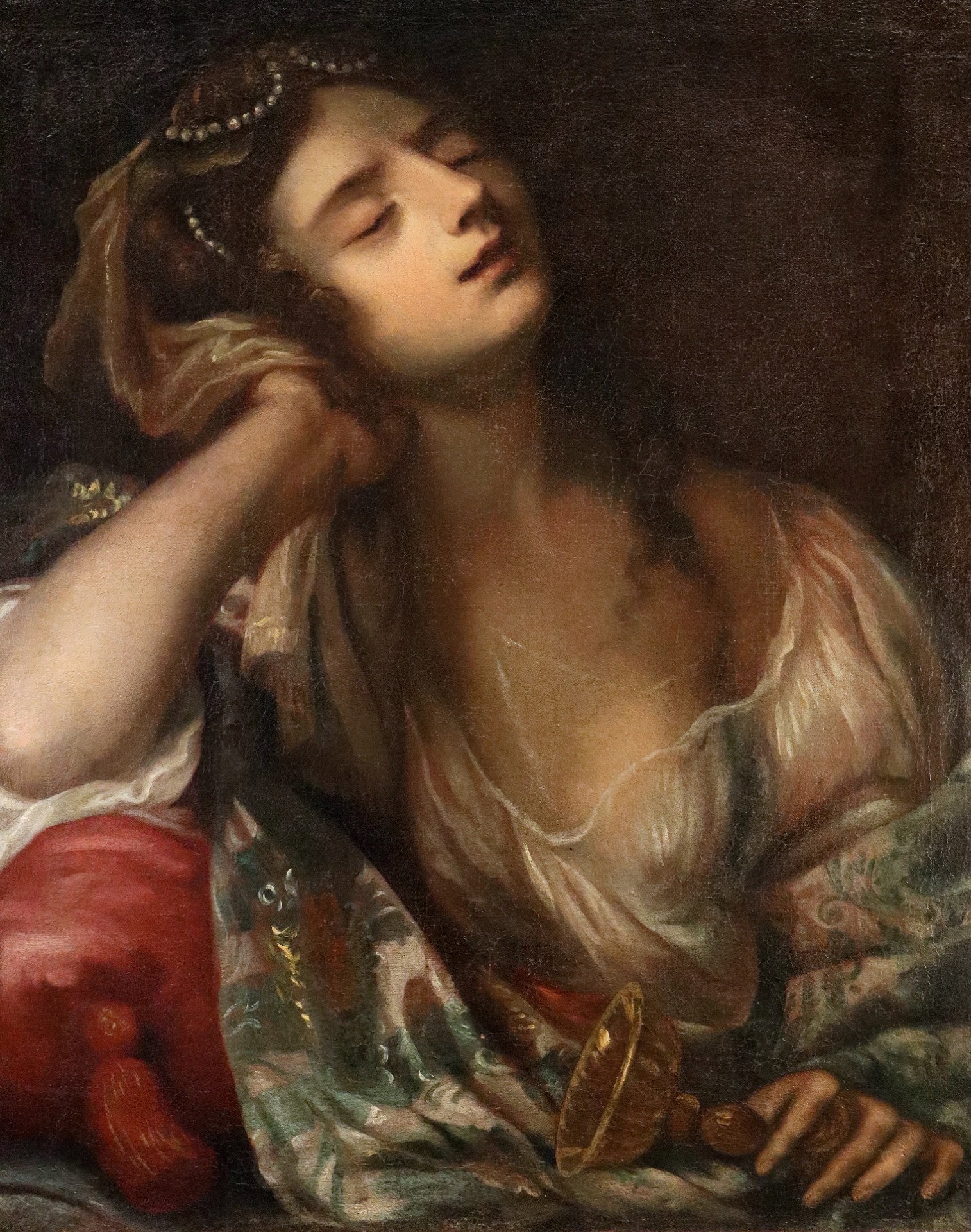
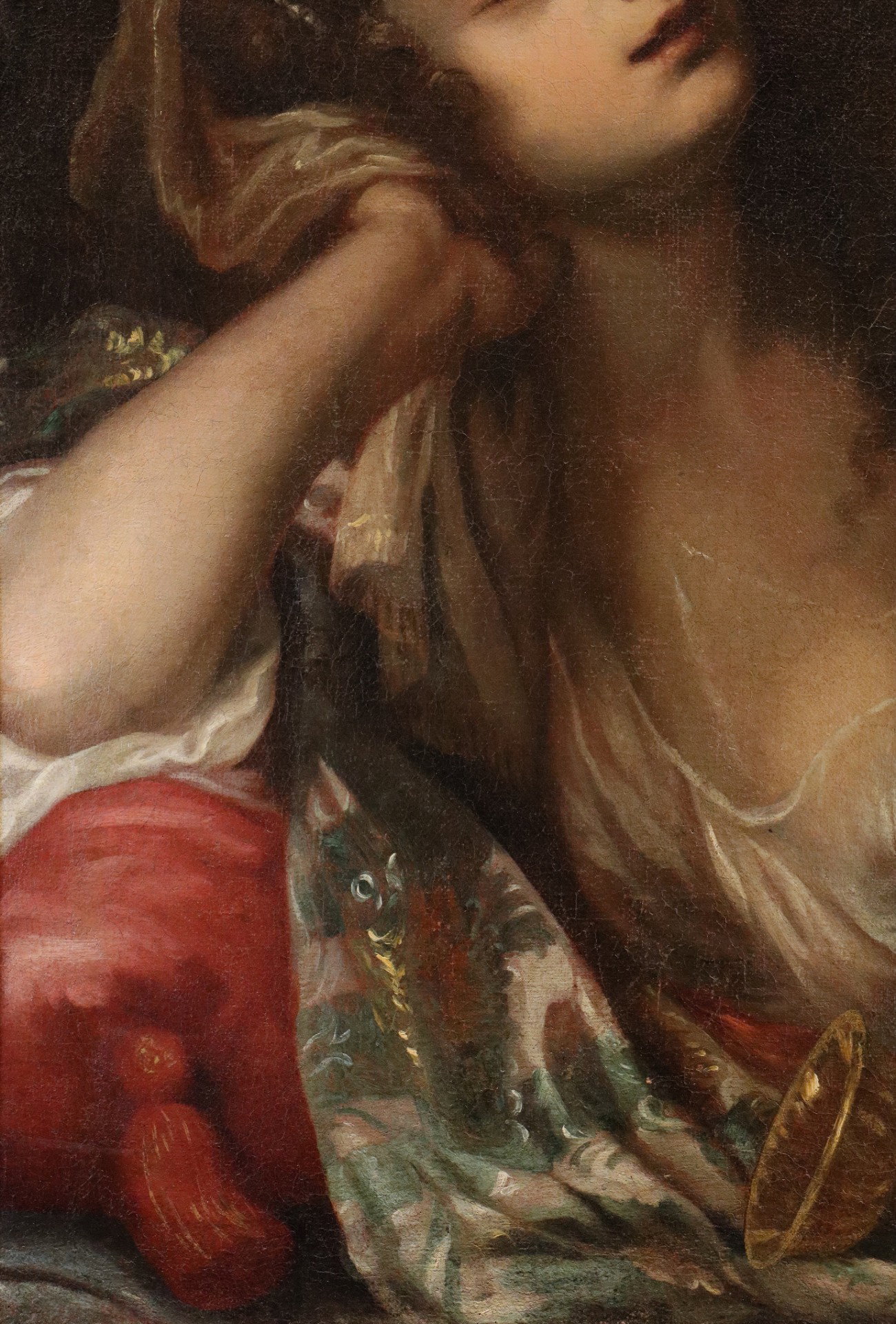
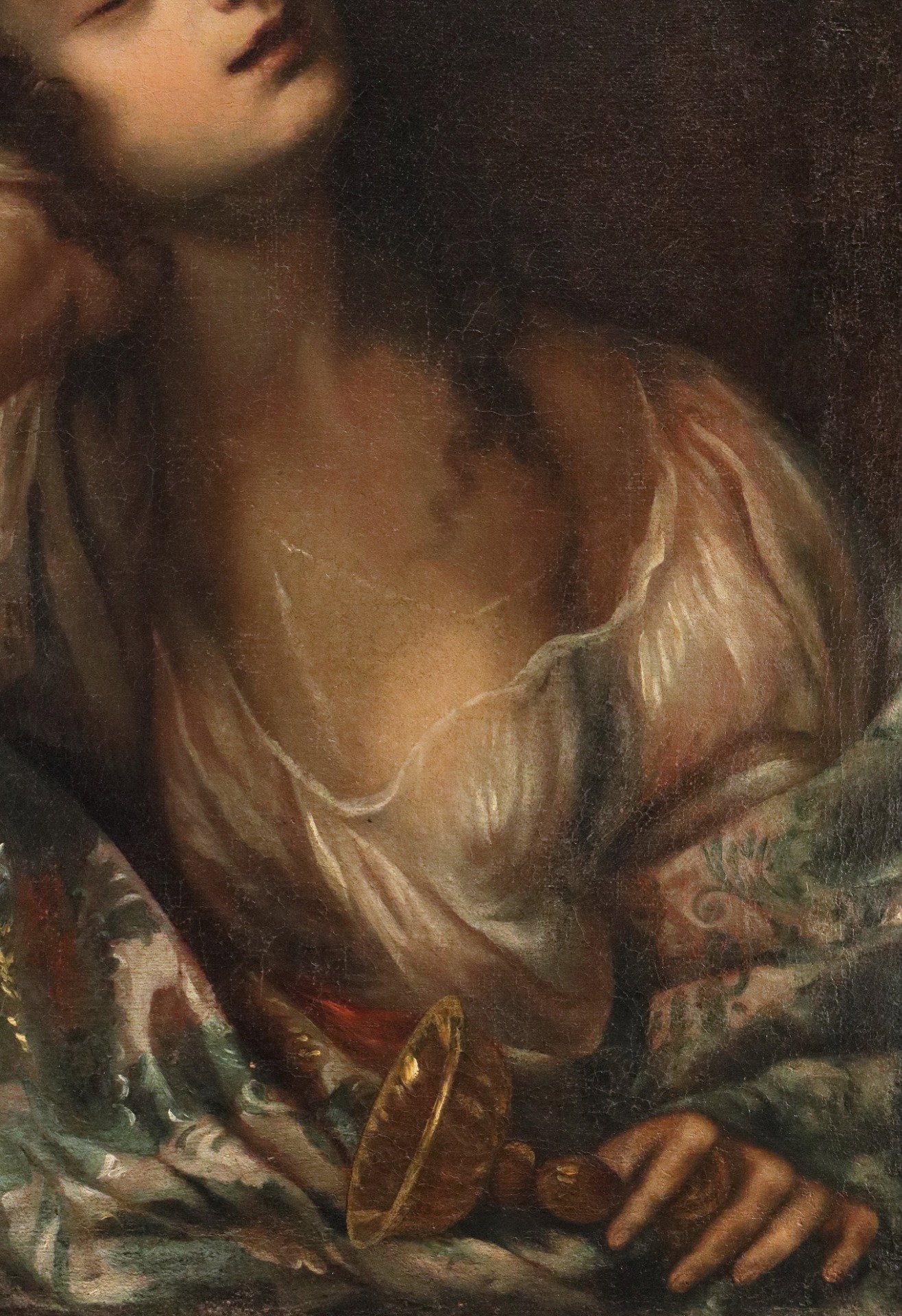
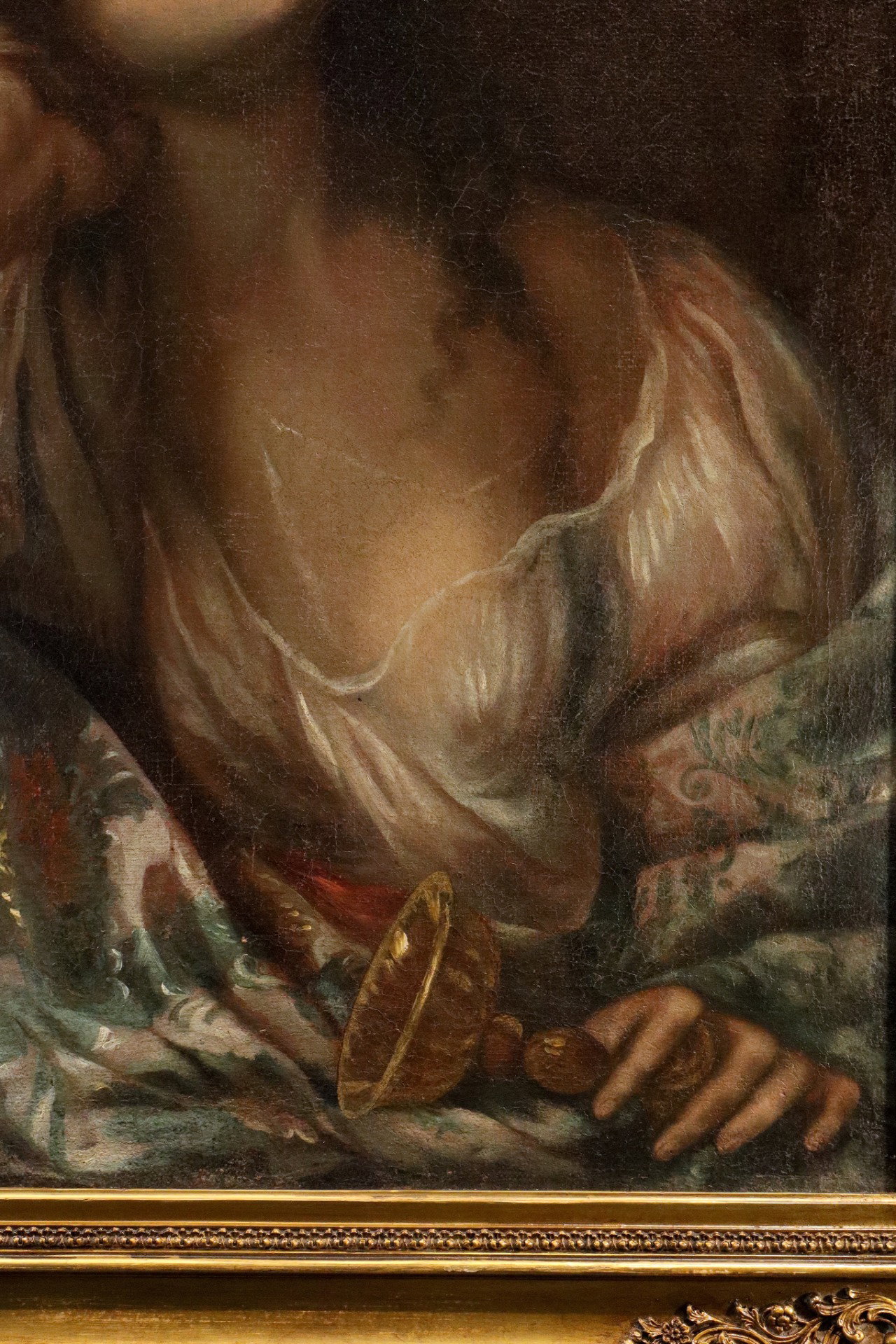
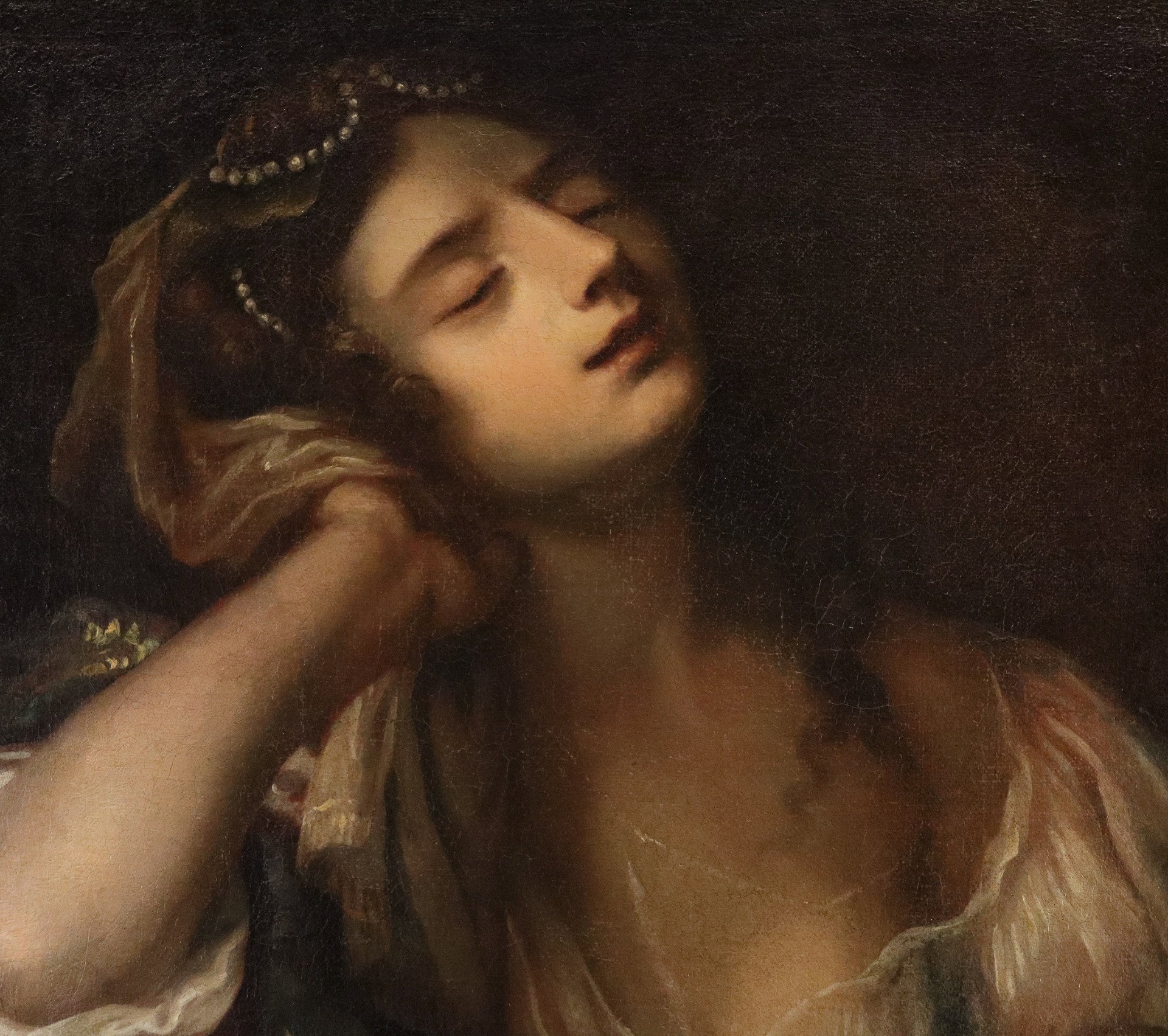
The painting in question captures the tragic moment when Sophonisba, the last queen of Carthage, takes her own life rather than be led to Rome and paraded as a prisoner of war, submitting to the Romans.
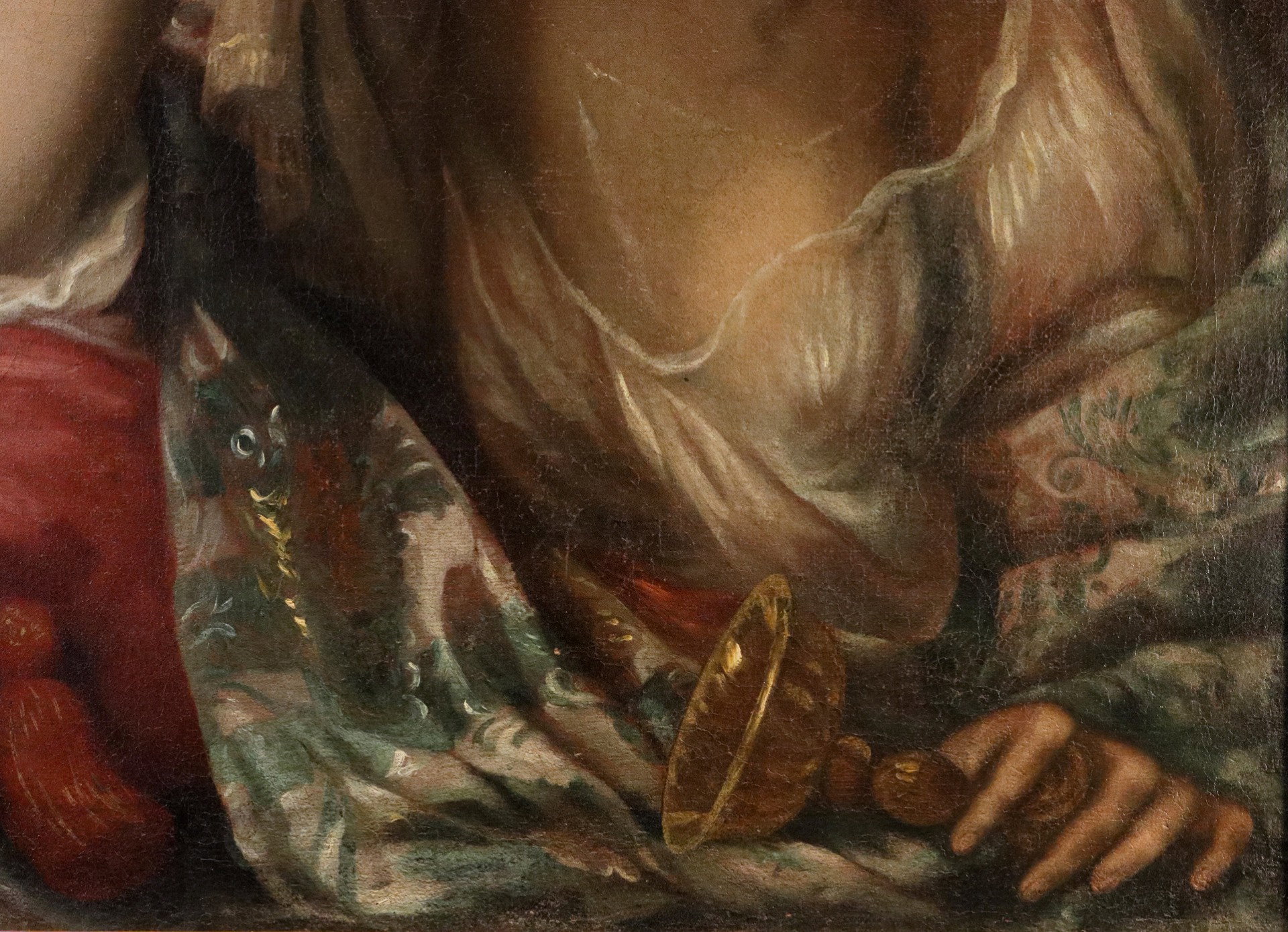
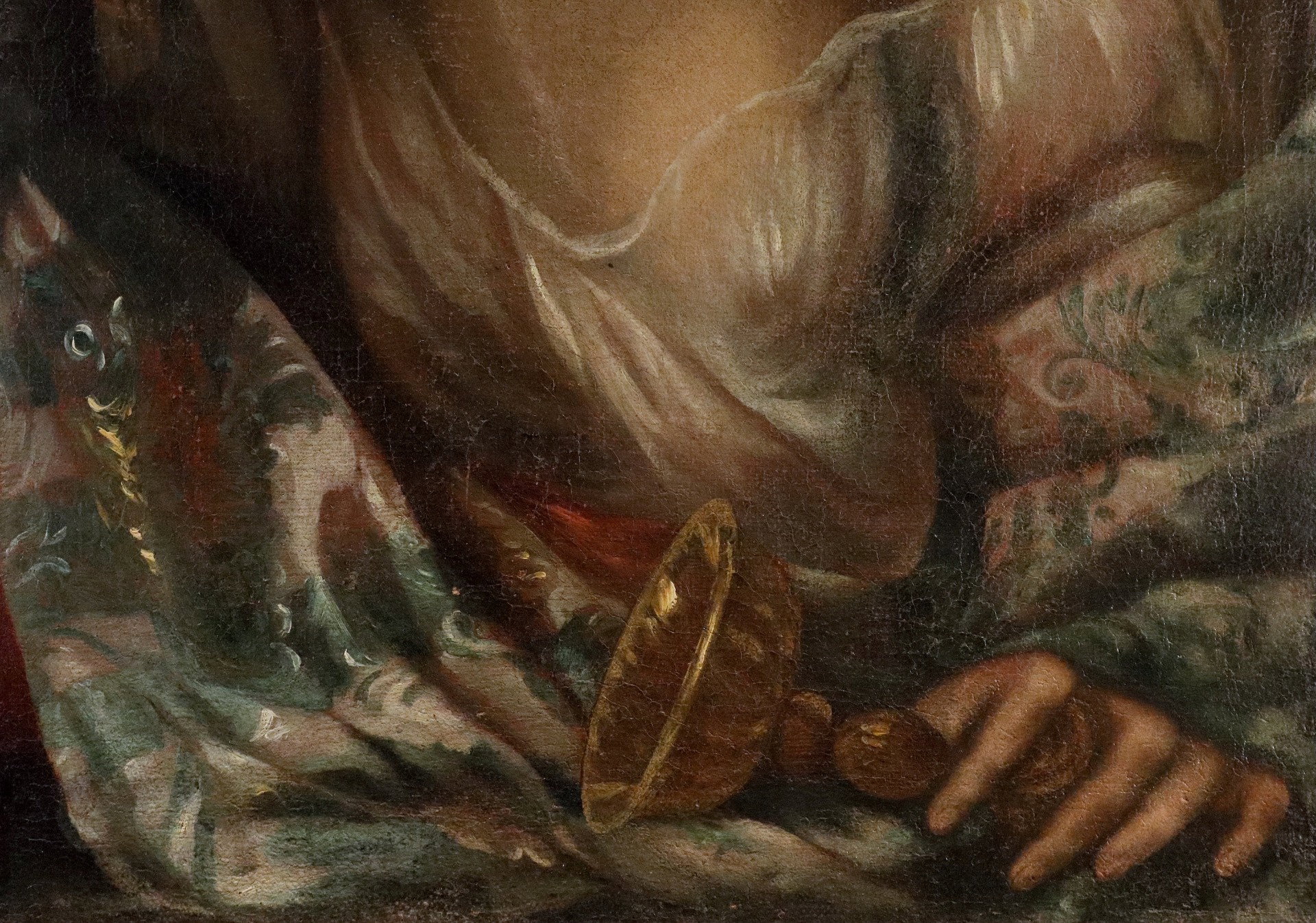
This is a theme very dear to Baroque painting for its high dramatic potential, here emphasized by the depiction of the woman immortalized at the moment when the poison begins to take effect, with her head tilted in languid abandon, still supported by an arm resting on a rich red velvet cushion with a tassel. In her left hand, resting below, she holds the golden goblet from which she has just drunk the poison, a symbol of her extreme sacrifice.
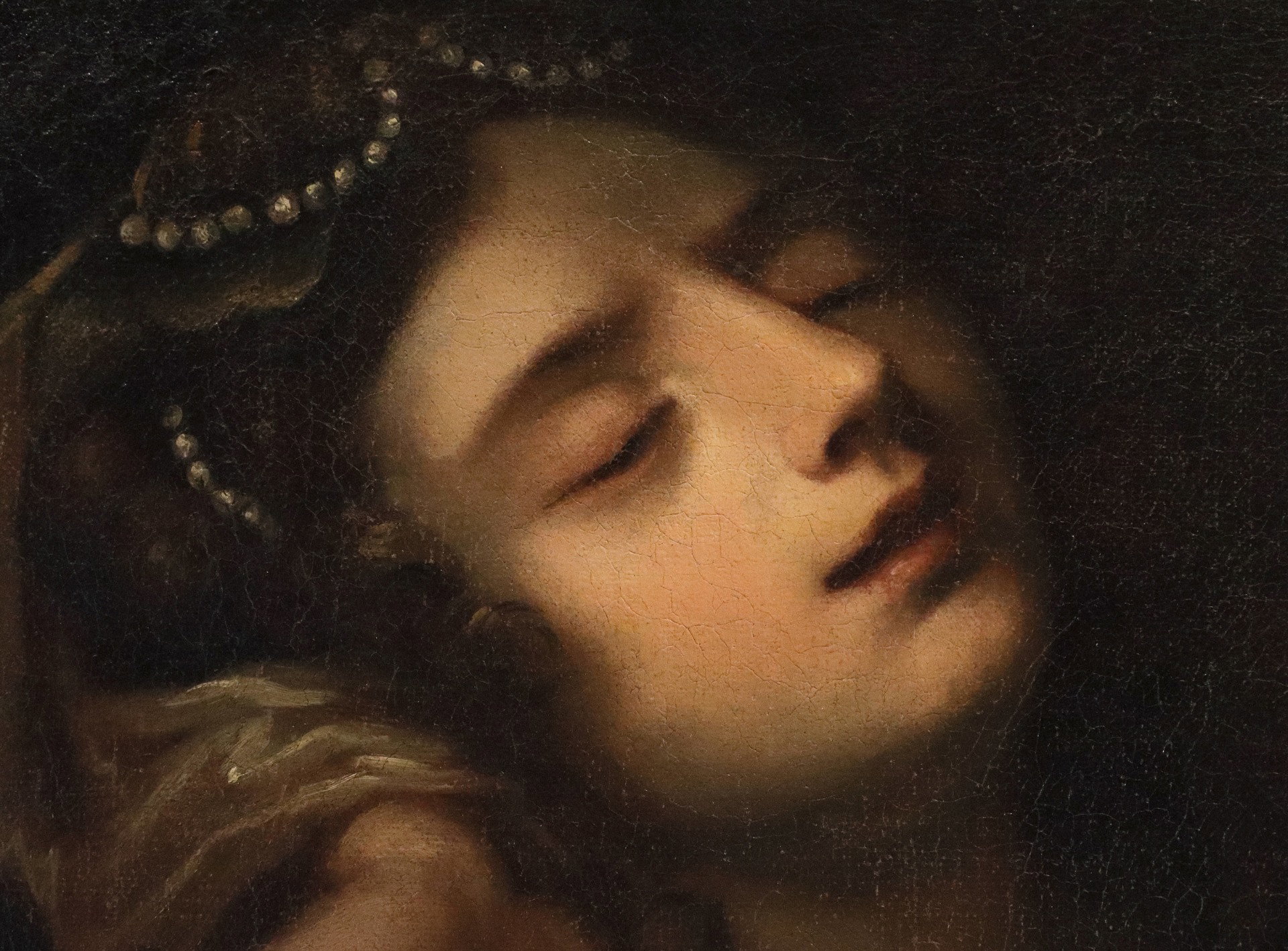
The Carthaginian queen is portrayed in all her beauty, wearing sumptuous garments, a finely draped white shirt, partially slipped to reveal her shoulder, and an overcoat in damask fabric with floral motifs, and her hair adorned with intertwined pearl strands that underline her royal status.
Her story, a tale of political intrigue and love against the backdrop of the Second Punic War, has made her one of the most famous and fascinating female figures of antiquity: over time she has become a symbol of pride and dignity, her act being an emblem of courage, thus inspiring numerous literary and artistic works.
Sophonisba married Syphax, king of the Numidians, to seal the alliance between Carthage and Numidia against Rome. After Syphax was defeated by the Romans and Masinissa, the latter entered the city of Cirta and when he saw her, struck by her beauty, he fell in love with her and immediately married her to save her from being taken as a prisoner to Rome.
But unfortunately, the Roman general Scipio demanded that the woman be handed over to Rome nonetheless to parade as a trophy in his triumph, and since Masinissa could not oppose such a decision, he sent Sophonisba poison so that she could kill herself and avoid the humiliation of captivity.
Voluntary death represented the only way to preserve her royal dignity and personal autonomy in the face of the slavery imposed by the victorious Romans.
The story of Sophonisba was also a very popular theme because it allowed artists to explore the contrast between feminine beauty and nobility of spirit, all emphasized by a narrative characterized by an intense dramatic effect, focusing on the tragic ecstasy of the protagonist.
The painting is attributable to the Milanese painter Carlo Francesco Nuvolone (Milan 1609 - Milan 1662), a leading exponent of the Lombard Seicento with a marked Baroque sensibility.
The work presents his distinctive traits, with its classic soft and shaded pictorial rendering, influenced by Murillo, so much so that he was nicknamed the "Murillo of Lombardy", using soft brushstrokes to create an almost ethereal atmosphere around the figures.
Nuvolone's figures, especially the female ones, are characterized by a strong emotional component, with a melancholic grace: the intimacy, the soft sensuality that the painting offers are a distinctive sign of the painter's achieved maturity and his complete adherence to the Baroque world.
Specifically, if we compare them to his famous Cleopatras or Herodses, they often present, as in the work exhibited here, tilted faces, half-closed eyes, and slightly open mouths, merging the sacred and the profane in an aesthetic of voluptuous suffering.
The expression of strong pathos appears here softened by the pursuit of an ideal beauty and an engaging narrative typical of Carlo Francesco's maturity.
The use of a bright red cushion on which the arm rests and the metallic reflections of the goblet are finally typical elements of his compositions, which balance Lombard realism with a search for aristocratic elegance. The precious details, such as the meticulous rendering of the pearl-adorned hair and the vaporosity of the fabrics of the garment, demonstrate the artist's technical skill in rendering different materials.
ADDITIONAL INFORMATION:
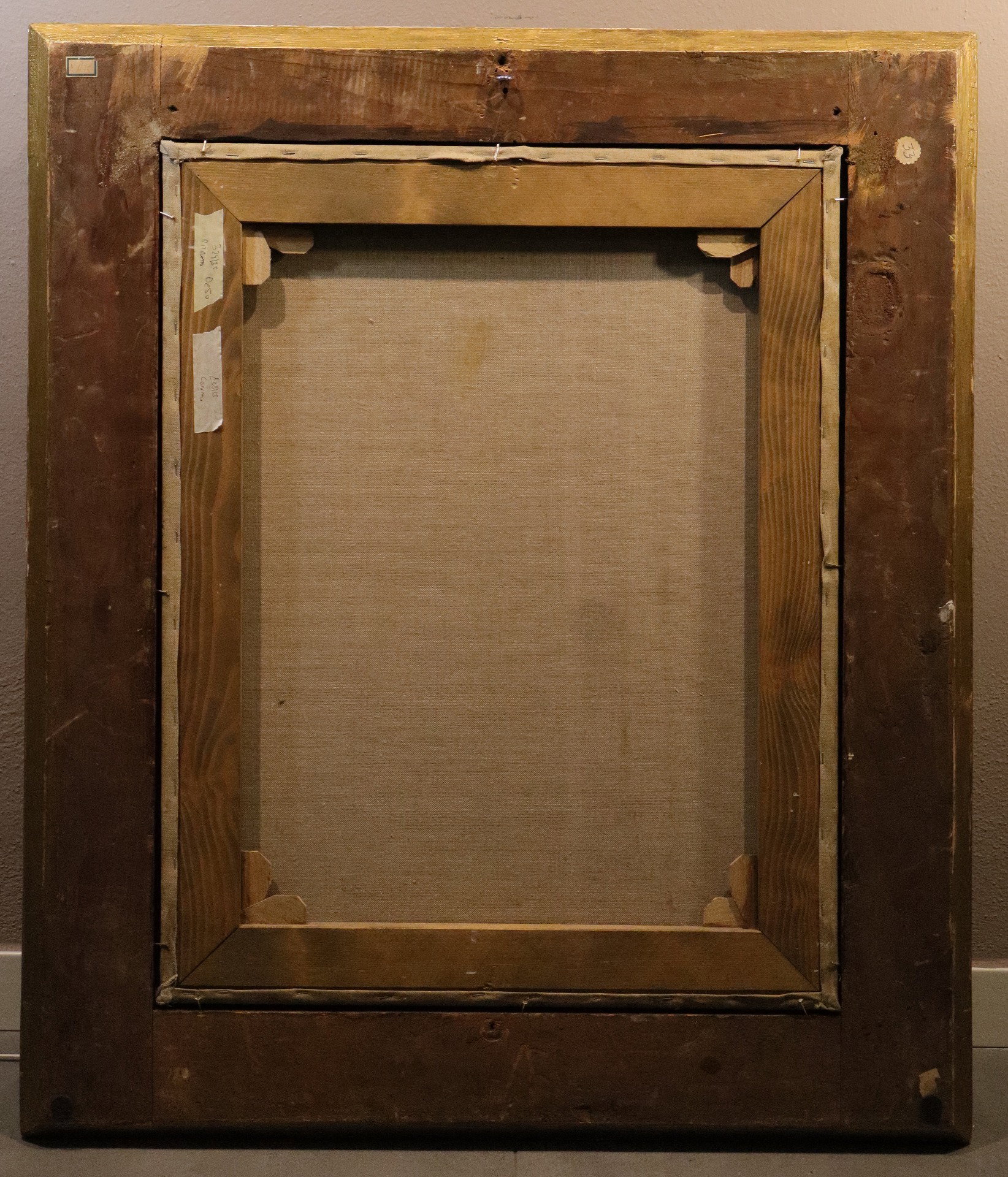
The painting is sold complete with an antique frame and is accompanied by a certificate of authenticity and a descriptive iconographic sheet.
We take care of and organize the transport of purchased works, both for Italy and abroad, through professional and insured carriers.
If you wish to view this or other works in person, we will be happy to welcome you to our new gallery in Riva del Garda, at Viale Giuseppe Canella 18. We look forward to seeing you!
Contact us for any information or to organize a visit, we will be happy to answer you.
Follow us also on:
https://www.instagram.com/galleriacastelbarco/?hl=it
https://www.facebook.com/galleriacastelbarco/