France, late 18th - early 19th century
Looking glass
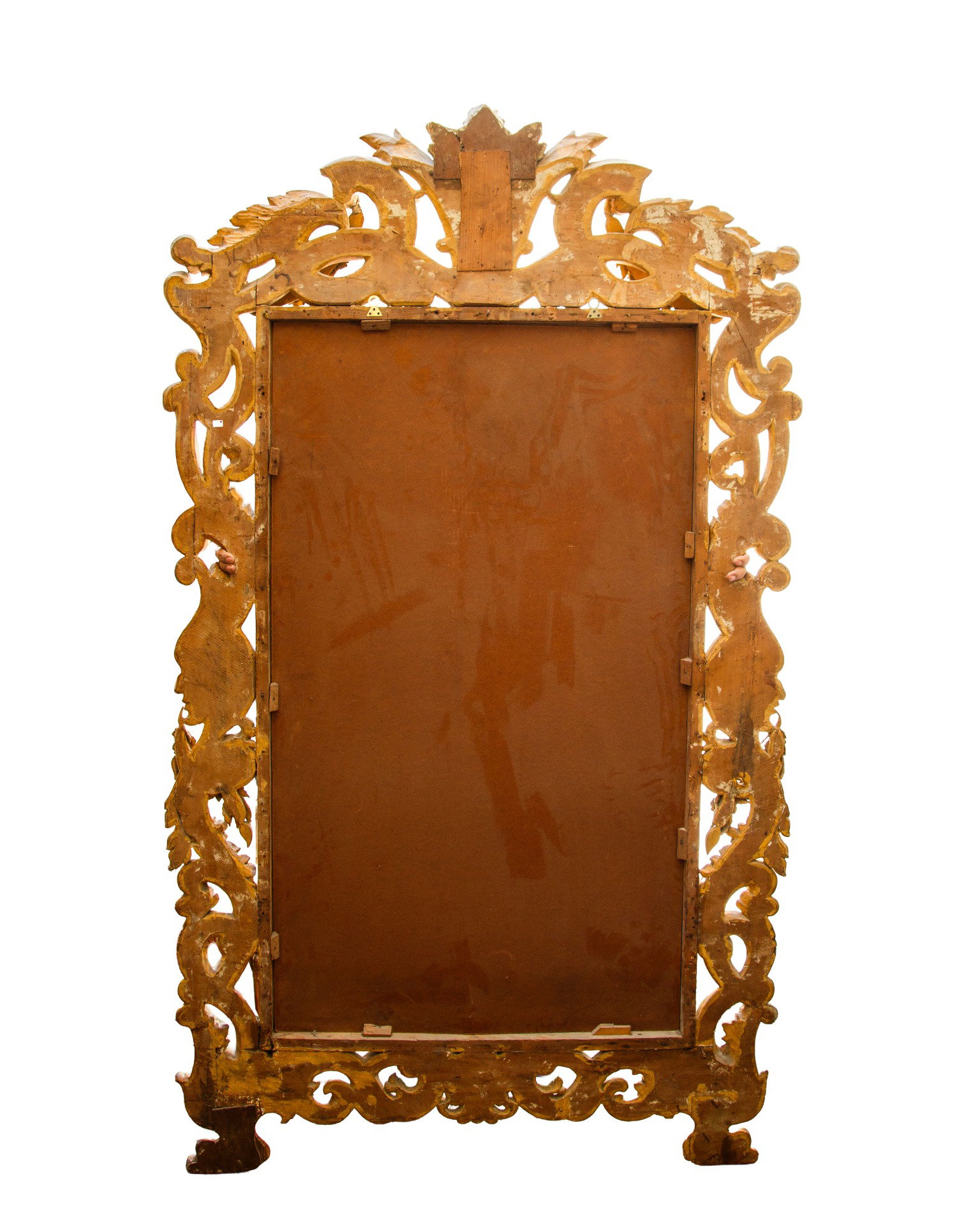
Carved and gilded wood, 240 x 138 x 6 cm
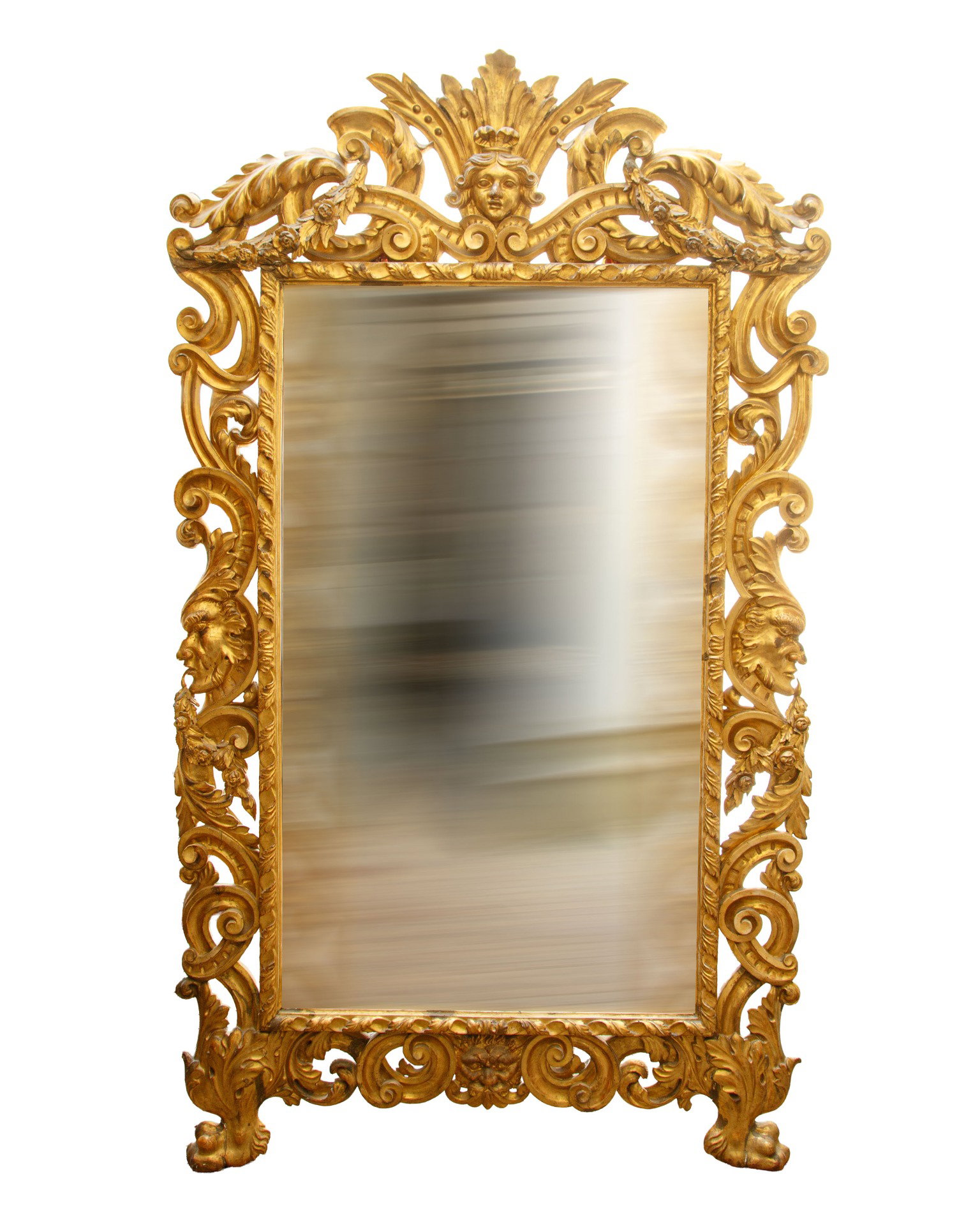
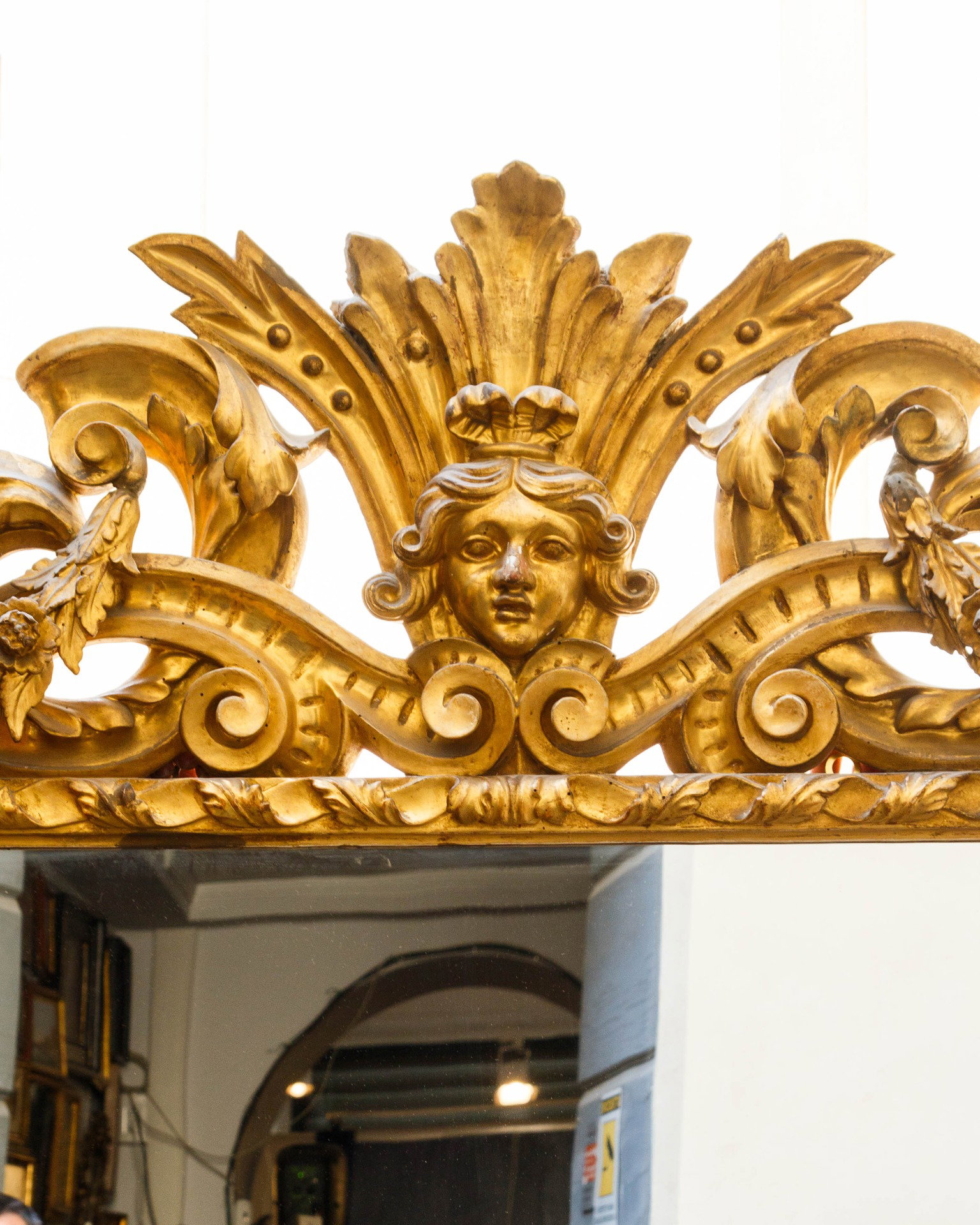
This imposing looking glass is a high testament to French cabinetmaking virtuosity, from the twilight of the Ancien Régime to the rise of the new imperial aesthetic. The work is distinguished by an extraordinarily dense decorative apparatus, expressed through wood carving that transforms the material into a dynamic intertwining of symbols of luxury. The structure is defined by a lush succession of foliate scrolls and rocaille, which blend with the neoclassical solemnity of laurel swags and delicate floral garlands.
Of particular value is the architecture of the pediment, dominated by a central mask with an apotropaic character, which serves as the visual fulcrum for the entire composition. The decoration continues along the sides with a tight rhythm of volutes, enriched by further anthropomorphic elements, and concludes at the base on robust scroll feet.
Placed within an era of profound historical transition, the looking glass embodies the concept of ostentatious opulence: not just an object of use, but a true scenographic backdrop intended to reflect the light and prestige of noble drawing rooms. It retains the intact plastic vigor and majesty typical of furniture for the high European aristocracy of the late 18th century, where decorative splendor became a tool for social affirmation and a celebration of luxury.