17th century
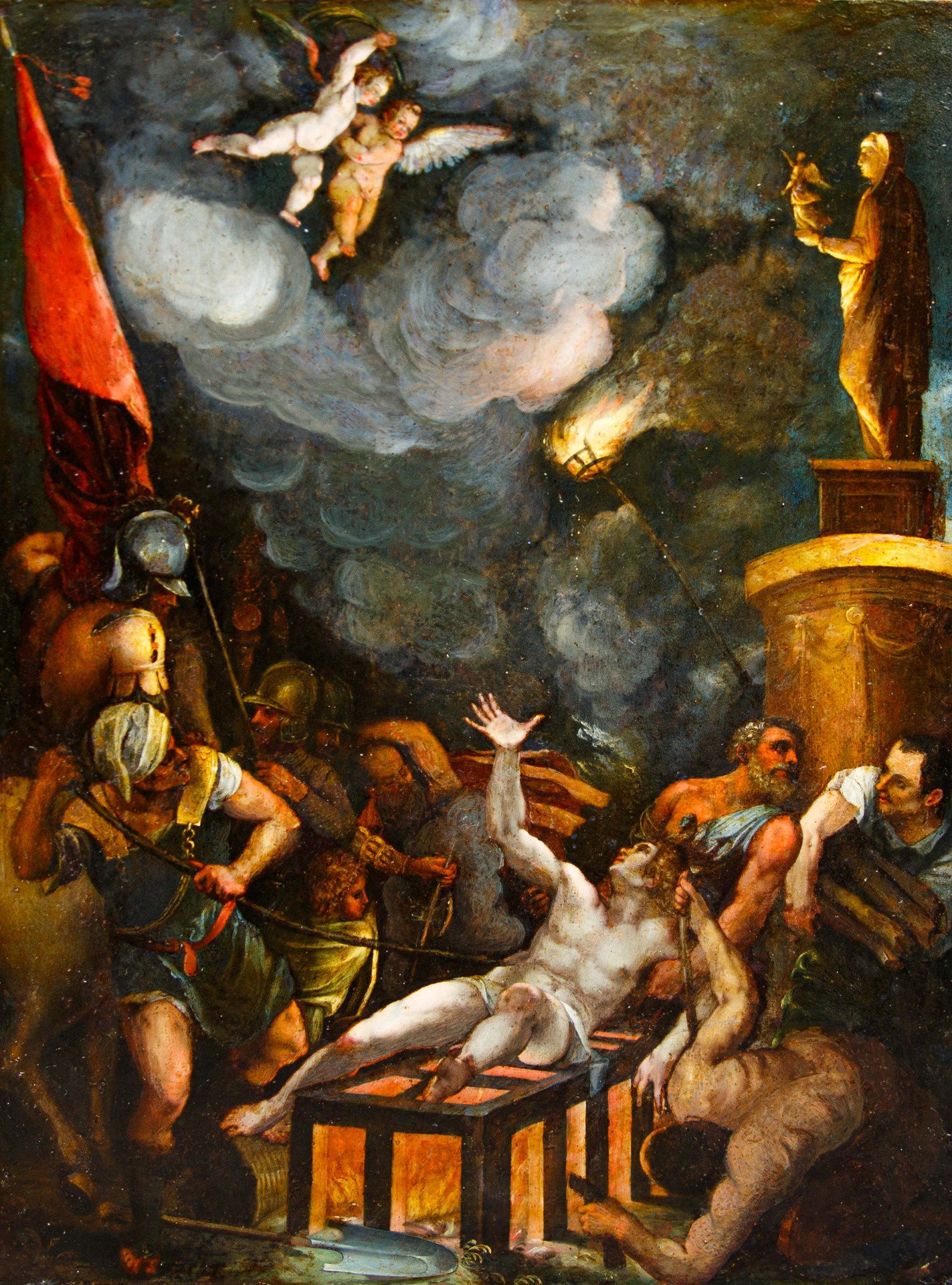
Martyrdom of Saint Lawrence
Oil on copper, 38 x 28 cm
With frame, 50 x 40 cm
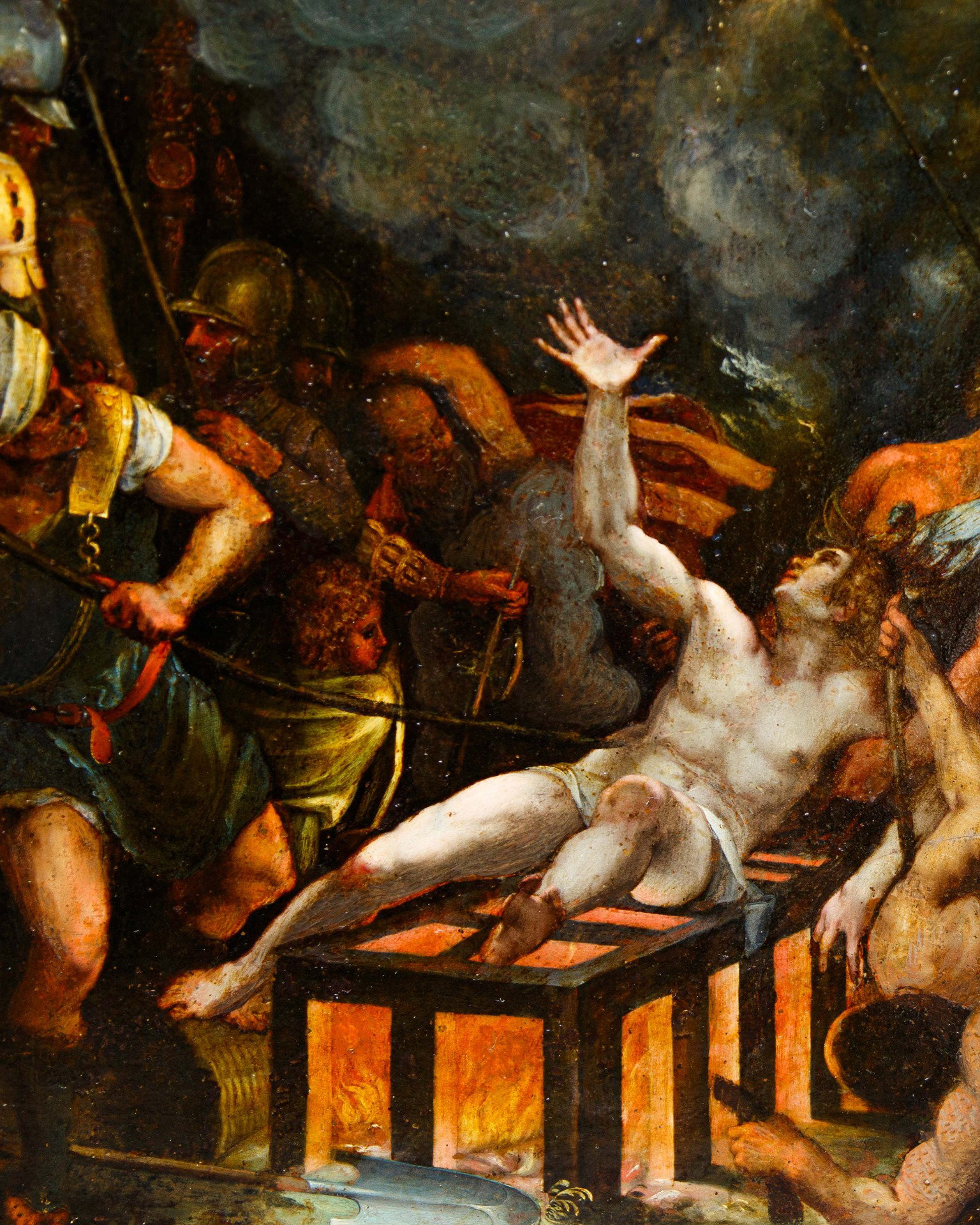
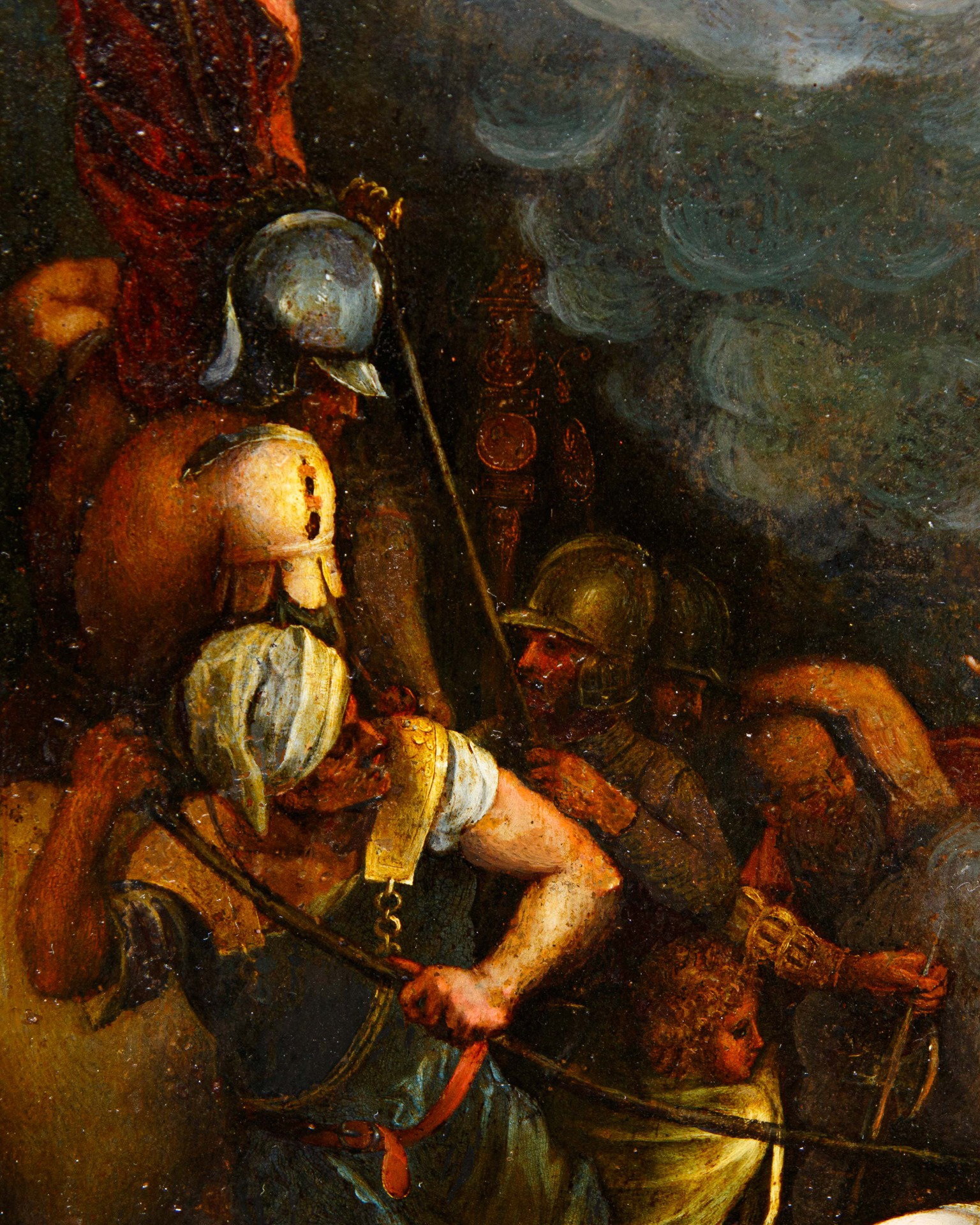
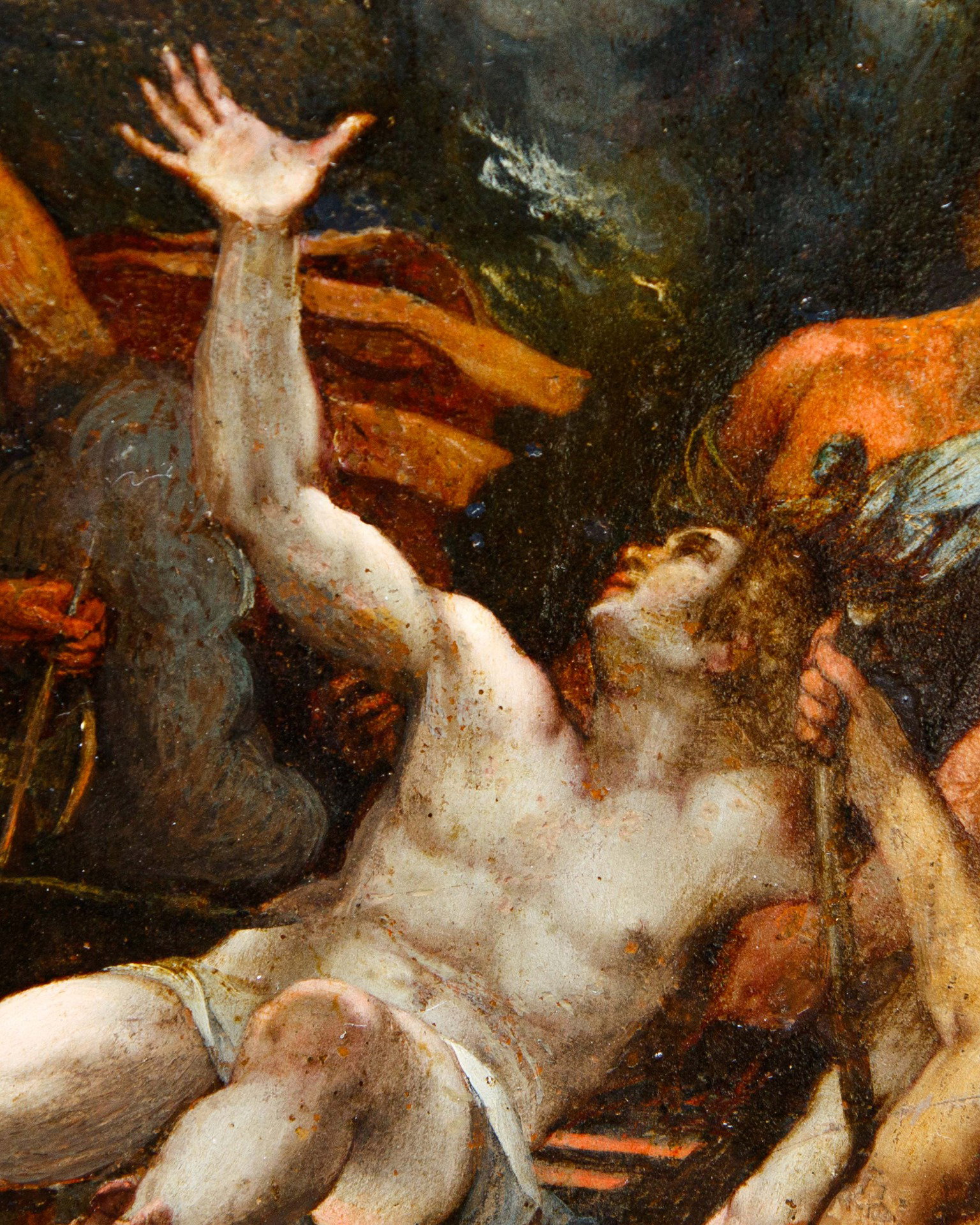
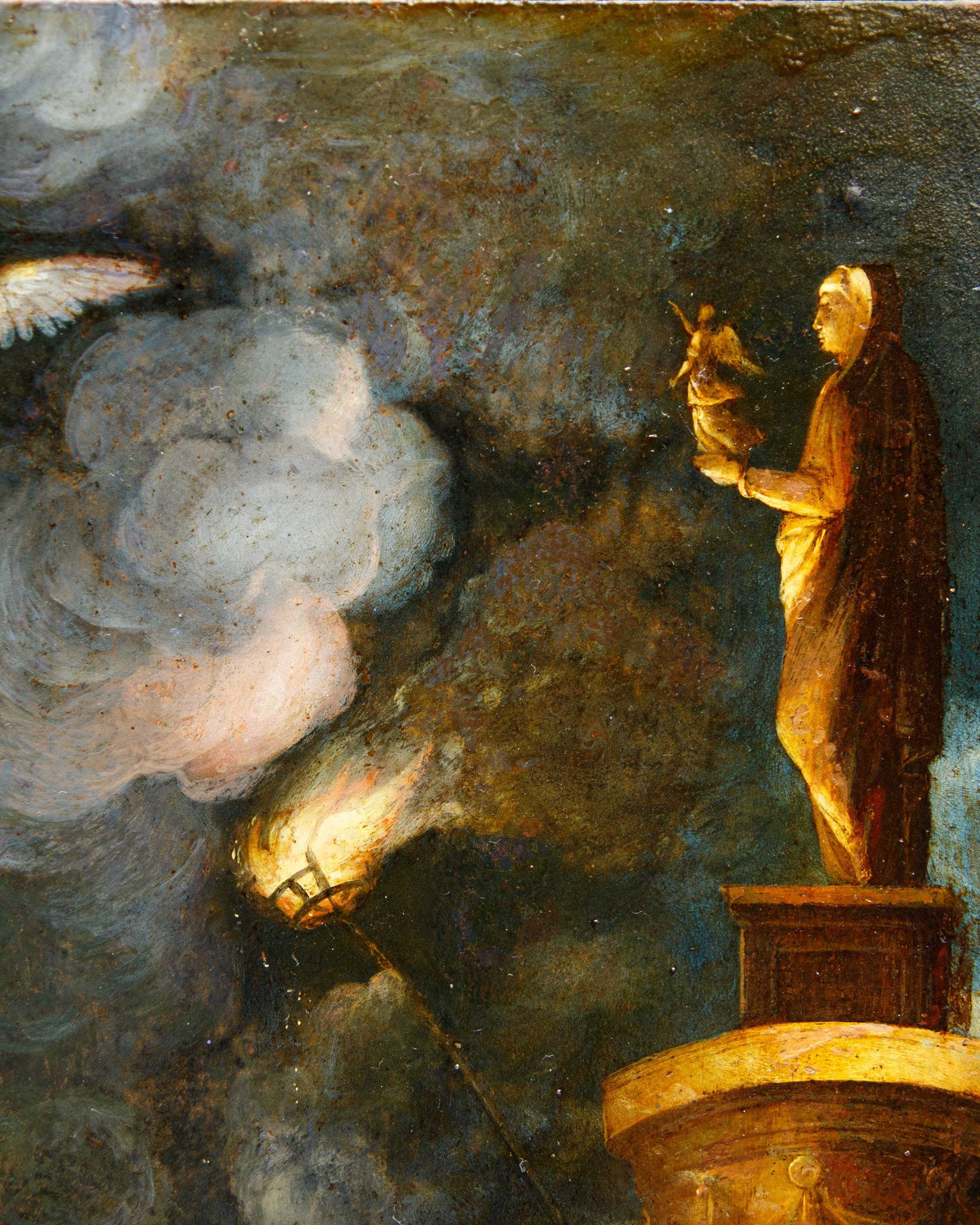
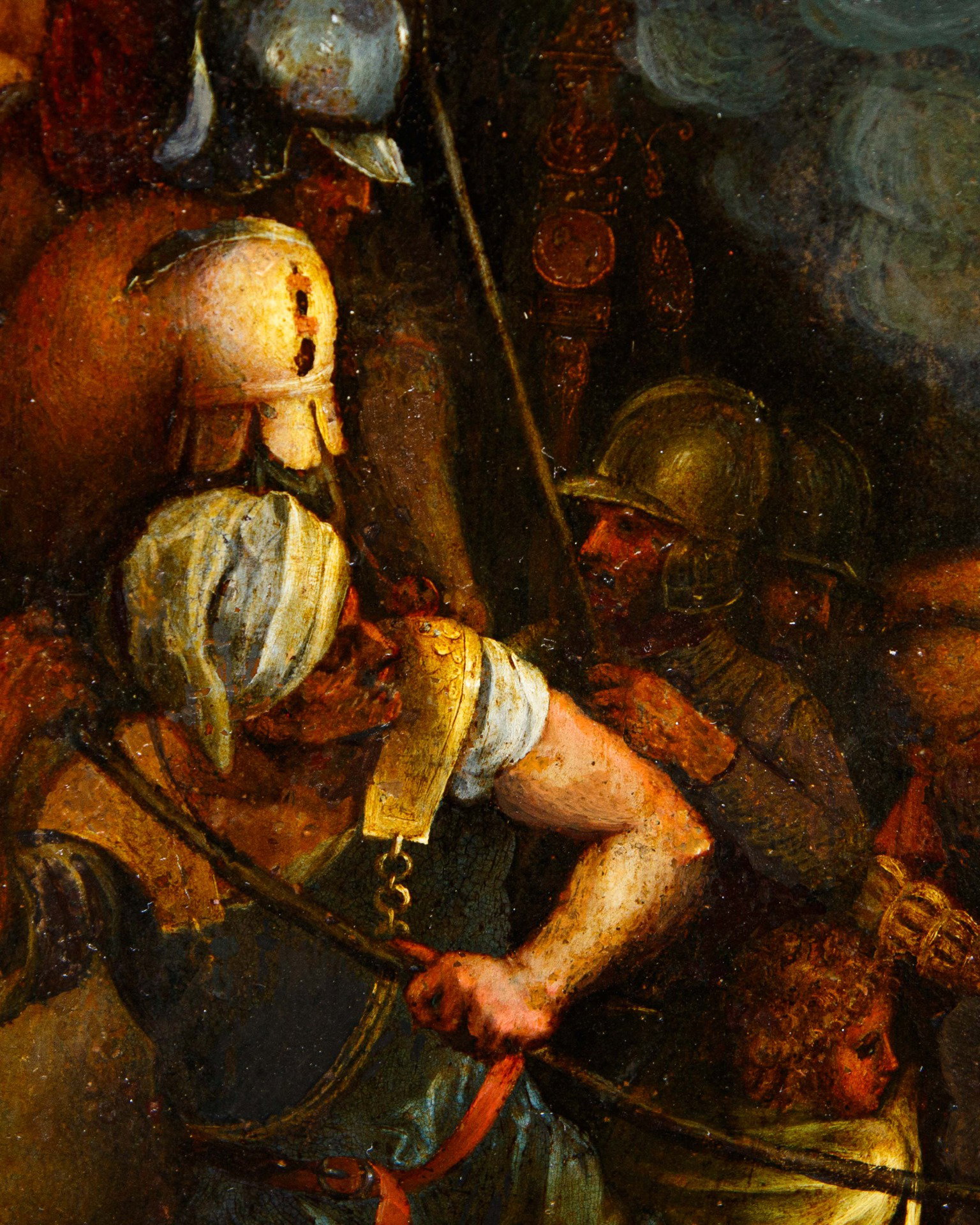
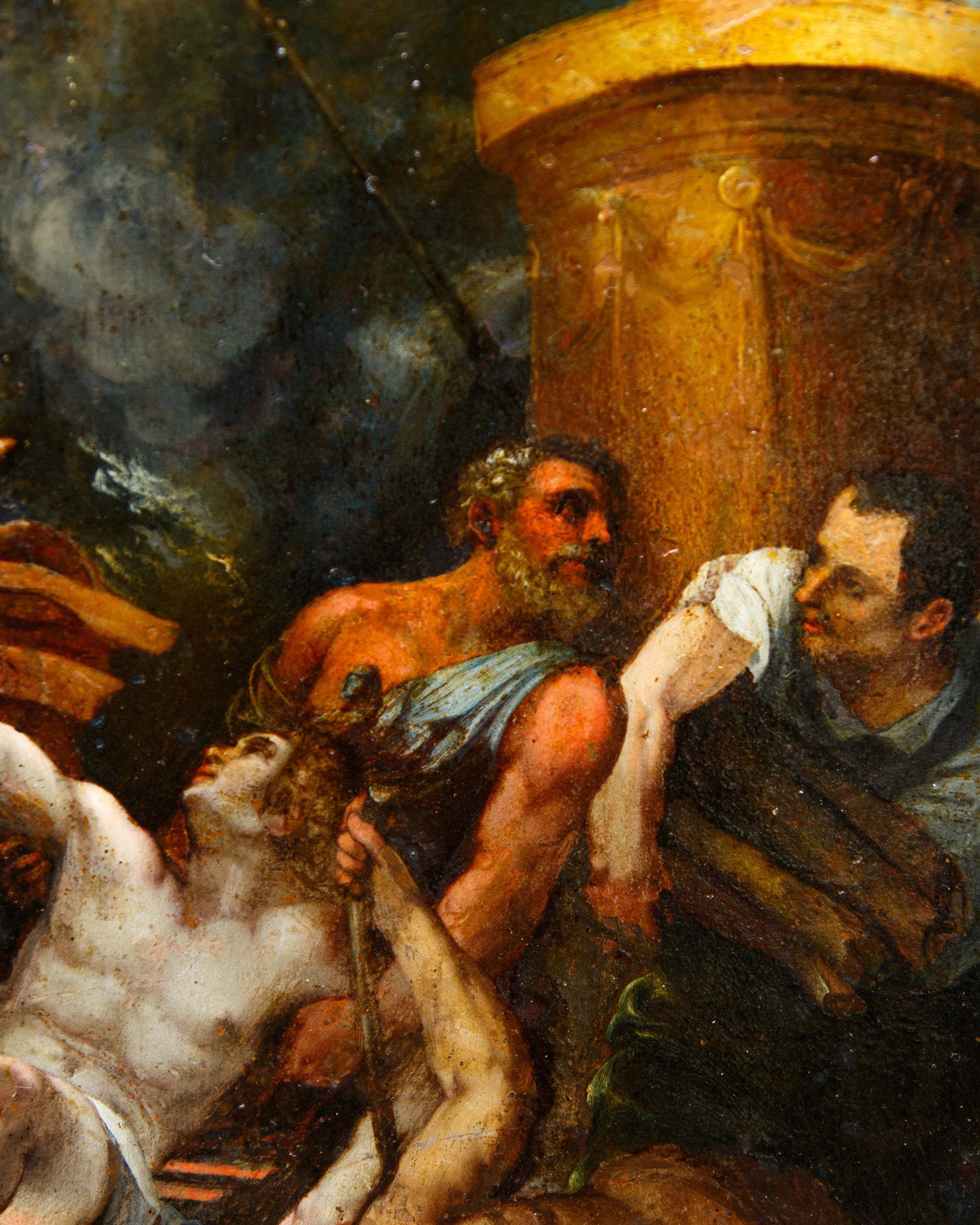
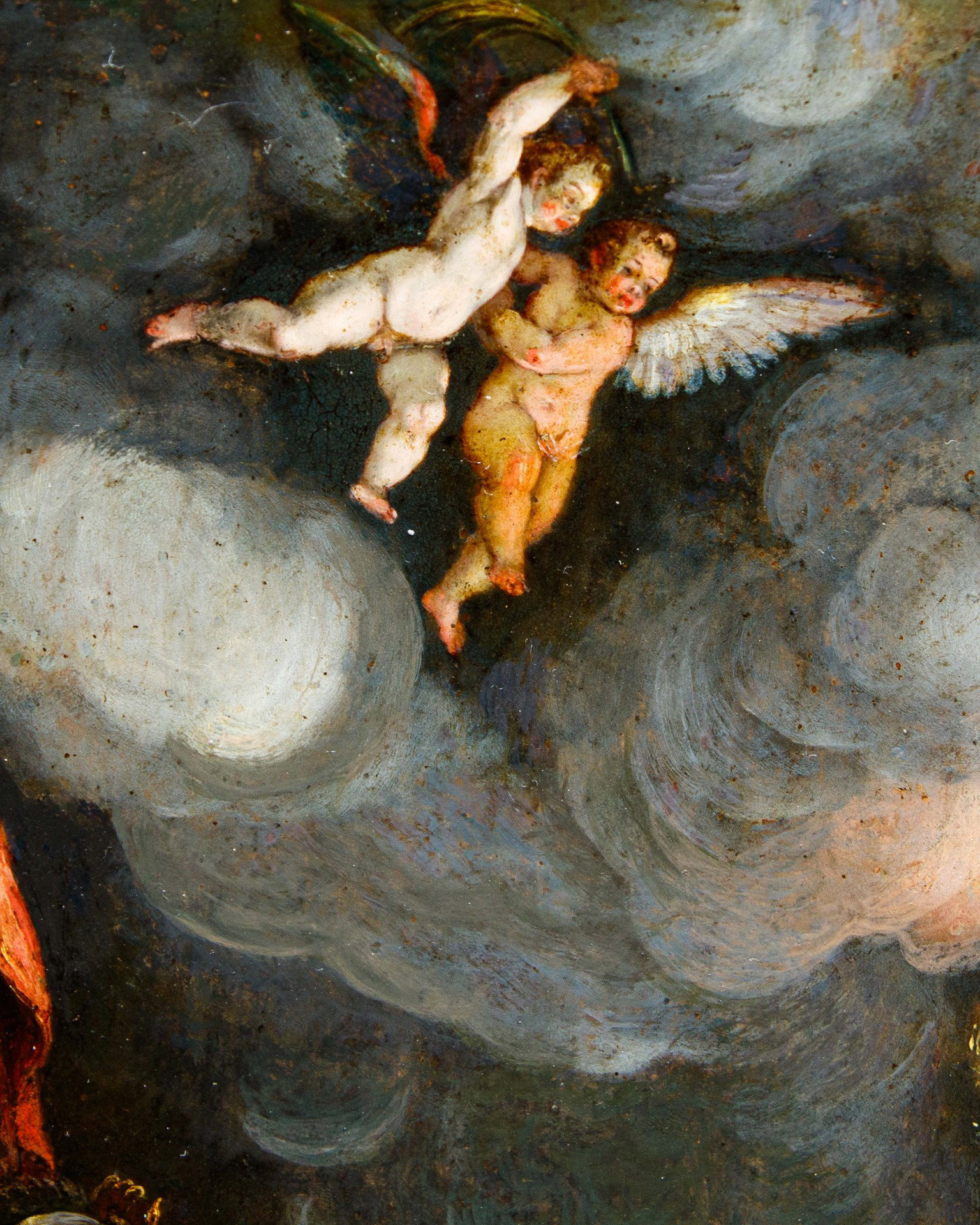
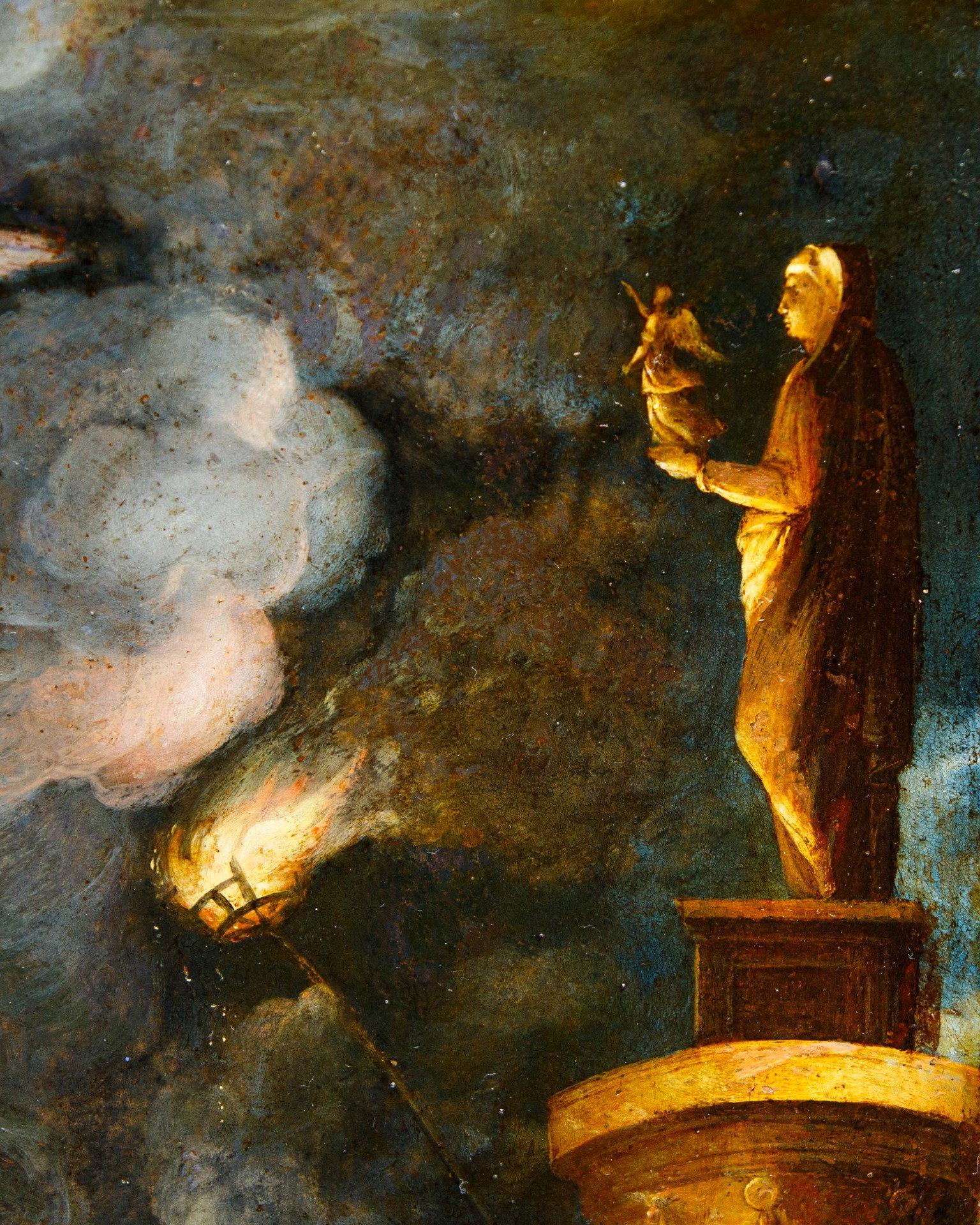
This 17th-century copper painting is a precious testament to the critical and iconographic success of Titian Vecellio's inventions, mediated by the famous graphic translation by Cornelis Cort. The subject of the Martyrdom of Saint Lawrence depicted here does not derive directly from a single canvas by the master from Cadore, but rather meticulously reproduces the composition codified in the burin engraving that Cort created in 1571. This print was conceived as a synthesis of two earlier pictorial versions by Titian: the first, executed between 1548 and 1557 for the Church of the Gesù in Venice, revolutionary for its nocturnal setting illuminated by spectral glares, and the second, sent in 1567 to King Philip II for the Monastery of El Escorial, characterized by greater monumental simplification and more accentuated pathos. The author of the copper in question faithfully reproduces the structure of Cort's engraving, which fused the dynamism of the torturers from the Venetian version with the angelic apparition from the Spanish version, eliminating the grand classical architecture in favor of a dense and dramatic cloud of smoke that enhances the contrast between earthly violence and celestial glory. The painting carefully incorporates the distinctive details of the graphic model, such as the pagan statue on the right dedicated to Philip II and the complex gestures of the figures surrounding the burning gridiron, translating the rigor of the engraved line into a vibrant pictorial material. The scene recalls the martyrdom of Lawrence, deacon of Sixtus II, condemned to death in 258 AD by Emperor Valerian for presenting the poor as the true "treasure of the Church" rather than handing over its riches. The saint is depicted on the burning gridiron as, with heroic fortitude, he raises his arm towards the celestial light, a symbol of faith that overcomes physical torment. The choice of copper as a support, typical of 17th-century small-format production, allows for a meticulous rendering of light reflections and flames, celebrating that Titianesque "nocturne" which, through the circulation of Cort's print, became an indispensable canon for European sacred art.