Cesare Gheduzzi (Crespellano, 1894 - Turin, 1944)
Seascape
Oil on canvas, 70 x 100 cm – with frame, 82 x 112 cm
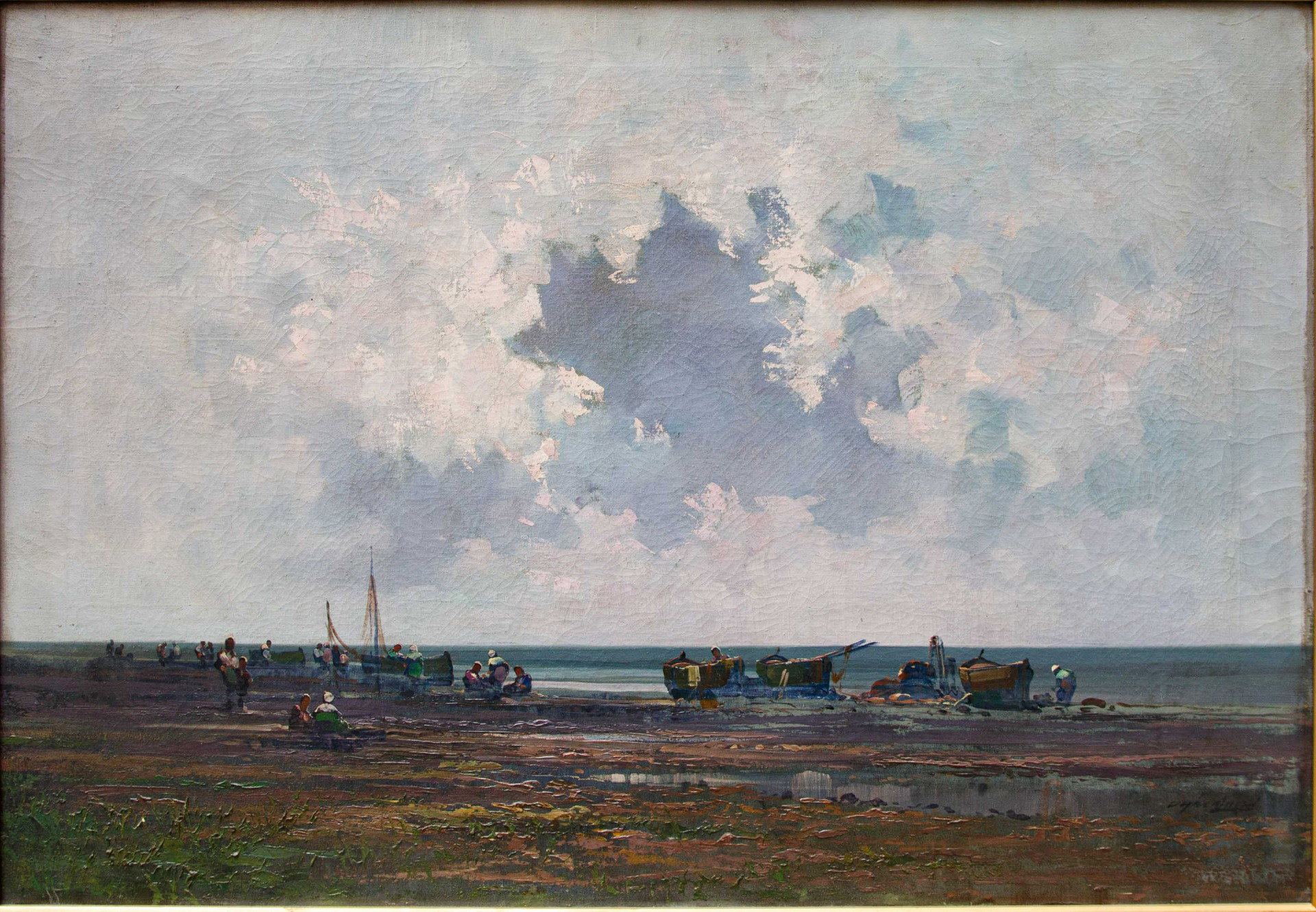
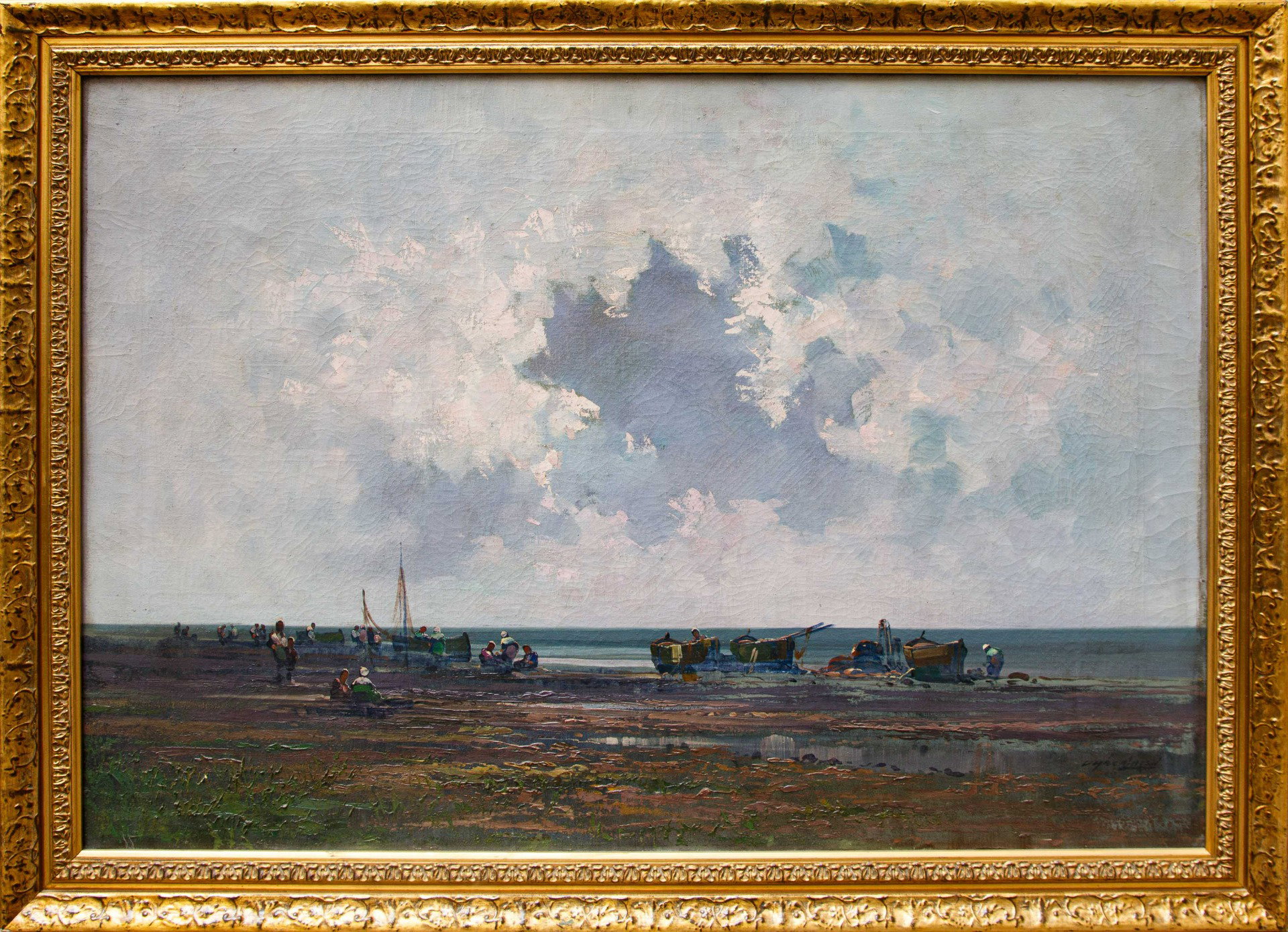
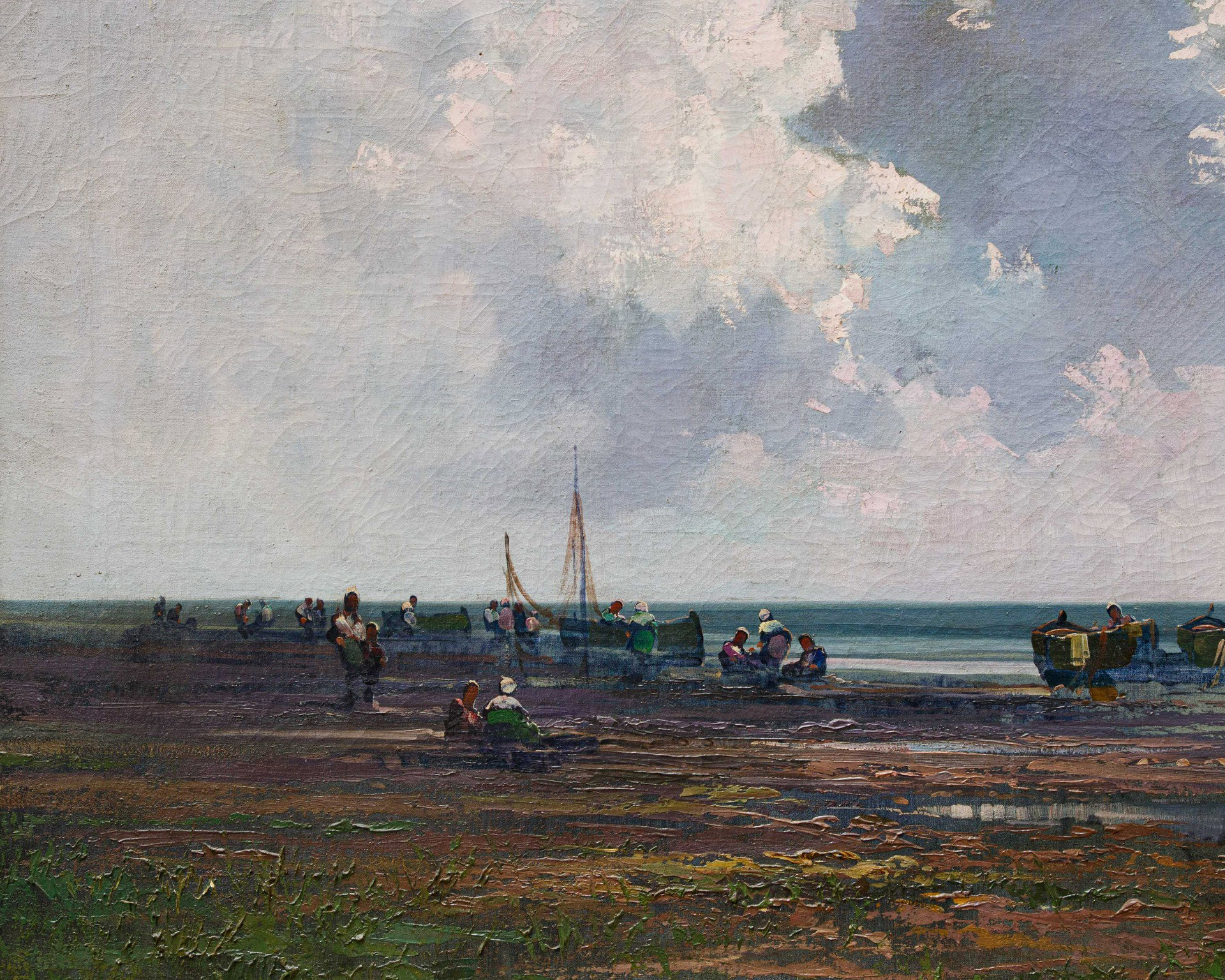
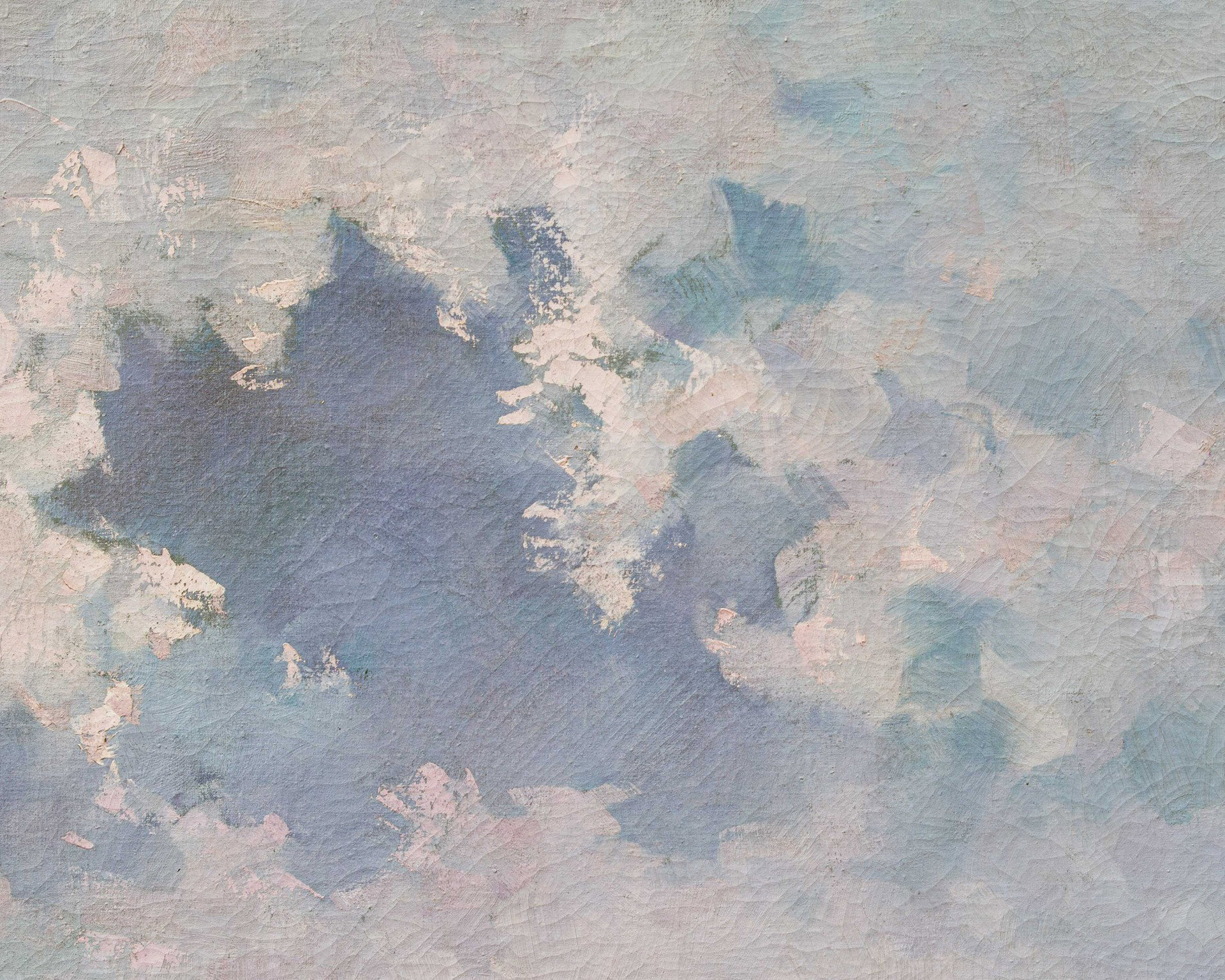
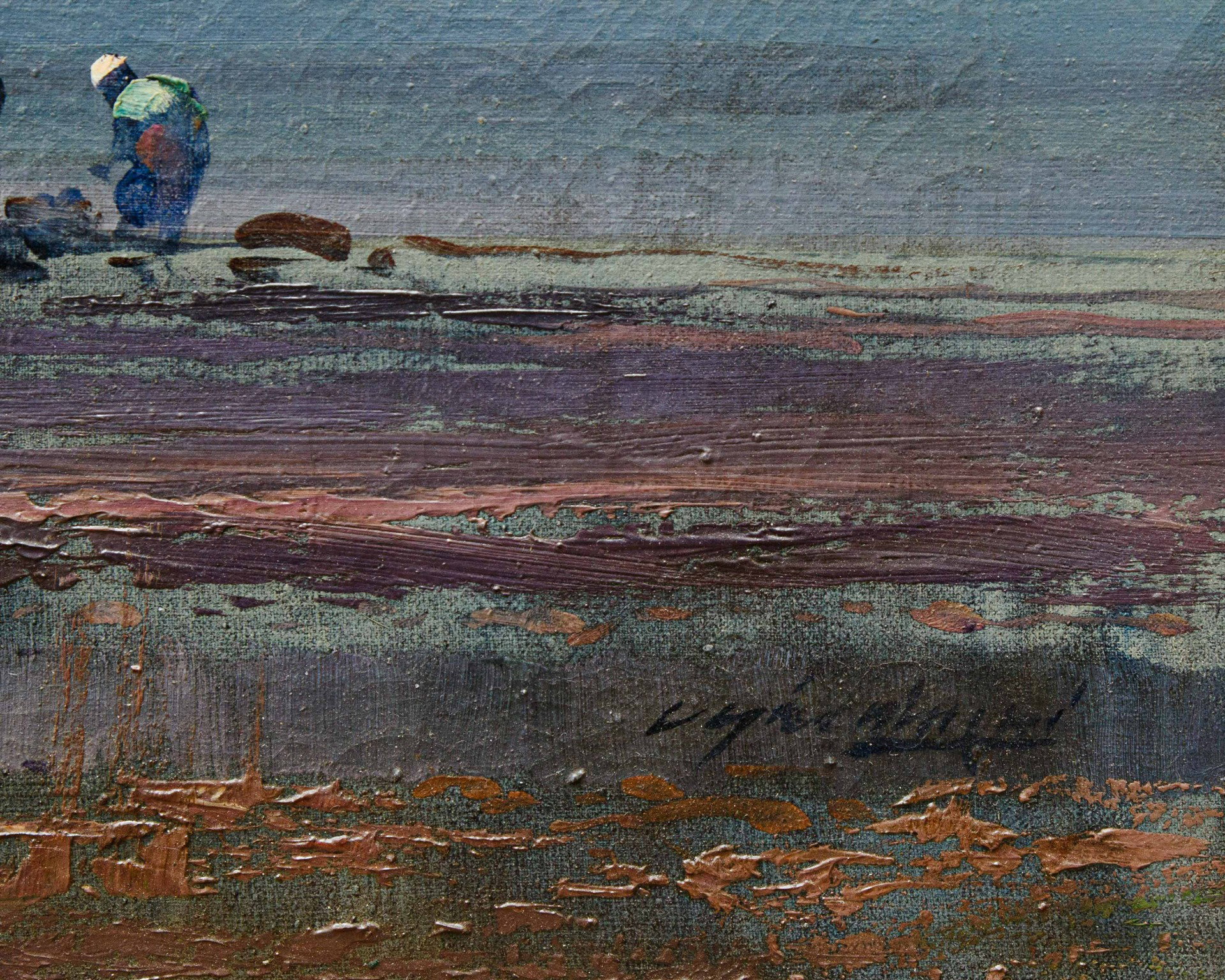
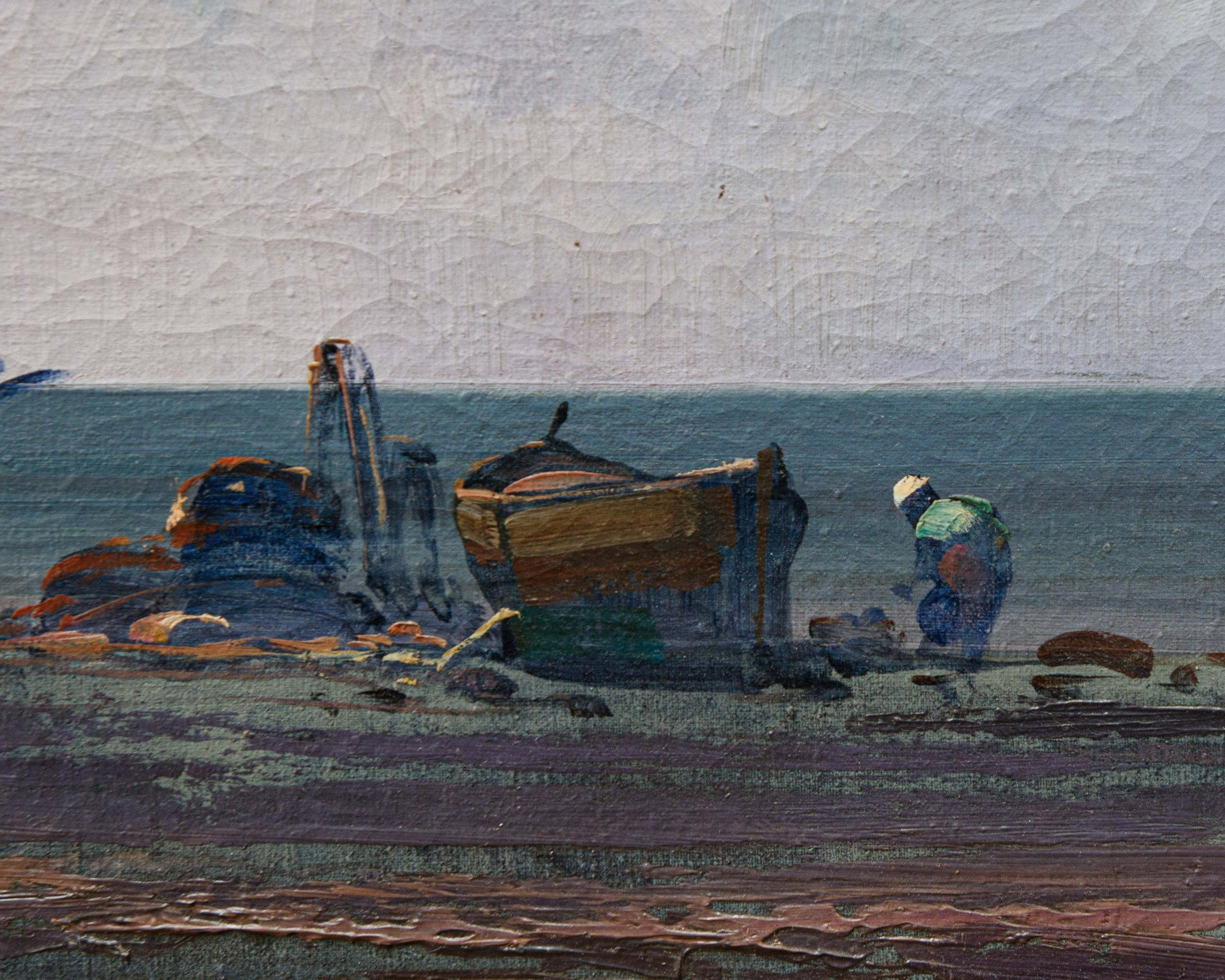
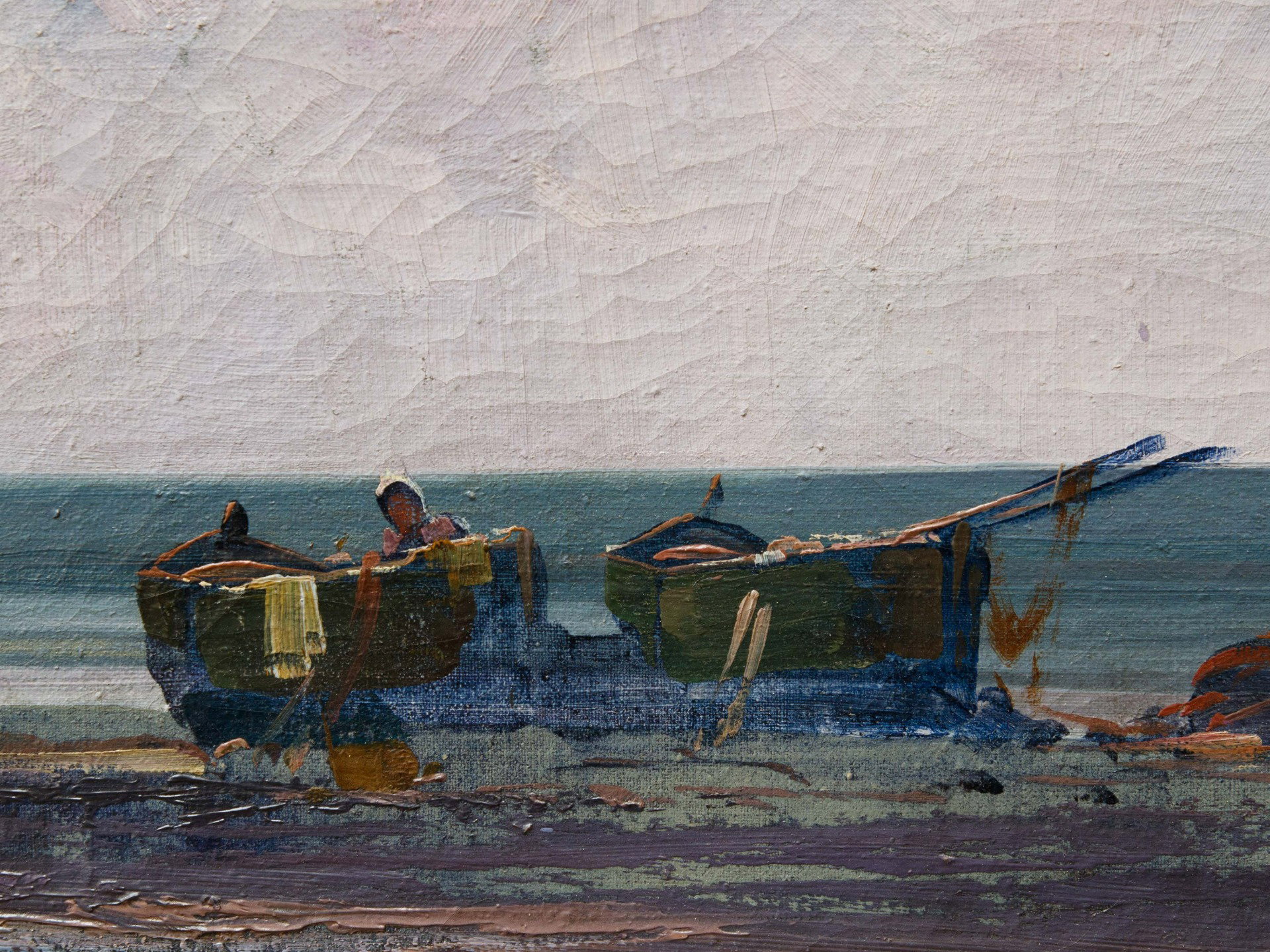
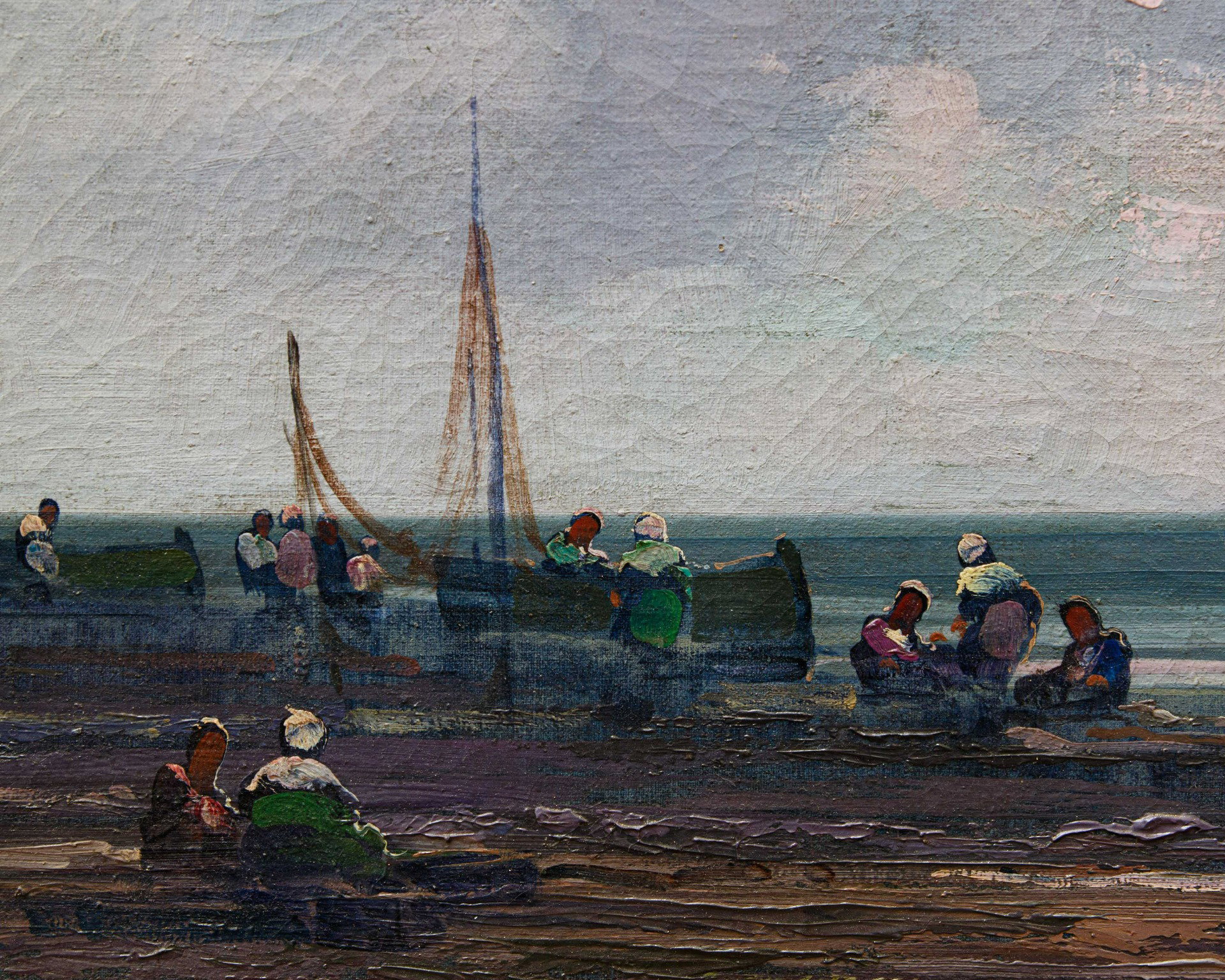
Seascape, an oil on canvas work signed by the painter of Emilia origins Cesare Gheduzzi, shows how this artist interpreted landscapes with a sensitivity suspended between 19th-century tradition and a highly effective chromatic modernity. The composition develops on a low horizon, allowing the vast celestial vault, crossed by wispy clouds imbued with silvery light, to become the true protagonist of the painting. In the foreground, the dark, damp shoreline welcomes a series of boats pulled ashore, around which figures of fishermen move, rendered with rapid brushstrokes. These human presences, although minute compared to the vastness of the environment, lend the scene a note of daily life, typical of the genre painting that Gheduzzi frequented assiduously. The skillful use of light contrasts and a palette dominated by cool, pearlescent tones reveal the decisive influence of Carlo Follini, his teacher, while also highlighting an autonomous stylistic signature that translates into a more concise sign.
Born in Crespellano in 1894 into a family of artists, Cesare Gheduzzi breathed the atmosphere of painting studios and scenographic workshops from childhood. Having moved to Turin in 1900 to follow his father Ugo, the renowned set designer for the Teatro Regio, Cesare began his training as a self-taught artist, later perfecting his skills under the guidance of his older brother Augusto and, above all, Carlo Follini. Despite a rebellious nature that kept him away from formal academic paths, he quickly distinguished himself in the Turin art scene, collaborating on his family's major stage productions and concurrently dedicating himself to easel painting. His career was marked by the traumatic experience of the Great War, during which he fought on the Isonzo, sustaining injuries and being discharged for psychiatric reasons, events that, however, did not extinguish his creative urge. He exhibited regularly at the Società Promotrice delle Belle Arti and the Circolo degli Artisti in Turin, consolidating a reputation linked to his ability to faithfully and elegantly render both the mountain landscapes of the Aosta Valley and the Ligurian seascapes.
In this Seascape, Follini's lesson can be traced in the stylistic features of the small figures and the luminous highlights that dot the coast, but Gheduzzi resolves the ensemble with a well-formed personality, where the atmospheric rendering becomes more synthetic. Critics, particularly Giuseppe Luigi Marini, have highlighted how the artist manages to distinguish himself through the use of cool colors and a technique that avoids descriptive complacency in favor of a more immediate rendering of the natural subject. His works continue to be of interest for their ability to combine the perspectival rigor, learned from his brother Augusto, with a freedom of execution that transforms every view into a visual emotion. Cesare Gheduzzi died in Turin in 1944, leaving an artistic legacy that is still celebrated today, through posthumous exhibitions in Milan and Turin, for its honest and refined adherence to reality.