Felice De Maurizio (1810 - 1890)
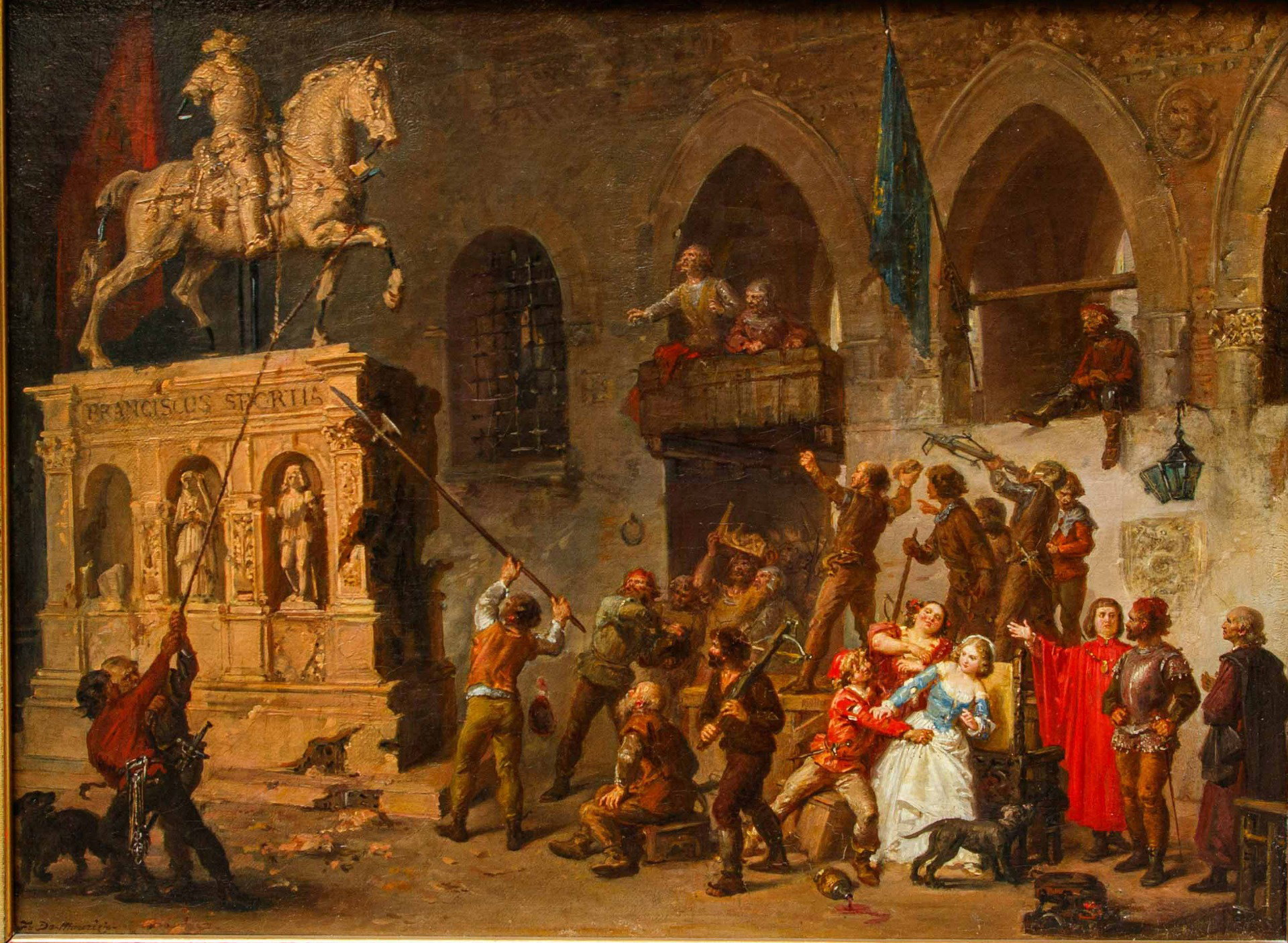
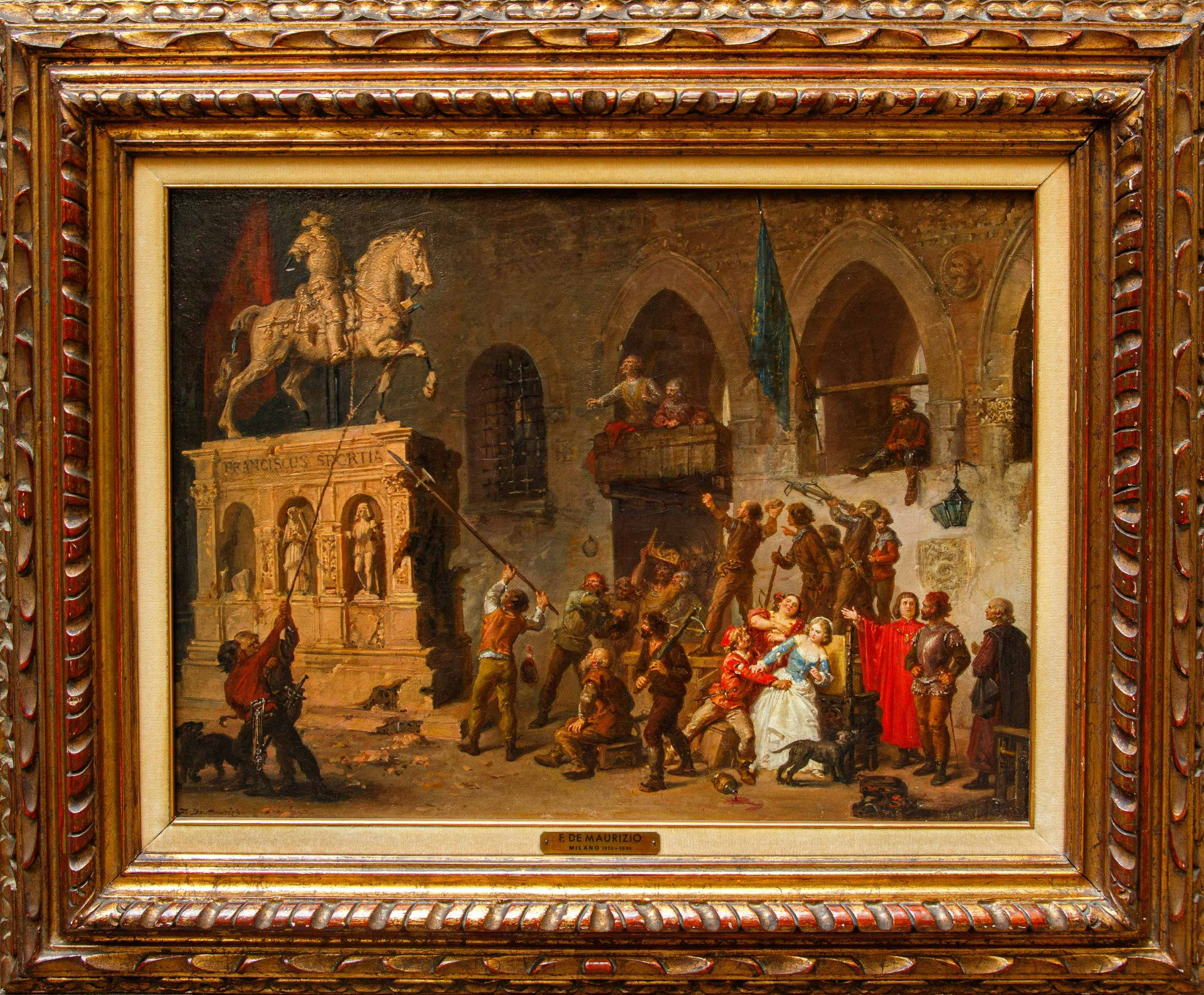
Destruction of the equestrian statue of Francesco Sforza
oil on canvas, 44.5 x 59.5 cm, with frame, 70 x 85 cm
signed lower left
Provenance: Bernasconi Collection, Milan
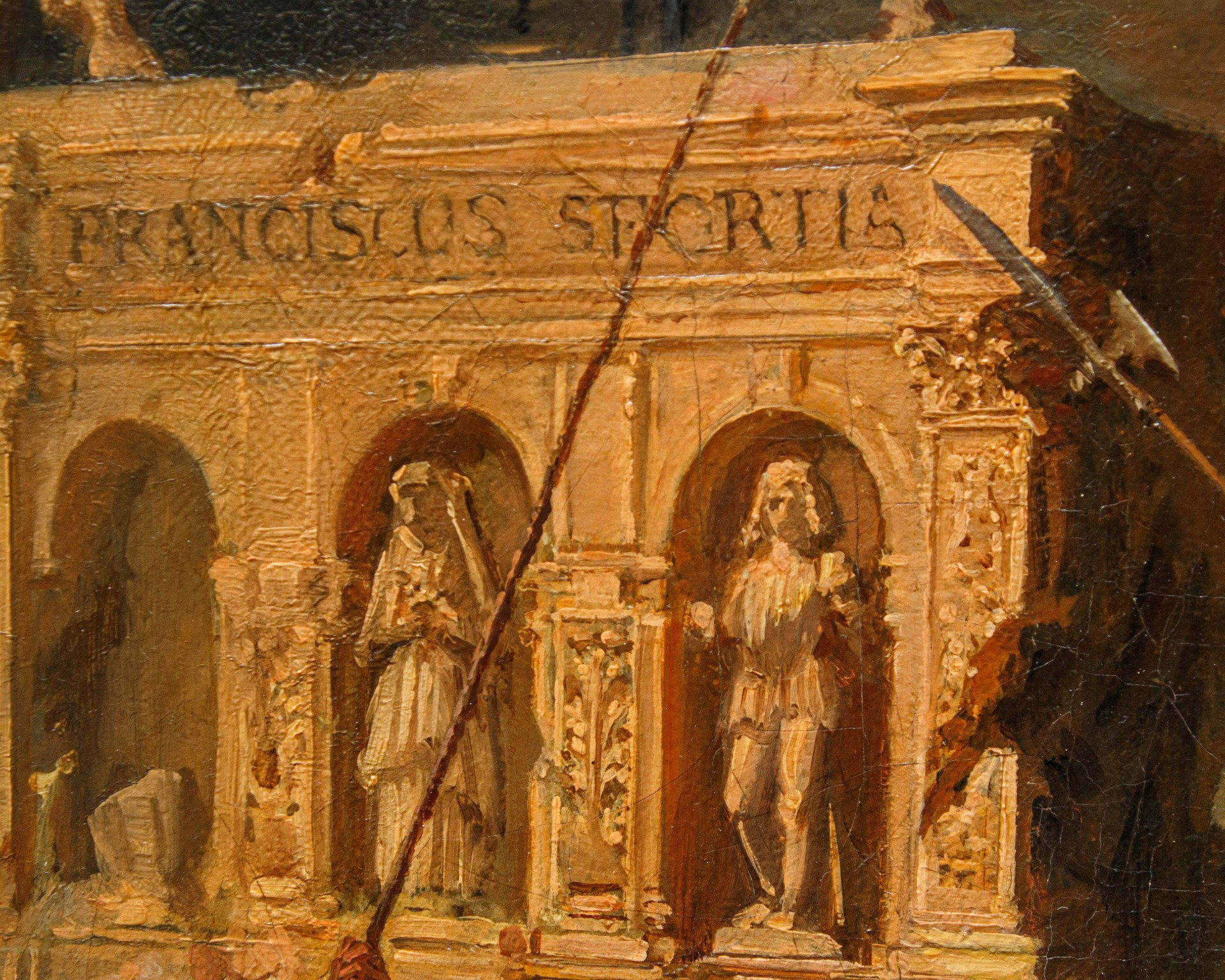
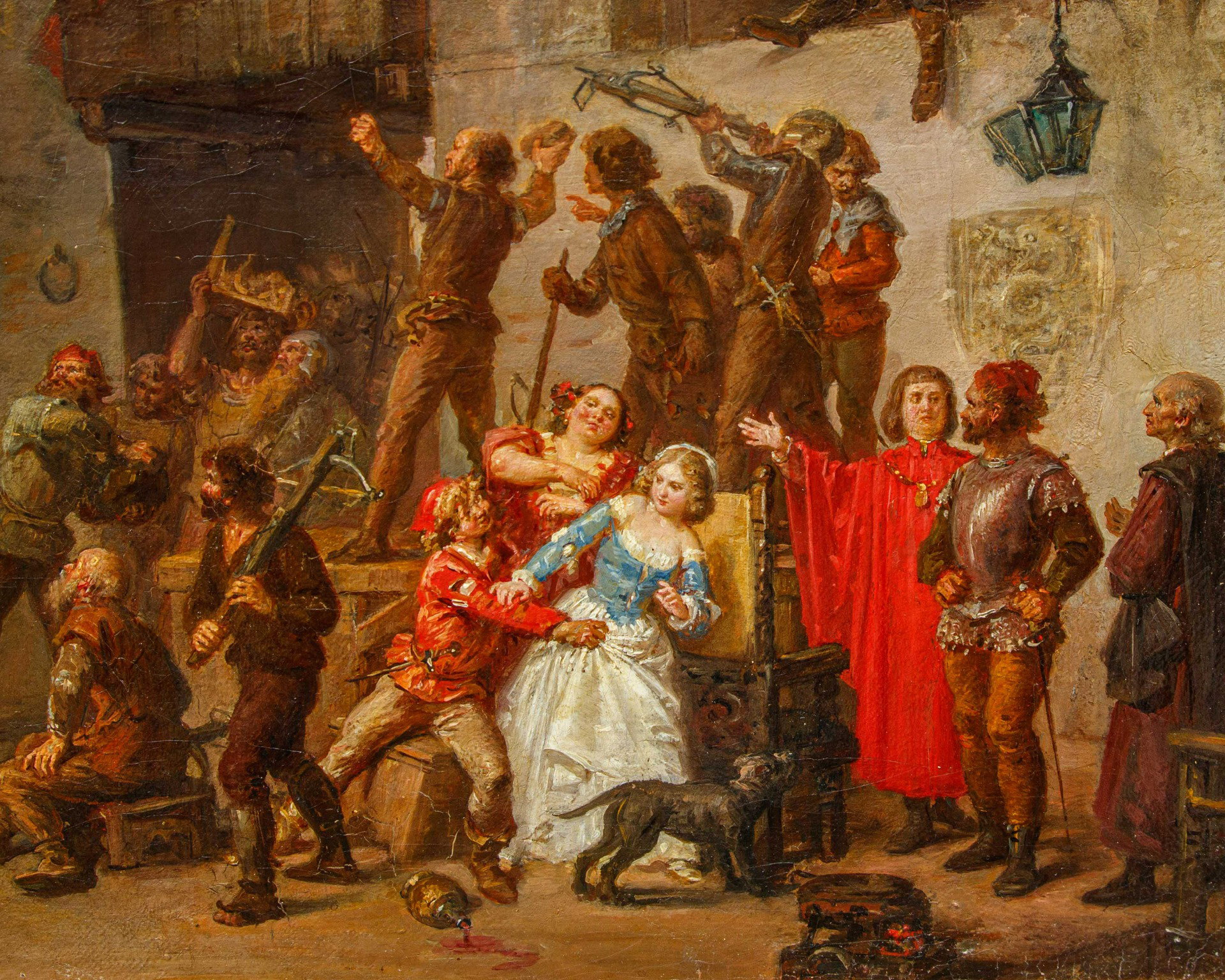
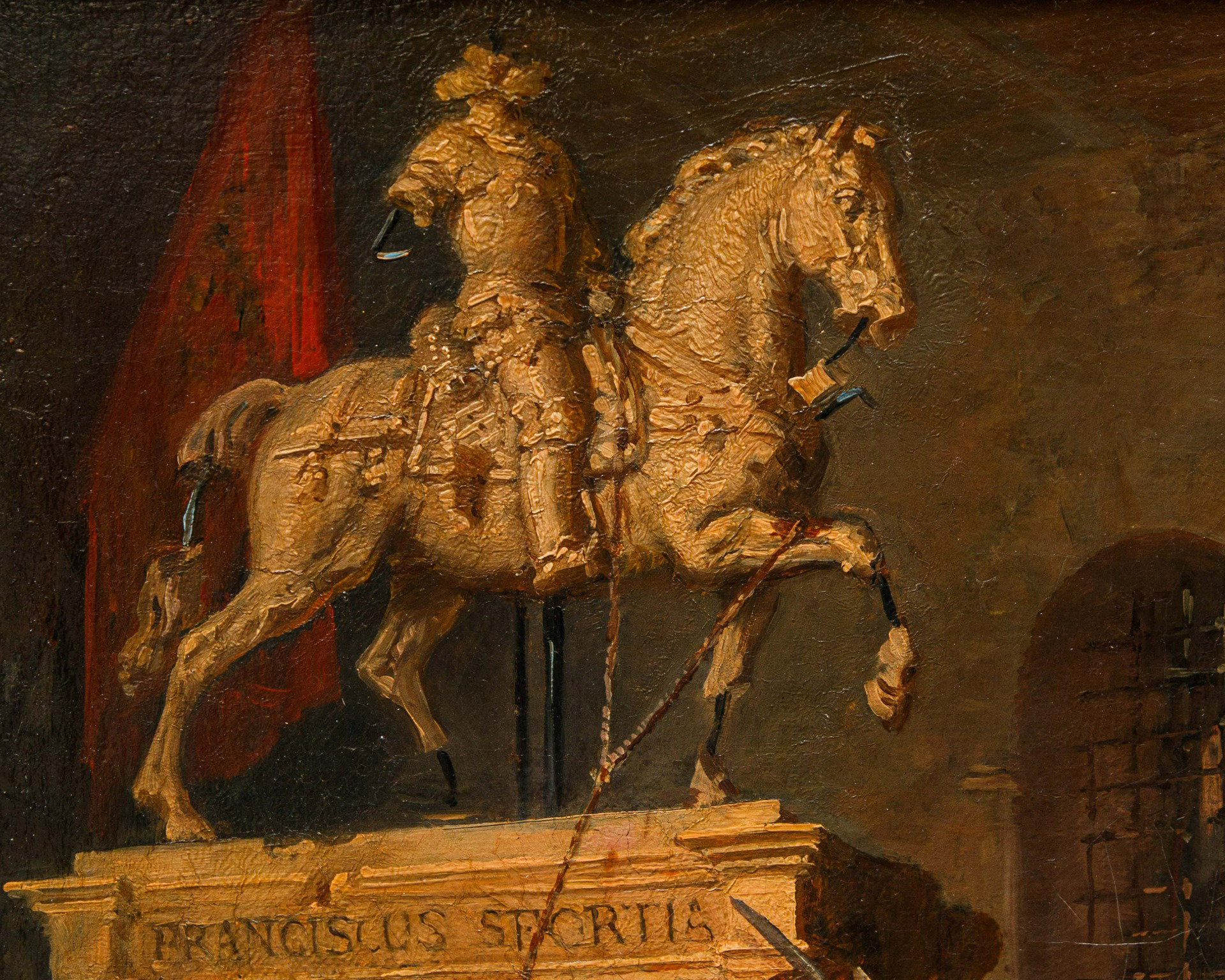
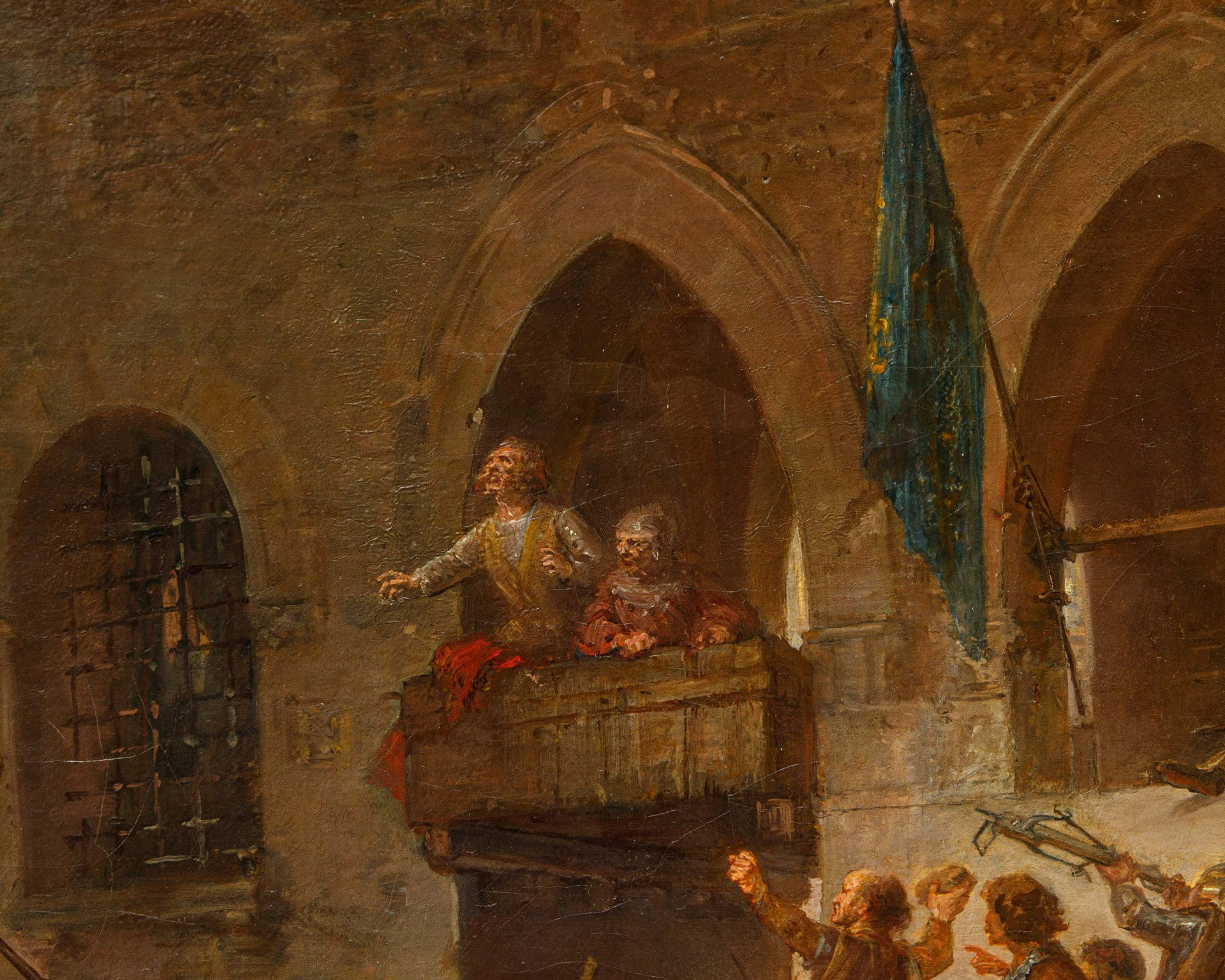
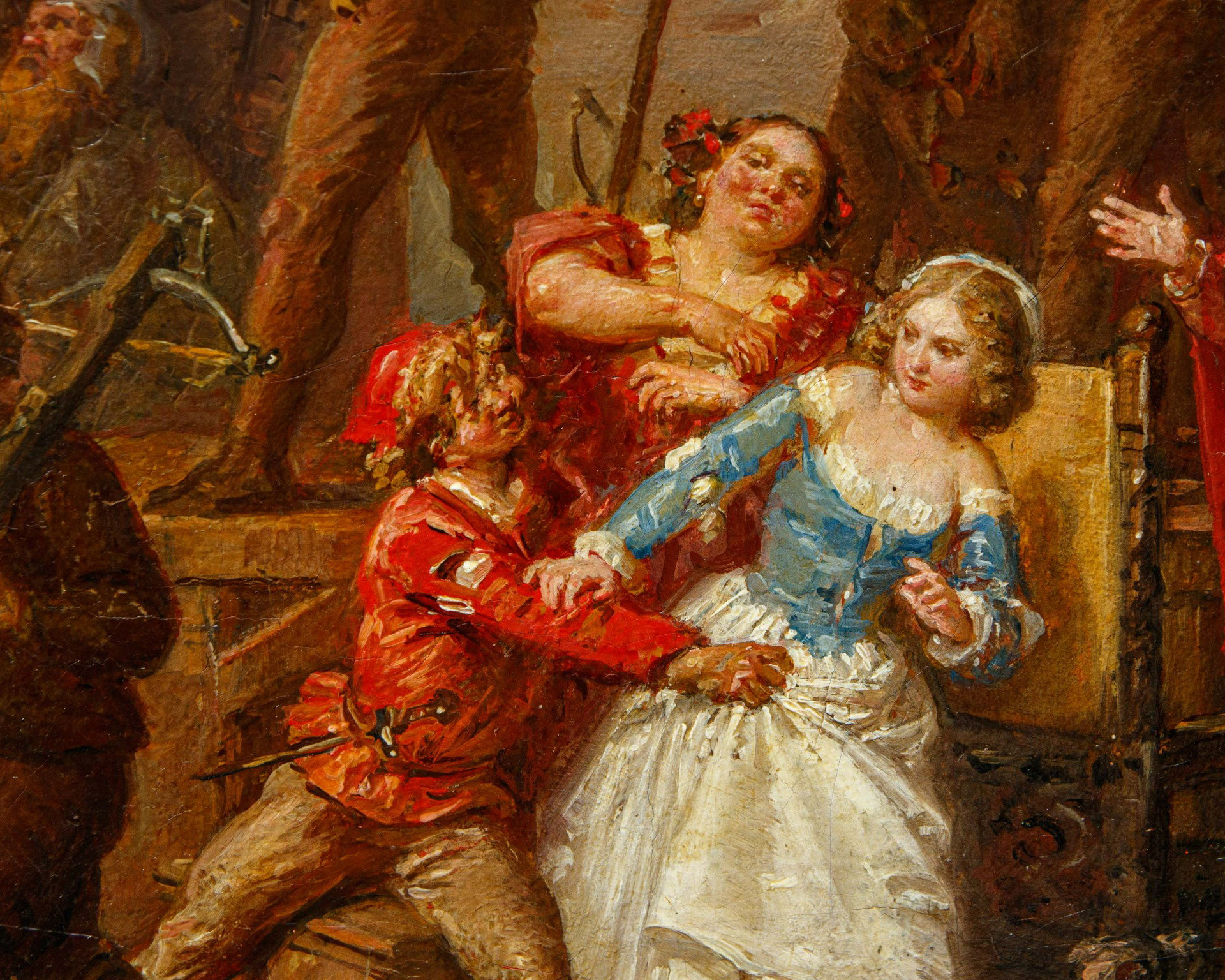
This canvas conveys with dramatic visual force the convulsive power shift that occurred in Milan in 1499, when the fall of Ludovico il Moro marked the end of an era and the beginning of French domination. The artist merges historical reality and imagination to narrate the collapse of the Sforza dynasty, choosing as a symbolic fulcrum the assault on what appears to be the legendary equestrian monument to Francesco Sforza, the titanic work designed by Leonardo da Vinci and never completed.
The Sforza Monument, commissioned to Leonardo in 1482 by Ludovico il Moro, was to be the largest equestrian statue in the world in honor of Francesco Sforza. After years of anatomical studies, in 1493 the artist created a colossal clay model over seven meters high, intended for a bronze casting that never took place. When in 1499 the troops of Louis XII entered Milan, the monumental clay model was used by Gascon crossbowmen as a target for their exercises, being irreparably destroyed and leaving Leonardo with the bitterness of never having seen his greatest sculpture completed.
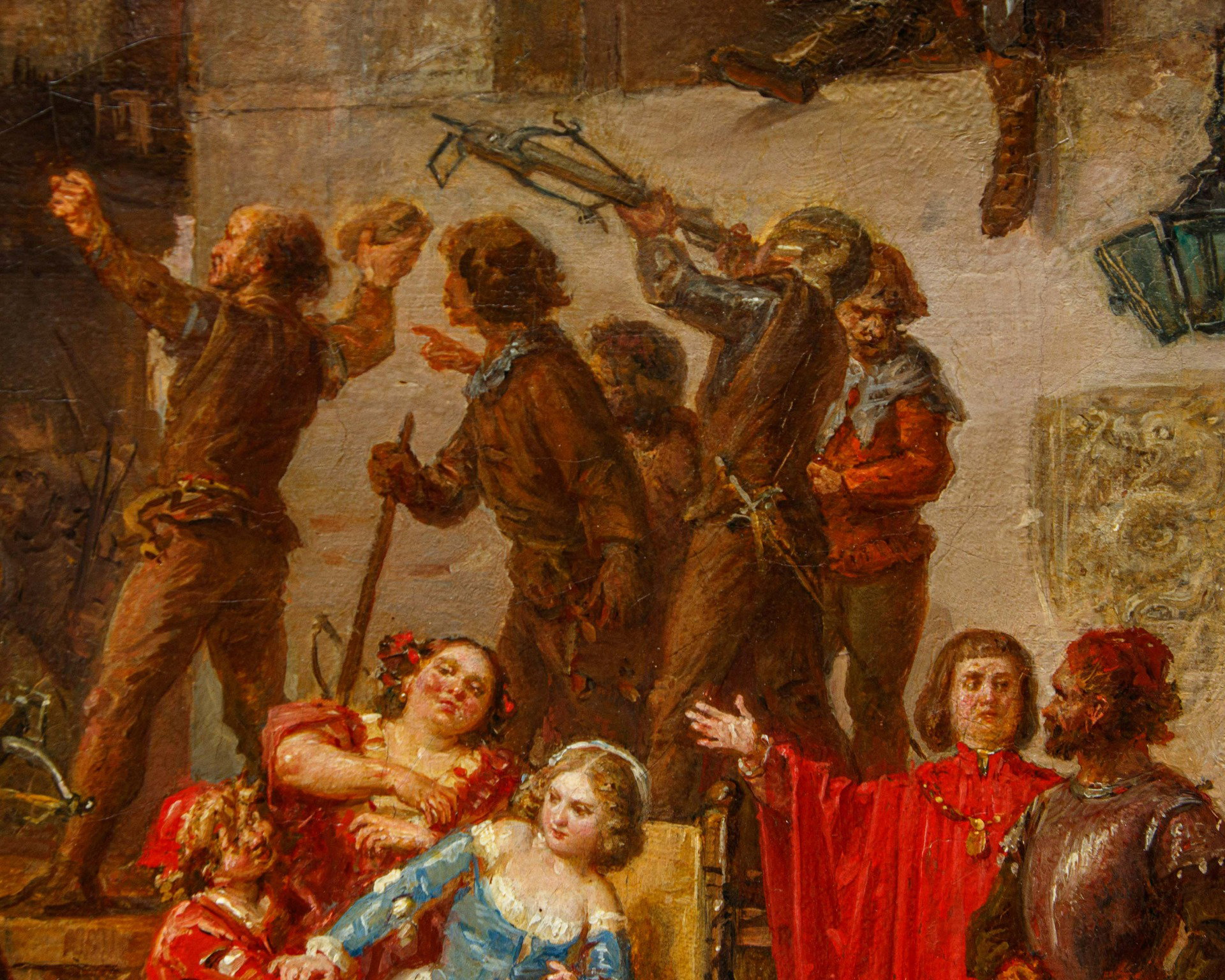
The description of the work highlights a furious crowd that, amidst debris and smoke, attacks the simulacrum of the duke with ropes and long poles, transforming the castle courtyard into a theater of iconoclastic fury where the overthrow of the statue sanctions the cancellation of the previous regime. In this scenario of radical change, the figure cloaked in a sumptuous red dress emerges as the political pivot of the scene, likely identifiable as Gian Giacomo Trivulzio, the Milanese nobleman and bitter enemy of the Sforzas who led the French army to conquer his own city, here depicted observing with solemn detachment the definitive end of his adversaries.
The author of the painting is Felice De Maurizio, a painter born in Milan in 1810 and trained at the Brera Academy under Luigi Sabatelli between 1824 and 1830, who distinguished himself as a figure painter specializing in historical-literary compositions and commissioned portraiture. During his career, he exhibited significant works at Brera such as Saints Cosma and Damian , Paul and Virginia , and The youthful meditations of Christopher Columbus, as well as creating important institutional portraits for the Ospedale Maggiore and the Administration of Pious Charities, such as that of Giuseppe Calcaterra. In addition to painting, De Maurizio dedicated himself to scenography, restoration, and ornamental decoration, holding the prestigious position of curator of the Pinacoteca di Brera between 1867 and 1882, before his death in Milan in 1890.