Roman School, 17th century
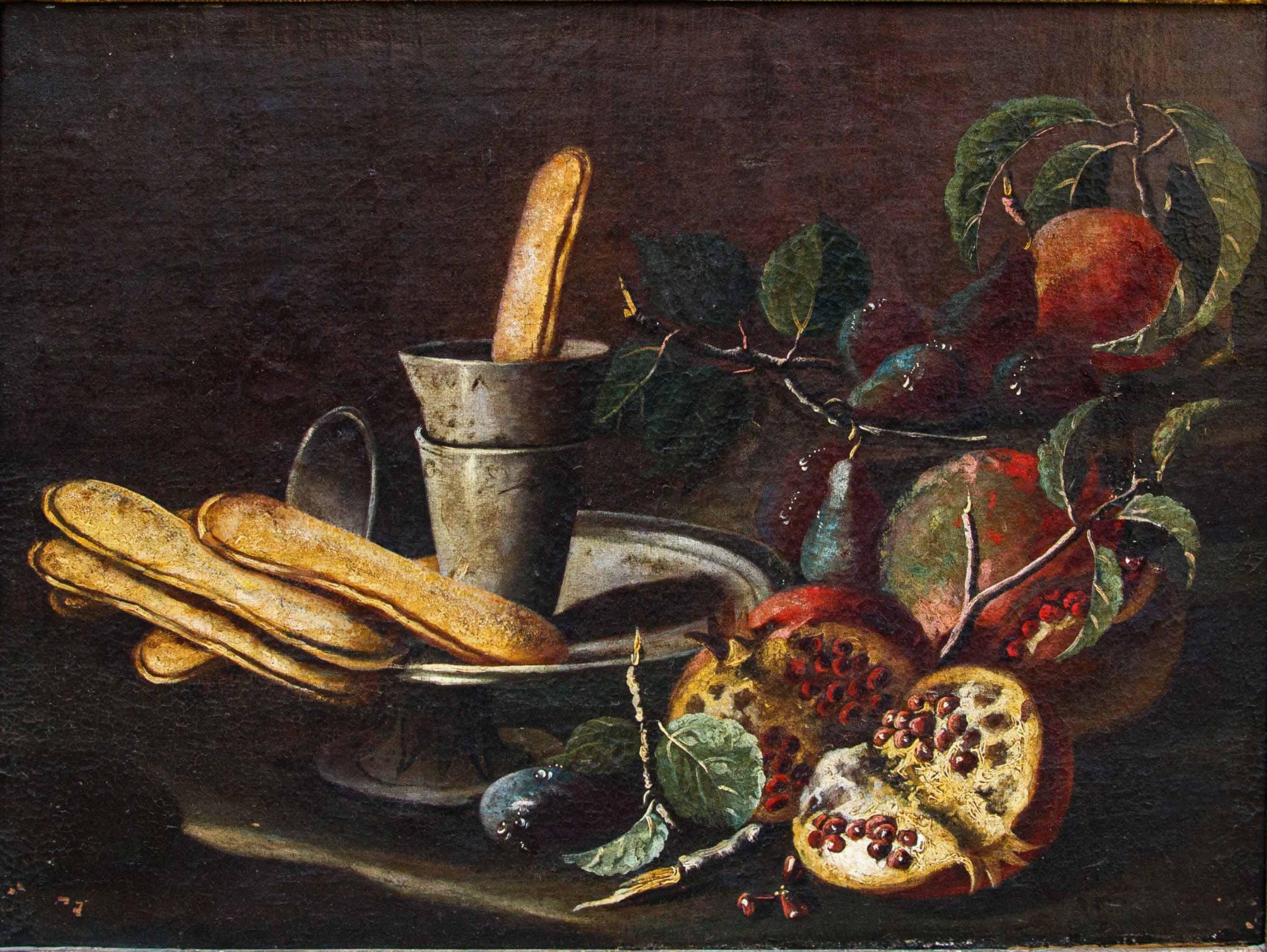
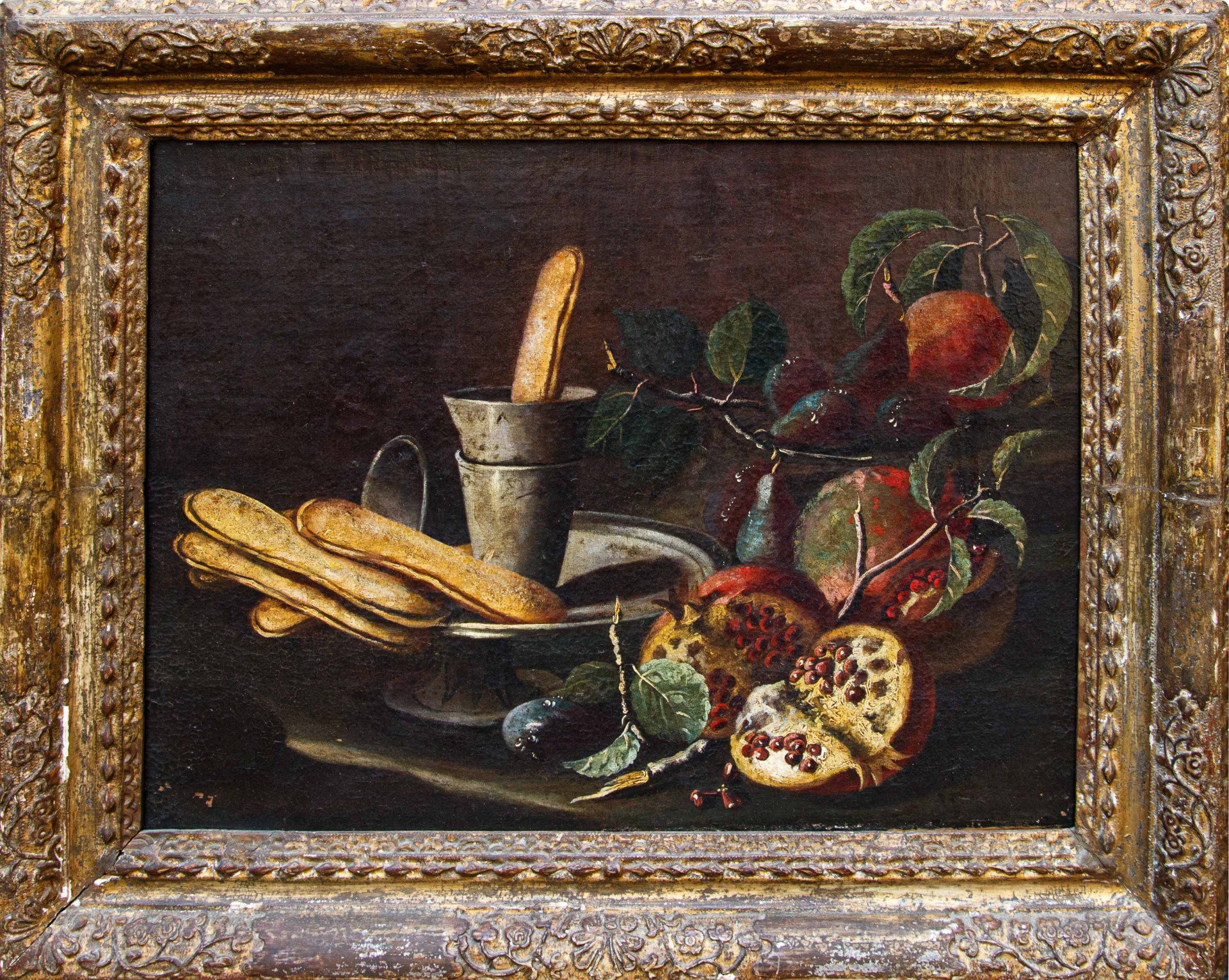
Still life with pomegranates
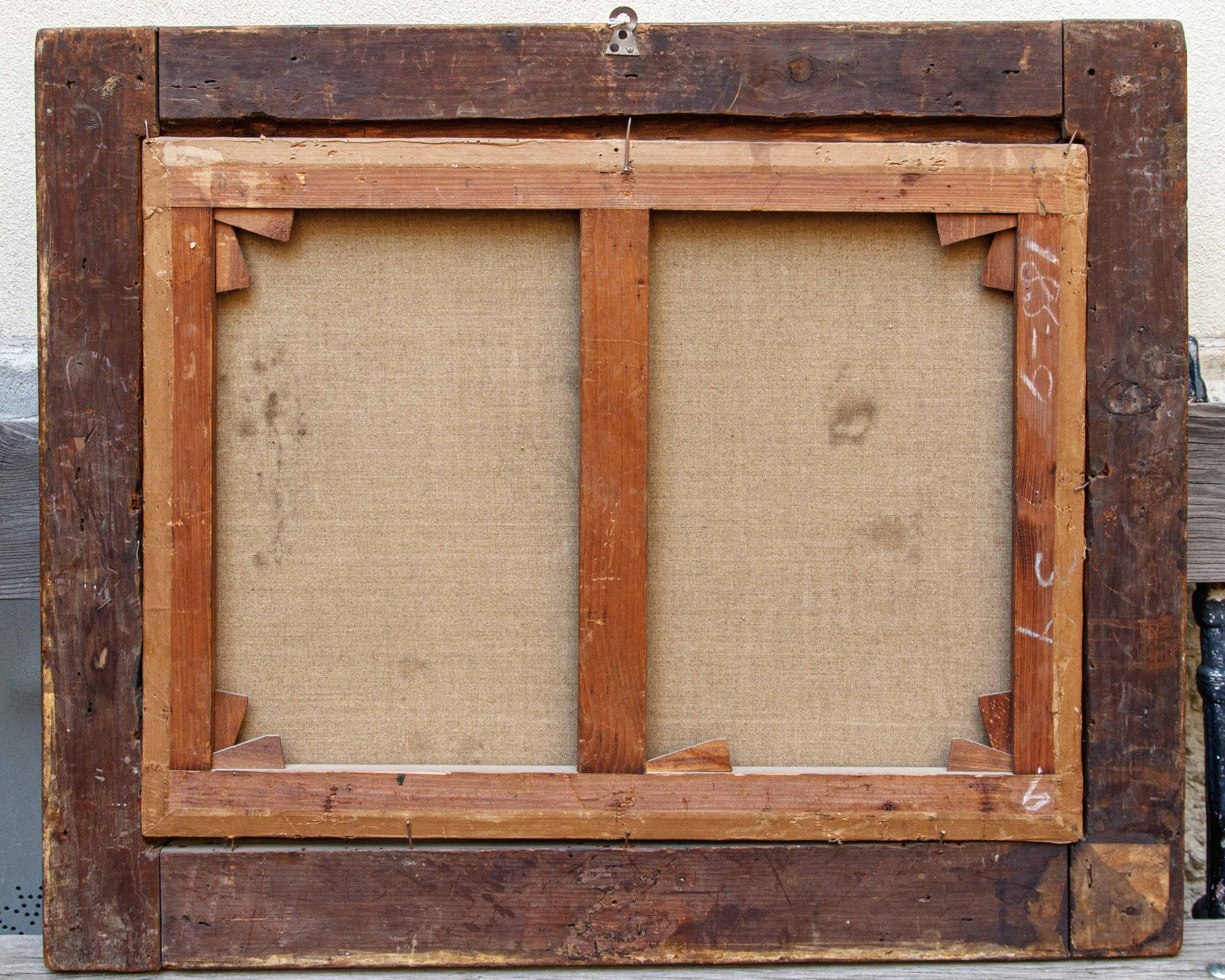
Oil on canvas, 45 x 62 cm – with frame, 67 x 81.5 cm
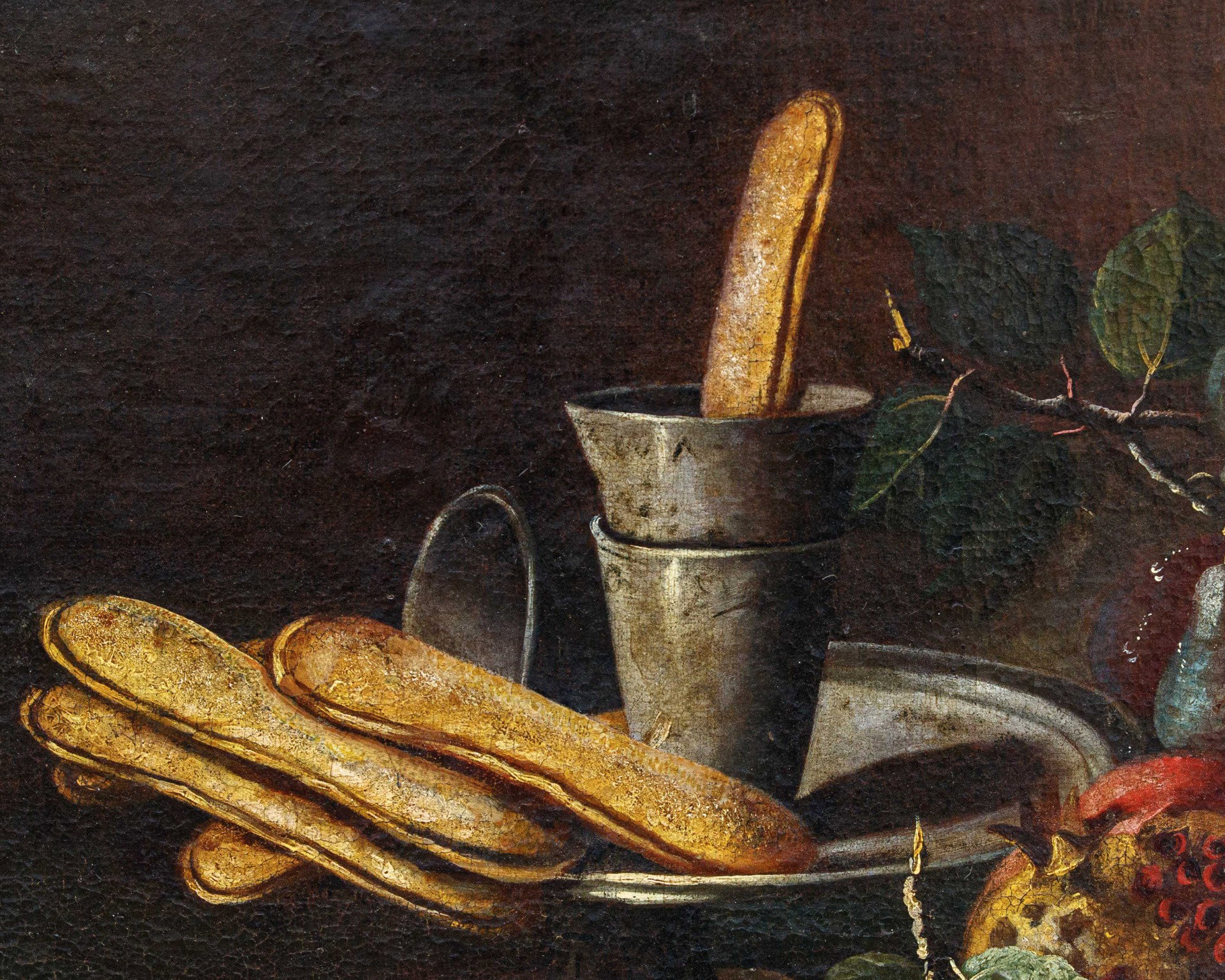
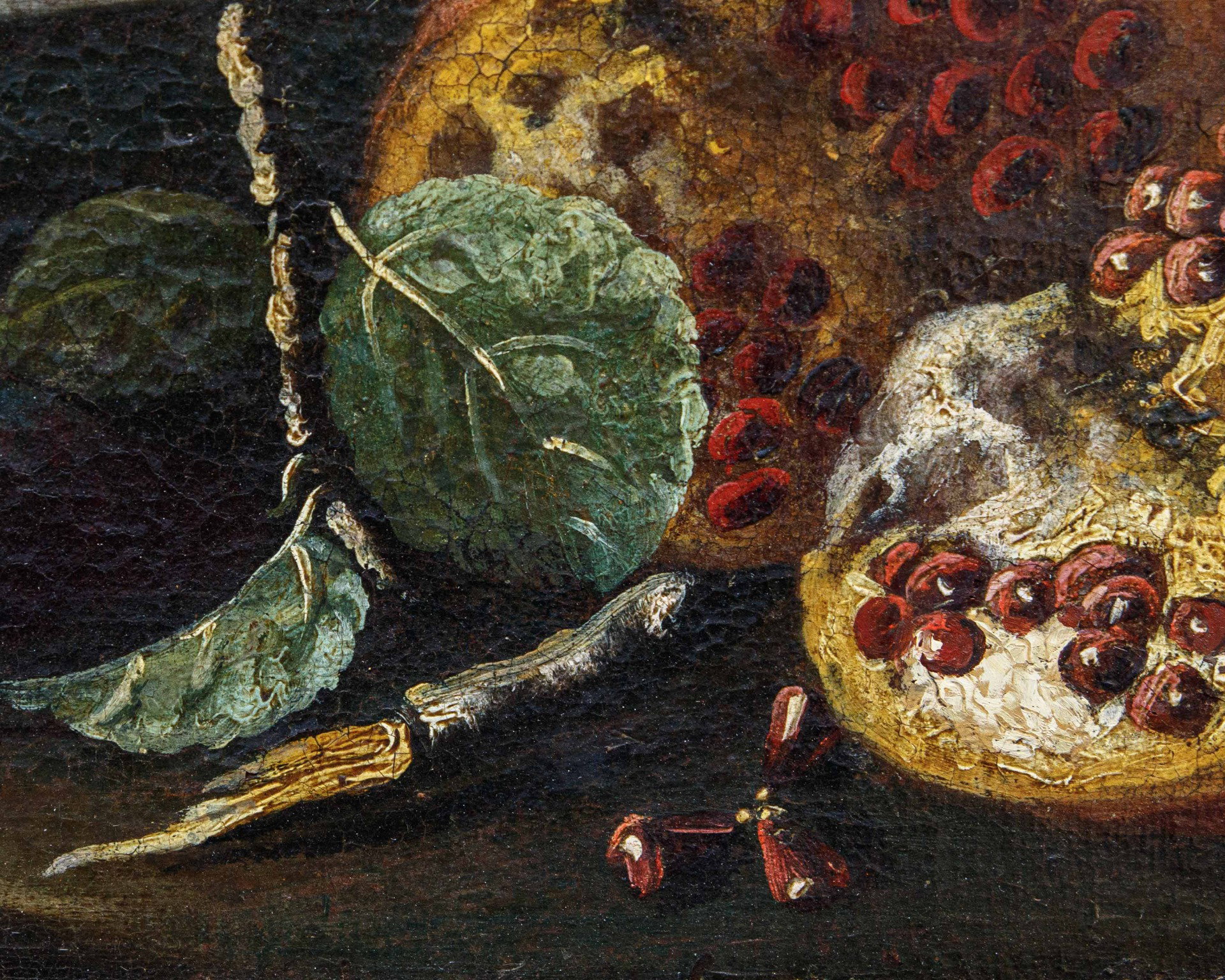
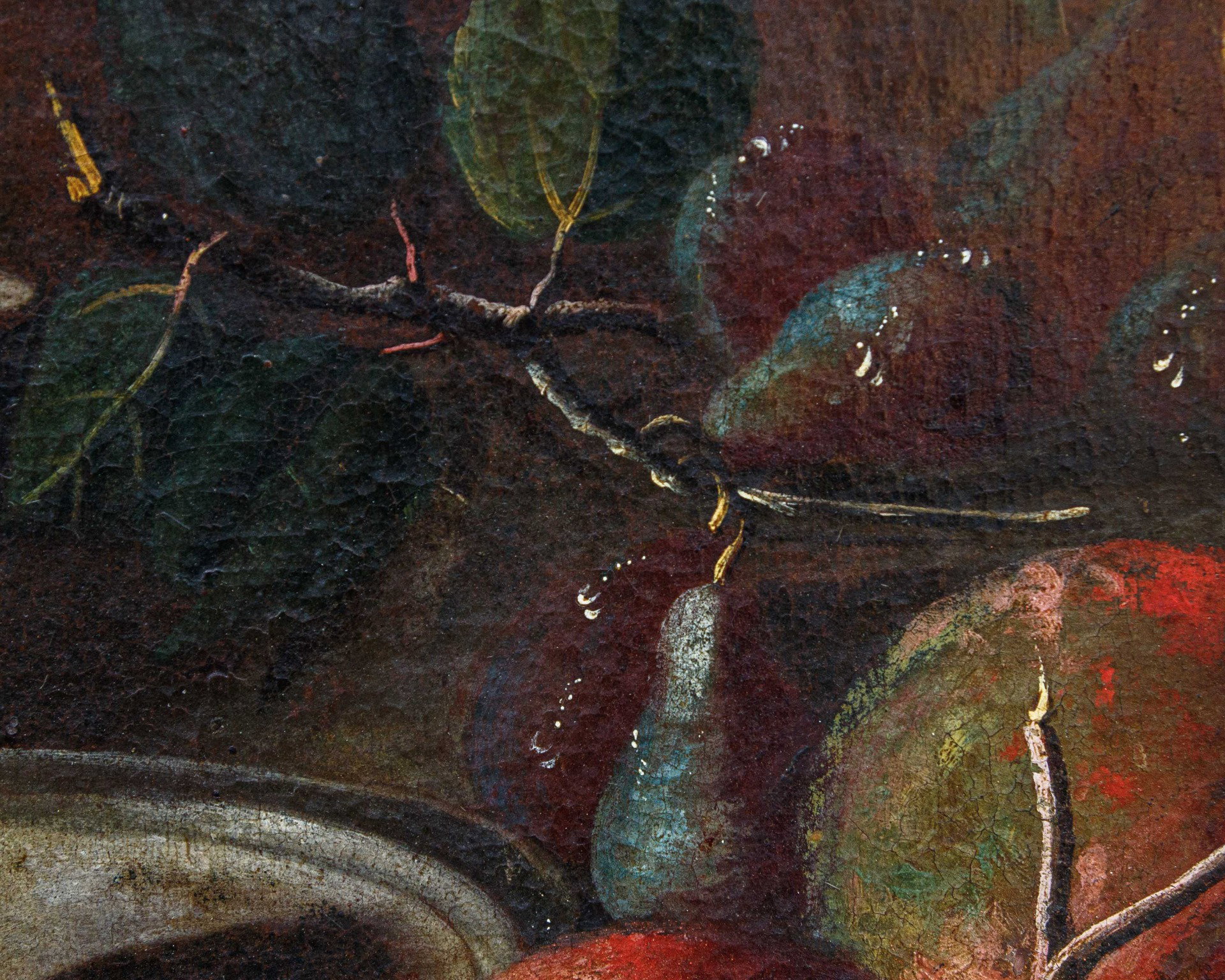
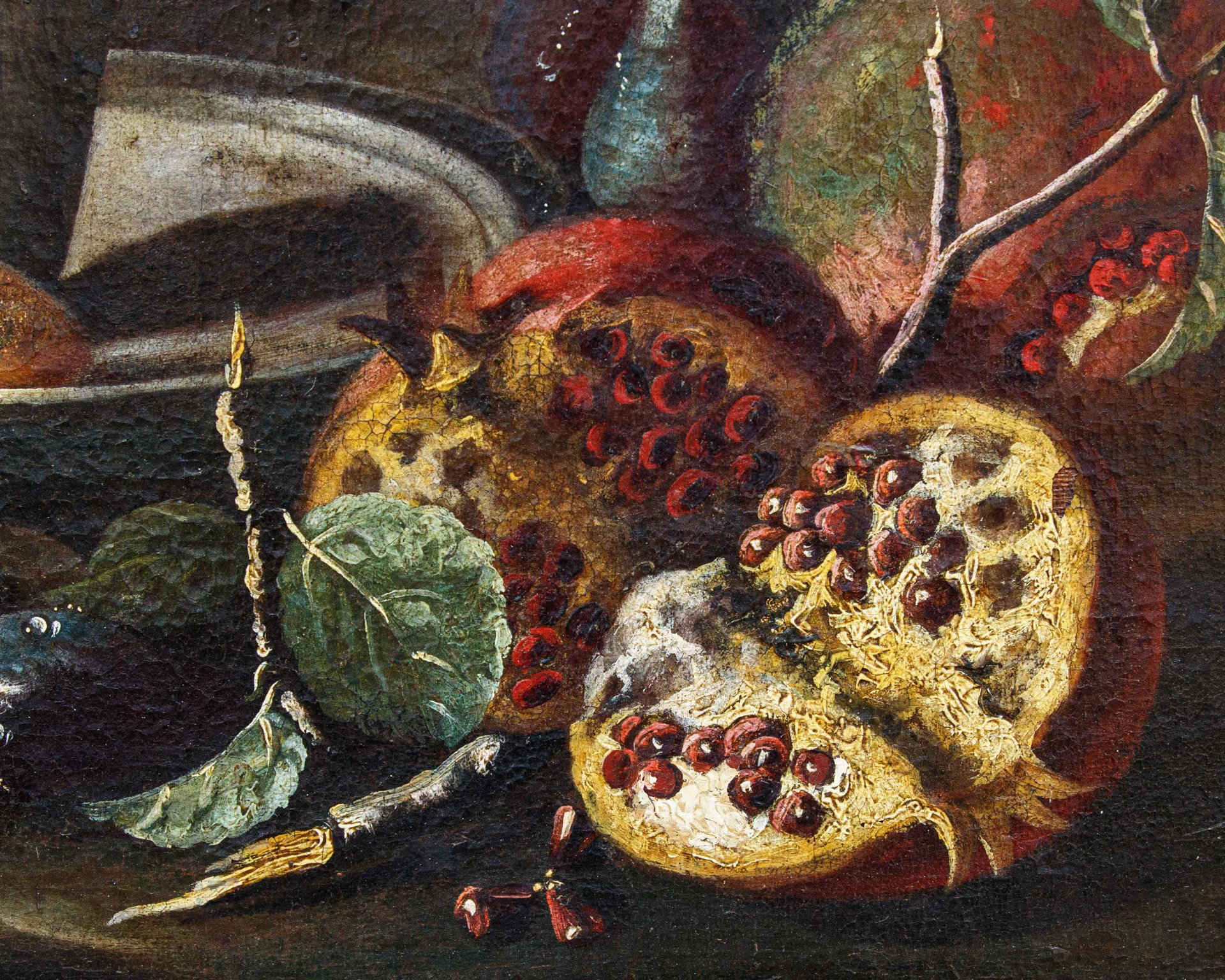
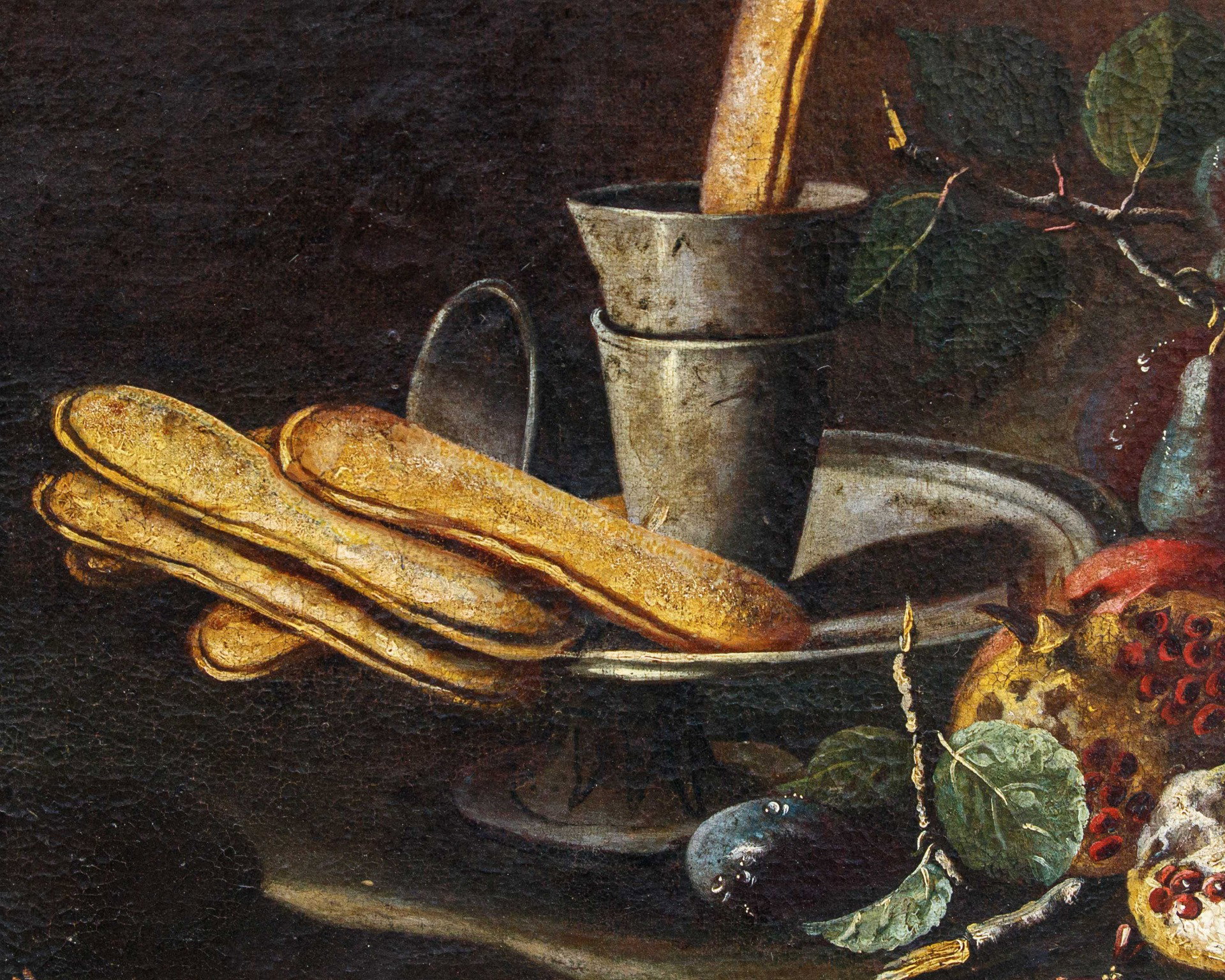
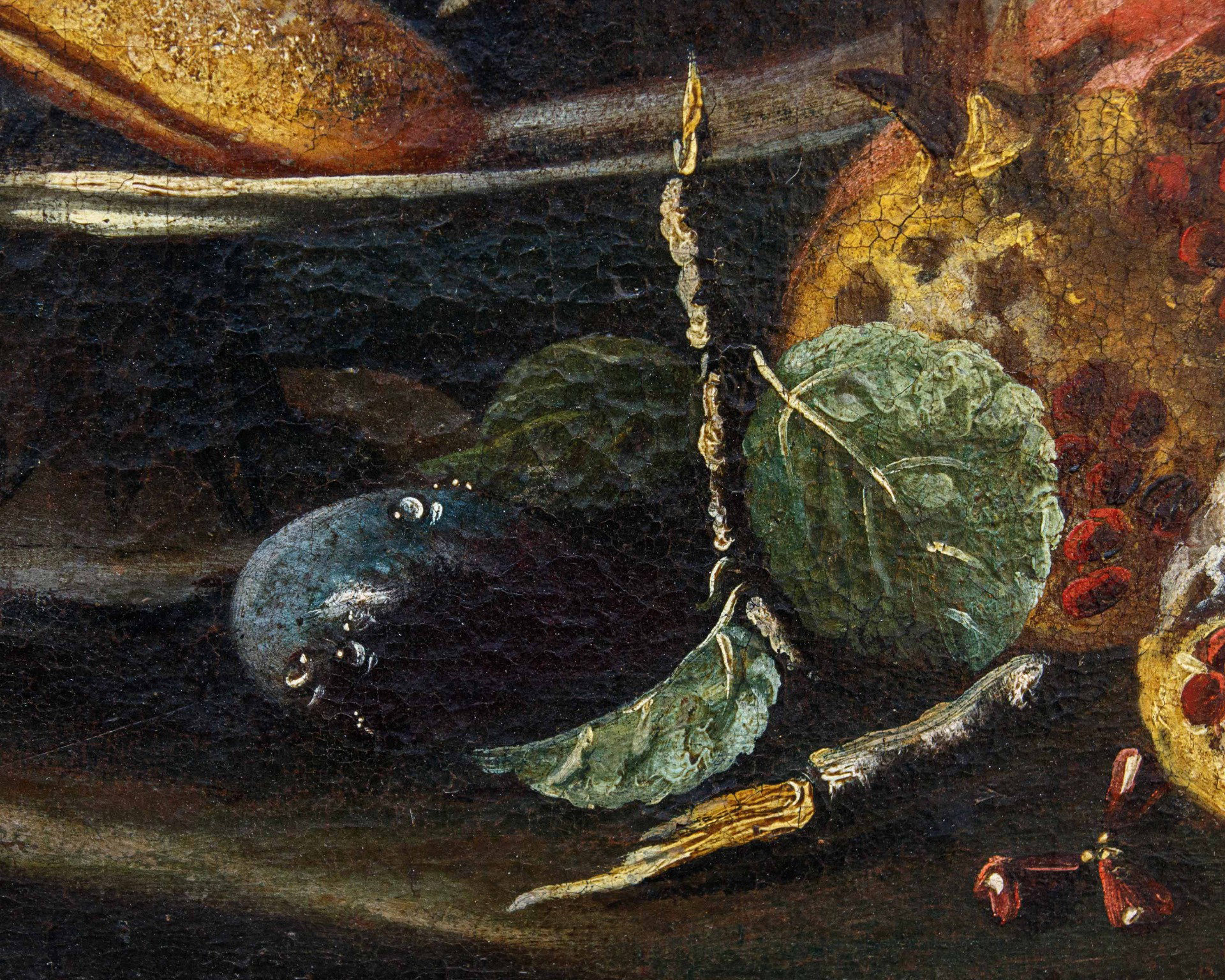
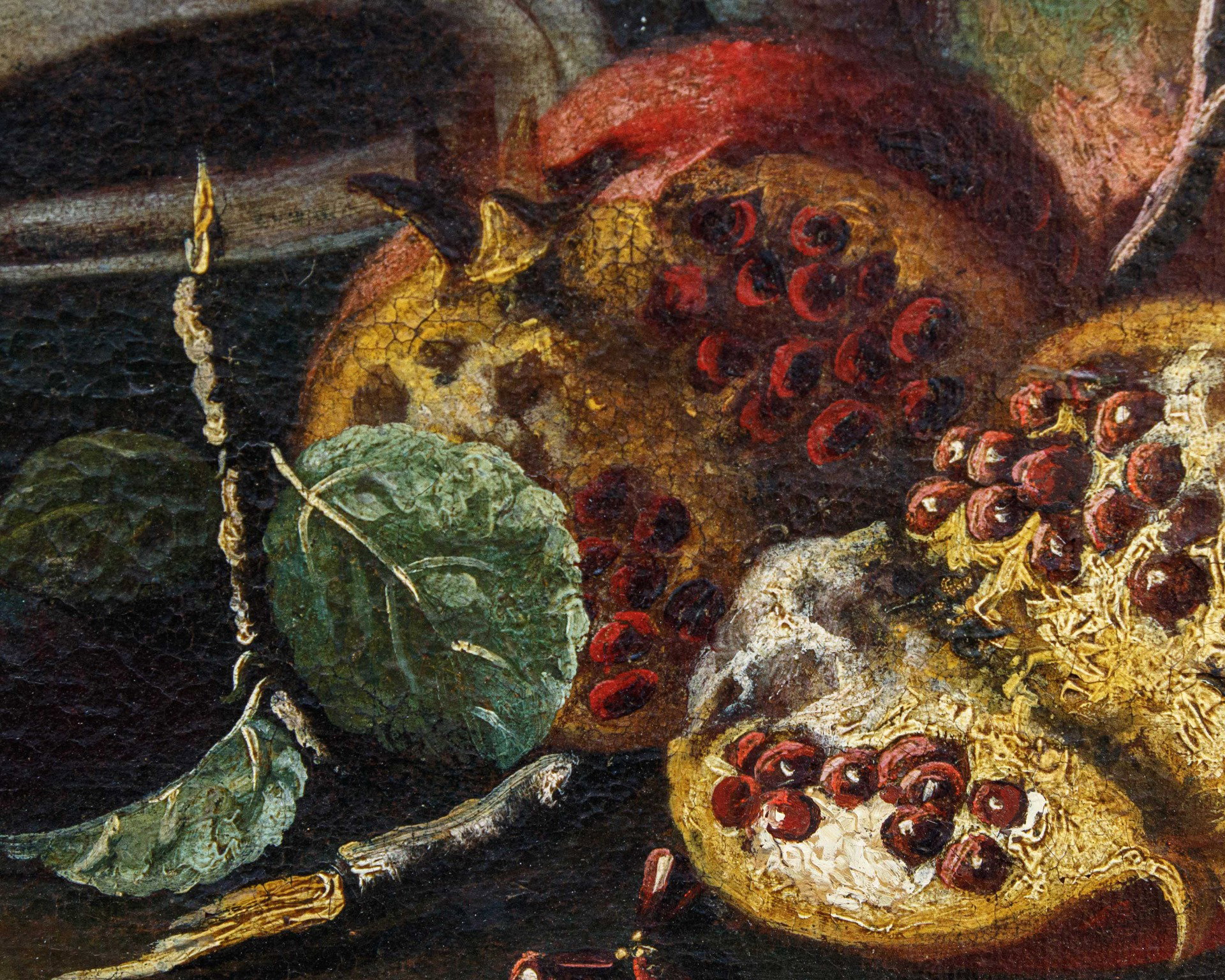
This Still Life with Pomegranates and Biscuits, executed in oil on canvas, represents a significant testament to Roman artistic production of the 17th century, a period when the genre of "still life painting" experienced an extraordinary flourishing and unprecedented stylistic evolution. The composition is masterfully balanced around a narrative focus dominated by the pomegranate, a fruit rich in symbolic and religious meanings. In the foreground, the viewer is immediately captured by a split pomegranate, its translucent seeds, painted with meticulous attention to materiality, reflecting light with crystalline glints. Next to it, a metal plate holds a pile of elongated biscuits, likely ladyfingers, which extend towards the viewer; one of these is placed vertically in a ceramic cup or glass, creating an interesting play of heights and volumes. In the background, other intact pomegranates emerge, enhanced by fresh foliage that adds a touch of chromatic vitality. The entire scene is immersed in a silent atmosphere, defined by a dark, uniform background that nullifies any spatial reference to focus attention solely on the objects. The light, which strikes the composition diagonally, acts as a true plastic element: it models the surfaces, enhances the roughness of the fruit's skin and the porosity of the biscuits, lending the work an almost tactile realism.
In Rome, during the 17th century, still life gradually moved away from its role as a mere decorative or secondary element to acquire independent status. The influence of Caravaggio and his famous Basket of Fruit was decisive, imposing an approach focused on natural truth and the analytical study of optical data. Roman painters active in this century, from Agostino Verrocchi to Pietro Paolo Bonzi, as well as Northern and Neapolitan influences converging in the Eternal City, developed a language capable of combining compositional rigor with a chromatic opulence that was never an end in itself. Roman works from this period are often characterized by this contrast between the darkness of the background and the liveliness of the illuminated subjects, where the theme of the transience of life, typical of vanitas, is masked behind the luxuriant display of fruits and everyday objects. The painting in question fits perfectly into this tradition, demonstrating how the unknown Roman author has succeeded in elevating a simple arrangement of food to a profound meditation on light and form, typical of the most authentic and measured Baroque.