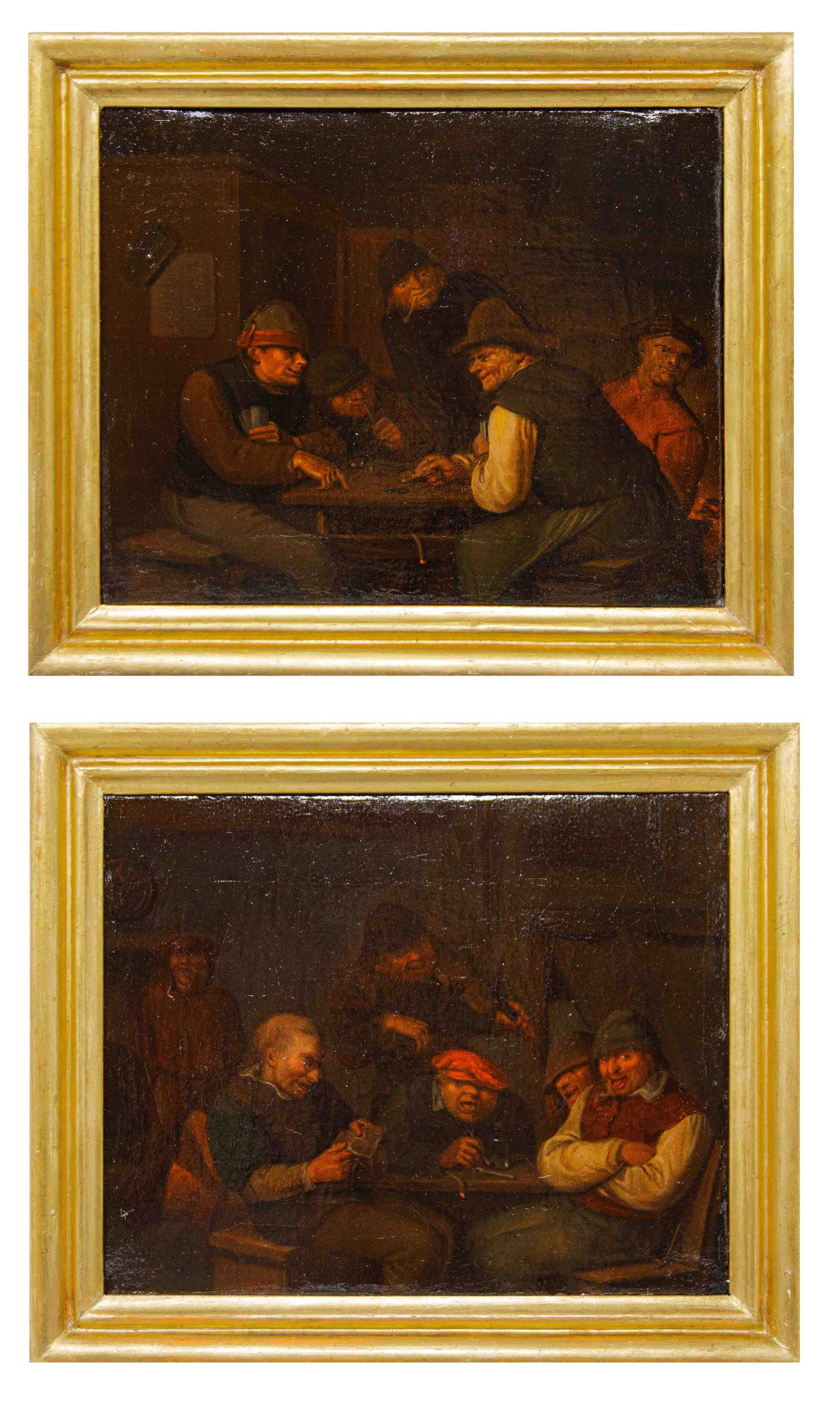
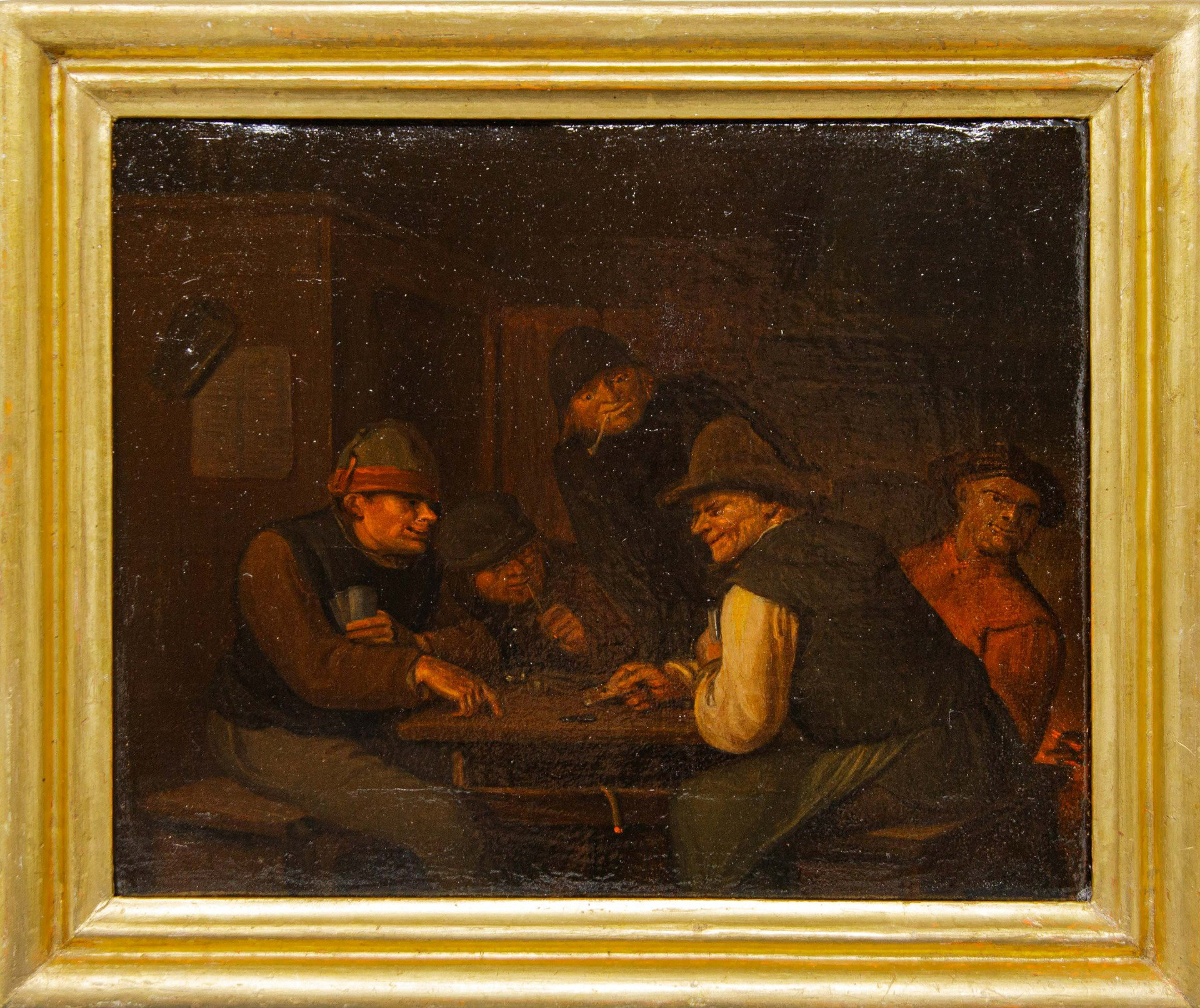
Egbert van Heemskerck (Haarlem, 1634 - London, 1704), workshop of
Tavern Scenes
Oil on canvas, 20.5 x 25.5 cm (2) – with frame, 26 x 31 cm
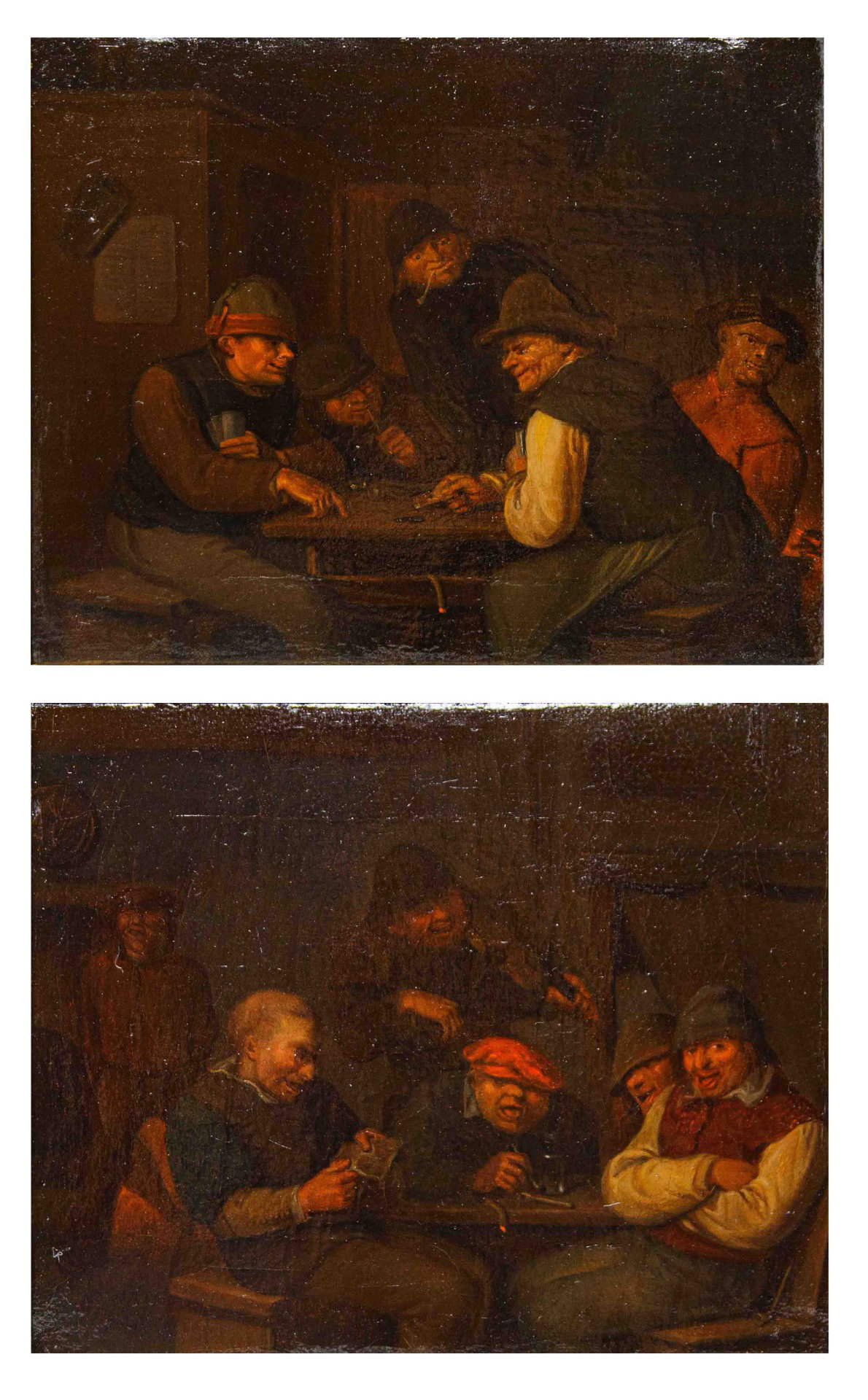
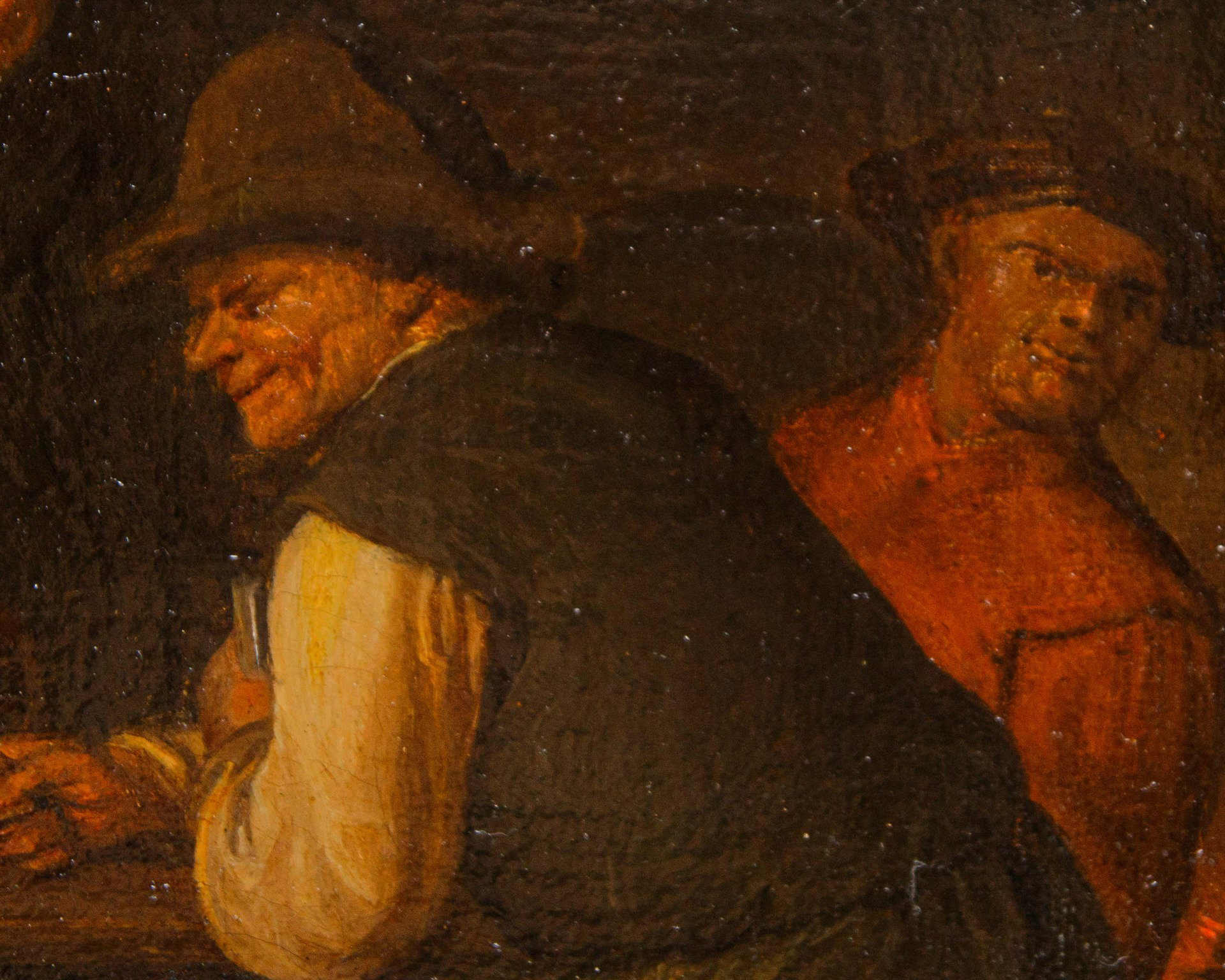
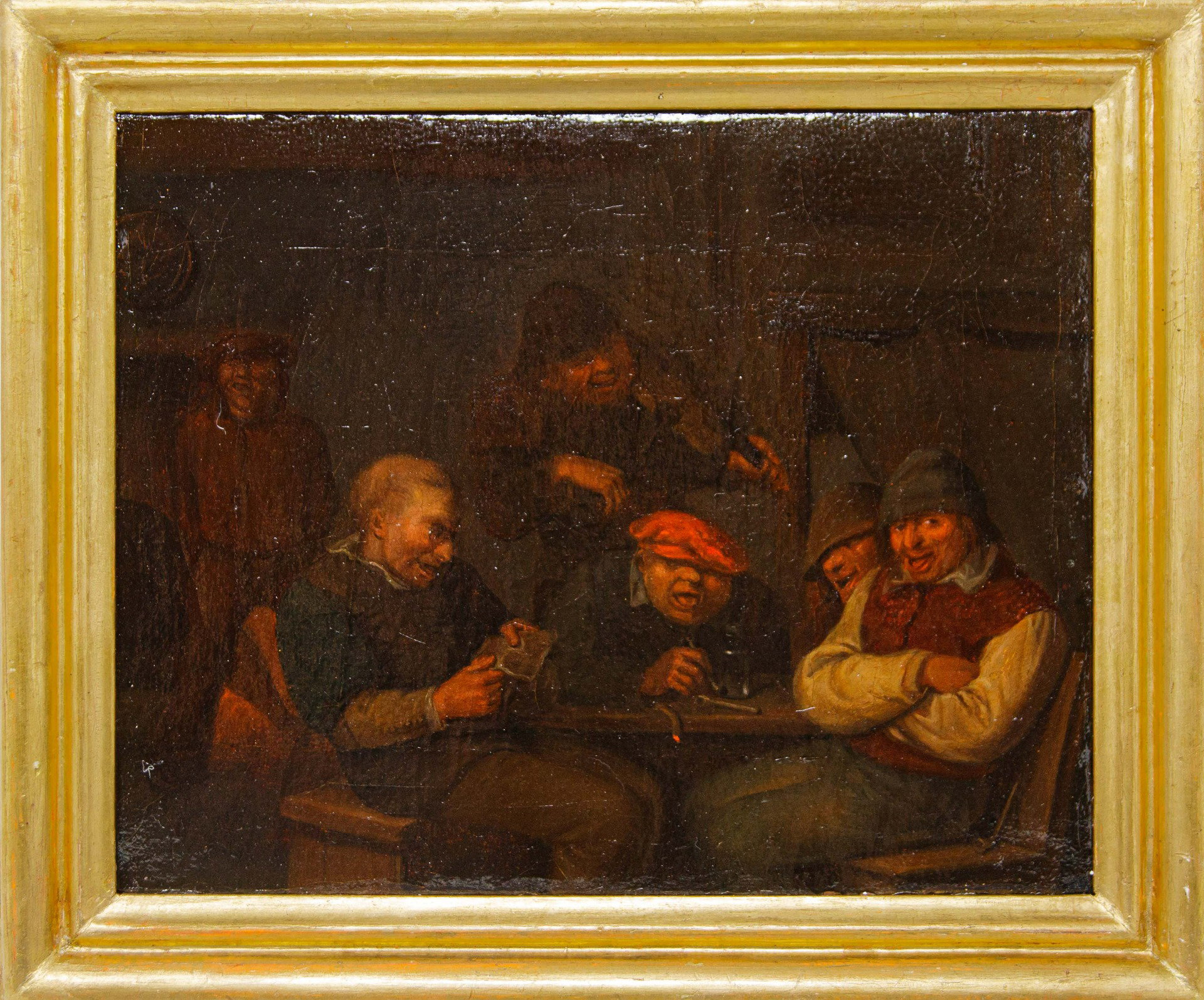
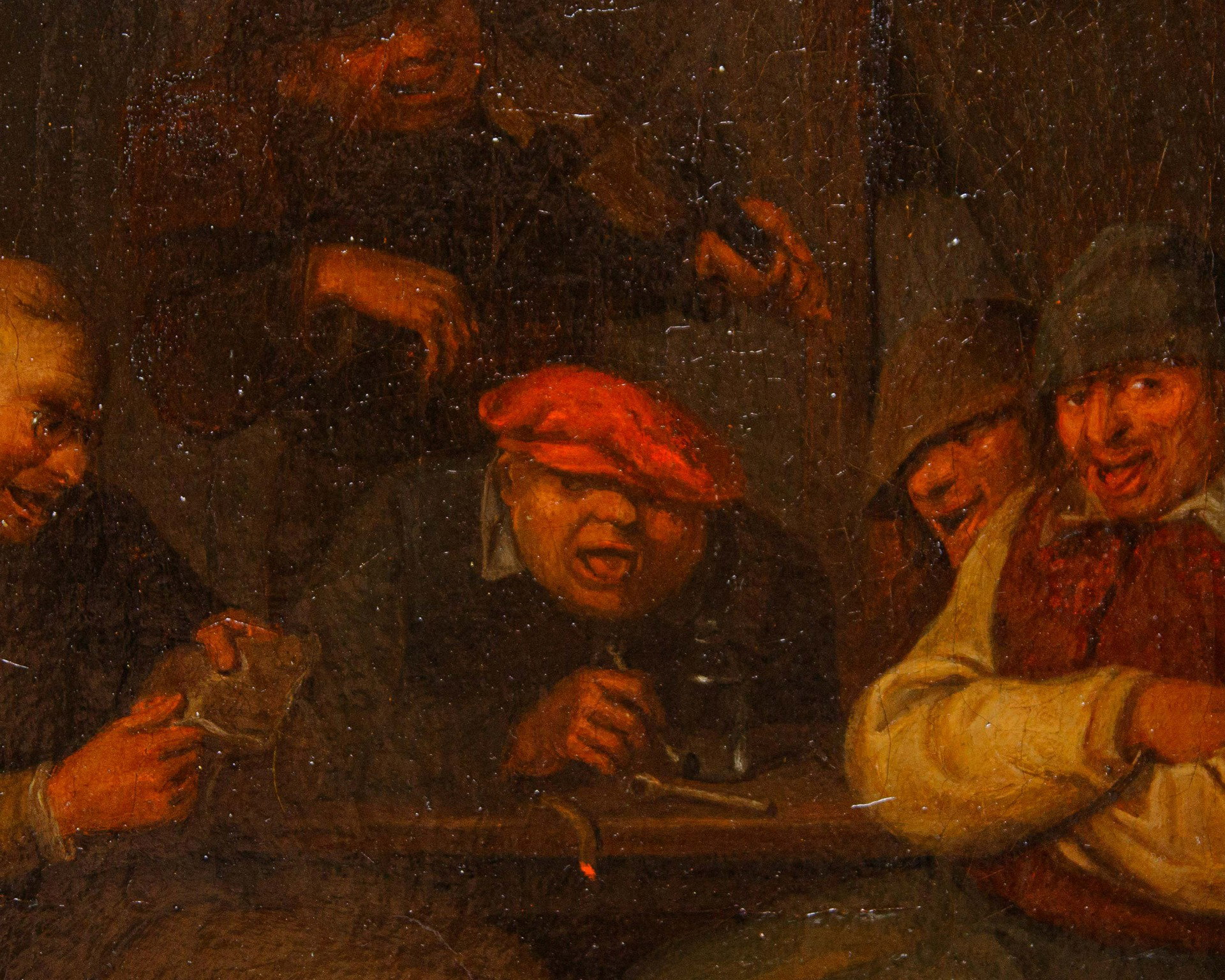
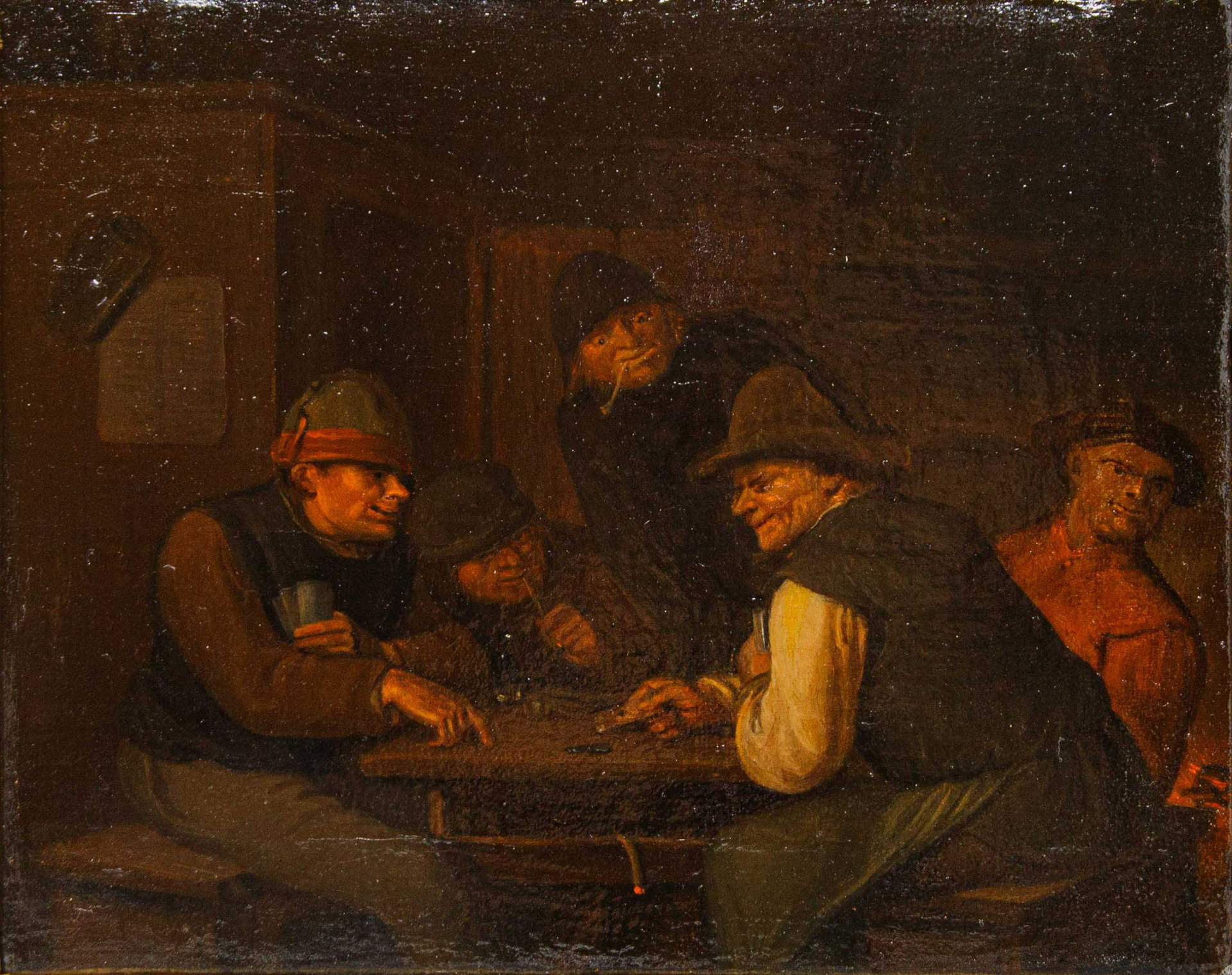
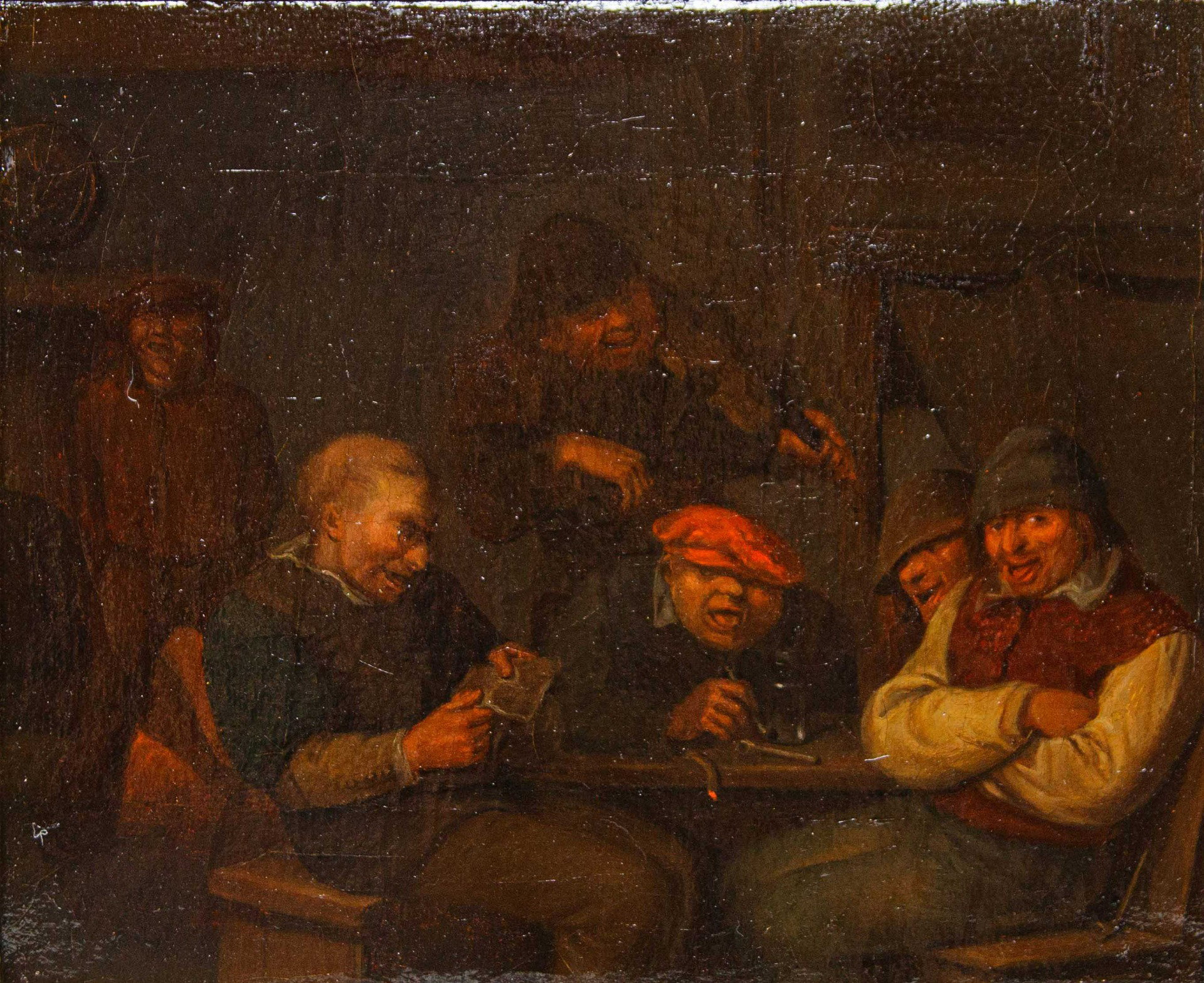
This pair of canvases from the workshop of Egbert van Heemskerck represents an emblematic example of 17th-century Dutch genre painting, an era in which the representation of everyday life reached heights of extraordinary introspection and social satire. In the two proposed scenes, the artist leads us into smoky, dimly lit taverns, where the narrative unfolds through card games, pipe smoke, and conviviality kindled by wine. In the first panel, a group of patrons is caught in a moment of collective hilarity around a table; a figure in the foreground stands out, examining a card or document intently, while a companion next to him opens his mouth in boisterous laughter, and a violinist, in shadow, accompanies the scene with his music. The second canvas, on the other hand, focuses on a card game, a moment of tension and amusement, where the faces of the protagonists are etched with grotesque expressions, ruddy noses, and crooked smiles that reveal the direct influence of Adriaen van Ostade's teachings. The pictorial technique used shows a clear Caravaggesque lineage, mediated by the Utrecht and Haarlem schools: the light, raking and selective, emerges from an almost impenetrable darkness to strike the focal points of the composition, such as the white sleeves of the garments, the reflections on the tankards, or the folds of the hats, leaving the background in a suggestive shadow that serves to enhance the theatrical mimicry of the characters.
Egbert van Heemskerck, born in Haarlem in 1634, trained under Pieter de Grebber and became a member of the Guild of Saint Luke in 1646. His life was shaped by the artistic environment of his hometown, where he grew up as the half-brother of the celebrated landscape painter Jan Wijnants, before moving to London in the 1670s. In England, his satirical and sometimes sharp vein did not go unnoticed, apparently even leading to friction with the court of Charles II. His production is often characterized by this taste for the comic and the excessive, a trait that distinguishes him from more refined genre painters and brings him closer to the masters of "low genre." To fully understand the value of these two canvases, it is useful to compare them with autograph works preserved in prestigious international museums. For example, the Museum of Fine Arts in Ghent houses interior scenes that share the same compressed spatial structure and attention to humble detail with these canvases. At the Fitzwilliam Museum in Cambridge and the Frans Hals Museum in Haarlem, one can admire paintings where Van Heemskerck further explores human physiognomy, pushing it almost to the point of caricature, exactly as we see in the distorted expressions of the drinkers analyzed here.
These works fit into the vast tradition of genre scenes that flourished in the United Provinces, reflecting a bourgeois society eager to possess images that, under the guise of entertainment, often concealed moralizing intentions. The tavern was not just a place of leisure, but a stage where capital vices such as idleness, anger, or lust were enacted, serving as a warning to the observer. However, in Van Heemskerck, a more purely descriptive and humorous taste often prevails, an almost visceral pleasure in portraying humanity in its most earthy and candid aspects. The skillful management of light and the economy of expressive means make this pair of paintings a valuable document of 17th-century visual culture, capable of transforming a banal moment of rural life into a small theater of human passions.