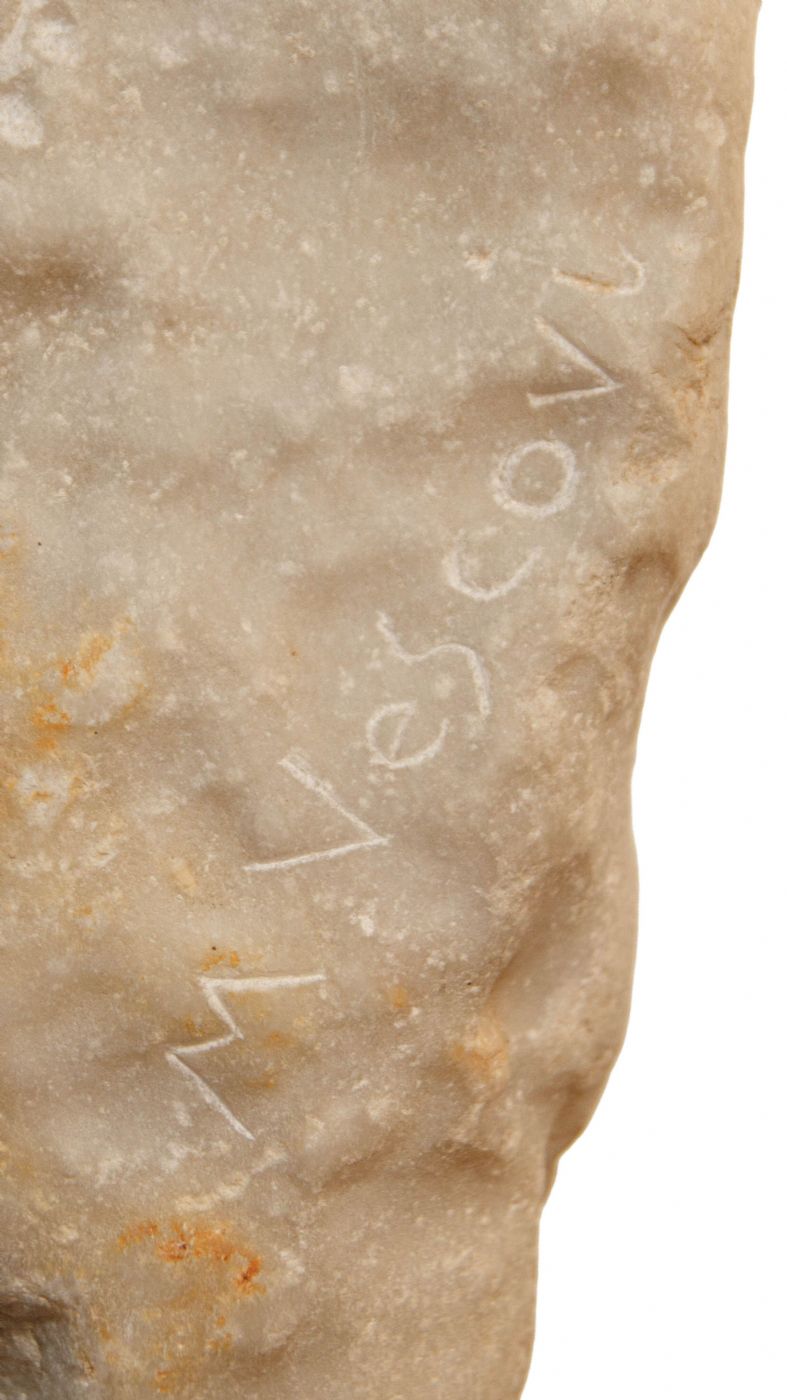
Mario Vescovi (Zandobbio, 1896 – Como, 1976)
Maternity
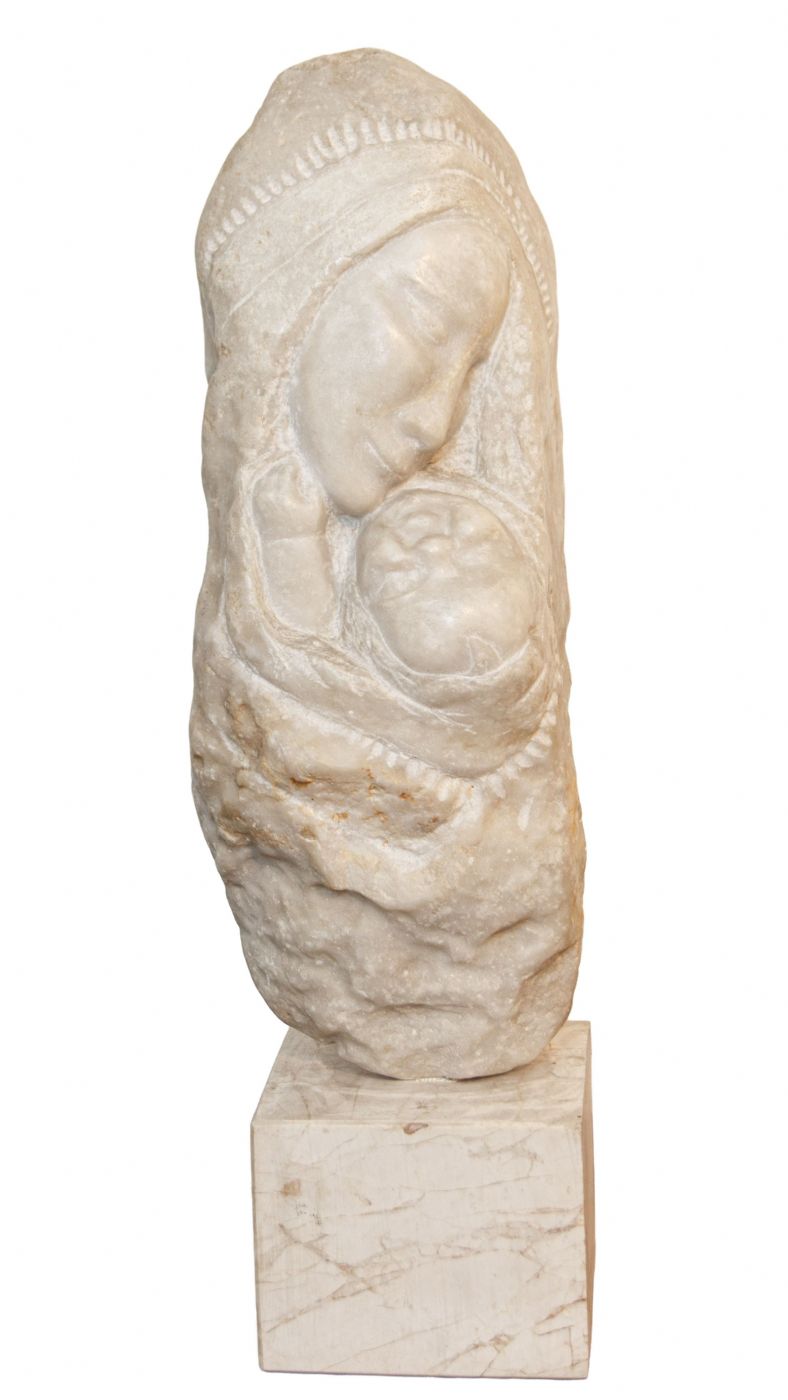
White monolithic stone from Madesimo, 40 x 12 x 14 cm
Published in P. Mosca, Arte e Costume a Bergamo. Ottocento-Novecento, Bergamo, Grafica e arte, p. 968
Maternity by Mario Vescovi presents itself as a refined synthesis of his poetics between raw material and spiritual sentiment, offering a significant testimony of the stylistic signature of an artist capable of breaking away from tradition to embrace a more intimate and versatile artistic vision. Trained at the prestigious Accademia Carrara School in Bergamo under the guidance of Maestro Ponziano Loverini, Vescovi honed his initial artistic rudiments in his father's workshop, in close contact with the family's marble quarry. However, unlike his brother Tobia, Mario chose to pursue a less academic and more experimental path, aimed at investigating the becoming of form as a vehicle for the essence of the spirit. This research led him to choose the stones of his native valleys as his working material – pebbles collected from riverbeds, onyx, and stalactites – interpreting the material and seeking vital alternatives to traditional marble.
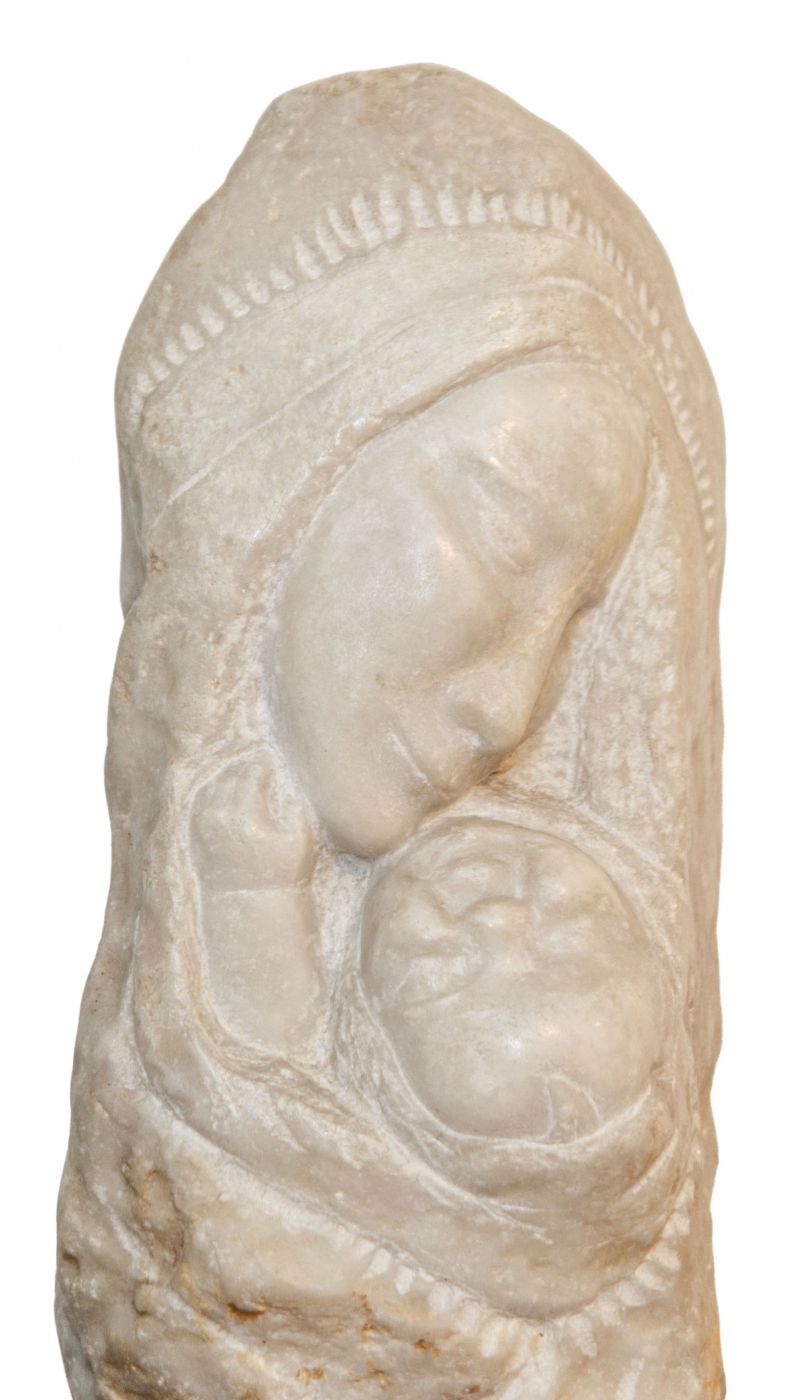
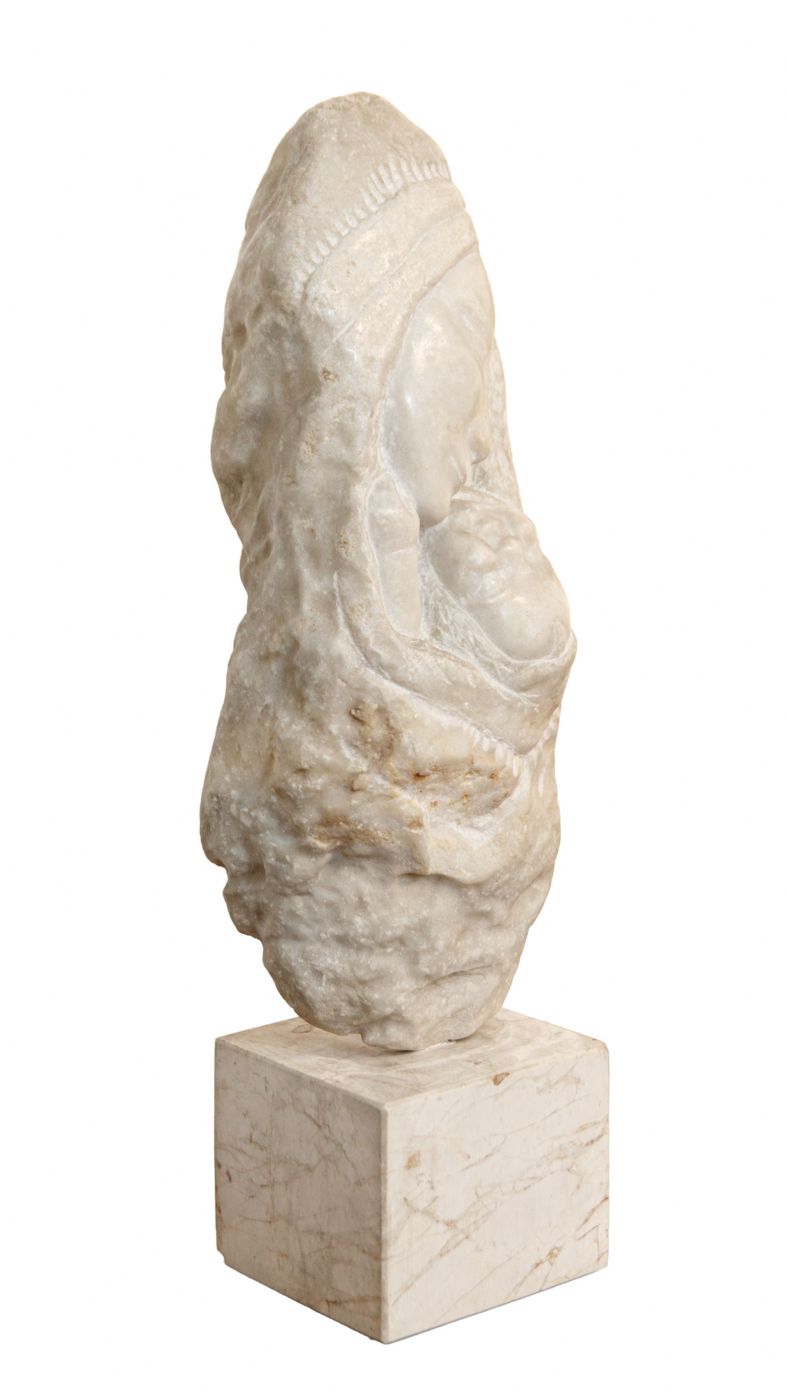
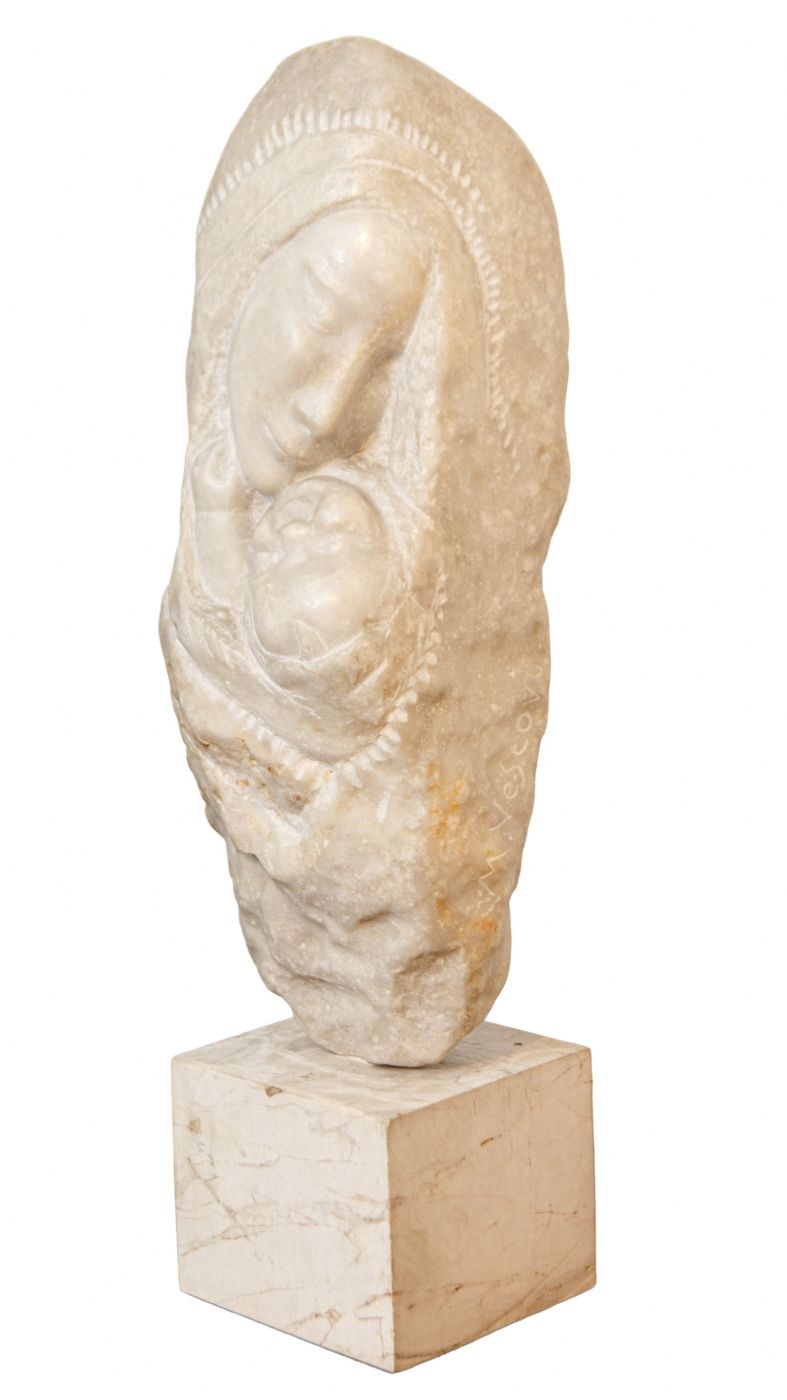
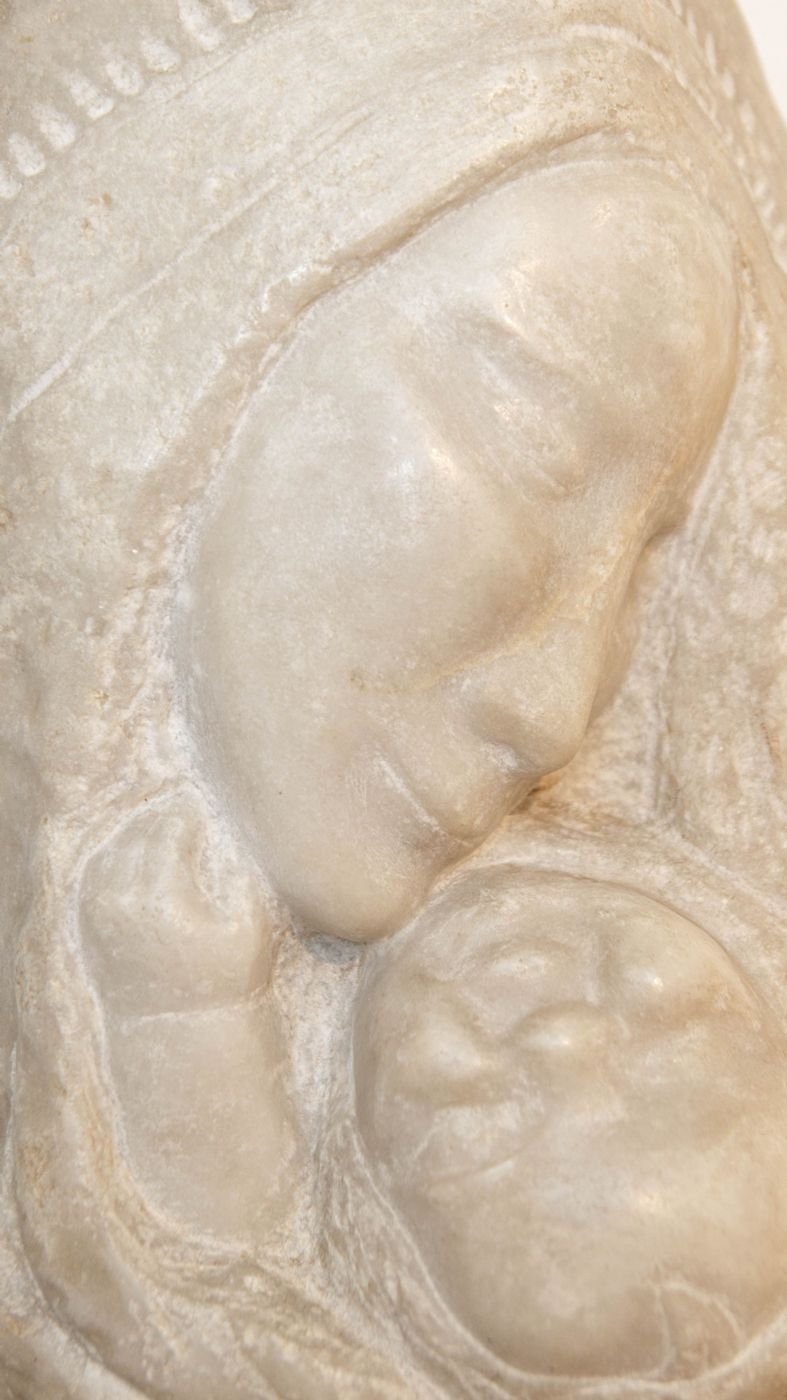
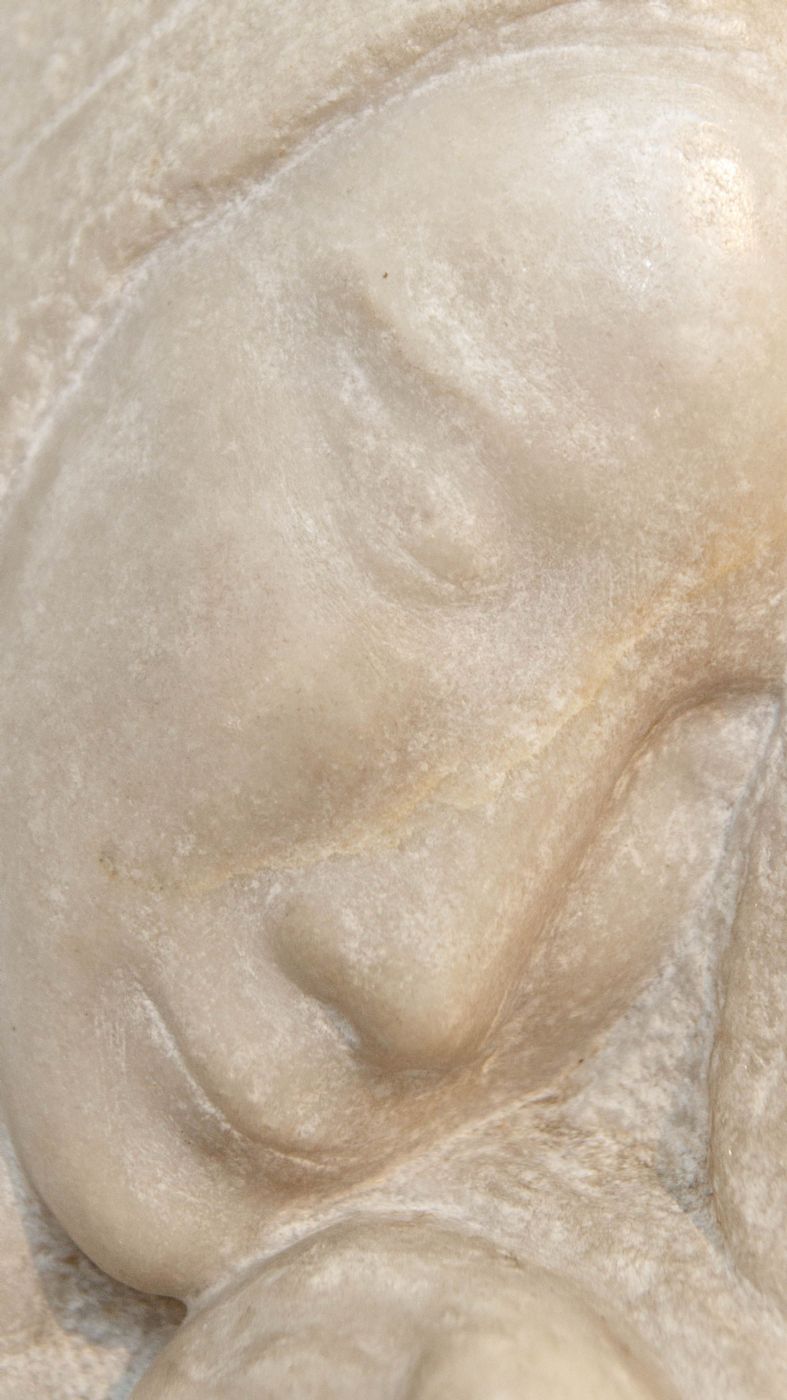
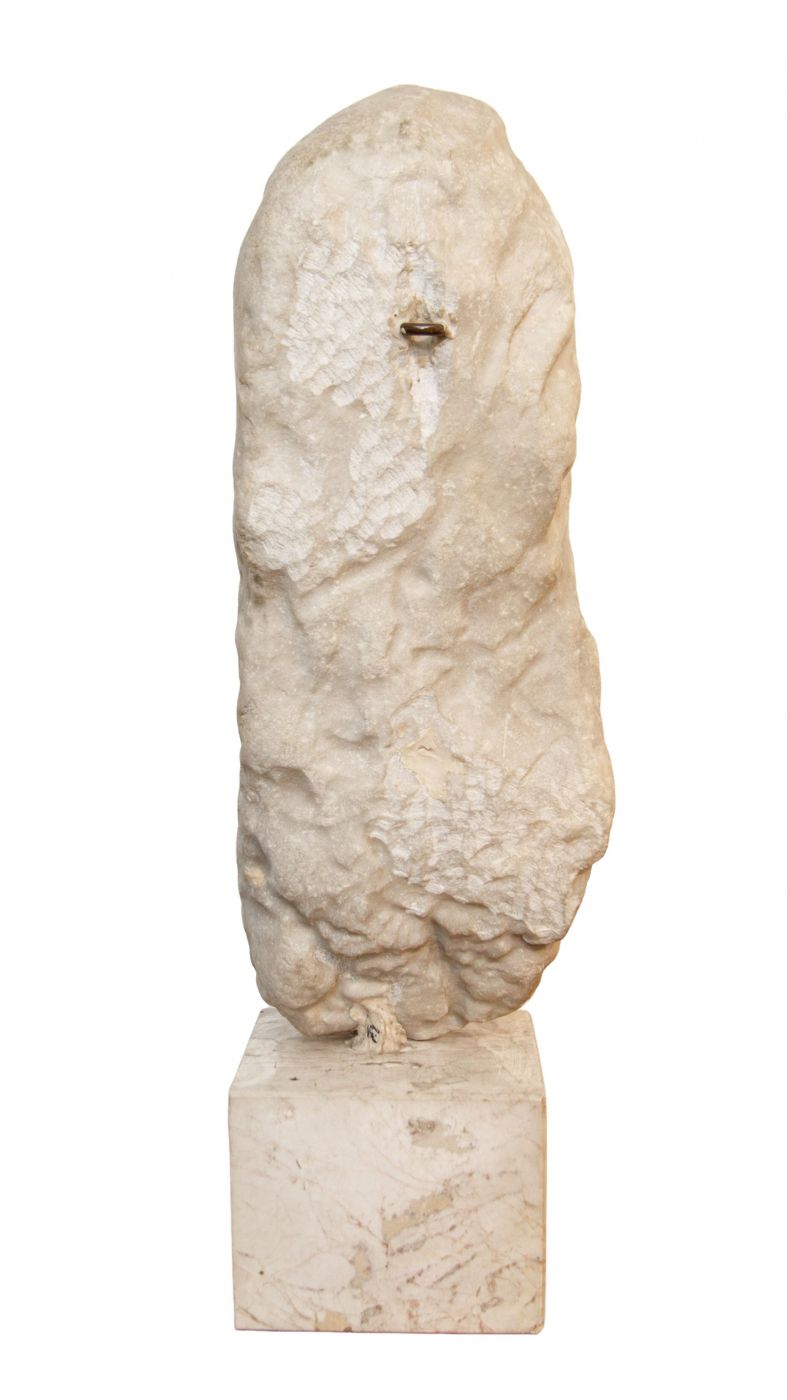
In the sculpture in white monolithic stone from Madesimo analyzed here, this desire to embrace the intrinsic nature of the stone clearly emerges. The artist does not impose a preconceived form on the material but seems to almost liberate the figure already residing within the stone, leaving large portions of the surface in its natural, rough, and irregular state to concentrate the sculptural intervention on the faces and essential gestures. Maternity is resolved in a vertical development that follows the conformation of the monolith: the mother's face, with gentle and composed features that recall a timeless sacredness, inclines with infinite tenderness towards the child. The lowered eyelids and the slight smile suggest a dimension of contemplation and silent ecstasy, while the infant's body appears almost enveloped and protected by a stone womb that becomes fabric, swaddle, and shelter.
The use of white stone from Madesimo, with its warm veins and natural translucence, lends the work a soft light that enhances the delicacy of the smoothed volumes, contrasting with the rougher areas of the base and the back. This approach brings Vescovi's poetics closer to that of Alberto Meli, with whom he shares a love for elements found in nature and the ability to transform poor or wild materials into sculptures of extreme refinement. Vescovi's career was marked by moments of great public recognition, such as the important exhibition in 1958 at the Galleria Gussoni in Milan, which attracted national critical attention, or the collective exhibitions with his brothers Tobia and Pier Angelo in the courtyard of Palazzo Frizzoni in Bergamo in the thirties. Although he created monumental and civic works of great impact, such as the Soldier Protecting a Woman with a Child located in Zandobbio, it is in works like this Maternity that Vescovi reveals his most authentic nature: that of an artist-explorer who, through constant dialogue with stone, manages to give visible form to the invisible fabric of human affections.