Workshop of Peter Paul Rubens (Siegen, June 28, 1577 – Antwerp, May 30, 1640)
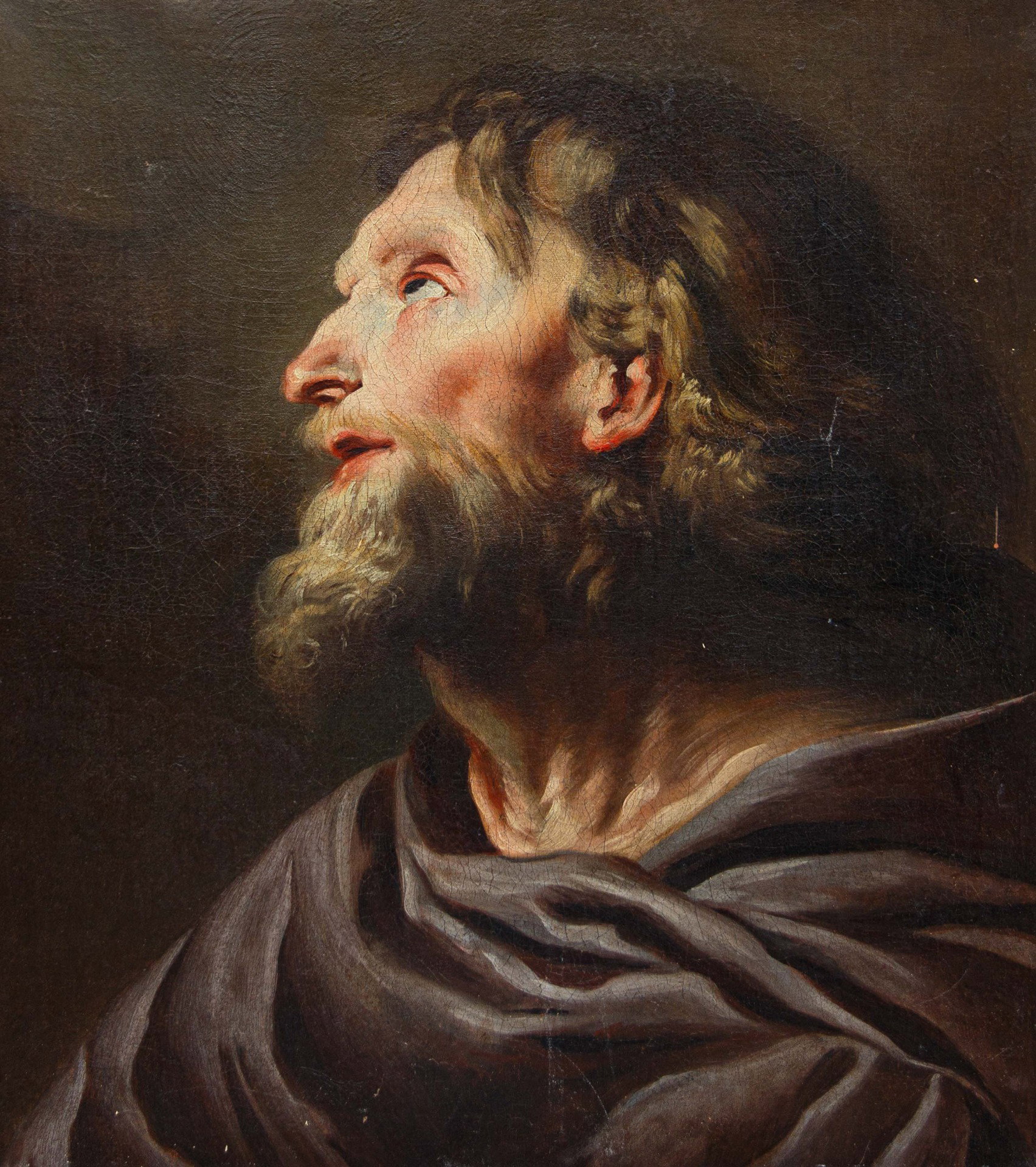
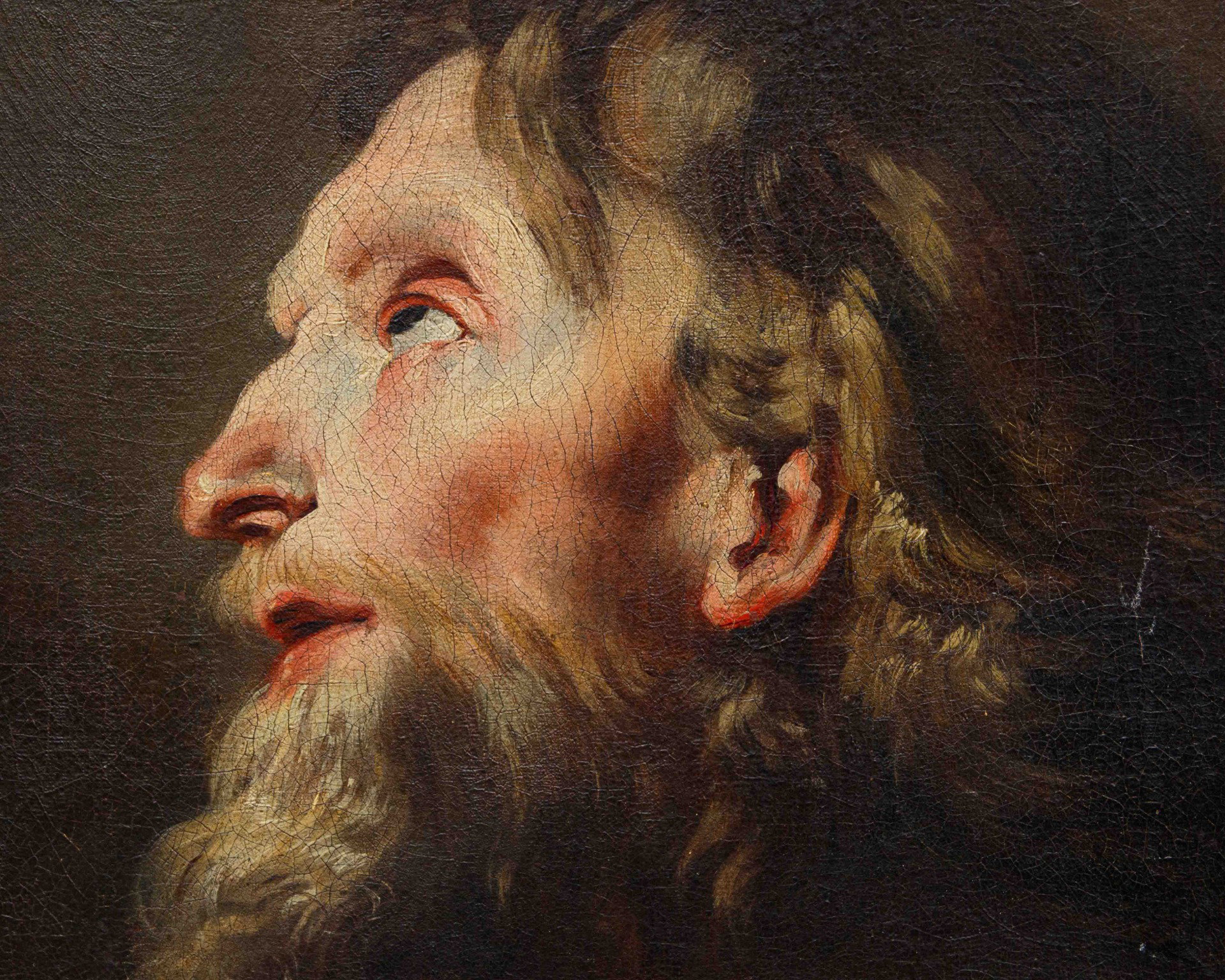
Saint Jerome in Ecstasy
Oil on canvas, 69 x 59 cm – with frame, 74 x 64 cm
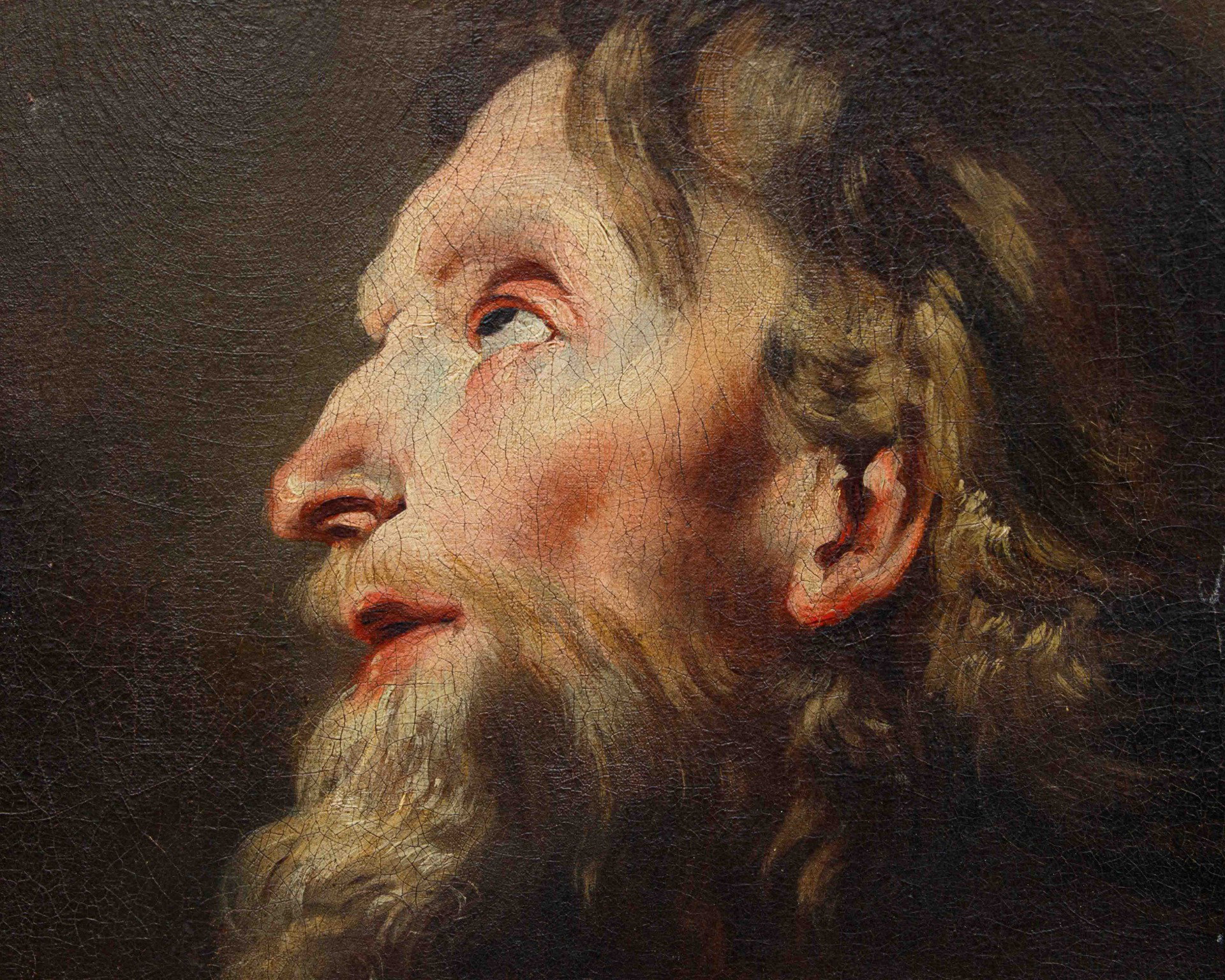
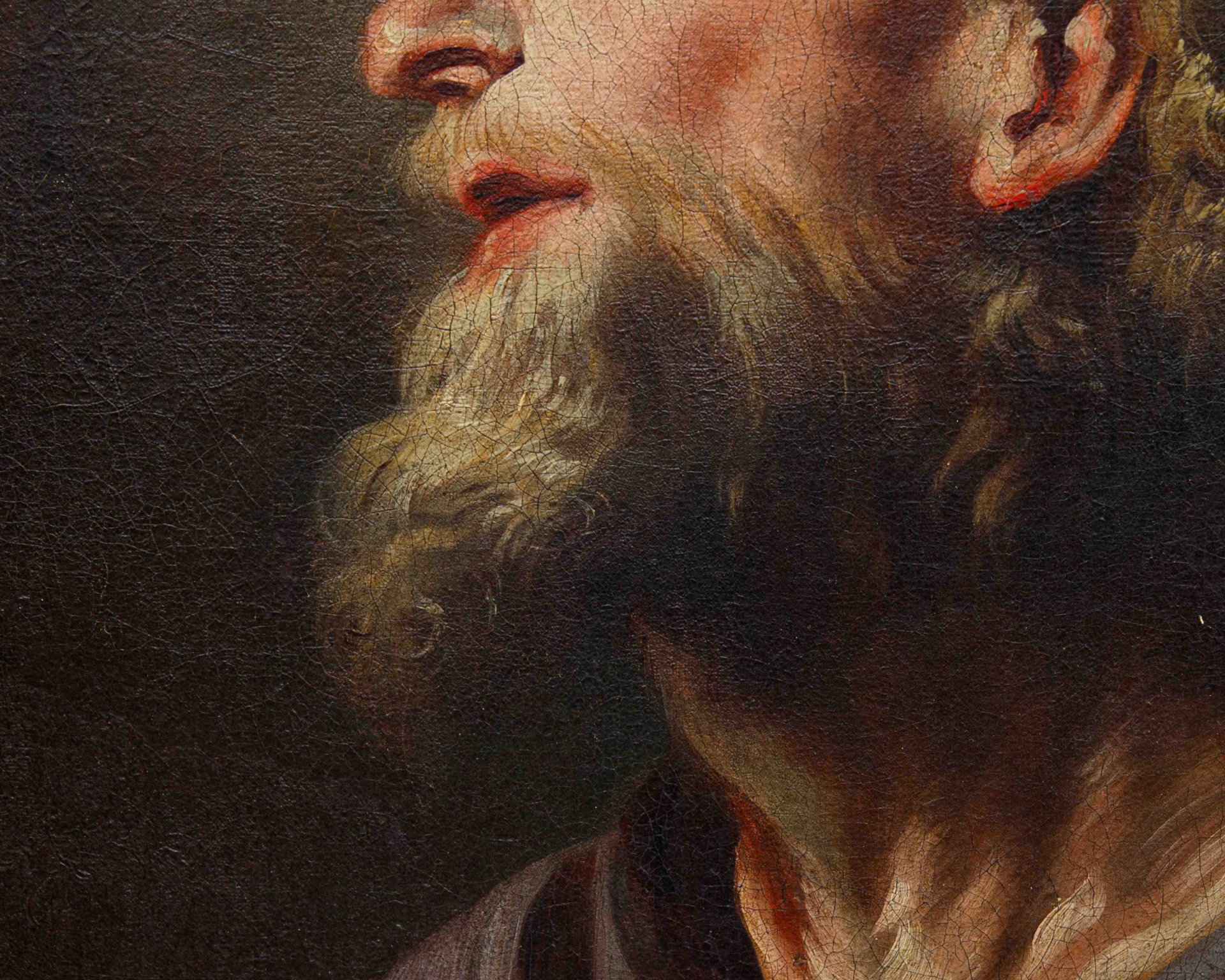
The work in question, an oil on canvas of considerable visual impact depicting Saint Jerome in ecstasy, represents a significant testament to the artistic production of the workshop of Peter Paul Rubens, the undisputed giant of Flemish Baroque. The painting captures the saint in an instant of absolute transcendence: the face, marked by time and a life of rigorous privations, is raised in a dramatic torsion towards a superior light source, a symbol of the divine presence that breaks through the darkness of hermitic meditation. The gnarled and expertly modeled hands hold a skull, an element that in the iconography of Saint Jerome is not merely a decorative embellishment but the fulcrum of his theological thought on the vanity of earthly things. The skull serves as a memento mori, a constant reminder of mortality that the saint, during his years of asceticism in the desert and his monumental commitment to translating the Bible (the Vulgate), used to elevate the spirit beyond the transience of the flesh. Peter Paul Rubens, author of the prototype on which this canvas is based, was an artist of immense intellectual stature, capable of dominating the European scene thanks to a style that combined Michelangelo's power with Venetian luminosity, all filtered through a Flemish sensibility for natural detail and theatrical dynamism. His Antwerp workshop was not merely a studio but an unprecedented art academy and creative industry, where masters like Van Dyck and Jordaens took their first steps. In this workshop, Rubens often provided the initial sketch, the so-called model, leaving the task of applying color on a large scale and defining secondary volumes to his more experienced collaborators and apprentices, then intervening personally in crucial passages to infuse the work with that creative fury that made him unique. This method allowed for the widespread dissemination of his iconographic models, as clearly demonstrated by the painting presented here. The fundamental reference for this composition is Rubens's autograph painting, now preserved at the Oberes Schloss in Siegen, Germany, the city where Rubens himself was born. This work has a particularly fascinating collecting history within the Italian context, having remained for centuries in a prestigious private collection in Italy before being purchased and becoming part of the German museum's heritage in 1962. The version under consideration faithfully reproduces its expressive power and masterful handling of shadows, elements that allow for a direct link to the execution practices of the Rubensian atelier. An illuminating comparison to understand the quality of these collaborations can be made with Rubens and workshop's famous Last Supper exhibited at the Pinacoteca di Brera in Milan; in that large canvas, the crowd of apostles features numerous faces of elderly men with gray beards and foreheads furrowed by deep wrinkles, rendered by apprentices with a technique aimed at exalting the dignity and gravitas of old age through full and vibrant brushstrokes. Such physiognomies, laden with an almost tactile naturalism, are stylistically akin to the face of Saint Jerome analyzed here, confirming the existence of a veritable repertoire of physiognomic studies used by collaborators to ensure consistency in the master's works. The popularity of this specific subject was not limited to the narrow circle of contemporaries but spread throughout the 17th century, inspiring artists from different schools such as Francesco Bencovich, with his more tormented and angular style, or Jean Restout, who offered a different but equally powerful interpretation. The presence of numerous variants of this Saint Jerome, many of which are still housed in important international private collections, confirms how the figure of the hermit saint, mediated by Rubens's heroic vision, perfectly met the devotional and prestige needs of the patronage of the time. This canvas, therefore, is not just a valuable pictorial execution but a fundamental piece for understanding how Rubens's language became a lingua franca of European art, capable of transforming penance and the silence of prayer into a visual event of extraordinary intensity.