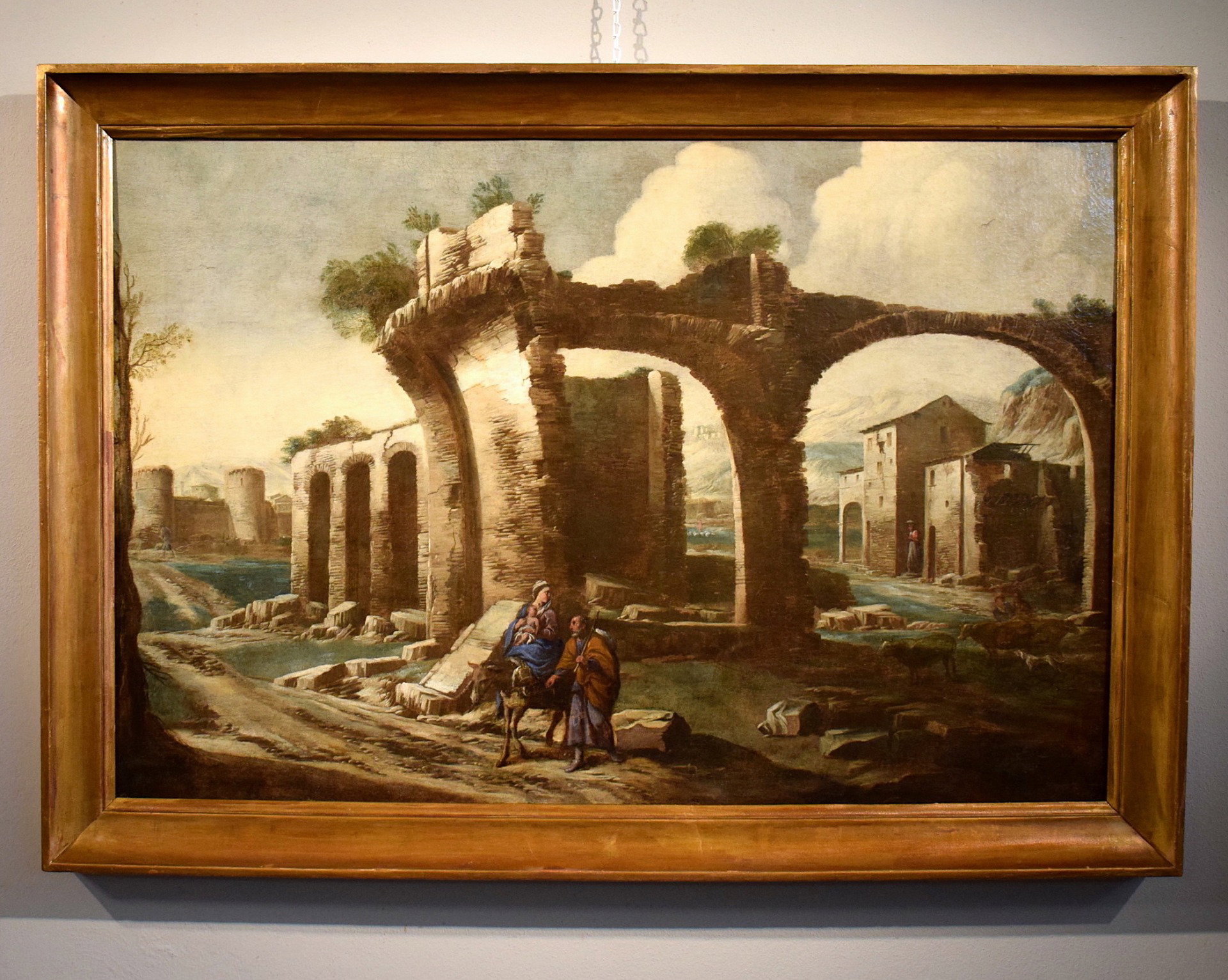
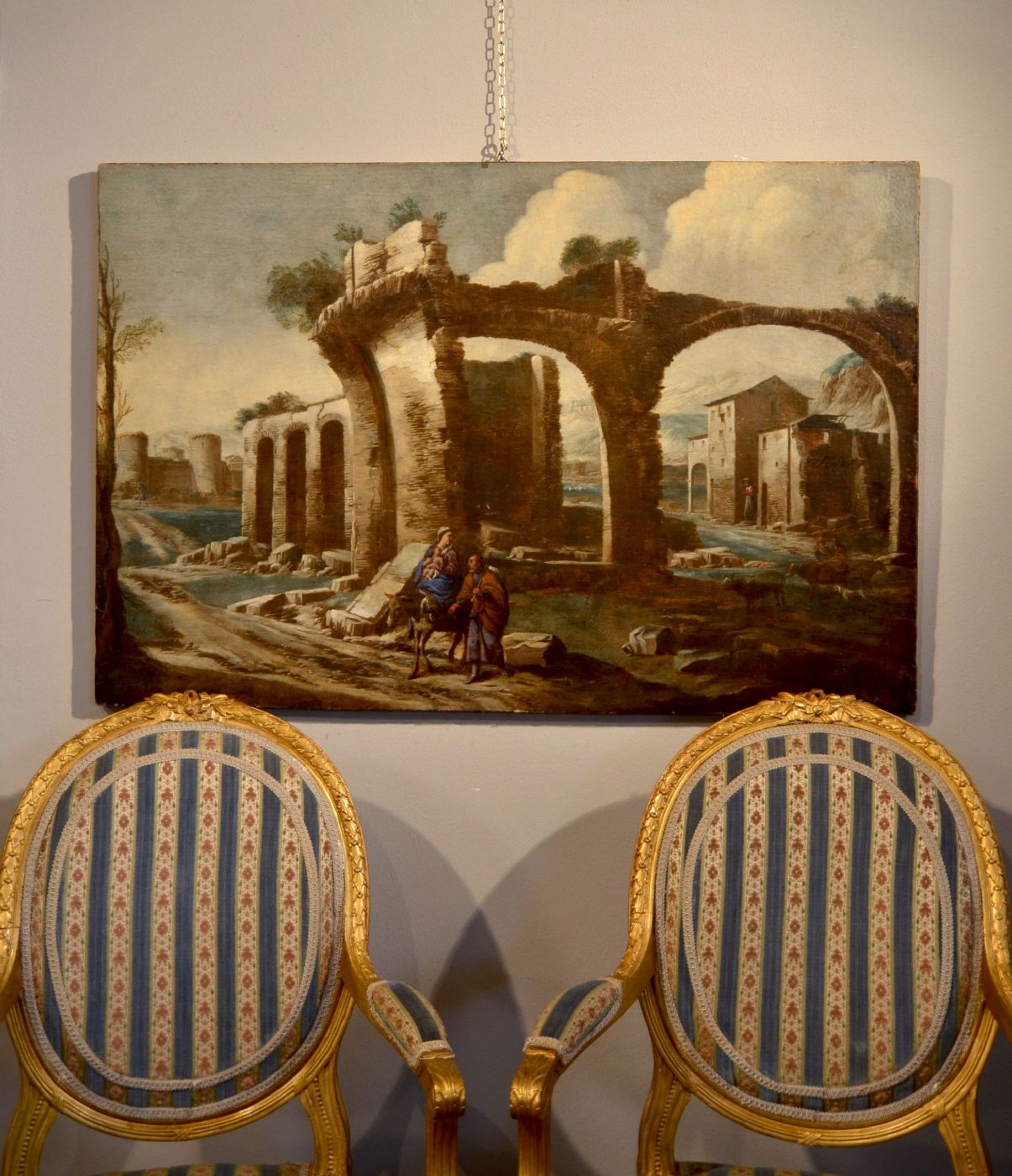
Antonio Travi, called il Sestri (Sestri Ponente 1608 - Genoa 1665), circle
Landscape with ruins and biblical scene
First half of the 17th century
oil on canvas, 82 x 121 cm, with antique frame 105 x 145 cm
Complete descriptive and photographic details: www.ANTICHITACASTELBARCO.it
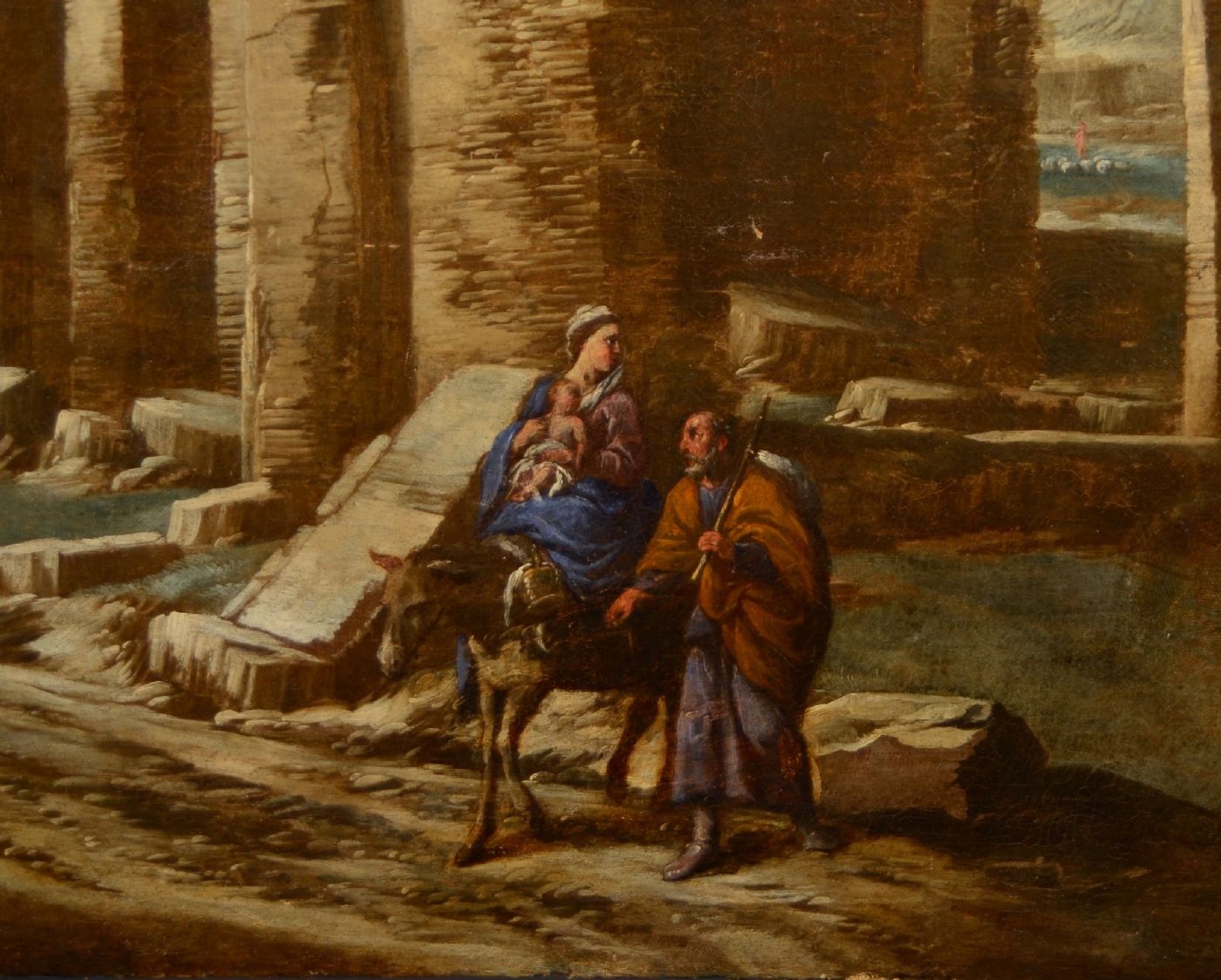
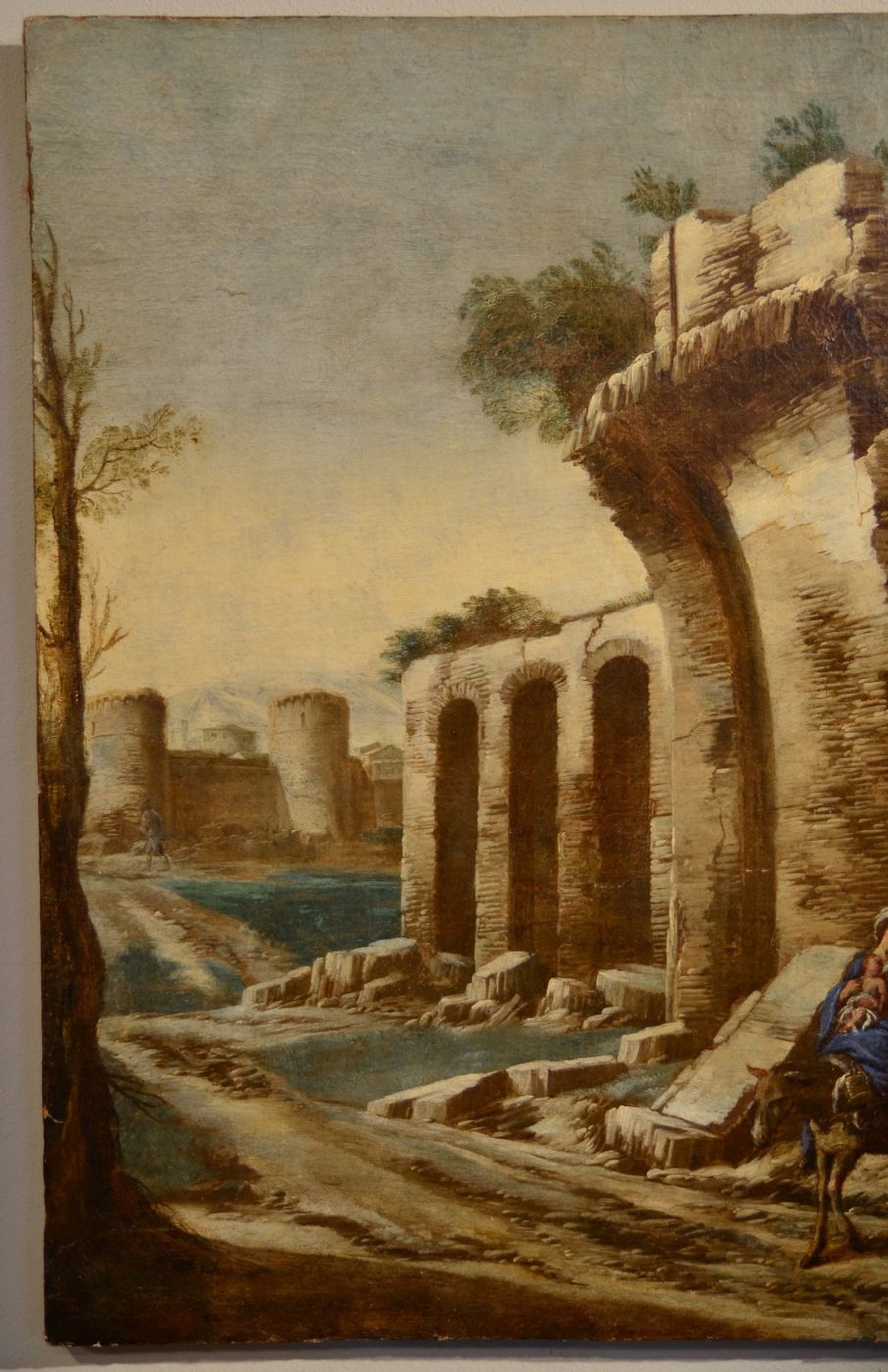
The beautiful published painting, a wide landscape with architectural ruins, fully reflects the pictorial poetics of Antonio Travi (Sestri Ponente 1608 - Genoa 1665), the first landscape painter of the Genoese school; a poetics that remained constant throughout his prolific career: from his beginnings as a student of Bernardo Strozzi, until his death in 1668, when his flourishing workshop was already supported by numerous sons and pupils. The imposing ruins, highlighted by an austere and luminous brightness, provide the backdrop for the biblical episode of the Flight into Egypt, with the Holy Family in the foreground.
Observing the stylistic characteristics, we notice the evident brushwork and the love for color typical of the master Strozzi, but also a clarity and precision typical of the Flemish artists active in Genoa, with particular reference to the German Goffredo Waals, present in various collections of the Genoese aristocracy. The luminous and metaphysical scenographies of Waals are translated into Travi's painting with a taste for ruins in a Ligurian key, through rapid brushstrokes, dense with color, and a fantastic naturalism accentuated by silvery luminosity. The proposed canvas reveals typical elements of his palette, such as the accurate color harmonies and the studied inclusion of brighter hues on the earthy and white base tones.
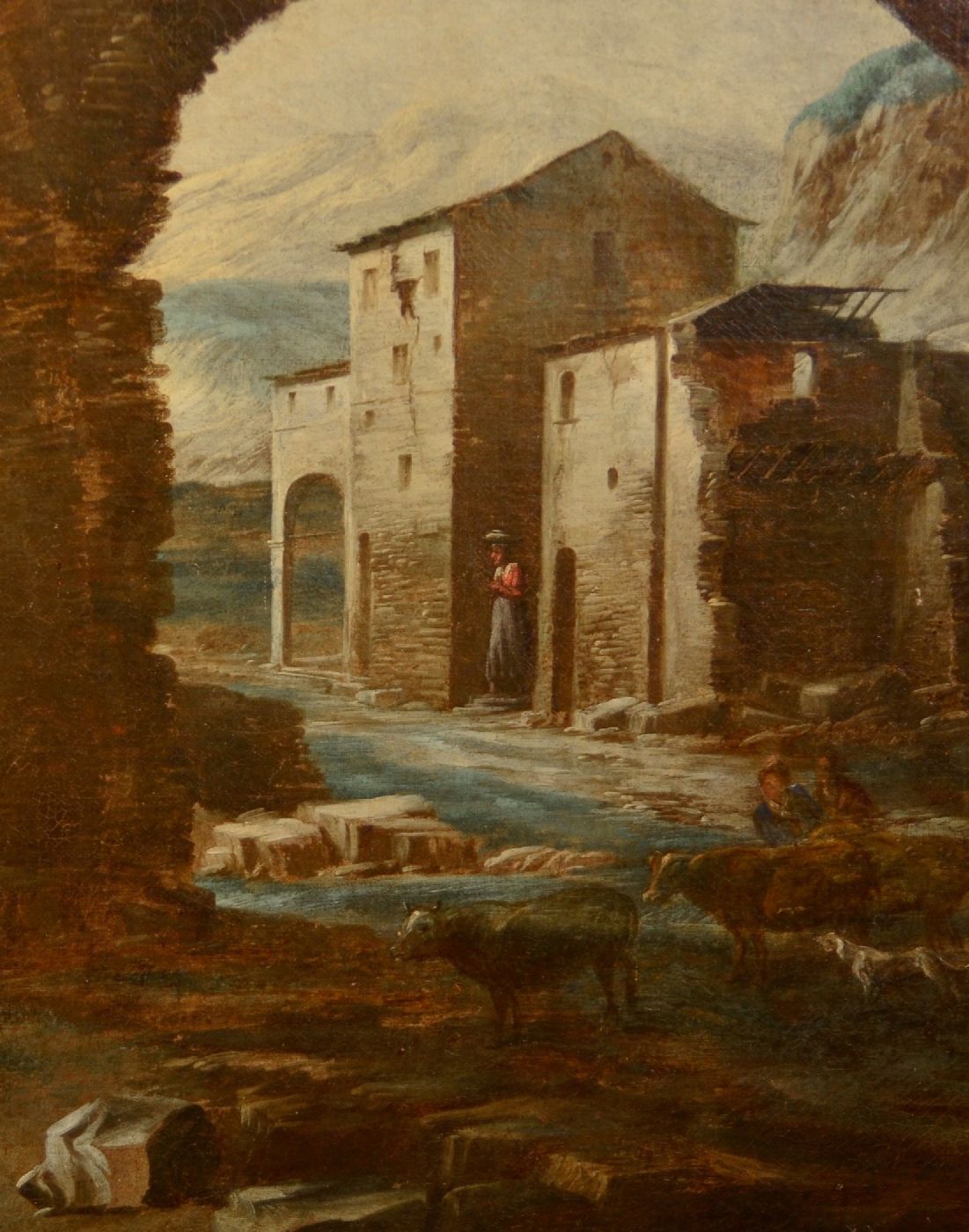
Regarding the composition, his passionate investigation of idealized Italian landscape remains almost unchanged over time, where the traces of inexorable time – ancient ruined architecture and dilapidated houses – inhabit the landscapes of a silent nature. His works are always animated by small figures, who simply carry out their daily activities: they lead flocks to drink or graze on the riverbanks. The same popular everyday nature of his genre subjects also characterizes his paintings with sacred themes, like the one under examination, always dominated by an order that imparts a sovereign tranquility to the environment.
However, it should be emphasized that the presence of man never appears decisive, but rather, the true protagonist of his works is nature, which reveals itself in all its simplicity. This canvas clearly illustrates it: almost a manifesto of his poetic vein, where the ruin is the true queen of the scene, the inexorable passage of time to which nothing can be opposed, except Mother Nature, in her silent resistance made of eternally azure skies crossed by clouds, of watercourses that will always flow to the sea, of meadows and valleys, trees and stones.
The perceived quality is that of a work of exquisite authenticity: note the reflections on the water, the descriptive meticulousness of the ruin in every stone and even in the traces of decoration on the arches above, the brushstrokes of white that are flashes of light.
Certificate of authenticity (FIMA)