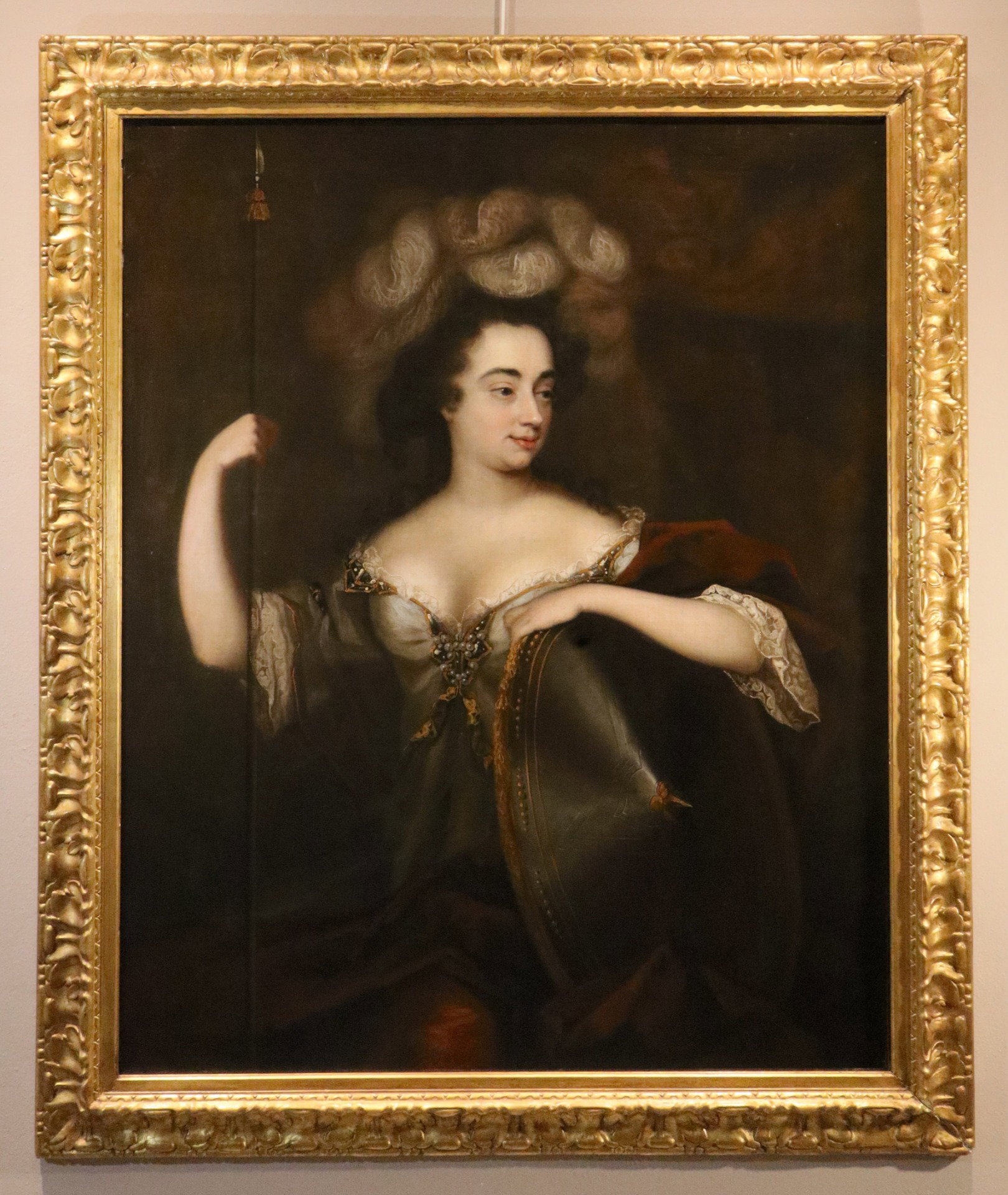
Attributed to Willem Wissing (Amsterdam, 1656 – Stamford, 1687)
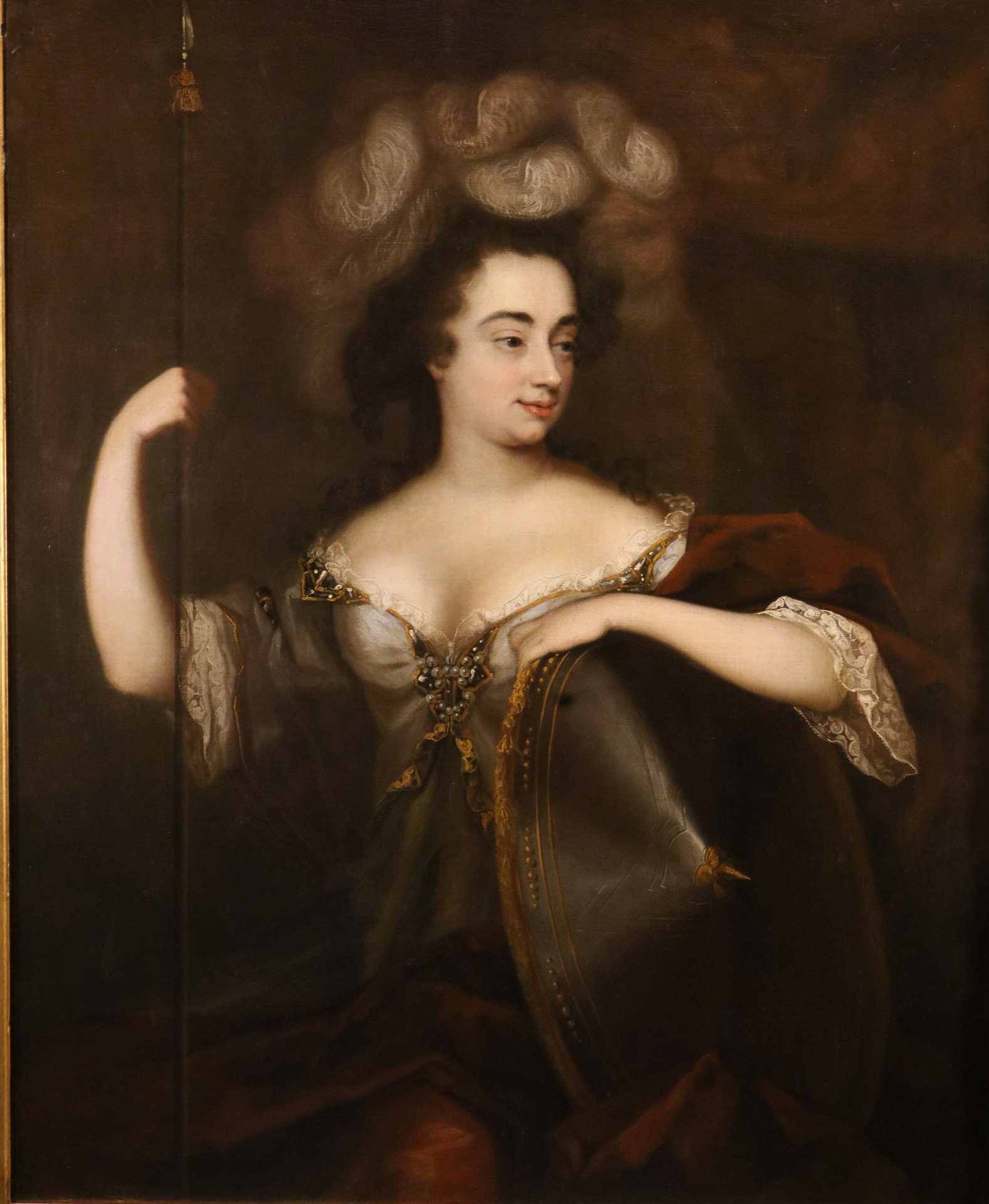
Portrait of the Duchess of Marlborough, in the guise of the goddess Minerva
Oil on canvas
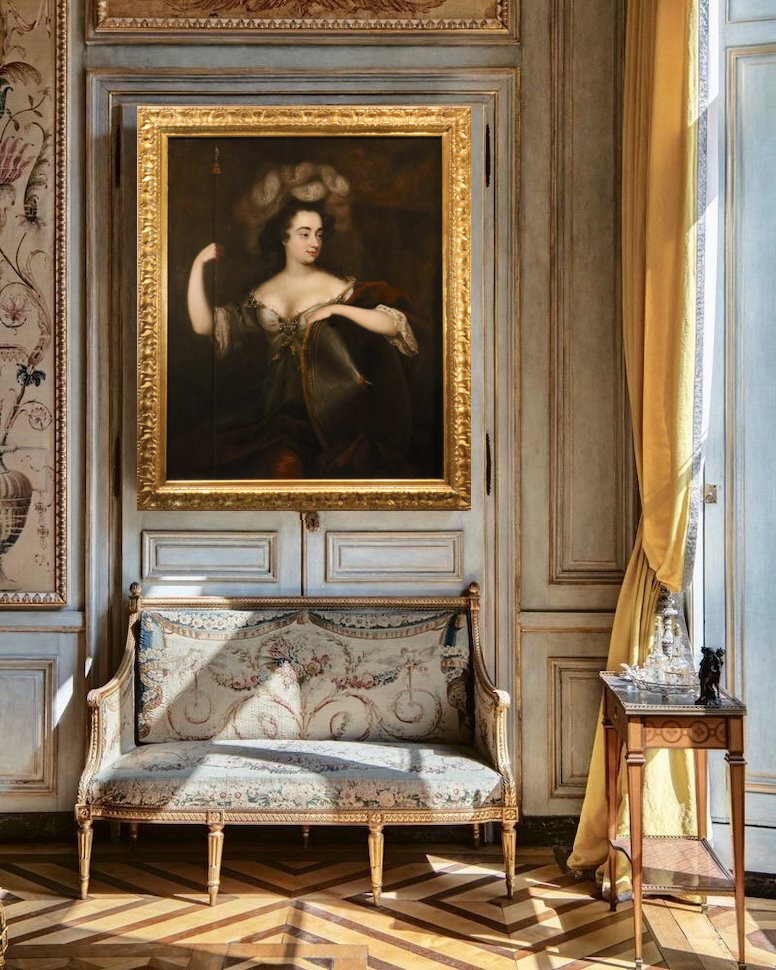
128 x 103 cm - in a gilded frame 149 x 125 cm.
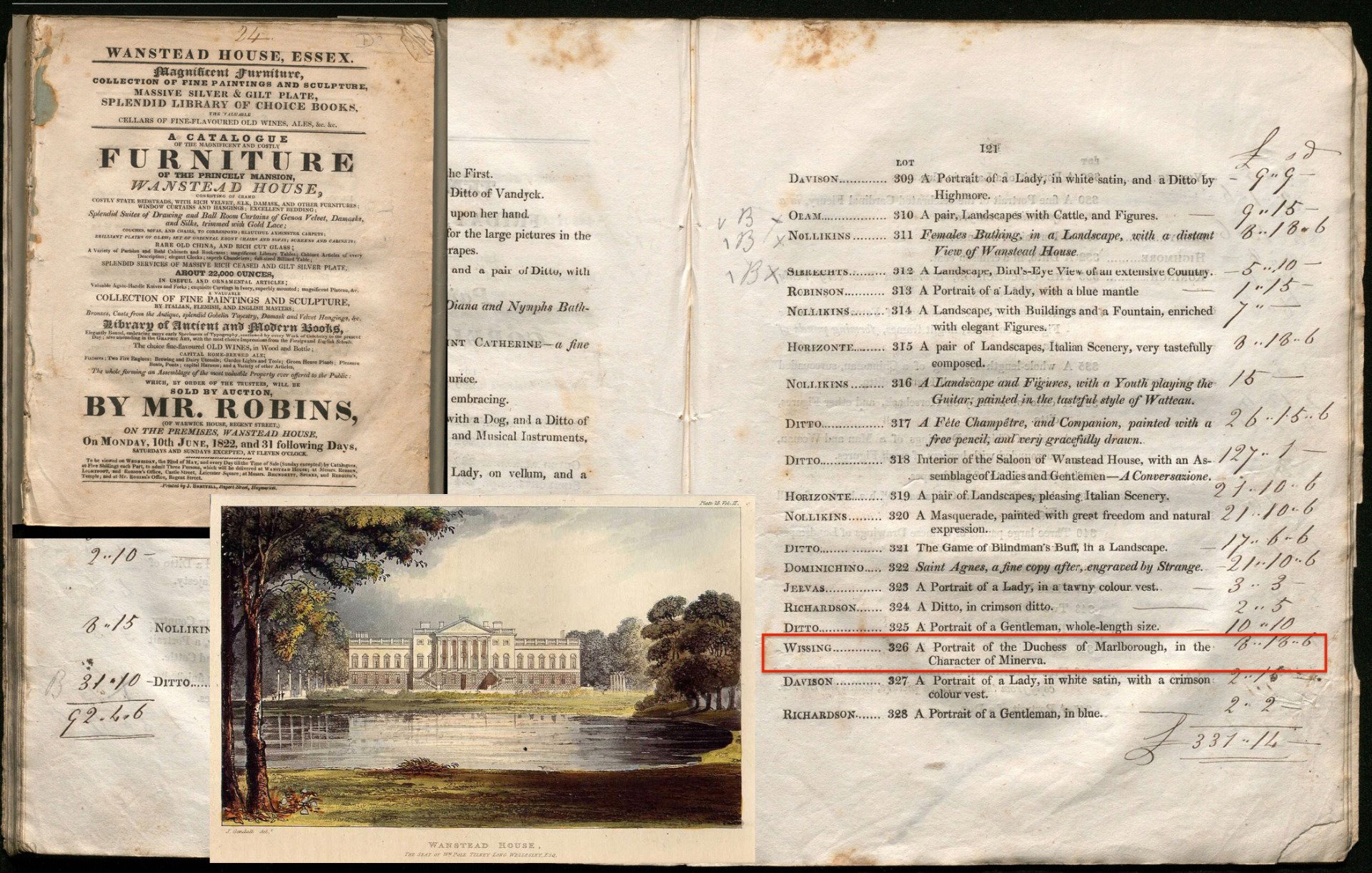
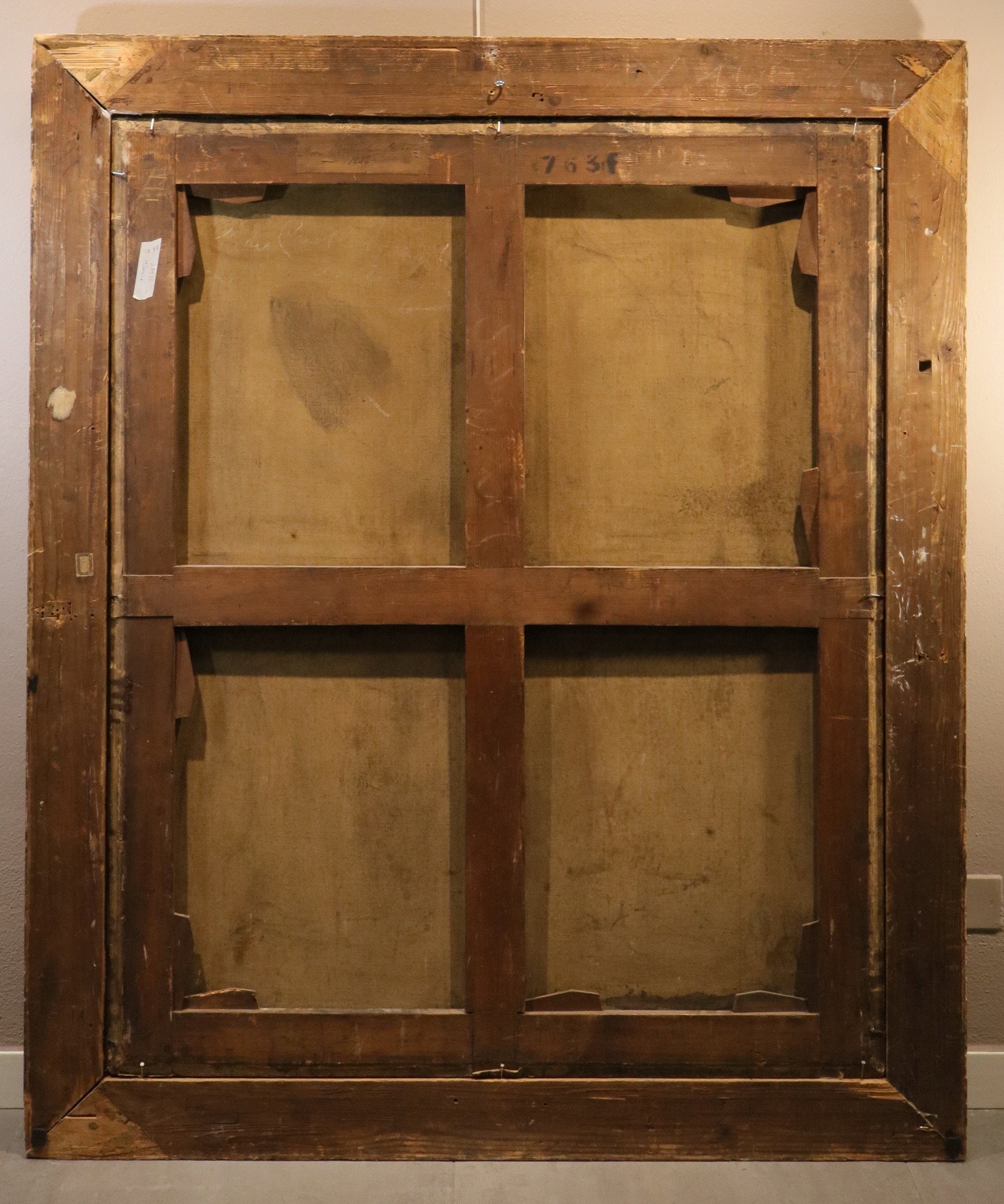
Provenance: Bears an old label on the back, Wanstead Collection, Essex (auction at Wanstead House, Essex, June 21, 1822, lot 326, page 121 of the catalog ** see catalog for details)
Notes: Based on this label placed on the back, the painting presented here, identified as "Portrait of the Duchess of Marlborough, in the character of Minerva", previously attributed to Willem Wissing, was published in the auction catalog relating to the sale of the Wanstead Collection.
In 1822, the entire collection of Wanstead House, one of the most important noble residences in Essex, commissioned in the early 18th century at the behest of Sir Richard Child from the Scottish architect Colen Campbell in Palladian style, was sold off in an auction that lasted a full 32 days to be able to extinguish the considerable debts accumulated by the Earl's heirs.
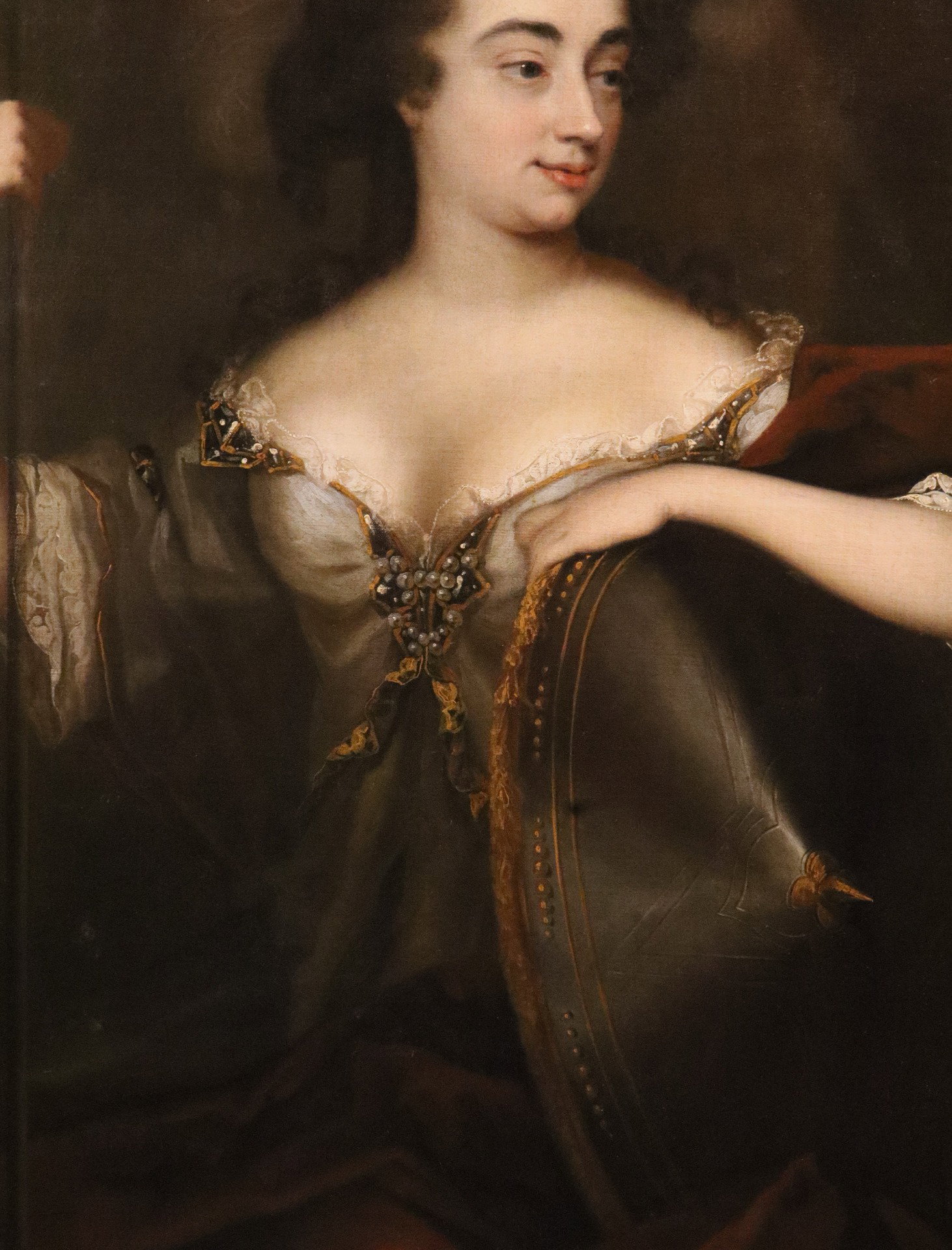
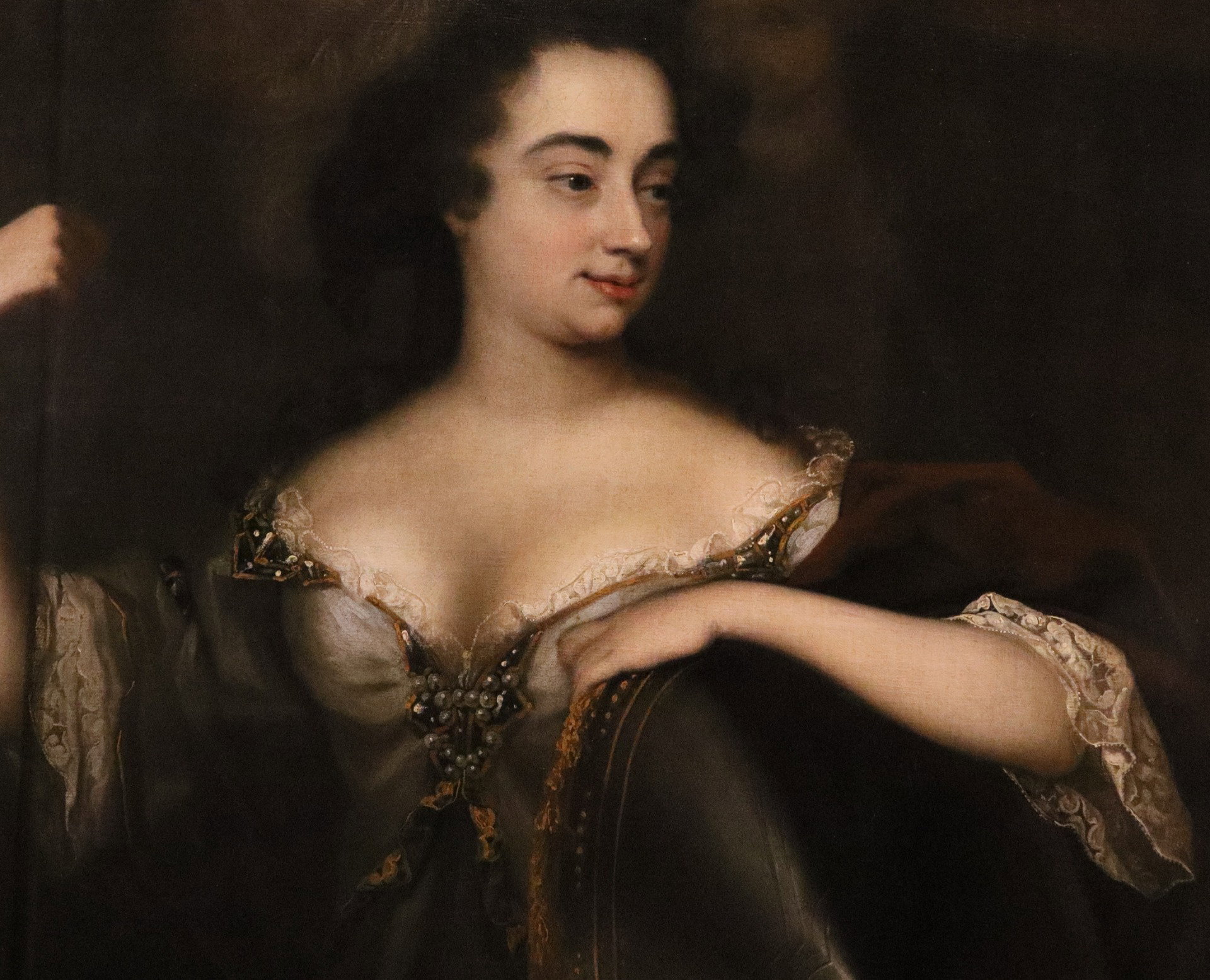
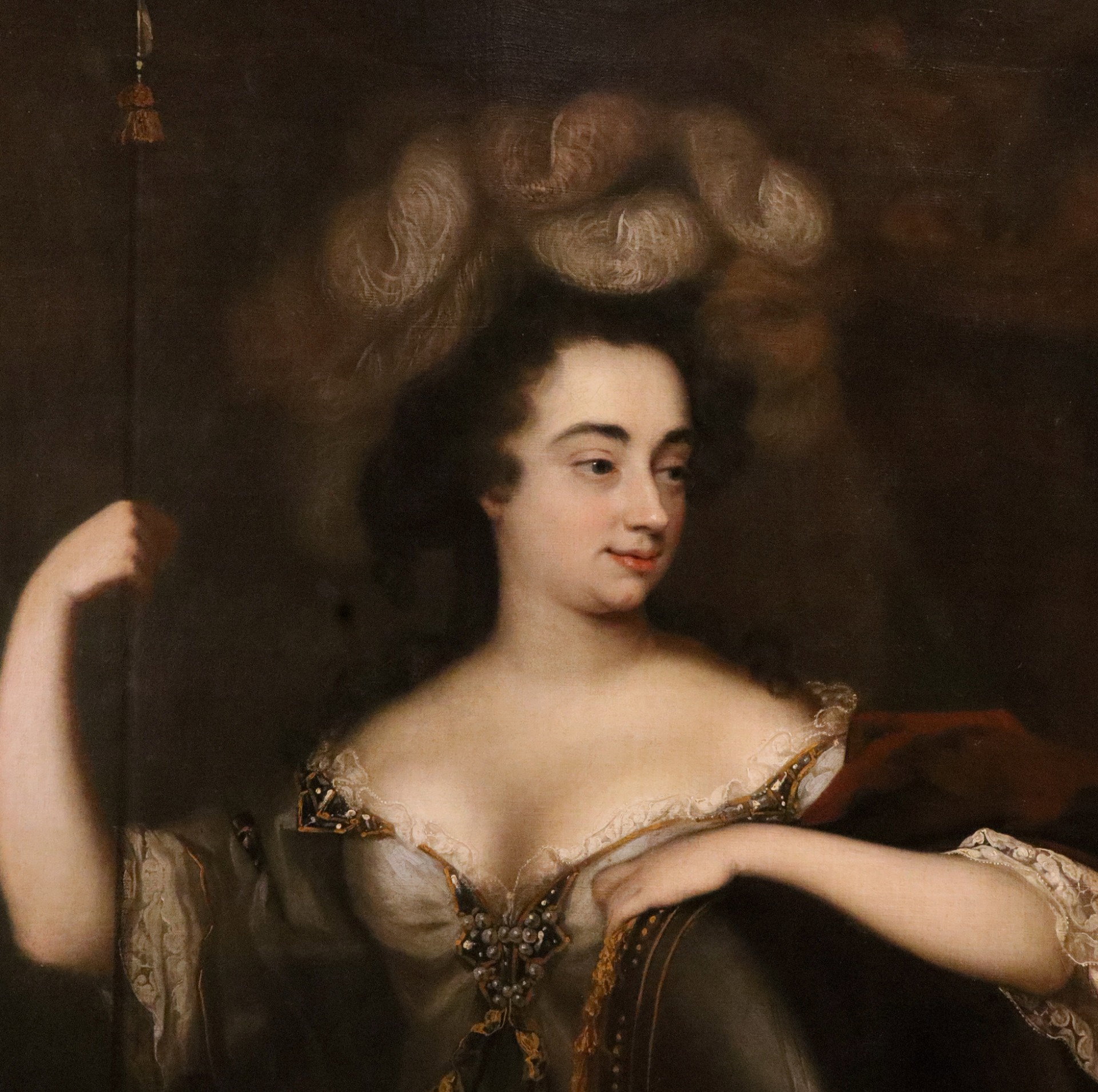
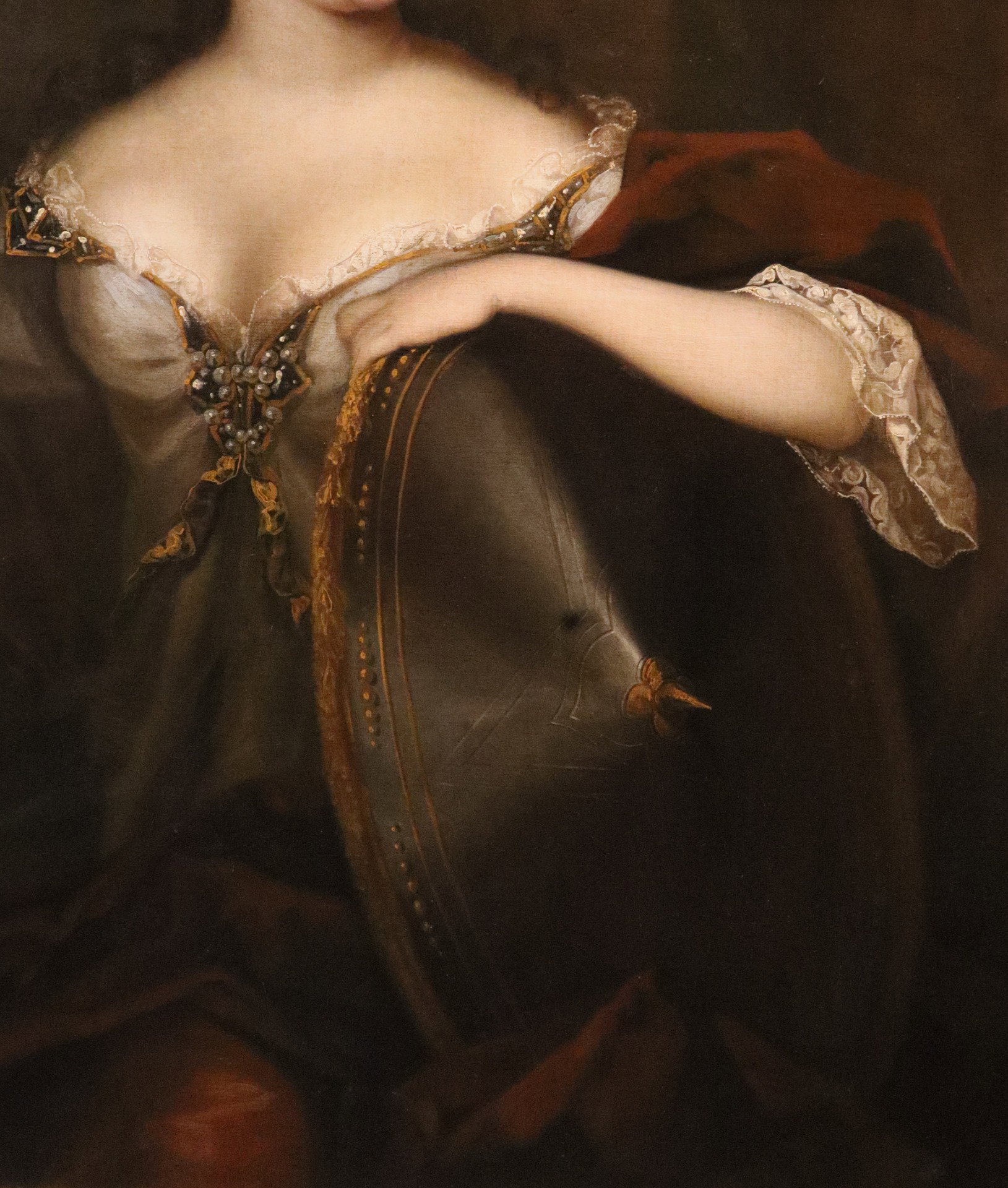
It is a portrait of an elegant lady depicted with the attributes of the Roman goddess Minerva, namely with a large shield, called an aegis, on which her left forearm rests, and a spear she proudly holds in her right hand. The sitter would be Sarah Churchill (1660 – 1744), Duchess of Marlborough, one of the most influential people in English history, a friend of Princess Anne Stuart of England.
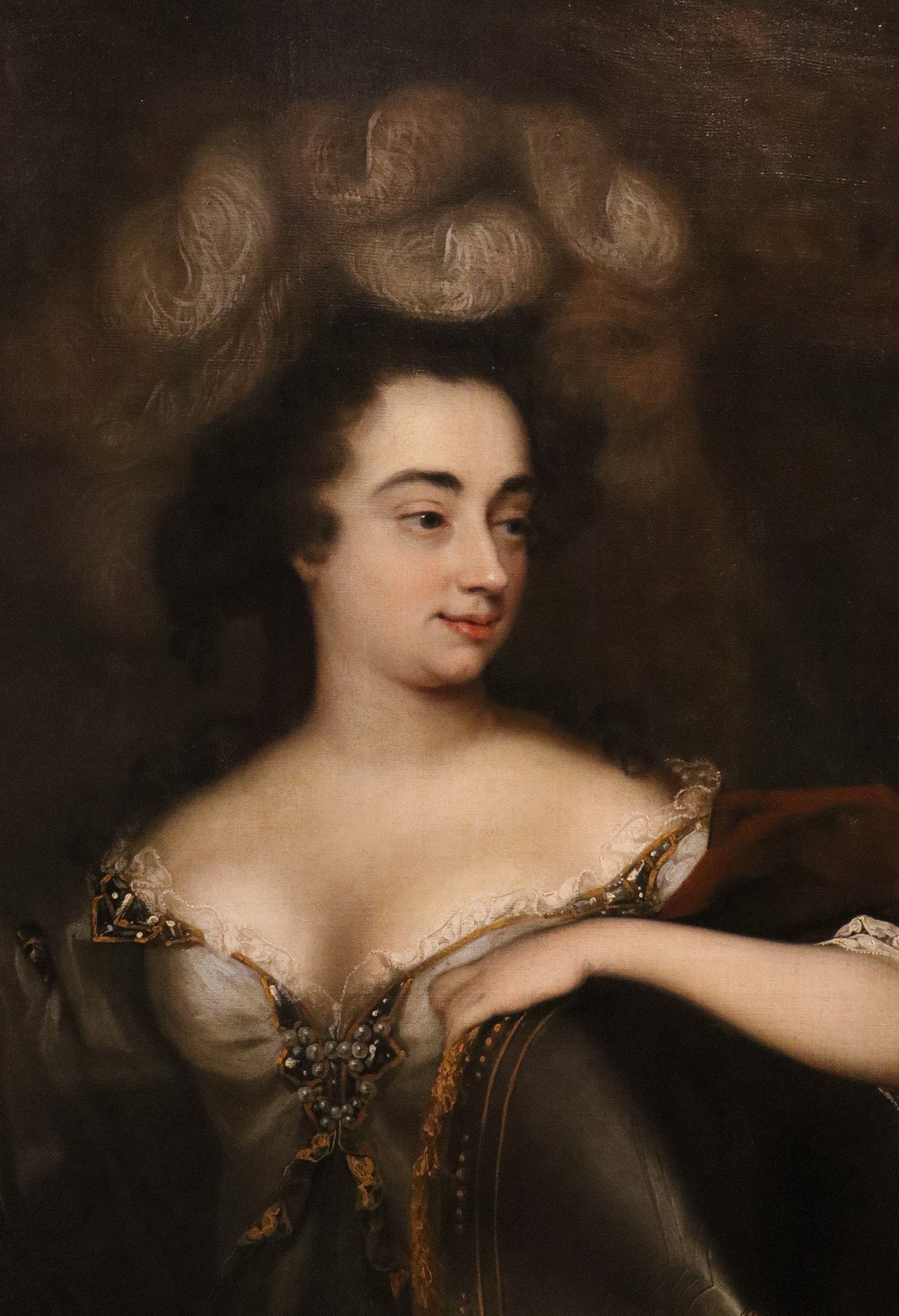
She wears a dress with a wide neckline, finished with lace at the edge and decorated with jewelry. She has a delicate, fair complexion and dark hair, on which she wears a large helmet with a feathered plume, turned to the side, looking out of the painting with her dark eyes.
This is a high-quality painting, representing a type of portrait typically commissioned by the nobility, especially the English, between the 17th and 18th centuries, where the sitter liked to be portrayed as a deity, with allegorical or mythological attributes, to elevate their status and value.
The work, which according to sources belonged to the prestigious collection of Wanstead House in Essex, is traditionally attributed to the painter Willem Wissing (Amsterdam, 1656 – Stamford, 1687), a renowned Dutch painter of the Baroque period, mainly known as a portraitist at the English court of the Stuarts and whose career flourished in England as Sir Peter Lely's principal artistic heir.
Following the latter's death in 1680, Wissing inherited a large part of his clientele, becoming Godfrey Kneller's main rival.
Wissing absorbed from Lely the portraiture tradition that used pastoral landscapes or classical deities to flatter patrons, a typical Baroque method to confer an aura of "sacredness" or "immortality" upon political power.
He was highly appreciated by James II, who in 1685 sent him to the Netherlands to paint the future sovereigns William III of Orange and Mary II. He painted every reigning British monarch from King Charles II to King George I, as well as the most important figures in British society and public life. These works, publicly exhibited in royal palaces, were admired and so appreciated by the public that they induced a large number of clients, mainly nobles, to want his workshop to handle their family portraits.
His technique reflects the formal elegance and sensuality typical of Stuart court portraits, with a strong emphasis on the nobility and decorum of the subjects. A peculiarity of his, which we find here, is the ability to idealize the features, giving the faces an almost porcelain softness, with large eyes and a serene but distant expression, typical of high aristocracy.
ADDITIONAL INFORMATION:
The work is sold complete with a gilded frame and is accompanied by a certificate of authenticity and a descriptive iconographic sheet.
We handle and organize the transport of purchased works, both to Italy and abroad, through professional and insured carriers.
It is also possible to view the painting in the gallery in Riva del Garda; we will be pleased to welcome you to show you our collection of works.
Contact us, without obligation, for any additional information.
Follow us also on:
https://www.instagram.com/galleriacastelbarco/?hl=it
https://www.facebook.com/galleriacastelbarco/