Flemish Master of the 16th Century
Circle of Quentin Metsys (Leuven, 1466 – Antwerp, 1530)
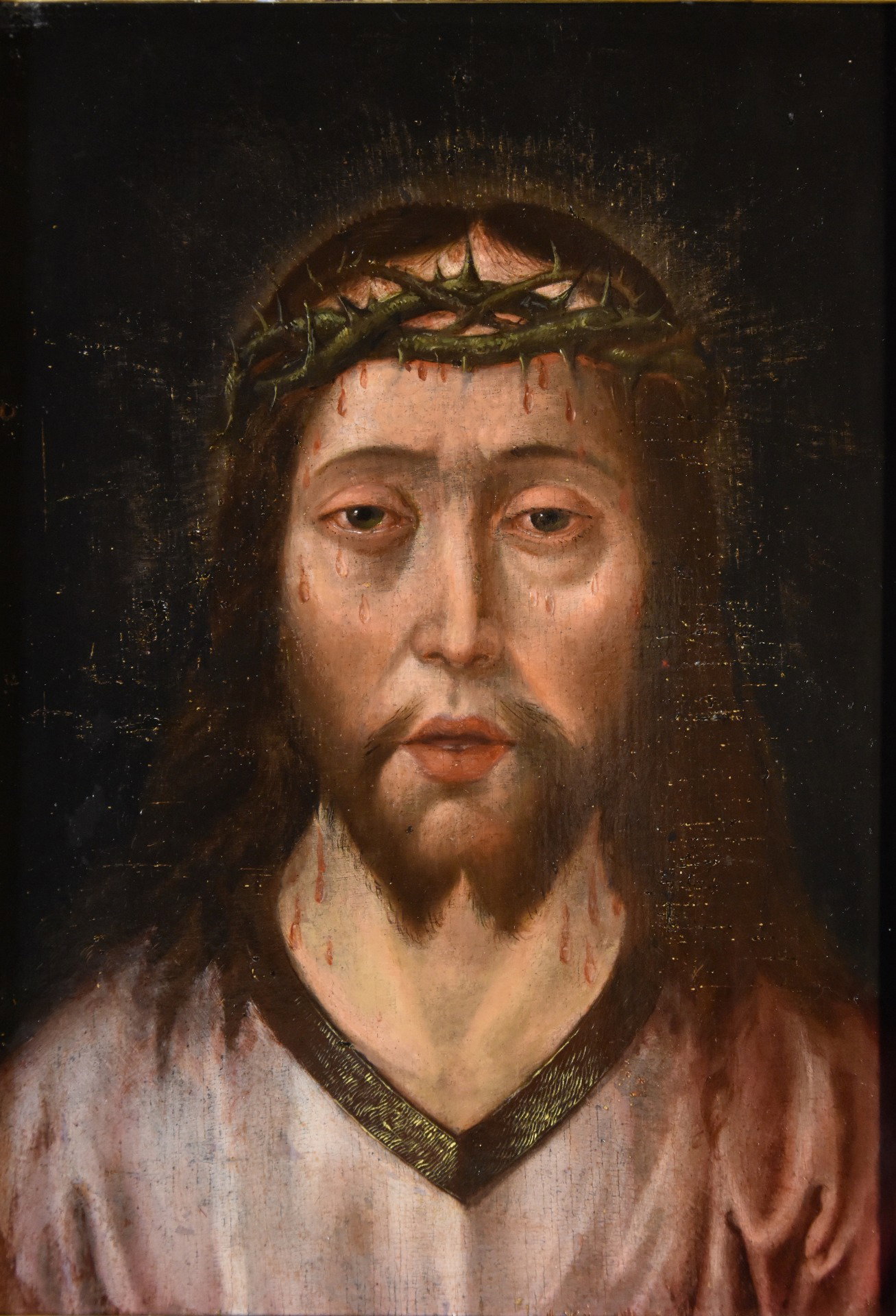
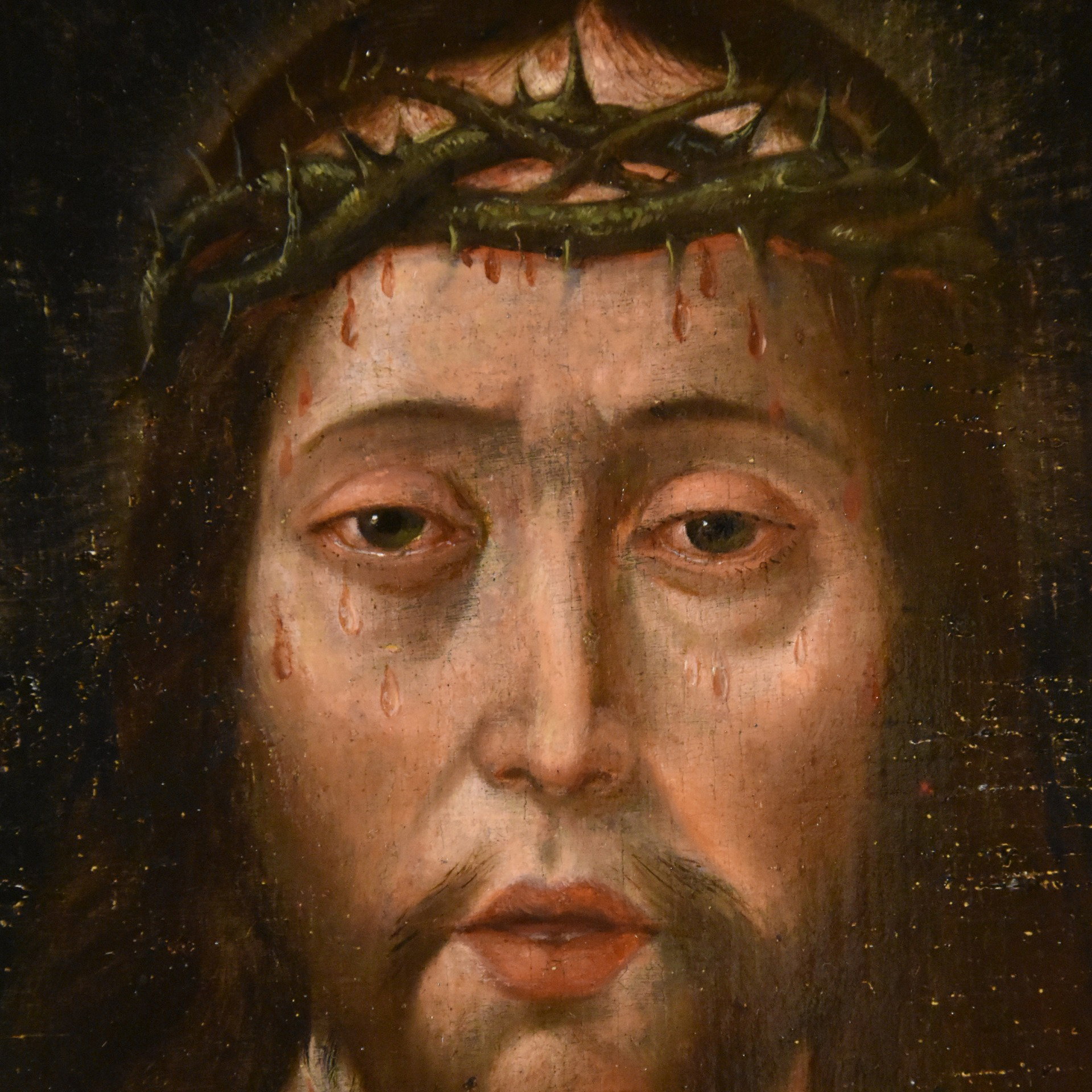
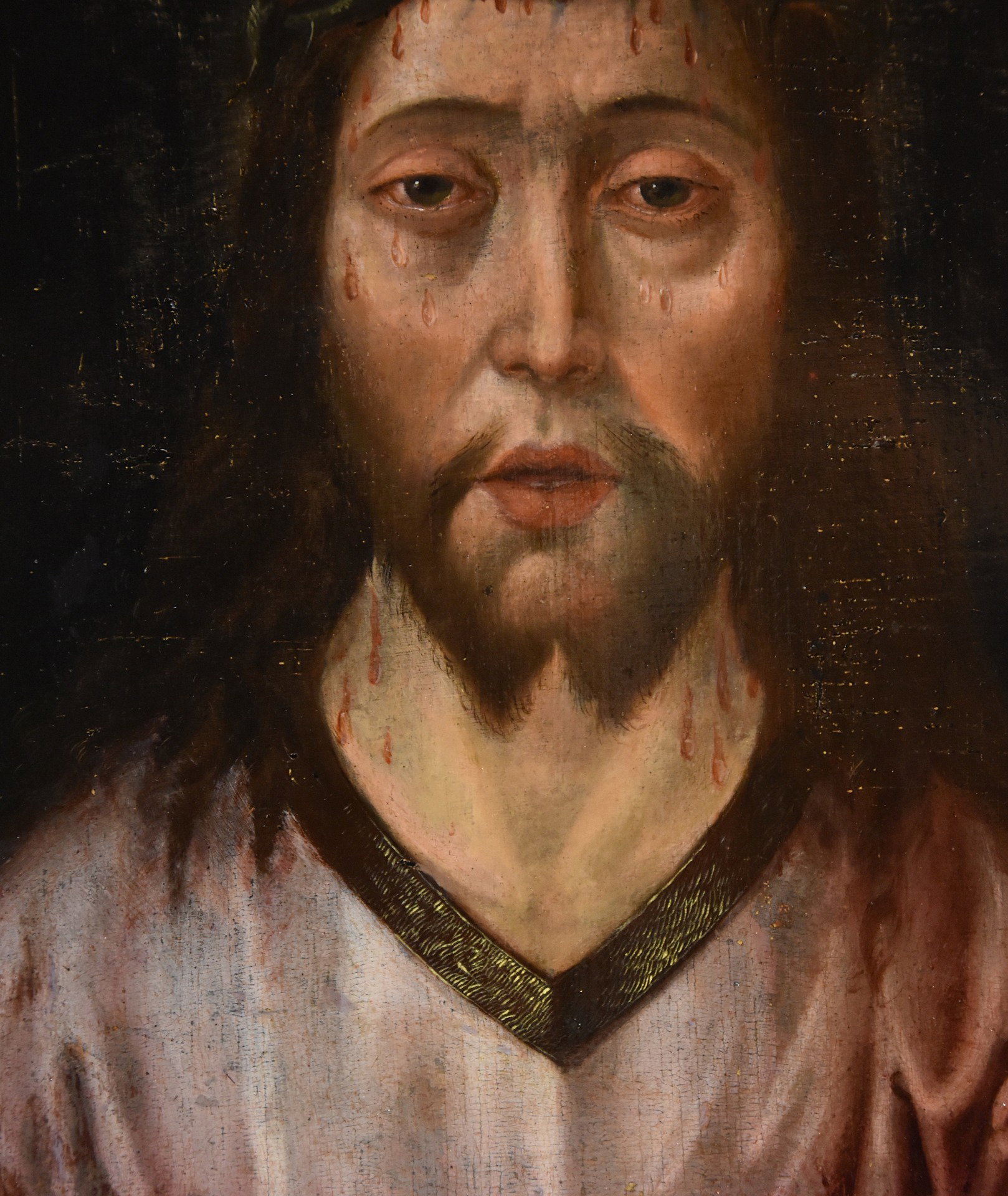
Ecce Homo
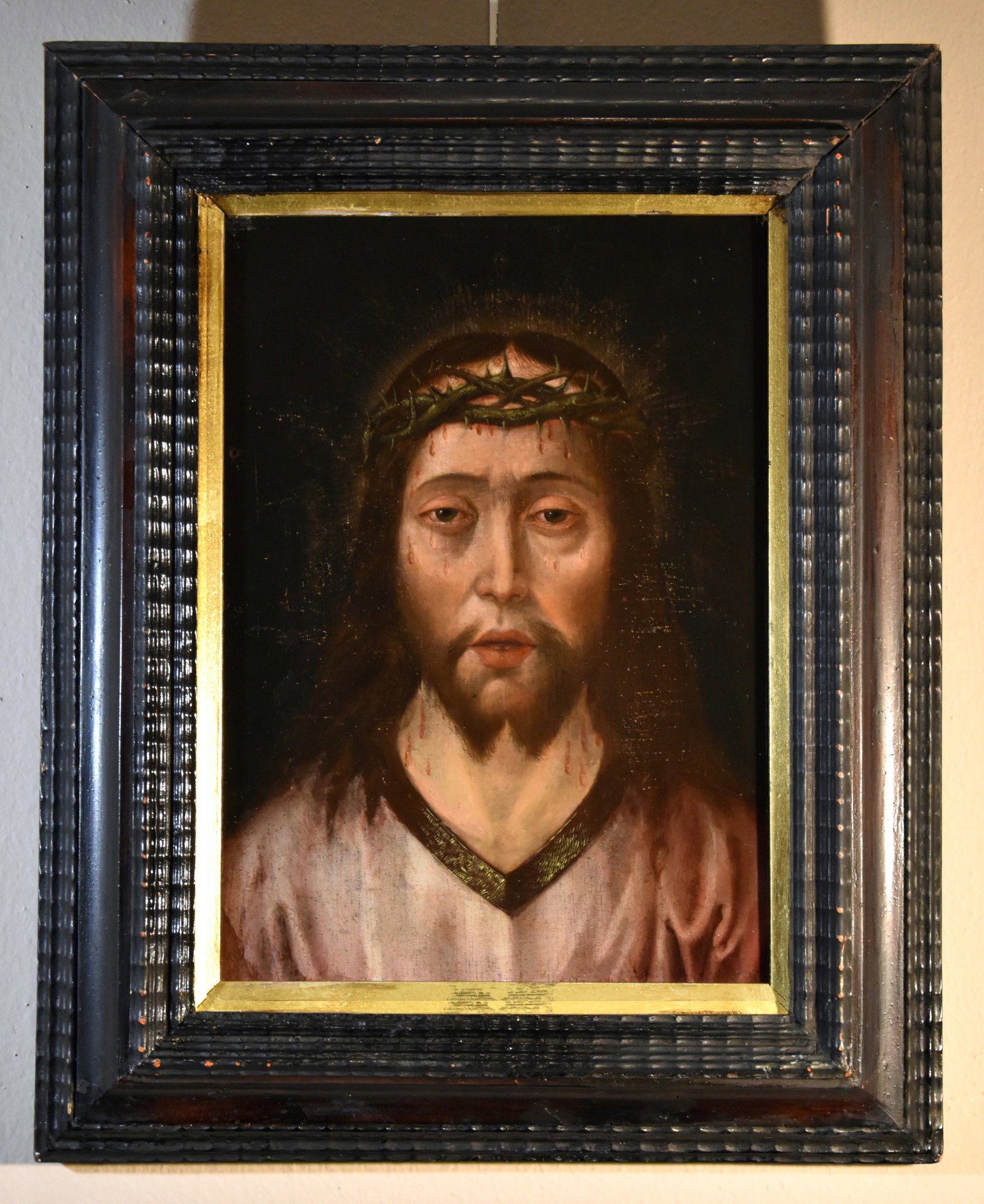
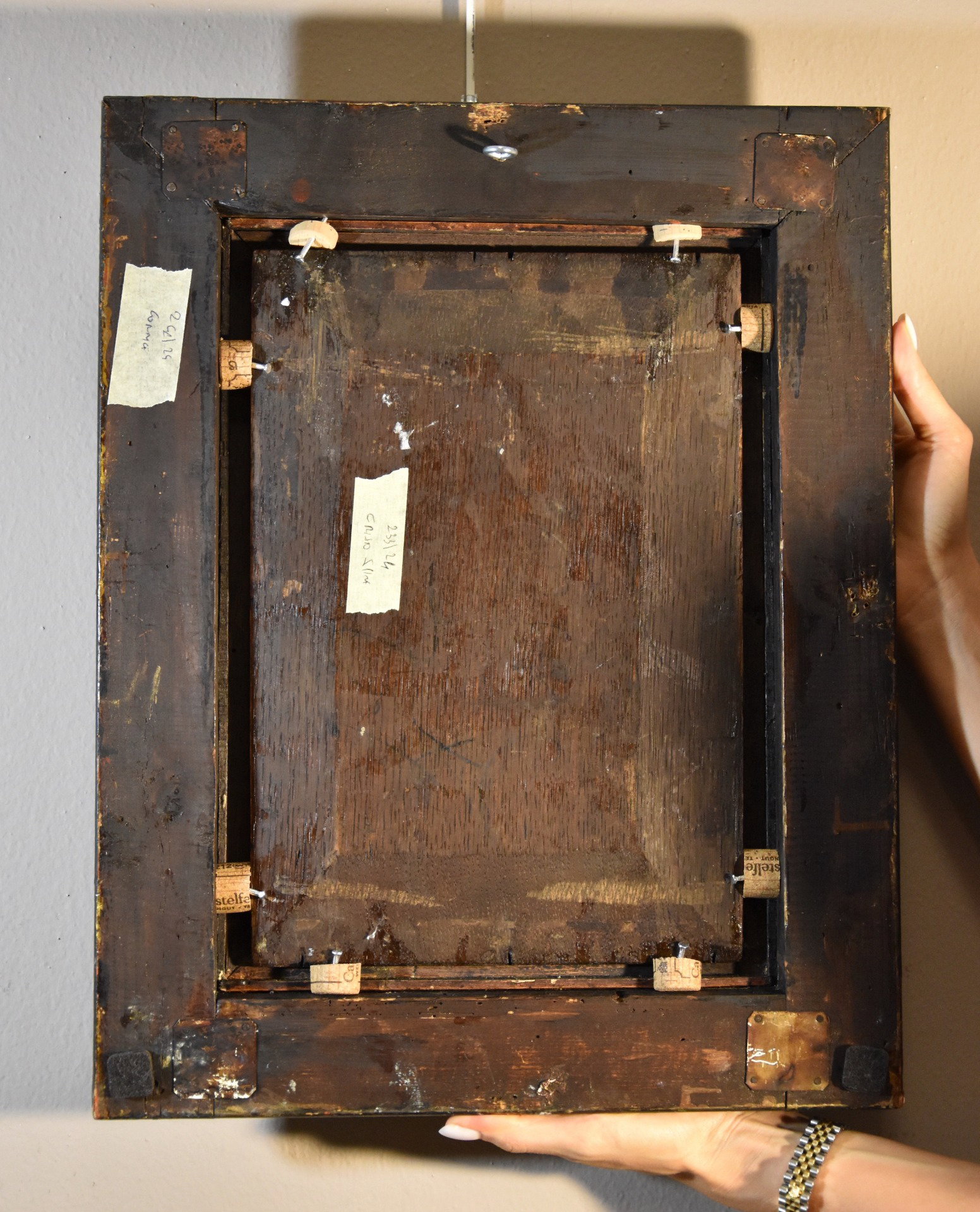
oil on panel (cm. 34 x 23 - with a non-contemporary 19th-century frame cm. 47 x 37)
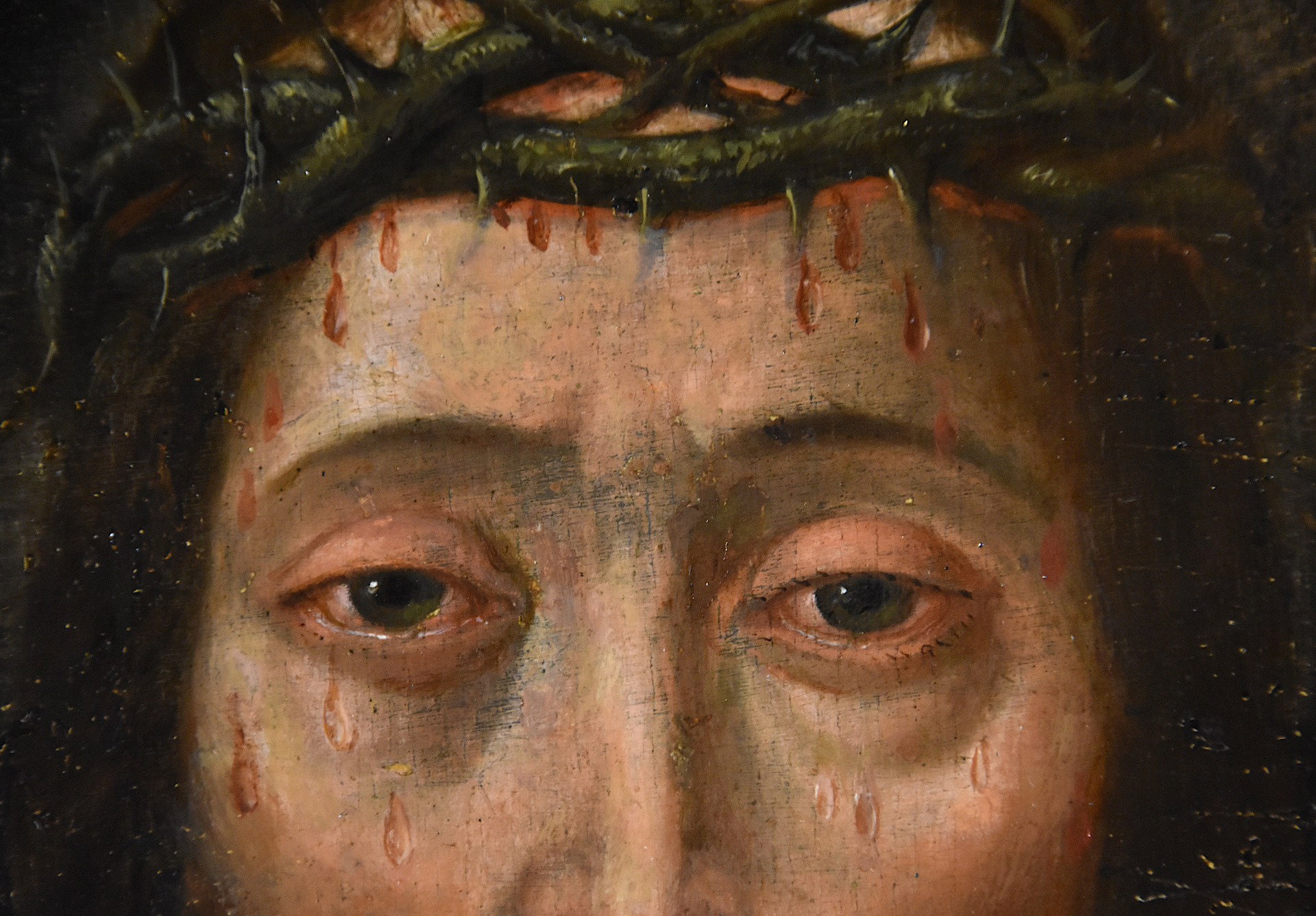
An important panel painting depicting the suffering face of Christ crowned with thorns, in the most traditional iconography of Ecce Homo, one of the most representative Christian depictions in ancient painting, which saw Flemish painters emerge for their intensity and dramatic realism.
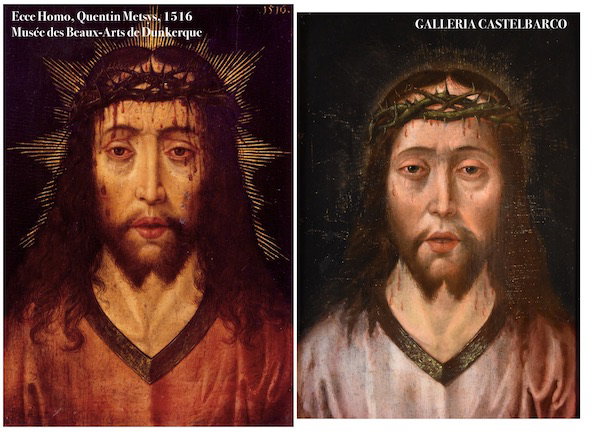
The painting indeed reveals typological and formal characteristics derived from the 16th-century Northern European tradition, showing particular affinities with the works of the Fleming Quentin Massys (or Metsijs), founder of the Antwerp School and one of the greatest Flemish interpreters of this subject;
Among his many works, we can mention his Ecce Homo dating back to 1516, currently housed at the Musée des Beaux-Arts de Dunkerque (see details)
*https://collections.musees-dunkerque.eu/fr/notice/ba-p-190-le-christ-cb75e188-ada2-41df-b588-77a0ed8a790d
Musée des Beaux-Arts de Dunkerque
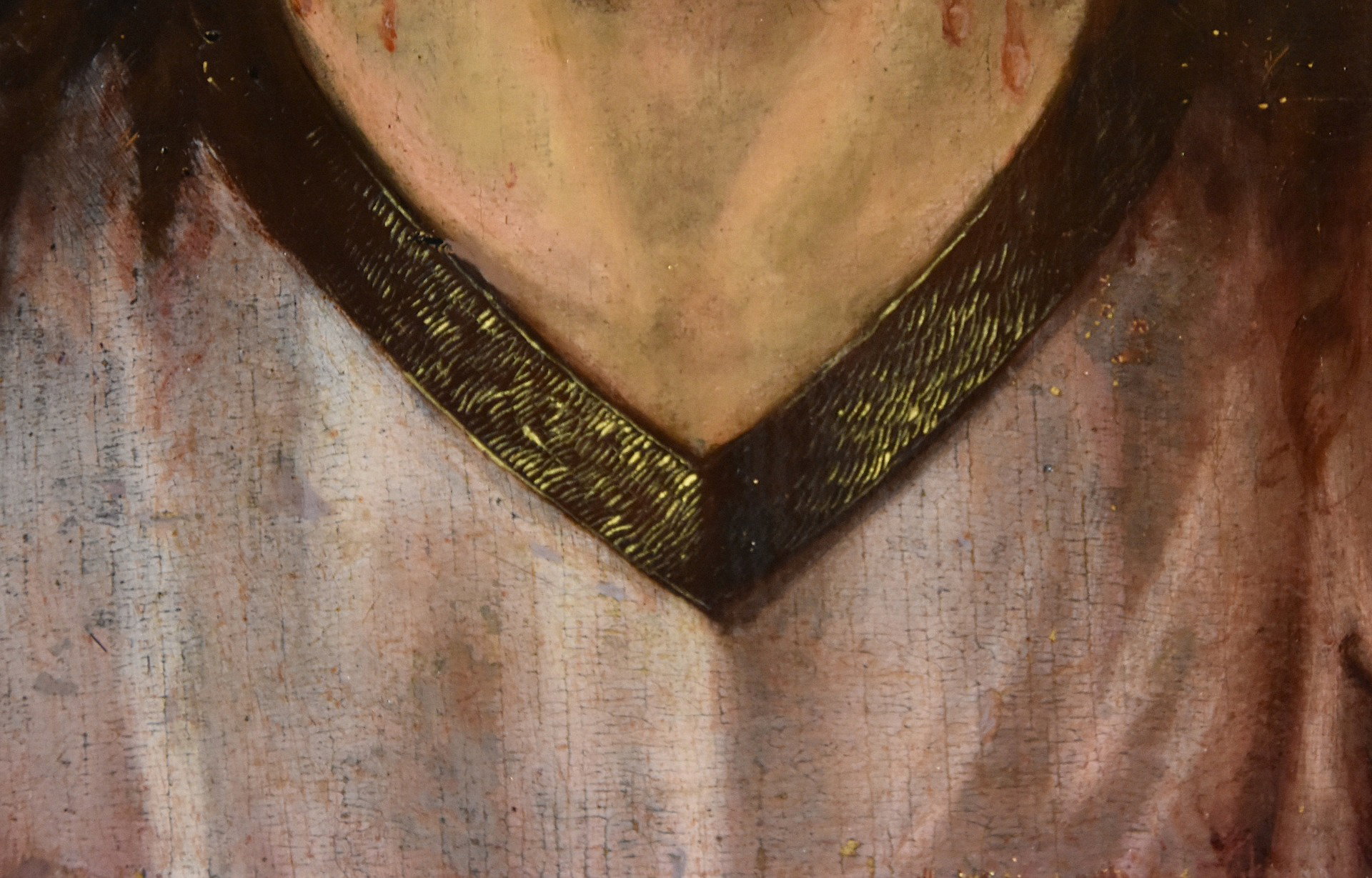
Compared to this model, the work in question exhibits a more robust execution and denser impasto, which, in our opinion, suggests a rather late 16th-century dating.
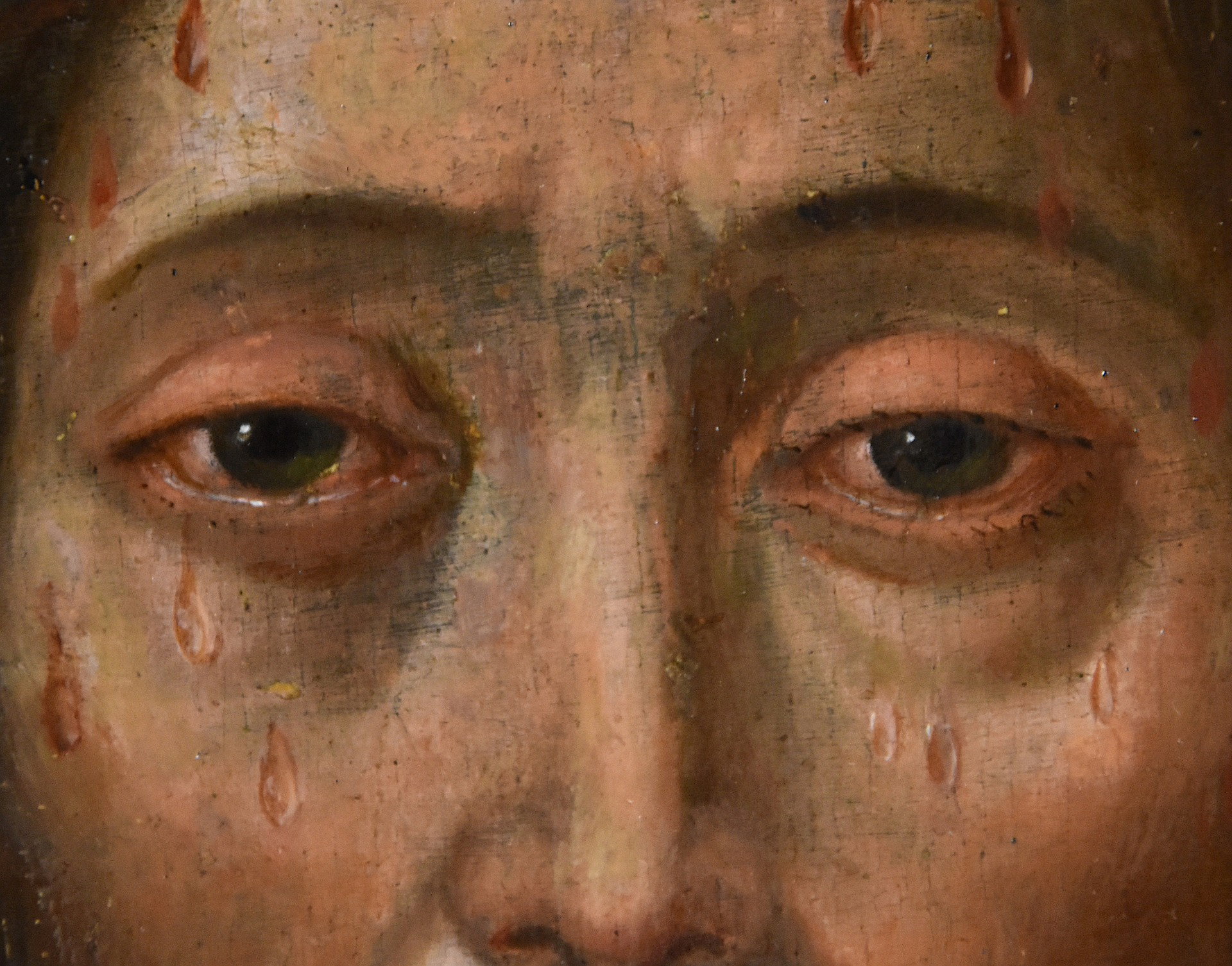
Christ, whose figure emerges against a dark background, is depicted with His head framed by a luminous halo, on which rests the crown of intertwined thorns. His gaze is vacant with half-closed, reddened eyes, in a resigned attitude, disfigured by pain, furrowed by tears and drops of blood.
What is important in this painting is the study of Christ's expression and gaze, with His eyes looking downwards, as a sign of sorrow, filled with a pathos capable of conveying to the viewer the suffering of this episode of the Passion.
Ecce Homo is the Gospel episode during which Jesus, awaiting his condemnation, after the flagellation, is presented to the people by Pontius Pilate, then Roman governor of Judea. The expression literally means 'Behold the Man,' and was the phrase spoken by Pilate to describe the suffering of Jesus, scourged and crowned with thorns.
The face suggests that the author certainly studied the works of other artists carefully for physiognomy, i.e., the discipline that sought to study people's character based on their physical appearance, and if there were indeed links between appearance and character.
ADDITIONAL INFORMATION:
The work is sold complete with a wooden frame and is accompanied by a certificate of authenticity and a descriptive iconographic sheet.
We handle and organize the transport of purchased works, both within Italy and abroad, through professional and insured carriers. It is also possible to view the painting at our gallery in Riva del Garda; we will be happy to welcome you to show you our collection of works.
In case of purchase of the work by non-Italian clients, an export permit will be required, which takes approximately 10/20 days. Our gallery will handle the entire process until its issuance. All costs for this operation are included.
Please contact us, without obligation, for any additional information.
Follow us also on:
INSTAGRAM https://www.instagram.com/galleriacastelbarco/?hl=it
FACEBOOK https://www.facebook.com/galleriacastelbarco/