Jacopo Ligozzi (Verona 1547 - Florence 1627) Workshop
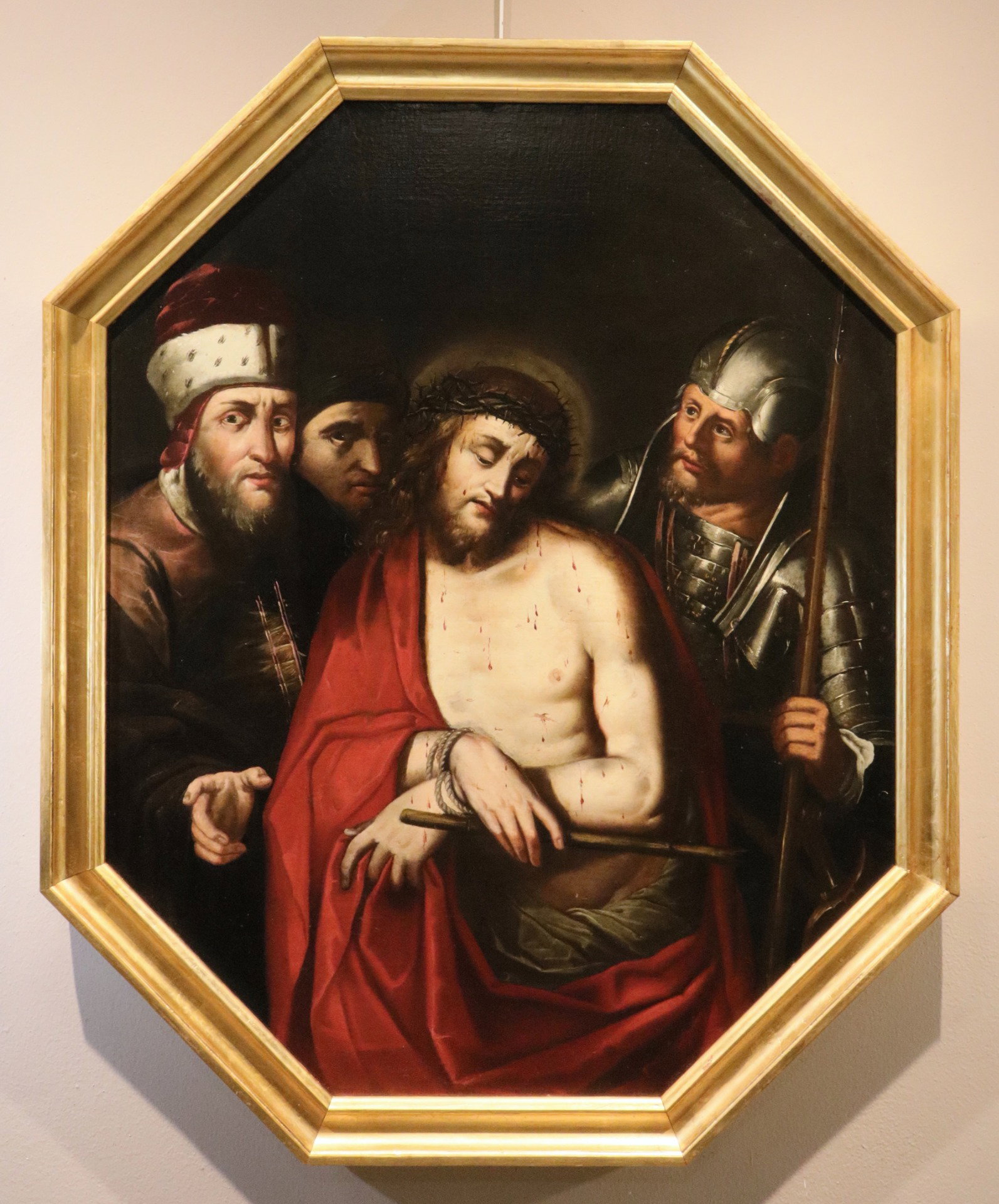
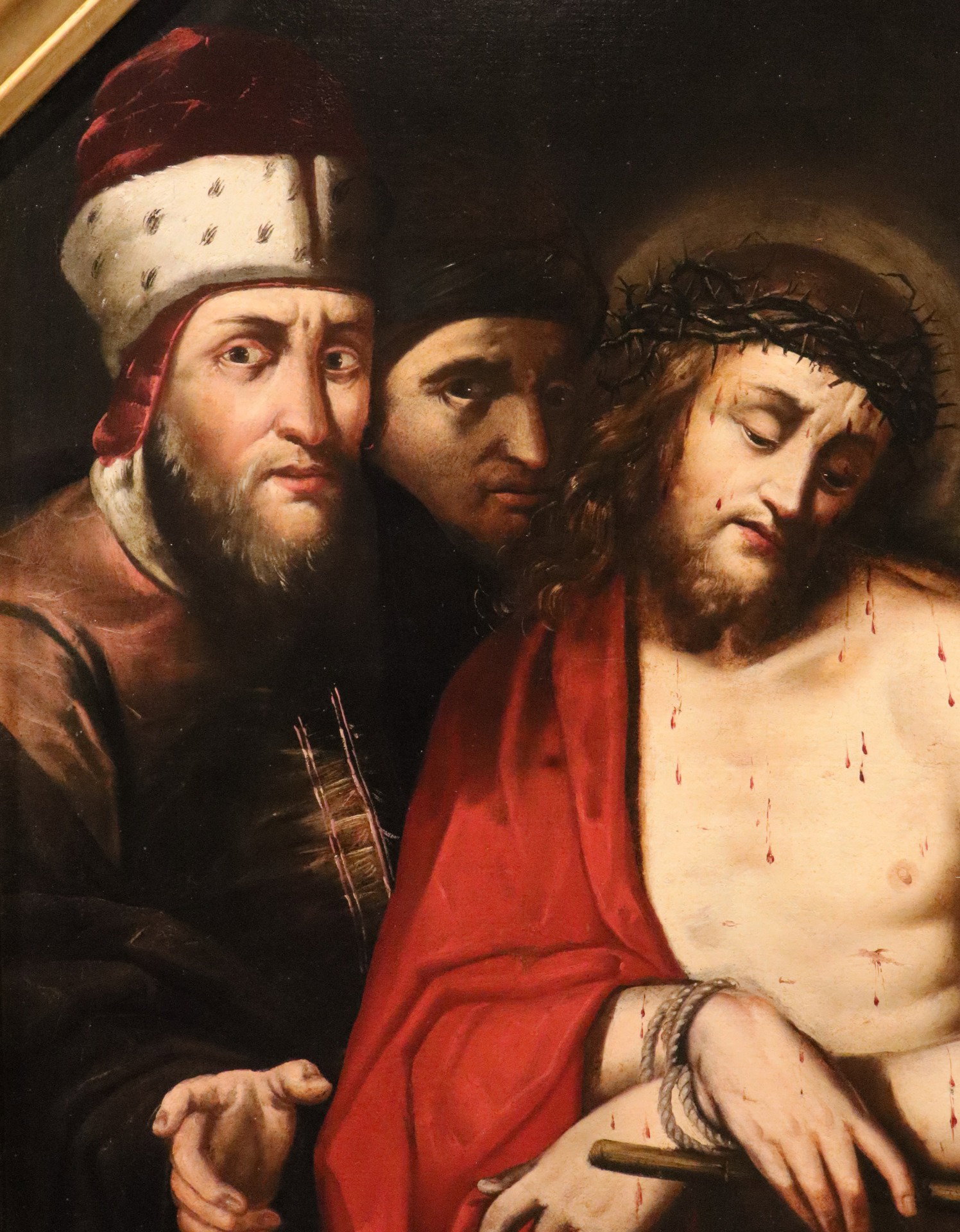
Ecce Homo
oil on octagonal canvas
118 x 94 cm. - Framed 128 x 105 cm.
Full details of the artwork (click HERE)
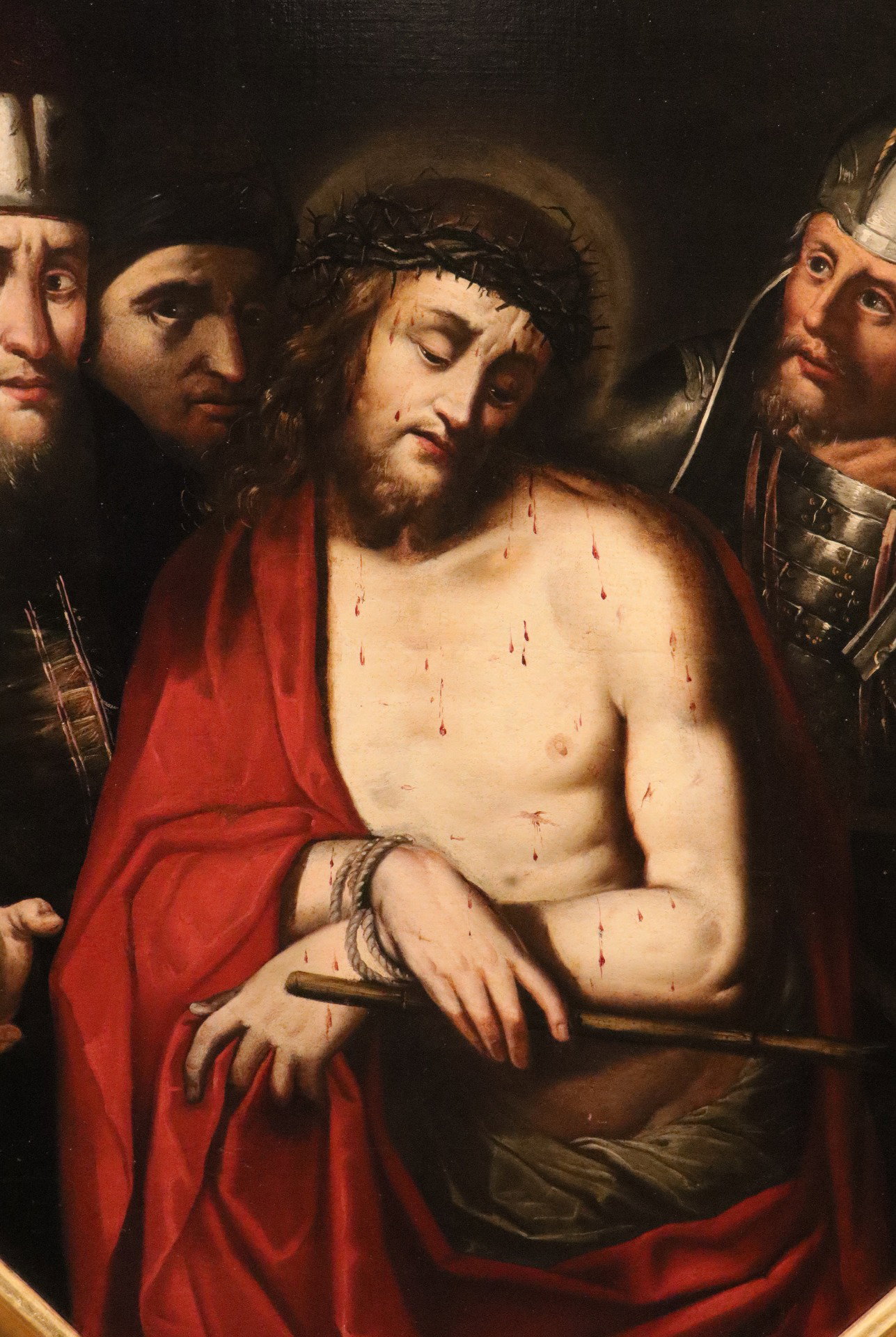
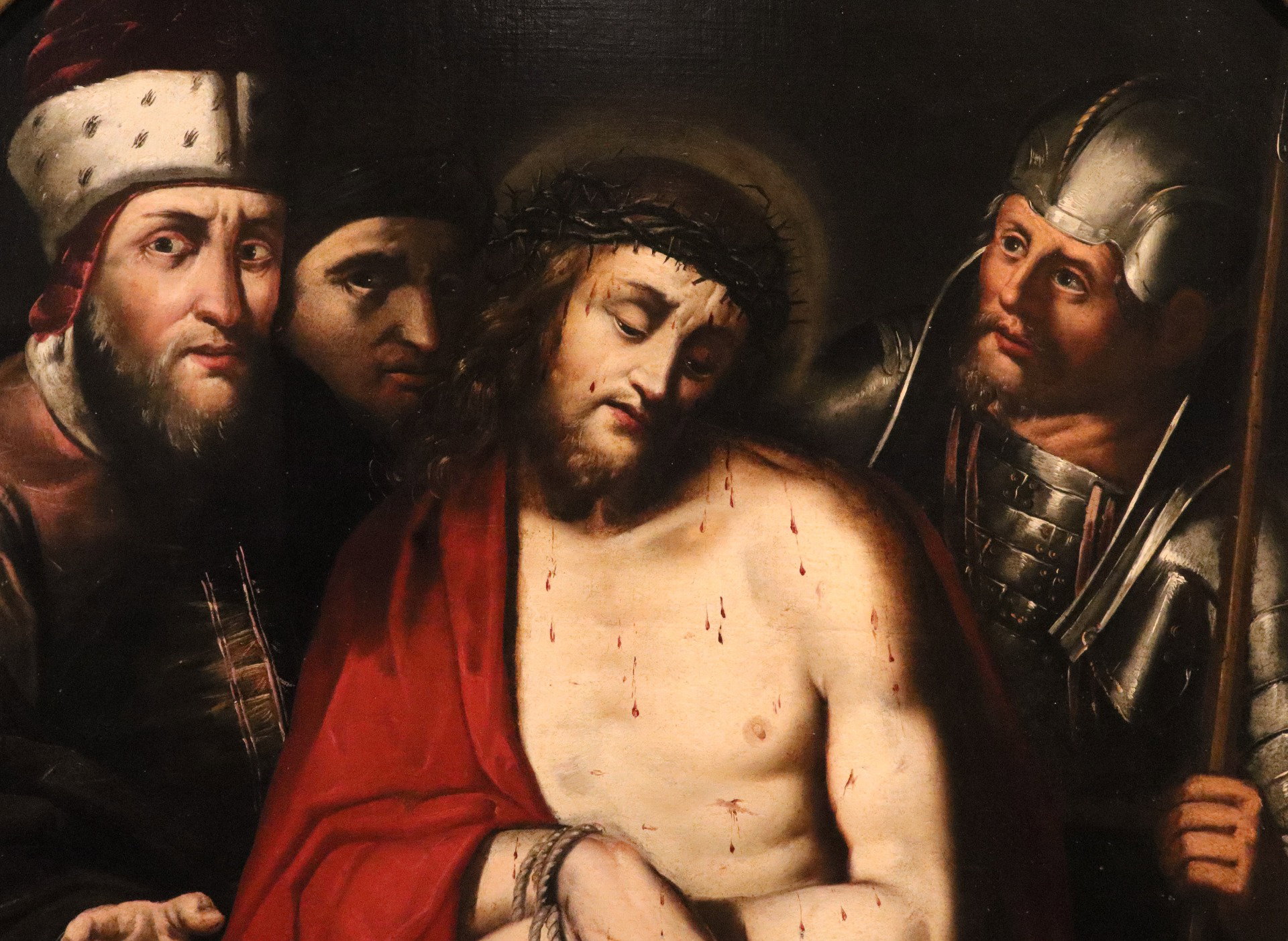
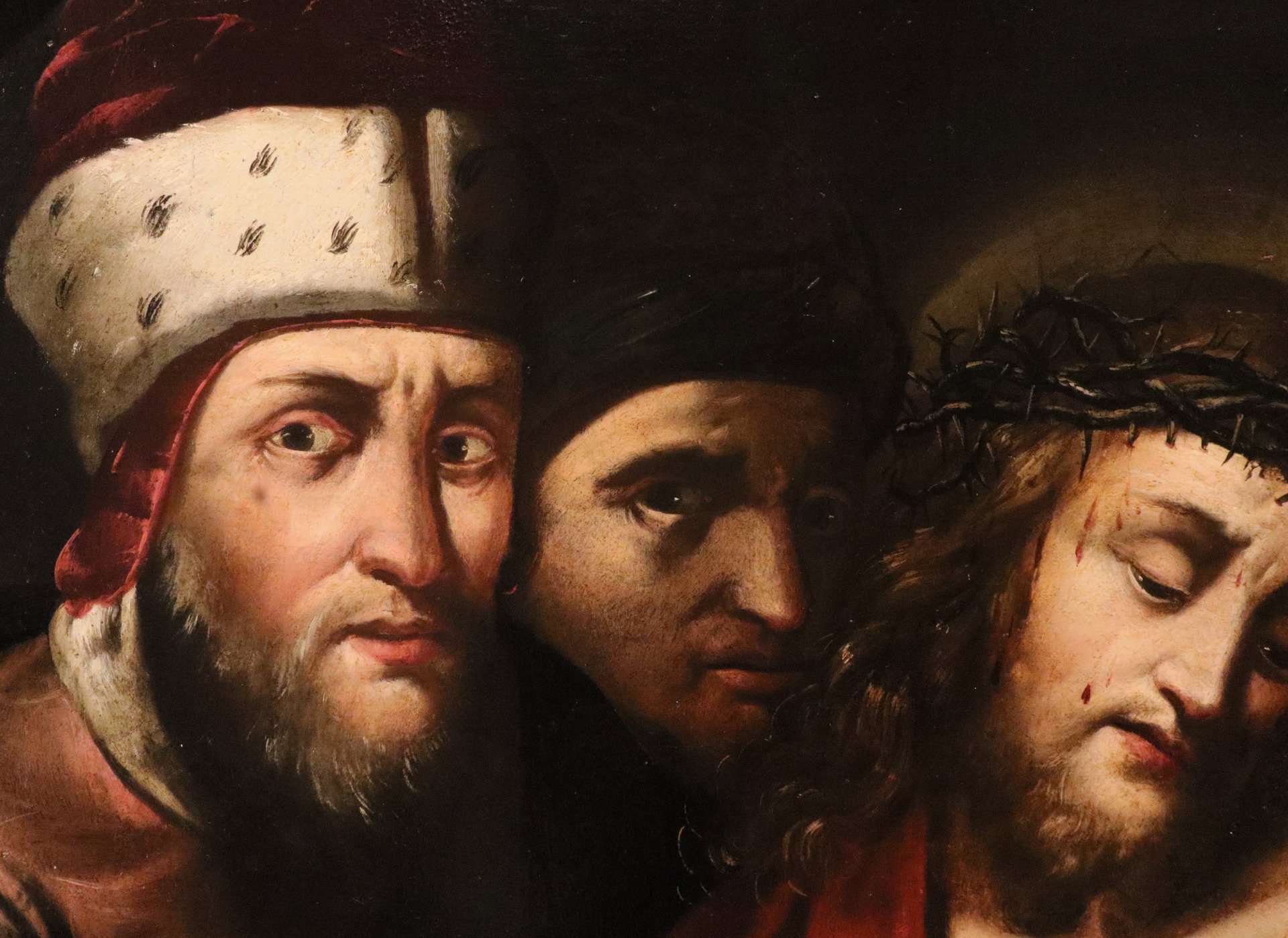
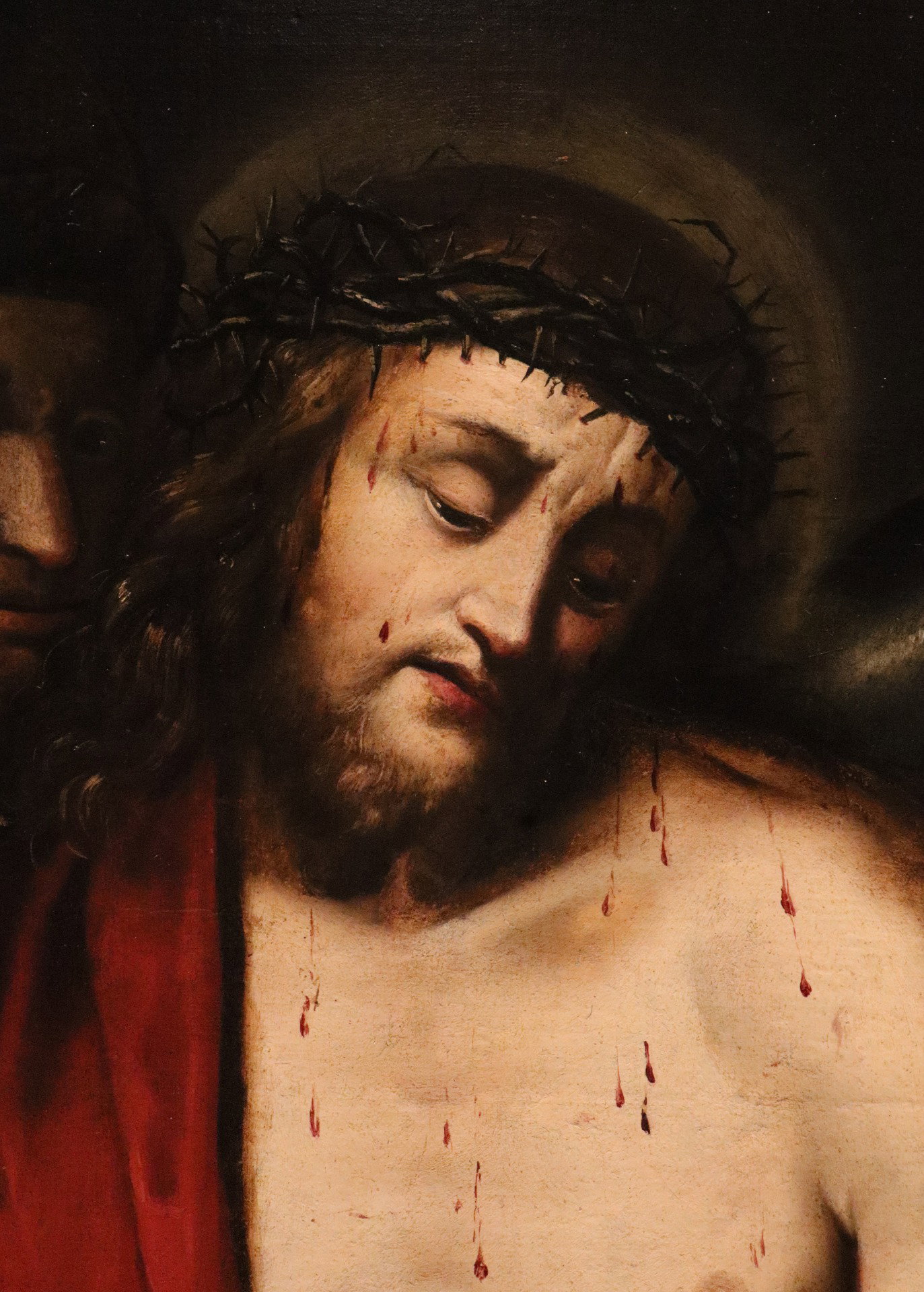
The "Ecce Homo," the subject of our intense canvas, is the evangelical episode during which Jesus, awaiting his condemnation and after the flagellation, is presented to the crowd by the Roman governor Pontius Pilate, here depicted at his side with an oriental-style turban.
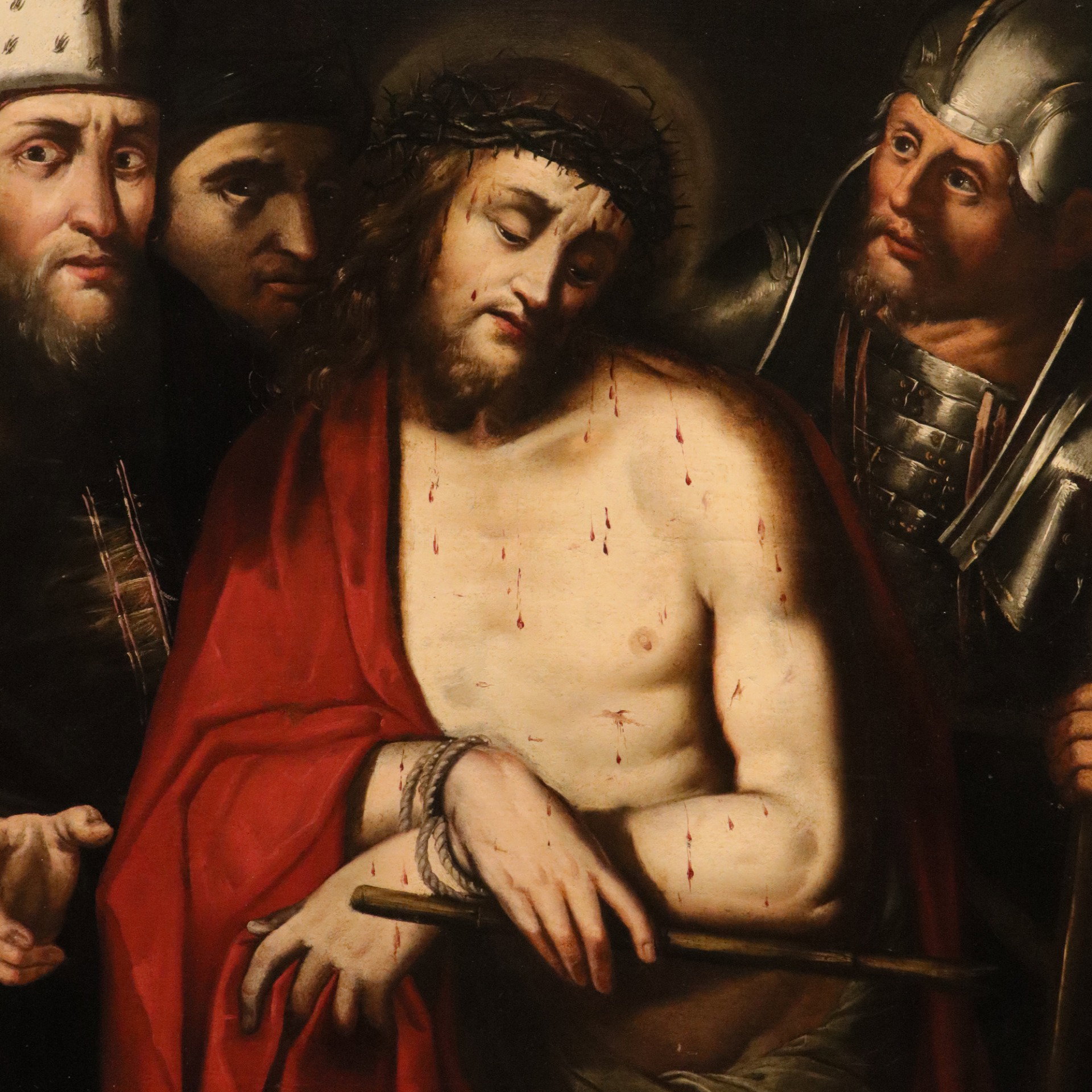
The canvas immortalizes the moment the Savior accepts his final destiny: in his face, there is not only humiliation but a moment of deep introspection and emotion. He is then portrayed with a crown of thorns placed over his long hair, stripped of his clothes, with his hands tied and crossed, alluding to his imminent crucifixion on Golgotha.
"Ecce Homo," which literally means "Behold the Man," was the phrase uttered by Pilate himself to designate the scourged Jesus and appease the crowd, aware of having condemned an innocent man.
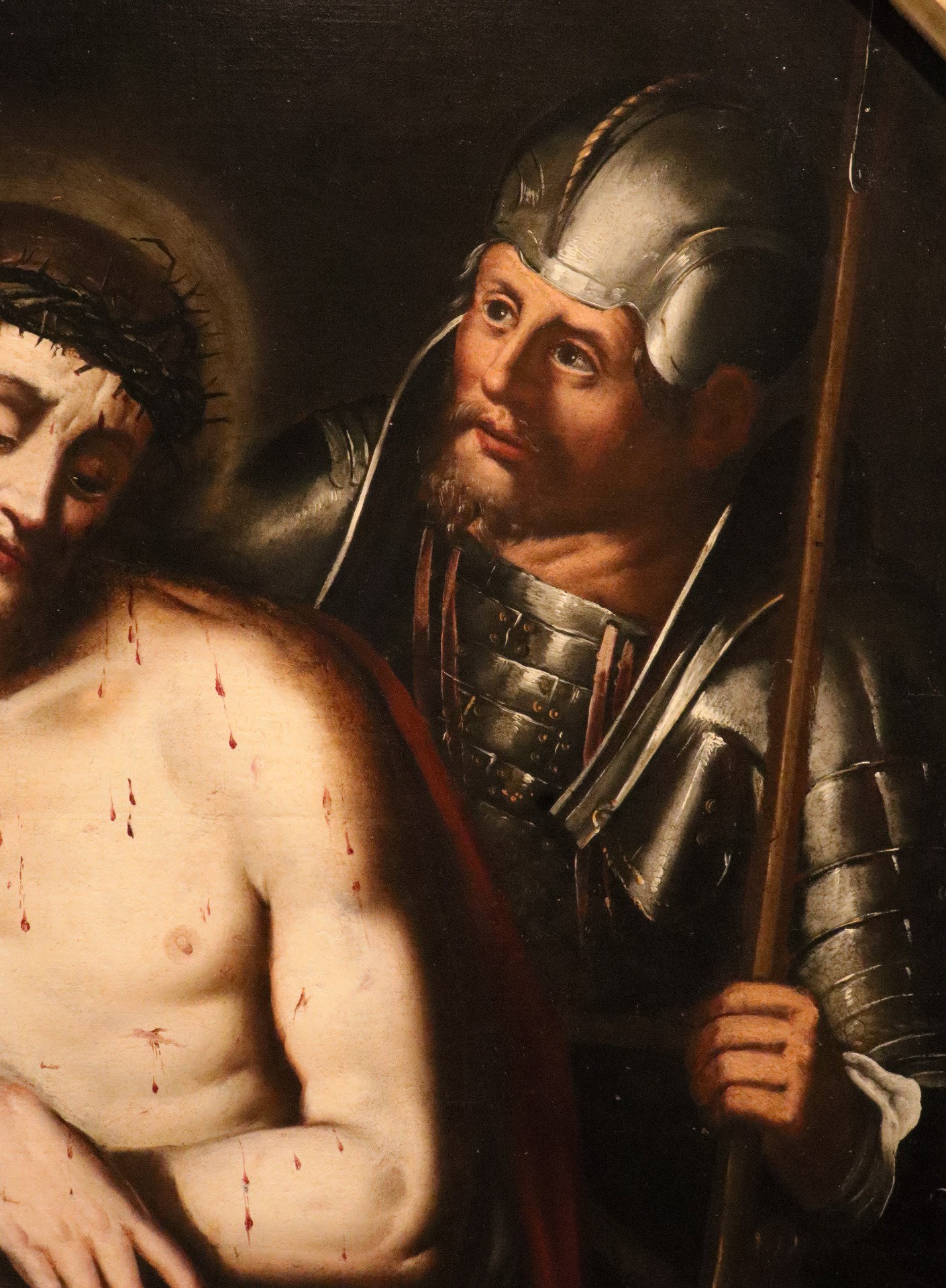
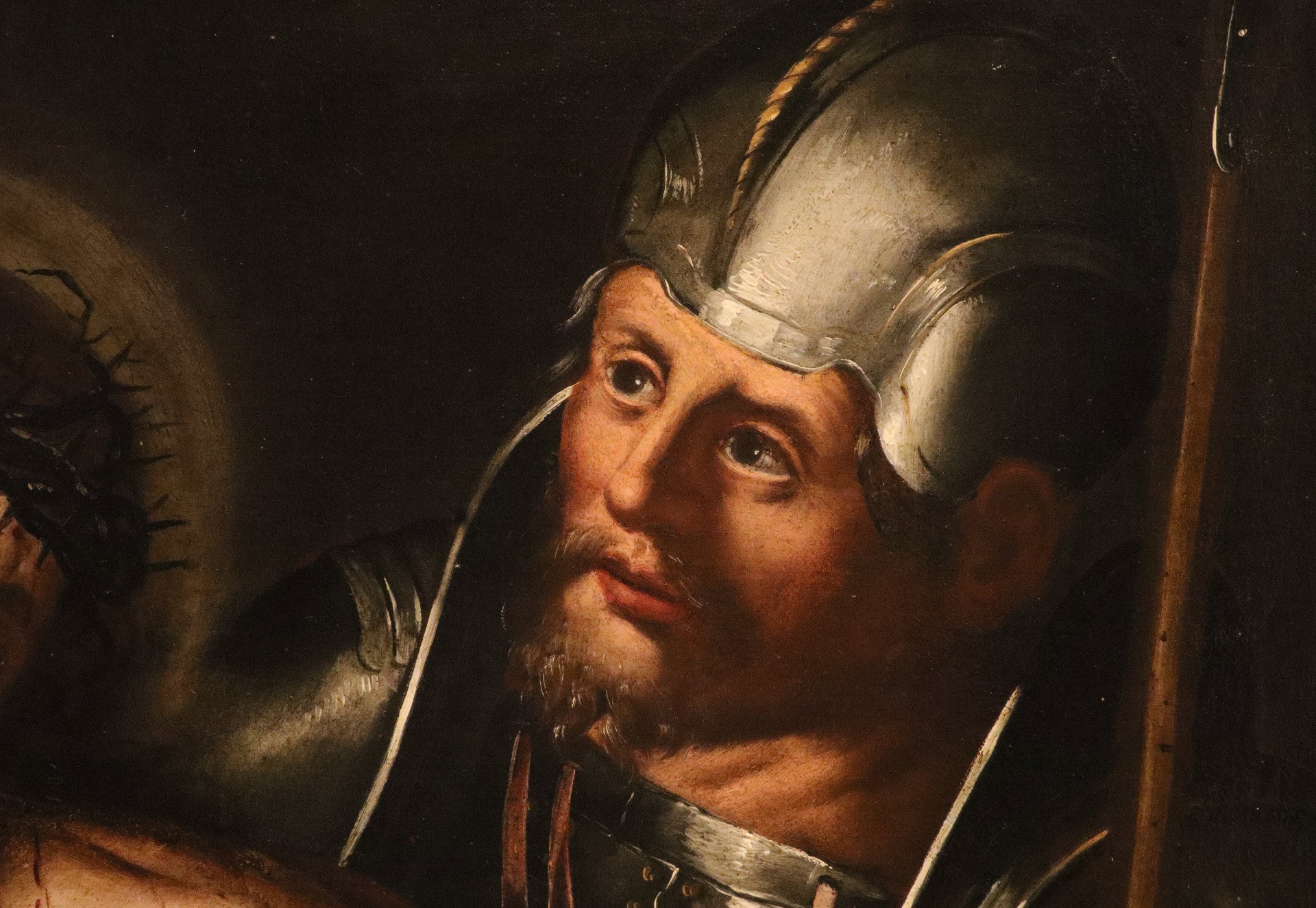
To his right, a soldier in armor observes Jesus with a stern gaze, while the head to Christ's left is said to be that of Barabbas, the murderer freed by Pilate in place of Jesus Christ during the trial before the crucifixion.
Iconographic curiosity about the shiny metallic armor worn by the soldier, in the most typical Caravaggesque style, which contrasts with the vulnerability of Christ's bare, wounded skin. We can easily ascertain that it is seventeenth-century armor, a common anachronism at the time to make the scene more current and engaging for the viewer of the period.
This subject was very popular in the 16th century, giving rise to particularly intense creations, capable of moving even those who do not favor subjects with such strong emotional impact.
In particular, the work under examination refers to the famous "Ecce Homo" created by Jacopo Ligozzi (Verona 1547 - Florence 1627), a Veronese artist active in Florence at the Medici court, originally preserved in the collection of Agostino Giusti in Verona. The composition reflects his late Mannerist style and his almost scientific attention to detail, so much so that it merges the Veronese tradition with a precision typical of Northern Europe.
In our case, it is a very interesting and high-quality work to be placed at the beginning of the 17th century, to be attributed to a skilled author from his workshop.
The work was indeed reinterpreted by the artist himself and his workshop in numerous versions, one of which, perhaps the most famous, is in the Alte Pinakothek in Munich (see: https://www.sammlung.pinakothek.de/en/artwork/ZMLJr9VLJv/jacopo-ligozzi/ecce-homo).
The success of the work was largely due to the beautiful engraving by Raphael Sadeler, from 1598, one of which is now at the British Museum (see: https://www.britishmuseum.org/collection/object/P_X-1-109).
- imm.1 - Jacopo Ligozzi (1547–1627) - Ecce Homo - Bayerische Staatsgemäldesammlungen – Alte Pinakothek
- Imm.2 - Raphael Sadeler I, Ecce Homo (after Jacopo Ligozzi) - British Museum, London
ADDITIONAL INFORMATION:
The work is sold complete with a pleasant frame and is accompanied by a certificate of authenticity and guarantee.
We handle and organize the transport of purchased artworks, both for Italy and abroad, through professional and insured carriers. It is also possible to view the painting at the gallery in Riva del Garda; we will be happy to welcome you to show you our collection of artworks.
Contact us, without obligation, for any additional information.
Follow us also on:
INSTAGRAM https://www.instagram.com/galleriacastelbarco/?hl=it
FACEBOOK https://www.facebook.com/galleriacastelbarco/


.jpg)