Erasmus Quellinus II (Antwerp 1607 - 1672)
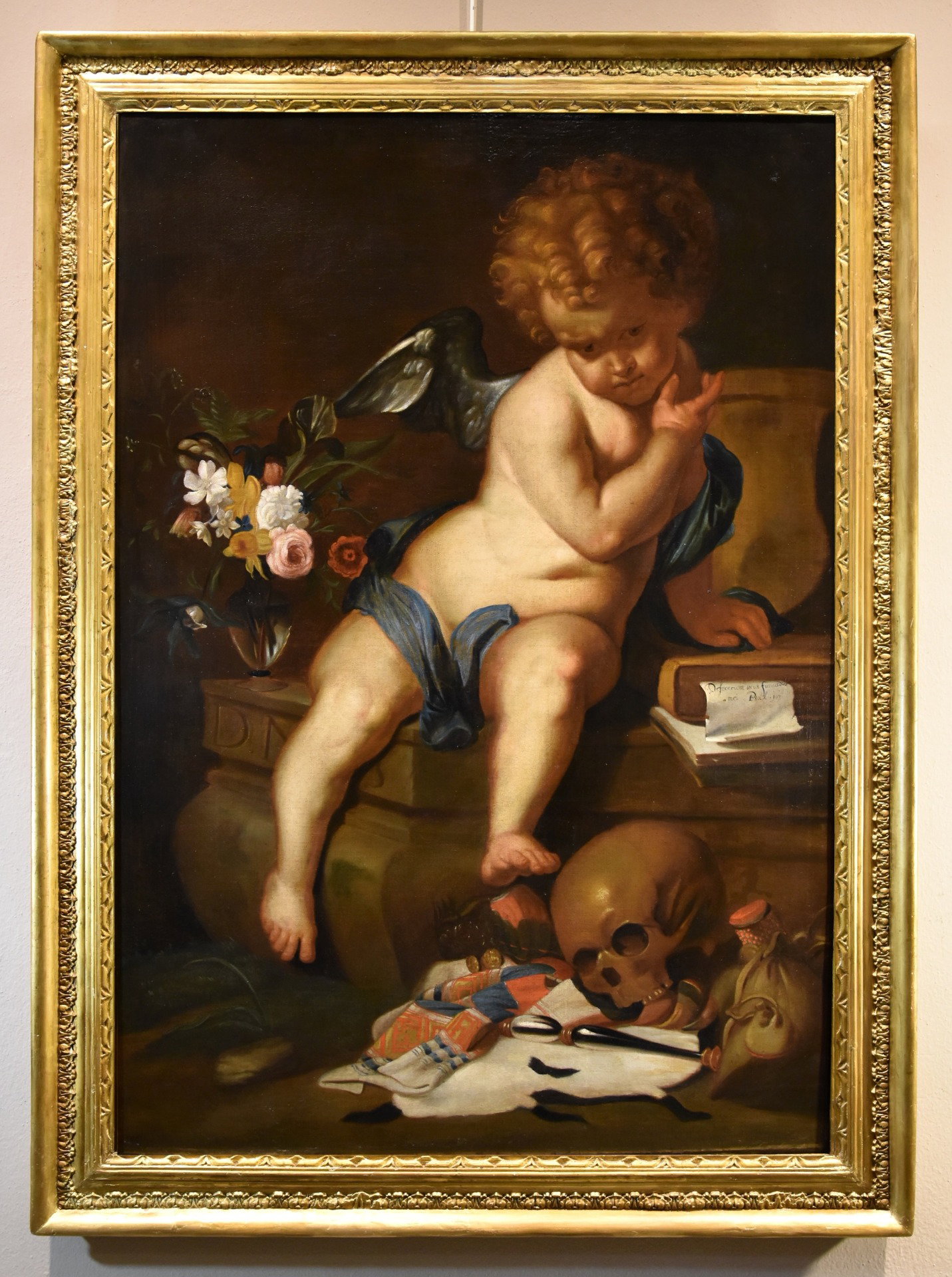
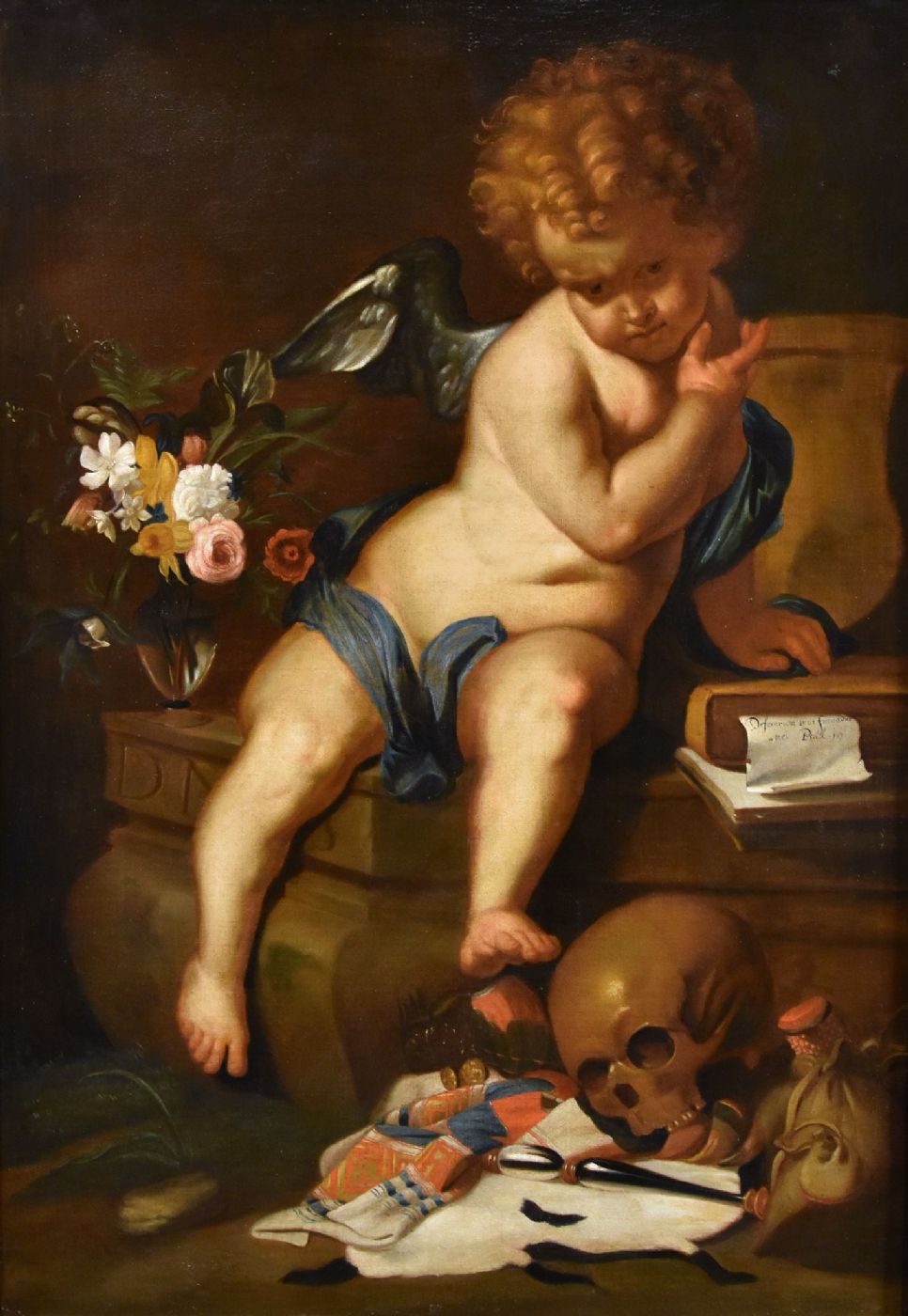
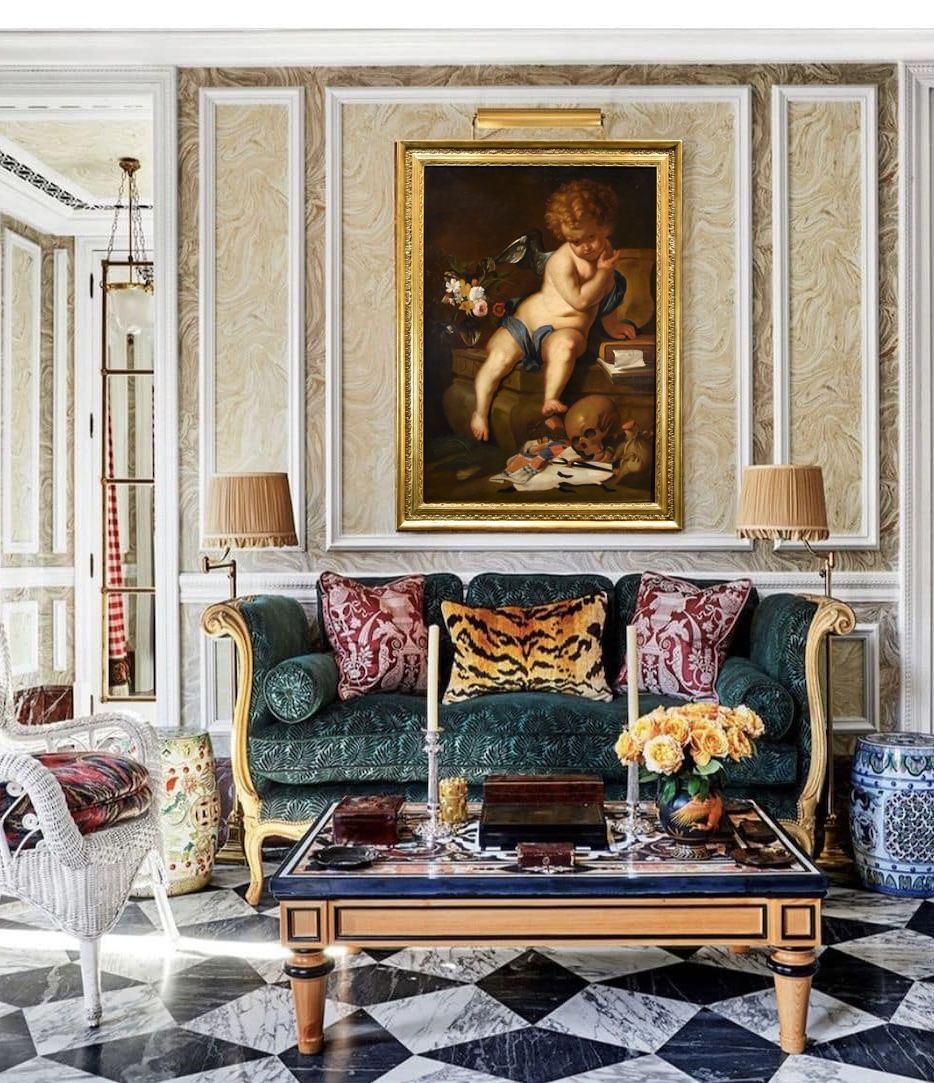
Vanitas (as Allegory of the Vanity of Life or of Youth)
Oil on canvas (cm. 121 x 84 - Framed cm. 135 x 98)
The work is accompanied by a critical study written by Prof. Emilio Negro, of which we present some excerpts.
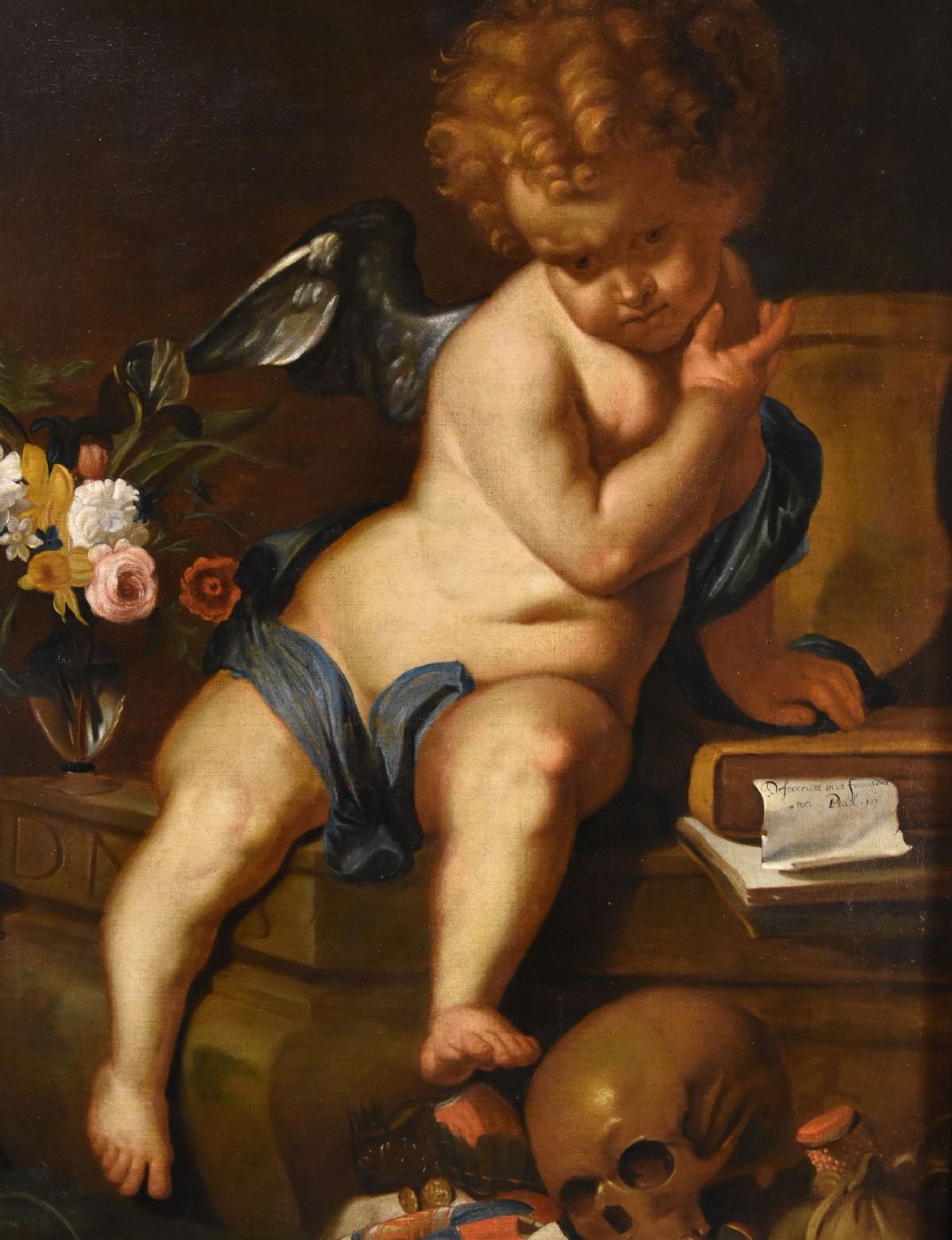
The theme of the painting we are offering is a singular and rare "Vanitas," a subject of strong moral value that, in painting, refers to a composition with symbolic elements alluding to the theme of the transience of life, and therefore intended to prompt the viewer to meditate on the transience of human destiny and the fragility of worldly pleasures.
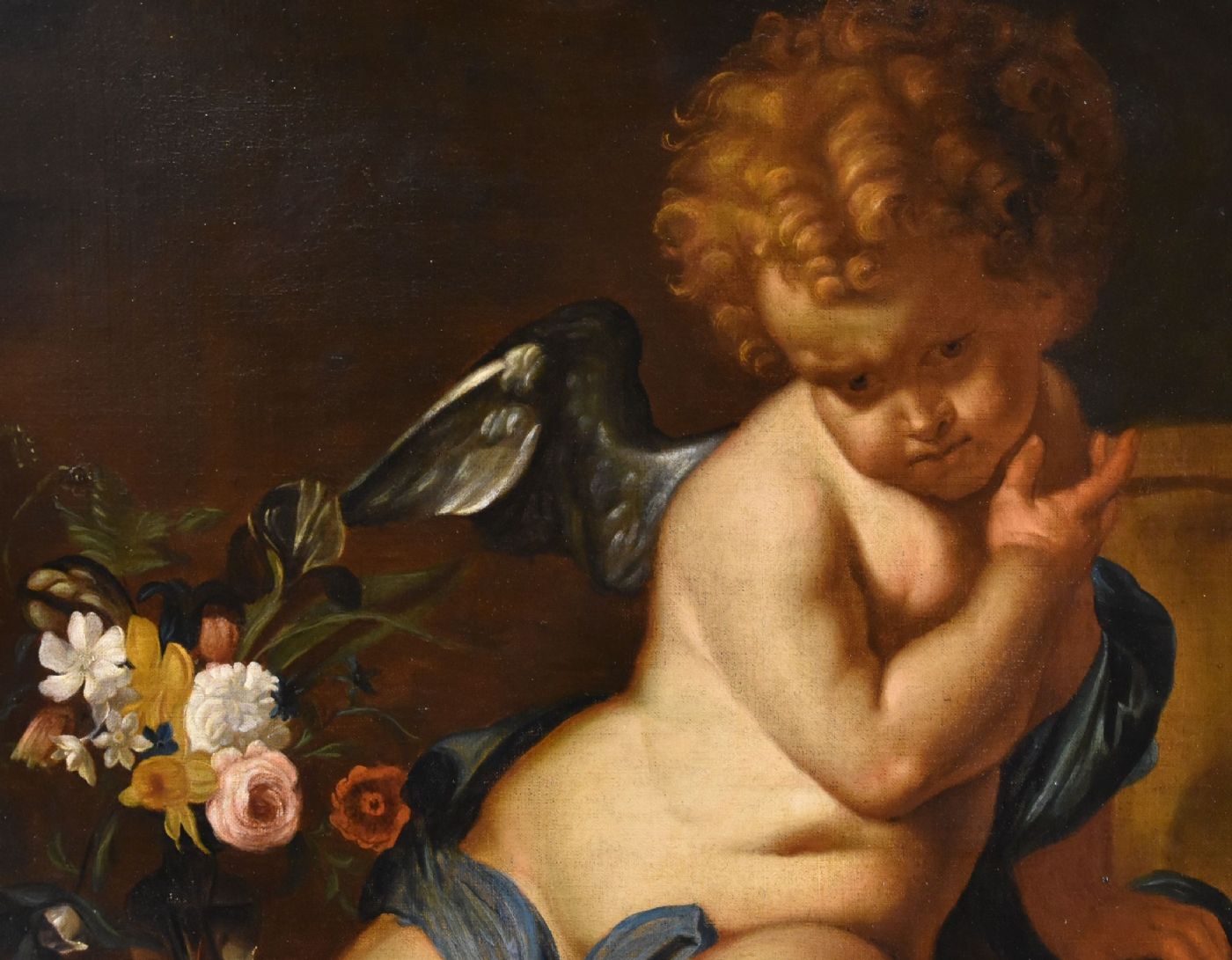
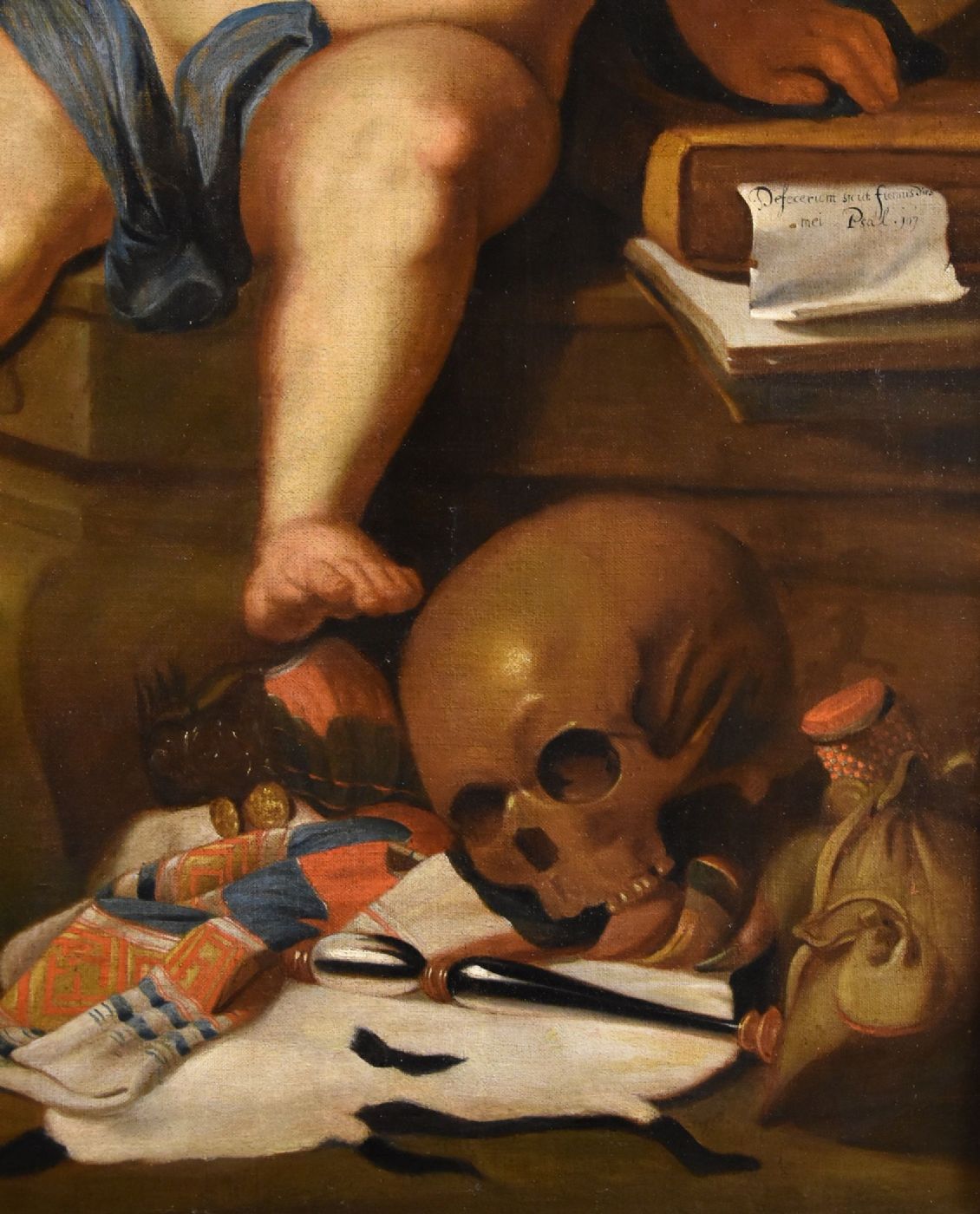
Such subjects, which were particularly popular in Flanders, are works of great fascination, interesting to study and often difficult to decipher; the protagonist of our canvas is a capricious putto, seated on a sarcophagus, a sort of anthropomorphic "Carpe Diem" (seize the day) in painting, which invites contemplation on the fleetingness of life and enjoyment of the moments of happiness it grants; this without concern for the vicissitudes of fate, symbolized by the putto's foot trampling on gold coins, precious fabric, a scepter, ermine stole, skull, hunting horn, and books.
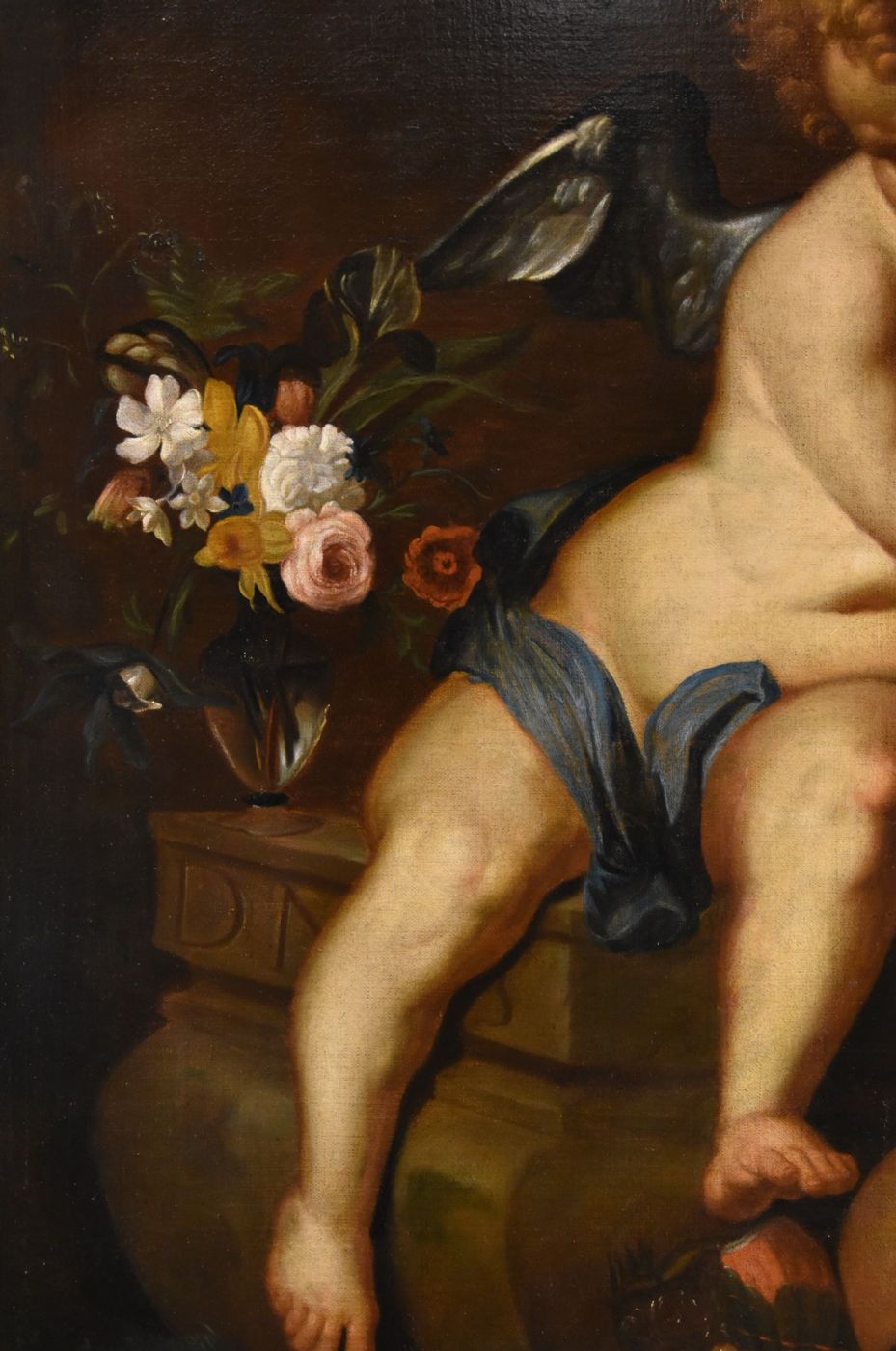
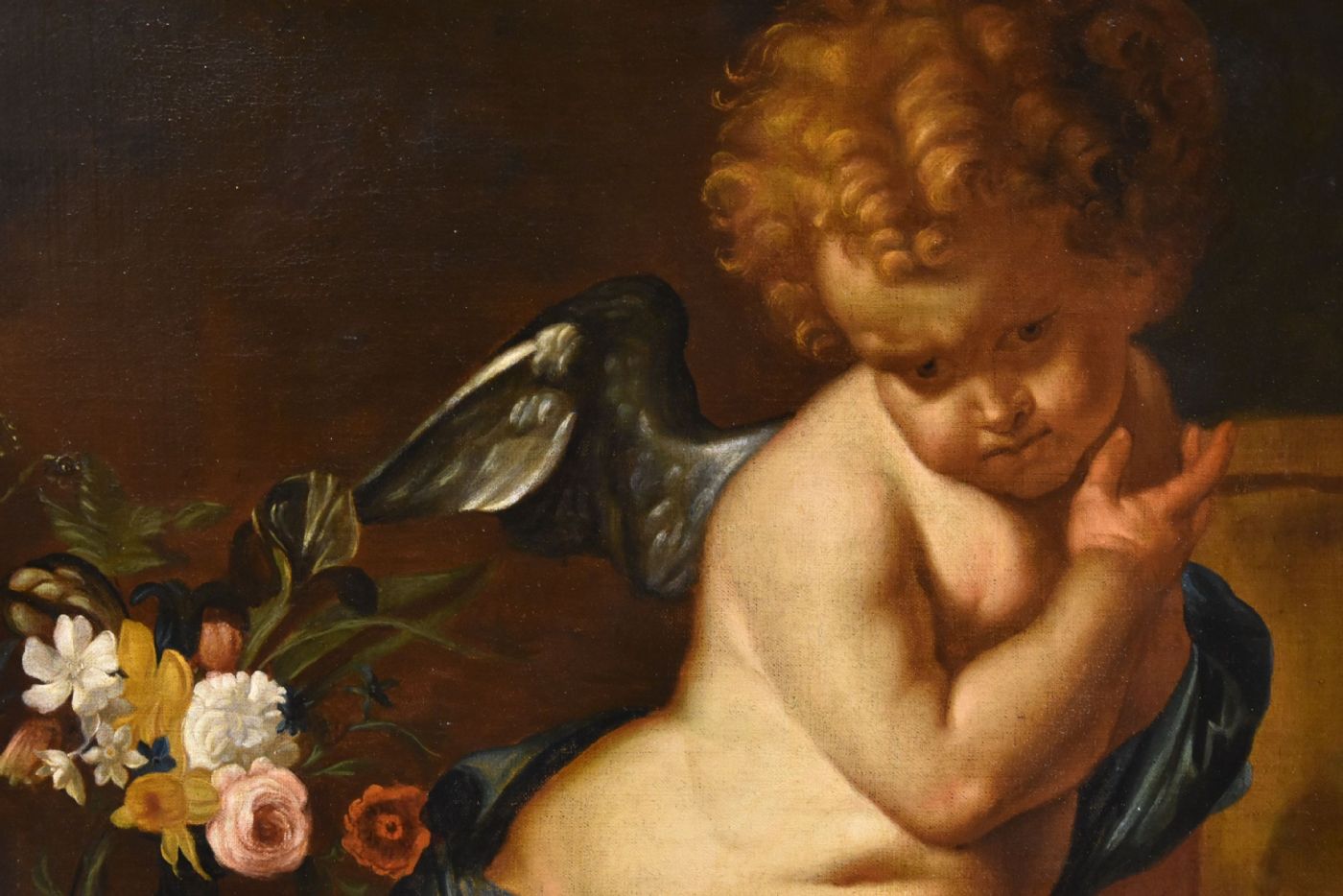
Beside him is a still life of colorful flowers, arranged in a crystal vase, whose presence carries a clear allegorical meaning, as they constitute a metaphor for the transience of youthful beauty which, like fresh flowers, is destined to fade.
Particularly noteworthy is the bare stone tomb on which the putto sits, bearing the inscription "D. M. S.," engraved in fine Roman capital letters, to be deciphered as the Latin phrase "Diis Manibus Sacrum," meaning "Sacred to the Manes gods," corresponding to the invocation carved on burial stones of late paganism and early early Christian periods, addressed to the spirits of deified ancestors.
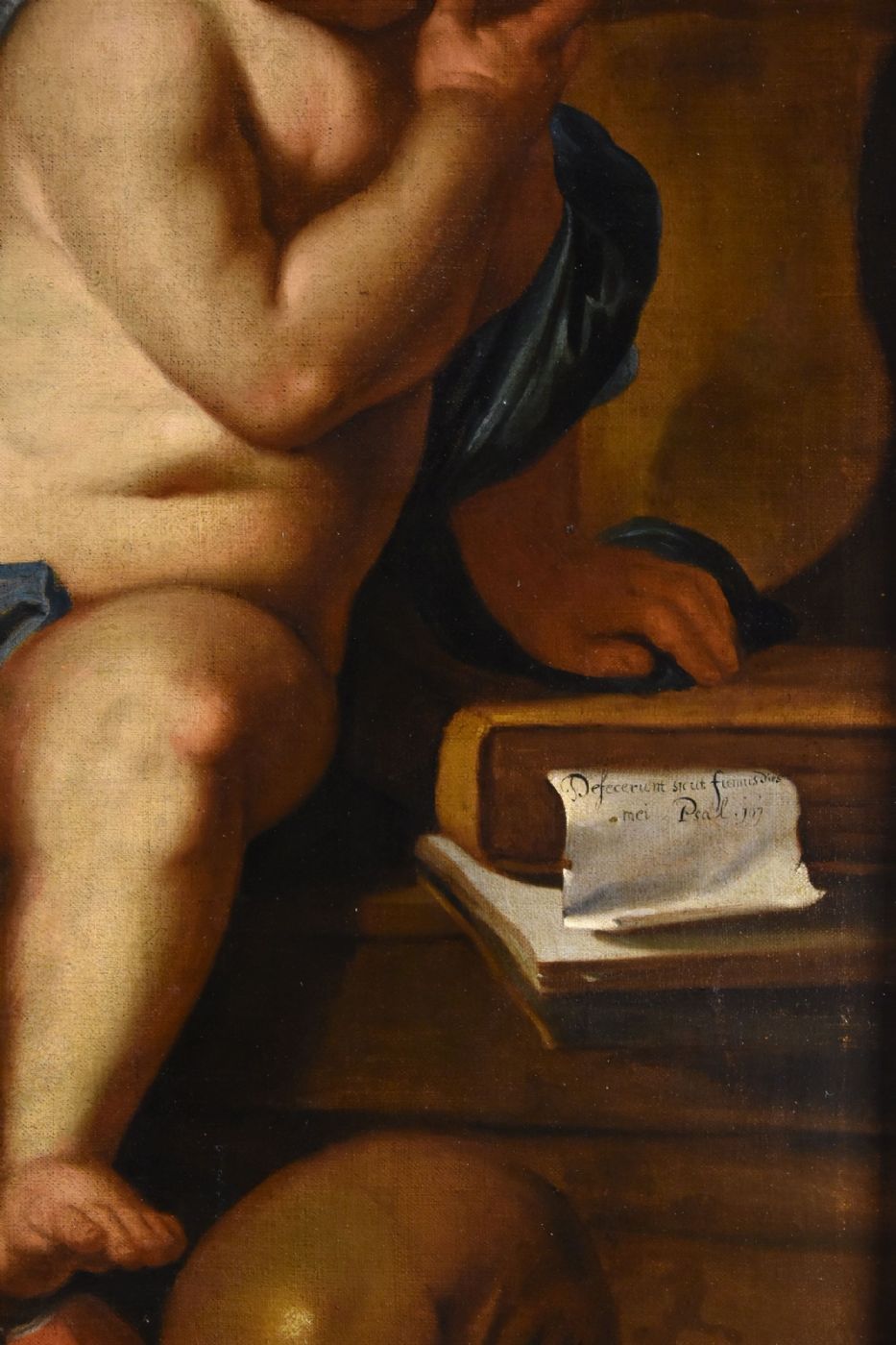
Another very interesting detail is the white sheet of paper protruding from the pages of the closed, voluminous psalter (the biblical text containing the collection of Psalms), on which is written in fine 17th-century cursive calligraphy the Latin phrase: "[Quia] Defecerunt sicut fumus dies/mei Psal J.97" (to be translated: "[Because] my days have vanished like smoke" (Psalter, Psalm 1.97), equivalent to another exhortation to reflect on the short duration of existence.
Regarding the pictorial origin of the composition in question, it should first be noted that it is an interesting replica, with some modifications, of a work executed jointly by Erasmus Quellinus the Younger (the figure of the putto) and Daniel Seghers (the still life).
Of the same composition, a version titled 'Allegory of the passage of Youth' is also known, which passed through Sotheby's in Amsterdam as Cornelis Schut and Daniël Seghers (12.12.1991, Old master Paintings and Drawings, lot 218, Price €16,630, then sold in London as Thomas Willeboirts Bosschaert (Sotheby's 16.12.1999, lot 59, Hammer price: €126,592 / £80,000).
Here is the link to the painting: https://research.rkd.nl/en/detail/https%3A%2F%2Fdata.rkd.nl%2Fimages%2F52665?c=q%3D%26filters%255B0%3D...
And also the Vanity attributed to Thomas Willeboirts Bosschaert and passed through Dorotheum in Vienna (17/10/2007, estimated: €18,000-€24,000, link:
https://www.invaluable.com/auction-lot/thomas-willeboirts-bosschaert-bergen-op-zoom-1613-228-c-ms7xg...
Regarding the painting in question, its creation can be attributed to a skilled Flemish artist of the Grand Siècle, attentive to the rendering of details and faithful to the teachings learned from studying the compositions of the best 17th-century masters: in our canvas, clear post-Caravaggesque and post-Rubensian accents stand out, typical of Wallerant Vaillant's pupils; peculiar stylistic elements that are evident in the effective contrasts of light and in the fluid, well-balanced pictorial impasto and colors.
These reasons allow us to connect this Vanitas to the modus operandi of the aforementioned Erasmus Quellinus the Younger (Antwerp, 1607-1678), one of Rubens' closest collaborators in the 1630s, here assisted by a capable collaborator trained in his active workshop.
A descendant of a renowned family of artists (as his father was the painter Erasmus Quellinus the Elder), Erasmus Quellinus II worked primarily in Flanders, where his activity is evidenced by numerous compositions similar to ours, attributed to him and housed in the most important public and private collections. Furthermore, he headed a thriving atelier where numerous students trained, including his sons and grandsons. It is true that in the canvas in question, credibly intended to adorn the walls of a noble residence of a collector, man of letters, or humanist, there emerges an accurate painting, especially in the insistent search for details, with warm tones, which are specific qualities of Erasmus's best works.
For further information, please contact us.
The work, like all our items, is sold with a legal photographic certificate of authenticity.
Follow us also on:
https://www.instagram.com/galleriacastelbarco/?hl=it
https://www.facebook.com/galleriacastelbarco/