Francesco Tironi (Venice, circa 1745 - 1797)
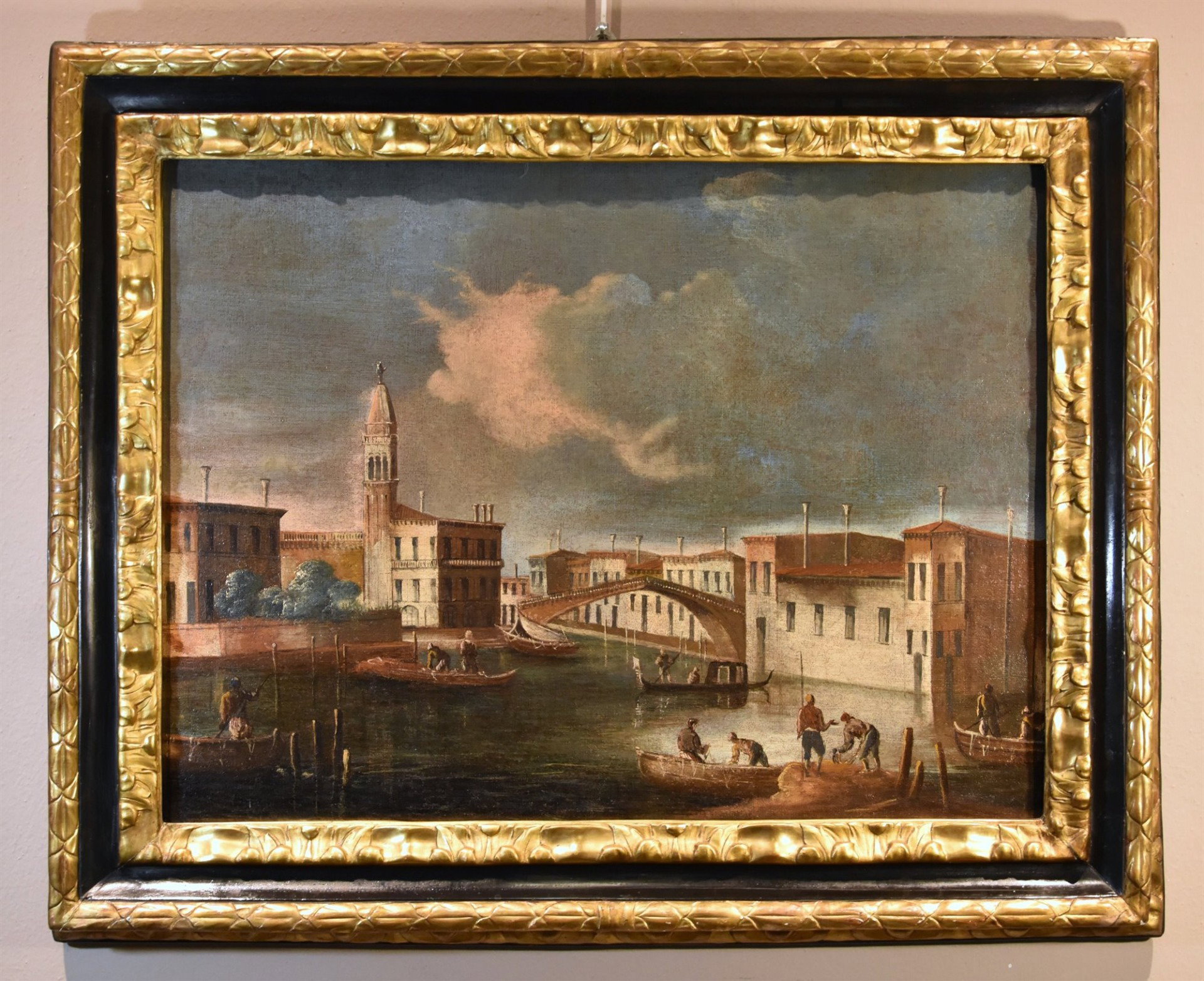
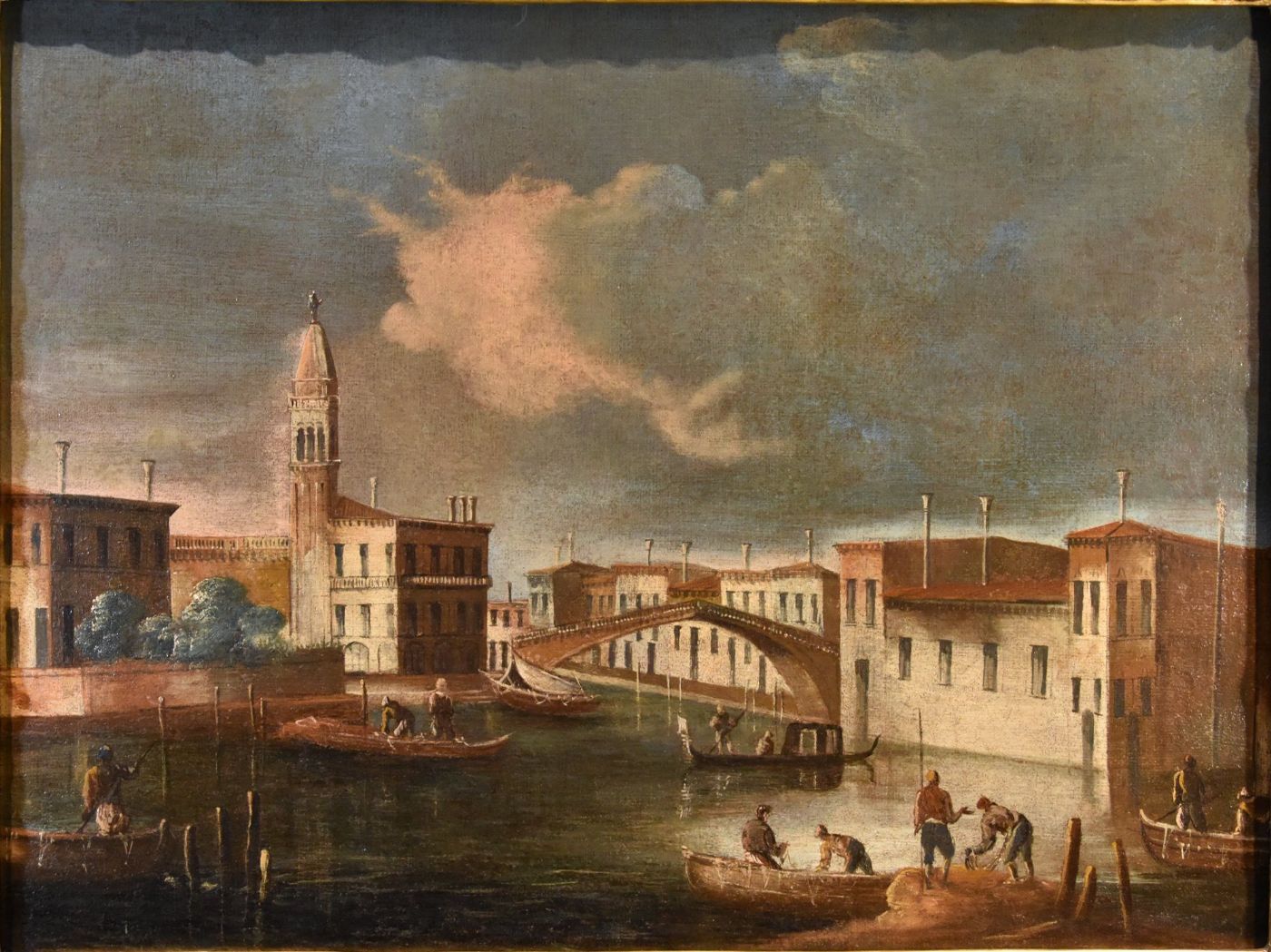
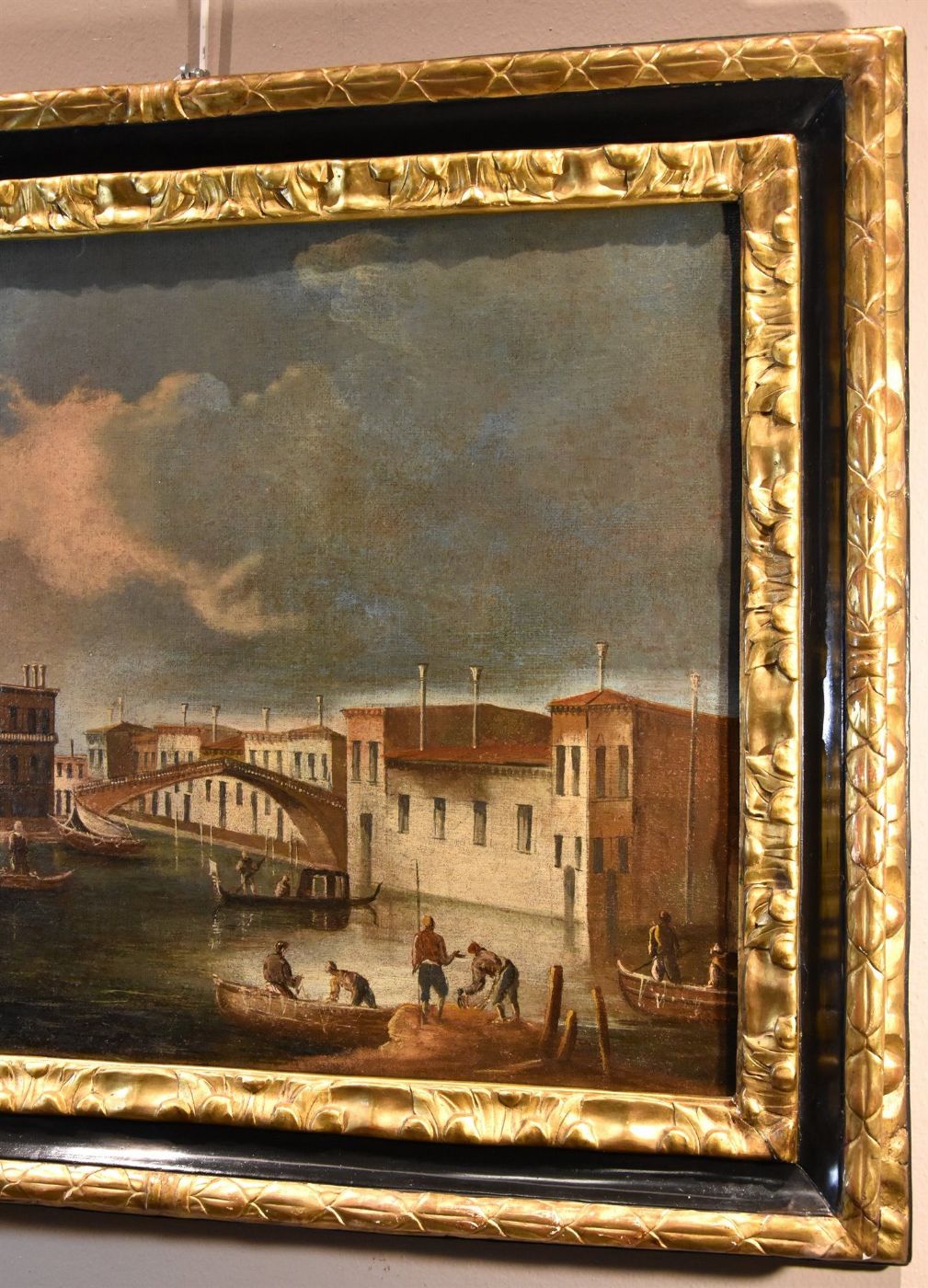
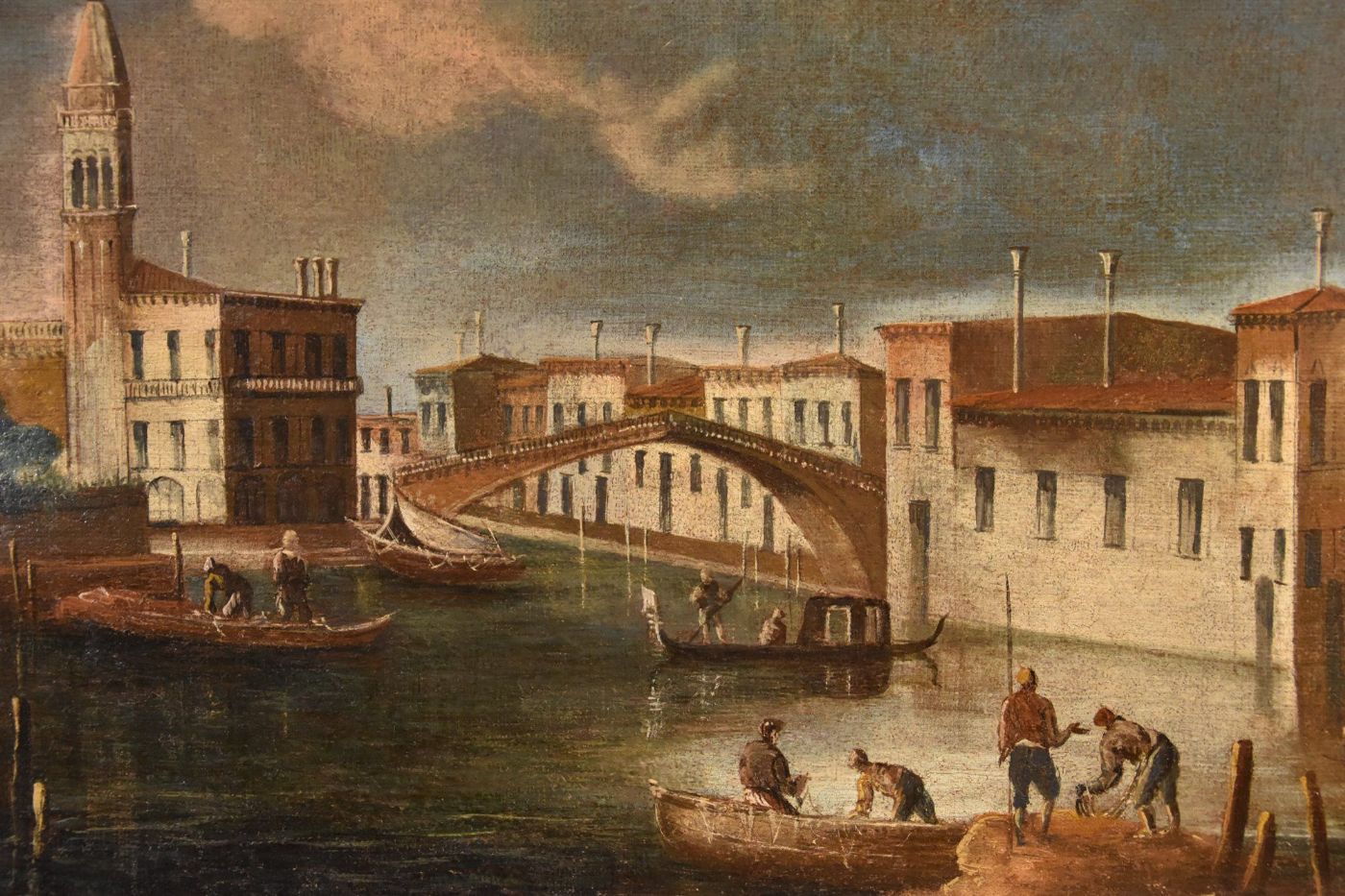
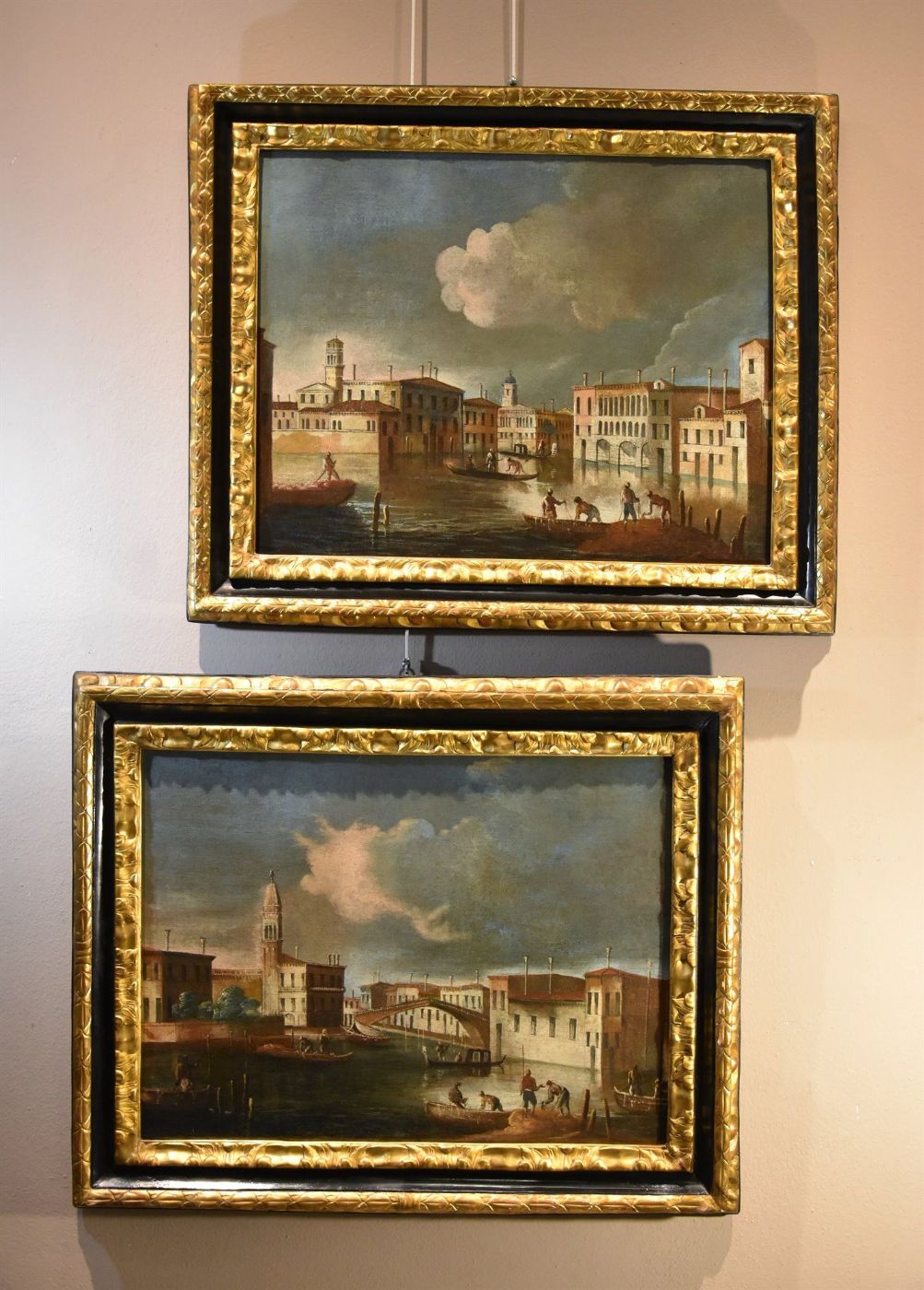
View of Venice with the Church of S. Geremia and the Ponte delle Guglie
oil on canvas
59 x 75 cm.
with frame 72 x 88 cm.
Accompanied by a descriptive sheet by Prof. E. Negro
The canvas, dating approximately to the 1780s, is attributed to the Venetian vedutista Francesco Tironi (Venice, 1745-1797), demonstrating the artist's expressive skills in the mature phase of his activity.
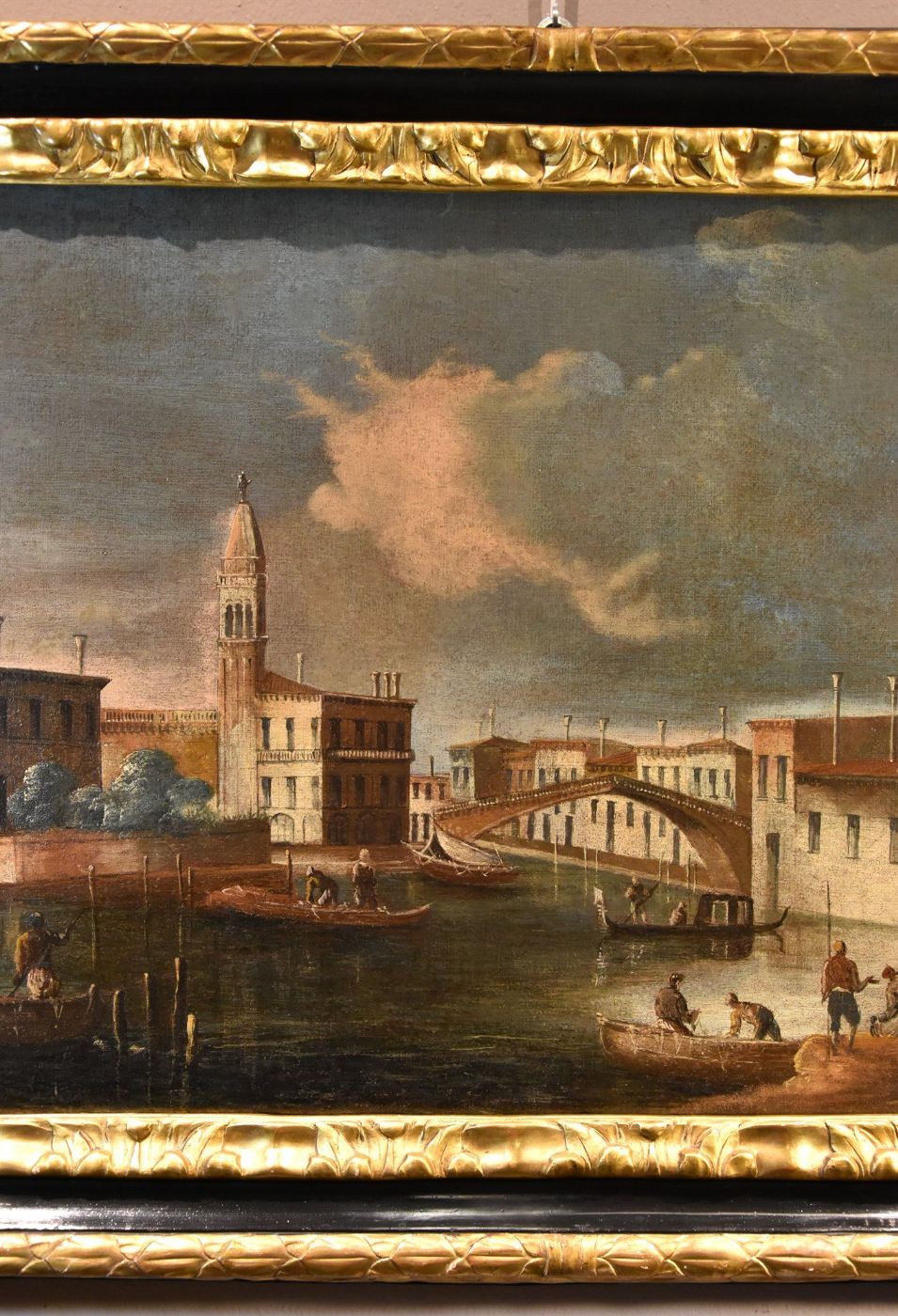
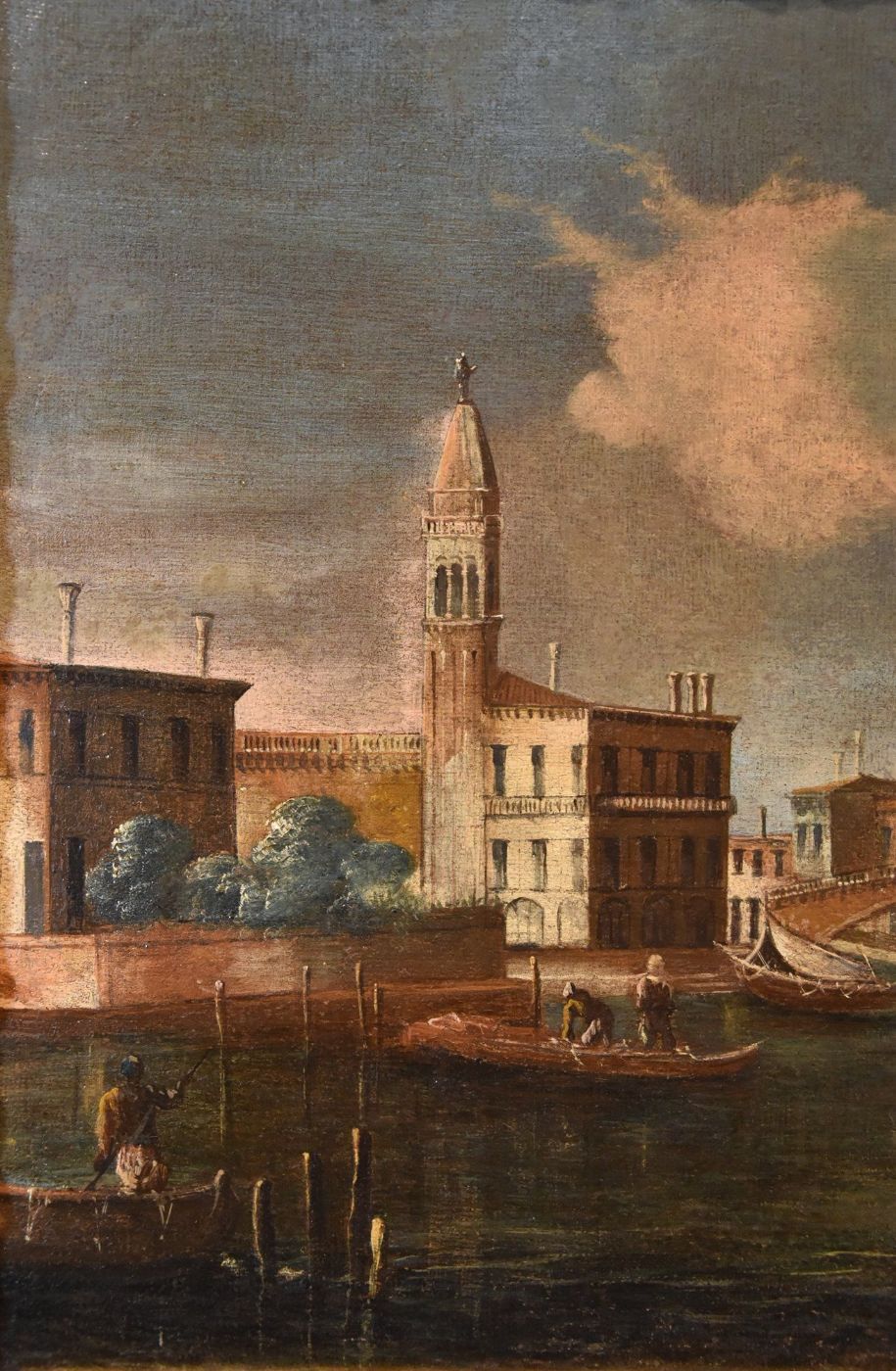
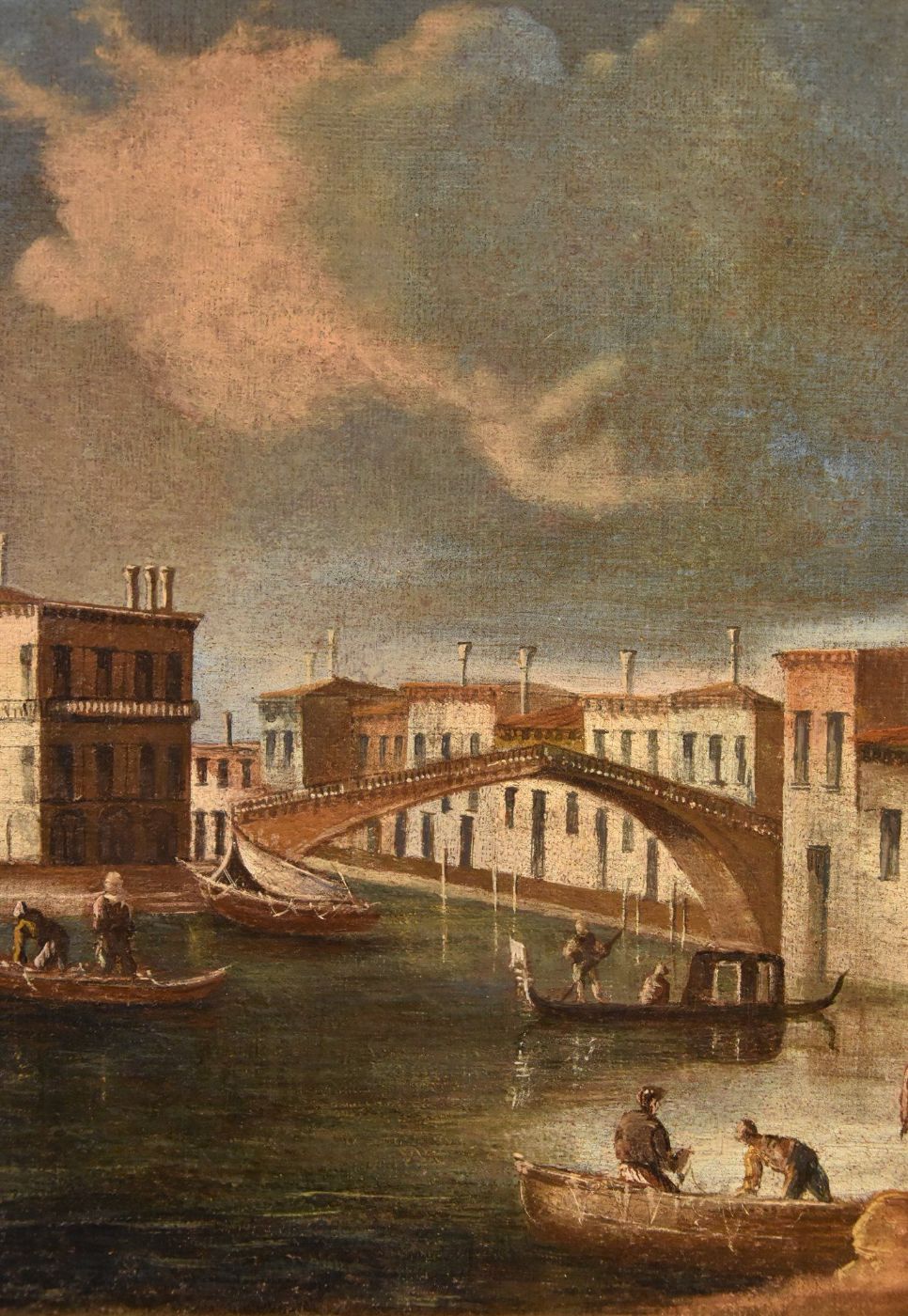
It is a view of Venice, immortalizing a glimpse of the city with some palaces, a church, and a bell tower, captured at the mouth of the Canal di Cannaregio. As evidenced by the verdant tree branches peeking out from behind the walls of the small garden, the canvas reproduces a spring view of the Serenissima, taken from the calm body of water facing the fork between the "Canal Grando, or Canalaso" (to the left) and the "canal de Canaregio" (to the right).
The canvas thus depicts a picturesque corner of the lagoon populated by boats and a gondola, while the figures of people painted on the vessels and on the quay represent merchants, sailors, and commoners. Both the architectural structures of the buildings and the slightly rippling motion of the lagoon's waves have been reproduced with concise sobriety compared to the actual reality.
In the 18th century, Venice experienced a second "golden age" in the artistic and cultural field. The Venetian view became a highly successful painting genre, catering to the needs of patrician families, nobles, especially English and German, but also French, who visited the city during their "Voyage d'Italie" (Venice, Florence, Rome, Naples), and those who, despite never having been to Venice, wished to decorate their residences with views of the Serenissima.
Alongside Antonio Canal 'il Canaletto' (1697-1768), the leading figure of vedutismo, a large number of artists active in the lagoon city made this period of painting extraordinary. Among these are Luca Carvelarijs, the Guardi brothers, Francesco and his son Giacomo, Michele Marieschi, and indeed Francesco Tironi, to whom the proposed painting is attributed.
Our attribution is supported by comparison with the artist's confirmed works, for the similar way of structuring the scenes, for the common tendency in rendering perspective, for the care in depicting details of the meticulously drawn architectures, for the marked play of light and shadow, and for the type of numerous figures in the Canaletto style, which animate the scene in the square.
Tironi is characterized by a rather eclectic taste, which originally fuses elements derived from Canaletto or Marieschi (for the typology of 'macchiette' and the compositional layout of the views), with clear influences from Guardi (for the synthetic rendering of architectural elements, fluently defined).
Regarding our View of Venice with the Church of S. Geremia, Palazzo Labia and the Ponte delle Guglie, there are numerous analogies with other compositional works by Tironi, so to confirm the proposed attribution, it is sufficient to compare it with some drawings by the Venetian master (for example, the View of the island of Mazzorbo and that of the islands of Murano, S. Michele and S. Cristoforo, (both in New York, at the Robert Lehman collection), as well as with paintings depicting the View of the Grand Canal with the Rialto Bridge (Ajaccio, Muséeacute;e Fesch), the View on the Brenta River (Genoa, Cambi Casa d'Aste, December 16, 2021, no. 211), and the pendant depicting the views of Piazza S. Marco and the island of S. Giorgio (Genoa, Wannenes, March 5, 2020, no. 773).
These works, in fact, show clear stylistic analogies and similar perspective inventions also found in our scene, namely a peculiar recovery of early 18th-century vedutismo aimed at overcoming and simplifying the last baroque residues, and a clear orientation towards more serene figurative solutions, inspired by genuinely Venetian models in the architectural drawing: recurring characteristics in the gratifying works of Francesco Tironi.
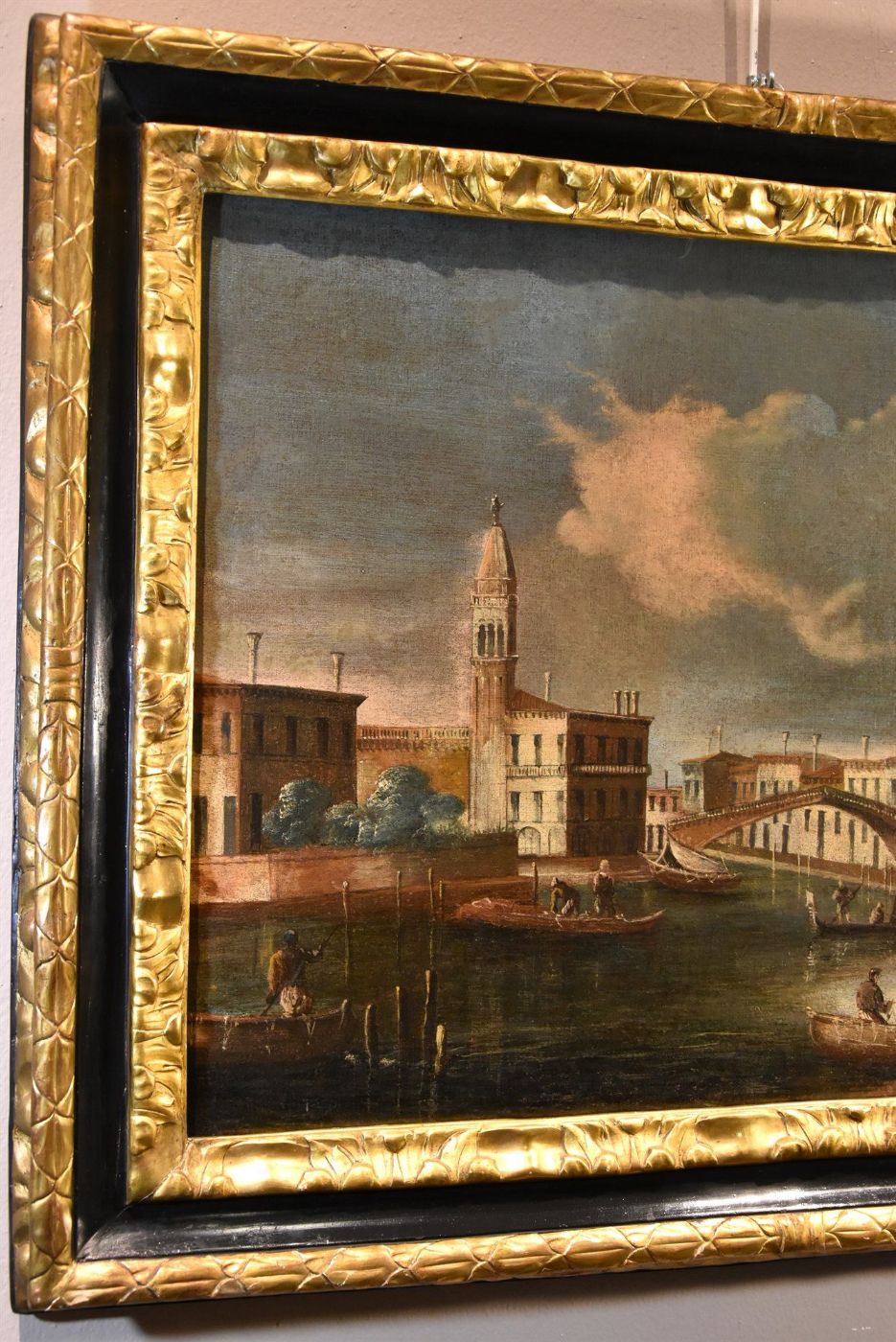
The view, in excellent state of preservation, is enriched by a beautiful antique gilded and lacquered frame.
ADDITIONAL INFORMATION:
The work is sold with a certificate of authenticity and a descriptive iconographic sheet.
We handle and organize the transport of purchased works, both within Italy and abroad, through professional and insured carriers. It is also possible to view the painting in our gallery in Riva del Garda; we will be happy to welcome you to show you our collection of works.
Contact us, without obligation, for any additional information.
Follow us also on :
INSTAGRAM https://www.instagram.com/galleriacastelbarco/?hl=it
FACEBOOK https://www.facebook.com/galleriacastelbarco/