Emilian School, 18th Century
Rest on the Flight into Egypt
Oil on canvas 18.5 x 24.5
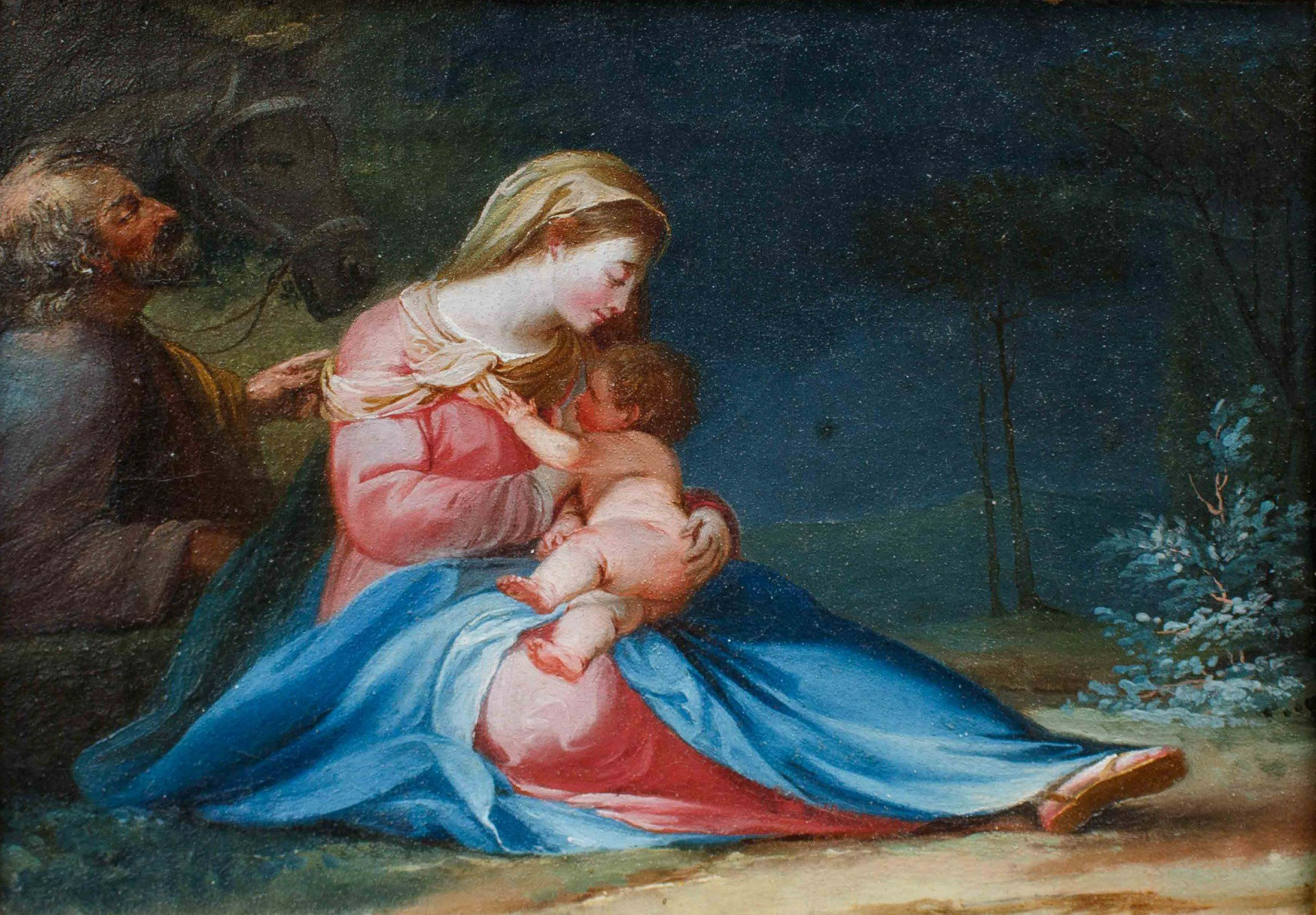
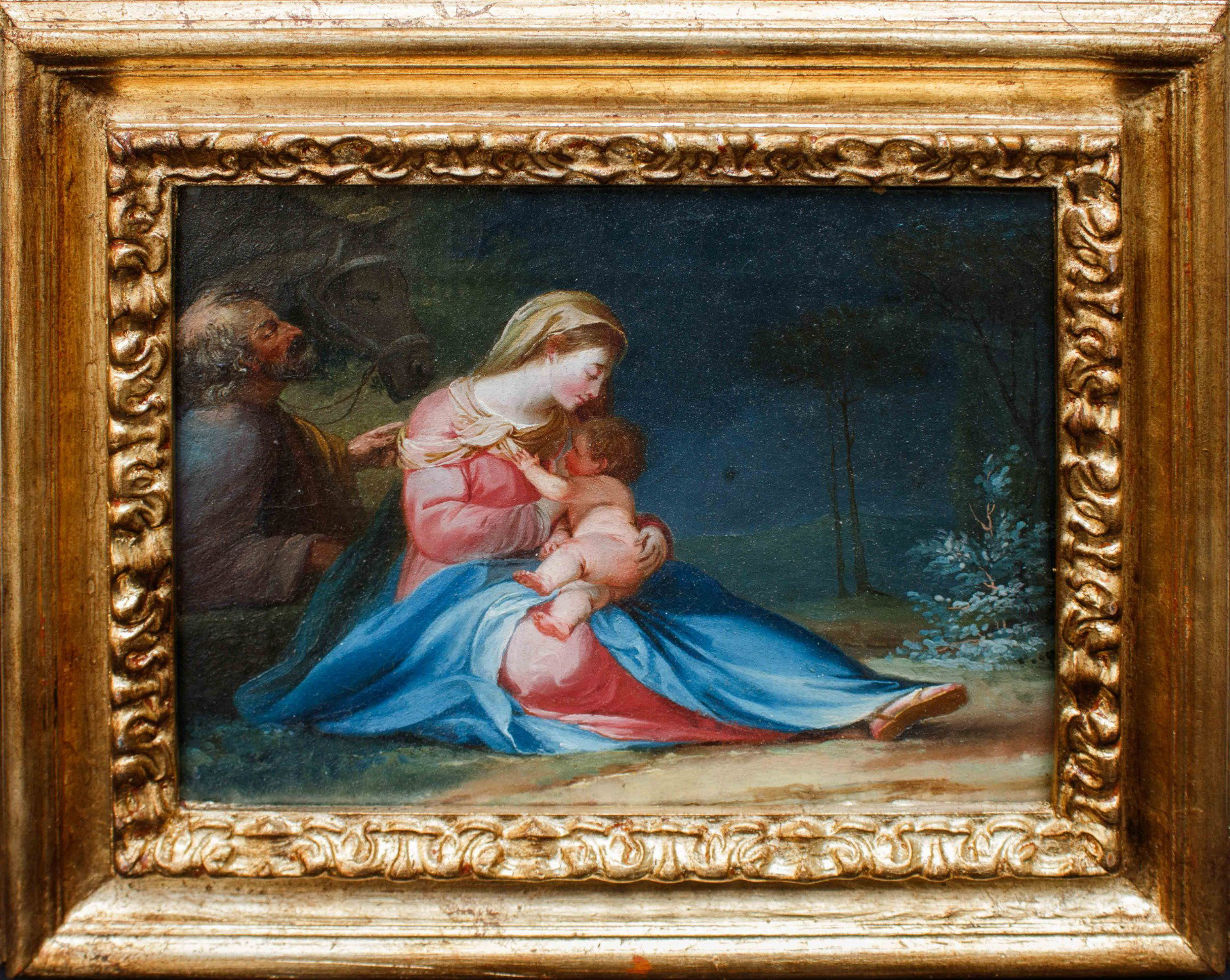
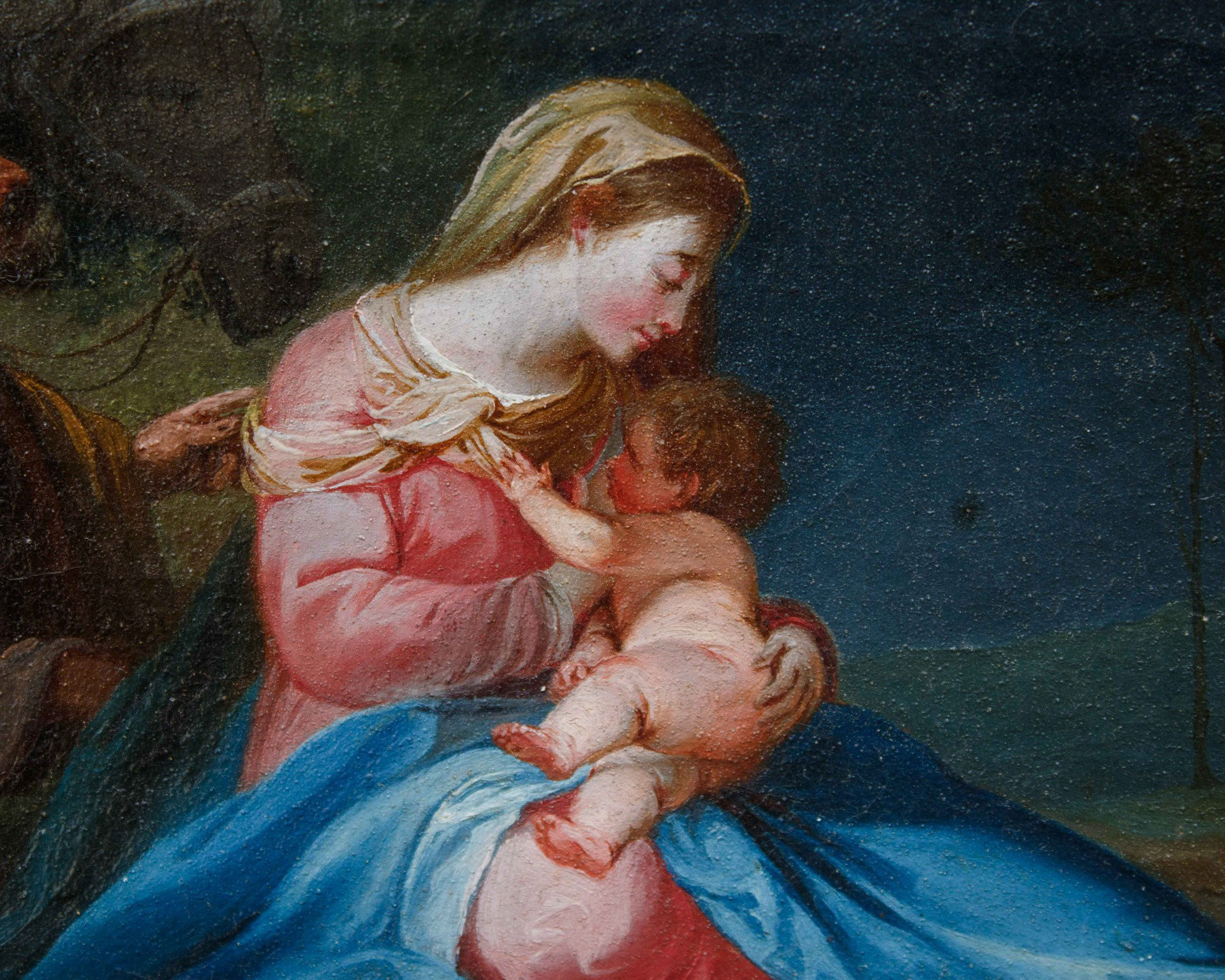
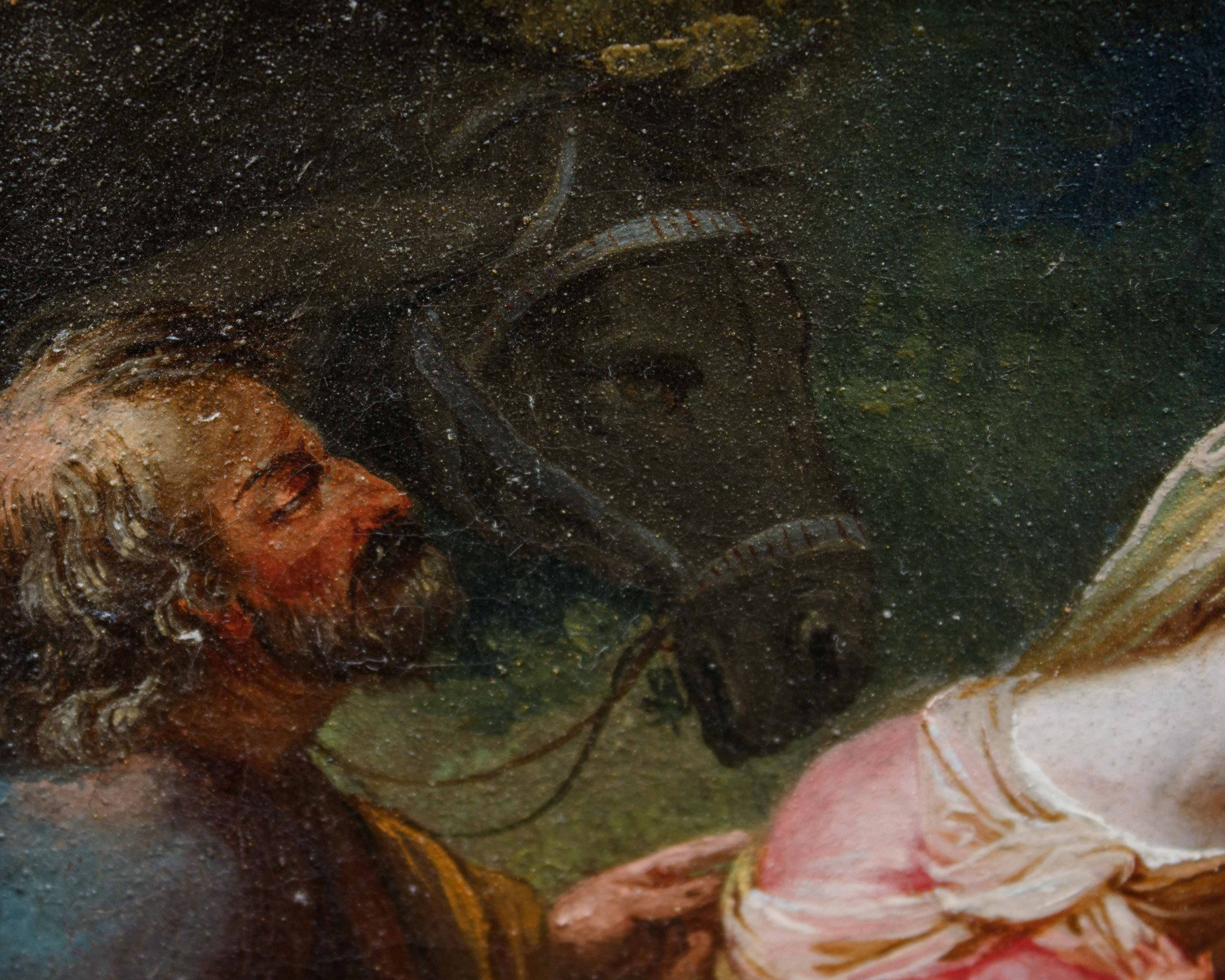
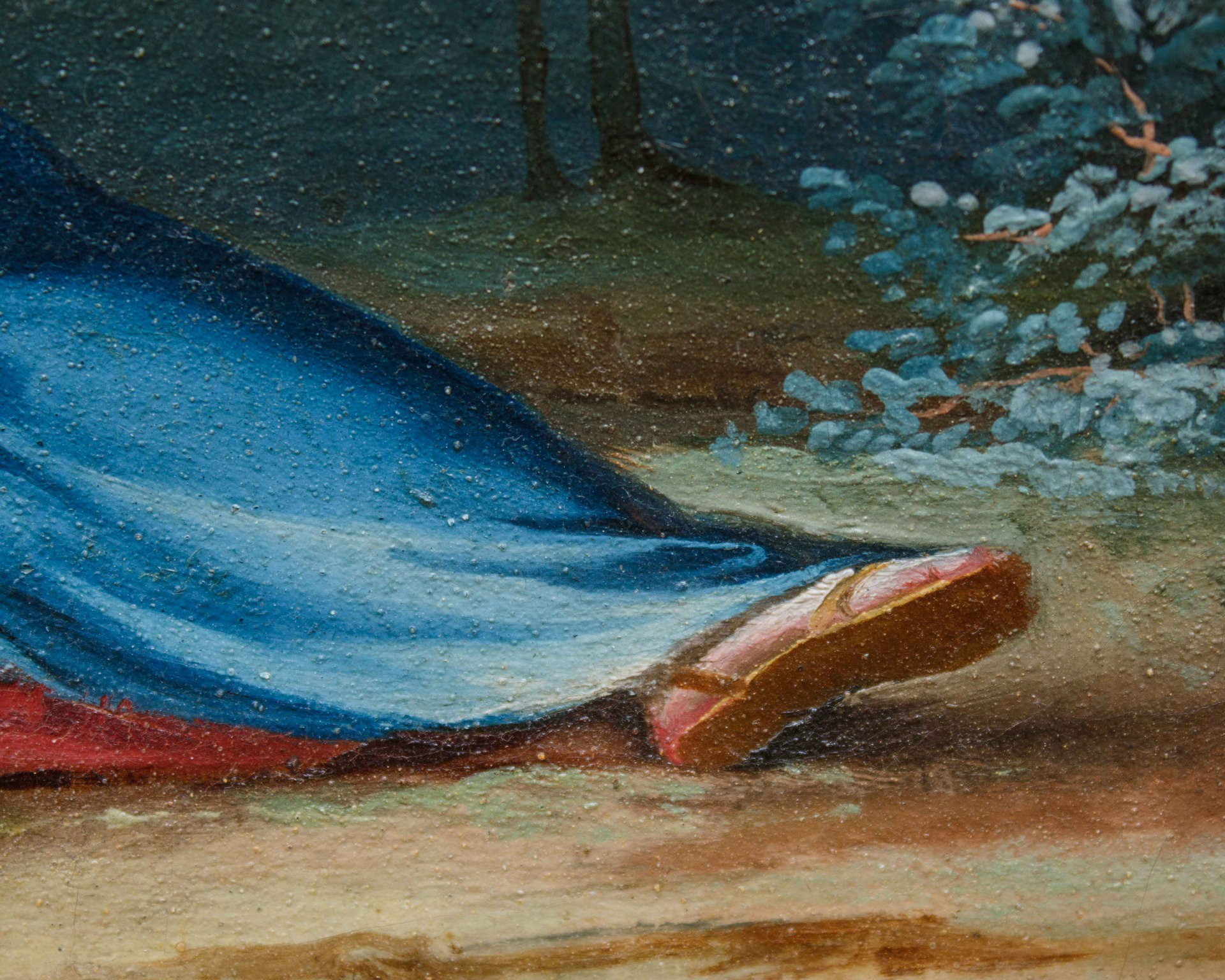
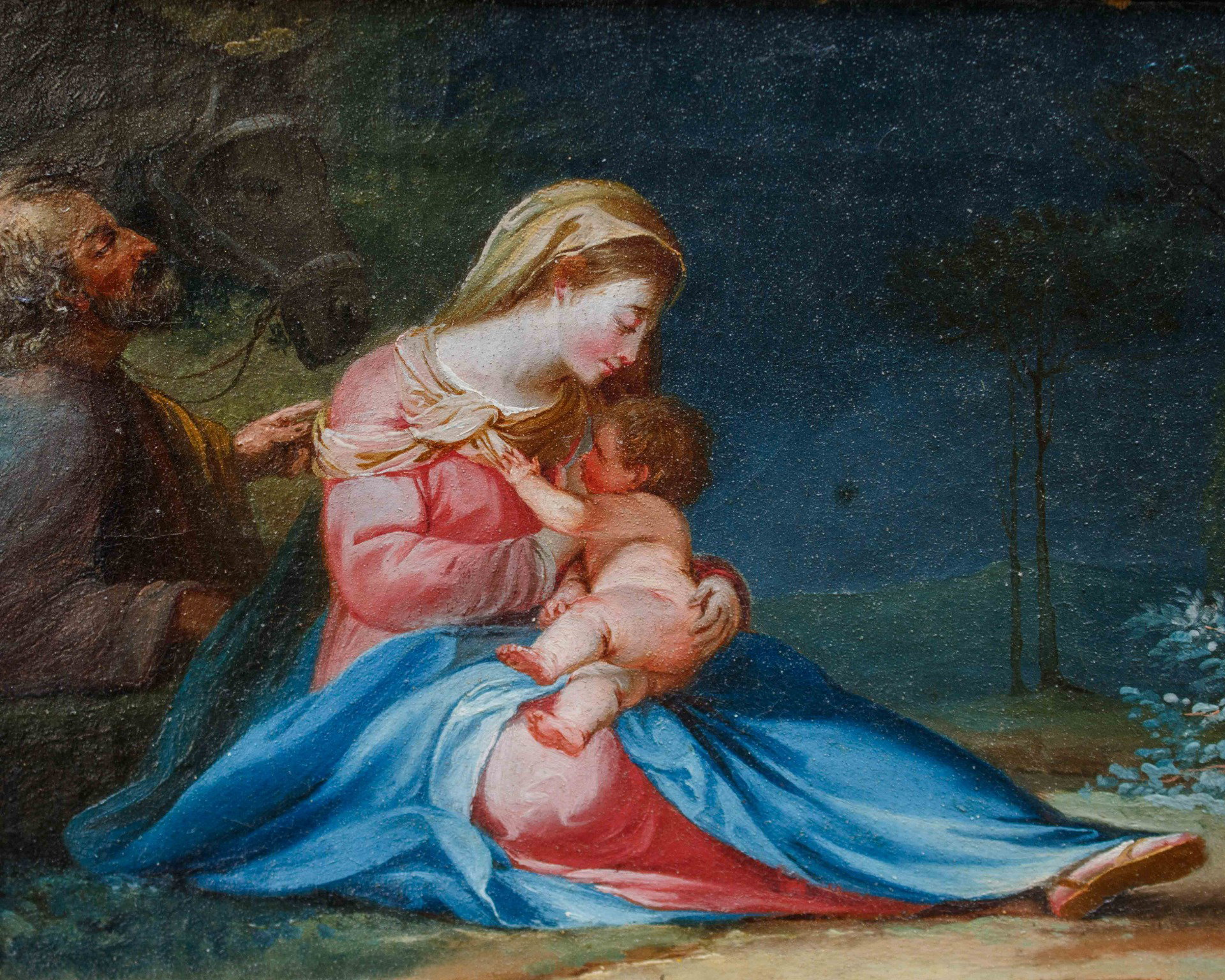
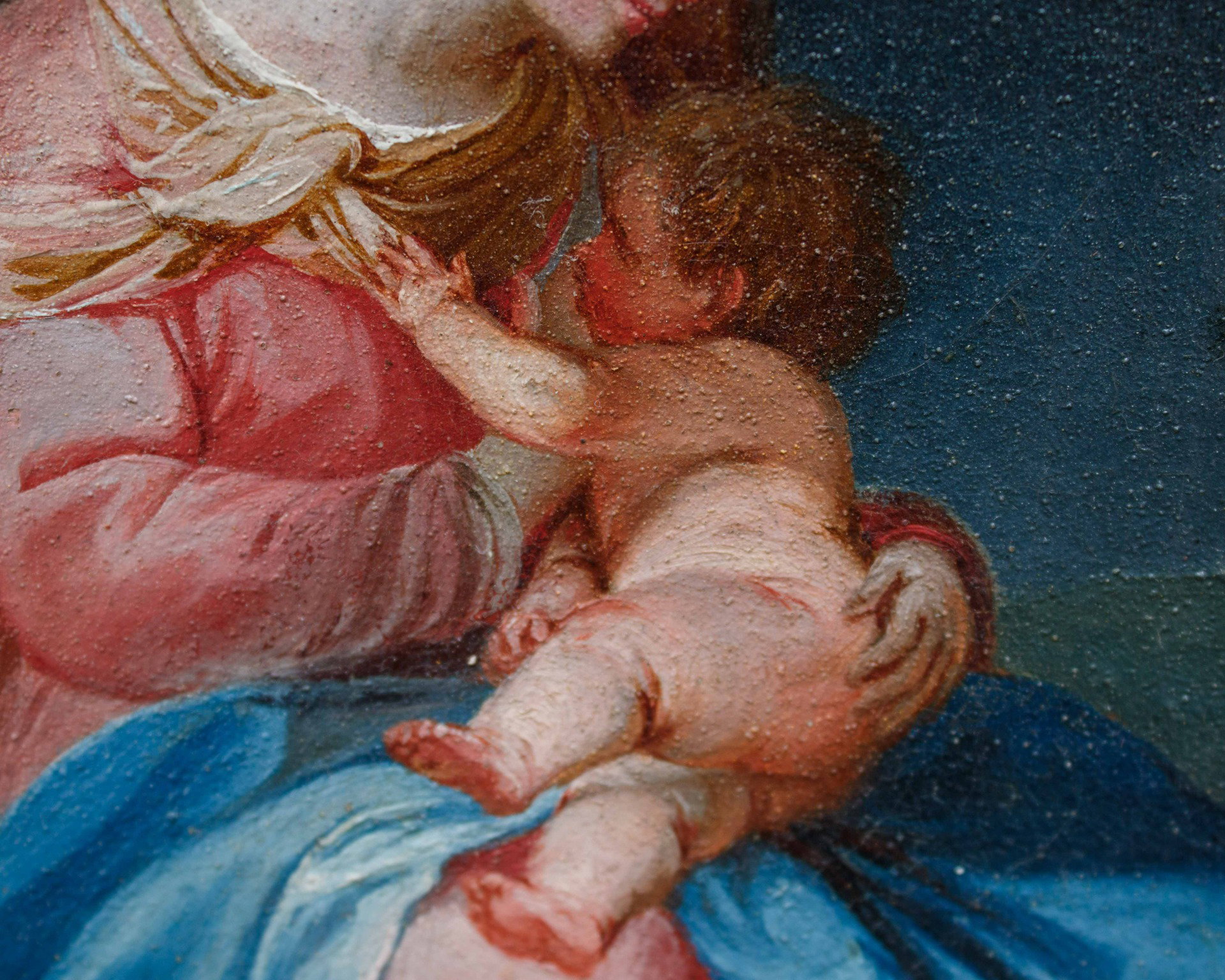
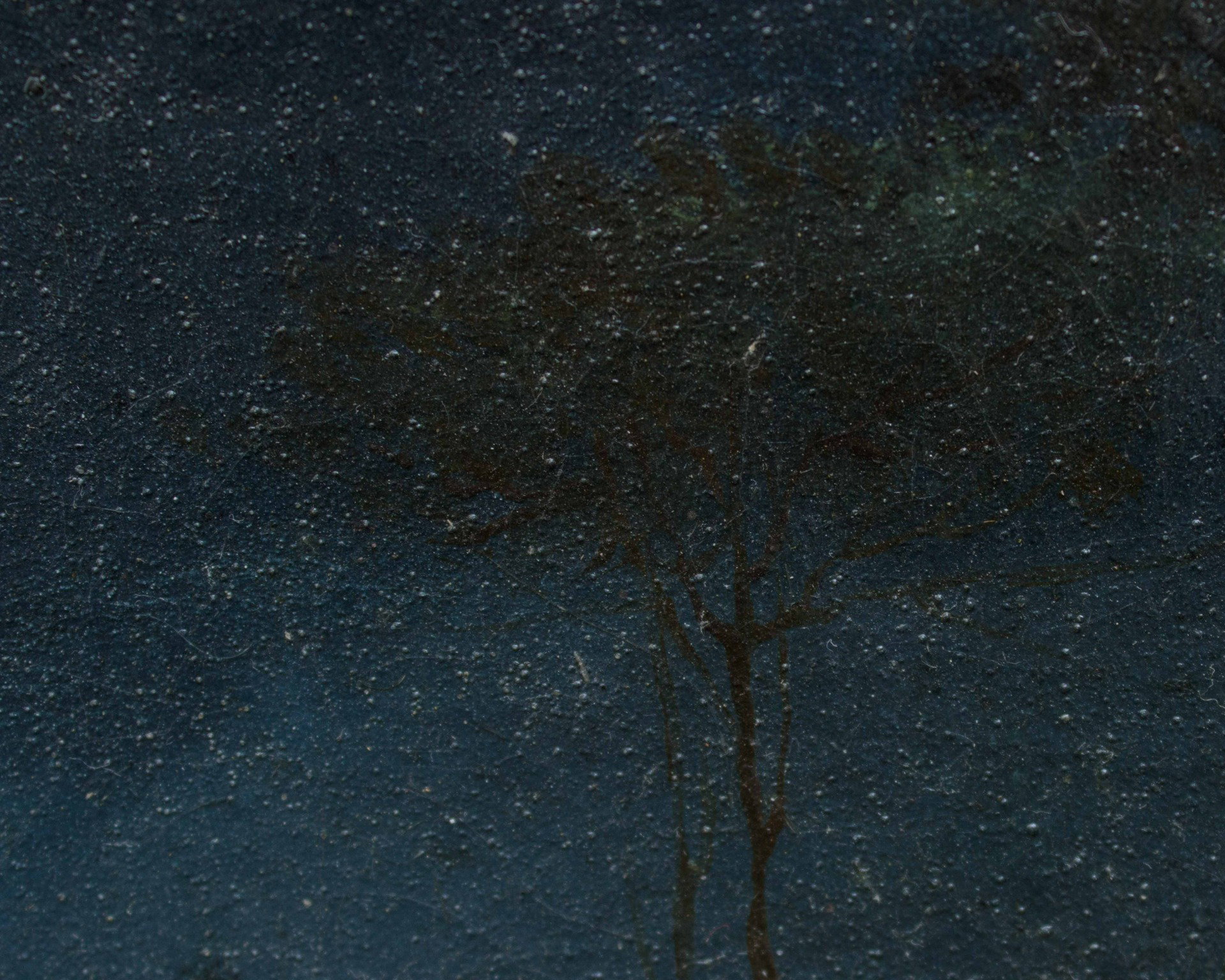
The work depicts, in a bucolic and nocturnal setting, the Madonna seated on the ground with one knee bent and the other leg extended, nursing the baby Jesus. On the margin is Saint Joseph, almost in a secondary position and in shadow compared to the Madonna and Child. Finally, the donkey, on which the Virgin and Child undertake the journey of flight to Egypt to escape Herod's persecution, also appears, interrupting the journey to allow themselves a moment of rest. This subject was particularly popular in the artistic scene, even though the Flight is only recounted in the Gospel of Matthew and in a verse of the Quran, which contextualizes its occurrence in Egyptian lands. It is the apocryphal texts that give us more details about the episode, from which artists draw inspiration: from the famous date palms that would have bowed down on their own to offer their fruits to the Child Jesus, to the innumerable crossings of the Nile River (Historia monachorum in Aegypto); and also from lions and leopards ready to escort the trio (Pseudo-Gospel of Matthew) to a hurried Jesus so that his parents would not suffer too much from the heat to multiple miracles (Arabic-Syriac Gospel of the Infancy). However, the painting in question presents the Holy Family in a rather essential natural setting, of which a few slender trees can be glimpsed from the penumbra.
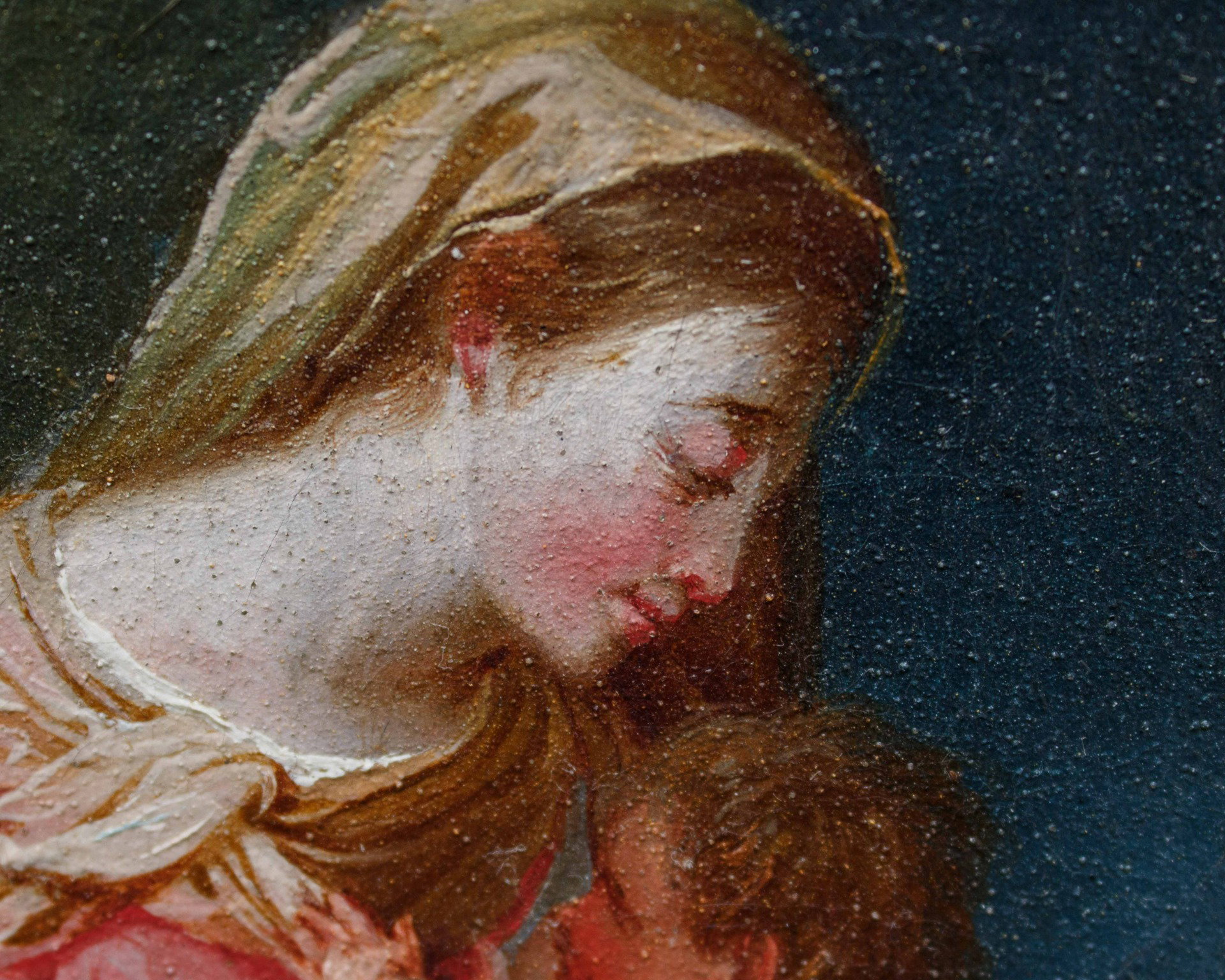
The treatment of the clothing, modeled by soft, well-blended colors and good chiaroscuro, as well as the flesh tones, particularly those of the Madonna, like porcelain, brings the painting back to an Emilian matrix. The work still shows the influence of 17th-century tradition regarding the nocturnal setting, but it is to be placed in the first half of the 18th century.
A "Rest on the Flight into Egypt" by an Anonymous Bolognese artist of the 18th century, in part similar to the one presented here, belongs to a private collection: note, in fact, the pose of the Virgin, shown in profile, seated on the ground in the same position as the Madonna under examination. The model for the Virgin finds its precedents in the masters of 17th-century Emilian painting, such as Francesco Albani.