Spain, 16th century
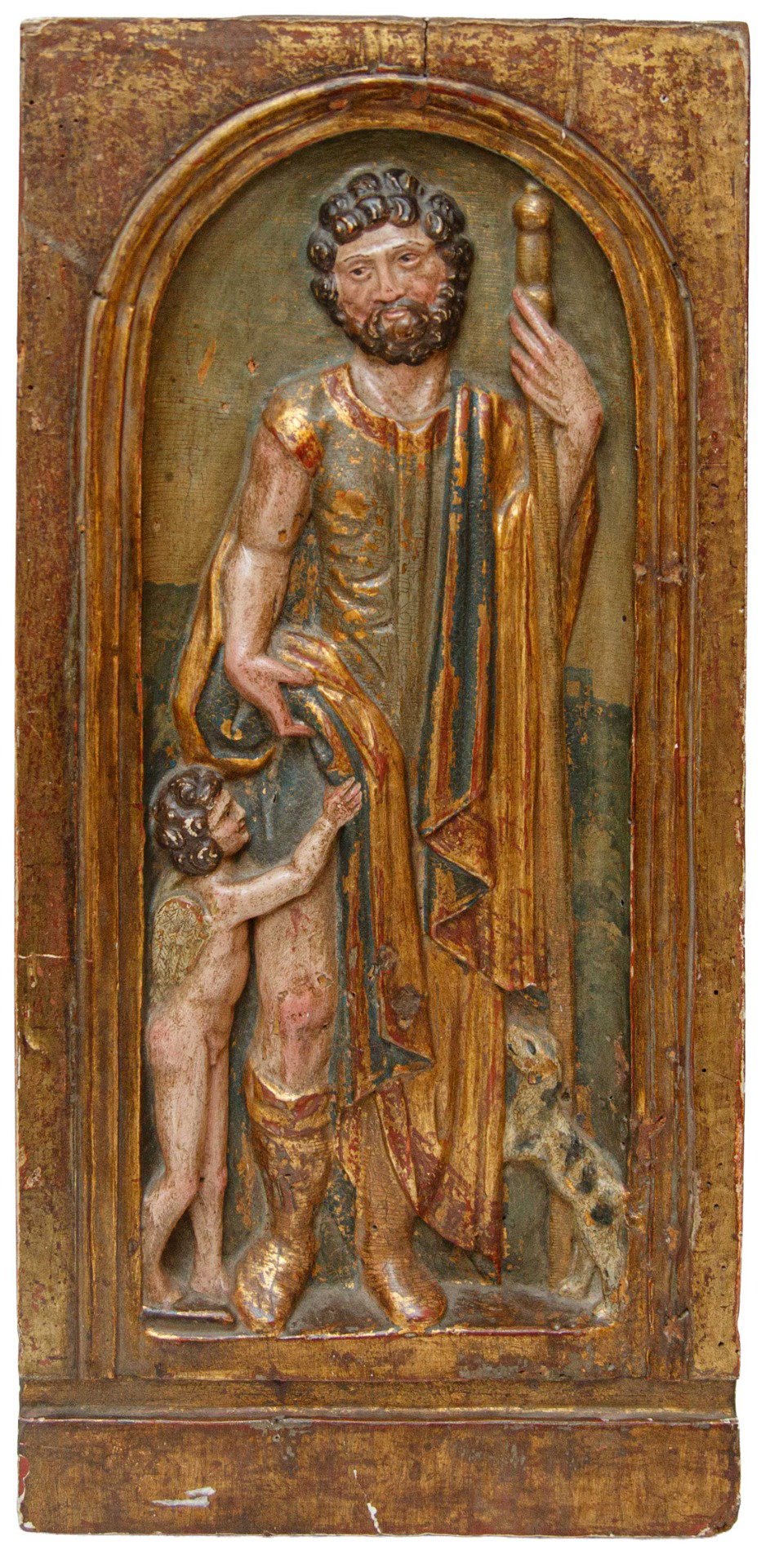
Carved relief with Saint Roch
Polychrome and gilded walnut wood, 53 x 25 cm
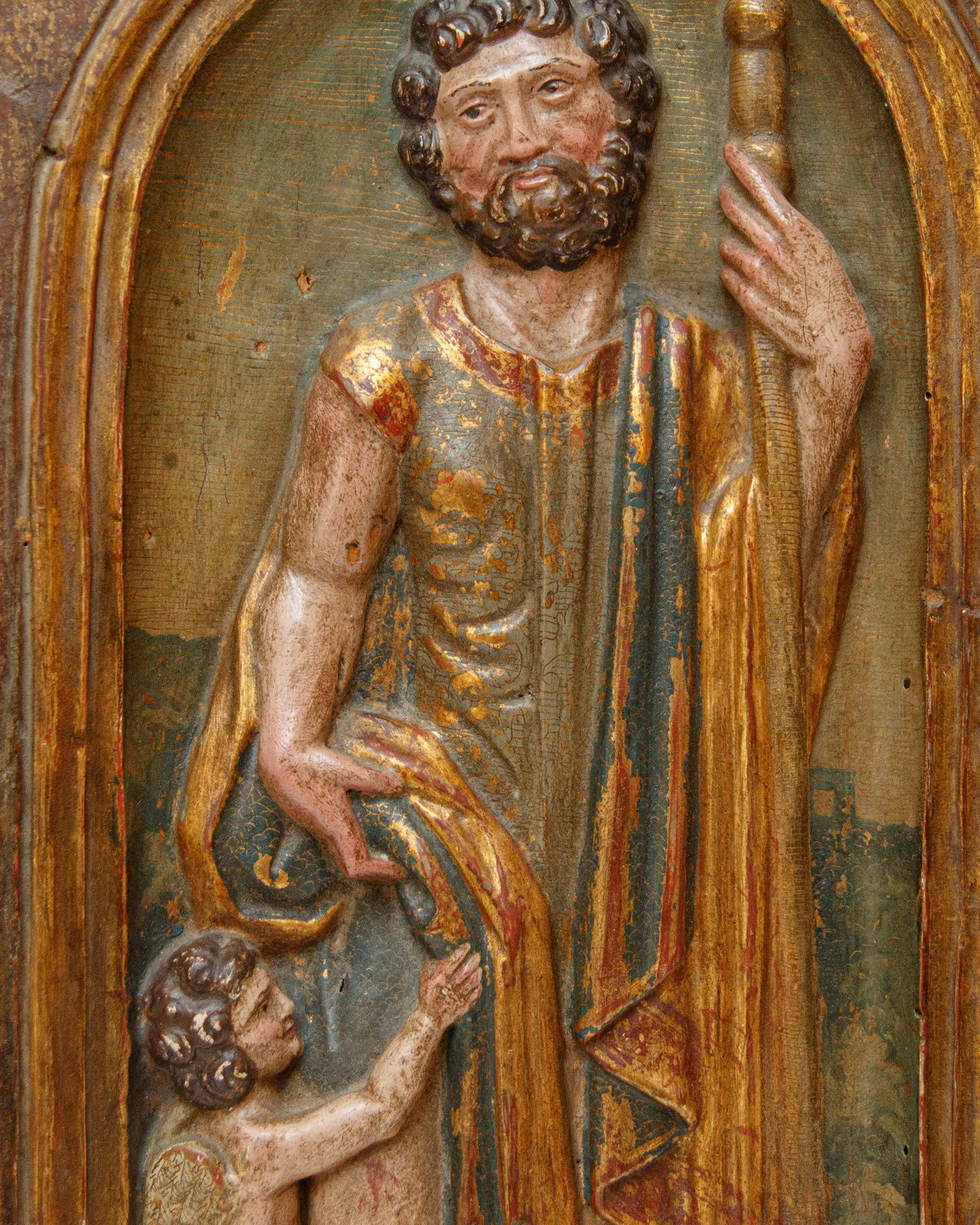
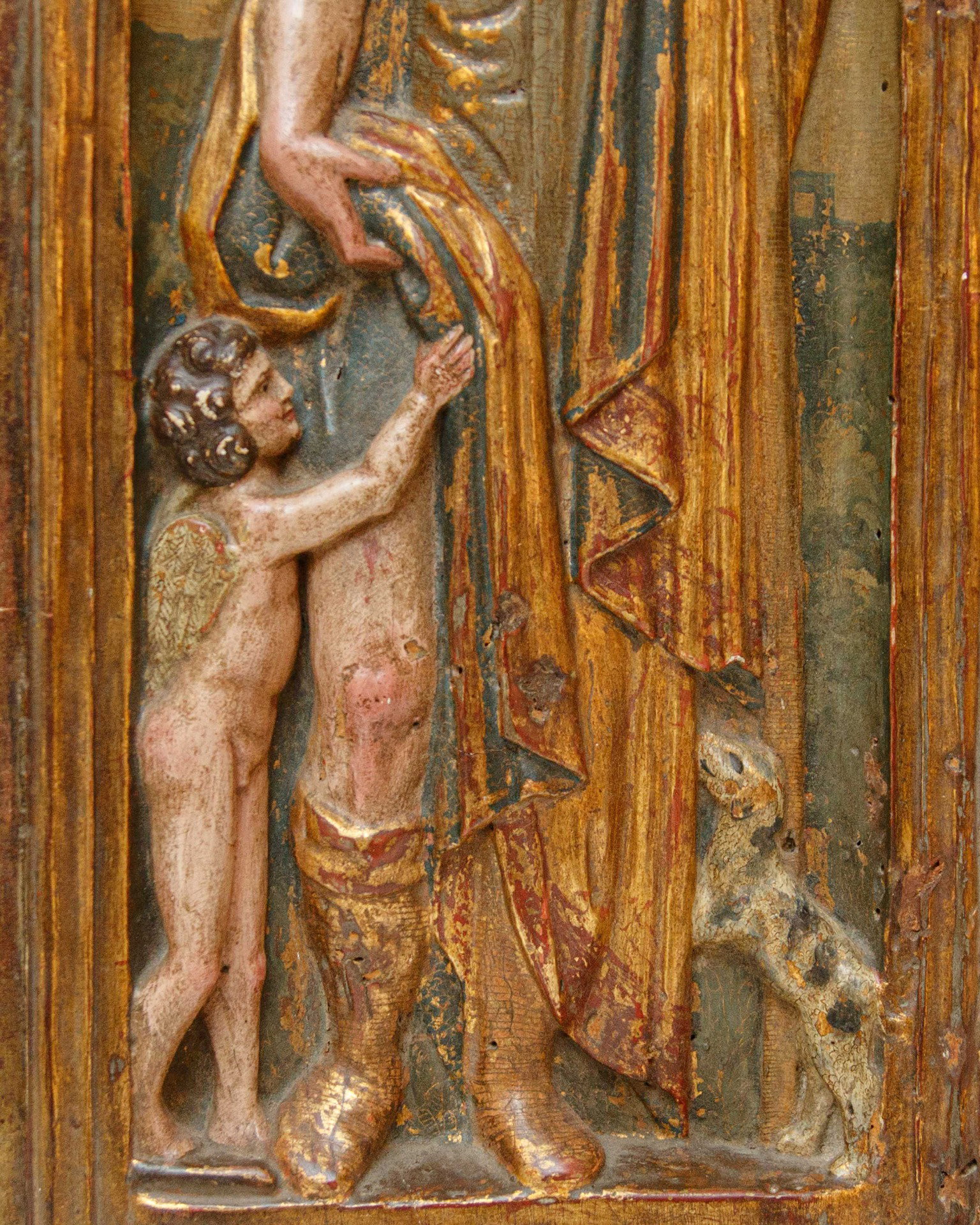
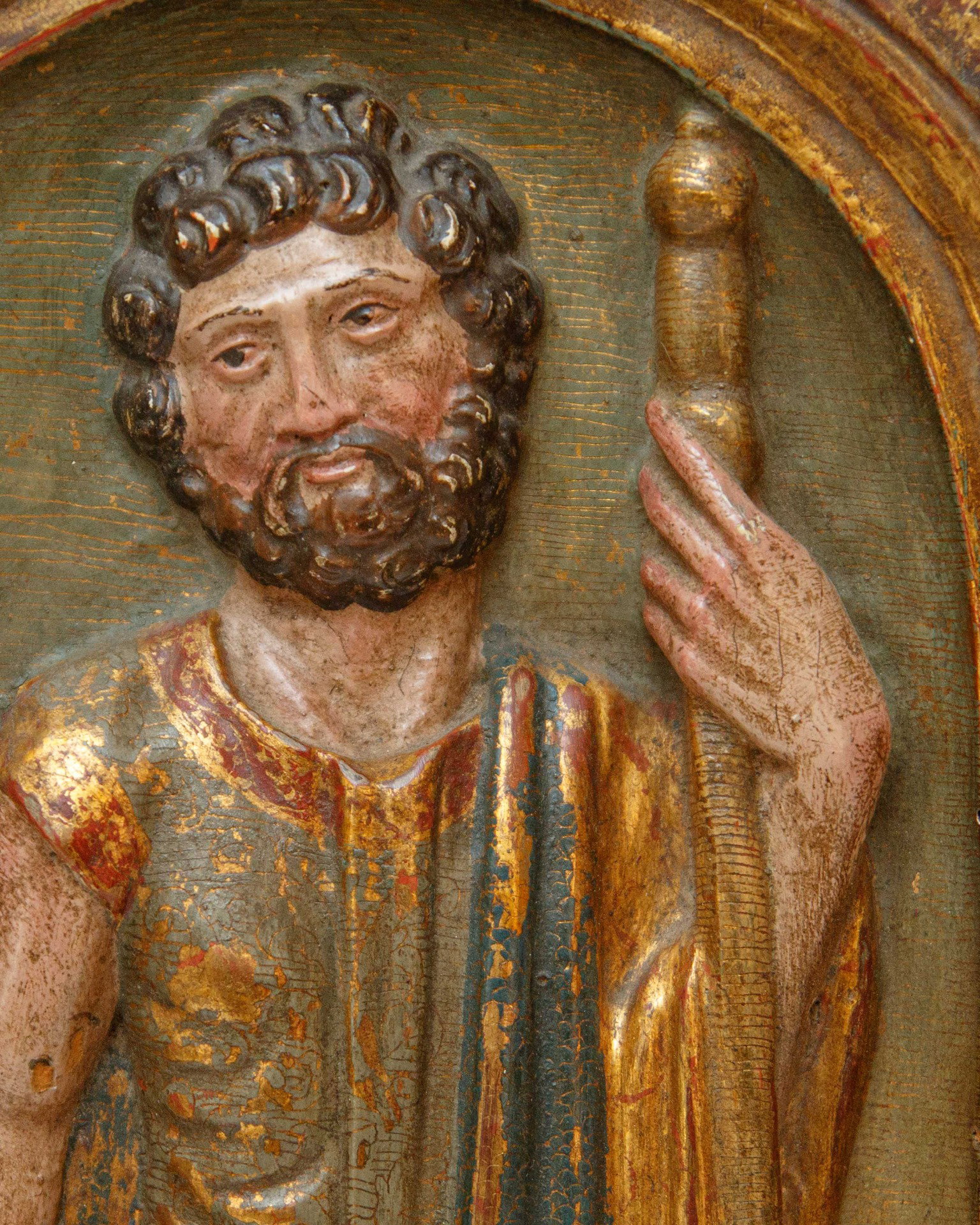
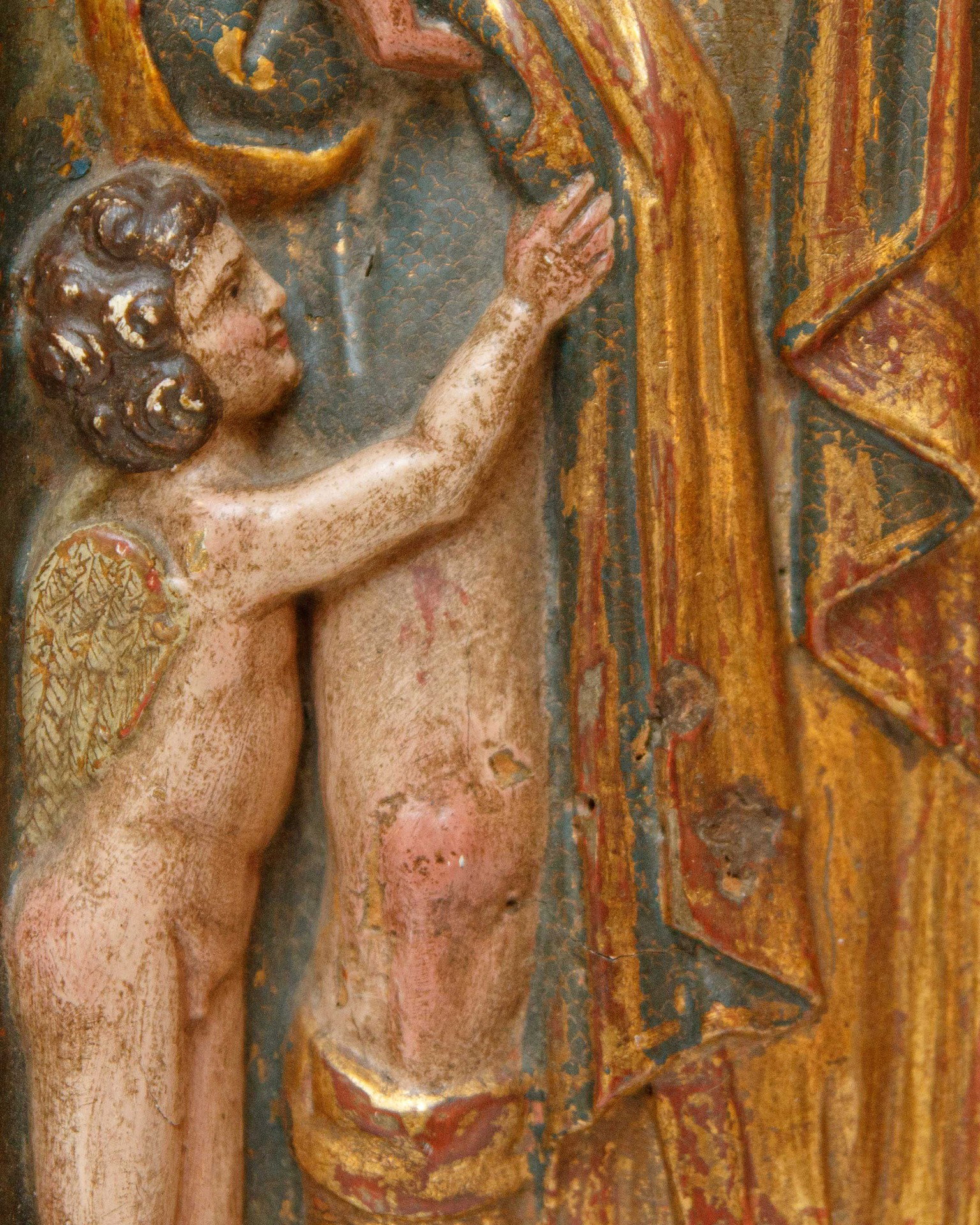
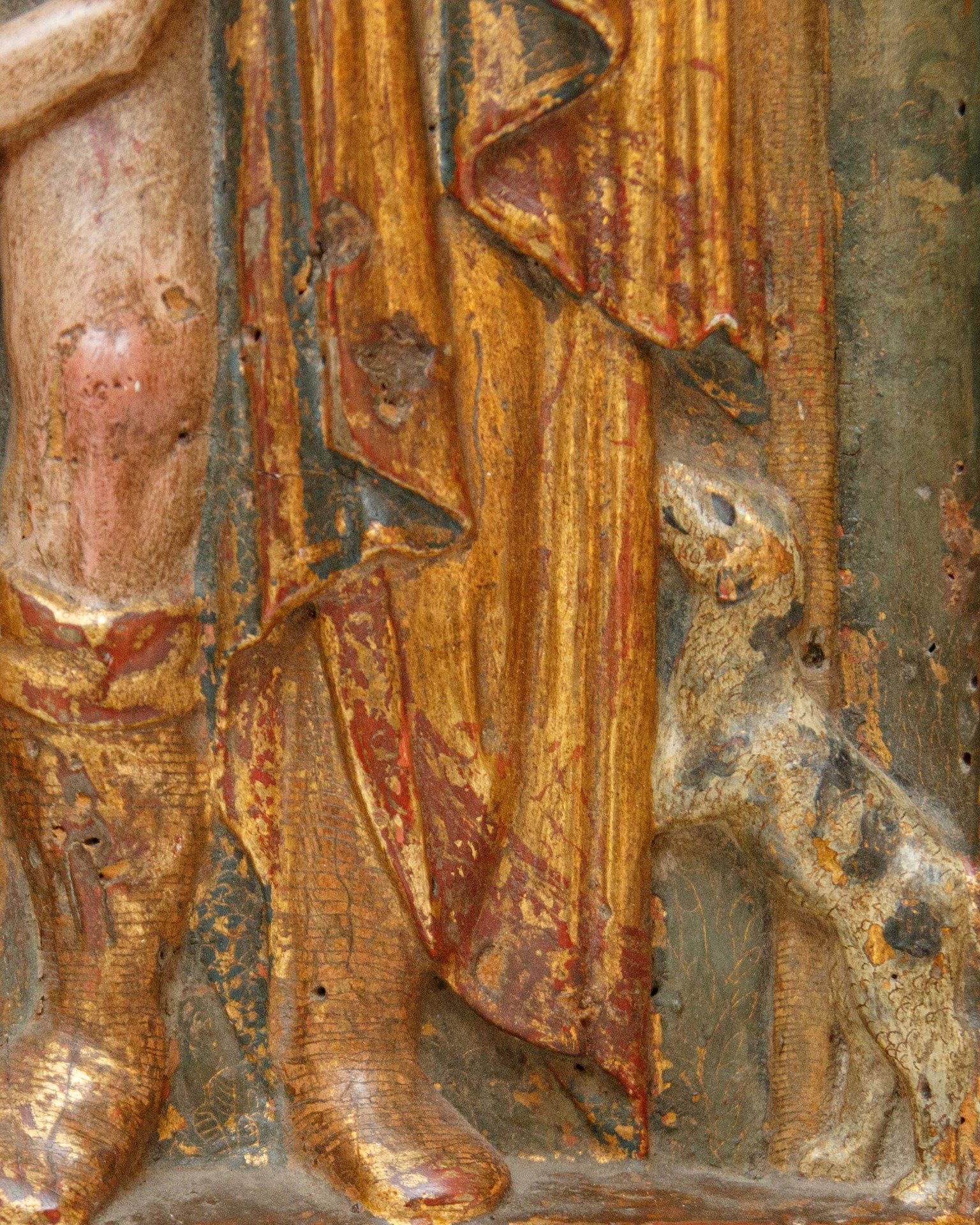
This sculpture fits perfectly into the rich Spanish tradition of "imaginería," meaning polychrome and gilded religious sculpture. In the 16th century, this tradition solidified as the primary language of Iberian faith, blending the late Gothic legacy with the new demands of the Renaissance. The aesthetic of this period is manifested in a search for formal balance and solemnity, while still maintaining that particular attention to devotional expression and the strength of volumes that characterizes Castilian and Andalusian art of the 16th century. Made of walnut wood, a noble material highly valued for its compactness and particularly fine grain suitable for detailed carving, the panel depicts Saint Roch, one of the most popular and venerated saints, especially in Spain, invoked as a protector against the plague. He is portrayed with his classic pilgrim attributes (staff and short cloak), caught in the iconic gesture of showing the wound on his thigh. Assisted by a cherub on the left, his faithful dog is at his feet, a reminder of the miraculous sustenance received during his isolation. The 16th-century Spanish school transforms these symbols into a plastic narrative of sober monumentality, where the realism of the wound combines with the sacredness of the gilded garments, conveying a sense of dignity and devotion. Every detail—from the composure of the folds of the garments to the solidity of the protagonists' bodies—reflects a deep spiritual sensibility and extraordinary technical mastery. The tradition of these wooden panels derived from the evolution of the "retablo," the large monumental altarpiece which, in Spain, unlike the prevalent painting in Italy, became a complex architectural structure entirely sculpted and gilded. In an era marked by the need to instruct the faithful, the Spanish Church invested heavily in wood sculpture: the relief offered a three-dimensionality that made the sacred almost tangible, facilitating the understanding of dogma through the visual power of carved wood.