JEAN-FRANCOIS DE TROY
(Paris, 1679 - Rome, 1752)
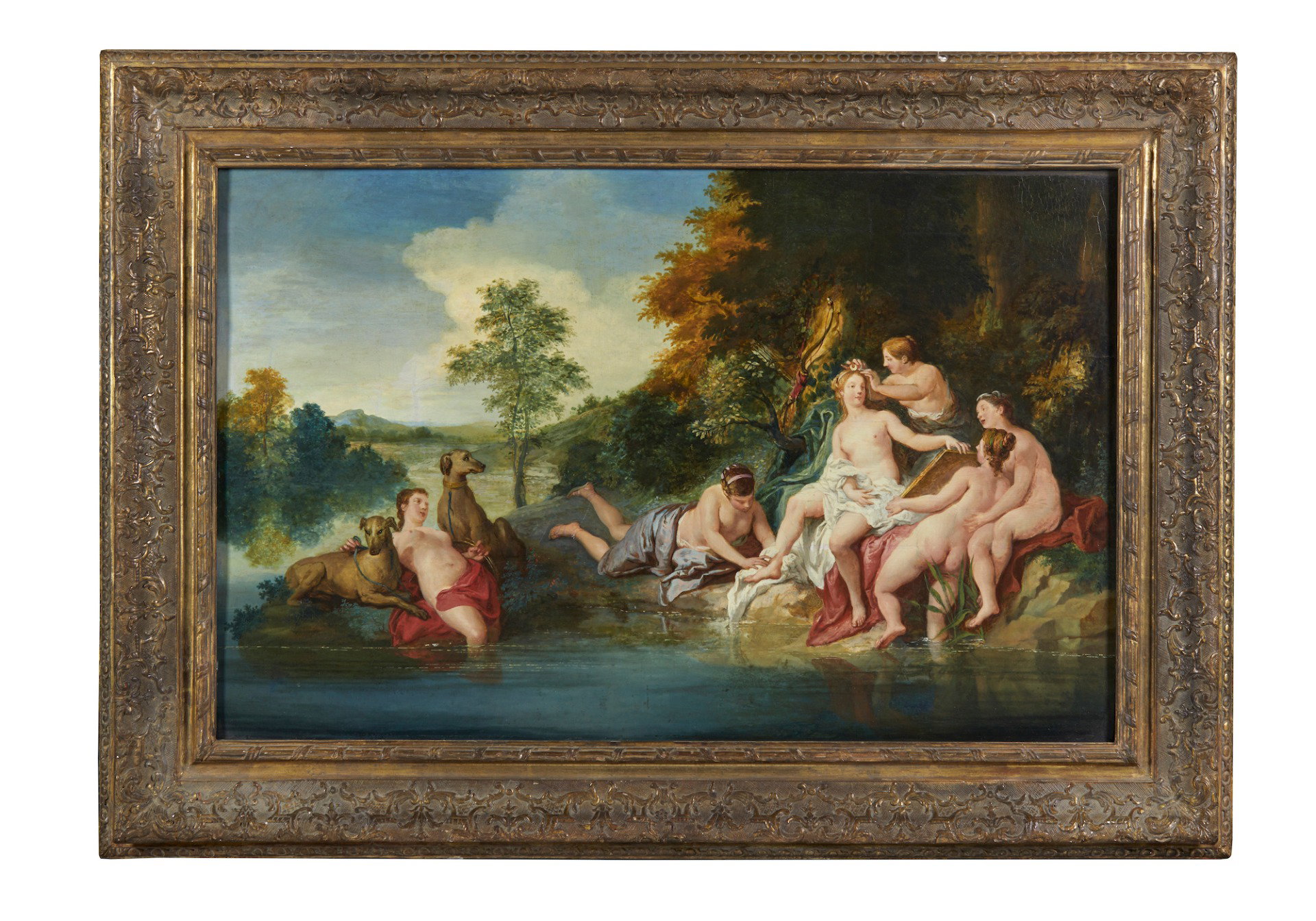
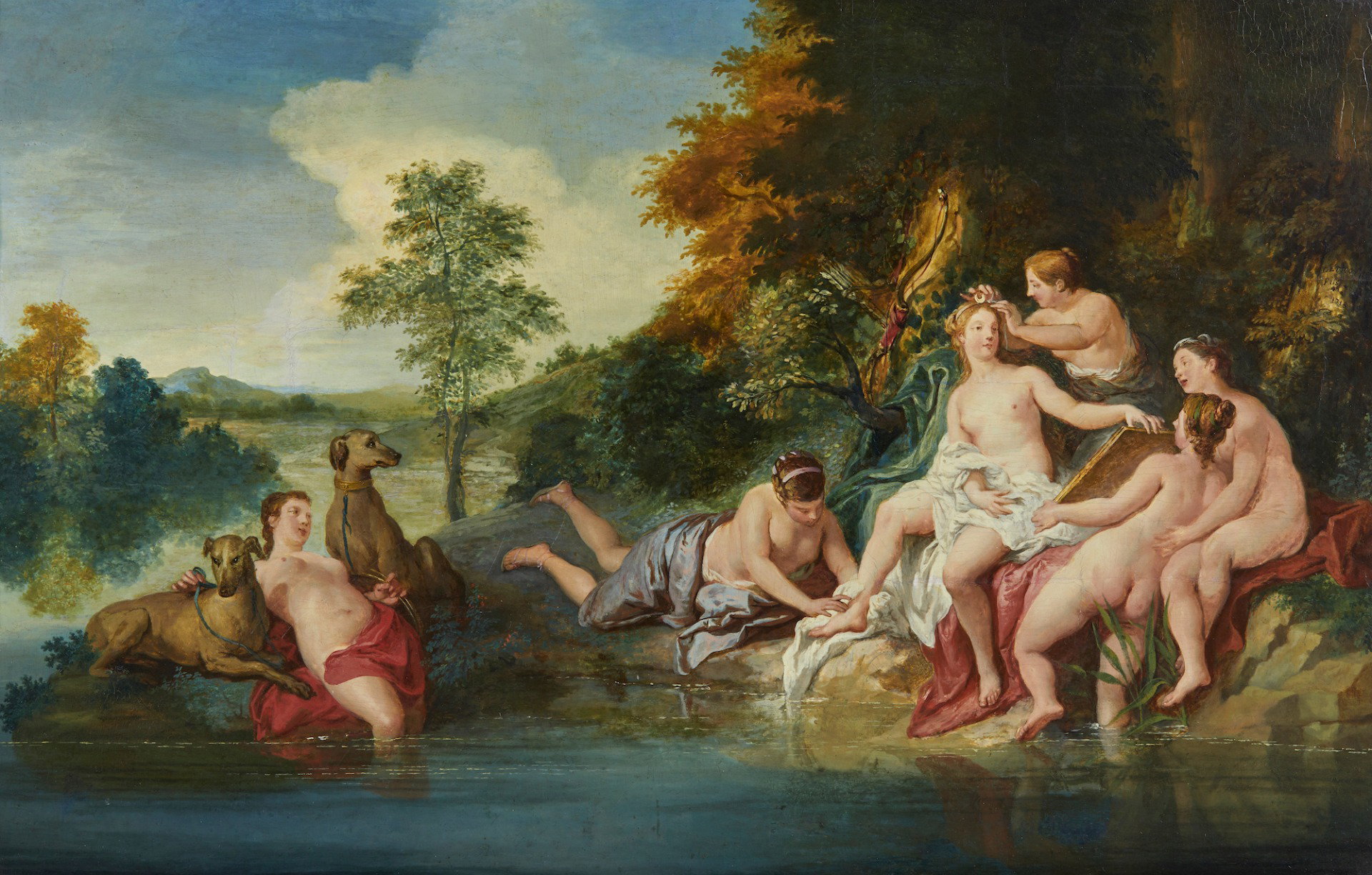
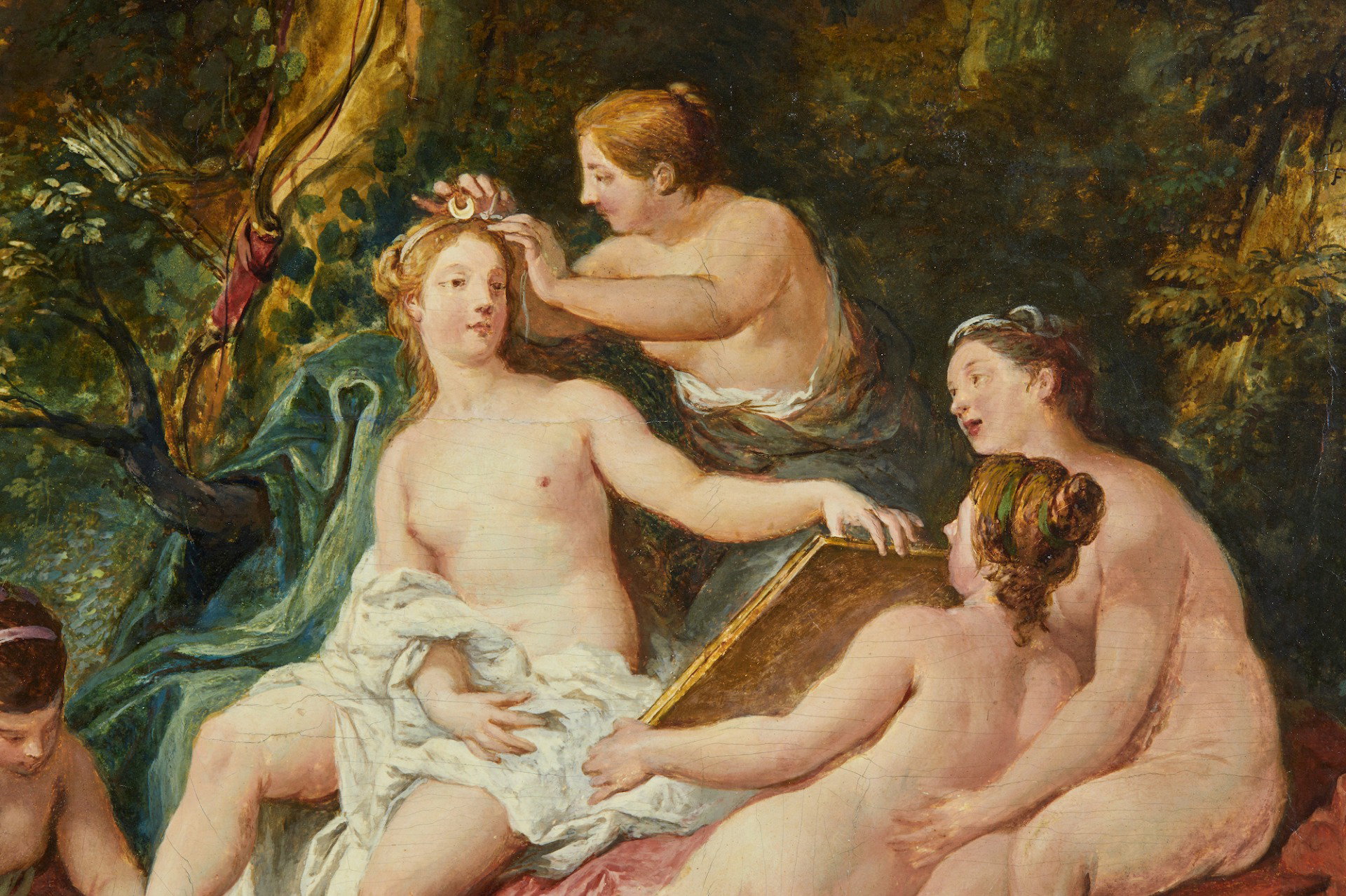
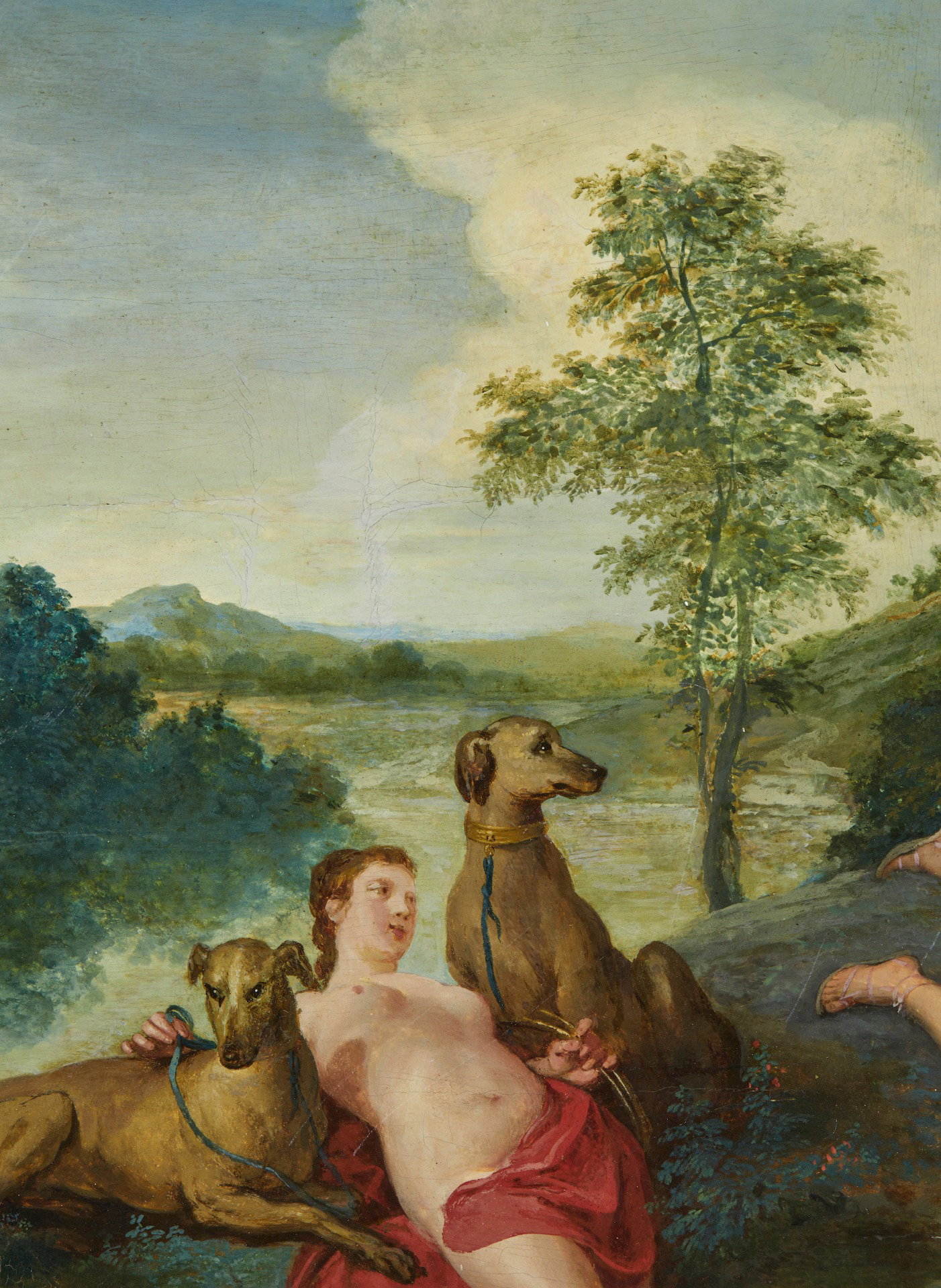
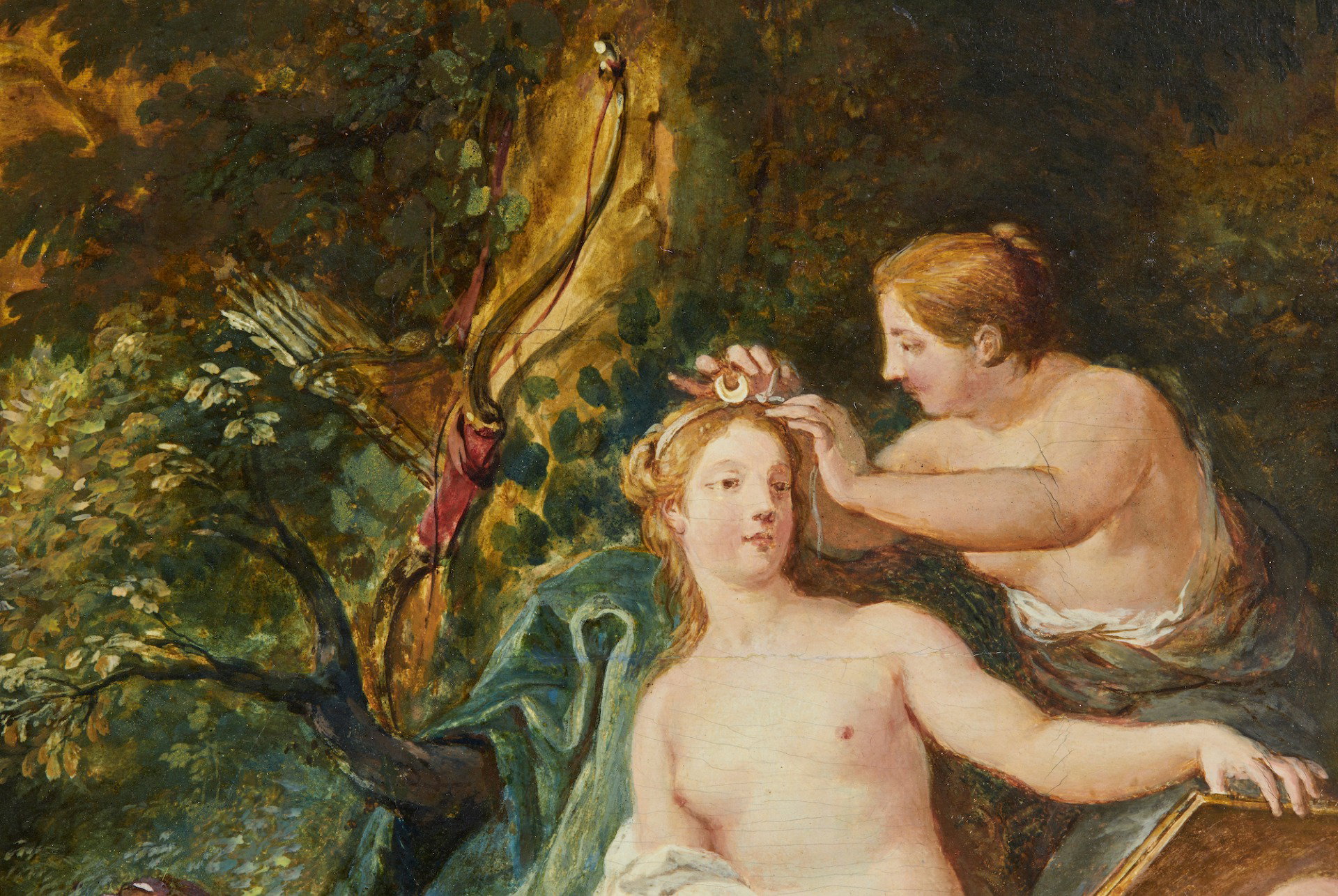
Diana's Bath
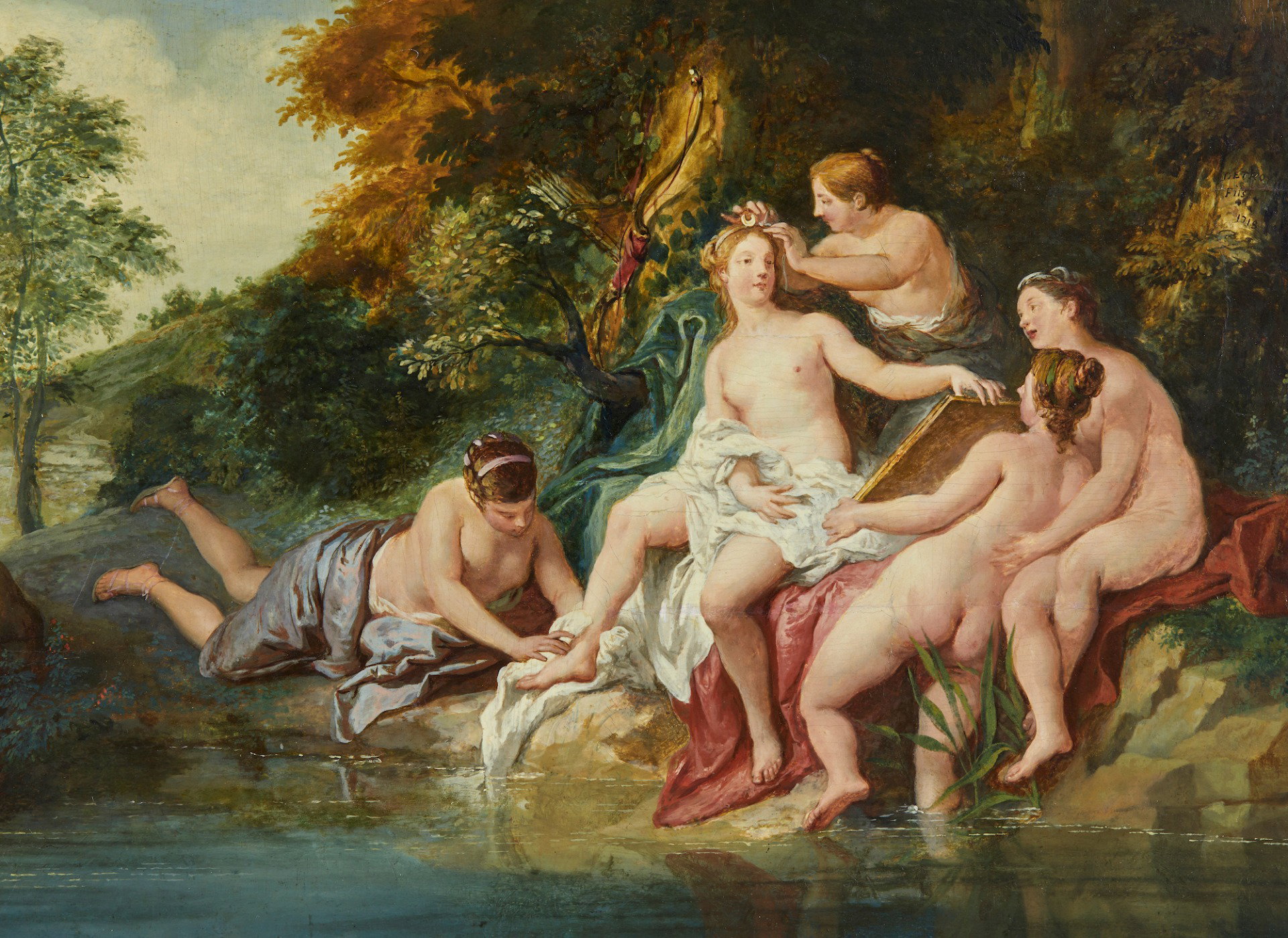
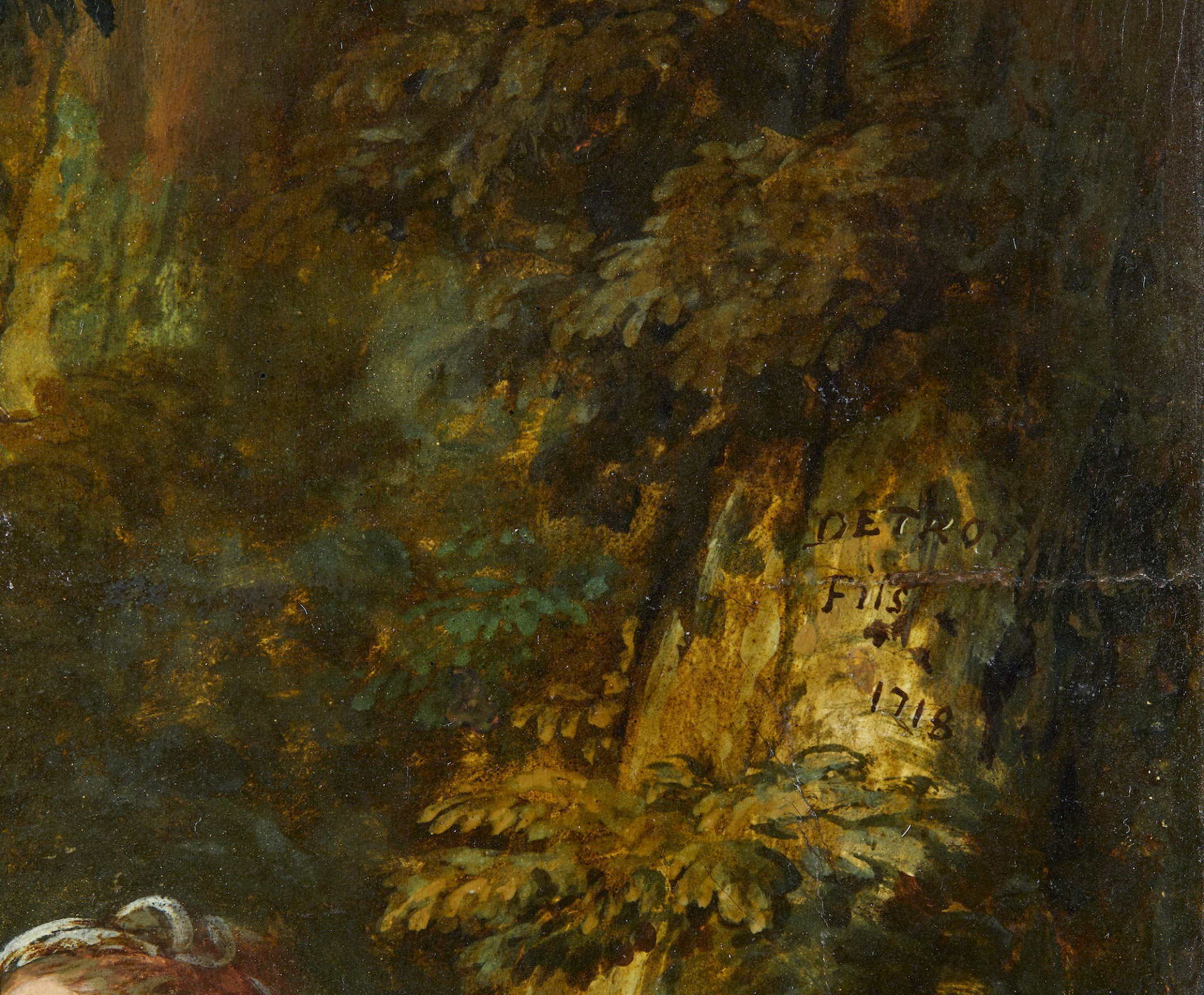
Signed and dated 'DETROY Fils 1718 (center right, on the tree trunk)
oil on panel 53x82 cm
Formed with his father and later at the Académie Royale de Peinture et Sculpture, the painter stayed in Italy from 1699 to 1706, although nothing is known to us of the works produced in these years. Returned home in 1708, De Troy became a member of the Academy presenting the painting depicting 'Niobe and her children' now kept at the Musée Fabre in Montpellier.
Despite being considered a history painter, the artist frequented all pictorial genres; in fact, we owe him the tableaux de modes, that is, works in which the activities carried out in the free time of French aristocratic society are depicted.
The 'Declaration of Love' of 1731 now in Charlottenburg Palace in Dresden is one of his most famous and typical examples. In 1724 De Troy was commissioned to execute two decorative paintings on the themes of Zephyr and Flora and Acis and Galatea for the Hôtel du Grand Maître in Versailles.
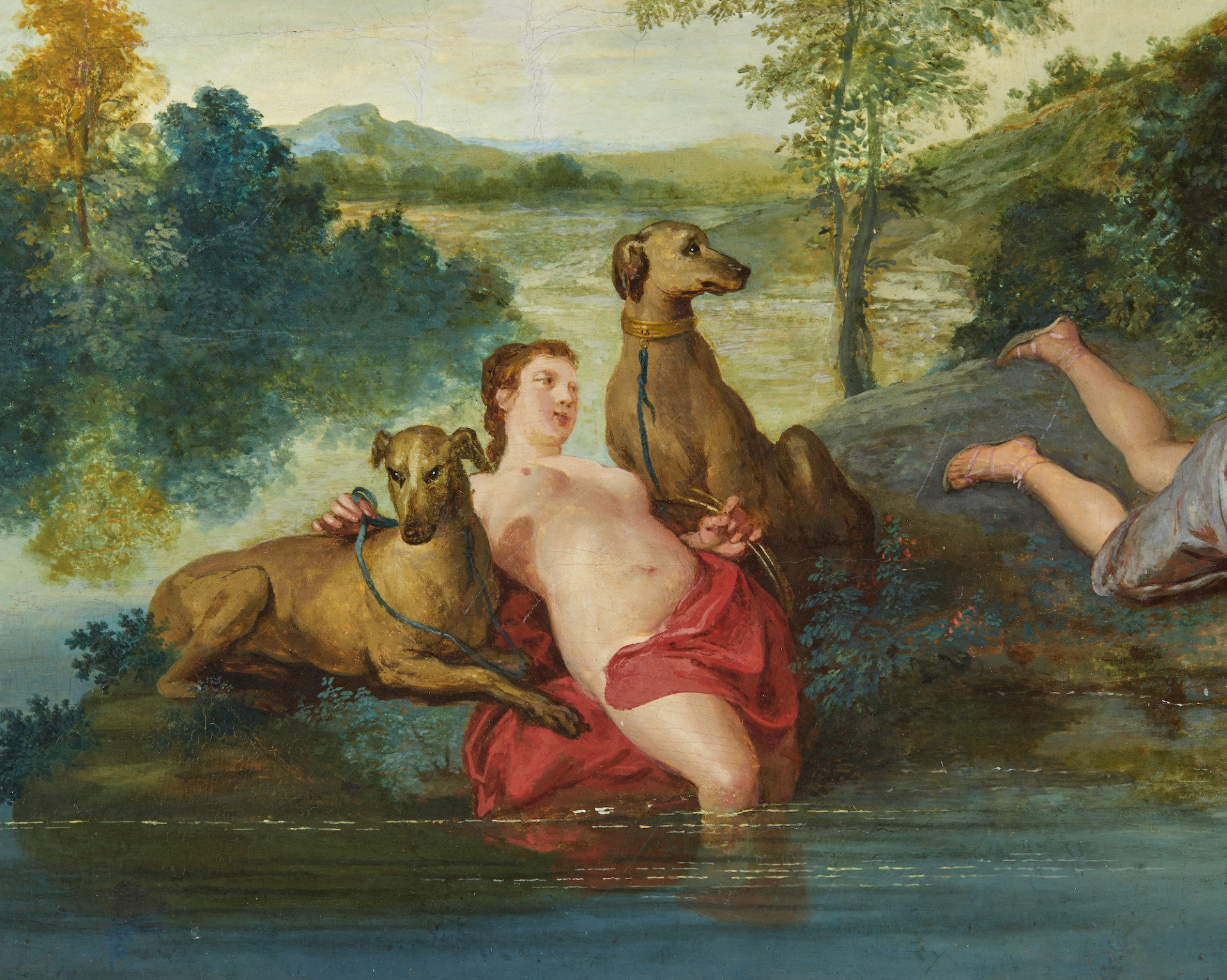
These works were followed by other commissions between 1734 and 1737 for the royal apartments in Versailles and Fontainebleau, including The Luncheon of the Musée Condé in Chantilly, The Glory of the Princes Claims the Sons of France in Versailles). Like many other masters of his time, the artist also devoted himself to drawing cartoons for the Gobelins tapestry factory and those dedicated to the story of Esther are from 1736. Two years later the artist moved to Italy where he was appointed director of the French Academy in Rome, holding that position until 1751. Our work is therefore a beautiful testimony of his early maturity and anticipates by a few years the version now kept at the Getty Museum (oil on canvas, 74.3X92.1 cm, no. 84.PA.44). In our case, the painter imaginatively describes the landscape and the Ovidian scene, with the goddess looking at herself in the mirror while being dried by the nymphs and in a moment preceding the arrival of the satyr who in the American canvas is seen on the left while being captured by a young woman.
Bibliography:
J.-L. Bordeaux, 'Jean-Francois de Troy, still an artistic enigma: some observations on his early work', Artibus et Historiae, vol. 20, 1989, p. 152, fig. 4
C. Bailey, 'Les Amours des Dieux: La Peinture mythologique de Watteau a` David', exhibition catalogue, Paris, 1991, pp.134-135 and 137
C. Leribault, 'Jean-Francois de Troy (1679-1752)', Paris 2002, p. 241