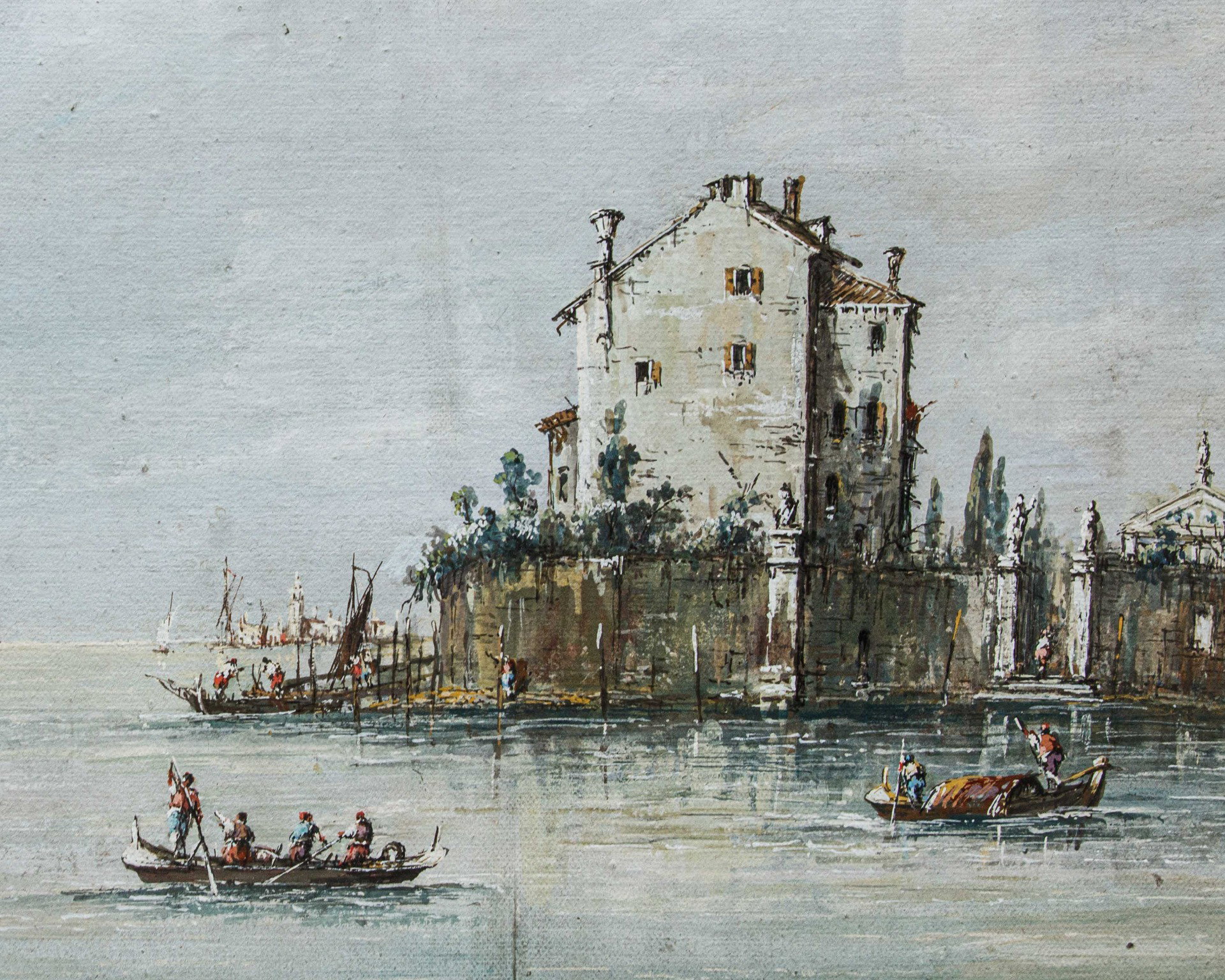
Follower of Giacomo Guardi (Venice 1764 – 1835)
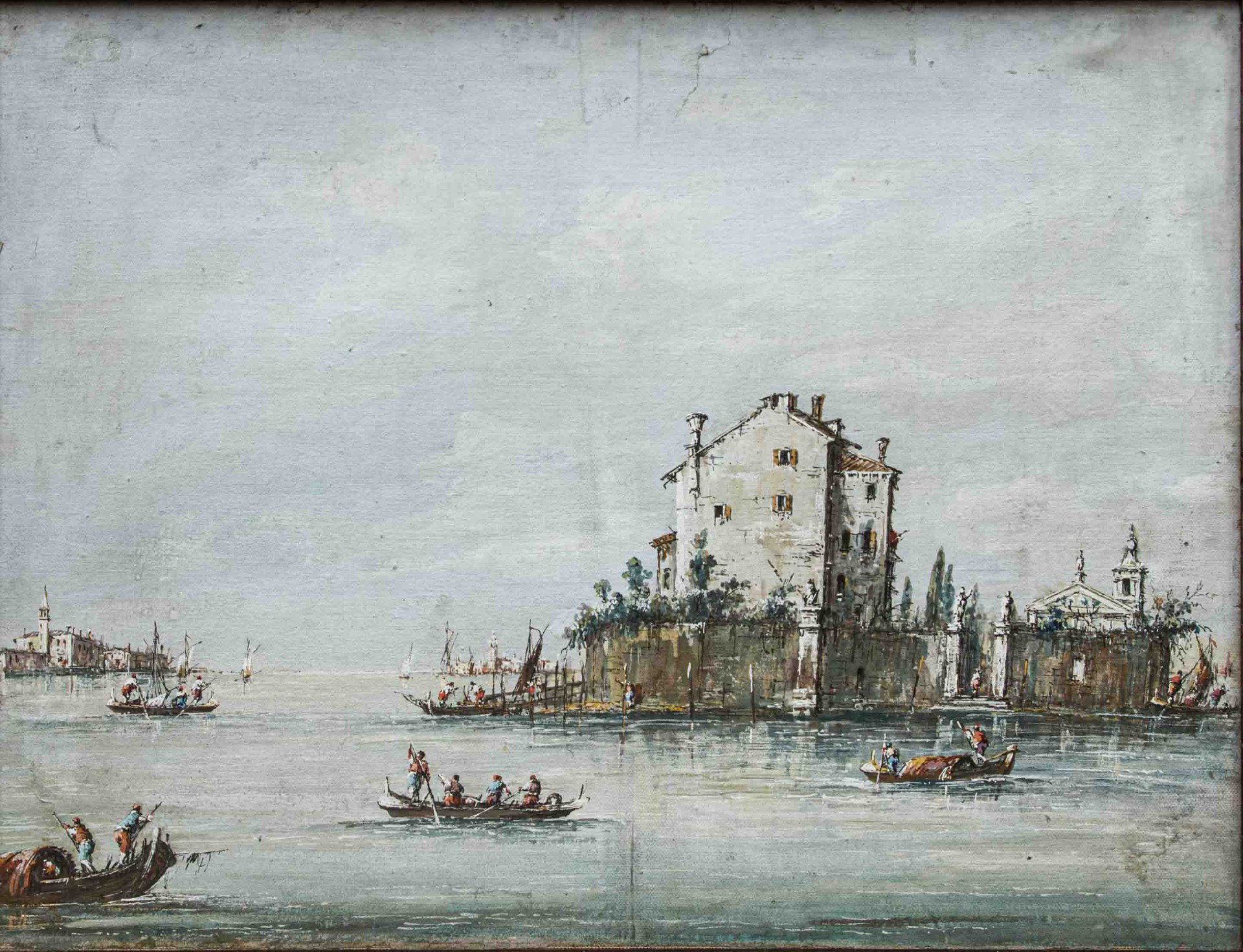
Lagoon Landscape
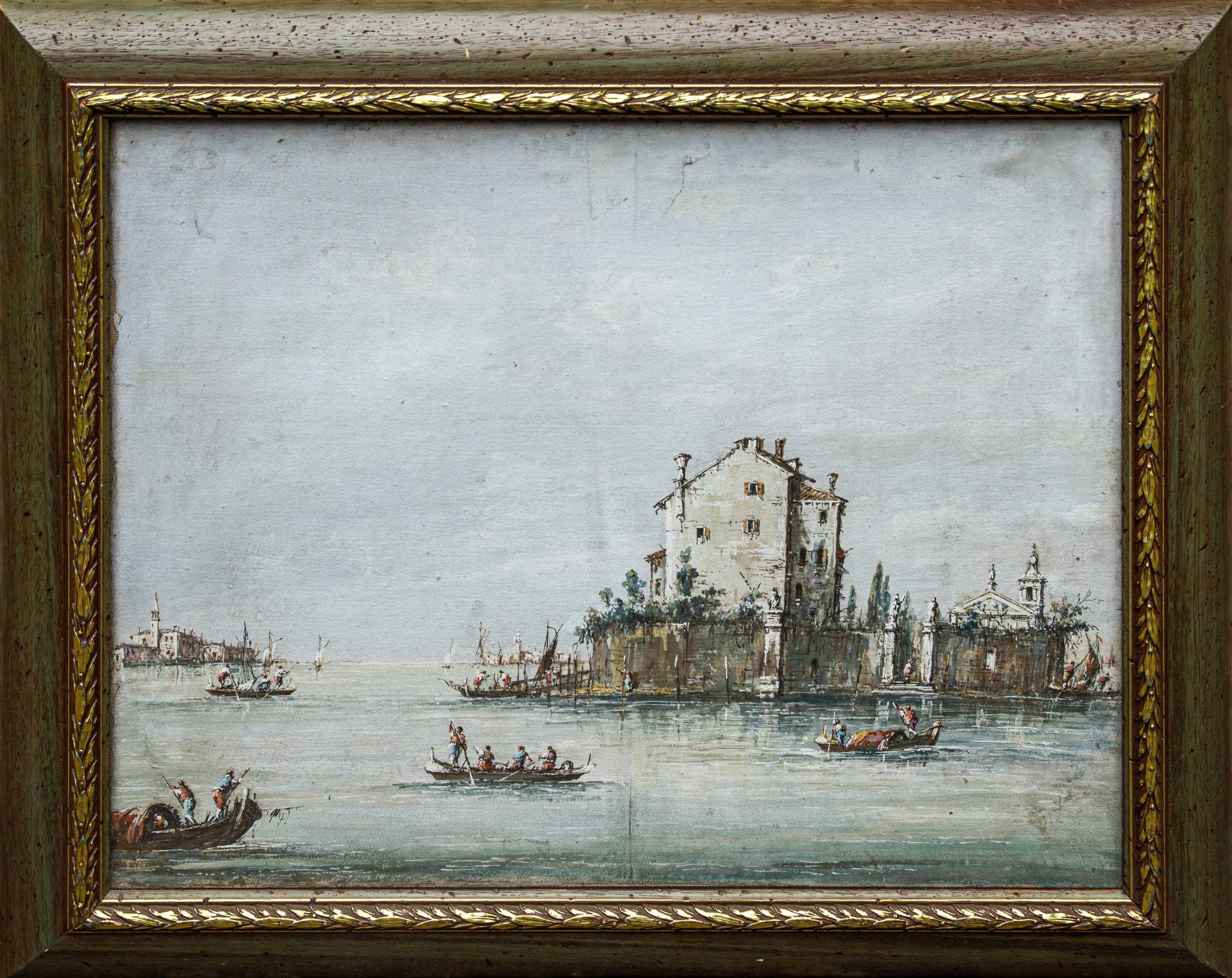
Tempera on paper, 56 x 45 cm – with frame, 54 x 64 cm
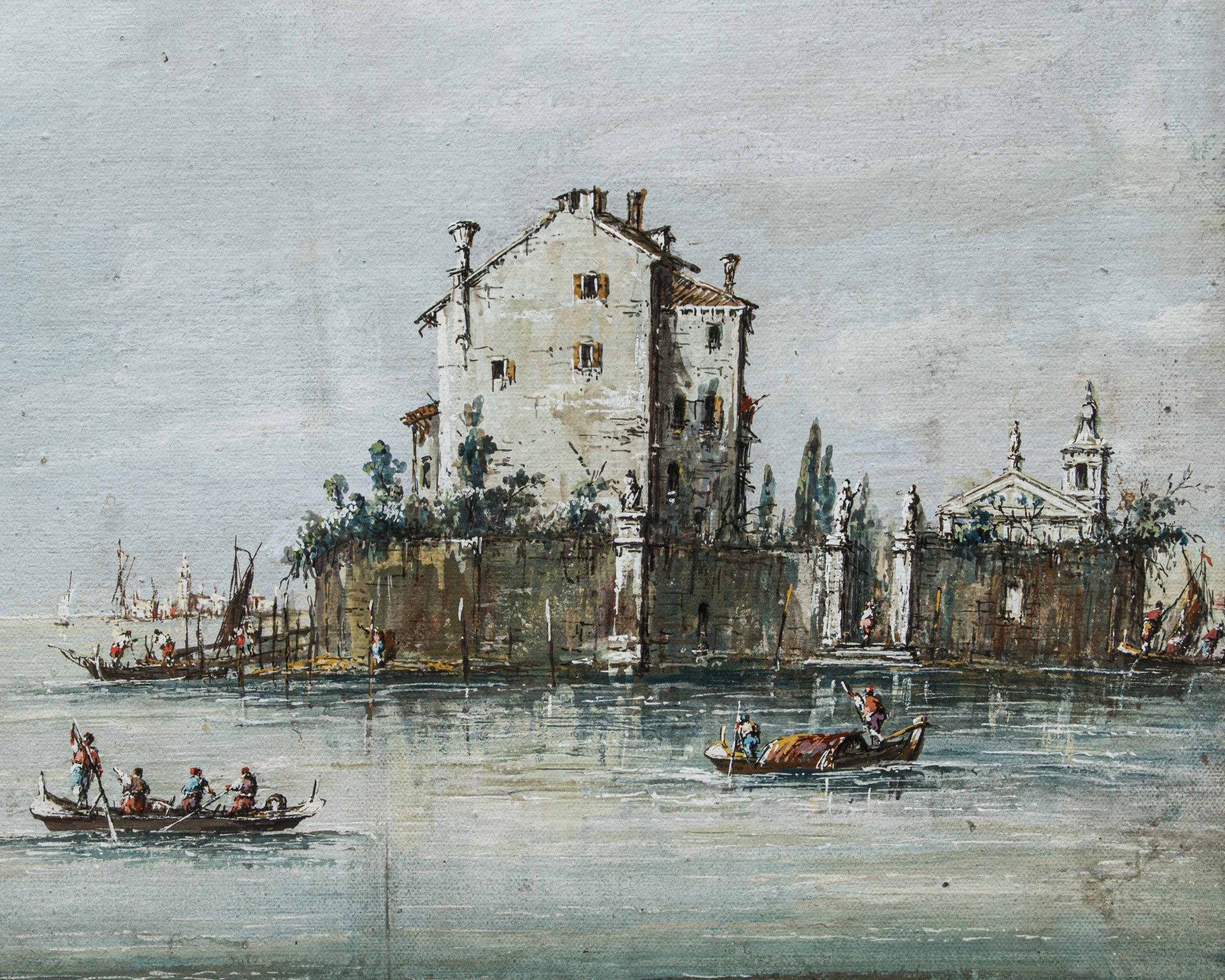
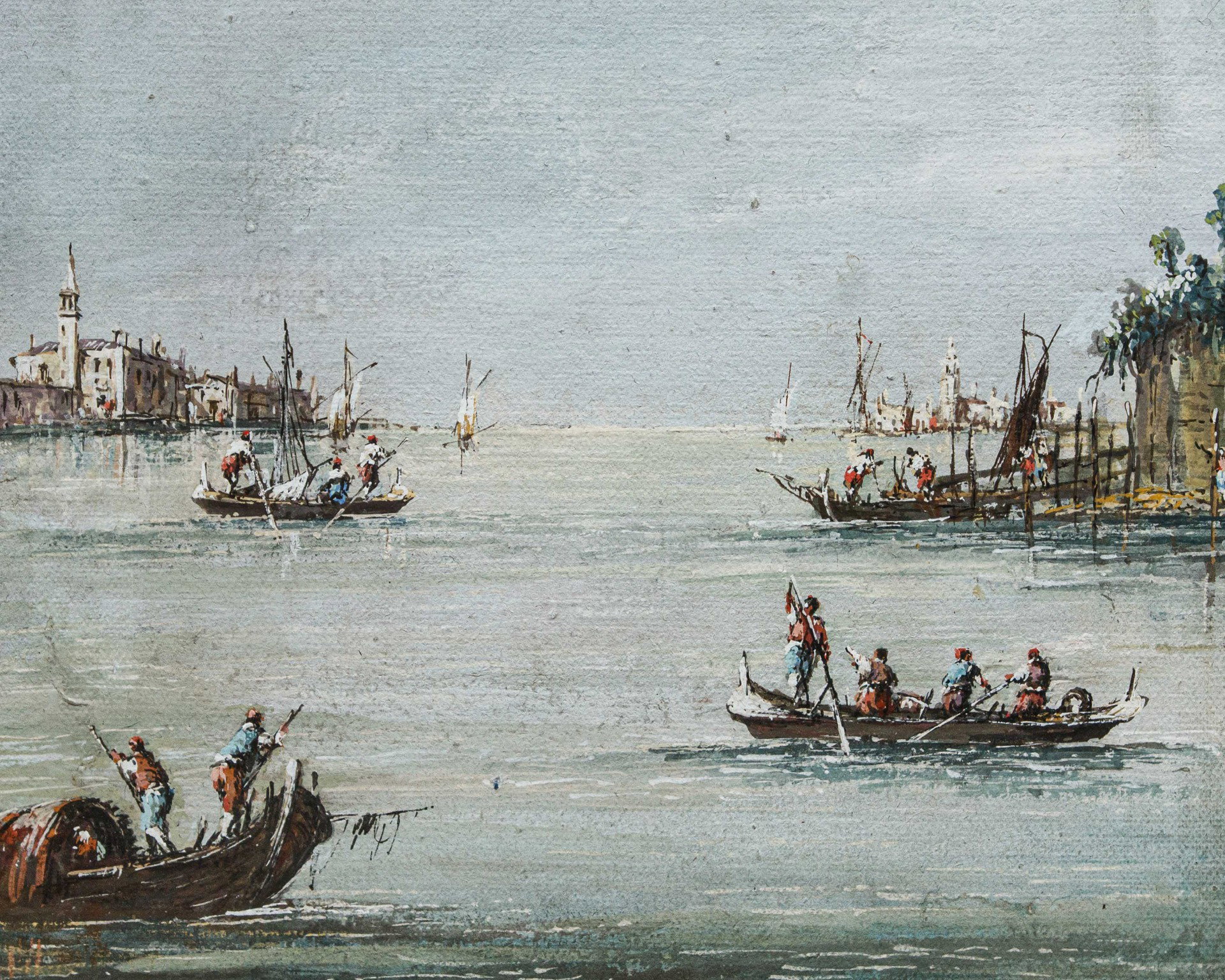
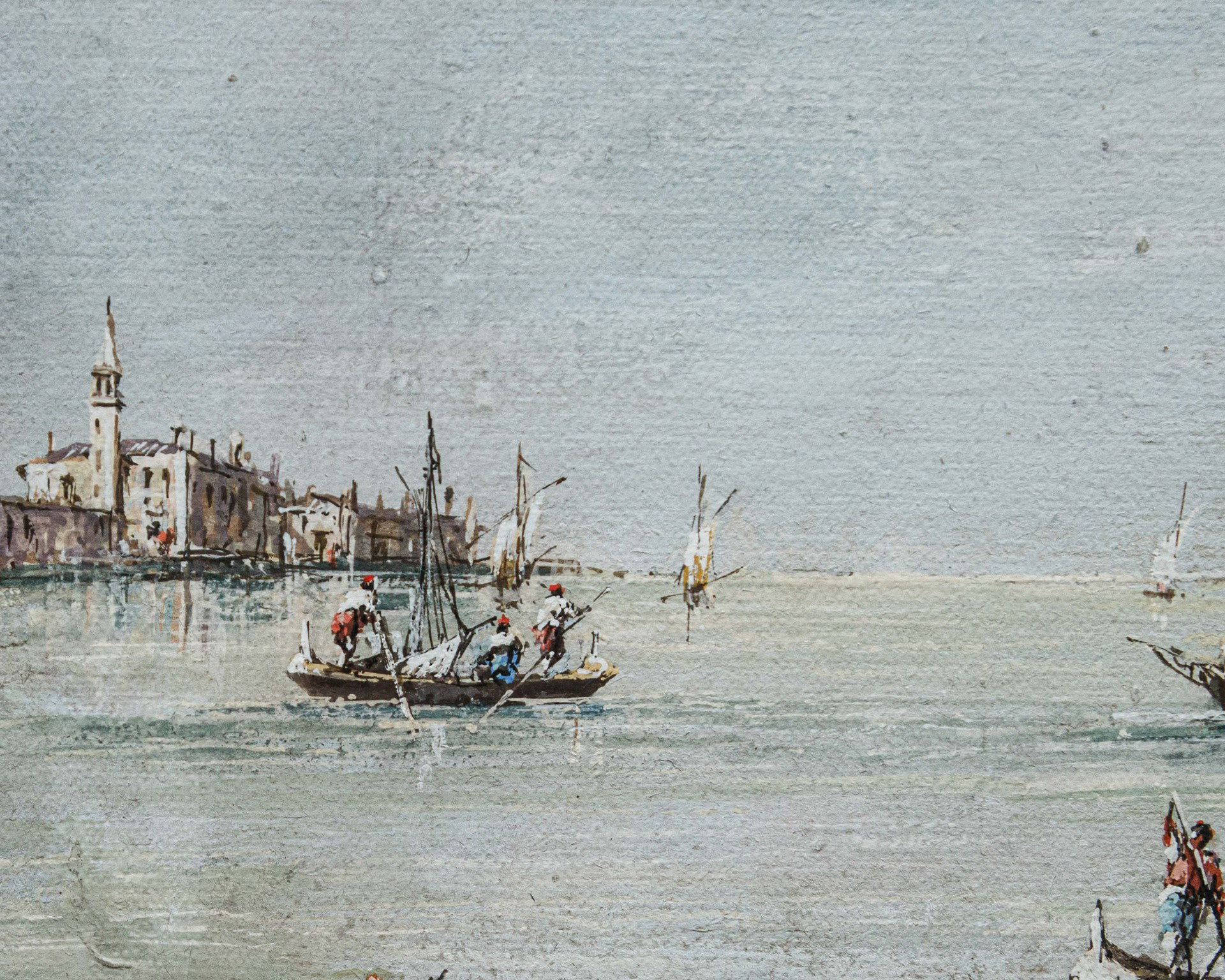
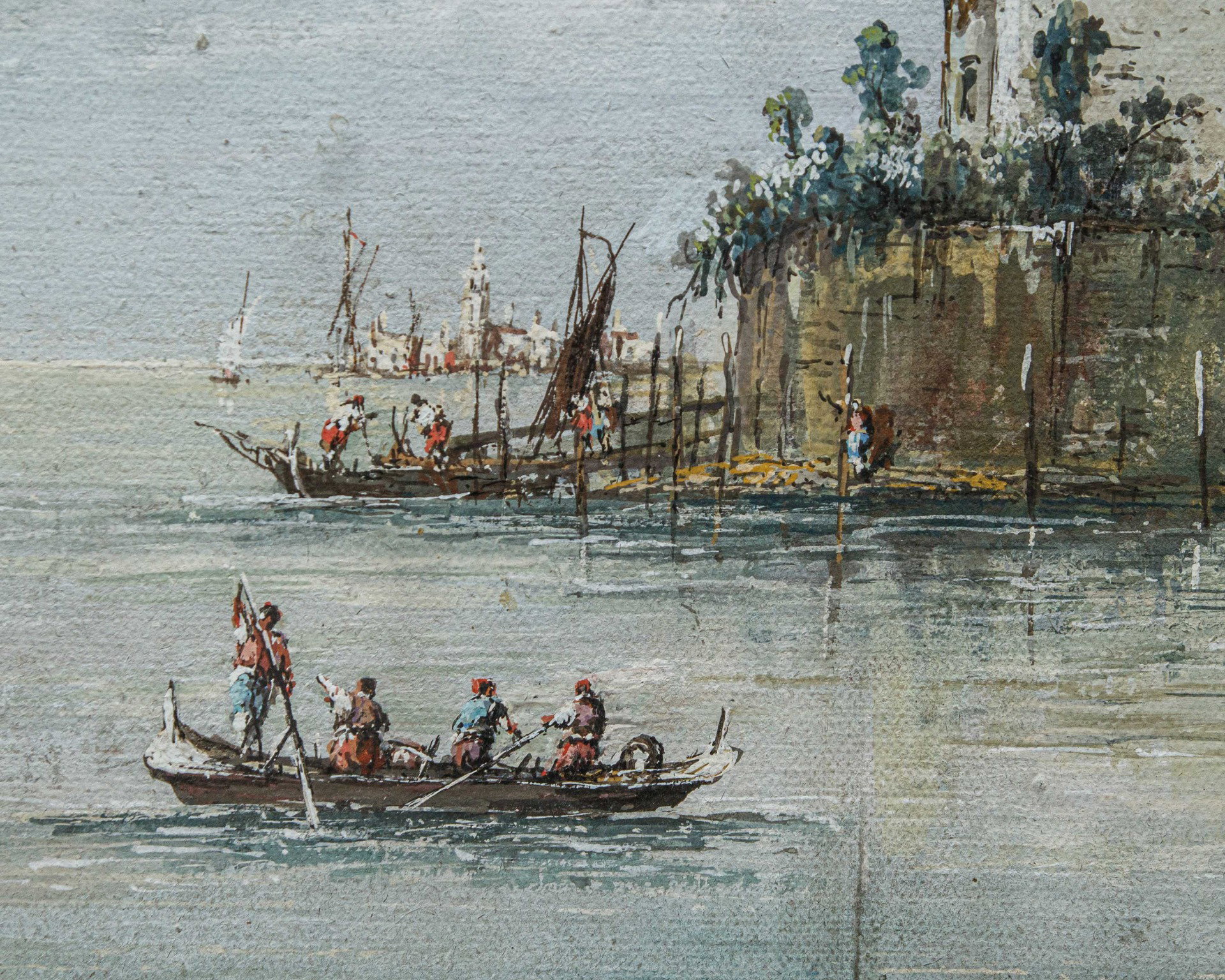
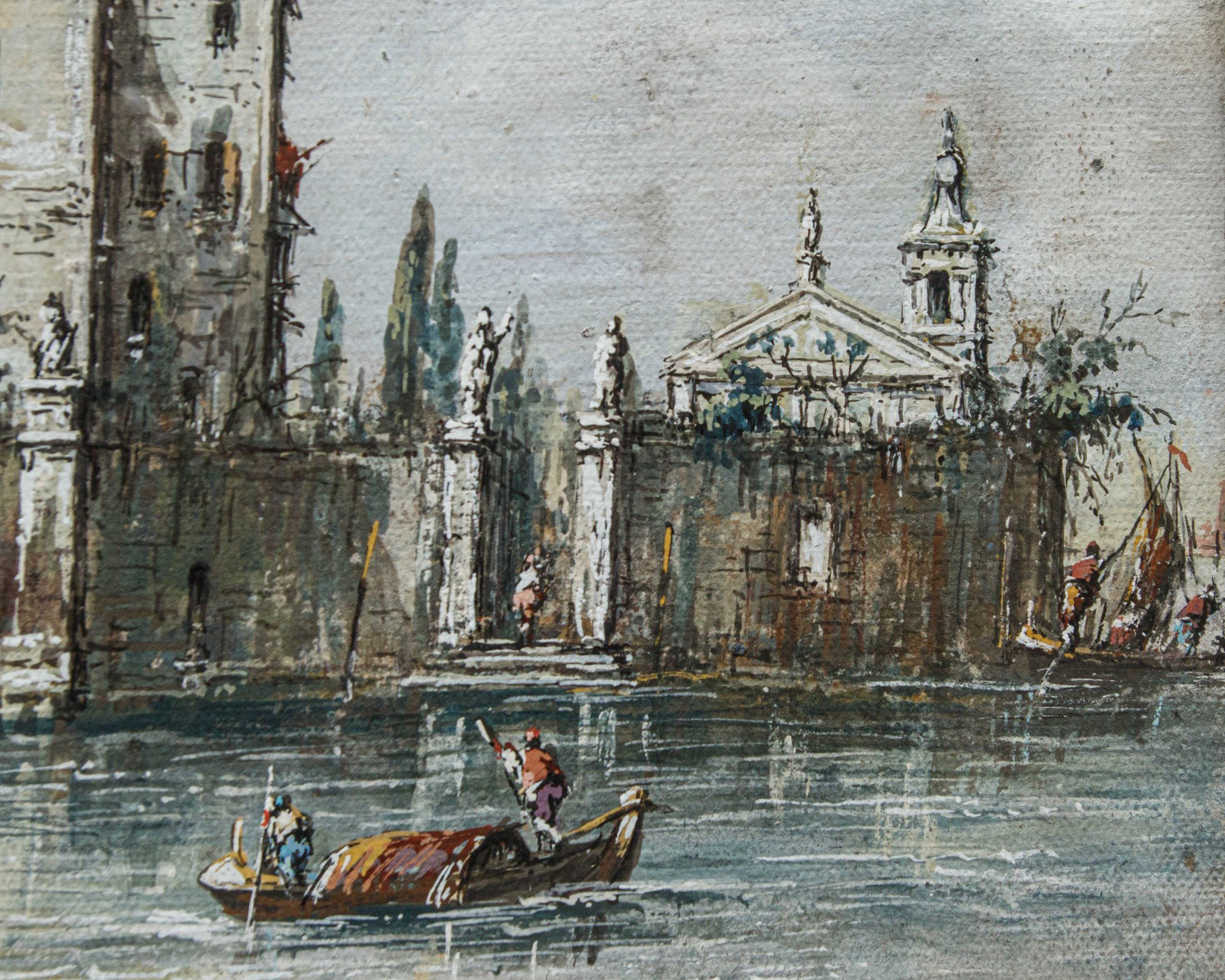
This work, executed in tempera on paper, elegantly follows the extensive production of Venetian views that characterized the work of Giacomo Guardi, son and continuator of the fortunate paternal legacy of the great Francesco Guardi. The painting presents a lagoon view where an architectural complex, consisting of a more imposing main structure flanked by a smaller building resembling a chapel or a small sacred edifice, stands isolated on a strip of land, surrounded by the mirroring waters of the lagoon. The composition is permeated by a clear and diffused light, typical of Venetian atmospheres, which envelops the buildings and the sky in a light, almost diaphanous, hue, allowing the light shadows and the chromatic contrast of the figures in the foreground to define the spatial depth. Boats, gondolas and small transport boats, naturally ply the waters, populated by figures sketched with quick and synthetic brushstrokes, a technical expedient that, despite its essentiality, infuses vivacity and realism into the scene, transforming the vista into a moment of everyday life crystallized in time. The work fits coherently into the panorama of Venetian painting of the first half of the 19th century, a period in which the genre of vedutismo, after the eighteenth-century glories of Canaletto and his father Francesco, took on a different value, often orienting towards a more commercial and collector-oriented market intended for Grand Tour travelers or refined local clients who sought in small formats, such as tempera or gouache on paper, a precious and manageable souvenir of the city. Giacomo Guardi, working in a Venice profoundly changed after the fall of the Republic and foreign occupations, managed to keep alive the stylistic mark of his father's workshop, albeit in a more repetitive and sometimes conventional interpretation, yet managing to preserve that atmospheric sensitivity and that vibrant touch that still make his views today testimonies imbued with a melancholic and poetic beauty. The choice of paper support, typical for these agile and decorative works, underscores the purpose of these productions, created to adorn bourgeois and aristocratic drawing rooms with views that celebrate, in a sort of eternal return, the myth of a Venice suspended between the magnificence of its past and the quiet daily life of the lagoon present. The composition, built on a low horizon line and a wide sky, enhances the sense of space and silence surrounding the depicted island, making the entire painting a significant example of that technical skill and aesthetic taste that defined, even in the new century, the visual identity of the city of water, perpetuating its charm throughout Europe through an intense and widespread diffusion of images that, like this one, still tell today of the light and the secret life of the lagoon.